
Reviewed · E-BIKES
Tokyo: 3-Hour Bike/E-Bike Tour of the City’s Highlights
Tokyo becomes easier to understand from a bike seat. This three-hour ride links Zojo-ji Temple, the Imperial Palace, Tokyo Station, and Shibuya Crossing, giving you a quick look at several very different parts of the city without spending the whole day underground on trains.
I like the route’s variety, and I like the way an e-bike lets you cover long stretches without turning the outing into a race. Guides such as Naoki, Hiroto, Sho, Rin, Rinto, Kei, and Casey have been praised for clear explanations, patience, and careful group control.
The tradeoff is that you must be comfortable cycling near traffic and through crowded areas. Helmets cost an extra ¥1,000, and the meeting point at the Commodore Perry Statue can be hard to locate, even for locals.
In This Review
- Tokyo highlights connected by two wheels
- Why this route works for a short stay
- Starting at Zojo-ji and the Imperial Palace
- Tokyo Station and the formal center of the city
- Olympic Tokyo, Aoyama, and Cat Street
- The Shibuya Crossing finale
- What the guides add to the ride
- Practical riding advice for Tokyo
- Who should book this three-hour bike tour
- Should you book it?
- FAQ
- How long is the Tokyo bike tour?
- Where does the tour start?
- Where does the tour finish?
- Is a bicycle included?
- Is a helmet included?
- Can I request a child seat?
- What happens if the weather is poor?
Tokyo highlights connected by two wheels
- Ride from Minato to Shibuya: The route crosses several major districts instead of staying in one sightseeing zone.
- See Shibuya Crossing from a bike: This is more active than simply watching the famous scramble from a nearby building.
- Use an e-bike for the long route: Pedal assist makes the three-hour ride manageable for many people with moderate fitness.
- Hear local context along the way: Guides explain temples, imperial sites, neighborhoods, fashion areas, and Tokyo landmarks.
- Finish near Yoyogi Park: The ride ends in Jinnan, about five minutes from the park and ten minutes from Shibuya Station.
- Plan for extras and weather: Helmets and child seats cost extra in cash, while rain can lead to a date change or refund.
Why this route works for a short stay
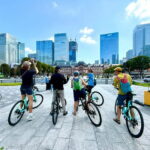
Tokyo is too large to understand in a single afternoon, but this ride gives you a useful first outline. You begin near Tokyo Tower and Zojo-ji, pedal through the central government and business districts, then finish among the shops and streets of Harajuku and Shibuya.
That progression matters. You see old religious Tokyo, the imperial center, early twentieth-century railway architecture, formal state buildings, Olympic facilities, upscale Aoyama, and youth-oriented Shibuya in one outing. It is not a detailed visit to each attraction. It is a moving introduction that helps you decide where to return later.
The price is $63.01 per person. For three hours with a bicycle, guide, insurance, and a planned route, I consider that a fair price if your main goal is orientation and variety. You are paying for access to a broad route and for someone else to handle navigation, not for admission to major sights. The listed stops are viewed from outside or visited briefly, and food, drinks, and helmets are not included.
The e-bike option is important. Tokyo is not a steep city at every turn, but the route covers a lot of ground. One account described the ride as easy with pedal assist, while another advised being in good shape for the full three hours. Both points can be true: the motor reduces effort, but you are still riding, stopping, starting, and handling city streets for a substantial part of the afternoon.
Other cycling tours in Tokyo
Starting at Zojo-ji and the Imperial Palace
The meeting point is the Statue of Commodore Perry at 2-chōme-2-20 Shibakōen in Minato City. Allow extra time to find it. The location has caused confusion, so do not assume that arriving in the general Shiba Park area means you are there.
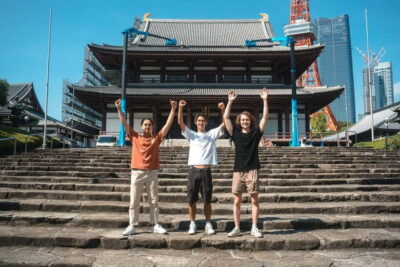
Your first stop is Zojo-ji Temple, beside Tokyo Tower. The visit is listed as five minutes, so expect a look and a short explanation rather than a full temple visit. Zojo-ji is tied to important Buddhist traditions and serves as a resting place for members of the Tokugawa warrior government. Its setting beside the modern tower neatly frames one of Tokyo’s recurring contrasts: old religious architecture beside a high-rise city.
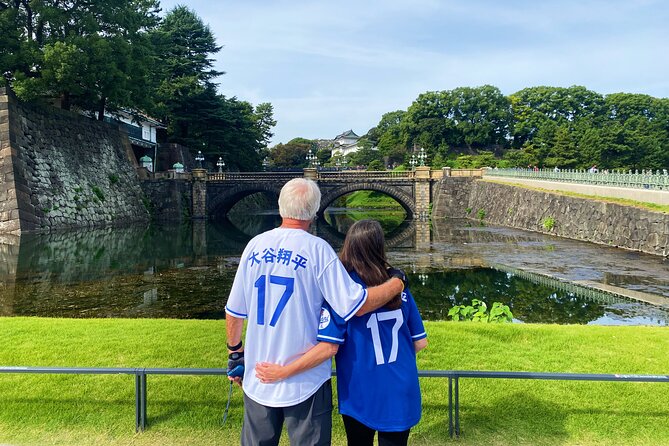
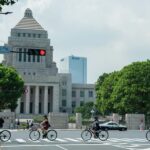
Next comes the Imperial Palace, with about fifteen minutes scheduled. You will learn about the palace as the residence of Japan’s Emperor and see the broad grounds from public areas. This is a place where the guide’s explanation adds real value, since the buildings and walls do not always explain their own role to someone seeing them for the first time.
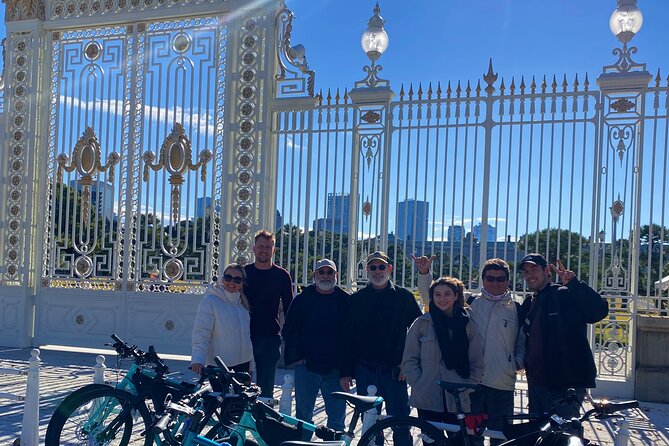
The itinerary also includes Kokyo Otemon Gate, the main entrance to part of the palace grounds. Ten minutes gives you time for photographs and a quick look at the gate’s design. Because the stops are short, think of this section as a visual introduction, not a palace tour. You will not have the time for a long wander through the grounds.
Tokyo Station and the formal center of the city
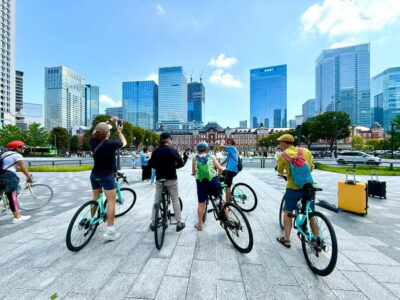
Tokyo Station Marunouchi Station Square follows the palace area. The station’s red-brick facade dates to its opening in 1914, making it one of the city’s most recognizable pieces of prewar architecture. The building is especially striking because it sits in a district filled with glass towers and corporate offices.
The scheduled stop is ten minutes. That is enough for an exterior view and photographs, but not enough to explore the station’s interior maze, shops, or underground food areas. If Tokyo Station interests you, save time after the ride to return on your own.
The route then moves to Akasaka Palace, also called the State Guesthouse. Built first as a royal villa, it now serves as a state guesthouse. The listed visit is only five minutes, so you should expect to see the exterior and hear a concise explanation of its role. This is another stop where the value comes from the sequence: the ride shows you how imperial, ceremonial, and civic spaces fit into the modern capital.
The brief timing can be a strength and a weakness. You keep moving and see more districts, but you will not get long photo sessions at every site. One account wished for more planned stops for pictures, while also noting that the guide was patient when the group paused. If photography is your main reason for booking, tell the guide early and understand that the route’s priority is coverage.
Olympic Tokyo, Aoyama, and Cat Street
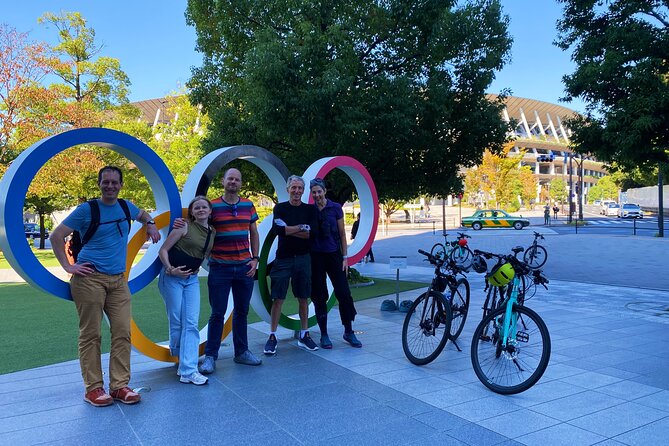
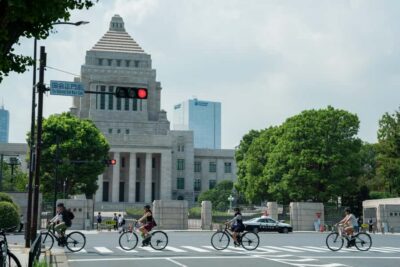
Japan National Stadium provides a look at the site used for the 2020 Tokyo Olympic and Paralympic Games. Fifteen minutes is a reasonable amount of time for a short exterior visit and a few photographs. The stop also gives the ride a modern landmark after the palace and historic station.
From there, the ride passes along Aoyama Street. This area is associated with high-end fashion, polished storefronts, and unusual architecture. The scheduled five minutes is brief, but cycling through the district gives you a better sense of its scale and street character than a single subway stop would.
Shibuya Cat Street brings a different mood. The route passes vintage shops and current fashion brands on a pedestrian-oriented shopping street known for its style-conscious atmosphere. Again, five minutes is enough for a quick stop, not a shopping session. If you see something worth buying, note the location and return later.
This middle section is one of the ride’s best features. You move from official Tokyo to design-conscious Tokyo, with the guide pointing out changes in architecture and neighborhood character. The ride does not pretend these areas are the same. It gives you a fast look at the city’s many faces.
The Shibuya Crossing finale
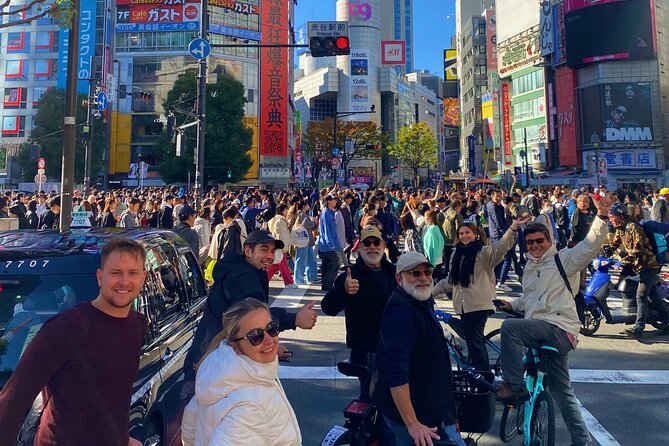
The best-known moment comes at Shibuya Crossing. The schedule allows five minutes, but the real experience is the approach and the ride through the surrounding streets, not simply standing at a lookout and taking a picture.
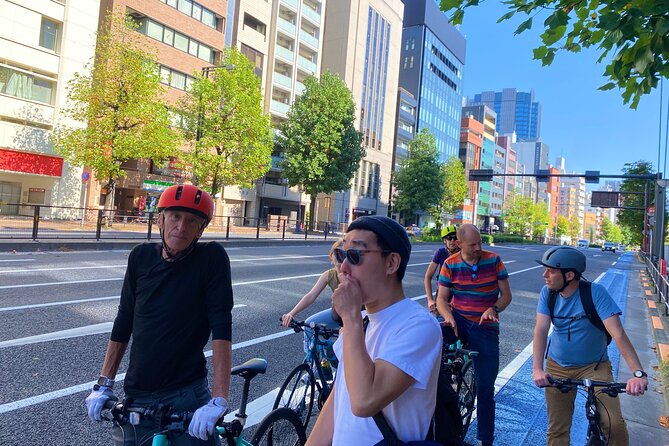
Cycling in this area requires attention. You may be riding near traffic and through crowds, so follow the guide’s signals and avoid treating the crossing like a race. Several guides have been praised for positioning themselves at the front and back of the group, keeping riders together, and checking that everyone is safe.
Some people find the traffic stressful at moments. Others describe Tokyo’s roads as less intimidating than expected. Your comfort will depend on how often you cycle in cities and how relaxed you feel starting and stopping around pedestrians. The tour is not a quiet park ride.
The finish is at the Bell of Peace in Jinnan, between Yoyogi Park and Shibuya. From there, it is about five minutes on foot to Yoyogi Park or ten minutes to Shibuya Station. That is a useful ending point. You can continue into Harajuku, take a break in the park, or head toward Shibuya for food and shopping.
Other city tours we've reviewed in Tokyo



What the guides add to the ride
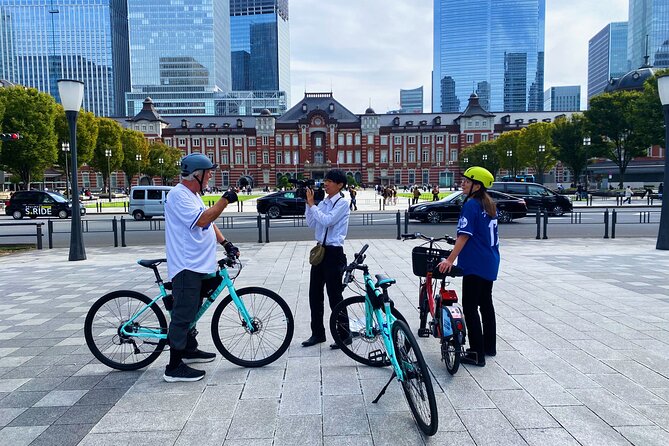
The guide can make or break a fast city tour. With so many short stops, you need someone who can give useful context without turning every pause into a lecture.
Naoki has been praised for bringing history to life, explaining road rules, and speaking clear English. Hiroto has led highly enjoyable rides, including an evening outing to Shibuya Crossing. Sho has been described as friendly and good at mixing history with popular culture.
Rin has been noted for communicating well in both English and Japanese. Rinto has received praise for patience and personal attention, while Kei has been described as well informed about the city and its past. Casey has also been praised for friendliness and patience, including during a rainy ride.
These details point to a consistent strength: the company appears to use guides who focus on keeping the group together and making the ride approachable. Still, guide style can vary. One assessment found the explanations too brief at some stops, so if you want detailed historical commentary at every location, a walking tour with fewer stops may suit you better.
Although the experience is presented as a private activity, accounts also describe small groups, including a group of eight and mixed-age groups from 18 to 70. Confirm the exact group arrangement when booking if privacy is important to you.
Practical riding advice for Tokyo
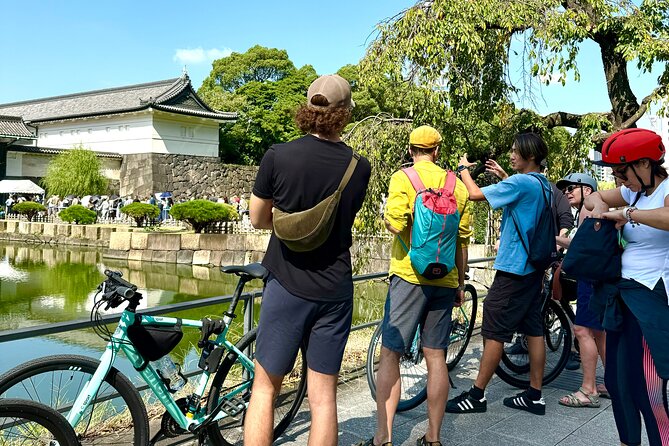
You need moderate physical fitness. The e-bike reduces the work, but it does not remove the need to pedal, balance, brake, and ride for three hours. You should also be comfortable in crowds, since the route includes central streets and Shibuya.
A helmet is not included. You can rent one for ¥1,000, and you should bring cash for that charge. Families can request a child seat for ¥3,000, but setup must be arranged at least two days before the activity and paid in cash on the day.
Each bike includes a small pouch for a phone, wallet, or key. Bike insurance is included, along with a raincoat on rainy days. Food and drinks are not provided, so eat beforehand and carry what you need within the limits of the small pouch.
The tour duration includes travel between stops. That explains why some sightseeing pauses are short. You are not getting three hours of stationary visits. You are getting three hours of riding, navigation, explanations, photographs, and transitions across Tokyo.
Weather deserves attention. The experience requires good weather, and poor conditions can lead to an alternate date or a full refund. Free cancellation is available up to 24 hours before the start time. Changes or cancellations inside that window are not refunded or accepted, so avoid building a tight schedule around this ride if rain is in the forecast.
Who should book this three-hour bike tour
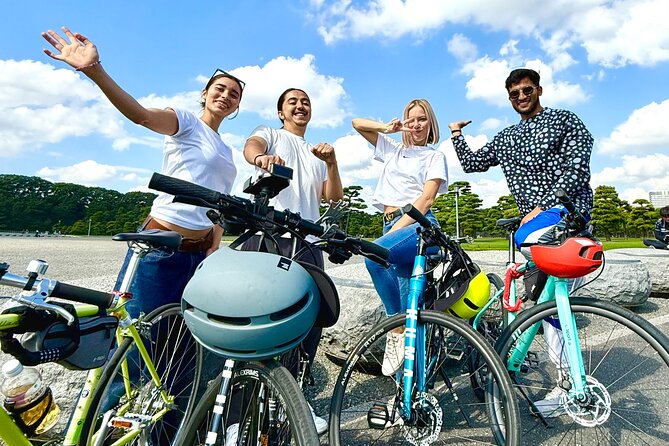
I would choose this tour at the beginning of a Tokyo stay, especially if you have only a day or a long layover. It gives you a quick sense of where the major districts sit and may help you decide which areas deserve a longer return visit.
It also suits people who dislike spending an entire sightseeing day on trains. You see the city at street level, pass through parks and neighborhoods, and get a better feel for the distance between major sights. Several riders found it more useful than a bus for understanding Tokyo’s streets.
Families can book it if everyone can ride comfortably, though the child seat requires advance arrangement and an extra fee. It can also work for mixed-age groups. The e-bike helps, but nobody should book it expecting a passive sightseeing vehicle.
I would hesitate if you dislike urban cycling, want long visits inside temples and palaces, or plan to take careful photographs at every stop. The route is quick, and traffic or crowds may make some riders uneasy. A walking tour or private car tour would offer a calmer pace, though neither would give you the same street-level movement.
Should you book it?
Book this ride if you want a broad, active introduction to Tokyo and are comfortable cycling in city traffic. At $63.01, it offers good value for a guided route that connects Minato, the palace district, Aoyama, Harajuku, and Shibuya in one morning or afternoon.
Choose a morning departure during hot weather, since a three-hour ride in Tokyo can feel demanding. Choose an afternoon or evening time if seeing Shibuya after dark matters to you. Confirm the meeting point, bring cash for a helmet, and leave room in your schedule for the ride to end near Yoyogi Park rather than at the starting point.
FAQ
How long is the Tokyo bike tour?
The ride lasts approximately three hours, including the time spent traveling between stops.
Where does the tour start?
It starts at the Statue of Commodore Perry at 2-chōme-2-20 Shibakōen, Minato City, Tokyo 105-0011, Japan.
Where does the tour finish?
It ends at the Bell of Peace in Jinnan, near Yoyogi Park and Shibuya. Yoyogi Park is about a five-minute walk away, and Shibuya Station is about a ten-minute walk away.
Is a bicycle included?
Yes. Bicycle use, bike insurance, a small bike pouch, and an English or Japanese in-person guide are included.
Is a helmet included?
No. A helmet can be rented for ¥1,000. Bring cash to pay on the activity date.
Can I request a child seat?
Yes. A child seat costs ¥3,000, must be arranged at least two days before the tour, and is paid for in cash on the activity date.
What happens if the weather is poor?
The experience may be canceled because of poor weather. You will be offered another date or a full refund. You can also cancel for a full refund up to 24 hours before the start time.
More E-Bikes in Tokyo
More City Tours in Tokyo
More Cycling Tours in Tokyo
More tours in Tokyo we've reviewed


E-Bikes, compared.
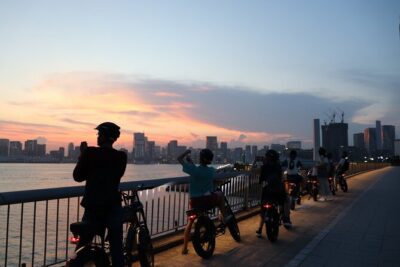 ★ 5.0Tokyo Top Highlights 3h Guided E-bike TourFrom $63
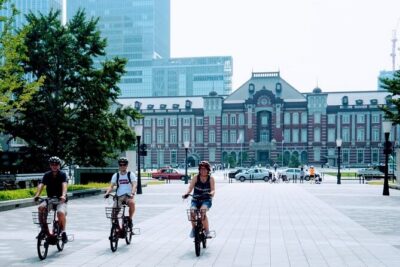 ★ 5.03h Tokyo E-Bike Tour: Hidden Gems, and Local Life with guideFrom $63
 ★ 4.8Tokyo: 3-Hour Bike or E-Bike City Highlights TourFrom $453 hours
 ★ 4.8Tokyo: 3-hour Guided E-Bike Tour of the City’s Hidden GemsFrom $65
 ★ 5.03-Hour Tokyo Private E-Bike Tour Starting from Your HotelFrom $145
 ★ 4.7Tokyo: 3-Hour Bike or E-Bike Tour of City’s Hidden GemsFrom $603 hours