
Reviewed · E-BIKES
Tokyo: 3-Hour Bike/E-Bike Tour of the City’s Hidden Gems
Tokyo reveals itself differently from a bicycle. In three hours, you pedal from the temple grounds of Zojo-ji to the neon energy of Shibuya, passing the Imperial Palace, Tokyo Station, Aoyama, and the National Stadium along the way. The route covers about 18 kilometers, so you see a surprising amount of central Tokyo in one morning or afternoon.
I like the way this tour combines major sights with ordinary city streets, and I like that guides such as Show, Naoki, Kosei, and Miguel explain what you are seeing rather than simply leading a moving photo stop. The small group, capped at seven people, also makes it easier to ask questions and stay together.
The main caution is the cycling itself. Tokyo traffic, pedestrians, hills, heat, and stop-and-go riding require a moderate level of fitness. An e-bike helps, especially in warm weather, but this is still an active three-hour outing, not a gentle sightseeing bus ride.
In This Review
- Key points to know before you book
- Why a bicycle is a smart way to see central Tokyo
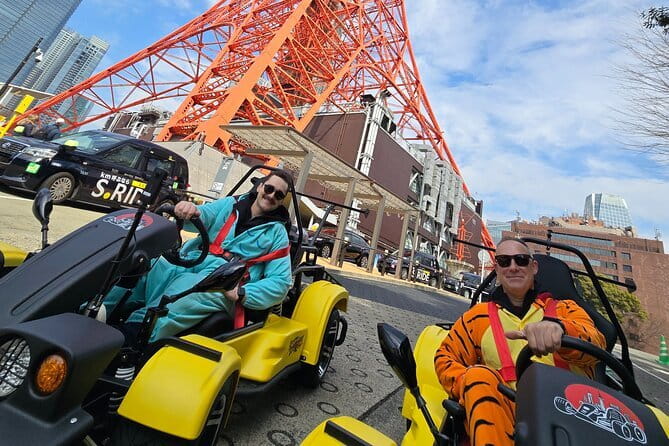
- Starting at Zojo-ji with Tokyo Tower behind you
- The Imperial Palace and Otemon Gate
- Tokyo Station’s red-brick face
- Akasaka Palace and the National Stadium
- Aoyama streets and Shibuya Cat Street
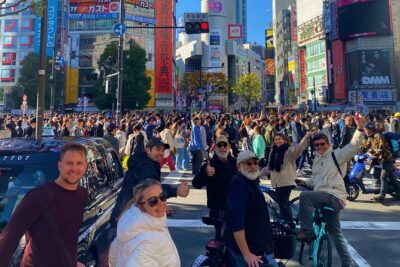
- Riding through Shibuya Crossing
- Finishing near Yoyogi Park and Harajuku
- Regular bike or e-bike?
- What the guide adds to the ride
- Price, timing, and physical effort
- Who will enjoy this Tokyo bike tour?
- Should you book it?
- FAQ
- How long is the Tokyo bike tour?
- How far do you ride?
- Where does the tour start?
- Where does the tour finish?
- What languages does the guide speak?
- How large is the group?
- Is a bicycle included?
- Is a helmet included?
- Can I request a child seat?
- What happens if the weather is bad?
Key points to know before you book
- 18 kilometers in three hours: You cover central Tokyo at a pace that would be difficult on foot or by train.
- A strong westward route: The ride begins near Tokyo Tower and Zojo-ji, crosses the Imperial Palace area, and finishes near Yoyogi Park and Shibuya.
- E-bike recommended for hills and heat: Several riders found the electric assist made the ride easier, while regular-bike riders sometimes lagged on climbs.
- Small groups make a difference: With no more than seven people, guides can stop for photos, answer questions, and keep an eye on the group.
- The title promises more hidden corners than the route delivers: Zojo-ji, Tokyo Station, the Imperial Palace, and Shibuya Crossing are famous sights, though the connecting streets offer a less familiar view.
- Budget for extras: Helmets cost ¥1,000, and a child seat costs ¥3,000 with advance notice. Cash is required for these options.
Why a bicycle is a smart way to see central Tokyo
Tokyo is enormous, and its train system is wonderfully fast. Still, trains can make the city feel like a series of underground jumps from one district to another. A bicycle gives you the in-between places: quiet lanes, office districts, tree-lined avenues, shop fronts, and the gradual change from historic temple grounds to fashion-heavy Shibuya.
This route is especially useful early in a Tokyo visit. You get a quick mental map of several important districts, then you can return later by train to the places that caught your attention. The ride also saves you from spending much of your sightseeing time walking between widely separated sights.
You are not simply pedaling past everything. The schedule includes short stops for photographs and explanations, with time at each major point. That balance works well for a first look, though anyone hoping for long temple visits or museum-style detail may find the stops brief.
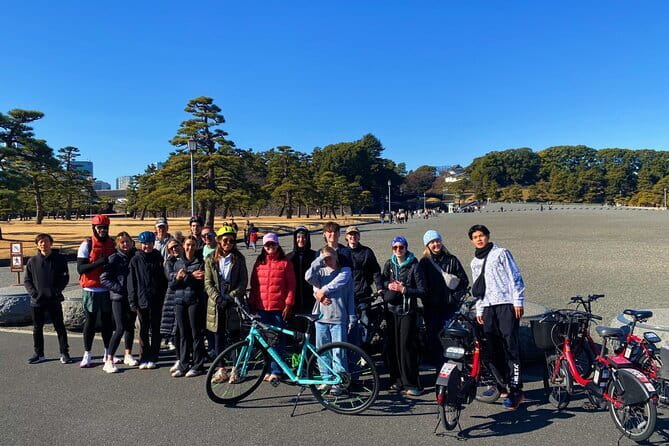
The maximum group size is seven. That is small enough for a guide to adjust the pace, wait at crossings, and respond to questions. The guides are described as friendly, clear in English, and ready to explain Japanese culture and history. Show, Naoki, Kosei, Miguel, Rinto, Kazu, Kei, and others have led recent departures, so the exact personality and depth of commentary will depend on who is assigned.
Other cycling tours in Tokyo
Starting at Zojo-ji with Tokyo Tower behind you
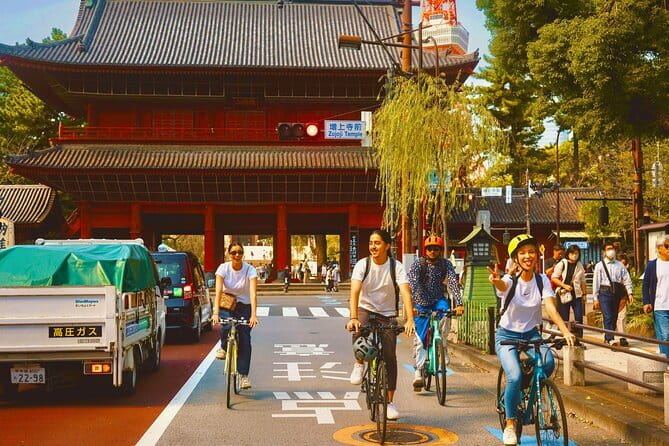
The tour starts at Shiba Park, near Zojo-ji Temple and Tokyo Tower. This is a good opening scene because it gives you two very different symbols of Tokyo in one frame: the calm, formal setting of a Buddhist temple and the bright orange tower rising behind it.
You spend about 15 minutes at Zojo-ji. That is enough for photographs and a first explanation of the temple, though not enough for a full visit if the interior is open. The plan allows for the possibility of going inside, but access is not guaranteed.
Zojo-ji is also a practical place to settle into the bicycle. Your guide can explain the riding order and route before the group moves into city traffic. Use this first stop to check your phone pouch, water, brakes, and electric assist if you selected an e-bike.
The Imperial Palace and Otemon Gate
The ride continues to the Imperial Palace area. At the palace entrance, you can see the guards and learn about the role of the imperial residence. The stop is only about 10 minutes, so think of it as an orientation rather than a palace tour.
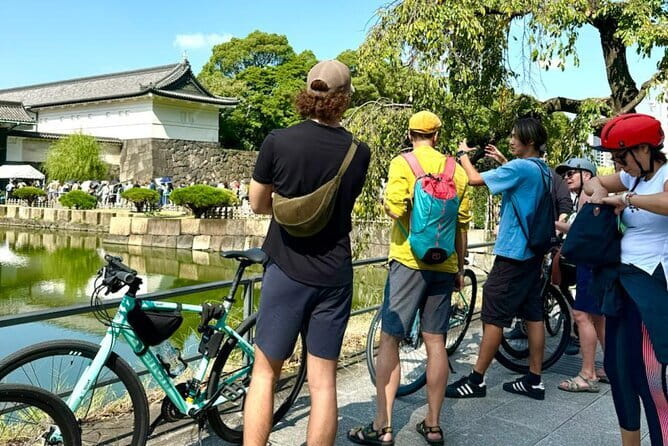
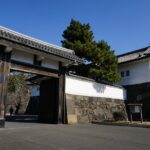
A second palace-area stop brings you to Otemon Gate, one of the most photogenic points on the route. The large historic gate gives you a stronger sense of the old defensive architecture than the palace entrance alone. You have another 10 minutes for pictures and a short talk.
These stops work well by bicycle because the palace grounds are broad and the surrounding roads can take time to cover on foot. You will not enter private palace areas as part of this outing, and the focus is on exterior views, gates, and context.
Tokyo Station’s red-brick face
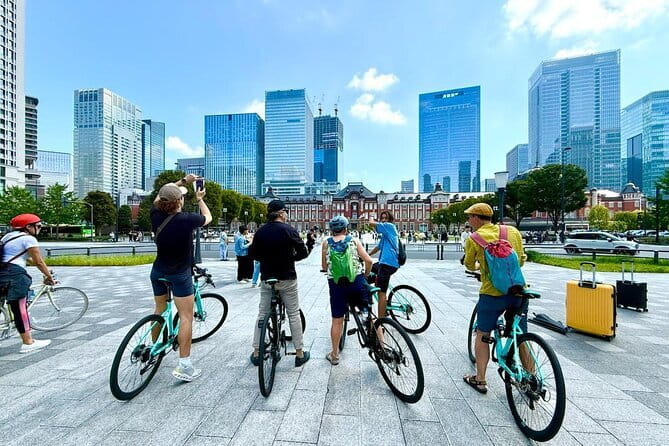
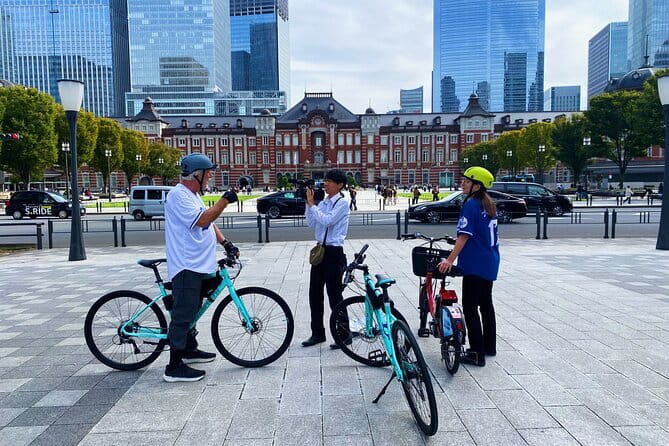
Tokyo Station Marunouchi Square is one of the route’s most attractive urban stops. The station opened in 1914, and its red-brick exterior offers a sharp contrast to the glass towers around it.
The stop lasts about 10 minutes. That gives you time to admire the facade and take photographs, but you should not expect an extended architectural tour or time inside the station. The value here is the quick comparison: old-style brickwork, modern office buildings, taxis, commuters, and one of Tokyo’s most important transport hubs all meet in the same square.
This is also a good example of the tour’s broader appeal. You are seeing famous places, but you reach them by bicycle and observe the city as you travel between them. That connection is more interesting than ticking off isolated sights.
Akasaka Palace and the National Stadium
Akasaka Palace, also called the State Guesthouse, is another brief stop. It began as a royal villa and now serves as a state guesthouse. The planned visit lasts about five minutes, and admission is not included.
That short timing matters. You can see the exterior and take in the setting, but you should not book this ride expecting a full palace visit. If entering the building is a priority, plan a separate visit with enough time for admission and interior viewing.
The National Stadium receives about 15 minutes. This is where the 2020 Tokyo Olympic and Paralympic Games took place, giving the stop a clear modern connection to the city. The stadium is a useful counterpoint to the palace sites and temple at the start of the ride. Tokyo’s story here is not presented as one single period, but as a mix of old institutions, rebuilt districts, international events, and current city life.
Other city tours we've reviewed in Tokyo




Aoyama streets and Shibuya Cat Street

After the more formal sights, the mood shifts in Aoyama. The area is known for high-end fashion brands and distinctive architecture. The planned stop is only five minutes, so you will mainly get a quick look at the streets rather than time for shopping.
Shibuya Cat Street adds another change of pace. The route passes fashion stores, vintage shops, and younger retail culture before reaching the main Shibuya district. Again, five minutes is enough to pause and take a few pictures, but not enough for browsing every shop.
This part of the ride helps explain why cycling is useful in Tokyo. A train can bring you to Shibuya, but a bicycle lets you notice the transition from Aoyama’s polished avenues to Cat Street’s smaller-scale retail scene. You see how close these districts are while still feeling distinct.
Riding through Shibuya Crossing
The final major sight is Shibuya Crossing. The scheduled stop is about five minutes, and the route takes you through the famous intersection before continuing toward the finish.
This is likely to be the loudest and most crowded section of the ride. You need to stay alert, follow your guide, and be comfortable riding near cars and pedestrians. One useful point from the practical side of the tour is that the route can feel quite different depending on the day. Sunday departures may benefit from streets closed to traffic in some areas, while other times can bring heavier crowds.
Do not expect to stop in the middle of the crossing for a long photo session. The appeal is moving through one of Tokyo’s best-known city scenes as part of a guided group. For a quieter photograph, Yoyogi Park and the surrounding streets offer a calmer finish.
Finishing near Yoyogi Park and Harajuku
The ride ends in Jinnan, a shopping and dining area between Yoyogi Park and Shibuya. Yoyogi Park is about a five-minute walk away, and Shibuya Station is about a 10-minute walk from the finishing point. Harajuku Station is also nearby.
This is a useful ending because you can continue sightseeing without returning to the starting point. You might walk through Yoyogi Park, explore Harajuku, or head toward Shibuya for food and shopping. The finish also gives you a chance to recover before tackling Tokyo’s evening crowds.
The one logistical point to remember is that the tour is not a loop. You start in Minato City near Shiba Park and finish in Shibuya. That is convenient for a day moving west through central Tokyo, but you should allow time to reach the start and plan your next stop from the finish.
Regular bike or e-bike?
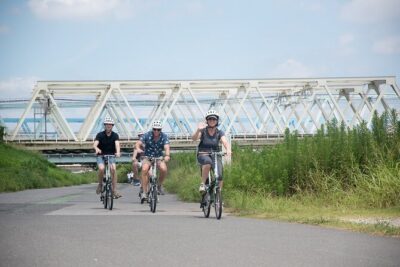
The e-bike is the safer choice for many people, especially in summer. The route includes hills, and several riders found that regular-bike users fell behind on climbs. Electric assistance also helps when the humidity is high or when you want to save energy for exploring after the ride.
You do not need to be a serious cyclist for the e-bike option, but you still need to pedal and control the bike in traffic. One rider in their late 60s completed the route with an e-bike and found it manageable, while another person noted that the ride remained fairly demanding even with electric assistance.
Regular bikes can work well if you already ride often and are comfortable with moderate hills. One person completed the tour without an e-bike and did not feel the need for one. Still, the supplied price information does not clearly explain the cost difference between bike types, and one customer found an e-bike too small and not fully effective. Confirm the exact bicycle option, size, and price before paying.
Helmets are not included. You can rent one for ¥1,000, and you should bring cash if you want one. A small pouch attached to the bike holds a phone, wallet, and keys, while bike insurance is included.
What the guide adds to the ride
The best part of a city bike tour is often the person leading it. Guides including Show, Naoki, Kosei, Miguel, Rinto, Kazu, and Kei have been praised for clear English, friendly direction, and useful explanations at the stops.
The level of detail can vary. Some departures provide a light overview with plenty of room for questions, while others offer a stronger outline of local history and culture. That is not necessarily a flaw. The format is designed as a fast introduction, not a university lecture.
I especially like that the guide can answer questions during the ride and make small adjustments for photographs or extra explanations. One solo participant received a particularly personal experience because the group was so small. If you want long, formal talks at every site, this may feel too quick. If you want a human introduction to Tokyo with room for conversation, it is a good fit.
Some people wished the guides used headsets. Without them, it may be harder to hear during busy sections or while the group is spread out. Stay close, listen carefully at stops, and ask your guide to repeat anything missed.
Price, timing, and physical effort
At $59.45 per person, the tour offers solid value if you want to see several districts in one short outing. You are getting a bicycle, an in-person English or Japanese guide, bike insurance, and roughly 18 kilometers of guided routing. Compared with arranging separate train rides and walking visits to all these areas, the price is reasonable.
The value is weaker if you dislike cycling or plan to spend most of your time inside attractions. Admission to Akasaka Palace is not included, and the route generally views major sites from outside. Food and drinks are also your responsibility.
Set aside three hours, but allow a little flexibility. The ride may pause for extra photographs and questions, and guides can spend additional time at a stop if the group needs it. You should arrive ready to ride, with water and clothing suited to the weather. Raincoats are supplied on rainy days, but the tour requires good weather and may be canceled if conditions are poor.
Free cancellation is available until 24 hours before the start time. If bad weather cancels the tour, you can receive a different date or a full refund.
Who will enjoy this Tokyo bike tour?
This outing suits you best if you:
- Have a half day and want a quick introduction to central Tokyo
- Enjoy light adventure and physical activity during a city break
- Want to connect Tokyo Tower, the Imperial Palace, Tokyo Station, and Shibuya in one route
- Prefer local explanation and conversation to a recorded audio guide
- Are comfortable riding among traffic and pedestrians
- Want to see more than you could comfortably cover on foot
You may want another kind of tour if you have limited cycling experience, dislike traffic, need long periods at each attraction, or want extensive palace and temple interiors. Families can request a child seat for ¥3,000, but it must be arranged at least two days ahead and paid in cash on the tour date.
Should you book it?
Book this tour if you want to get your bearings fast and enjoy seeing Tokyo from street level. The strongest features are the broad route, the small group, the cheerful guides, and the option to use an e-bike when heat and hills begin to wear you down.
Go in with accurate expectations. This is not a quiet ride through unknown neighborhoods, and many stops are famous Tokyo sights. It is a lively highlights ride with some less familiar connecting streets, short photo breaks, and enough cultural explanation to help the city make sense.
Choose the e-bike if you are uncertain about your fitness, visiting in hot weather, or want energy left for Shibuya and Harajuku afterward. With that choice, this is a smart, active way to see a large slice of Tokyo in three hours.
FAQ
How long is the Tokyo bike tour?
The tour lasts approximately three hours.
How far do you ride?
The route covers about 18 kilometers through central Tokyo.
Where does the tour start?
It starts at Shiba Park BLD in Shibakoen, Minato City, Tokyo 105-0011.
Where does the tour finish?
It ends in Jinnan, near the Bell of Peace, between Yoyogi Park and Shibuya. Yoyogi Park is about a five-minute walk away, and Shibuya Station is about a 10-minute walk.
What languages does the guide speak?
In-person guiding is available in English and Japanese.
How large is the group?
The tour has a maximum of seven participants.
Is a bicycle included?
Use of a bicycle is included. The available bicycle types may have different prices, so confirm the cost of a regular bike and e-bike when booking.
Is a helmet included?
No. Helmet rental costs ¥1,000, and you should bring cash if you want one.
Can I request a child seat?
Yes. A child seat costs ¥3,000, must be arranged at least two days before the tour, and requires cash payment on the tour date.
What happens if the weather is bad?
The tour requires good weather. If it is canceled because of poor conditions, you will be offered another date or a full refund.
More E-Bikes in Tokyo
More City Tours in Tokyo
More Cycling Tours in Tokyo
More tours in Tokyo we've reviewed






E-Bikes, compared.
 ★ 5.0Tokyo Top Highlights 3h Guided E-bike TourFrom $63
 ★ 5.03h Tokyo E-Bike Tour: Hidden Gems, and Local Life with guideFrom $63
 ★ 4.8Tokyo: 3-Hour Bike or E-Bike City Highlights TourFrom $453 hours
 ★ 4.8Tokyo: 3-hour Guided E-Bike Tour of the City’s Hidden GemsFrom $65
 ★ 5.0Tokyo: 3-Hour Bike/E-Bike Tour of the City’s HighlightsFrom $63
 ★ 5.03-Hour Tokyo Private E-Bike Tour Starting from Your HotelFrom $145