
Reviewed · GO-KARTS
Tokyo: Asakusa, Skytree & Akhihabara Go-Kart City Experience
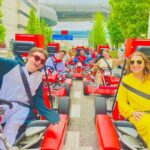
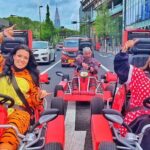
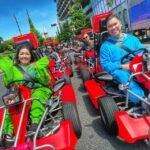
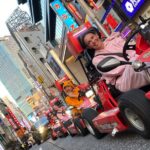
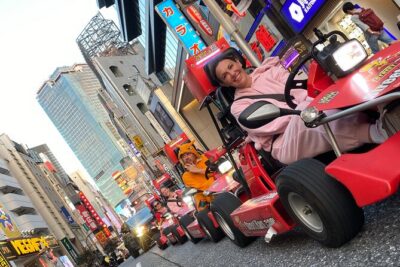
Tokyo looks different from a go-kart. You sit low, feel every turn, and pass through Asakusa, Tokyo Skytree, and Akihabara with the city close around you. It is sightseeing with a motor, a costume, and plenty of waving from the pavement.
I like the small groups of up to eight and the fact that your guide takes photos while you concentrate on driving. I also like the route’s mix of old Asakusa, the huge Skytree, and Akihabara’s pop-culture streets.
The catch is serious: you need the right paper driving permit before leaving home. Japan does not accept every international license, and a digital copy will not do. The tour can also be rescheduled in rain.
In This Review
- Key points at a glance
- What this Tokyo go-kart tour is really like
- Starting in Yokokawa: safety before the fun
- Choosing a costume and setting off
- Asakusa: Tokyo’s old streets from a new angle
- Tokyo Skytree: the big visual landmark
- Akihabara and the city after dark
- Photos, cameras, and the souvenir value
- Is $96 a fair price?
- Who should book it?
- Weather, timing, and small practical choices
- My verdict: fun, unusual, and document-sensitive
- FAQ
- Where does the Tokyo go-kart tour start?
- How long does the activity last?
- Which Tokyo areas does the route include?
- Is Tokyo Skytree entry included?
- Is a guide included?
- How many people are in each group?
- What driving document do I need?
- Can I use a digital copy of my international permit?
- Are costumes and photos included?
- Can the tour be canceled because of weather?
Key points at a glance
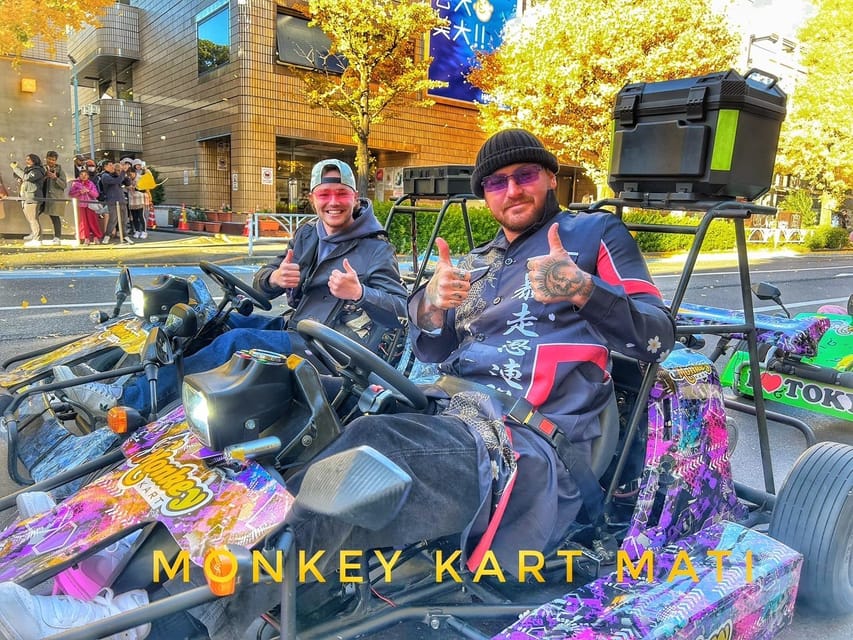
- A low, open-air view of Tokyo: You see the streets from behind the wheel instead of through a bus window.
- Three very different districts: The route links historic Asakusa, Tokyo Skytree, and electric Akihabara.
- Costumes make the photos: Pick a character outfit before setting off, if you want the full comic-book effect.
- Photo service is included: Your guide takes pictures during the ride, then sends the collection by AirDrop or email.
- A compact 70-minute outing: It fits neatly into a busy Tokyo day without taking over your schedule.
- Your license decides everything: Bring a hard-copy 1949 Geneva Convention IDP, or the approved Japanese translation for certain countries.
What this Tokyo go-kart tour is really like
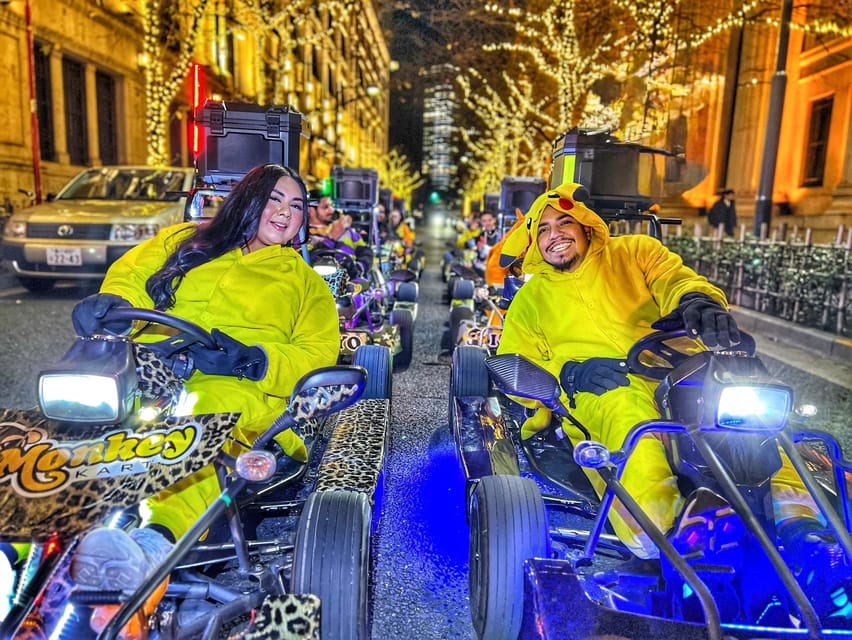
This is not a long cultural tour with frequent stops. It is a moving city experience. You follow a guide through public roads in a custom-built, street-legal kart, keeping pace with the group and following instructions.
That distinction matters. You will pass major sights and get photo stops, but you will not spend a long time inside temples, museums, or shops. The reward is the feeling of being part of the street scene for a little while.
The meeting point is at 4-chōme-9-9 Yokokawa, about a seven-minute walk from Oshiage Station. Plan to arrive 20 minutes early. Staff use that time for check-in, the safety briefing, costume selection, and getting everyone ready.
The group is limited to eight participants. That is a useful size for an activity involving traffic, turns, and hand signals. Guides can keep an eye on the line more easily than they could with a large convoy.
English is the listed tour language. Several guides praised in the supplied feedback include Adam, Sho, Hannah, Luis, Matias, Brandon, Shoma, and Lewis. The guide roster can change, but the pattern is clear: the staff role is not just to lead the way. Guides explain the route, settle nerves, manage the group, and stop for photos.
A few more Tokyo tours and experiences worth a look


Starting in Yokokawa: safety before the fun
The safety briefing is the part you should take seriously. Some drivers arrive excited, while others are nervous about handling a kart on Tokyo streets. Guides have been praised for giving clear instructions and helping first-time drivers relax.
You will be shown how to operate the kart and how to follow the lead guide. Pay close attention to signals, spacing, and traffic instructions. One piece of practical feedback noted that hand signals can be hard to see from three karts back, so keep your eyes on the guide and the vehicles ahead of you.
The karts are described as well maintained, large enough to feel comfortable, and suitable for the tour’s street route. One participant also appreciated a small pouch on the front of the kart for a phone. Still, this is an outdoor driving activity, not a padded amusement-park ride. You are sharing the road, so calm attention matters more than speed.
Water is included. Gloves have been provided on cold days, but you should still dress for the forecast. The karts are open to the air, and the wind makes winter rides feel colder than a normal walk. Summer can be hot too, as one July group found.
Choosing a costume and setting off
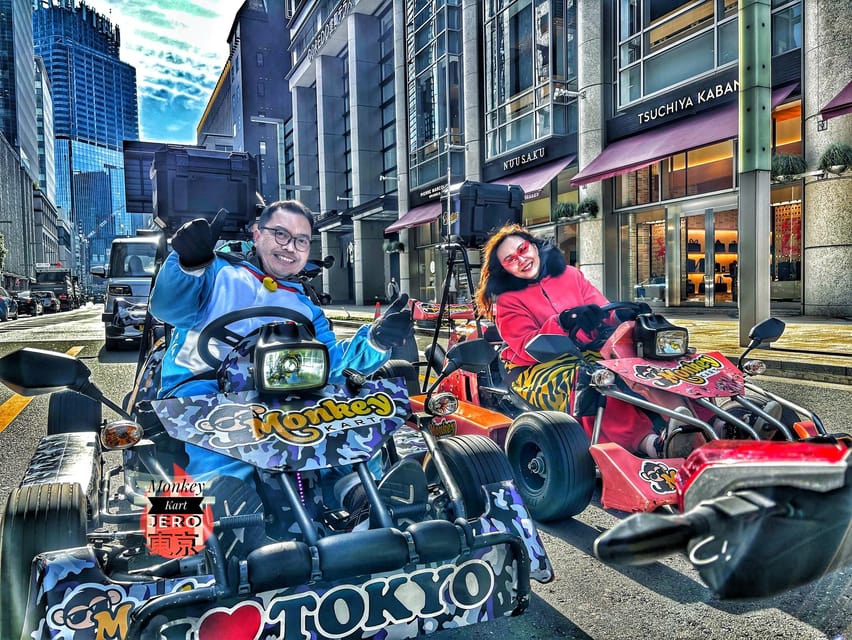
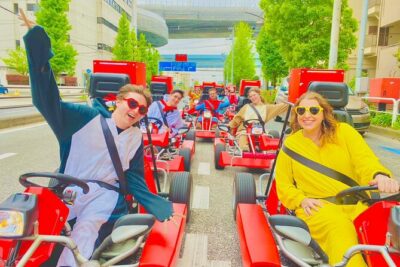
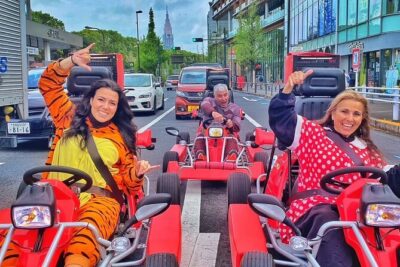
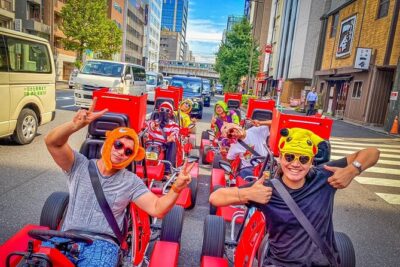
Before departure, you can choose from the available costumes. This is optional, but it changes the mood of the outing. A costume makes the photographs more playful and turns an ordinary traffic stop into a small piece of street theater.
You should check the fit before setting off. The activity is not suitable for people over 180 centimeters tall or over 150 kilograms, and it is not suitable during pregnancy. Those limits are worth checking before you pay, since they may affect both comfort and participation.
Once everyone is ready, the guide leads the group onto the road. You do not need to worry about finding the route. Your job is to drive safely, maintain your position, and enjoy the unusual view.
A kart gives you a different sense of scale. Buildings feel taller, passing vehicles feel closer, and pedestrians are at eye level. People may wave or give a thumbs-up, which adds to the fun, though you should not treat public attention as the main attraction.
Asakusa: Tokyo’s old streets from a new angle
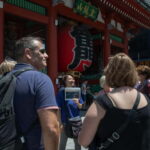
Asakusa brings a useful change of pace. This district is associated with traditional Tokyo, and the route lets you see that older character while sitting in a very modern little vehicle.
The tour passes through the area rather than offering a long temple visit. That makes it best for seeing the district’s streets and atmosphere, not for studying every detail of Senso-ji or shopping through the lanes around it.
I like this part because the contrast is so strong. You may be dressed as a favorite character, driving a low kart, and then looking up at streets shaped by older Tokyo traditions. It is a good reminder that the city is not just neon and giant screens.
Your guide may identify key points as you go. The experience is guided, but the main focus remains the drive. If Asakusa is a top priority for temples and history, give it a separate visit on foot. This tour gives you a quick, memorable look rather than a detailed introduction.
Tokyo Skytree: the big visual landmark
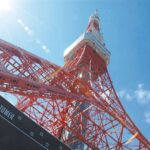
The route includes Tokyo Skytree Town and a photo stop near the tower. The Skytree is hard to miss, but seeing it from a street-level kart gives you a different frame than the usual observation-deck visit.
The tower’s scale works especially well for photographs. Your guide can position the group and take pictures while you remain in costume beside or inside the kart. A hard-copy photo is included, along with the digital images shared after the ride.
Do not expect this activity to include a ticket to the Skytree observation decks. The itinerary describes sightseeing, passing by, and a photo stop. If you want panoramic views from high above Tokyo, that is a separate plan.
Timing can make a noticeable difference. Several people liked the late afternoon, around 4 p.m., because the city shifted from daylight toward evening lights. Sunset is listed as a possible part of the experience, but exact conditions depend on the season, weather, and starting time.
A few more Tokyo tours and experiences worth a look


Akihabara and the city after dark
Akihabara is the most playful section of the route. Known for electronics, anime, manga, games, and elaborate signs, it gives the outing its strongest pop-culture flavor.
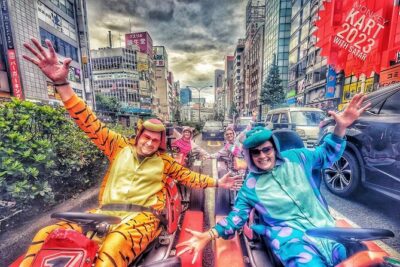
Driving through the district in costume can feel intentionally silly, which is exactly the point. You are not simply looking at the streets. You are part of the passing scene, while your guide keeps the group moving and watches the traffic.
The evening option is worth considering if your schedule allows it. At night, shop signs and city lights change the look of the route, and several people preferred the night ride to the morning version. A daytime tour offers clearer views and may feel less chilly, while an evening tour gives you more lights and atmosphere.
The tour title highlights Asakusa, Skytree, and Akihabara. Some comments describe routes that included other Tokyo areas, including Shibuya, but do not assume Shibuya Crossing is part of this specific booking. Confirm the route when you reserve if seeing a particular district is essential.
Photos, cameras, and the souvenir value
The photo service is one of the strongest practical benefits. You do not need to hold up your phone while driving or ask strangers to take pictures. Guides stop at useful points and photograph the group, the costumes, and the city around you.
The digital pictures are shared through AirDrop or email after you return. One hard-copy photo is also included. An action-camera or Insta360 mount is listed, and one participant specifically recommended using the GoPro option if available, while reminding you to check that the camera is fully charged.
This is a good setup for couples and groups. You can enjoy the activity together and still come home with pictures showing everyone, instead of ending up with one person missing from every frame.
The quality of the photos depends on the guide, light, traffic, and timing. Still, the repeated praise for guides such as Julian, Jerome, Ken, and Adam points to a real strength: staff understand that the photographs are part of the product, not an afterthought.
Is $96 a fair price?
At $96 per person, this is not a cheap way to get from one Tokyo district to another. Public transport costs far less, and walking gives you more time at each sight.
The price makes more sense if you value the combination of services: a 70-minute guided drive, use of the kart, costume access, water, photography, a hard-copy photo, and the small-group format. You are paying for an activity with staff, equipment, road preparation, and a built-in photo service, not just transportation.
I would compare it with other paid Tokyo experiences rather than with a train ticket. For a first visit, it can be a memorable break from temples, department stores, and observation decks. For a family group, couple, or birthday outing, the costume and photo elements add real value.
The tour is less convincing if you want detailed sightseeing or maximum time at each landmark. In that case, spend the $96 on several walks, meals, and a separate attraction. The go-kart tour is about the feeling of the ride and the unusual pictures.
Who should book it?
You should consider this tour if you enjoy hands-on activities, do not mind public attention, and want a playful way to see Tokyo. It suits first-time visitors, returning visitors looking for something different, couples, friends, and family groups with eligible drivers.
It is also a good choice if you feel nervous but can drive legally and follow instructions. Several people began anxious and felt comfortable after the briefing and the guide’s help. That said, you must be willing to drive in city traffic. If that idea makes you very uncomfortable, no amount of costume fun will change the basic nature of the activity.
Check the height, weight, pregnancy, and age rules before booking. Drivers must be over 18. Most important, check your documents before your trip, not at the airport and not at the meeting point.
Japan requires a hard-copy paper booklet IDP issued under the 1949 Geneva Convention by an official agency in your country. A 1968 Vienna Convention permit, FIA, IDA, or IAA permit is not recognized. Online and soft copies are not valid.
Drivers from France, Switzerland, Taiwan, Germany, Monaco, and Belgium need a Japanese translation of their local license, obtained through the Japan Automobile Federation. Driving permits from Indonesia, Pakistan, Saudi Arabia, Mexico, Brazil, Costa Rica, Colombia, Kuwait, Qatar, and some other countries may not be accepted. Check your exact situation with the operator and the official agency before booking.
Weather, timing, and small practical choices
Rain may cause the tour to be rescheduled. Since the karts are open, this is not a minor detail. Keep some flexibility in your Tokyo schedule, especially if the tour is a highlight of your trip.
Arriving early matters. You are asked to be there 20 minutes before departure, and cutting it close could leave you rushed during the safety briefing or costume selection.
For the best mix of daylight and city lights, look at late-afternoon starting times. A morning ride can be pleasant and may fit better with a full sightseeing day, but the evening route gives you illuminated streets and a stronger night-time mood.
Free cancellation is available up to 24 hours in advance for a full refund, and you can reserve now while paying later. Those terms help if rain or a change in your schedule is a concern.
My verdict: fun, unusual, and document-sensitive
I would book this if I wanted one highly visual, slightly goofy Tokyo memory. The route covers three recognizable parts of the city, the group stays small, and the guide handles the photos so you can focus on driving.
I would not book it without first confirming my license paperwork. That is the make-or-break issue. If your documents are correct, you meet the physical requirements, and you like the idea of cruising through Tokyo in costume, $96 buys a distinctive 70-minute experience that a normal city tour cannot copy.
FAQ
Where does the Tokyo go-kart tour start?
It starts at 4-chōme-9-9 Yokokawa, about a seven-minute walk from Oshiage Station.
How long does the activity last?
The tour lasts 70 minutes.
Which Tokyo areas does the route include?
The experience includes Asakusa, Tokyo Skytree Town, and the Akihabara area.
Is Tokyo Skytree entry included?
No Skytree observation-deck admission is listed. The experience includes sightseeing and a photo stop around Tokyo Skytree Town.
Is a guide included?
Yes. An English-speaking live guide leads the tour.
How many people are in each group?
The group is limited to eight participants.
What driving document do I need?
You need a hard-copy paper booklet of a 1949 Geneva Convention International Driving Permit issued by an official agency in your country, or another license and translation approved under Japanese regulations.
Can I use a digital copy of my international permit?
No. Online and soft copies are not valid for this activity.
Are costumes and photos included?
Yes. A costume, a photoshoot, digital photo sharing by AirDrop or email, and one hard-copy photo are included.
Can the tour be canceled because of weather?
Yes. The tour may be rescheduled due to rain. You can also cancel up to 24 hours in advance for a full refund.
More Go-Kart Tours in Tokyo
More Akihabara & Anime Tours in Tokyo
More Asakusa Tours in Tokyo
More tours in Tokyo we've reviewed











Go-Karts, compared.
 ★ 5.0Flagship 2-Hours Official Street Go-Kart Tour – Tokyo Bay ShopFrom $642 hours to 2 hours 30 minutes (approx.)
 ★ 5.0Official Street Go-Kart in ShibuyaFrom $76
 ★ 5.0Official Street Go-Kart Tour – AkihabaraFrom $61
 ★ 5.0Tokyo Go Kart: Asakusa, Skytree, and Akihabara **IDP MUST**From $99
 ★ 5.0Shibuya Official Street Go-Kart in Shibuya AnnexFrom $69
 ★ 4.7Tokyo: Premium Go-Kart Tour with Tower & Shibuya CrossingFrom $11675 - 105 minutes