
Reviewed · 2-HOUR EXPERIENCES
Tokyo: 2-Hour Night E-Bike Tour of the City’s Hidden Gems
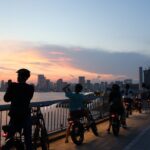
Tokyo after dark makes the most sense from a bicycle. You move past Shibuya Crossing, Tokyo Tower, and the Imperial Palace without spending the evening underground or wearing out your feet. This private two-hour ride links famous sights with quieter streets, and your guide sets the pace for your own group.
I like the point-to-point route, which begins in Shibuya and ends at Tokyo Station. I also like the personal touch: guides such as Kei and K have been praised for friendly explanations, city tips, and a knack for making the ride feel easy even if you are not used to much exercise. The main catch is time. Two hours covers a lot, but most stops are brief photo and explanation breaks rather than full visits.
In This Review
- Key points to know before booking
- Why an evening bike ride works so well in Tokyo
- Starting in Shibuya at 6 p.m.
- Shibuya Crossing and Harajuku
- Japan National Stadium and Aoyama Cemetery
- Roppongi Hills after dark
- Tokyo Tower and Zojo-ji
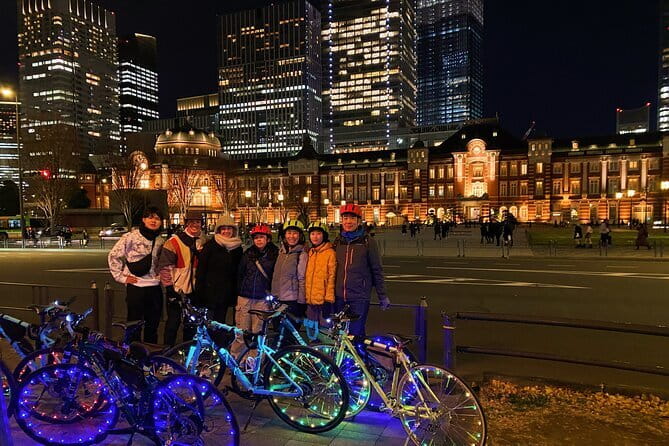
- The Imperial Palace and Tokyo Station
- What the private format adds
- Weather, fitness, and the real pace
- English and Japanese guidance
- Who should book this Tokyo ride?
- Final verdict: a smart overview for active visitors
- FAQ
- What time does the Tokyo night e-bike tour start?
- Where does the tour begin?
- Where does the tour end?
- Is the tour private?
- Are bicycles and safety items included?
- What happens if bad weather cancels the tour?
Key points to know before booking
- Private evening ride: Only your group participates, so the guide can adjust the pace and commentary to your interests.
- Shibuya to Tokyo Station route: The ride finishes near major rail connections, making it simple to continue your night.
- Nine major Tokyo sights: Expect Shibuya Crossing, Harajuku, Japan National Stadium, Aoyama Cemetery, Roppongi Hills, Tokyo Tower, Zojo-ji, the Imperial Palace, and Tokyo Station.
- Equipment included: You receive a bicycle, bike insurance, and a small pouch for your phone, wallet, or keys.
- Weather matters: A raincoat is supplied on rainy days, but the tour may be canceled for poor weather.
- Moderate fitness needed: You need to pedal between stops and manage a two-hour outing on a bike.
Why an evening bike ride works so well in Tokyo
Tokyo is huge, and its best-known districts are spread across a wide part of the city. On foot, you can spend much of an evening simply getting from one neighborhood to the next. By train, you cover the distance quickly but miss the connections between places.
This tour gives you a useful middle ground. You see the streets between the headline sights, then stop for short visits and explanations. At night, Tokyo’s signs, towers, avenues, and station fronts take on a different character than they have in daylight.
The route is also private rather than shared with strangers. That matters if your group has different cycling speeds or wants to ask questions. Guide K, for example, has been described as accommodating and able to make a physically active outing feel more joyful. Guide Kei has also been singled out for combining city facts with a pleasant evening ride.
The tour starts at 6 p.m. at the Bell of Peace in Udagawacho, Shibuya. The exact end is Tokyo Station, not the starting point, so plan your evening around that one-way route. This is helpful if you want dinner or a train afterward, but less convenient if you have left luggage or need to return to a hotel in western Tokyo.
A few more Tokyo tours and experiences worth a look



Starting in Shibuya at 6 p.m.
The meeting point puts you near one of Tokyo’s most energetic districts. From here, you begin with the city already moving into its evening rhythm. The start time is well chosen for visitors who want a sightseeing activity after a day of museums, shopping, or a morning excursion.
You will receive the bicycle and the small bike pouch included in the price. The pouch is a practical detail, since you can keep a phone, wallet, or key close at hand without stuffing everything into a backpack. Bike insurance is included as well.
You should arrive ready to ride, not dressed for a formal dinner. The tour calls for a moderate level of physical fitness, and the two-hour duration includes the time spent traveling between stops. You are not cycling for two hours without pauses, but this is still an active outing.
Shibuya Crossing and Harajuku
The ride through Shibuya Crossing gives you one of Tokyo’s great city scenes from an unusual angle. You are not simply walking across with the crowd. You are seeing the crossing as part of the street network, then continuing by bicycle into the surrounding district.
The listed stop lasts about five minutes, so keep your expectations sensible. This is a quick look and a chance to hear context from your guide, not a long photo session or a visit to a building. If you want extensive time among Shibuya’s shops, you will need to return on your own.
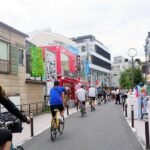
Next comes Harajuku, where the route passes streets lined with high-end fashion stores and vintage shops. That contrast is one reason the bicycle works well here. You can move from major commercial streets to nearby areas without treating every district as a separate train trip.
Again, the stop is about five minutes. I would think of Harajuku here as a passing portrait rather than a shopping stop. If you want to browse vintage clothing or spend time around the area’s food and fashion, save that for another part of your itinerary.
Japan National Stadium and Aoyama Cemetery
The Japan National Stadium is scheduled for a roughly 10-minute stop. It is connected with the 2020 Tokyo Games and gives the route a modern sports landmark alongside the older temples and palace grounds later in the evening.
The value here is the change of subject. Tokyo is not presented only as neon streets and old religious sites. You also see a major contemporary venue and the city’s large-scale public architecture. Your guide’s commentary can help tie the stop to Tokyo’s recent history.
Aoyama Cemetery offers a quieter change of pace. The route passes through one of Japan’s prestigious cemeteries for about 10 minutes. This is not a standard first-day sightseeing stop, which makes it useful for anyone who wants to see a less commercial side of central Tokyo.
You should also know that a cemetery is a place for respectful observation, not casual noise or rushed group behavior. The short pause lets you experience the calm of the area without turning the visit into a formal tour of graves.
Roppongi Hills after dark
Roppongi Hills receives about 15 minutes, the longest scheduled stop on the route. The district is known for luxury shopping, major art museums, expensive restaurants, and polished modern development.
At night, the area helps show Tokyo’s upscale side. You will not have time to visit an art museum or sit down for a Michelin-starred meal, and food and drinks are not included. The stop is better understood as a quick look at one of the city’s most high-end quarters.
This is a good place to ask your guide for advice about returning later. One of the most useful parts of a private tour is being able to request practical suggestions, and guide K has specifically been praised for recommending places to visit during a stay. You may find the advice more valuable than a long prepared speech.
Other cycling tours in Tokyo
Tokyo Tower and Zojo-ji
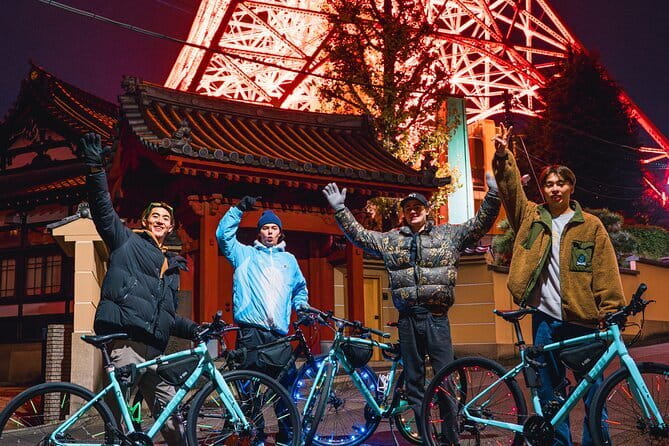
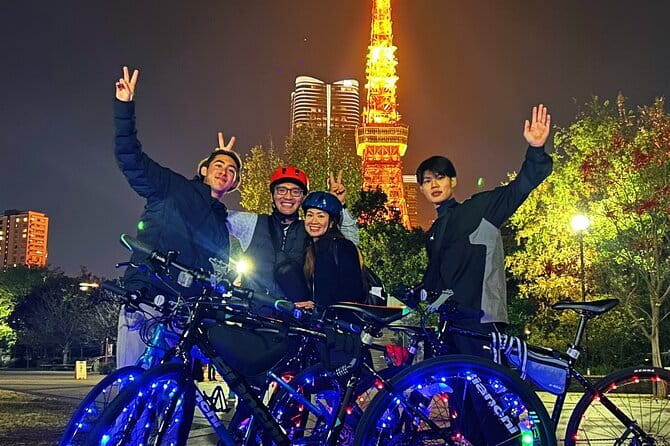
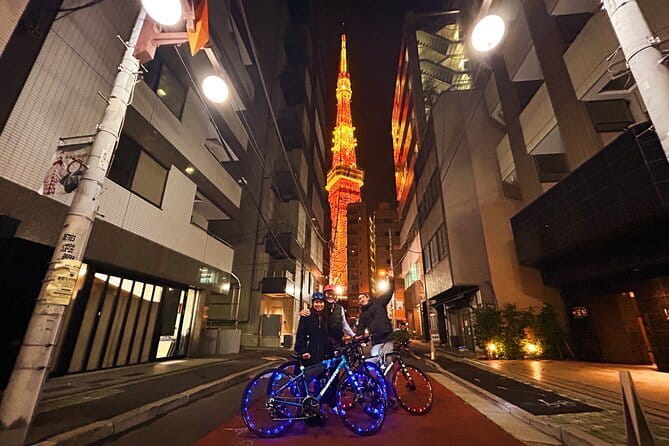
The route then brings you to Tokyo Tower, one of the clearest visual symbols of the city. The tower is a self-supported steel structure and is slightly taller than its Paris model, the Eiffel Tower. It also carries a postwar meaning, linked with Japan’s return as a major economic power.
The information describes this as a closer view, so expect a strong photo opportunity rather than a tower admission visit. No ticket entry is listed, and the two-hour schedule does not leave room for going up the tower.
Nearby Zojo-ji gives you a very different view of Tokyo. The temple is a major religious center and a resting place connected with Japanese warlords. Its position beside Tokyo Tower creates one of the city’s most memorable pairings: a traditional Buddhist temple below a bright modern tower.
The stop is about five minutes. That is short, but the combination is worth seeing even briefly. If you want a long temple visit, quiet reflection, or detailed attention to the grounds, plan another visit in daylight.
The Imperial Palace and Tokyo Station
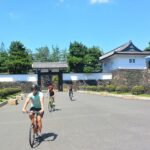
The ride along the Imperial Palace takes about 10 minutes. You see the area where the Japanese emperor resides, with the route offering a look at the palace setting rather than a guided interior visit.
This stop works well late in the route because it shifts the mood again. After Shibuya, Harajuku, Roppongi, and Tokyo Tower, the palace area gives you broader avenues and a more formal central Tokyo setting. You are still moving through the city, but the surroundings feel less like a shopping district.
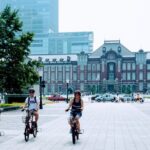
The final stop is Tokyo Station, where the tour ends after about five minutes. The station is one of Tokyo’s most recognizable transport centers, and its Marunouchi location puts you in a useful place for the rest of your evening.
Ending here is one of the tour’s practical strengths. You can take a train back to your hotel with ease, meet friends for dinner, or continue exploring around Marunouchi. Since the tour is one way, you do not waste time cycling back to Shibuya.
What the private format adds
A private tour costs $147.80 per person, so the value depends heavily on your group size and your priorities. For a solo traveler or couple, this is not a cheap way to rent a bicycle for two hours. You are paying for the guide, route planning, equipment, commentary, insurance, and the ability to keep the experience limited to your own group.
For a larger private group, group discounts can make the price easier to justify. You also avoid the stop-and-go pattern of a large shared tour. If one person wants a slower pace or your group has questions about a neighborhood, the guide can respond without managing a busload of people.
The tour is booked, on average, 43 days ahead. That suggests you should reserve early if the 6 p.m. time fits an important evening in your Tokyo plans. Free cancellation is available until 24 hours before the start time. Inside that window, the payment is not refunded, so do not treat the booking as a loose placeholder.
Weather, fitness, and the real pace
This experience needs good weather. A raincoat is provided on rainy days, but poor conditions can still lead to cancellation. If the operator cancels, you are offered another date or a full refund.
That policy is fair for a bicycle tour, since wet roads and poor visibility can affect both comfort and safety. I would avoid placing this ride on the only evening you have available if the forecast looks doubtful.
You should be comfortable riding for a moderate period and handling city streets. The tour does not promise a hard workout, but it is not a sightseeing bus with a few steps at each stop. The guide leads you between locations, and the total two hours includes that travel time.
The private format helps, but it does not remove the need to ride. If you are worried about cycling, tell the provider before booking so you can confirm that the activity suits you.
English and Japanese guidance
In-person guiding is available in English and Japanese. That is important because the value of the tour rests partly on the commentary between stops. A bicycle route can otherwise become a simple transfer from one photo point to the next.
The strongest guide feedback centers on friendliness, clear information, and useful suggestions for the rest of a Tokyo stay. K has been praised for being accommodating, while Kei has been noted for sharing facts throughout the route. Those details point to the kind of guide interaction you should expect: practical city context, basic history, and help shaping your remaining plans.
Still, the tour cannot explain every district in depth within two hours. You will get a broad introduction rather than a specialist lecture on architecture, temples, or Japanese politics.
Who should book this Tokyo ride?
I would recommend it most to first-time Tokyo visitors who want to connect several famous areas in one evening. It is also a good match for couples, families with older children, and small private groups who prefer movement to a long walking tour.
You will get the most from it if you:
- Want a quick orientation to central Tokyo
- Like seeing neighborhoods from street level
- Prefer a private guide to a large group
- Have moderate fitness and are comfortable on a bicycle
- Want to end near Tokyo Station
- Enjoy asking for restaurant and sightseeing suggestions
I would think twice if you want long visits at each attraction, extensive shopping time, a museum entry, or a relaxed meal. You should also reconsider if rain is likely, if you dislike cycling in an urban setting, or if your evening plans require you to return to Shibuya.
The 4.9 rating from 17 reviews and 100 percent recommendation figure point to a consistently well-received small-group experience, but the sample is not large. The most praised qualities are the guides’ friendly manner, useful city information, and ability to make the ride memorable rather than strenuous.
Final verdict: a smart overview for active visitors
Book this tour if you want to see Tokyo’s major districts in a short window and you value a personal guide. The route gives you a pleasing mix of neon streets, fashion areas, modern sports architecture, a cemetery, luxury development, Tokyo Tower, a historic temple, the Imperial Palace, and Tokyo Station.
Do not book it expecting deep visits or plenty of free time. Think of it as a moving introduction to Tokyo, with a well-planned route and a friendly guide who can help you decide where to return later.
For many visitors, the best reason to book is the combination of private guiding and one-way efficiency. You start in Shibuya, finish at Tokyo Station, and spend the evening seeing how the pieces of central Tokyo fit together.
FAQ
What time does the Tokyo night e-bike tour start?
The tour starts at 6 p.m.
Where does the tour begin?
It begins at the Bell of Peace, 1 Udagawacho, Shibuya, Tokyo 150-0042, Japan.
Where does the tour end?
The tour ends at Tokyo Station, 1 Chome-9 Marunouchi, Chiyoda City, Tokyo 100-0005, Japan.
Is the tour private?
Yes. Only your group participates in the activity.
Are bicycles and safety items included?
Yes. Bicycle use, bike insurance, and a small bike pouch for items such as a phone, wallet, or key are included. A raincoat is provided on rainy days.
What happens if bad weather cancels the tour?
You will be offered a different date or a full refund if the experience is canceled because of poor weather.
More City Tours in Tokyo



More Cycling Tours in Tokyo
More Night Tours in Tokyo
More tours in Tokyo we've reviewed



2-Hour Experiences, compared.
 ★ 5.0Ninja Samurai 2-hour hands-on lesson by Japanese master in TokyoFrom $86
 ★ 5.0Tokyo 2-Hour Genuine Samurai Experience: Kendo in JapanFrom $118
 ★ 4.9Tokyo: Flagship 2-Hour Street Go-Kart Tour by Street KartFrom $642 hours
 ★ 4.9Tokyo: Shinjuku Izakaya and Golden Gai Bar Hopping Tour (2h)From $962 hours
 ★ 4.8Tokyo: 2-Hour Vegan and Vegetarian Ramen Guided Walking TourFrom $962 hours
 ★ 5.0Asakusa: 2-hour history explorationFrom $64