
Reviewed · GO-KARTS
Tokyo: Flagship 2-Hour Street Go-Kart Tour by Street Kart
Tokyo has plenty of ways to see the city, but few put you behind the wheel on public streets. This two-hour Street Kart tour takes you across Rainbow Bridge and toward Tokyo Tower, with the city lights, traffic, and open road forming the backdrop to your ride.
I like the generous driving time and the careful lead guides, who explain the karts, keep the group together, and rotate the front position. I also like the included costume choice and photo service. The main catch is simple: you need the correct Japanese driving documents, and driving in traffic takes more focus than sightseeing.
In This Review
- Key points at a glance
- What this Tokyo Bay go-kart tour is really like
- Starting at the Street Kart Tokyo Bay warehouse
- Costumes, helmets, goggles, and the first safety briefing
- Following the guide through Tokyo traffic
- Crossing Rainbow Bridge by go-kart
- The run toward Tokyo Tower
- Photos are included, while video costs extra
- Is $64 a fair price for two hours?
- Who should book, and who should skip it?
- My call: book it if the driving is the point
- FAQ
- Do I need an International Driving Permit?
- Are there exceptions to the IDP requirement?
- What does the $64 price include?
- Can I use my cellphone during the tour?
- Can people under 18 join the tour?
- What shoes and clothing should I wear?
Key points at a glance
- Rainbow Bridge is the main thrill: You cross the bridge by go-kart, with a second pass possible on some tours.
- You drive for more than an hour: The full two-hour outing includes check-in and preparation, but the actual driving time is still substantial.
- Guides take the safety job seriously: Kinna, Riley, Alexis, Mel, Reece, Johnny, Bryan, and others have been praised for clear signals and steady convoy control.
- Costumes are part of the fun: Choose an action character outfit before setting off, but bring practical clothing underneath.
- Photos are included: Your guide takes pictures during the ride and provides the data afterward.
- Your license paperwork matters: Most drivers need a physical 1949 Geneva Convention IDP, plus a physical passport.
What this Tokyo Bay go-kart tour is really like
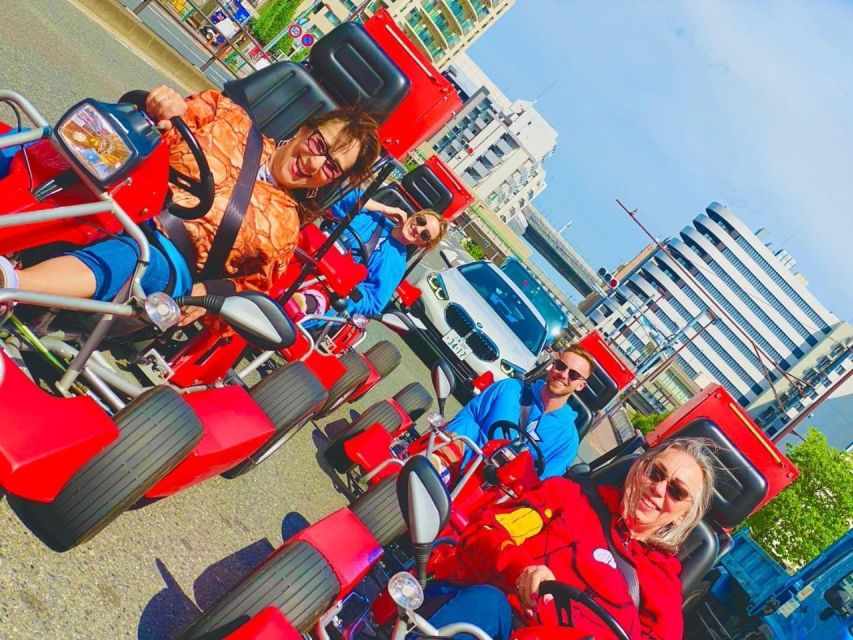
This is not a closed karting track with plastic barriers and short laps. You drive a small go-kart on Tokyo’s public roads, following a trained English-speaking guide through the Tokyo Bay area and onward toward Tokyo Tower.
That difference shapes the whole experience. You need to watch traffic, follow hand signals, keep your place in formation, and operate the kart properly. You also get something a normal sightseeing bus cannot provide: the sensation of moving through Tokyo under your own power.
The two-hour format is a good choice for this kind of activity. A shorter ride could feel rushed, especially if you are learning the kart and getting used to driving in Japan. Several riders found that the tour provided more than an hour of driving, which gave them time to relax after the nervous first stretch.
You should not expect to spend the ride quietly admiring every building. Your attention belongs on the road. The views come in between driving tasks, particularly on Rainbow Bridge, where the open route and city lights make the ride feel much bigger than a standard amusement ride.
A few more Tokyo tours and experiences worth a look
Starting at the Street Kart Tokyo Bay warehouse
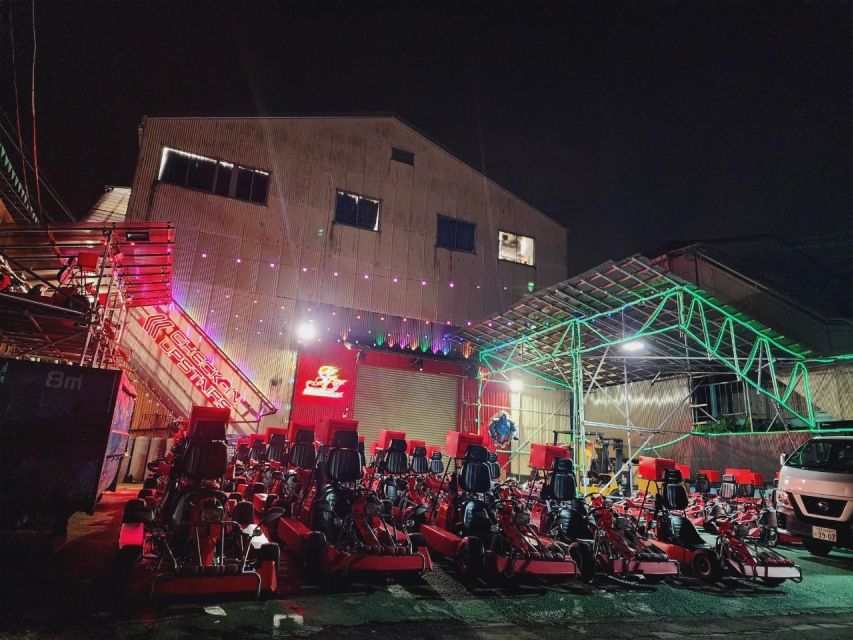
The meeting point is Street Kart Tokyo Bay, a warehouse with go-karts parked out front. Look for the exterior stairs and go upstairs for check-in.
The setting is practical rather than scenic. This is a working warehouse area, not a polished attraction with a big visitor center. That matters if you arrive with a friend who is not driving. The site does not offer a waiting arrangement for nonparticipants, so someone who comes along may need to spend the two hours elsewhere.
Allow time to arrive with all required documents. Street Kart emails booking guidance about the paperwork, but you remain responsible for obtaining and carrying the right items. You must have your physical driving permit or license documents and your physical passport with you.
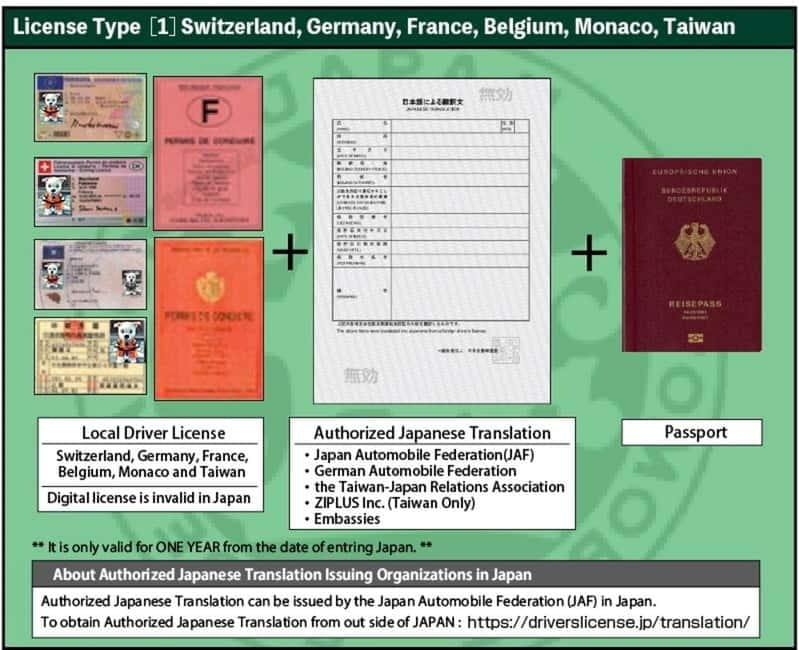
For most countries, that means an International Driving Permit issued in the booklet format under the 1949 Geneva Convention. It must be issued by the same country as your domestic license, and you cannot obtain a valid one online while already traveling.
Drivers with licenses from Switzerland, Germany, France, Taiwan, Belgium, or Monaco need a Japanese translation from the Japan Automobile Federation instead of an IDP. You must carry the physical domestic license and official translation. Licenses from countries not covered by the 1949 Geneva Convention, including China, Indonesia, Mexico, Qatar, and Saudi Arabia, are not accepted for driving in Japan.
This is the most important booking detail. Do not treat the paperwork as a minor technicality. Without the correct documents, you cannot drive.
Costumes, helmets, goggles, and the first safety briefing
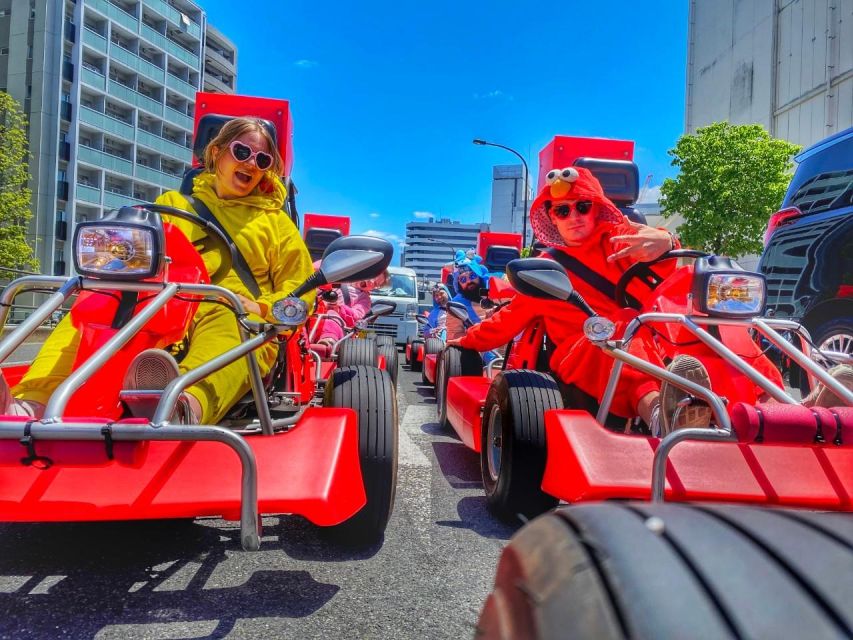
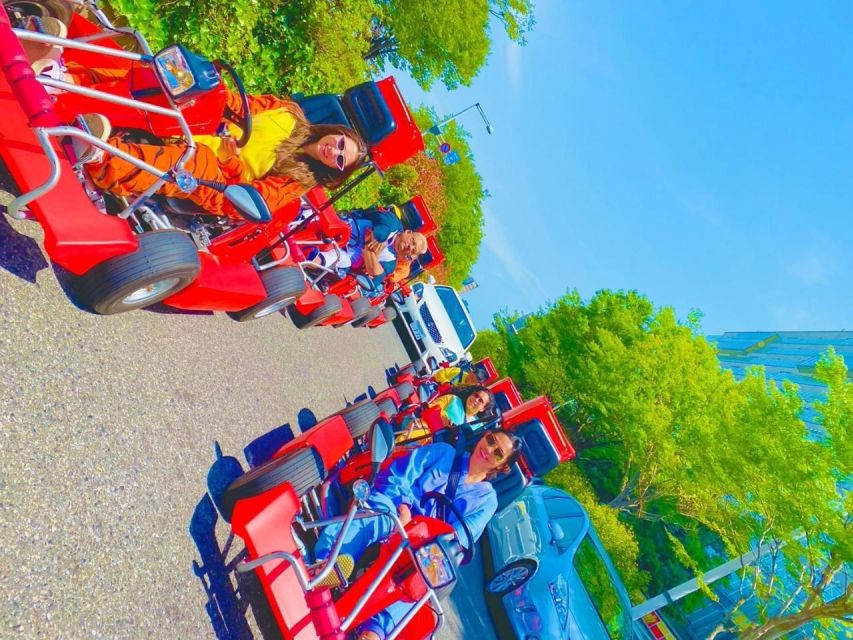
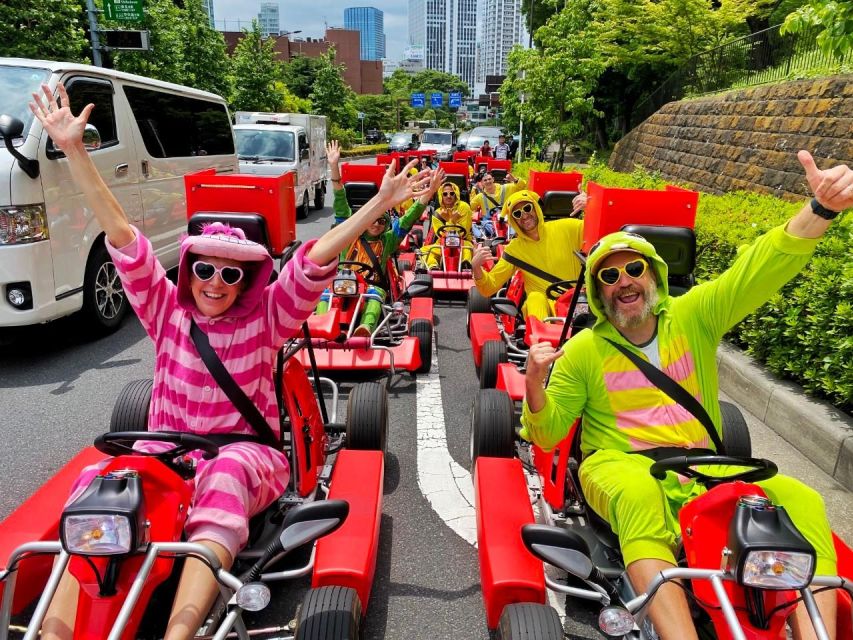
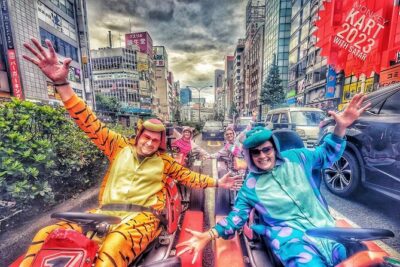
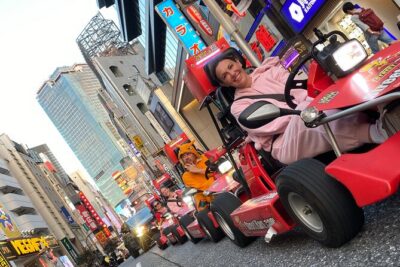
After check-in, you choose a costume based on an action character or other popular figure. It adds a playful edge to an activity that already attracts attention on the road.
The costume is optional in spirit, but it is central to the experience’s look. If you plan to use the included photos for social media or personal memories, the outfit gives the pictures a clear Tokyo go-kart feel. Choose something that fits comfortably over what you are already wearing.
The center provides karts, gasoline, costumes, goggles, and raincoats for rainy weather. In winter, staff may have spare gloves, glasses, and heat packs available, according to one cold-weather experience. In summer, avoid cotton shorts. Sitting in a leather kart seat for two hours can become very hot and uncomfortable.
You cannot wear high heels or open-toed shoes. Leave alcohol and drugs out of the plan, and do not use your cellphone during the activity. Those restrictions are sensible on a public-road tour, but you should know them before arriving.
The guide explains how the kart works and what to expect on city streets. This is where the tour earns much of its value. If you have not driven in Japan before, the briefing helps you understand the controls before you join traffic.
One small equipment issue deserves attention. A rider found the supplied goggles cloudy and scratched, making them hard to use. If protecting your eyes is important to you, consider bringing suitable personal goggles, as long as they are allowed by the staff. The tour does supply goggles, but their condition may vary.
Following the guide through Tokyo traffic
Once the group leaves the warehouse, the activity changes from costume play to real driving. You follow the guide in formation, keep a safe gap, and respond to signals.
The guides receive especially strong praise for this part of the job. Bryan was noted for looking back often, keeping the group aligned, and stopping at safe points for pictures. Alexis helped a driver who had not driven in a long time feel comfortable on busy streets. Kinna was also praised for building confidence before the group reached Rainbow Bridge.
That personal guidance matters more here than it would on a track. Tokyo traffic requires concentration, and you cannot simply follow the kart in front without thinking. The guide controls the pace and formation, but you still need to pay attention to lane position, signals, and surrounding vehicles.
The group rotates the lead position, giving each driver a turn at the front. This is useful for two reasons. You get a better chance at the best photo position, and you avoid spending the entire ride behind kart exhaust and traffic fumes.
Night tours bring extra atmosphere. Tokyo Tower may be lit, and the city glows around Rainbow Bridge. They also bring a small visibility concern. One rider suggested reflective gloves for guides so hand signals would be easier to see from the back at night. Pay close attention to the guide, especially if you are not near the front.
Crossing Rainbow Bridge by go-kart
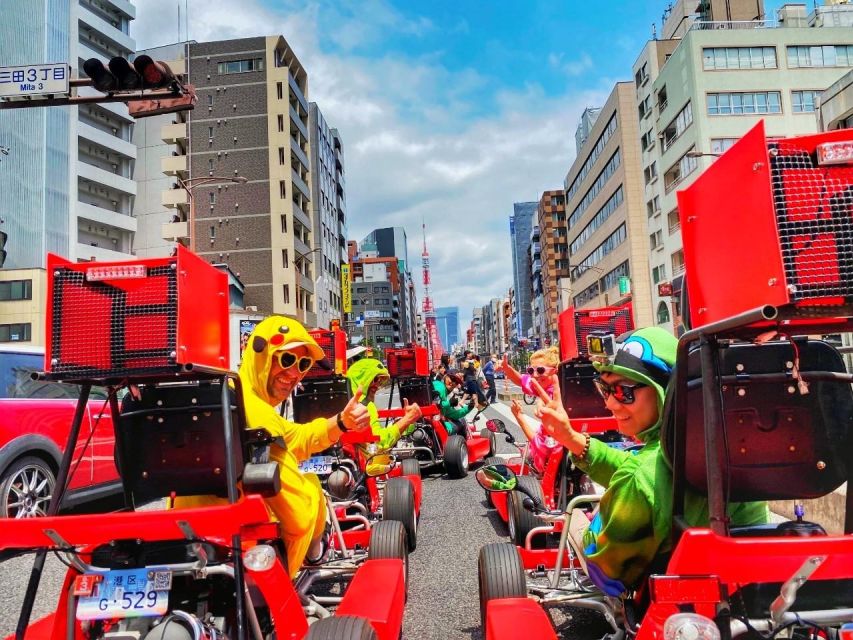
Rainbow Bridge is the heart of the route. The tour advertises the only go-kart course that goes across Rainbow Bridge and toward Tokyo Tower, making this section more than a novelty costume ride.
The crossing feels fast because you are exposed to the road and moving as part of a convoy. Riders describe it as exhilarating, and some tours cross the bridge twice. The second pass can feel quicker once you have settled into the kart and understand the route.
Do not expect to stop in the middle of the bridge for a long viewing session. You are driving, not standing at an observation deck. You may get a short chance to take in the skyline, but your eyes need to remain on the road.
This is why the ride suits people who want an active view of Tokyo. If you prefer a calm city panorama, book an observation deck instead. If you like the idea of seeing the skyline while handling a kart on the road, Rainbow Bridge delivers the tour’s strongest moment.
Traffic conditions can affect the feeling of this section. One ride found the bridge nearly empty, while other parts of the route involved normal city traffic. You should be ready for both open-road excitement and slower movement around vehicles.
A few more Tokyo tours and experiences worth a look
The run toward Tokyo Tower
After the bay area, the route continues toward Tokyo Tower, one of the city’s most recognizable symbols. Seeing the tower while driving gives the stop a different character from visiting its observation levels.
The route is about the journey as much as the destination. You are not signing up for a tower admission ticket or an extended visit inside the landmark. Instead, the guide brings the convoy through the city toward Tokyo Tower, where its shape and lighting become part of the ride and photo backdrop.
A night departure can be especially appealing here because the tower may be lit. Still, remember the tradeoff: you will catch views in motion rather than study them at leisure. If you want detailed architecture or skyline photos, plan a separate stop at Tokyo Tower or another viewpoint.
The best way to think of this portion is as a moving city portrait. You get the road, the tower, the surrounding traffic, and the sound and motion of the kart. That combination makes the experience memorable, but it is not a replacement for traditional sightseeing.
Photos are included, while video costs extra
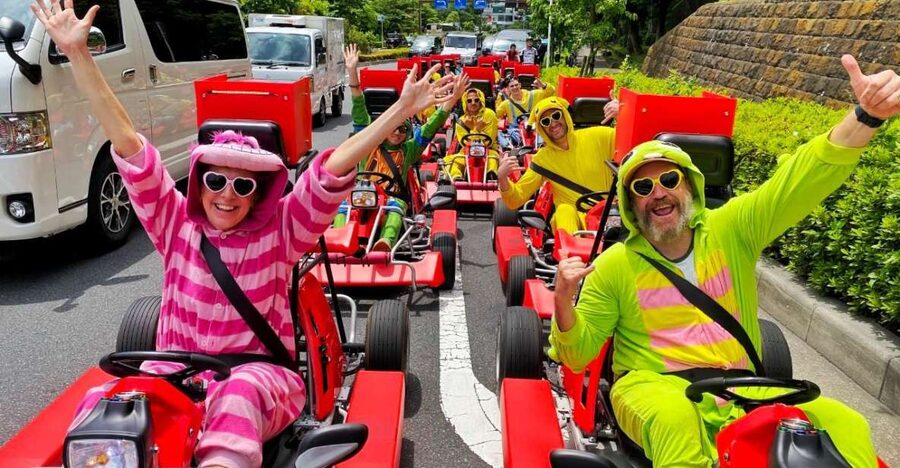
Your guide takes pictures throughout the tour and gives you the photo data afterward. Guides such as Bryan, Riley, Alexis, and Reece were praised for taking many pictures and giving each kart a turn at the front for better shots.
That service adds real value. You cannot safely hold a cellphone while driving, and the activity does not allow cellphone use. The guide can capture the moments you would otherwise miss, including the costume, convoy, bridge crossing, and Tokyo Tower views.
Some guides take a large number of images. One ride produced more than 80 pictures. The exact quantity will depend on the guide, group, route, and conditions, but you should receive a useful set of memories without needing to operate a camera yourself.
Video is different. An action camera rental costs extra, as does the Micro-SD card needed to save the footage. A camera mount for the head or chest also costs extra. You may be able to use your own GoPro with an approved mount, but you must follow the operator’s rules and cannot simply film with a cellphone.
I like the photo arrangement because it keeps your hands free and your attention on driving. If you know you want video, budget for the additional charges before arrival. Several riders wished they had footage of the bridge crossing after the tour, so decide early rather than relying on a last-minute purchase.
Is $64 a fair price for two hours?
At $64 per person, the tour sits in a reasonable range for a two-hour guided activity that includes the kart, gasoline, English-speaking guide, costume, goggles, raincoat if needed, and guide-taken photos.
The value is strongest if you want an unusual Tokyo experience rather than a simple transport option. Fuel is included, the guide handles group direction, and the photo service removes the need to buy a separate photographer. You are paying for access to a very specific kind of road experience, not just for time in a small vehicle.
The price does not include action-camera rental, a Micro-SD card, or a mounting device. Add those costs only if video matters to you. The standard tour still provides photos, so many people can enjoy the activity without extras.
The two-hour length also improves the value. You have time to learn the kart, settle your nerves, cross Rainbow Bridge, head toward Tokyo Tower, and get several photo opportunities. If you are nervous at first, that extra time can change the whole experience.
Who should book, and who should skip it?
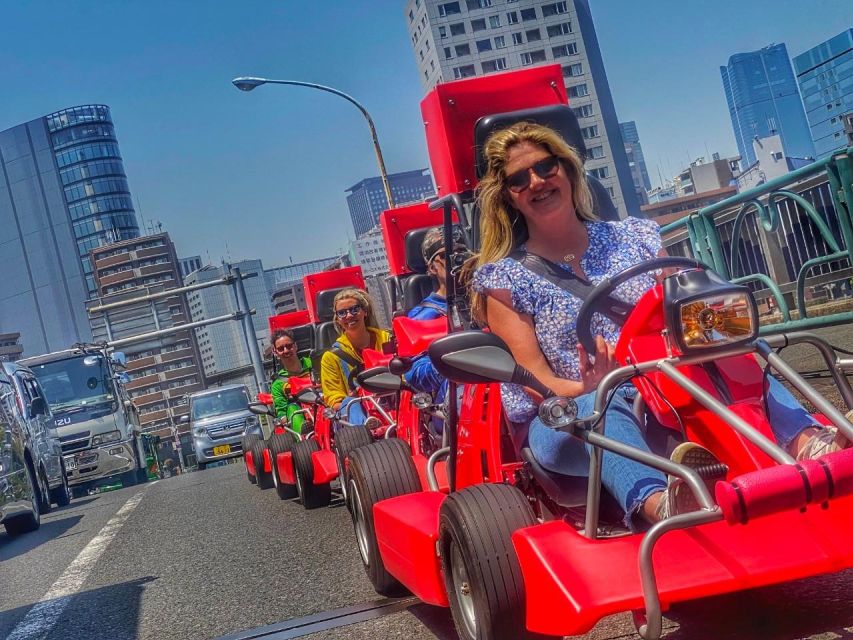
You should book this if you hold the correct driving documents, enjoy active sightseeing, and feel comfortable operating a vehicle in traffic. It suits adults who want something more playful and hands-on than a standard Tokyo tour.
It also works well for friends, couples, and families with adult children. Children under 18 cannot participate, so this is not a family activity for younger kids. The group is English-guided, which makes the safety instructions easier to follow for English speakers.
You should think twice if you have not driven for a long time or feel uneasy on public roads. Nervous drivers can become comfortable with the guide’s help, but the first half may feel intense. This is not an enclosed practice track.
The activity is not suitable for pregnant women, people with back problems, mobility impairments, wheelchair users, people with pre-existing medical conditions, or hearing-impaired people. The supplied information also advises against participation for anyone under 18.
Weather affects comfort, though raincoats are provided for rainy days. Dress for the season, choose closed, flat shoes, and avoid bulky or overly hot clothing. In winter, gloves and warm layers matter. In summer, avoid sitting in shorts that become uncomfortable against the seat.
Cancellation is free up to seven days before the tour for a full refund. Check the available starting times when booking, especially if you want a night ride for the lit-up bridge and tower.
My call: book it if the driving is the point
I recommend the Street Kart Tokyo Bay tour for the right kind of visitor: someone who wants to drive through Tokyo, not simply look at it. Rainbow Bridge, Tokyo Tower, costumes, and guide photos create a memorable package, and the safety focus gives the activity a firm foundation.
The tour is less appealing if you want relaxed sightseeing, dislike traffic, or cannot secure the required documents. You should also plan around the extra video fees, the outdoor warehouse meeting point, and the fact that nonparticipants may not have an indoor waiting area.
For most eligible drivers, $64 is fair for two hours of a highly unusual Tokyo outing. Bring the correct physical paperwork, wear sensible shoes, listen closely to the guide, and keep your eyes on the road. The best memories will come from the bridge and the city around you, not from trying to film while driving.
FAQ
Do I need an International Driving Permit?
Most participants need a physical International Driving Permit issued in the booklet format under the 1949 Geneva Convention. It must be issued by the same country that issued your domestic license, and it cannot be obtained online while traveling.
Are there exceptions to the IDP requirement?
Yes. Drivers with licenses from Switzerland, Germany, France, Taiwan, Belgium, or Monaco need a Japanese translation from the Japan Automobile Federation. They must carry their physical domestic license, official translation, and physical passport.
What does the $64 price include?
The price includes the go-kart, gasoline, English-speaking guide, costumes, goggles, a raincoat for rainy days, and photos taken by the guide. Action-camera rental, a Micro-SD card, and a camera mount cost extra.
Can I use my cellphone during the tour?
No. Cellphones are not allowed during the activity. Action cameras may be available for an additional rental fee, and you may also need to pay for a Micro-SD card and mounting device.
Can people under 18 join the tour?
No. The activity is not suitable for children under 18.
What shoes and clothing should I wear?
Do not wear high heels or open-toed shoes. Closed, practical footwear is required. Dress for the season, and avoid cotton shorts in summer because the kart seat can become very hot during the two-hour ride.
More 2-Hour Experiences in Tokyo
More Go-Kart Tours in Tokyo
More tours in Tokyo we've reviewed











Go-Karts, compared.
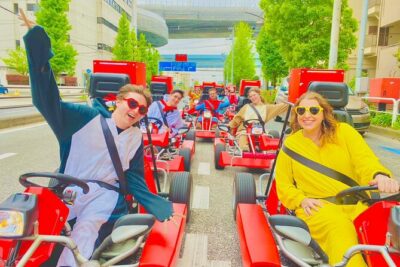 ★ 5.0Flagship 2-Hours Official Street Go-Kart Tour – Tokyo Bay ShopFrom $642 hours to 2 hours 30 minutes (approx.)
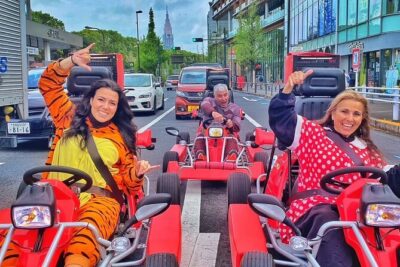 ★ 5.0Official Street Go-Kart in ShibuyaFrom $76
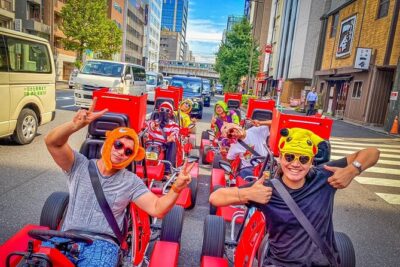 ★ 5.0Official Street Go-Kart Tour – AkihabaraFrom $61
 ★ 5.0Tokyo Go Kart: Asakusa, Skytree, and Akihabara **IDP MUST**From $99
 ★ 5.0Shibuya Official Street Go-Kart in Shibuya AnnexFrom $69
 ★ 4.7Tokyo: Asakusa, Skytree & Akhihabara Go-Kart City ExperienceFrom $961h 10m