
Reviewed · SHINJUKU TOURS
The Dark Side of Tokyo – Night Walking Tour Shinjuku Kabukicho
Tokyo’s dark side is not a single scary corner. It is a mix of old drinking alleys, giant neon signs, adult entertainment, tiny bars, shrines, hotels, and Japan’s largest LGBTQI district. This two-hour walk through Shinjuku and Kabukicho gives you the local context that signs and guidebooks rarely provide.
I like the small group size, capped at 12, and the way the tour helps first-time visitors get their bearings before heading out alone. I also like the practical range of stops: Omoide Yokocho, Godzilla Head, Golden Gai, a Shinto shrine, and the area often called Gay Town.
The main drawback is that food and drinks are not included, and the walk finishes around Shinjuku 3 Chome rather than returning to the police box near the East Exit. Rain and heavy crowds can also make it harder to keep the group together.
In This Review
- Key points about the Shinjuku night walk
- What this tour reveals about Shinjuku after dark
- Meeting the guide near Shinjuku East Exit
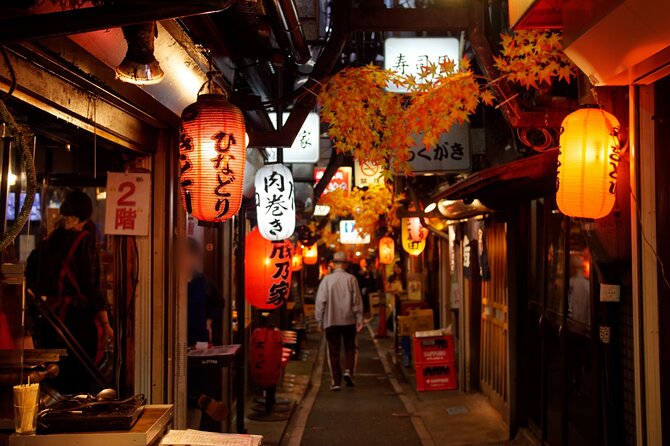
- Omoide Yokocho, where old Tokyo meets the present
- Kabukicho and the business of nightlife
- Godzilla Head and Kabukicho’s pop-culture landmark
- Golden Gai and the narrow bar district
- A Shinto shrine in the middle of nightlife
- Tokyo’s LGBTQI district, often called Gay Town
- How the two-hour pace feels
- Who gets the most from this tour
- Is $25 a fair price?
- Practical details before you book
- Should you book the Dark Side of Tokyo walk?
- FAQ
- Where does the tour start?
- Where does the tour finish?
- How long does the walking tour last?
- What neighborhoods are included?
- Is food included?
- What landmarks will I see?
- How large can the group be?
- Do I receive a paper ticket?
- Is the tour suitable for most people?
- What happens if bad weather cancels the tour?
Key points about the Shinjuku night walk
- Omoide Yokocho: See one of Tokyo’s best-known drinking alleys and learn how its compact bars and eateries fit into Shinjuku’s past and present.
- Kabukicho after dark: Walk through Tokyo’s biggest nightlife district with guidance on local customs, laws, and areas you may not want to enter alone.
- Adult-industry context: Guides explain how sex work and entertainment businesses operate within Japanese legal limits, without turning the walk into a sales pitch.
- A full mix of Shinjuku: The route includes neon streets, Godzilla Head, narrow bar lanes, a Shinto shrine, and the LGBTQI district.
- Guides with personality: Past tours have been led by Polina, Gray, Danny, Kumi, Loc, and Daniel, with special praise for their humor, clear English, and local insight.
- Useful first-night activity: At $25 per person, it is a reasonably priced orientation before you return to Shinjuku for dinner or drinks on your own.
What this tour reveals about Shinjuku after dark
Shinjuku is easy to visit and surprisingly easy to misunderstand. You can walk out of the station and see department stores, office towers, bright signs, and crowds moving in every direction. A few blocks later, the mood changes to narrow lanes, small bars, host clubs, love hotels, adult businesses, and restaurants with almost no English.
That shift is the heart of this tour. You are not simply walking past neon signs for photographs. Your guide explains what different parts of the district are used for, how the entertainment economy developed, and how to avoid wandering into a place that is not suited to you.
The word dark can sound more sinister than the tour actually is. This is not a ghost walk, crime tour, or invitation to seek out trouble. The focus is on nightlife, subculture, local rules, and the parts of Tokyo that are usually left out of a standard sightseeing route.
The tour is priced at $25 per person and lasts about two hours. That is good value if you want a clear introduction to Shinjuku and plan to spend more time in the area afterward. You are paying for the guide’s explanations and the confidence to explore, not for a meal or admission to clubs.
A few more Tokyo tours and experiences worth a look
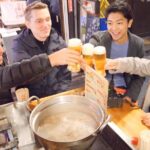
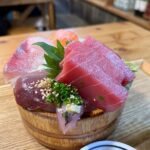
Meeting the guide near Shinjuku East Exit
The meeting point is the police box at Shinjuku Station’s East Exit, at 3 Chome 38 1 Shinjuku. In Japan, a police box is called a koban. It is a small neighborhood police station, not a telephone booth.
That distinction matters. One person had trouble finding the meeting point because they were looking for a phone box. If you use a map app, search for the stated police box or show the full address rather than simply asking for a telephone box.
The station area can feel confusing at night, so allow time to get out of the station and locate the correct exit. The mobile ticket makes check-in simple once you are in the right place. Since the group can include up to 12 people, look for the guide promptly rather than assuming the group will be easy to spot in the crowd.
Guides have included Polina, Gray, Danny, Kumi, Loc, and Daniel. The exact guide depends on the date, but the strongest pattern is clear: the best part of the walk is the person leading it. Polina has been praised for speaking clearly over street noise and for answering questions carefully. Gray has brought humor and an inclusive tone. Danny has been especially good at mixing jokes with useful facts and keeping the group on schedule.
Omoide Yokocho, where old Tokyo meets the present
One early stop is Omoide Yokocho, the famous drinking alley near Shinjuku Station. Its name is often translated as Memory Lane, though the atmosphere is less polished than that title might suggest.
The lane is narrow and packed with tiny establishments. It offers a close view of Tokyo’s small-scale drinking culture, where a handful of seats can make up an entire business. You get a much better sense of the place on foot than you would from a passing train or a large restaurant district.
Your guide adds the missing context. You may learn how the area developed, how these compact venues operate, and how local food and drink customs fit into a night in Shinjuku. Food is not included, so this is a viewing and learning stop unless you choose to return later and pay for your own meal.
That arrangement is worth noting. The tour gives you orientation, but it does not turn into a pub crawl. If you want dinner, plan to eat before or after the walk, or ask your guide for suggestions. Several guides have offered food and drink recommendations, which can be useful when menus are difficult to read.
Kabukicho and the business of nightlife
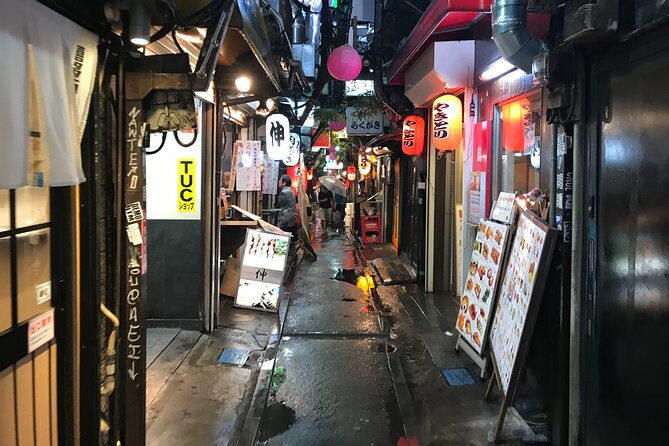
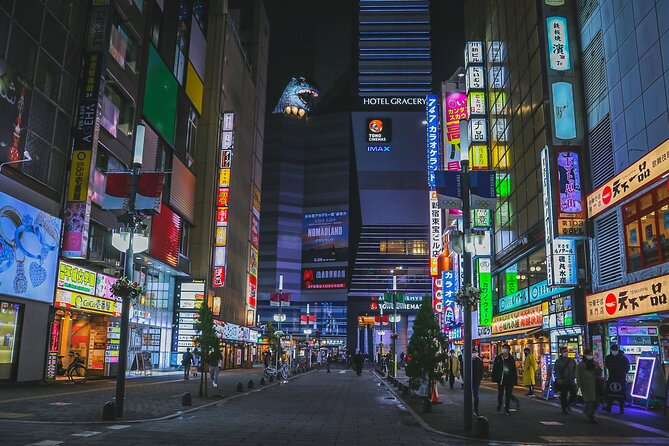
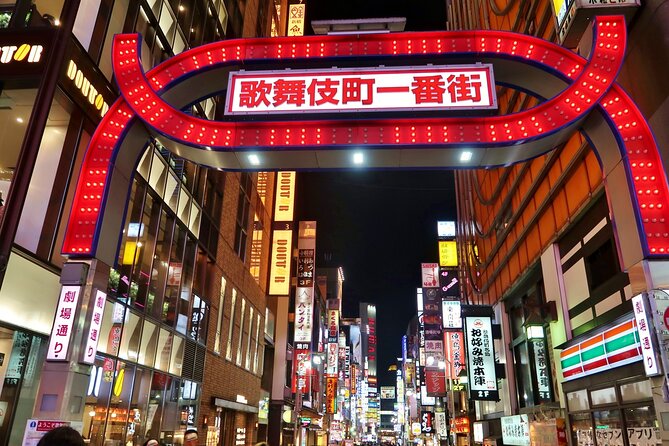
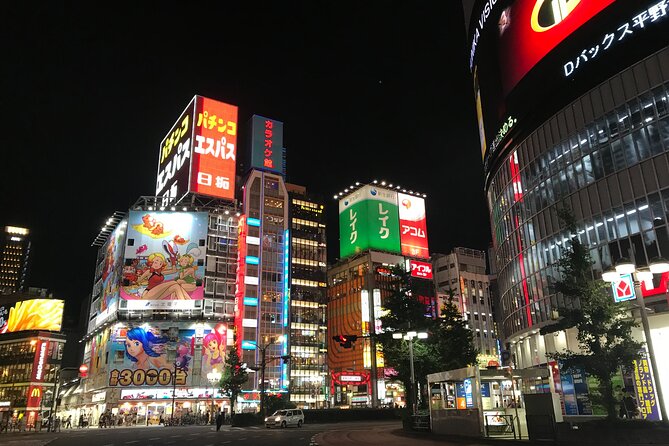
Kabukicho is the major nightlife district on the route. Neon signs fill the streets, and businesses cater to many different kinds of evening entertainment. Some venues are ordinary restaurants and bars. Others are aimed at a more adult audience.
This is where the tour earns its price. You can see the district by yourself, but signs alone will not explain who a venue serves, how local businesses work, or what behavior is expected. A guide can discuss the rules and customs without leaving you to guess.
The adult-industry material is handled as social and legal context. The walk can cover how workers and businesses operate within Japanese law, including ways the industry gets around legal restrictions. That subject may be uncomfortable for some people, but it is central to understanding Kabukicho as more than a wall of colorful signs.
You should not expect a sensational show. The value is in learning how the district functions and why it looks the way it does. The guide also helps you avoid unpleasant situations, especially if you are new to Tokyo and cannot read Japanese signs.
This part of the route is best for adults who want an honest look at city life. Parents with young children, visitors seeking a quiet cultural walk, or anyone uncomfortable with sexual themes may prefer a different evening activity.
Godzilla Head and Kabukicho’s pop-culture landmark
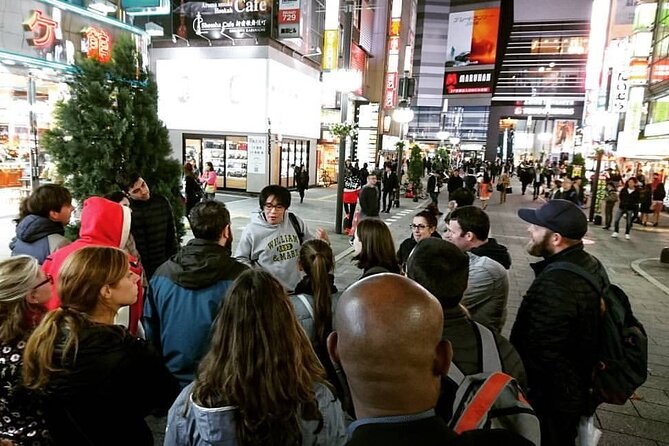
The route includes the famous Godzilla Head, a giant monster figure rising above the district. It is one of the easiest landmarks to recognize in Kabukicho and a welcome change of pace after the more serious discussion of nightlife businesses.
Your guide points out the head and explains its role as a visual marker in the neighborhood. The attraction also has a scheduled show, so you may get to see Godzilla in action during the stop, depending on timing.
This is a good photo opportunity, but keep your expectations sensible. The tour does not appear to include a ticketed visit to an attraction or a long stop devoted solely to photography. The value is seeing the landmark as part of a larger walk through Kabukicho.
Godzilla also helps you understand the district’s unusual mix. Within a short stretch, Tokyo places a pop-culture icon, a luxury hotel, a small bar, a shrine, and adult entertainment businesses close together. The walk makes those contrasts easier to read.
A few more Tokyo tours and experiences worth a look



Golden Gai and the narrow bar district
Another stop is the narrow bar district, commonly known as Golden Gai. Here, a web of tiny lanes holds hundreds of small bars, many with only a few seats. The scale is completely different from the broad avenues around Shinjuku Station.
This is a place where an unplanned approach can be awkward. Some bars have their own rules about regular customers, cover charges, or who they welcome. A guide can explain the atmosphere and suggest how to approach the area respectfully, but your tour fee does not cover entry or drinks.
You will probably want to return later if you find a bar that suits you. The walking tour gives you a quick introduction rather than a full evening inside the district. That is a strength for people who want to keep their plans flexible, but a limitation if you expect a guided tasting session.
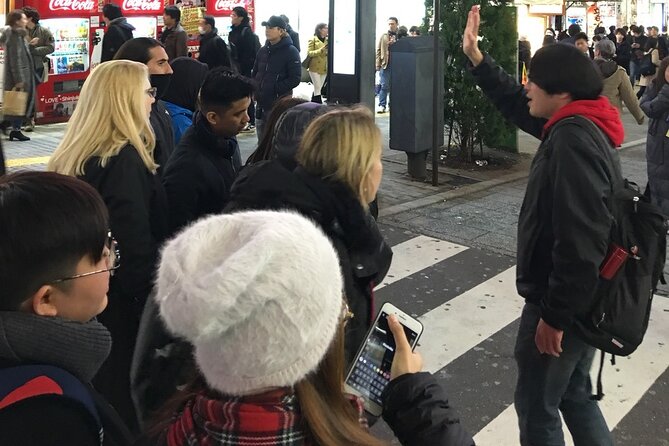
The lanes can also become crowded. Stay close to your guide, especially in rain. One group found it easy to lose sight of the leader among other walking groups and people carrying umbrellas. A bright meeting sign or raised marker would help, but you should still keep an eye on the group.
A Shinto shrine in the middle of nightlife
The itinerary also includes a Shinto shrine in Shinjuku. This stop provides a sharp contrast to Kabukicho’s signs and late-night businesses.
A shrine visit can seem unexpected in a nightlife district, which is precisely why it adds value. It shows that commercial entertainment, everyday religious practice, and older neighborhood traditions occupy the same city blocks. The stop also gives the group a quieter moment during a route filled with traffic, music, and bright displays.
Your guide can explain basic traditions and the shrine’s place in local life. This is not presented as a long formal temple visit, so think of it as a cultural pause rather than a major religious attraction.
Remember that this is an active place of worship. Keep your voice down, follow the guide’s instructions, and treat the setting with care. The contrast between the shrine and the surrounding nightlife is one of the most memorable parts of the route.
Tokyo’s LGBTQI district, often called Gay Town
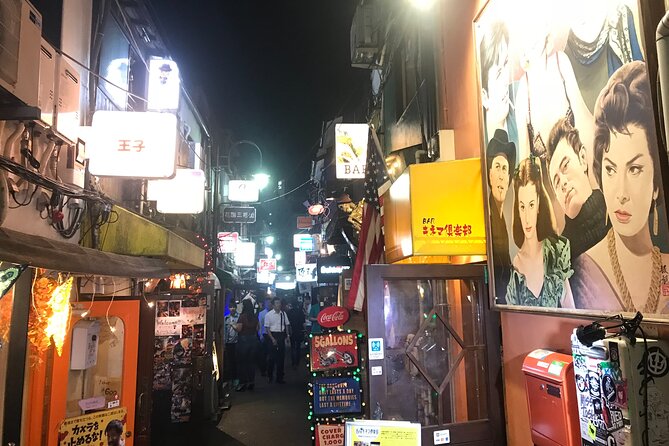
The walk continues through Shinjuku’s LGBTQI district, often called Gay Town. This area is known for its concentration of LGBTQI bars and venues, many of them small and tucked into buildings or side streets.
The tour gives you a way to see the district as part of Tokyo’s social fabric rather than as a novelty. Your guide can explain the neighborhood’s culture and subculture, and you can ask questions in a respectful setting.
Do not expect entry into bars or a nightlife drink included with the walk. The route is an introduction to the area, not a bar-hopping package. If you want to spend more time there, you can return after the tour and choose a venue that fits your interests.
This stop is especially useful if you want more than the standard Tokyo route of shrines, shopping, and observation decks. It also broadens the meaning of the tour’s title. Shinjuku’s nightlife is not only about adult entertainment. It includes many communities, audiences, and forms of self-expression.
How the two-hour pace feels
The experience is a walking tour, so you should be ready to stay on your feet for roughly two hours. The route moves through busy streets and narrow lanes, with regular stops for explanations and questions.
One person described a longer, fast-paced experience of more than three hours, but the stated duration is approximately two hours. I would plan around two hours and keep extra time free if you want to continue exploring afterward.
The guides generally aim to keep the group engaged while staying within the time frame. Danny has been singled out for keeping the walk entertaining and well paced. That matters in Shinjuku, where long explanations can be hard to follow if the group blocks a busy sidewalk or the noise rises around you.
Rain can affect the experience. The activity requires good weather, and it may be moved or canceled if conditions are poor. Even light rain makes the narrow lanes more crowded and increases the risk of losing sight of the guide. Check the forecast and wear shoes suitable for city walking.
Who gets the most from this tour
I would choose this walk if you are visiting Tokyo for the first time and want to spend an evening in Shinjuku without guessing where to go. Several guides have been especially helpful for first-night orientation, giving you a sense of the area before you explore independently.
It also suits you if you want to understand the legal and social side of Tokyo nightlife. The route discusses adult businesses, local customs, food, hotels, bars, and LGBTQI culture. It is more revealing than a standard sightseeing walk, but it remains a guided neighborhood tour rather than an adult show.
You may want to skip it if you dislike nightlife districts, sexual topics, crowds, or walking after dark. It is also not the right choice if you want dinner included, since all food and drinks cost extra.
The maximum group size of 12 is a useful middle ground. It is small enough for questions and personal attention, but not necessarily private. Some departures may be much smaller. One group had only four people, which created an especially personal experience.
Is $25 a fair price?
At $25 per person, this is a strong value for a two-hour introduction to a complicated area. You are covering the guide fee and receiving interpretation that you cannot get from simply walking past the signs.
The price looks even better if you use the tour as the beginning of a full evening. After the walk, you can choose your own restaurant, bar, or neighborhood stop. You are not locked into a fixed meal or a preselected venue.
The value is less clear if you already know Shinjuku well or prefer to explore without commentary. The route itself is free to walk, and the landmarks do not require a tour ticket. You are paying for the explanation, local context, and help avoiding bad choices.
The 4.7 out of 5 rating and 95 percent recommendation rate fit the experience’s main strength: the guides. Names such as Polina, Gray, Danny, Kumi, Loc, and Daniel appear repeatedly in the tour’s feedback, with praise for humor, clear English, friendliness, and useful local detail. The quality may depend on who leads your departure, but the guide is clearly the central part of what you are buying.
Practical details before you book
You receive confirmation at booking and use a mobile ticket. The tour starts at the police box near Shinjuku Station’s East Exit and finishes around Shinjuku 3 Chome, so do not plan on ending at the original meeting point.
Food and drinks are not included. Wear comfortable shoes, keep your phone charged for the ticket and meeting details, and leave room in your evening schedule for a meal afterward.
Service animals are allowed, the route is near public transportation, and most people can participate. The experience is subject to weather. You can cancel for a full refund up to 24 hours before the start time, but changes or cancellations inside that window are not accepted. If poor weather cancels the tour, you are offered another date or a full refund.
Should you book the Dark Side of Tokyo walk?
Book it if you want a frank, guided look at Shinjuku’s nightlife and plan to explore the area afterward. The mix of Omoide Yokocho, Kabukicho, Godzilla Head, Golden Gai, a shrine, and the LGBTQI district gives you a fuller picture than a simple neon-photo walk.
I especially recommend it for a first evening in Tokyo. You get the lay of the streets, learn how to read the district, and gain practical advice before choosing your own dinner or drinks.
Skip it if you want a quiet cultural tour, a meal-based activity, or a route that returns to the starting point. For the right audience, though, $25 buys a useful and unusually candid introduction to one of Tokyo’s most complicated neighborhoods.
FAQ
Where does the tour start?
It starts at the police box near Shinjuku Station’s East Exit, at 3 Chome 38 1 Shinjuku, Shinjuku City, Tokyo 160-0022, Japan.
Where does the tour finish?
The tour finishes around the Shinjuku 3 Chome area. It does not necessarily return to the starting point.
How long does the walking tour last?
The experience lasts approximately two hours.
What neighborhoods are included?
The route includes Shinjuku, Kabukicho, Omoide Yokocho, the narrow bar district, a Shinto shrine, and Shinjuku’s LGBTQI district, often called Gay Town.
Is food included?
No. Dinner, food, and drinks are not included and cost extra.
What landmarks will I see?
The route includes Omoide Yokocho and Godzilla Head, where you may see the Godzilla show depending on timing.
How large can the group be?
The tour has a maximum of 12 participants.
Do I receive a paper ticket?
No paper ticket is required. The experience provides a mobile ticket.
Is the tour suitable for most people?
Most people can participate. The tour is near public transportation, and service animals are allowed.
What happens if bad weather cancels the tour?
If poor weather causes the experience to be canceled, you are offered a different date or a full refund. You can also cancel up to 24 hours before the start time for a full refund.
More Walking Tours in Tokyo

More Night Tours in Tokyo
More Shinjuku Tours in Tokyo

More tours in Tokyo we've reviewed




Shinjuku Tours, compared.
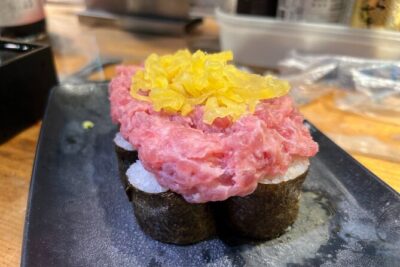 ★ 5.0Tokyo: Shinjuku Food Tour (13 Dishes at 4 Local Eateries)From $86
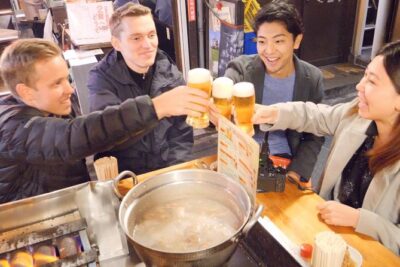 ★ 5.0Tokyo Bar Hopping Tour in Shinjuku (All-You-Can-Drink + Dinner)From $106
 ★ 4.9Tokyo: Shinjuku Food Tour (15 Dishes and 4 Eateries)From $853 hours
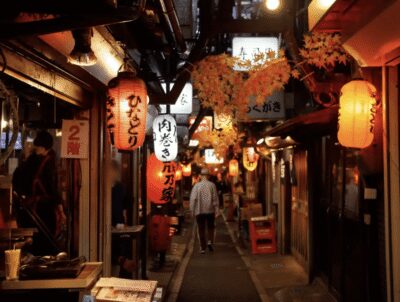
 ★ 5.0Best of Shinjuku: Izakaya Food Tour (4 Stops, 14+ Tastings)From $92
 ★ 4.9Tokyo: Shinjuku Local Bar and Izakaya Guided Walking TourFrom $343 hours
 ★ 5.0Tokyo Shinjuku Chopsticks Making ClassFrom $20