
Reviewed · SAMURAI & NINJA EXPERIENCES
Ninja Samurai 2-hour hands-on lesson by Japanese master in Tokyo
The best part of this Tokyo experience is that you do not just watch a staged ninja show. You put on ninja clothes, learn Kuji-In meditation, draw a samurai sword, throw shuriken, and try a blowgun under the direction of an English-speaking Japanese sensei. I like the mix of history and hands-on practice, and I like the small maximum of six people, which gives the instructor time to correct your movements. One consideration: the class is in a real dojo in Shiomi, not a polished theme-park attraction, and the building can take a little finding.
I especially like that the lesson works for a wide age range. Children as young as 11 and adults in their 60s and 70s have taken part, and the activities can be adjusted to different abilities. I also like the range of equipment, from swords and ninja stars to chopsticks and darts, though some exercises involve running or jumping, so you should be comfortable with light physical activity.
In This Review
- Key points before you book
- What the two-hour ninja and samurai lesson is really like
- Starting with ninja clothes and Kuji-In meditation
- Learning the difference between ninja and samurai tools
- Shuriken throwing and blowgun practice
- Drawing and handling the samurai sword
- The instructors make or break the experience
- Why the six-person limit matters
- Location in Shiomi and how to avoid a frustrating start
- Is $86.22 a fair price?
- Who should book this activity?
- Practical booking advice for a smoother visit
- Should you book the Ninja Samurai lesson?
- FAQ
- How long does the Ninja Samurai lesson last?
- Where does the class meet?
- How many people can join the class?
- Is the lesson taught in English?
- Are ninja clothes provided?
- What activities are included?
- Is transportation included?
- Can children and older adults participate?
- What is the cancellation policy?
Key points before you book
- Small groups of six or fewer: You get more direct attention than in a large theatrical demonstration.
- Two traditions in one class: The session covers both ninja methods and samurai sword technique.
- Real practice, not just costumes: You try shuriken, blow darts, sword movements, ninja tools, and meditation.
- English-speaking instructors: Sensei Hyoga, Asami, Buddy, and Onel are among the instructors praised for clear teaching and humor.
- A practical location tip: The class meets at NINJA SAMURAI TOKYO in Shiomi, a short walk from public transport, but the building entrance can be easy to miss.
- Good value for active culture fans: At $86.22 per person, the price is reasonable if you want two hours of instruction rather than a quick photo opportunity.
What the two-hour ninja and samurai lesson is really like
This is an active cultural class built around participation. You are not asked to sit quietly while someone explains Japanese warriors from a distance. The instructor gives historical background, then puts equipment in your hands and guides you through basic movements and techniques.
The full program includes ninja meditation called Kuji-In, an introduction to ninja weapons and tools, an introduction to a gimmick-filled ninja trick house, ninja sword training, shuriken throwing, and blowgun practice. The samurai side focuses on the Japanese sword, including how to draw it and how to use it in a controlled performance.
The exact order can vary, but you should expect a steady change of activities rather than one long sword lesson. That variety is a major strength. If sword work is not your main interest, you still have meditation, throwing, darts, tools, and historical explanation to keep the class moving.
A few more Tokyo tours and experiences worth a look

Starting with ninja clothes and Kuji-In meditation
The session begins with a change into rented ninja clothing. This is more than a photo prop. The costume helps set the mood and gives the class a clear break from an ordinary sightseeing day. Families in particular may enjoy this opening, since children can start participating right away.
The meditation section introduces Kuji-In, a series of hand signs and focused mental practice linked with ninja tradition. The class presents it as part of the ninja spirit, not simply as a theatrical pose. It gives you a useful contrast with the more physical parts of the lesson and shows that the training is not only about weapons.
I would pay attention here even if you booked mainly for the sword. The meditation helps explain the discipline and concentration expected in the later exercises. It also makes the experience feel broader than a simple martial arts demonstration.
Learning the difference between ninja and samurai tools
The instructor introduces several ninja weapons and tools before asking you to try them. The program includes shuriken, often called ninja stars, blowguns with darts, chopsticks, ninja swords, and samurai swords. You also receive an introduction to a ninja trick house, which adds a playful look at the devices and ideas associated with ninja life.
This variety is one of the strongest reasons to choose this class over a short sword photo session. You get to compare weapons and methods rather than treating all Japanese warrior traditions as the same thing. The lesson also addresses common myths and anime-inspired assumptions, according to the class experience described by participants.
The equipment is handled as part of a structured lesson. You should follow the sensei closely and wait for instructions before trying anything. Some sessions may use a metal samurai sword for practice, while other equipment can vary, so do not book expecting a specific weapon in a specific form.
Shuriken throwing and blowgun practice
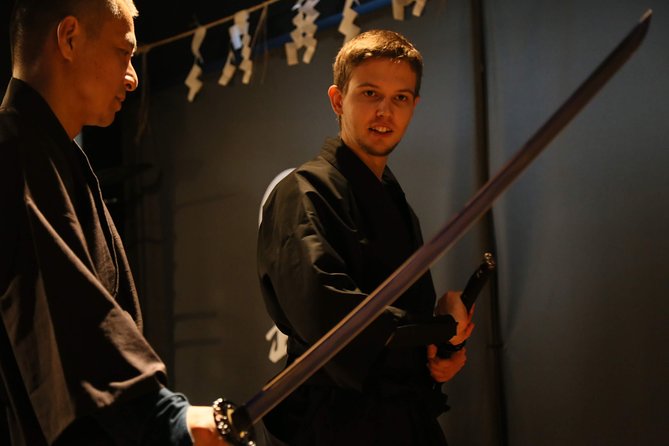
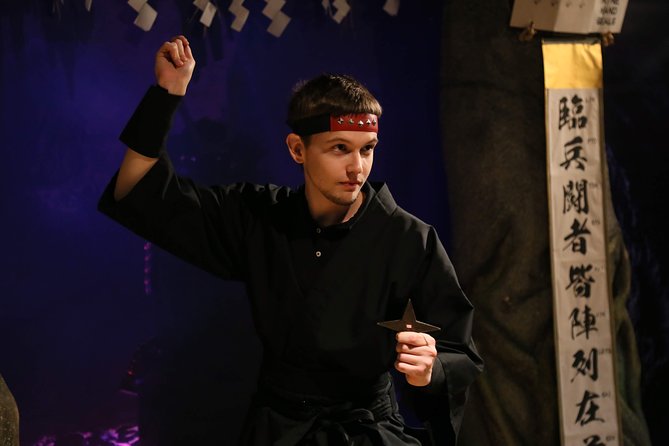
The shuriken section gives the class its most obvious ninja flavor. You practice throwing stars at targets, learning how the tools are handled and aimed. Blowgun practice follows the same hands-on idea, allowing you to try darts rather than merely watch a demonstration.
These activities are entertaining, but their value is not just the novelty. They show how different ninja tools require different kinds of control. The instructor can explain the purpose and use of each item while keeping the class moving from one skill to the next.
I would not expect expert accuracy in a single two-hour lesson. The appeal is trying several techniques under supervision and seeing how quickly you can pick up the basic motion. Participants of different ages and skill levels have completed the class, and the teaching is designed to be approachable rather than athletic.
Drawing and handling the samurai sword
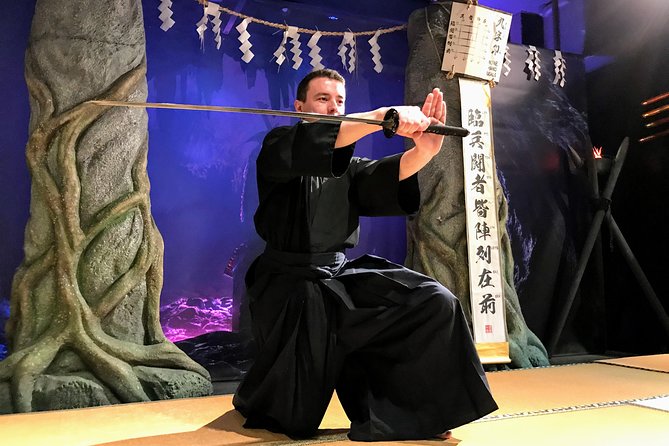
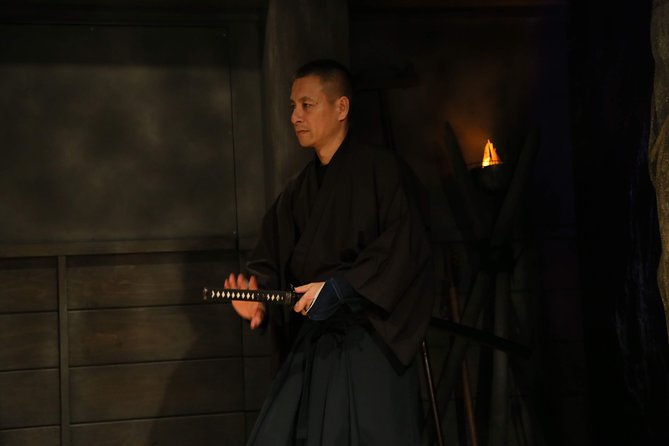
The samurai portion centers on learning how to draw and use a Japanese sword. The instructor demonstrates the movement, then gives you a chance to practice the technique and a short routine. You may also watch and take part in a samurai performance based on what you have learned.
This section gives the class a more formal feel than the playful target work. Drawing a sword is not presented as a casual flourish. It involves posture, timing, and control, which makes the historical explanation more useful. You begin to see why samurai swordsmanship developed its own set of manners and movements.
The class is not a substitute for a long-term martial arts course. In two hours, you get an introduction and a guided performance, not full training in swordsmanship. Still, for a first encounter, the combination of explanation, demonstration, and practice offers much more substance than posing with a replica blade.
A few more Tokyo tours and experiences worth a look




The instructors make or break the experience
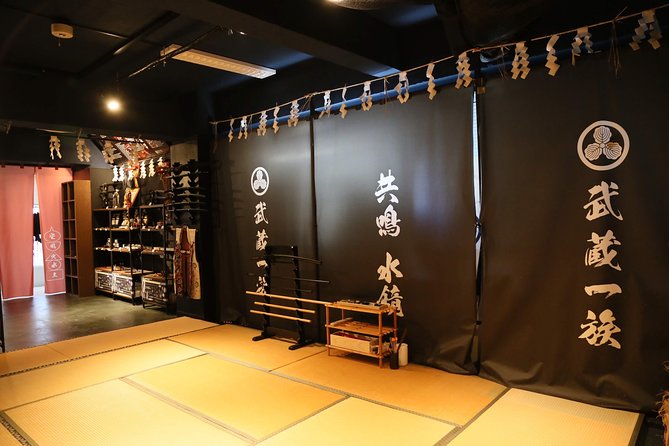
The instructors are a major part of the value here. Sensei Hyoga is praised for making the lesson funny, clear, and memorable. Asami is described as patient and strong at explaining both the history and techniques. Buddy is called a master by one participant, while Onel is praised for creating a warm family experience.
The instructor names may not be guaranteed for every booking, so I would treat them as examples rather than promises. What is consistent in the description is that a Japanese sensei who has trained in ninja arts teaches in English. That matters because the class depends on quick explanations and close attention to movement.
Good English also helps with the cultural side. The instructor can explain the difference between ninja and samurai, discuss feudal-era ideas, and correct popular myths without turning the session into a lecture. Humor is another advantage. You will probably make a few awkward first attempts, and a relaxed teacher makes that part of the fun rather than an embarrassment.
Why the six-person limit matters
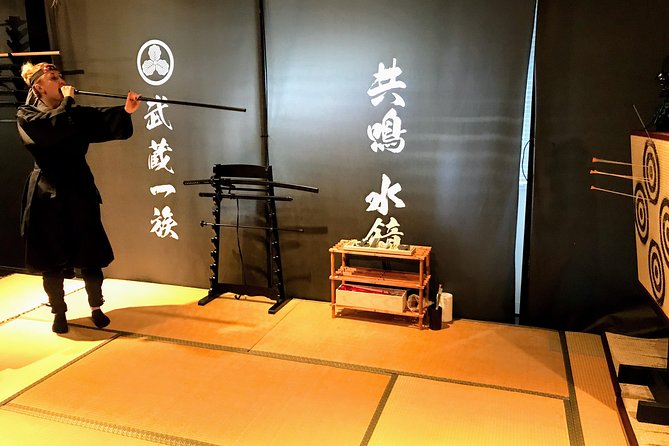
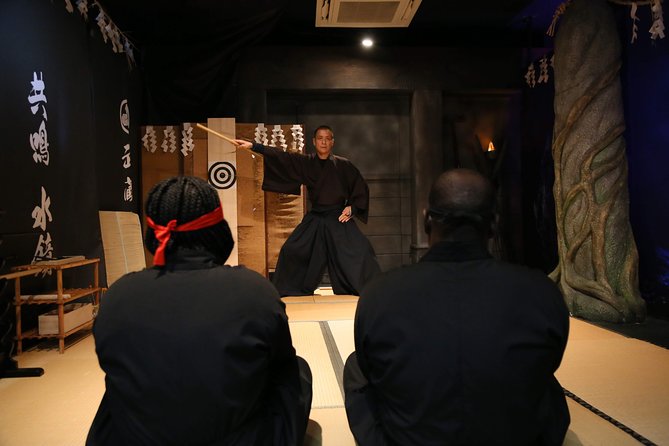
A maximum of six people is unusually useful for a physical lesson. The instructor can watch each person draw a sword, throw a star, or try a movement. You are less likely to spend the class waiting for a large group to finish.
The small format also suits families and mixed-age groups. One family with children aged 11 and 13 enjoyed the activity, and another group ranged from 11 to 73. That does not mean every exercise is effortless for everyone, but it does show that the class is not aimed only at young martial arts fans.
Small groups can also make the class feel more personal. You can ask questions, get corrections, and take part in the performance without disappearing into a crowd. If you are shy about trying unfamiliar movements, the intimate setting may work both ways: you receive more support, but you also have fewer places to hide.
Location in Shiomi and how to avoid a frustrating start
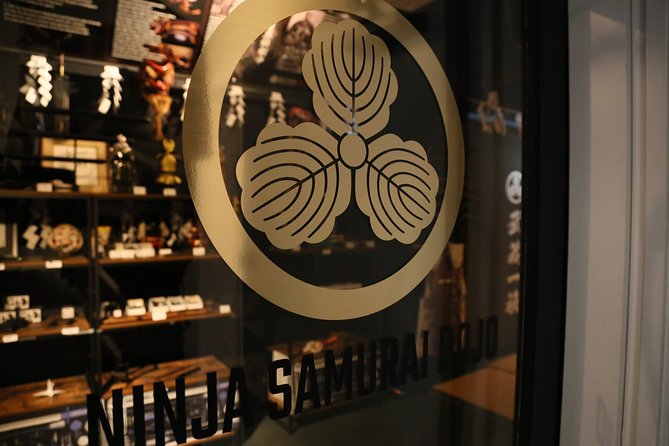
The meeting point is NINJA SAMURAI TOKYO, at Bayfrere Shiomi, East, 4th floor, in Shiomi, Koto City, Tokyo 135-0052. The class ends at the same place.
The venue is near public transportation, and the class is described as a direct walk from the station. Still, allow time to identify the correct building and entrance. One participant could not locate the class and had trouble even after taking a taxi, while another noted that the location took some time to discover but was worth the effort.
There is also a practical stair warning. The elevator was not working during one visit, requiring four short flights of stairs. Do not assume that this will always be the case, but keep it in mind if anyone in your group has difficulty with stairs.
The setting is a real dojo rather than a large studio built only for photographs. Some promotional images may suggest a more elaborate space than you find on arrival. That is not necessarily a flaw, but it is better to expect a working training room with a modest feel.
Is $86.22 a fair price?
At $86.22 per person, this is not the cheapest activity in Tokyo, but the price compares well with the amount of direct instruction. You receive about two hours, ninja clothing rental, admission, an English-speaking sensei, a small group, and several hands-on activities.
The value is strongest if you would otherwise spend money on separate entertainment, a cultural workshop, and a staged performance. Here, the sword lesson, target practice, costume, history, and final performance are bundled into one compact experience.
The value is weaker if you want a quiet museum-style look at Japanese history or a serious course in martial arts. You are paying for an entertaining introduction, not a certificate or advanced training. Bottled water is not included, and private transportation is not provided, so plan those parts yourself.
For a family, couple, or group of friends, the price can feel worthwhile because everyone participates together. It is also a useful choice for a rainy-day plan, though the stated booking terms note that the activity requires good weather and may be rescheduled or refunded if weather causes cancellation.
Who should book this activity?
I would recommend it to families with older children, couples looking for something more active than temple visits, and adults who enjoy Japanese history, martial arts, or pop-culture ninja imagery. You do not need to be an athlete, and the class has worked for a wide range of ages.
You should be comfortable with light physical activity. One description specifically notes running and jumping, so this is not ideal if you need a completely seated experience. The stair access may also matter for anyone with limited mobility.
It suits people who like to try things. If you only want photographs in a costume, you may find the lesson more involved than necessary. If you want to handle equipment, learn basic sword movements, and take part in a performance, the format is a strong match.
Practical booking advice for a smoother visit
Book with enough time to cancel if your plans change. You can receive a full refund when you cancel at least 24 hours before the local start time. Cancellations or changes made within 24 hours are not accepted for a refund.
Check the meeting address carefully and use public transportation information rather than relying only on a taxi driver. Give yourself extra time to find Bayfrere Shiomi and reach the fourth floor. If the elevator is unavailable, you will need to use the stairs.
Bring a phone or camera if you want to record the experience, but keep it out of the way during weapons practice. The class has several good photo moments, especially in ninja clothing and during the learned performance, but listening to the sensei matters more than filming every movement.
Should you book the Ninja Samurai lesson?
Book this if you want a lively, hands-on introduction to Japanese ninja and samurai traditions. The strongest reasons are the maximum-six group, English instruction, wide range of activities, and instructors who combine history with humor. At $86.22, it offers solid value for two hours of active cultural entertainment.
Think twice if you need a fully accessible venue, dislike physical participation, or expect a grand theatrical set. The Shiomi location can take patience to find, and the dojo is a practical training space. For most people who want to do more than look at Tokyo, this is a memorable way to spend two hours.
FAQ
How long does the Ninja Samurai lesson last?
The experience lasts approximately two hours.
Where does the class meet?
It meets at NINJA SAMURAI TOKYO, Bayfrere Shiomi, East, 4th floor, Shiomi, Koto City, Tokyo 135-0052. The class ends at the same meeting point.
How many people can join the class?
The maximum group size is six people.
Is the lesson taught in English?
Yes. A Japanese sensei who has trained in ninja arts teaches the class in English.
Are ninja clothes provided?
Yes. Ninja clothes rental during the training is included.
What activities are included?
The class includes Kuji-In ninja meditation, an introduction to ninja weapons and tools, a ninja trick house introduction, ninja sword training, shuriken throwing, blowgun training, and samurai sword instruction.
Is transportation included?
No. Private transportation is not included. The meeting point is near public transportation.
Can children and older adults participate?
Most people can participate, and the experience has been suitable for a wide range of ages, including children aged 11 and adults in their 70s. Some activities involve running or jumping.
What is the cancellation policy?
You can cancel at least 24 hours before the start time for a full refund. Cancellations or changes within 24 hours are not refunded. If the activity is canceled because of poor weather or insufficient participants, you will be offered another date or experience, or a full refund.
More 2-Hour Experiences in Tokyo




More Workshops & Classes in Tokyo
More Samurai & Ninja Experiences in Tokyo
More tours in Tokyo we've reviewed











Samurai & Ninja Experiences, compared.
 ★ 4.5Tokyo: Samurai Restaurant Show Ticket with 2 DrinksFrom $551h 30m
 ★ 4.6Tokyo: Samurai Ninja Museum Guided tour and ExperienceFrom $27
 ★ 5.0Tokyo: Samurai Sword & Archery Class from Samurai DescendantFrom $1933 hours
 ★ 5.0Best Samurai Experience in TokyoFrom $65
 ★ 5.0Ninja Experience (Family Friendly) at Samurai Ninja Museum TOKYOFrom $47
 ★ 4.6Tokyo: Samurai Entertainment Night Show in Kanda ShrineFrom $412 - 3 hours