
Reviewed · SAMURAI & NINJA EXPERIENCES
Tokyo 2-Hour Genuine Samurai Experience: Kendo in Japan
The best part of this Tokyo activity is that it treats kendo as a real martial art, not a costume photo opportunity. You learn how to wear the keikogi, hakama, and bogu armor, practice basic strikes with a bamboo sword, and finish with a controlled tournament-style game.
I like the hands-on training and the way the instructors explain both movement and etiquette. I also like that you work with proper equipment and may practice alongside local dojo students, which gives the session an authentic feel. The main drawback is physical: heavy gear, shouting, kneeling, and repeated strikes make this a proper workout.
In This Review
- Key points to know before booking
- What this two-hour kendo class really offers
- Arriving at the dojo in northern Tokyo
- Putting on keikogi, hakama, and bogu
- Learning the etiquette behind the sword
- From demonstration to basic striking practice
- The tournament-style match at the end
- How authentic is the experience?
- Physical effort, age, and comfort
- Is the $118.92 price good value?
- Who should book this kendo experience?
- My verdict on the Tokyo samurai experience
- FAQ
- Where does the kendo experience take place?
- How long does the experience last?
- What time does the morning session start?
- Is hotel pickup included?
- Do I need previous kendo experience?
- What equipment is provided?
- What should I wear?
- What is the minimum age?
- How many people can join the class?
- Can I cancel for a refund?
Key points to know before booking
- Full kendo armor is included, along with the bamboo sword and other required equipment.
- Sensei Keshi and other English-speaking instructors explain the basics clearly to first-timers.
- The final tournament-style combat game gives the lesson a fun goal without requiring previous experience.
- You meet at a dojo in northern Tokyo, rather than receiving hotel pickup and drop-off.
- The session suits active families and adults, but you should be comfortable with exercise and tell the instructor about knee problems.
- Morning and afternoon options help you fit the two-hour class into a busy Tokyo day.
What this two-hour kendo class really offers
Kendo means the way of the sword. It grew from Japanese swordsmanship and the samurai tradition, but this class is not a lesson in theatrical sword fighting. You handle a bamboo sword, follow formal movements, learn how to strike designated targets, and use protective armor during practice.
That distinction matters. You are not simply dressing up and posing. The session asks you to listen, copy the instructor, repeat basic forms, and make a genuine effort to move correctly. The tone is friendly and accessible, but the activity itself is serious enough to leave you warm and tired.
The class is designed for all experience levels. You do not need to know Japanese martial arts, and the instructor speaks English in a way that is easy to follow. The teaching is patient, especially with children and beginners, while still giving experienced participants something more substantial than a quick demonstration.
The activity lasts about two hours and accepts a maximum of 15 people. That is large enough to create energy during the match, but small enough for individual correction in a well-run session. A minimum of two people is required for each booking, so this is not a solo drop-in lesson.
A few more Tokyo tours and experiences worth a look
Arriving at the dojo in northern Tokyo
The meeting point is 誠道館ビル4 Chome-7 Higashinippori, Arakawa City, Tokyo 116-0014. The class starts at 10:00 in the listed morning schedule, with an afternoon option also available.
You make your own way to the dojo. Hotel pickup and drop-off are not included, and transport costs between activities are your responsibility. The location is near public transportation, so allow extra time to find the building and arrive ready to change.
This is one place where a little planning helps. Tokyo neighborhoods can feel confusing when you are watching station signs, checking a phone map, and trying to arrive on time in a new city. Save the meeting point before leaving your hotel, and do not build a tight connection with another booking afterward.
The surrounding northern Tokyo neighborhood can also help you make a half-day of it. The activity ends back at the meeting point, and nearby shrines and food stalls give you options after class. That works well if you want a local neighborhood stop rather than another major sightseeing district.
Putting on keikogi, hakama, and bogu
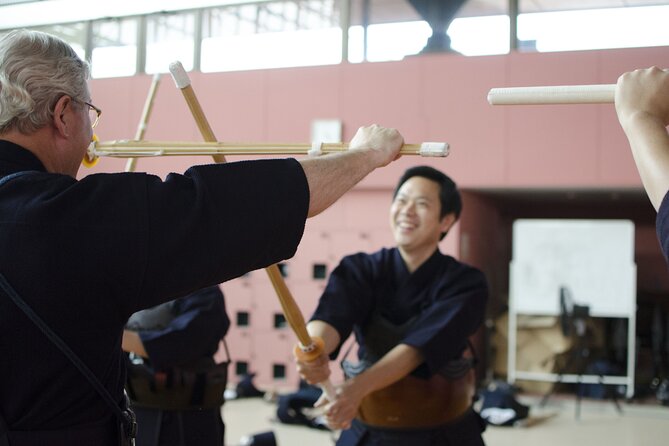
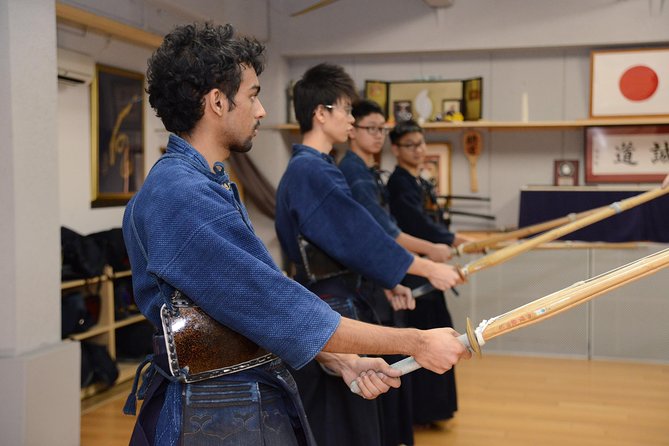
The clothing is part of the lesson, not just decoration. You learn how to put on the keikogi, a jacket-like top, and the hakama, the pleated garment worn over the lower body. You then add bogu, the protective armor used for kendo practice.
The equipment is included in the price, so you do not need to bring protective gear or a bamboo sword. A Japanese hand towel and bottled mineral water are also provided.
Expect the armor and fabric layers to feel warm. One of the most useful practical tips is to arrive well hydrated and wear athletic clothing underneath. This is an active class, and the gear can make the room feel hotter as the session continues.
The outfit also changes how you understand kendo. Once you are dressed, the class feels less like a museum explanation and more like participation in a living practice. You begin to notice the formal posture, the careful handling of the sword, and the respect shown before and after each exercise.
Learning the etiquette behind the sword
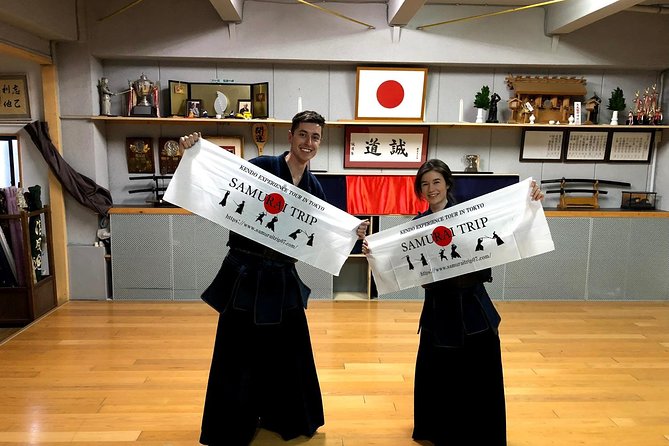
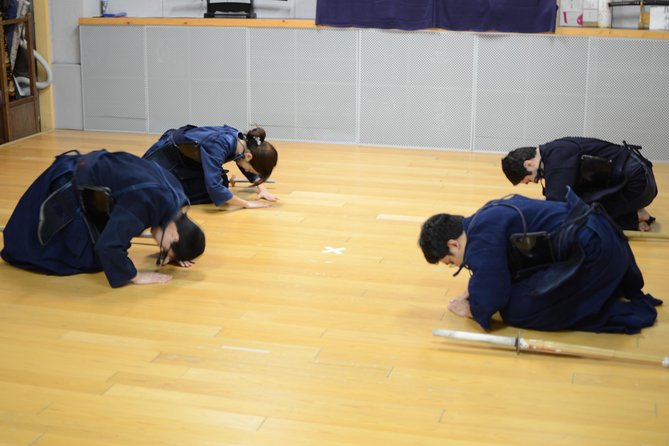
Kendo is built on discipline and manners as much as on striking technique. The instructor explains the culture and etiquette behind the sport before asking you to use the bamboo sword against another person.
That background gives meaning to the movements. You learn that a successful strike is not just a matter of hitting hard. Timing, posture, distance, form, and a clear call all matter. The loud yell can feel unusual at first, but it is part of the practice and helps create focus.
The class also shows the difference between a theatrical samurai show and a martial art. You are expected to pay attention, stand correctly, and follow instructions. The sense of order may be especially valuable if you are visiting Japan mainly for food, shopping, and sightseeing, since it offers a direct look at a traditional discipline still practiced today.
You do not need to master the etiquette in two hours. The point is to understand the basics and take part respectfully. The instructors keep the mood light enough for beginners, and children can take part when they are at least nine years old.
From demonstration to basic striking practice
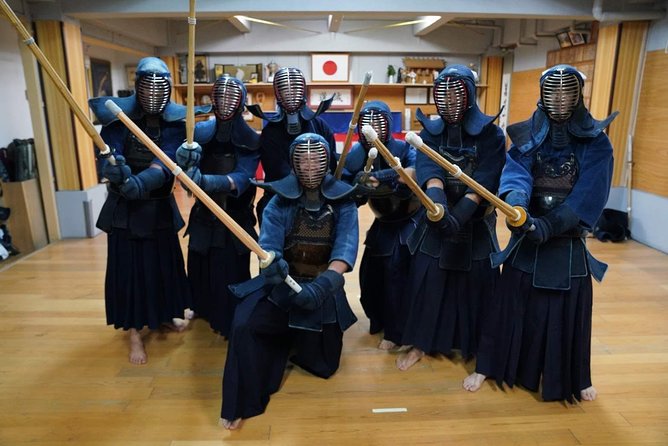
The instructor first demonstrates the movements, then guides you through practical kendo techniques. You learn how to hold and move the bamboo sword, how to position your body, and how to aim for the permitted target areas.
The most rewarding moments come when the movement clicks. A correct strike requires more than swinging your arms. You need the right form and timing, and the instructor gives immediate feedback when you do it well or asks you to try again when something is off.
That direct correction is especially useful for families. Parents and children can learn together, but each person still receives help with the details. One family described the activity as both fun and a little exercise, which is a fair way to think about the two hours.
You may also see regular dojo students training nearby or taking part in the class. Their movement gives you a useful reference point. You can see how much control and practice kendo requires, while still enjoying the fact that the instructor adjusts the session for beginners.
A few more Tokyo tours and experiences worth a look
The tournament-style match at the end
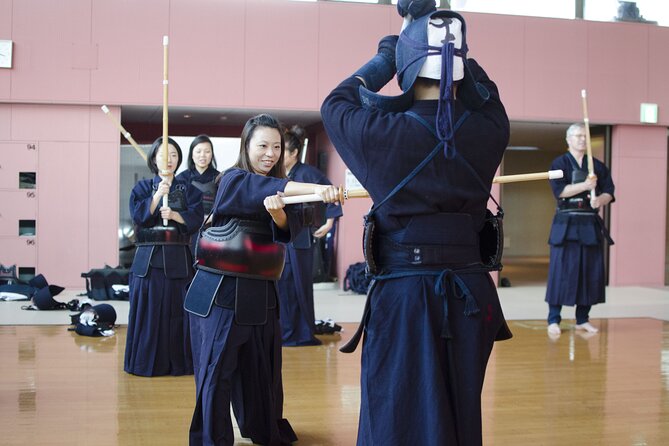
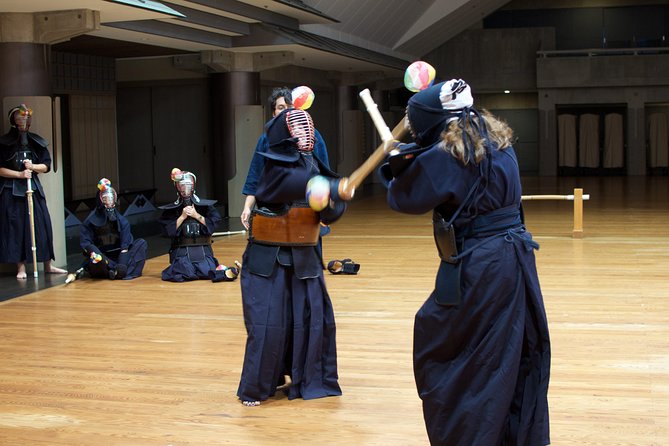
The final combat game is the payoff. After learning the basic techniques, you use them in a mock tournament setting against another participant.
This is not presented as a full competition for trained kendoka. The instructors keep it suitable for beginners, but it still gives you a reason to remember the footwork, shouting, target areas, and defensive position from earlier in the lesson. The result is active, noisy, and fun.
The match also reveals why the class needs a reasonable level of fitness. You are moving in armor, reacting to another person, and repeating techniques. You may finish tired, especially if you have never worn kendo gear before.
Do not expect a relaxed photo session. The activity includes what one participant described as real martial arts, with plenty of practice and striking. That is exactly why it offers stronger value than a short samurai-themed performance, but it also makes the class a poor fit for anyone seeking a gentle cultural demonstration.
How authentic is the experience?
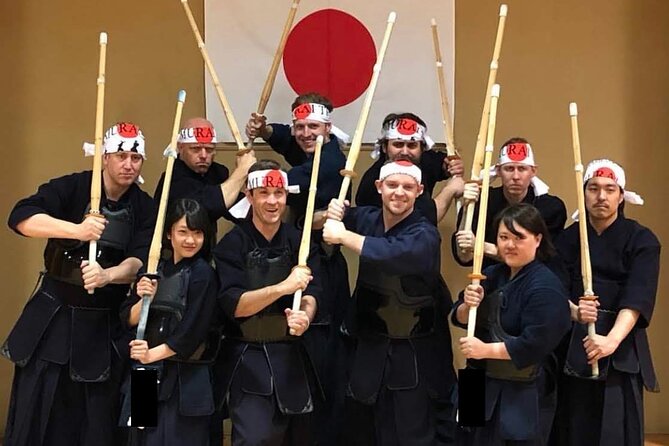
The activity has a strong connection to ordinary dojo practice. You train in a dojo, use standard kendo clothing and armor, and learn from an instructor with decades of experience. One highly praised instructor was described as having trained for 60 years, while Sensei Keshi has also been singled out for patient teaching and a friendly manner.
The presence of local students adds another useful layer. You can watch people who practice regularly and see the difference between beginner drills and established technique. That makes the experience feel grounded in real training rather than built only for tourists.
At the same time, it remains an introductory class. You will learn basic forms and striking methods, not become a trained swordsman in one afternoon. The tournament is a structured game, not a test of advanced kendo ability.
That balance is the main strength. You get enough instruction to understand what you are doing, enough equipment to feel the physical side of the sport, and enough contact with the dojo setting to take away a clearer sense of kendo culture.
Physical effort, age, and comfort
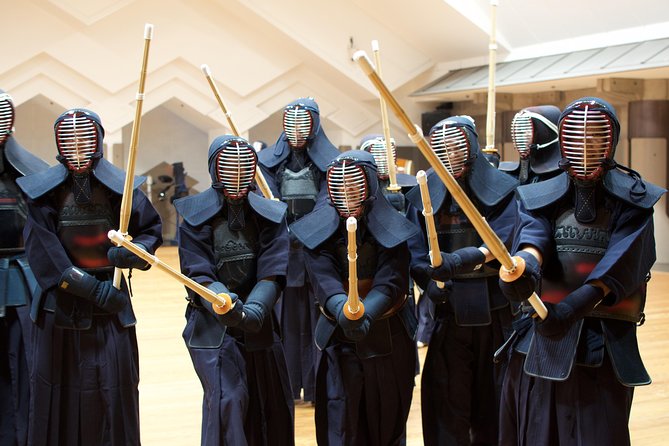
The minimum age is nine. The class can work well for families, and children have received extra patience and encouragement from the instructors. Adults can take part too, including people with no prior knowledge of kendo.
You should have a strong level of physical fitness. The clothing is heavy, the armor is warm, and the class may involve kneeling, repeated movement, and active sparring. Wear athletic clothing and drink water before you arrive.
If you have bad knees or another physical concern, tell the Sensei at the start. A participant specifically noted being allowed to skip movements that caused knee pain, such as kneeling. Do not wait until the discomfort becomes serious.
The session is not described as accessible for every mobility level, so anyone with major movement limitations should ask the provider before booking. The important point is to approach it as exercise with cultural instruction, not as a seated talk.
Is the $118.92 price good value?
At $118.92 per person, this is not a cheap two-hour activity. You are paying more than you would for a basic museum visit or a casual cultural demonstration.
The value comes from the amount of participation packed into the session. The price includes a professional instructor, rental armor and equipment, bottled water, and a Japanese hand towel. You also receive direct coaching, a demonstration, a history and etiquette lesson, and the final tournament-style game.
A private or very small lesson would make the price easier to justify, but the group can reach 15 people. The upside is a lively match and the chance to train around other participants and local dojo students. The downside is that individual attention may vary with the group size.
For me, the cost makes sense if you want a central memory from Tokyo that involves doing something rather than watching something. It is less appealing if you have a packed schedule, dislike strenuous activities, or mainly want a samurai costume photo.
The experience has a 4.8 rating from 112 ratings and is recommended by 97 percent of participants. Those figures suggest strong satisfaction, but they do not change the practical point: the price is justified by authentic instruction and equipment, not by sightseeing views or a long itinerary.
Who should book this kendo experience?
I would recommend it to families with active children aged nine and above, couples, friends, and solo-minded adults booking with another person. It is a good choice for anyone who has watched kendo online or seen it in Japanese culture and wants to understand the sport from inside the practice.
It also suits repeat visitors who have already covered Tokyo’s major temples and observation decks. A northern Tokyo dojo offers a different kind of cultural encounter, one based on posture, sound, movement, and discipline.
You should think twice if you have knee trouble, poor fitness, or no interest in physical activity. The instructors are accommodating, but the class cannot remove the basic demands of wearing armor and practicing strikes.
The two-hour length is another advantage. It is long enough to feel substantial, yet short enough to fit around a morning or afternoon in the city. Add time for transport and changing, then pair it with nearby shrines or food stalls if you want to make the most of the area.
Booking is flexible with free cancellation up to 24 hours before the start time. Changes or cancellations made inside that window are not refunded, based on Tokyo local time.
My verdict on the Tokyo samurai experience
Book this if you want a genuine, active introduction to Japanese martial arts and you are ready to sweat a little. The full armor, clear English instruction, formal etiquette, and tournament-style match make it far more substantial than a staged samurai encounter.
I especially like the mix of tradition and play. You learn why kendo is practiced in a certain way, then get to test the basics with a bamboo sword while the instructors keep the class welcoming.
Just arrive hydrated, wear sports clothing, plan your route to Higashinippori, and respect the physical demands. For the right person, this can become one of the most memorable two hours in Tokyo.
FAQ
Where does the kendo experience take place?
The activity starts and ends at 誠道館ビル4 Chome-7 Higashinippori, Arakawa City, Tokyo 116-0014, Japan.
How long does the experience last?
The session lasts approximately two hours.
What time does the morning session start?
The listed morning start time is 10:00 am. An afternoon session is also available.
Is hotel pickup included?
No. Hotel pickup and drop-off are not included. You make your own way to the dojo, and transportation costs are not included.
Do I need previous kendo experience?
No. All experience levels are welcome, including complete beginners.
What equipment is provided?
The experience includes rental kendo armor and equipment. You also receive bottled mineral water and a Japanese hand towel.
What should I wear?
Athletic wear is recommended because this is a physically active class. The kendo clothing and armor are supplied.
What is the minimum age?
The minimum age is nine years old.
How many people can join the class?
The maximum group size is 15 people, and at least two people are required per booking.
Can I cancel for a refund?
You can cancel for a full refund up to 24 hours before the experience start time. Cancellations or changes made less than 24 hours before the start time are not refunded.
More 2-Hour Experiences in Tokyo
More Samurai & Ninja Experiences in Tokyo
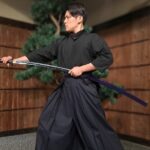
More tours in Tokyo we've reviewed










Samurai & Ninja Experiences, compared.
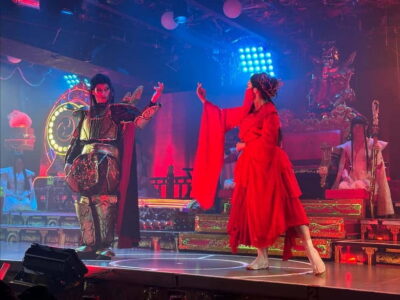 ★ 4.5Tokyo: Samurai Restaurant Show Ticket with 2 DrinksFrom $551h 30m
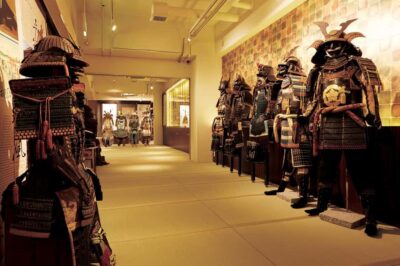 ★ 4.6Tokyo: Samurai Ninja Museum Guided tour and ExperienceFrom $27
 ★ 5.0Tokyo: Samurai Sword & Archery Class from Samurai DescendantFrom $1933 hours
 ★ 5.0Best Samurai Experience in TokyoFrom $65
 ★ 5.0Ninja Experience (Family Friendly) at Samurai Ninja Museum TOKYOFrom $47
 ★ 4.6Tokyo: Samurai Entertainment Night Show in Kanda ShrineFrom $412 - 3 hours