
Reviewed · SHIBUYA TOURS
Private Mochi Sweets Making class near Shibuya area
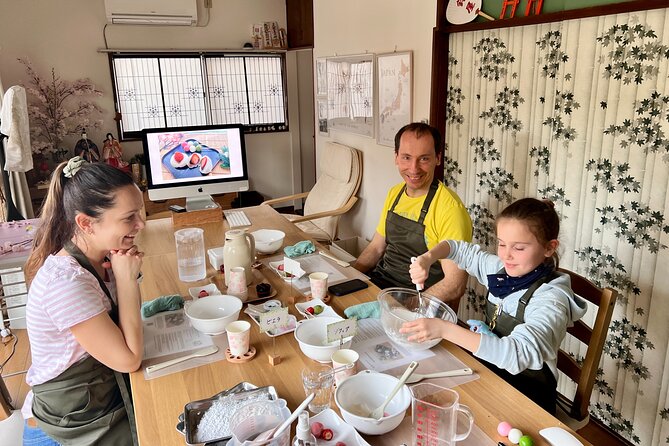
The best part of this class is not simply eating mochi. It is stepping into Sakura’s home in Sangenjaya and making Japanese sweets with your own hands. You prepare fruit daifuku and dango, hear why these foods matter in Japan, then sit down with tea to enjoy the results.
I like the small-group setting, which allows Sakura to guide beginners, children, and experienced cooks at their own pace. I also like the take-out bag, since you can save any sweets that survive the walk back to your hotel. The main consideration is practical: the class is upstairs, and a dog lives in the home, so it is not a good fit for anyone with a dog allergy.
In This Review
- Key things to know before booking
- Why a mochi class at home feels different
- Arriving in Sangenjaya near Shibuya
- The two-hour lesson with Sakura
- Making fruit daifuku by hand
- Shaping dango and learning what mochi means in Japan
- Tea, tasting, and the take-home bag
- What makes this a strong family activity
- Is the $79.28 price good value?
- Timing, group size, and practical limits
- Who should book this experience
- Should you book Sakura’s mochi class?
- FAQ
- Where does the mochi-making class meet?
- How long does the class last?
- What sweets will I make?
- Is tea included?
- Is the class suitable for children?
- How many people can attend?
- Are there any important access or allergy warnings?
Key things to know before booking
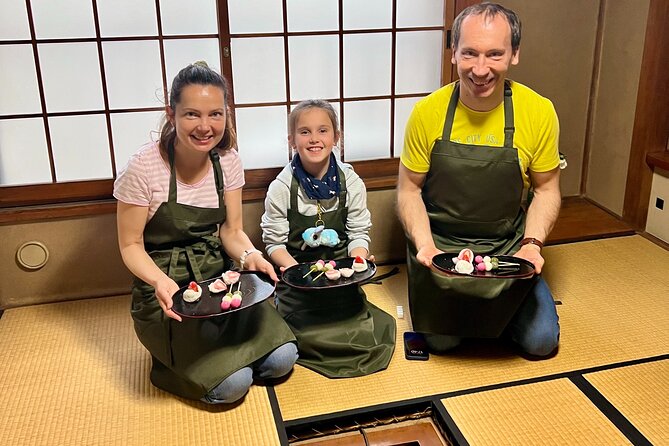
- Sakura teaches in her own home: This gives the class a personal, everyday Japanese setting rather than a standard cooking studio.
- You make more than one sweet: The class includes fruit daifuku and dango, with hands-on work at each stage.
- The lesson suits families: Sakura has experience teaching children, and children as young as eight or nine have enjoyed the activity.
- Tea is part of the experience: Japanese green tea or matcha is served, with decaffeinated black tea available if needed.
- The class is near Shibuya, in Sangenjaya: You meet at 1-chōme-11-13 Sangenjaya and finish at the same place.
- Plan for stairs and a dog: The venue is on the second floor, and the household dog may be present.
Why a mochi class at home feels different
Tokyo gives you endless chances to buy mochi. You can find it in department-store food halls, convenience stores, station shops, and specialist wagashi stores. Buying a neatly wrapped sweet is easy. Making one is a different kind of souvenir.
Sakura’s class takes place in her home near Shibuya, in Sangenjaya. That matters because you are not only learning a recipe. You are seeing a residential part of Tokyo and spending time in a Japanese household. The setting is more personal than a quick demonstration followed by a sample.
The class also has a clear social side. Sakura has taught more than 1,000 people from over 35 countries, and she has taught in Switzerland as a guest instructor. Her English makes the cultural explanation accessible, and several Japanese participants have also found the background useful. You do not need prior cooking experience or Japanese-language ability to take part.
The atmosphere is warm and relaxed. Sakura’s dog, named Chico or Choco in different descriptions, may be around during the lesson. That can be a charming part of the home setting, especially for children, but it is an important health consideration. If you have a dog allergy, choose another activity.
A few more Tokyo tours and experiences worth a look


Arriving in Sangenjaya near Shibuya

The meeting point is 1-chōme-11-13 Sangenjaya, Setagaya City, Tokyo 154-0024. The class begins and ends at this same location, so you do not need to arrange a separate return transfer.
Sangenjaya is a useful setting for this experience. It is close enough to the Shibuya area to fit into a Tokyo sightseeing day, yet the surrounding streets have a more local, residential feel. You can allow a little time before or after class to walk around the neighborhood rather than treating the activity as something attached to a major sightseeing site.
The exact public transport directions should be checked after booking, since the supplied details identify the address but do not list a specific station or route. The venue is near public transportation, but do not assume the meeting point is directly beside a station. Give yourself extra time, particularly if this is your first visit to Sangenjaya.
The home is on the second floor and requires stairs. That is worth considering for anyone with mobility limits, heavy luggage, or a stroller. The activity information permits service animals, but the separate dog-allergy warning remains important.
The two-hour lesson with Sakura
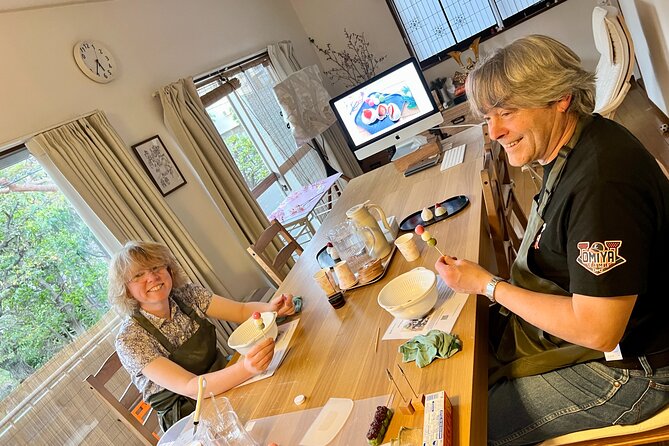
The class lasts about two hours. It is not a sit-back demonstration. Sakura explains the process, then has you carry out the work yourself. That hands-on format is the heart of the activity.
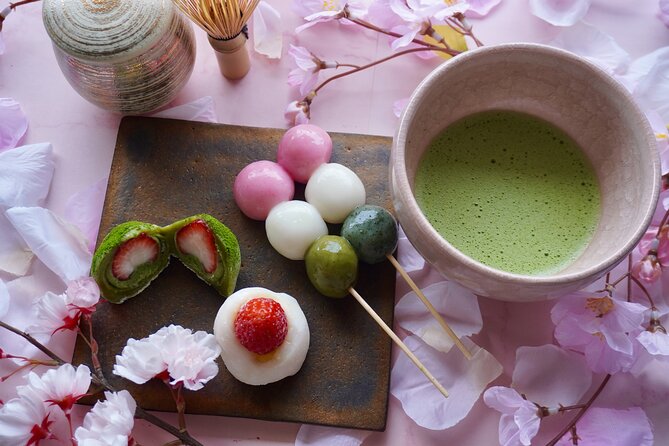
You learn to prepare traditional Japanese sweets, including fruit daifuku and dango. Daifuku is soft mochi wrapped around a filling, while dango is made into small round pieces, often served on a skewer or with a sweet topping. The specific class descriptions identify fruit daifuku and dango, including strawberry daifuku in one account, and some participants have made two kinds of each.
Expect Sakura to explain each step before you try it. This is useful because mochi dough can be sticky and unfamiliar if you have never handled it. Rather than rushing everyone through the same motions, she can give individual help in a small class. The maximum group size is eight people, and some bookings may be smaller.
The class uses ingredients without gluten, alcohol, or additives, according to the activity details. That is helpful for some dietary preferences, though you should still contact the provider directly about serious allergies. The supplied information does not promise a fully allergy-free kitchen or list every ingredient.
Making fruit daifuku by hand
Fruit daifuku is likely to be the most memorable part for many first-time participants. You work with soft mochi and shape it around a fruit filling, creating a sweet that looks simple but takes a little care.
The appeal is partly visual. You are not just cooking something that disappears into a bowl. You shape individual sweets, and the finished pieces show your own technique. A beginner may produce a slightly uneven daifuku, which is part of the fun rather than a problem.
Sakura’s teaching style is particularly useful here. Children and adults can follow the process together, and she has experience teaching children gently and patiently. Families with children around eight or nine have found the class manageable, while teenagers and adults have also enjoyed the work.
The ingredients are practical, too. One participant noted that the daifuku and dango use ingredients that are readily available abroad. If you enjoy the class, you can try making the sweets again at home instead of leaving the experience behind in Tokyo.
Shaping dango and learning what mochi means in Japan
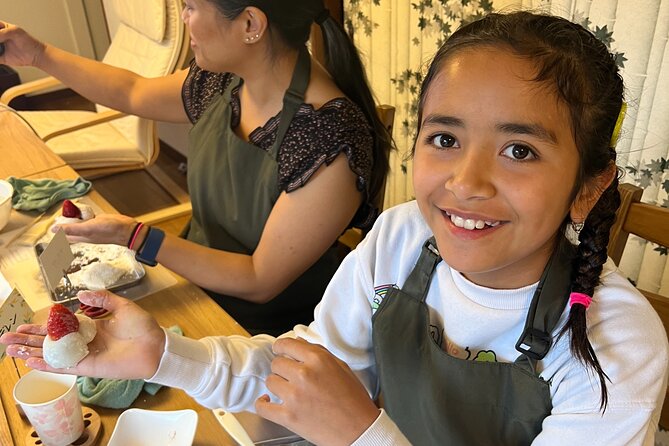
Dango gives the lesson a different rhythm. Instead of wrapping a filling, you shape the dough into small pieces and cook them. The process is tactile and easy to understand, making it a good introduction for children.
Sakura explains when Japanese people eat mochi and how the food connects with Japanese culture. This adds needed context. Without it, a mochi class could be just a pleasant confectionery activity. With the explanation, you understand that these sweets have a place in celebrations, customs, and daily life.
The class also covers traditional recipes and the cultural meaning of mochi. Do not expect a university lecture. The format is informal, with time to ask questions and talk with Sakura about Japan and her experiences abroad. That balance works well for a short activity because you learn something without losing the pleasure of making and eating.
Some participants have also made dango haiku as part of the class. This detail may vary by session, but it shows the lesson can include more than basic kitchen work.
Other private tours in Tokyo





Tea, tasting, and the take-home bag
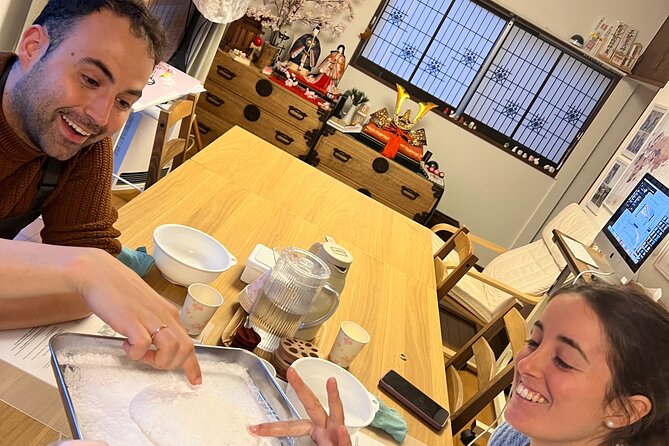
After the cooking, you taste what you made with Japanese green tea or matcha. If you avoid caffeine, decaffeinated black tea is available. Bottled water, soda, alcohol, brunch, and other drinks are not included, so think of this as a sweets-and-tea lesson rather than a meal.
The tea gives the class a natural ending. You can look at the sweets you shaped, compare the results, and ask final questions while sitting in a home setting. It also helps you understand how Japanese sweets are traditionally enjoyed, rather than treating them as a quick snack during a packed sightseeing schedule.
A take-out bag is included. This is a small but useful touch. Mochi is filling, and children may make more than they can eat immediately. You can carry leftovers back to your hotel, although the class does not provide a full meal or bottled water.
Aprons are available for rent. If you want to protect your clothing, ask about one before beginning. Since the supplied details do not state the rental cost, confirm it when you book or arrive.
What makes this a strong family activity
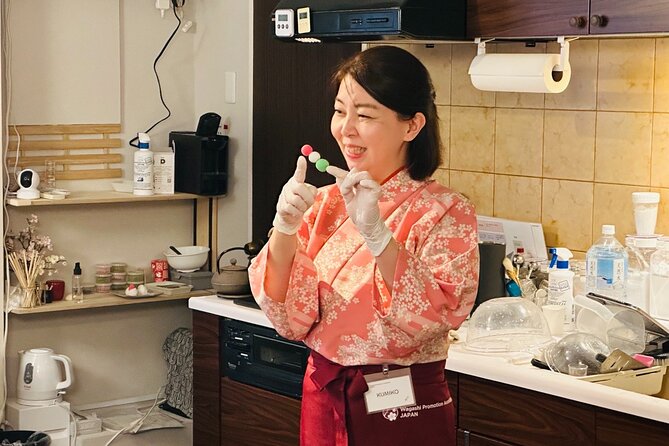
This class fits families unusually well. Children can take part in the shaping and decorating rather than simply watching an adult cook. Sakura has raised two children and understands how to explain tasks with patience.
The activity has also worked for mixed-age groups, including families with children, teenagers, and adults. That matters in Tokyo, where some cultural activities are too formal for younger children and some cooking classes move too quickly for beginners.
There is a quiet educational benefit, too. Your children learn where a familiar Japanese sweet comes from, how it is made, and why it matters. They also get a souvenir they can recreate at home. Several families have found that their children were eager to make mochi again after returning home.
The home setting may help children relax, but it is still a real household, not a purpose-built attraction. You should expect stairs, limited space compared with a commercial kitchen, and a dog in the home. For most families that adds character. For anyone with allergies or mobility concerns, it requires careful thought.
Is the $79.28 price good value?
At $79.28 per person, this is not the cheapest way to eat mochi in Tokyo. If you only want to sample a few sweets, a department-store food hall or specialty shop will cost far less.
The price makes more sense if you value the lesson, the cultural explanation, and the time with a local host. You receive about two hours of instruction, the ingredients for multiple sweets, tea or matcha, and a take-out bag. You are also paying for a small class rather than a large cooking session where the instructor cannot watch each person closely.
For a family, the value depends on how many people book and whether a group discount applies. Since group discounts are available, check the final price for your party rather than assuming the listed per-person figure is the only option.
I would compare it with other Tokyo food classes by asking what you actually want. If your priority is a full meal, this is not the right choice. If you want a focused cultural activity that works between sightseeing stops and leaves you with a skill to try at home, the price is easier to justify.
Timing, group size, and practical limits
The activity runs for about two hours, which makes it easy to place in a Tokyo itinerary. Still, you should avoid scheduling it immediately before a long-distance train, flight, or timed attraction. You need time to reach Sangenjaya, find the home, and return to your next stop.
The maximum group size is eight. Smaller numbers should allow more direct help from Sakura, and some sessions may be private or nearly private depending on bookings. The supplied information does not guarantee that every departure is exclusive to your party, so confirm that point if privacy is essential.
The class requires a minimum number of participants. If that number is not reached, the provider may offer a different date or experience, or a full refund. Poor weather can also lead to a change or refund under the stated policy, even though much of the activity takes place indoors.
Free cancellation is available up to 24 hours before the start time. Cancellations or changes made within 24 hours are not refunded or accepted. Check the local Tokyo time when calculating the deadline.
Who should book this experience
I would choose this class for:
- Families looking for a hands-on activity that children can follow
- Couples who want a quieter food experience near Shibuya
- First-time visitors curious about Japanese sweets and customs
- Small groups seeking a personal activity rather than a large workshop
- Anyone who wants a recipe and technique to try at home
- People who enjoy meeting a local host in an everyday setting
I would think twice if you have a dog allergy, difficulty climbing stairs, or no interest in sweets. I would also skip it if your schedule is so tight that two hours plus transport feels like a burden.
The class is not a substitute for a full wagashi course. It focuses on approachable sweets, especially fruit daifuku and dango, in a friendly home environment. That is its strength, but it also sets the right expectation.
Should you book Sakura’s mochi class?
Yes, if you want to do more than take a photo of a Japanese sweet. Sakura’s lesson gives you time to make mochi, understand its cultural role, enjoy tea, and see a local neighborhood near Shibuya. The small group limit and Sakura’s experience with children make it a particularly good choice for families.
Book it with realistic expectations. This is a home visit, so stairs and a household dog are part of the setting. It is also a sweets class, not brunch. If those details suit you, the $79.28 price buys a personal Tokyo memory and a skill you can take home.
FAQ
Where does the mochi-making class meet?
The meeting point is 1-chōme-11-13 Sangenjaya, Setagaya City, Tokyo 154-0024, Japan. The class ends back at the same meeting point.
How long does the class last?
The activity lasts approximately two hours.
What sweets will I make?
You will learn to make traditional Japanese sweets including fruit daifuku and dango. Strawberry daifuku and more than one type of daifuku or dango may be included.
Is tea included?
Yes. Japanese green tea or matcha is served. Decaffeinated black tea is available if you do not want caffeine.
Is the class suitable for children?
Yes. Sakura has experience teaching children, and the activity has suited families with children, teenagers, and adults.
How many people can attend?
The maximum group size is eight people. Group discounts are available.
Are there any important access or allergy warnings?
The venue is on the second floor and requires stairs. A dog lives in the home, so the activity is not recommended for anyone with a dog allergy. Service animals are allowed.
More Dessert Tours in Tokyo



More Private Tours in Tokyo
More Shibuya Tours in Tokyo



More tours in Tokyo we've reviewed











Shibuya Tours, compared.
 ★ 5.0Official Street Go-Kart in ShibuyaFrom $76
 ★ 4.9Tokyo: Street Kart Experience in ShibuyaFrom $741 hour
 ★ 5.0Shibuya Meltdown Nightlife Tour: All-You-Can-Drink Bar HoppingFrom $106
 ★ 5.0Shibuya Official Street Go-Kart in Shibuya AnnexFrom $69
 ★ 5.0Tokyo: Shibuya Food Tour (13 dishes and 4 Eateries)From $77
 ★ 5.0Best of Shibuya Food TourFrom $217