
Reviewed · TOKYO FOOD TOURS
Best of Shibuya Food Tour
Shibuya is more than the famous scramble crossing. This three-hour evening walk leads you into side-street restaurants, food halls, and narrow lanes where Tokyo’s food culture feels more local and less polished for tourists. You may try sushi, ramen, okonomiyaki, yakitori, gyoza, and dessert, depending on the day’s restaurant schedule.
I like two things here: the food is spread across several stops instead of being served as one large meal, and the guide adds useful context about Japanese customs and regional dishes. The small maximum of 10 people also gives the walk a personal feel. The main caution is price. At $217 per person, this is costly if you mainly want a meal, and a few stops may feel ordinary rather than special.
In This Review
- Key points at a glance
- Starting beneath the Hachiko mural
- From Myth of Tomorrow to Center-gai
- Shibuya Crossing without making it the whole night
- Five food stops, with room for substitutions
- Nonbeiyokocho and Shibuya’s smaller lanes
- Tokyu Food Show finishes the route
- How much food do you actually get?
- The $217 question
- Walking, timing, and the late-arrival warning
- Who will enjoy this Shibuya food walk?
- Should you book the Best of Shibuya Food Tour?
- FAQ
- Where does the Best of Shibuya Food Tour start?
- What time does the tour begin?
- Where does the tour end?
- How long does the experience last?
- How many people can join?
- Is food included in the price?
- What foods might be served?
- Is the tour suitable for children?
- Can the tour accommodate dietary restrictions?
- What happens if the weather is poor?
Key points at a glance
- Five food stops: Expect a broad tasting session rather than one sit-down dinner, with dessert included.
- Shibuya after dark: The route begins at Hachiko Square and moves through Center-gai, Nonbeiyokocho, the crossing area, and Tokyu Food Show.
- Regional Japanese flavors: Possible tastings include Hiroshima-style okonomiyaki, sushi, Wagyu beef yakitori, ramen, and other small dishes.
- A guide-led introduction: Guides such as Alex, Jacob, Saika, Melissa, Jane, and Sandra have been praised for food knowledge, local recommendations, and family care.
- Good for families: Children are welcome, with chicken skewers served instead of beef for younger participants.
- Come hungry: Several people found the portions generous, while some felt the food did not justify the high price.
Starting beneath the Hachiko mural
The meeting point is in front of the Hachiko mural at the Hachiko Exit, near Hachikō Family at 2 Chome-1 Dogenzaka. Your listed start time is 4:00 pm, when Shibuya is shifting from afternoon activity into its neon-lit evening rhythm.
This location is easy to recognize once you are at the correct station exit, but do not treat the meeting point casually. The tour uses the mural and Hachiko area as the marker, not a particular convenience store. One participant had trouble finding the wall by taxi and could not reach the guide after arriving late. I would use the station exit, not a taxi driver’s description of Hachiko Square, and arrive early.
You begin with Hachiko, the famous dog whose statue has become one of Tokyo’s best-known meeting places. The guide uses this short introduction to explain local customs and give you some background on Shibuya. It is a brief stop, but it helps you understand why the area is such a common reference point for both Tokyo residents and first-time visitors.
A few more Tokyo tours and experiences worth a look
From Myth of Tomorrow to Center-gai
The next pause is at Myth of Tomorrow, a large public artwork near the station. You will not spend long here, but it gives the walk a cultural break before the food stops begin in earnest.
From there, the route heads toward Shibuya Center-gai. This is the district’s main shopping and entertainment zone, but the tour’s value comes from turning away from the obvious storefronts. Your guide points out smaller places and explains how to read the food scene, which is useful when Japanese menus and ordering systems feel unfamiliar.
Center-gai is also where the group begins to feel the contrast between Shibuya’s famous public spaces and its less obvious dining lanes. You may walk past busy commercial streets before entering a modest restaurant with little English signage. That change is part of the experience, though it also means the route can feel more like a guided introduction than a polished food showcase.
Shibuya Crossing without making it the whole night
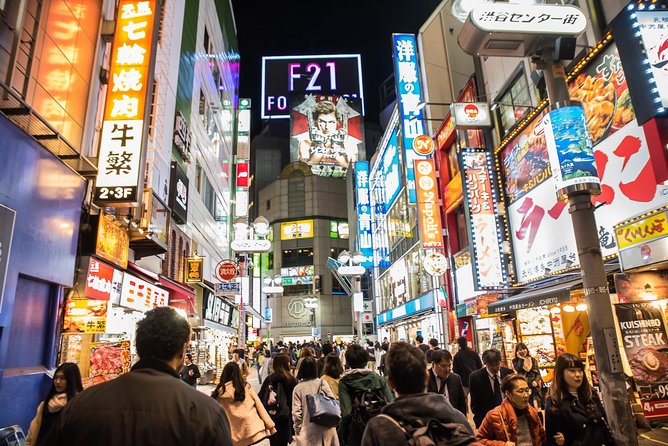
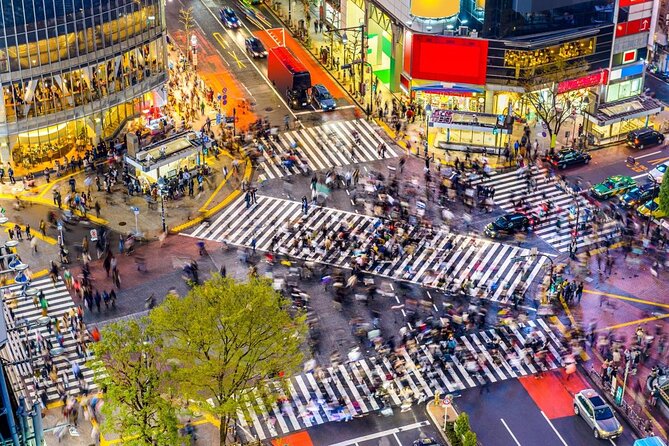
The crossing gets only a short stop, and that is a good thing. You will see the famous intersection, but you are not paying $217 simply to stand among the crowds and take photographs.
Some guides have also shown participants a useful view of the crossing from above. That detail is not guaranteed, but it is the sort of practical local tip that can make the stop more worthwhile. The tour keeps moving, so you get a sense of the area without losing much of your food time.
The route may also pass Shibuya 109 and Mega Don Quijote. These are not food tastings in themselves, but they help place the neighborhood in context. Shibuya 109 represents the district’s fashion side, while Mega Don Quijote gives you a look at one of Tokyo’s famously packed discount stores.
Five food stops, with room for substitutions
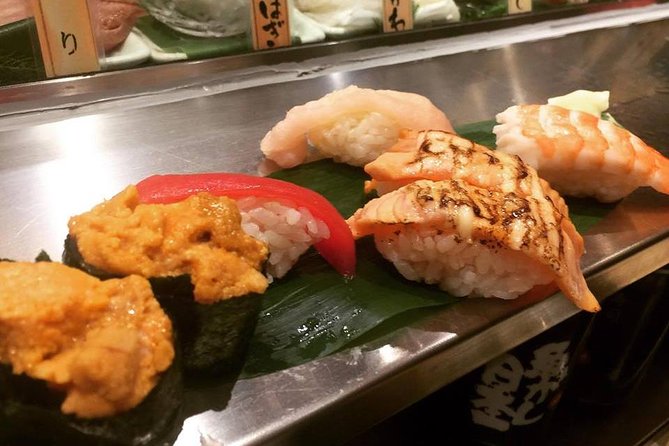
The core of the tour is the sequence of five food stops. The exact restaurants and dishes can change because of restaurant schedules, public holidays, weather, and other conditions. That flexibility protects the tour from a closed venue, but it also means you should not book expecting a fixed menu.
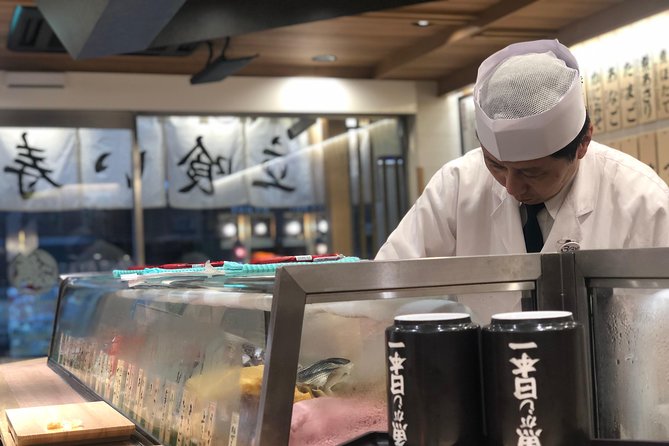
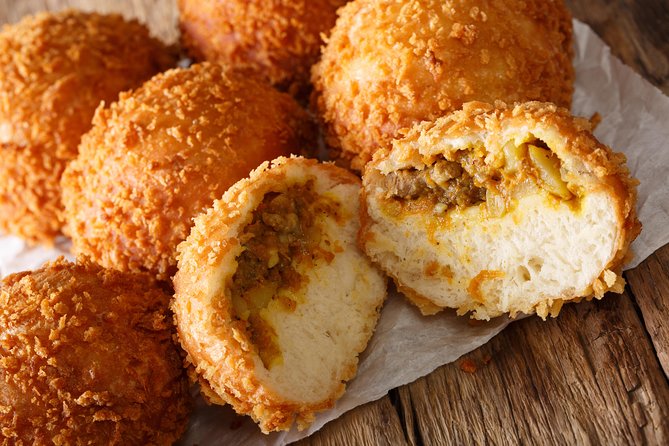
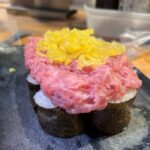
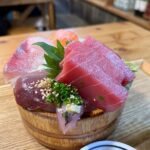
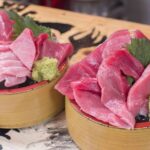
Possible foods include Hiroshima-style okonomiyaki, several kinds of sushi, Wagyu beef yakitori, ramen, gyoza, chicken wings, a vegetable and egg dish, seasonal foods, and dessert. Not every departure will include every item. The supplied details specifically present the dishes as examples, so ask your guide what is being served if one particular food matters to you.
The design works well for first-time visitors who want variety. Instead of ordering a large plate of one unfamiliar dish, you get smaller chances to test different flavors and textures. I especially like this format for people who want to try regional Japanese food but are not yet confident ordering alone.
It is also a good way to learn how different food businesses operate. A tiny counter, an informal side-street restaurant, and an underground department-store food hall each offer a different view of eating in Tokyo. The food hall stop at Tokyu Food Show is particularly useful because you can see the range of prepared foods and sweets sold in a Japanese department store basement.
Still, the food quality may vary from stop to stop. Some visitors found the sushi and ramen excellent, with one guide showing how to season ramen. Others found the restaurants average, and one person felt several venues seemed chosen mainly for the tour rather than for their own atmosphere. That is the central value question: you are paying for access, guidance, translation, and variety, not a guaranteed parade of elite restaurants.
Nonbeiyokocho and Shibuya’s smaller lanes
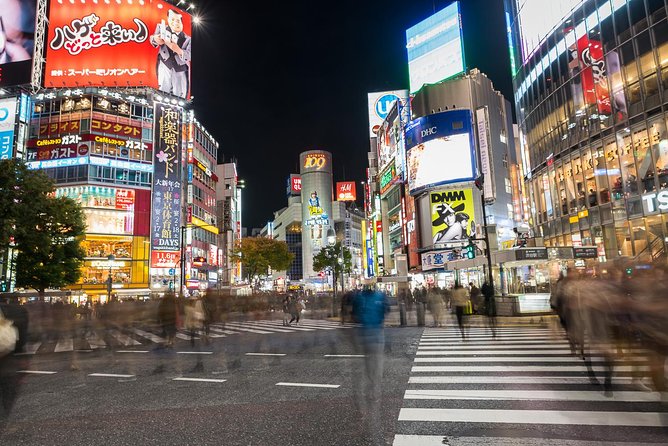
Nonbeiyokocho adds a different mood to the walk. Its narrow lanes and small eating places show a side of Shibuya that is easy to miss if you stay around the crossing and large shopping centers.
The route is not a historical walking tour, but these short stops give your guide openings to explain Japanese food customs, neighborhood habits, and the meaning behind certain dishes. Guides such as Jane and Jacob have been praised for connecting the food to Japanese culture, while Alex has been singled out for local recommendations and helpful advice for the rest of a Tokyo visit.
That guide quality matters here. The restaurants may not always speak much English, and some dishes are easier to understand when someone explains what you are seeing. A good guide can also help you pace the meal, handle substitutions, and explain how to season or eat a dish.
The experience depends heavily on the individual guide. Names associated with especially strong departures include Seika or Saika, Clara, Ray, Melissa, Jacob, Jane, Alex, Sandra, Vanessa, Daniel, Maya, and Yu. You cannot assume you will receive a particular guide, but the repeated praise for friendly explanations, food advice, and cultural conversation shows how much the guide shapes the evening.
A few more Tokyo tours and experiences worth a look

Tokyu Food Show finishes the route
The final point is Tokyu Food Show, at the basement level beneath the station, near the Tokyu Department Store location at 2 Chome-24-1 Dogenzaka. This is the end point, not the original meeting point, so you should plan your onward route from there.
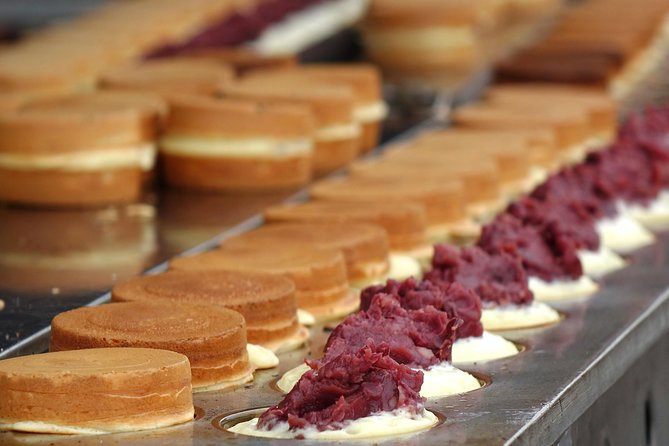
A Japanese depachika, or department-store basement food hall, is a worthwhile finish because it lets you see food as both daily shopping and careful presentation. You might find boxed meals, sweets, prepared dishes, and regional specialties arranged for commuters and shoppers. The stop is short, but it gives you ideas for snacks or gifts after the tour.
The official details list dessert as included, and the route ends at the food hall after the restaurant visits. That makes the final stop feel like more than a simple exit. You finish with a chance to look around, though the walking portion may leave you too full to buy much.
How much food do you actually get?
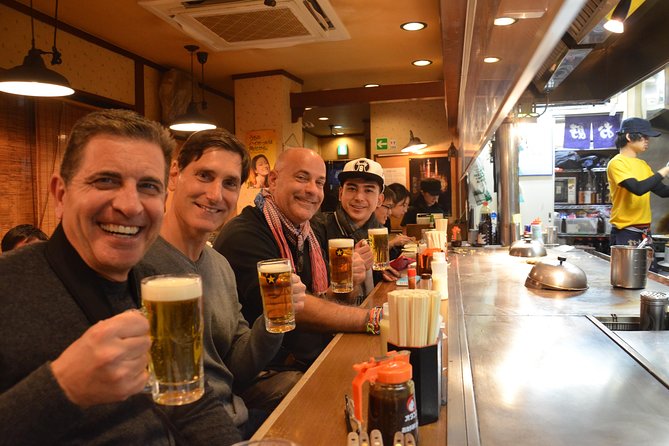
Come hungry. Several people described the food as generous and said they were stuffed by the end. The combination of five stops, dessert, and one drink can amount to a full dinner rather than a light tasting.
The portions are not described as a fixed menu, so your experience can vary. One critical account listed ramen, eight pieces of nigiri sushi, a vegetable and egg dish with bacon, chicken wings, gyoza, and sliced cucumber, but still felt the overall package was too expensive. That is useful context: generous food does not automatically mean good value for every palate.
You also need to keep dietary needs in mind. The experience is listed as vegan and vegetarian-friendly, and guides have handled non-pork requests. You should state your restrictions when booking and repeat them to the guide at the start. The information does not promise that every dish can be adapted, so flexibility is important.
Children receive chicken skewers instead of beef. Children must be accompanied by an adult, and passport information is required for children age 10 and above. The tour is family-friendly, and guides have helped families with young children by allowing restroom breaks and adjusting the walking pace.
The $217 question
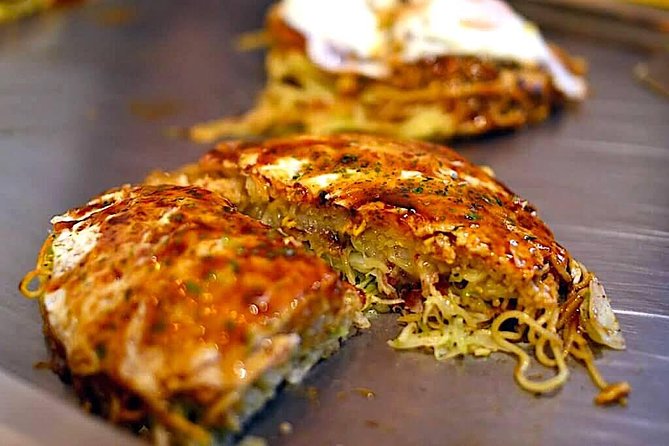
At $217 per person, this is not a bargain food crawl. The price includes a local guide, five food stops, dessert, and one drink, but other food and drinks are not included. Transportation and hotel pickup are also not included.
I would judge the value by your comfort level in Tokyo. If you can read menus, find small restaurants, order confidently, and understand how to move through Shibuya’s back streets, you can spend much less on your own. In that case, the tour may feel overpriced, especially if the assigned restaurants are merely average.
If you want a guided first evening, the price buys more than food. You get a planned route, help with ordering, cultural explanations, and access to places you might otherwise walk past. You also avoid spending time comparing restaurants in a huge district. For a short visit, that convenience can matter.
The tour is booked an average of 68 days ahead, which suggests that planning early is sensible. The maximum group size is 10, but the actual group may be smaller. A small group makes it easier to ask questions and keeps the restaurant changes manageable.
Walking, timing, and the late-arrival warning
The tour lasts about three hours and requires moderate physical fitness. You will move between several food stops, so comfortable shoes are sensible. The supplied details do not give an exact walking distance or step-free route, so contact the provider if mobility is a concern.
The tour begins at 4:00 pm and finishes around 7:00 pm, although the exact end can shift with restaurant service. Because you move from place to place, arriving late is a serious problem. The group may not be able to wait or meet you at a later restaurant, and the fare may be lost.
The meeting point is near public transportation, but hotel pickup and drop-off are not provided. I would make your way to Hachiko Square independently and save the end point in your phone. A mobile ticket is included, and booking confirmation is sent at the time of purchase.
Who will enjoy this Shibuya food walk?
I would recommend it most strongly to first-time Tokyo visitors who want a guided start in Shibuya, eat a lot, and prefer variety over a single restaurant reservation. It also suits families, provided children can manage a three-hour walking and eating schedule.
Food-focused visitors should decide how much they value local guidance. The route covers familiar Japanese favorites, but it is not presented as a specialist chef experience or a luxury dining tour. The best parts are the range of foods, the smaller streets, and the chance to ask questions as you go.
I would be more cautious if you are a serious restaurant hunter with a carefully planned Tokyo food list. You may find the $217 cost hard to justify, especially if you prefer selecting your own restaurants. The same is true if you want a quiet meal, since moving between several venues creates a more active evening.
A karaoke after-party is available, but the supplied details do not state whether it costs extra or exactly how it operates. Treat it as an optional add-on and confirm the details before committing.
Should you book the Best of Shibuya Food Tour?
Book it if you want a guided, filling introduction to Shibuya and would rather let someone else handle the route, ordering, and explanations. The strongest reasons are the five-stop format, the side streets, the department-store food hall, and guides who can add useful advice about Japanese dishes and customs.
Skip it if $217 feels high for a meal, or if you are comfortable exploring Shibuya independently. The restaurants can change, the food quality is not uniform, and the experience is only as strong as the guide and the day’s selections.
My practical call: book early if you want a family-friendly orientation on your first Tokyo evening, arrive well before 4:00 pm, and eat nothing beforehand. Ask about the day’s menu and dietary substitutions at the start. If the answer sounds broad enough for your tastes, the tour can be a convenient and enjoyable way to get your bearings in Shibuya.
FAQ
Where does the Best of Shibuya Food Tour start?
The tour starts in front of the Hachiko mural at the Hachiko Exit, near Hachikō Family at 2 Chome-1 Dogenzaka, Shibuya, Tokyo.
What time does the tour begin?
The listed start time is 4:00 pm.
Where does the tour end?
The tour ends at Tokyu Food Show, at the basement level under the station, near the Tokyu Department Store location at 2 Chome-24-1 Dogenzaka.
How long does the experience last?
The walking food tour lasts approximately three hours.
How many people can join?
The maximum group size is 10 travelers.
Is food included in the price?
Five food stops and dessert are included. The tour also includes one drink. Additional food and drinks are not included unless specified.
What foods might be served?
Possible foods include Hiroshima-style okonomiyaki, sushi, Wagyu beef yakitori, ramen, gyoza, chicken wings, seasonal dishes, and dessert. Restaurants and dishes may change.
Is the tour suitable for children?
Yes. It is family-friendly, but children must be accompanied by an adult. Children receive chicken skewers instead of beef.
Can the tour accommodate dietary restrictions?
The experience is listed as vegan and vegetarian-friendly, and non-pork options may be available. State your restrictions when booking and confirm them with the guide.
What happens if the weather is poor?
If poor weather causes cancellation, you will be offered another date or a full refund. The tour also requires a minimum number of participants, and a different date, experience, or full refund is offered if that minimum is not met. Free cancellation is available up to 24 hours before the start time.
More Food Experiences in Tokyo

More Tokyo Food Tours in Tokyo
More Shibuya Tours in Tokyo
More tours in Tokyo we've reviewed




Tokyo Food Tours, compared.
 ★ 5.0Tokyo: Shinjuku Food Tour (13 Dishes at 4 Local Eateries)From $86
 ★ 4.9Tokyo: Shinjuku Food Tour (15 Dishes and 4 Eateries)From $853 hours
 ★ 5.0Best of Shinjuku: Izakaya Food Tour (4 Stops, 14+ Tastings)From $92
 ★ 5.0Tokyo Night Foodie Tour in Shinjuku – Seasonal Sushi, Wagyu BeefFrom $111
 ★ 5.0Eat and Drink Like a Local: Tokyo Ueno Food Tour-Taverns&RamenFrom $95
 ★ 5.0Tokyo: Shibuya Food Tour (13 dishes and 4 Eateries)From $77