
Reviewed · VEGAN & VEGETARIAN
Beauty Vegan Dessert Cooking Class + Sake Kasu Hand Mask Trial!
The unusual draw here is fermented-food desserts. In two hours, you learn how amazake and sake kasu fit into Japanese cooking, prepare vegan sweets, and finish with a Japanese beauty afternoon tea and sakura tea. It is a food class with a small wellness lesson attached.
I like the intimate maximum of six people, which gives the teacher room to explain unfamiliar ingredients. I also like the practical recipe handout, since you can try making amazake again at home. The main consideration is sake kasu: it contains about 8 percent alcohol, and the hand mask may irritate sensitive skin.
In This Review
- Key points to know before booking
- Why fermented desserts make this class different
- Meeting near Akasaka-Mitsuke at 2:00 pm
- A small class with room for questions
- What happens during the two-hour class
- An introduction to amazake and sake kasu
- Preparing vegan desserts
- Tea and the beauty afternoon break
- The sake kasu hand mask deserves careful attention
- Is $64.09 good value in Tokyo?
- Who will enjoy this most
- Booking, cancellations, and useful planning details
- Should you book this fermented dessert class?
- FAQ
- Where does the class meet?
- What time does the activity start?
- How long does the class last?
- Is the food vegan?
- Does sake kasu contain alcohol?
- Can participants avoid sake kasu?
- Is the hand mask suitable for sensitive skin?
- What is included in the price?
Key points to know before booking
- Amazake without added sugar: Learn how fermented rice creates a naturally sweet ingredient for desserts and drinks.
- A hands-on beauty theme: Try a sake kasu hand mask, then sit down to a small Japanese afternoon tea.
- All-vegan menu: The desserts use plant-based ingredients, with seasonal changes to the menu.
- Small group setting: The class accepts no more than six people, making it easier to ask questions.
- Convenient Tokyo timing: Meet at 2:00 pm near Akasaka-Mitsuke Station, about 10 minutes from Shibuya Station.
- Alcohol matters: Sake kasu contains around 8 percent alcohol. Participants under 20 or anyone avoiding alcohol can request banana instead.
Why fermented desserts make this class different
Tokyo offers many cooking classes, but most focus on sushi, ramen, tempura, or wagashi. This one takes a narrower path: it explains how fermentation supports Japanese food culture, then applies those ideas to sweets.
That focus gives the class a clear purpose. You are not simply following a recipe and taking home a snack. You learn why amazake tastes sweet even without added sugar, and how sake kasu is used as a food ingredient rather than treated only as a byproduct.
Amazake is made from fermented rice and is traditionally very sweet without added sugar. Sake kasu is the nutrient-rich residue left after sake is pressed. It still contains alcohol, so you need to take that point seriously, but it also has a distinctive flavor that works well in desserts.
I like the way this links food with daily Japanese habits. Fermentation is part of the country’s cooking traditions, yet it can be hard to understand from a restaurant menu. Here, you get a direct explanation, a recipe, and a chance to taste the ingredients in more than one form.
The beauty angle is also specific rather than vague. The lesson connects fermented foods with gut health and skin care, then gives you a hand mask trial to test one use of sake kasu outside the kitchen. You can decide for yourself how much of the wellness message you accept, but the experience gives you something concrete to taste and try.
Other cooking classes in Tokyo
Meeting near Akasaka-Mitsuke at 2:00 pm
The meeting point is Akasaka-Mitsuke Station, at 3-chōme-1-6 Akasaka in Minato City. The class begins at 2:00 pm and lasts about two hours, ending back at the meeting point.
This timing works well on a Tokyo sightseeing day. You have the morning free for a market, museum, or neighborhood walk, then spend the afternoon indoors. The venue is also described as about 10 minutes from Shibuya Station, which makes it useful if your plans are based around Shibuya.
You will need to arrange your own transportation to the venue. Public transportation is nearby, and the mobile ticket makes it easy to keep the booking on your phone.
The experience is described as weather-friendly because the class takes place indoors, but the cancellation terms note that it requires good weather. If poor weather causes a cancellation, you can choose another date or receive a full refund. It is worth checking the day’s arrangements before setting your afternoon around the class.
A small class with room for questions
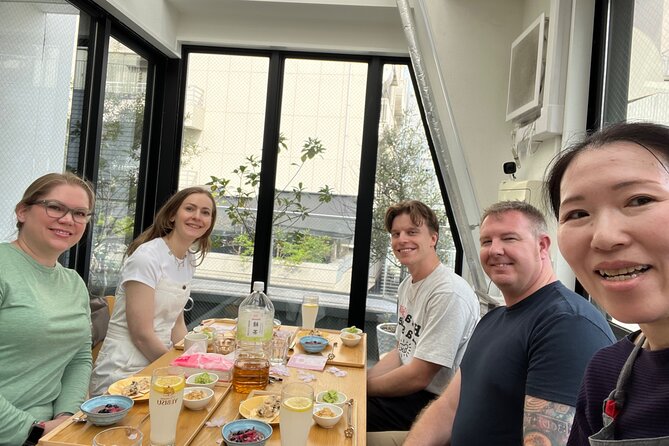
The group is limited to six people. That detail matters more here than it would in a simple demonstration. Amazake and sake kasu may be new to you, and the class includes cultural and health explanations as well as food preparation.
A large room can make a cooking class feel like a show. A six-person group should feel more like a lesson, with space to ask how to find rice koji, how to use amazake, or how sake kasu changes a dessert’s taste.
The available feedback points to a teacher who is kind and encouraging. One participant took this class along with the separate fermented-food lunch class and found the dessert session a useful follow-up, especially for learning how fermentation works in sweet dishes.
That pairing is worth considering. The lunch class begins at 11:00 am, and people who book both classes on the same day receive a gift of rice koji amazake, the same type used in the dessert class. It turns the day into a full introduction to fermentation, though it also means committing most of your day to one subject.
The lecture may not suit children age six and under because of its difficulty. This is better for adults and older children who can listen, handle ingredients, and follow a food lesson.
What happens during the two-hour class
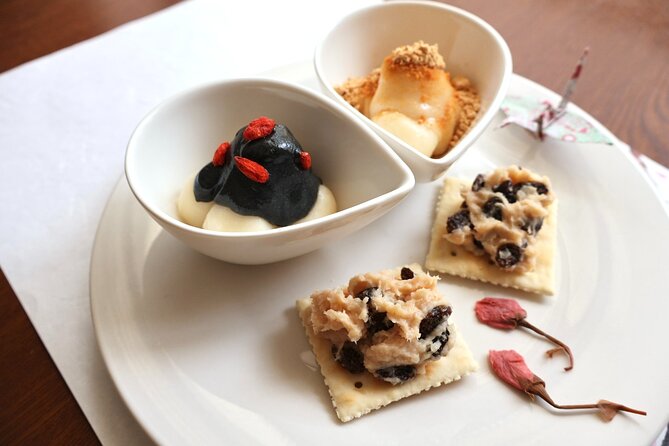
The exact menu changes with the season, so you should not book this expecting one fixed dessert. The reliable theme is vegan sweets made with Japanese fermented ingredients, followed by tea and the hand mask trial.
An introduction to amazake and sake kasu
The class begins with an explanation of fermented foods and their place in Japanese cuisine. You learn about amazake, sake kasu, Japanese superfoods, and the connection between food, health, and beauty.
Amazake is especially useful for understanding the class. It is traditionally sweet without sugar, so it can replace or reduce the need for added sweeteners in certain desserts. Sake kasu has a stronger connection to sake production and contains alcohol, which gives it both culinary interest and practical restrictions.
The lecture handout includes recipe information and presentation material. That is a real benefit. Fermentation can sound simple while being difficult to repeat at home, so written instructions give you something to consult after the class.
The health claims should be treated as general food education, not medical advice. The experience presents amazake and sake kasu as ingredients linked with gut health and glowing skin, but your own diet and skin can respond differently.
A few more Tokyo tours and experiences worth a look

Preparing vegan desserts
You then use the ingredients in desserts. Since everything is vegan, this suits people avoiding dairy, eggs, or other animal products. You should still tell the provider about allergies or restrictions when booking, rather than assuming that vegan means free from every possible allergen.
The recipes give you a practical way to understand the ingredients. It is one thing to taste amazake from a drink or shop; it is another to see how its sweetness fits into a dessert. The same applies to sake kasu, whose flavor may be unfamiliar if you have only encountered it in the context of sake.
Because the menu changes by season, the class can reflect available ingredients, but you lose the certainty of knowing the exact dishes in advance. If one particular dessert is the main reason you want to book, ask the provider what is planned for your date.
Tea and the beauty afternoon break
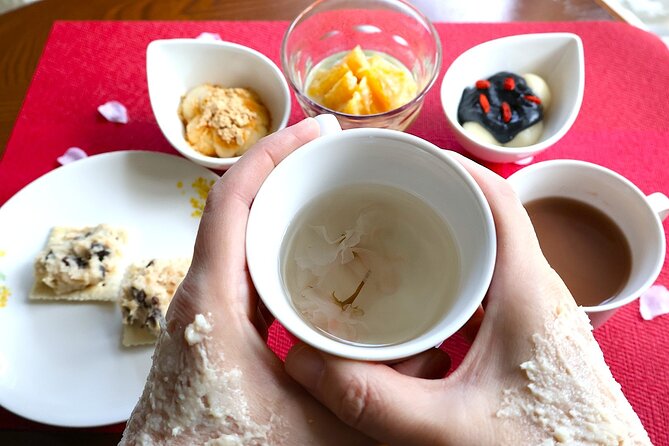
After making the desserts, you enjoy the food as a Japanese beauty afternoon tea. Coffee, green tea, or another Japanese tea is included, along with sakura tea.
The tea service gives the class a relaxed finish rather than ending at the mixing bowl. Sakura tea also adds a seasonal Japanese touch, though the experience does not promise that every part of the menu remains the same throughout the year.
The food portion is included in the price, so you are not paying for a lesson and then buying your own tasting plate afterward. That helps the $64.09 cost feel reasonable, particularly when you value the cultural explanation and the small group size.
The sake kasu hand mask deserves careful attention
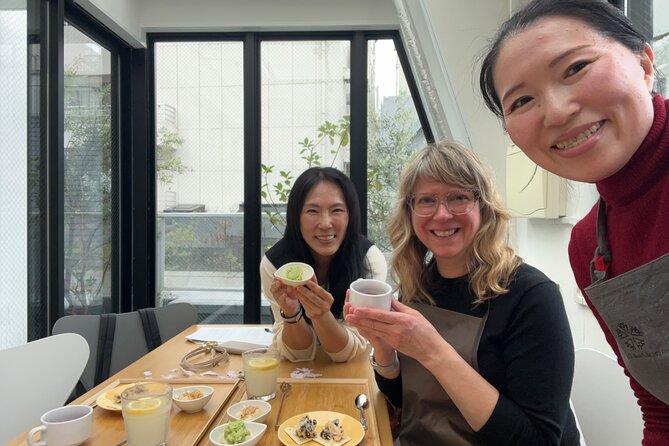
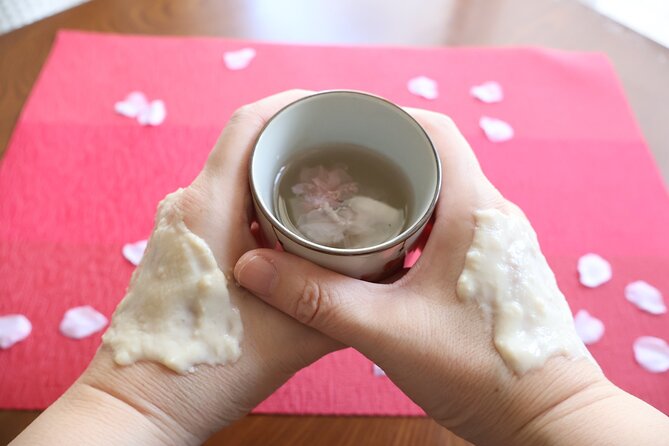
The hand mask is the class’s most unusual extra. You try sake kasu as a cosmetic, not just as a cooking ingredient, and learn how the same fermented product can be used in a beauty routine.
This is a trial, not a full spa treatment. The activity does not promise a lasting skin result, and you should approach the beauty claims with sensible expectations. The value is in experiencing a Japanese ingredient in a different setting and comparing its texture and feel with its role in food.
There are important safety limits. Sake kasu can irritate sensitive skin, just as various foods and cosmetics can. Do not take part in the hand mask if you have cuts or wounds on your hands, and tell the provider about skin concerns before the class.
The alcohol warning applies to the food as well. Sake kasu contains around 8 percent alcohol. If you are under 20, do not drink alcohol, or simply prefer to avoid it, request the banana option in advance. Do not drive after the class.
That banana substitution makes the activity more flexible for families and non-drinkers, but you must write to the provider so the ingredients can be prepared correctly. This is not a detail to leave until you arrive.
Is $64.09 good value in Tokyo?
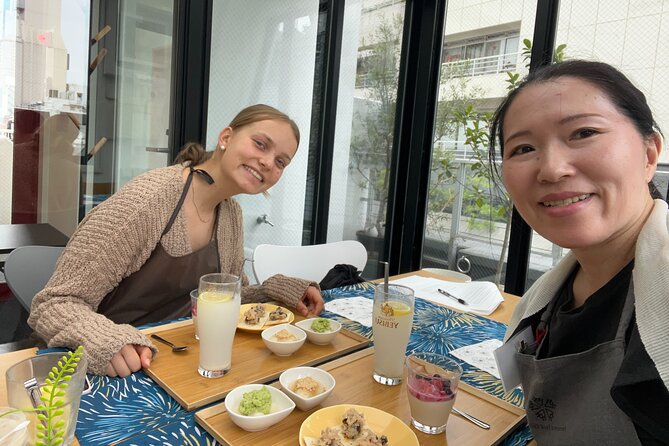
At $64.09 per person, this is not the cheapest way to eat dessert in Tokyo. You are paying for instruction, ingredients, an apron, tea, the food you prepare, written recipes, and the hand mask trial.
I see the value in the combination. A short class focused on a hard-to-find subject can add something that a normal meal cannot. You leave with an understanding of amazake and sake kasu, not just a full stomach.
The maximum of six also helps justify the price. You are not joining a large production where the teacher must rush through questions. The class has enough time for a lecture, food preparation, tasting, and the hand treatment within two hours.
The value is weaker if you want a large amount of food, a full meal, or a broad cooking lesson. This is a narrow class built around fermentation and beauty. You should book it because that subject interests you, not because it is the fastest way to sample every part of Japanese cuisine.
If you also join the 11:00 am fermented-food lunch class, the rice koji amazake gift adds extra value. The two-class plan is best for someone who wants a full food-focused day and has a strong interest in fermentation.
Who will enjoy this most
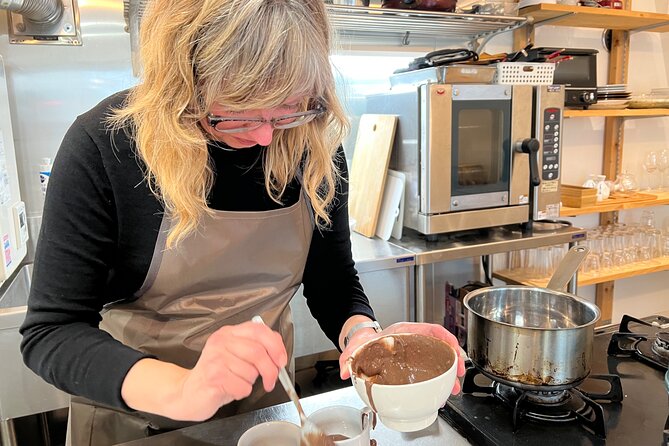
I would choose this class for you if you like food culture, plant-based cooking, or unusual local ingredients. It also suits people who want a calm indoor activity that fits neatly into a Tokyo afternoon.
It is a good match for:
- Vegan and vegetarian visitors who want more than a standard restaurant meal
- Cooks interested in Japanese ingredients they may not find at home
- People curious about fermentation and homemade amazake
- Visitors who prefer small classes over large demonstrations
- Adults and older children able to follow a lecture
- Anyone looking for an activity near Shibuya and central Tokyo
You may want to skip it if you dislike lectures, expect a full meal, or have strong sensitivity to alcohol-based ingredients. You should also reconsider the hand mask if you have sensitive skin, cuts, or open wounds.
The class is not designed as a broad survey of Japanese desserts. Its strength is its narrow subject, and that will either feel wonderfully focused or too specialized for your plans.
Booking, cancellations, and useful planning details
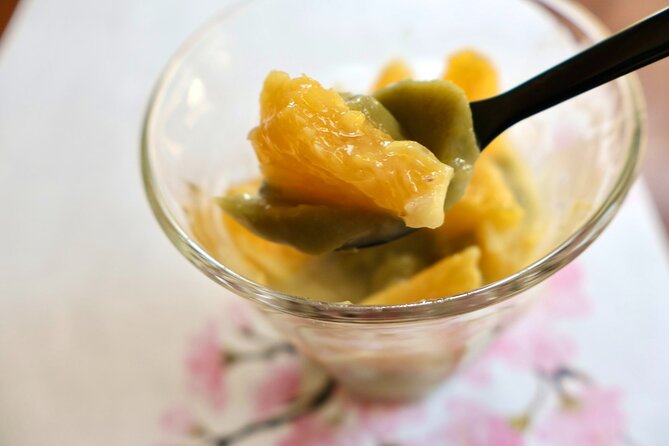
Confirmation normally arrives at booking. If you book within three days of the activity, confirmation can take up to 48 hours and remains subject to availability.
You can cancel up to 24 hours before the 2:00 pm start time for a full refund. Changes or cancellations made inside that window are not accepted and are not refunded. The cut-off uses Tokyo local time, so check the time difference if you are booking from abroad.
Tell Coji Life Cooking about allergies, age-related alcohol restrictions, or a preference for the banana option before you arrive. You should also keep your mobile ticket ready and allow enough time to reach Akasaka-Mitsuke Station.
The experience requires a minimum number of participants. If that minimum is not met, or if poor weather causes a cancellation, you can accept another date or experience, or receive a full refund.
Should you book this fermented dessert class?
Book it if you want a small, focused food lesson that explains a less familiar side of Japanese cuisine. The amazake recipes, seasonal vegan desserts, and written handout give you something useful to carry beyond the afternoon, while the sake kasu mask adds a playful beauty element.
I would especially recommend it to plant-based eaters and curious home cooks. The five-star feedback centers on the same strengths I would value: delicious food, clear learning, a kind teacher, and a desire to keep making amazake after returning home.
Skip it if you want a major sightseeing experience, a substantial meal, or a fixed menu. At $64.09, the class earns its price through its unusual subject and small size, not through quantity.
For the right person, this is a smart two-hour addition to a Tokyo itinerary: practical, tasty, and specific enough to show you a part of Japanese food culture that is easy to miss.
FAQ
Where does the class meet?
The meeting point is Akasaka-Mitsuke Station at 3-chōme-1-6 Akasaka, Minato City, Tokyo 107-0052, Japan.
What time does the activity start?
The class starts at 2:00 pm.
How long does the class last?
The experience lasts approximately two hours and ends back at the meeting point.
Is the food vegan?
Yes. All dishes prepared in the class are vegan.
Does sake kasu contain alcohol?
Yes. Sake kasu contains around 8 percent alcohol.
Can participants avoid sake kasu?
Yes. Participants under 20 and people who do not drink alcohol can request the banana option. You should state this when booking.
Is the hand mask suitable for sensitive skin?
Not necessarily. Sake kasu may irritate sensitive skin, and the hand mask is not available to people with cuts or wounds on their hands.
What is included in the price?
The price includes an apron, the desserts and snacks made during the class, coffee or Japanese tea, a lecture handout with recipes, and the sake kasu hand mask trial. Transportation to the venue is not included.
More Cooking Classes in Tokyo
More Food Experiences in Tokyo
More Cooking Classes in Tokyo
More tours in Tokyo we've reviewed










Vegan & Vegetarian, compared.
 ★ 5.0Vegan Friendly Sushi & Okonomiyaki Shibuya Night Foodie TourFrom $110
 ★ 5.0Ramen & Dumpling Cooking in Tokyo with Chef/Vegan possibleFrom $102
 ★ 5.0Ramen Making from Scratch with Tokyo Mom(Vegan Option Available)From $120
 ★ 4.8Tokyo: 2-Hour Vegan and Vegetarian Ramen Guided Walking TourFrom $962 hours
 ★ 4.7Shibuya Tokyo: Sushi Making Class (Vegan/Vegetarian/Halal)From $581h 30m
 ★ 5.0Tokyo Vegan Food TourFrom $101