
Reviewed · TOKYO FOOD TOURS
Tokyo Local Food Tour: Noodles, Skewers, Dumplings, Sweets
Tokyo’s food scene gets easier when someone else reads the menu and leads you through the station-side maze. This Shimbashi evening tour trades the usual sushi checklist for gyoza, udon, yakitori, drinks, and a fish-shaped taiyaki dessert.
I like the local restaurant focus and the way the stops sit within a few blocks, so you spend your time eating rather than navigating. I also like the friendly English-speaking guides, especially Ryu, who has helped many groups with food tips and wider Tokyo recommendations. The main drawback is simple: the dishes are familiar Japanese favorites, not rare or highly unusual specialties, and the tour cannot officially accommodate vegetarian, vegan, or gluten-free diets.
In This Review
- Key points to know before booking
- Why Shimbashi makes a good food-tour base
- Meeting at SL Square and getting settled
- Gyoza and a drink at the first restaurant
- A quiet udon stop with a generous bowl
- Yakitori, skewers, and the longest stop
- Taiyaki for a sweet finish
- What the guide adds to the meal
- How much food do you receive?
- Who will enjoy this Tokyo food walk?
- Timing, walking, and practical details
- Should you book the Shimbashi food tour?
- FAQ
- Where does the Tokyo food tour begin?
- What time does the tour start?
- How long does the experience last?
- Where does the tour end?
- What food is included?
- Are drinks included?
- Can people under 19 drink alcohol on the tour?
- Can the tour accommodate vegetarian, vegan, or gluten-free diets?
- How many people can join the tour?
- Can I cancel for a full refund?
Key points to know before booking
- Four food stops in Shimbashi: Gyoza, udon, yakitori, and taiyaki make up a full Japanese meal.
- A guide handles the ordering: You get help with menus, restaurant entry, and local food customs.
- The food comes quickly: The tour lasts about 2 hours and 15 minutes, with roughly an hour devoted to skewers and drinks.
- Come hungry: Several servings across four stops can leave you quite full.
- Alcohol is part of the plan: The yakitori stop includes a fun all-you-can-drink setup, but anyone under 19 cannot drink under Japanese law.
- Dietary limits matter: Vegetarian, vegan, and gluten-free requests cannot be accommodated officially.
Why Shimbashi makes a good food-tour base
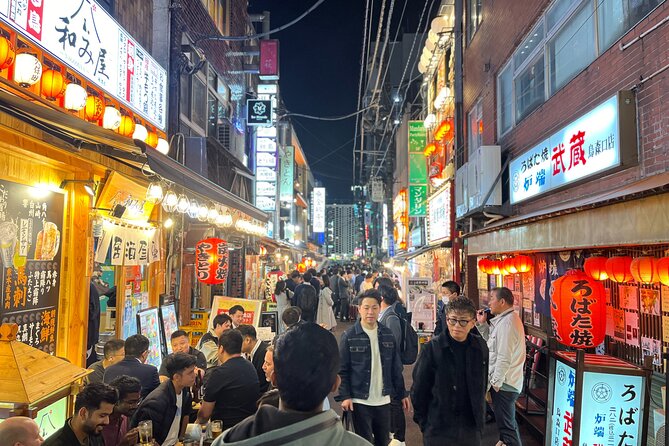
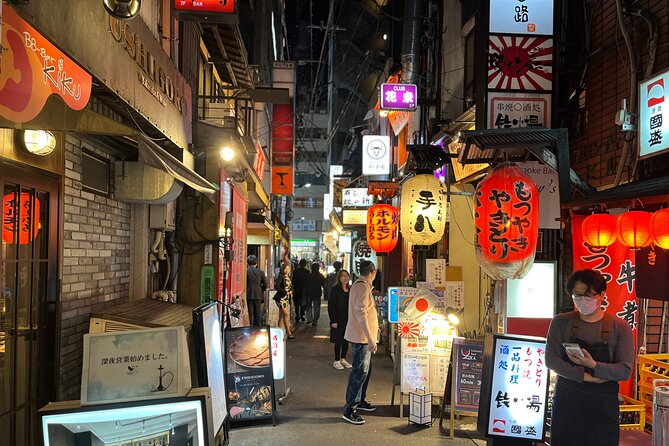
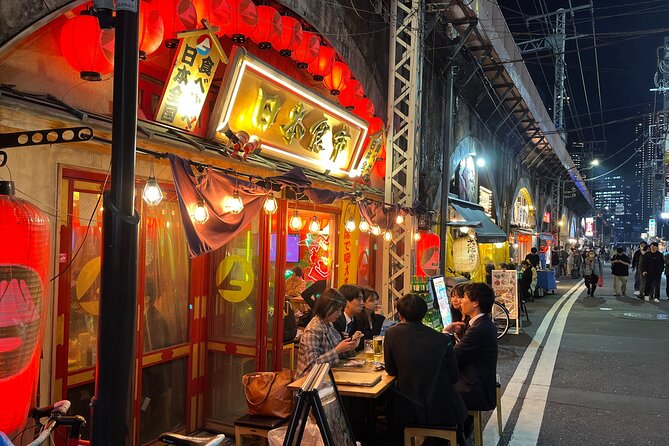
Shimbashi is a practical place for this kind of evening. It is easy to reach by train, and the meeting point at SL Square gives you a clear landmark: the old steam locomotive display near Shimbashi Station. You meet at 6:30 pm, when the area is well suited to a casual dinner crawl.
I like the setting because it gives you a side of Tokyo that can be missed if you stay around major sightseeing districts. The restaurants used here are close together, often only a few blocks apart. That keeps the walking light and the focus on food.
You are not signing up for a grand culinary lecture. This is a relaxed neighborhood evening, built around places you might not spot while rushing through the station area. Your guide leads the way, explains what to order, and helps you feel less awkward when the menu is in Japanese.
The group can reach a maximum of 20 people. That is small enough to feel organized, but it is not necessarily an intimate private meal. Some departures may be smaller, and private bookings are also possible according to the experience details. If you want long one-on-one conversation, ask about the group arrangement before paying.
A few more Tokyo tours and experiences worth a look
Meeting at SL Square and getting settled
The meeting point is SL Square, at 2-chōme-7-先 Shinbashi, Minato City. The steam locomotive display is the useful visual marker, but you should still allow time to find the correct side of the station area. A mobile ticket is provided, and confirmation arrives when you book.
This first stop is only about five minutes. Think of it as a rendezvous, not a sightseeing visit. The guide gathers the group, checks that everyone has arrived, and then walks you toward the first meal.
That short start is useful for first-time visitors who are still learning Tokyo’s train stations. It also gives you a chance to tell the guide about food concerns or drinking preferences. Still, you should not assume every dietary request can be solved on the spot. The official policy says vegetarian, vegan, and gluten-free needs cannot be accommodated.
Several people have praised the guides for clear English and quick communication. Ryu is the name most often associated with the experience, while some bookings refer to hosts as Ryo or Lou. The important practical point is that the guide is there to help you order and keep the evening moving.
Gyoza and a drink at the first restaurant
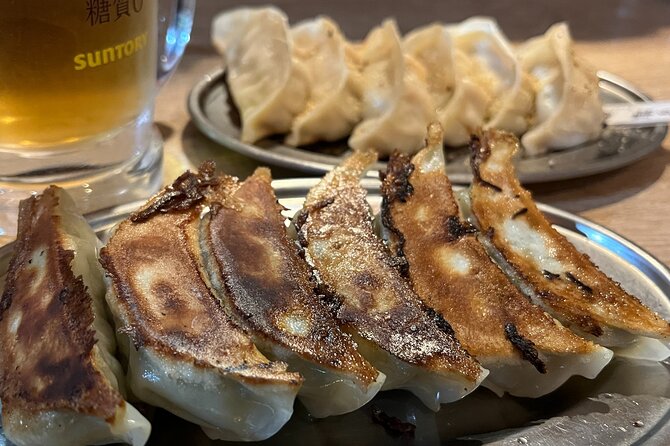
The first proper stop is Japanese dumplings, known as gyoza. You have about 30 minutes here, with food and a drink included.
Gyoza are a familiar choice, but that is not a weakness for a first food tour. The dish gives your guide an easy opening to explain how Japanese dumplings differ from versions you may have eaten elsewhere. You can concentrate on texture, dipping sauce, and the social rhythm of a small local restaurant without worrying about how to place the order.
The drink also helps set the tone. This is not a formal tasting with tiny portions. It is a casual meal where you sit, eat, and talk. The guide can point out menu terms and offer tips you can use at other Japanese eateries later in your trip.
I would not book this tour expecting gyoza you have never encountered before. One less enthusiastic assessment found the food very good but not especially unusual, noting that dumplings were already familiar. That is a fair point. The value here comes from the setting, the guidance, and the combined meal, not from each dish being a once-in-a-lifetime discovery.
A quiet udon stop with a generous bowl
Next comes udon, with about 20 minutes set aside for the stop. Udon is thick, chewy wheat noodle served in a range of hot or cold preparations. The exact bowl can vary, so you should treat this as a chance to try the house choice rather than a guaranteed specific topping.
The noodle shop has been described as tucked away and easy to miss without a local host. That is exactly where a guided walk earns its keep. Tokyo has countless small restaurants, but finding a place that fits a group, serves quickly, and welcomes visitors is harder when you cannot read the signs.
This stop is brief, but it adds a different texture and pace to the meal. After dumplings, a bowl of noodles makes the evening feel like a proper Japanese dinner rather than a string of snacks.
You should also listen carefully if the guide gives ordering advice here. A menu-reading tip can be more useful than a long cultural talk, since you can use it at the next noodle shop you visit on your own. Some groups have received extra food recommendations for Tokyo, Kyoto, and Osaka as part of the conversation.
Yakitori, skewers, and the longest stop
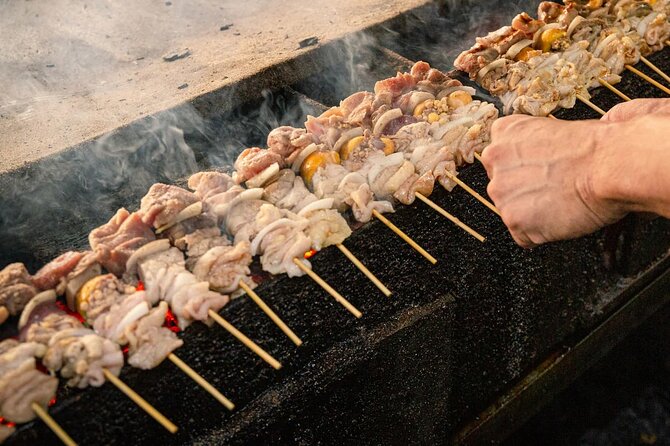
The yakitori stop takes about an hour, making it the heart of the tour. Yakitori means grilled chicken skewers, though the exact varieties served can differ. You may receive several types, and the guide can help explain what is arriving at the table.
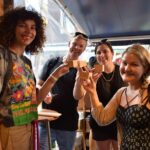
This is likely the most social part of the evening. The tour includes a fun all-you-can-drink alcohol arrangement, so you should expect this stop to feel more like a casual Japanese drinking night than a quiet restaurant tasting. If you enjoy beer, cocktails, or other available drinks, the format gives you time to settle in and chat.
If you do not drink much, this part deserves some thought. A guide has adjusted suggestions for a non-drinker on at least one occasion, but the tour description specifically includes alcohol. Ask before booking if drinks are a major concern. Anyone under 19 cannot have alcoholic beverages under Japanese law.
The skewers also show why a local guide can be useful. A restaurant menu may offer several cuts and preparations that are not obvious to an English reader. You can try the food without needing to point at random characters or order only the dishes you already know.
There is a practical tradeoff. An all-you-can-drink stop can make the tour lively, but it may not suit families with young children or people seeking a serious study of Japanese grilling. The group size can reach 20, and restaurant seating may feel communal rather than private.
A few more Tokyo tours and experiences worth a look


Taiyaki for a sweet finish
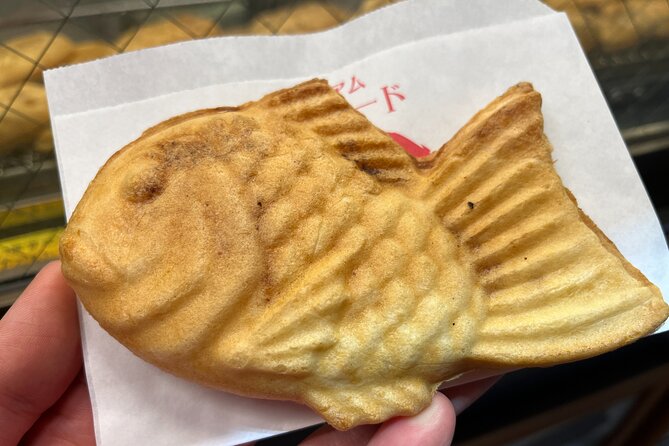
The last stop takes around 10 minutes and offers taiyaki, the fish-shaped cake often seen in Japanese food photos and social media. It is commonly filled with sweet paste or custard, though the precise filling can vary.
Taiyaki is a smart ending because it is easy to eat after a substantial meal. It gives you one final Japanese food term to remember, and its shape makes the dessert feel distinctly tied to Japan rather than simply another pastry.
The stop is short, so do not expect a separate dessert course with time for a long visit. It is a quick final bite before the group returns to the meeting point. By then, you have sampled four food styles in one neighborhood: dumplings, noodles, skewers, and a sweet cake.
What the guide adds to the meal
The strongest part of this experience is the human help. A restaurant crawl can sound easy until you face an unfamiliar menu, unclear ordering rules, and a crowded station district. Your guide removes much of that friction.
Ryu is frequently praised for fluent English, humor, patience, and a warm manner. He has helped people who were lost near the meeting point, waited for late arrivals, and offered restaurant suggestions for the rest of a Japan trip. Families have also found him easy to talk with, including teenagers interested in manga.
That matters because food tours work best when conversation feels natural. You are not simply being marched from one plate to the next. You can ask about ingredients, local eating habits, and what to try in other cities. The guide may also send photos or additional dining suggestions after the evening, though you should treat that as a personal touch rather than a guaranteed feature.
Guide quality can vary from one departure to another, as it can on any small-group activity. Still, the repeated praise for friendly English-speaking hosts gives this tour a strong advantage for anyone worried about ordering in Tokyo.
How much food do you receive?
The price is $74.64 per person. That includes the food and drinks listed across the four stops, though the exact portions and drink choices are not specified.
For Tokyo, the value depends on what you want from an evening. If you only want the cheapest possible meal, you can spend less by choosing one noodle shop or an inexpensive izakaya on your own. But that does not include a guide, menu help, a planned route, or the chance to enter several places with a local host.
You should also compare the tour with the cost of making four separate food decisions in an unfamiliar area. The included meal is plentiful enough that several people have found themselves very full by the end. That makes the price easier to justify if you want dinner plus orientation.
The value is less convincing if you already know Shimbashi well, speak Japanese, and are comfortable ordering anywhere. It is also not ideal if you want rare ingredients or chef-led explanations. This is a practical, social food walk, not a luxury tasting menu.
Who will enjoy this Tokyo food walk?
I would recommend it most strongly for:
- First-time visitors who want a gentle start to Japanese dining
- People staying near Shimbashi or able to reach the station easily
- Couples, families, and small groups who enjoy conversation with a guide
- Diners who want local-style restaurants instead of famous tourist stops
- Anyone who wants dinner plans without handling every menu and payment detail alone
- Visitors who want food suggestions for other parts of Japan
You should think twice if you are vegetarian, vegan, or gluten-free, because those needs cannot officially be accommodated. I would also be cautious if you dislike alcohol-centered dining, want a very small group, or expect highly unusual dishes.
The experience suits adventurous eaters, but it is not a dare-based food challenge. The menu centers on accessible Japanese favorites. That makes it a good introduction, though a less exciting choice for someone who has already eaten widely in Japan.
Timing, walking, and practical details
The tour lasts about 2 hours and 15 minutes, beginning at 6:30 pm and ending back at the meeting point. The stops are close together, so the walking should be manageable for most people. The activity is near public transportation, which helps you continue your evening afterward.
Come hungry, but do not arrive starving. You need enough appetite for four stops, and the meal builds from dumplings to noodles, skewers, and dessert. The yakitori course is the longest stop, so you should expect the evening to slow down there.
Wear comfortable shoes, even though the route is compact. Station districts can involve short stretches of walking, stairs, and busy sidewalks. The exact restaurant seating setup is not provided, so anyone needing special access should confirm details before booking.
Free cancellation is available if you cancel at least 24 hours before the local start time. Cancellations or changes made inside that window are not refunded or accepted.
Should you book the Shimbashi food tour?
Book it if you want an easy, friendly introduction to everyday Japanese food, especially on your first night or first full day in Tokyo. The combination of gyoza, udon, yakitori, drinks, and taiyaki gives you a satisfying range without sending you across the city.
I especially like this tour for people who feel nervous about menus or restaurant customs. A good guide can turn a confusing food district into a comfortable evening, and the repeated praise for Ryu’s English, humor, and personal recommendations is encouraging.
Skip it if you need strict dietary control, dislike drinking-focused restaurants, or want food that feels rare and surprising. For everyone else, $74.64 is a reasonable price for a full dinner, four stops, and local guidance in Shimbashi. Just bring an appetite and keep your expectations in the right place: this is a fun neighborhood meal, not a culinary master class.
FAQ
Where does the Tokyo food tour begin?
The tour begins at SL Square, located at 2-chōme-7-先 Shinbashi, Minato City, Tokyo 105-0004, near the steam locomotive display.
What time does the tour start?
The start time is 6:30 pm.
How long does the experience last?
The tour lasts approximately 2 hours and 15 minutes.
Where does the tour end?
The activity ends back at the meeting point.
What food is included?
The tour includes Japanese gyoza, udon noodles, yakitori skewers, and a fish-shaped Japanese sweet called taiyaki.
Are drinks included?
Drinks are included. The yakitori stop includes an all-you-can-drink alcohol arrangement.
Can people under 19 drink alcohol on the tour?
No. People under 19 cannot have alcoholic beverages because of Japanese law.
Can the tour accommodate vegetarian, vegan, or gluten-free diets?
No. The stated policy says these dietary needs cannot be accommodated.
How many people can join the tour?
The maximum group size is 20 people.
Can I cancel for a full refund?
Yes, if you cancel at least 24 hours before the experience start time. Cancellations made less than 24 hours in advance are not refunded.
More Dessert Tours in Tokyo



More Food Experiences in Tokyo
More Tokyo Food Tours in Tokyo
More tours in Tokyo we've reviewed






Tokyo Food Tours, compared.
 ★ 5.0Tokyo: Shinjuku Food Tour (13 Dishes at 4 Local Eateries)From $86
 ★ 4.9Tokyo: Shinjuku Food Tour (15 Dishes and 4 Eateries)From $853 hours
 ★ 5.0Best of Shinjuku: Izakaya Food Tour (4 Stops, 14+ Tastings)From $92
 ★ 5.0Tokyo Night Foodie Tour in Shinjuku – Seasonal Sushi, Wagyu BeefFrom $111
 ★ 5.0Eat and Drink Like a Local: Tokyo Ueno Food Tour-Taverns&RamenFrom $95
 ★ 5.0Tokyo: Shibuya Food Tour (13 dishes and 4 Eateries)From $77