
Reviewed · YOKOHAMA
Tokyo 8hr Private Tour with Licensed Guide from Yokohama
Tokyo is easiest to understand when you stop treating it like a checklist. This private day from Yokohama lets you choose the parts of the city you care about, then links them by train, subway, and foot. You can pair Senso-ji and Asakusa with Meiji Shrine, Shibuya, a garden, or a fish-market lunch.
I like the private format because your guide can adjust the pace and explain how to move through Tokyo rather than simply point at sights. I also like the Yokohama connection: you keep your hotel or cruise base and return there the same day. The main caution is simple: eight hours goes quickly, and Tokyo’s distances, station corridors, crowds, and walking can make an ambitious wish list feel rushed.
In This Review
- Key points to know before booking
- Why this Yokohama to Tokyo tour works
- Starting in Yokohama and crossing into Tokyo
- Choosing three or four sights without overloading the day
- Imperial Palace and Tokyo’s central gardens
- Asakusa and Senso-ji for old Tokyo
- Meiji Shrine, Harajuku, and Shibuya
- Tsukiji for food and market atmosphere
- Akihabara, Golden Gai, Roppongi, and Odaiba
- Nezu and Shibamata for a quieter side of Tokyo
- Walking, pace, and the real cost of eight hours
- Who gets the most value from this private day
- Booking judgment: a strong choice for a first Tokyo day
- FAQ
- Where does the tour begin?
- How long does the experience last?
- Is the tour private?
- Is transportation included?
- What type of guide is provided?
- Are entrance tickets included?
- Can I choose the places I visit?
- What is the cancellation policy?
Key points to know before booking
- Choose your Tokyo, not somebody else’s: Select from temples, shrines, gardens, markets, shopping districts, and modern neighborhoods.
- Public transport is part of the lesson: Your guide handles trains and subways, ticket buying, transfers, and route choices.
- The tour is truly private: Only your own party takes part, with the day adjusted to your interests and walking speed.
- Expect a full day on foot: Pickup and drop-off are on foot, and transit time counts toward the eight hours.
- Cruise passengers have a useful option: You can meet the guide at Yokohama port as well as at a designated Yokohama location.
- Admission and transit cost extra: Transportation, lunch, personal spending, and some garden entrance fees are not included.
Why this Yokohama to Tokyo tour works
For a cruise stop or a short stay, the hardest part of Tokyo is not finding famous places. It is arranging them in a sensible order. Shibuya, Asakusa, the Imperial Palace, Harajuku, and Tsukiji are not one compact sightseeing zone. Add station changes and you can lose a large part of the day before seeing much.
A private guide gives you a local route planner for the day. Guides such as An, Koba, Taka, Seiji, Taku, and Yoshi have helped visitors combine major sights with food stops, shopping, and less expected places. The strongest part of the experience is often not a single temple or garden. It is having someone explain which train to take, where to change, and how to avoid wasting time.
The tour includes a licensed local English-speaking guide. The exact guide is assigned by the operator, so you should not assume you will receive a particular person. Still, the guide team has shown a useful range: some focus on history and religion, while others help with food, shopping, art, or family needs.
The advertised price is $201.51 per person. That is a serious expense before you add train fares, entrance tickets, lunch, and shopping. I see the value when you are a first-time visitor to Tokyo, have only one day, or are traveling from a ship and cannot afford a missed train or wrong turn. For a large group, group discounts may improve the arithmetic.
For a confident Tokyo regular who already knows the rail system and wants only a few hours at one site, it may be more than you need. You are paying for planning, language help, local judgment, and private attention, not a private car. There is no vehicle included.
Other guided tours in Yokohama
Starting in Yokohama and crossing into Tokyo
The day begins by meeting your guide in Yokohama. Pickup is on foot within the designated area, and meeting at Yokohama port is possible. Some guide arrangements have included meeting at a Yokohama hotel, while other details specify a designated area, so confirm the exact meeting point before the day begins.
You then ride by train toward Tokyo. That first trip is useful because your guide can explain the basic system before the day becomes complicated. Public transportation is included in the experience, but your train and subway fares are not included in the tour price.
The return to Yokohama is also by train with your guide. For cruise passengers, this escort can be especially useful. You are not left to work out the final connection alone after a long day, though you should still allow enough time for your ship’s departure requirements.
Choosing three or four sights without overloading the day
The information for this experience uses slightly different wording about the number of stops. One section describes a customizable tour of three to four sites, while the broader choice list includes many possible stops and describes choosing four to six attractions. Treat the tour as a flexible three or four major-sight day unless the operator confirms otherwise.
That distinction matters. In eight hours, you can see several districts, but you cannot give every one a proper visit. A short stop at Akihabara or Roppongi Hills is a look around, not a full exploration. Ask your guide to group nearby places and tell them which stops matter most.
A sensible plan might be:
- Meiji Shrine, Takeshita Street, and Shibuya
- Imperial Palace, Tsukiji, and Asakusa
- Shinjuku Gyoen, Shinjuku Golden Gai, and a food stop
- Rikugien or Koishikawa Korakuen with Asakusa or Akihabara
Your guide may suggest a different order based on your interests, season, or the time available. That flexibility is the heart of the tour, but it works best when you arrive with a short priority list rather than a demand to see everything.
Imperial Palace and Tokyo’s central gardens
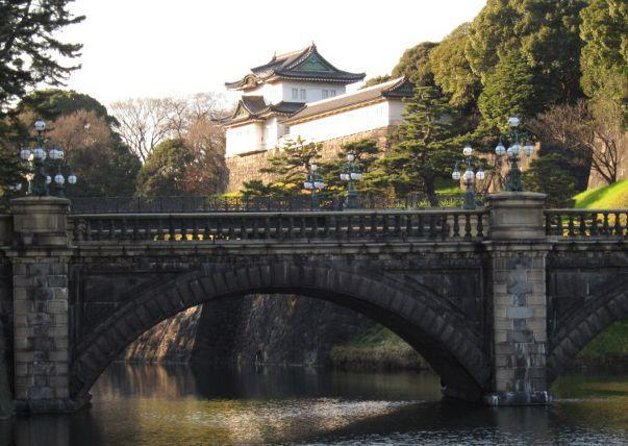
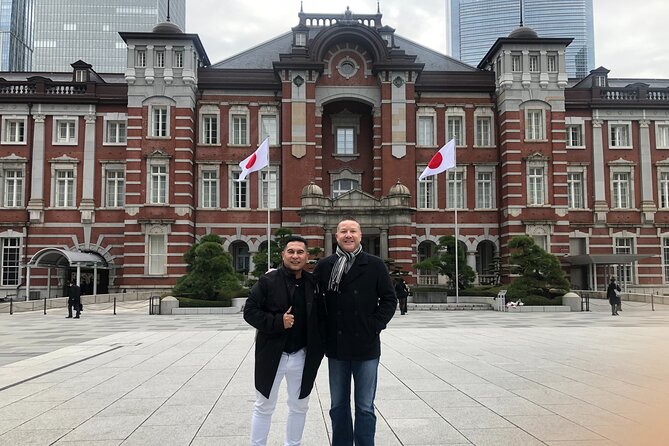
The Imperial Palace offers outer walls and large garden areas, but inside access to the palace is not included. This is a place for a broad introduction to the imperial center of Tokyo, not a palace interior tour.
You can also request one or more of Tokyo’s formal gardens. Shinjuku Gyoen is a large central garden known for cherry blossoms. Its adult admission is listed as ¥500, with a group rate of ¥400, and seniors age 65 and over pay ¥250 with valid identification. That ticket is extra.
Koishikawa Korakuen is one of Tokyo’s oldest Japanese gardens, created in the early Edo period for the Mito branch of the Tokugawa family. Rikugien, built around 1700 for the fifth Tokugawa shogun, is another classic choice and is often paired with Koishikawa Korakuen as one of Tokyo’s finest garden visits.
Hama Rikyu gives you a different setting beside Tokyo Bay. Its seawater ponds change with the tides, and there is a teahouse. Yoyogi Park is less formal, with open lawns, ponds, and wooded areas. These choices are not interchangeable, so tell your guide whether you want carefully shaped gardens, seasonal flowers, imperial history, or open space.
The time allocations can be brief. Koishikawa Korakuen and Hama Rikyu are each listed at 15 minutes, while Shinjuku Gyoen receives an hour and Rikugien 30 minutes. Those figures suggest that the operator may use some places as short scenic stops. If a garden is a major reason you booked, ask for enough time to walk beyond the entrance area.
Asakusa and Senso-ji for old Tokyo
Asakusa is one of the best choices for a first day because it gives you a strong sense of older Tokyo. The temple grounds and shopping street around Senso-ji are free to enter, and the area is easy to pair with a food stop or the Tokyo Skytree area, although the latter is not listed as part of this experience.
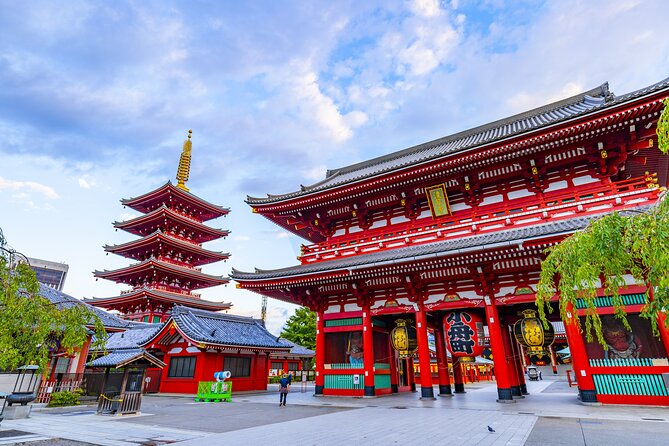
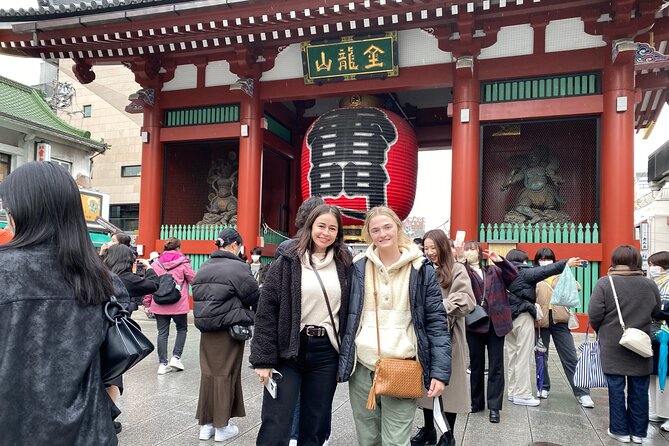
Senso-ji is one of Tokyo’s most colorful Buddhist temples. At the approach, you get the ceremonial gate, shopping stalls, temple customs, and a clear contrast with the glass towers found elsewhere in the city. Your guide can explain the water and incense rituals and how to make an offering.
Allow time for browsing, not just a photograph. The shopping street is part of the appeal, and guides have arranged ramen and other local food in or near Asakusa for some groups. If you want a sit-down meal here, say so early, since lunch can take a large part of an eight-hour day.
Other private tours in Yokohama



Meiji Shrine, Harajuku, and Shibuya
Meiji Jingu is dedicated to the deified spirits of Emperor Meiji and Empress Shoken. Its setting near busy Harajuku gives you a sharp change of mood, from city traffic to a shrine approach through wooded grounds.
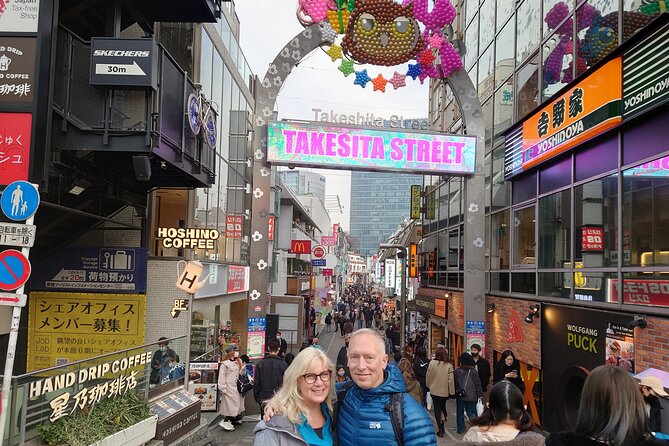
The listed time at Meiji Shrine is only 15 minutes, which is enough for a quick introduction but not a leisurely walk through the grounds. Ask about the timing if you care about the shrine itself. The tour can then continue to Takeshita Street, Harajuku’s famous youth-fashion corridor, where the atmosphere is more commercial, crowded, and playful.
Shibuya Crossing supplies the modern Tokyo image: a famous intersection and a steady flow of people moving in every direction. It is a quick stop, but it works well in a first-day plan. One family also included the Nintendo Store in Shibuya, showing how the private format can make room for a specific shopping request.
The best combination here is Meiji Shrine, Takeshita Street, and Shibuya. They sit along a logical western Tokyo route, though the walk between sights and the station connections still take time.
Tsukiji for food and market atmosphere
Tsukiji Fish Market is listed as a 30-minute stop, with no admission charge. You can explore the old market area and ask your guide for help choosing lunch. Several guides have arranged sushi, conveyor-belt sushi, ramen, shabu shabu, or other Japanese meals based on what the group wanted.
Lunch is not included, so set a food budget before you arrive. The advantage of eating with a guide is practical: you can ask what a menu means, find a suitable restaurant, and avoid spending your limited day wandering while hungry. The tradeoff is time. A proper meal may reduce the number of sights you can visit.
Tsukiji works especially well with Hama Rikyu or the Imperial Palace. It is less efficient to pair it with far eastern Tokyo stops unless food is your main priority.
Akihabara, Golden Gai, Roppongi, and Odaiba
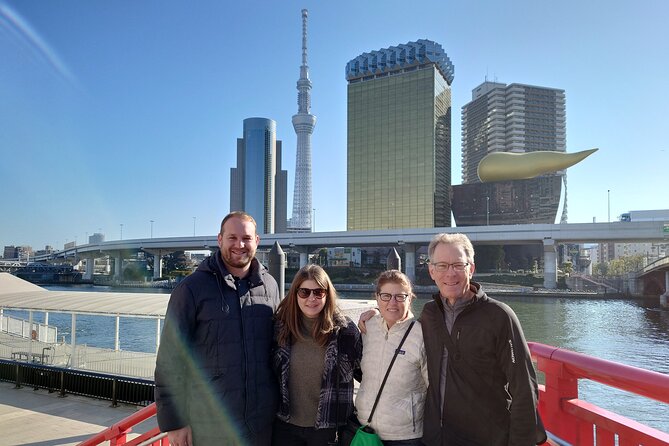
Akihabara is the choice for electronics, games, anime, and Japanese pop culture. The listed time is only 15 minutes, so use it as a taste of the district unless you have a specific store or purchase in mind.
Shinjuku Golden Gai offers a very different view of Tokyo. Its narrow lanes and small eating and drinking establishments grew from the postwar black-market era. A 15-minute visit gives you a look, but it is not enough for a relaxed evening meal, and the tour takes place during the day unless your schedule says otherwise.
Roppongi Hills is a modern complex of offices, homes, shops, restaurants, and a hotel. It can serve as a contemporary city stop, though the listing gives it only 15 minutes and does not include paid attractions there.
Odaiba is a shopping and entertainment district on a man-made island in Tokyo Bay. Its location makes it a poor choice for a packed day that also includes western and eastern Tokyo. Choose it when the bay setting, modern architecture, or shopping matters more to you than adding another historic site.
Nezu and Shibamata for a quieter side of Tokyo
Nezu, along with nearby Yanaka, belongs to Tokyo’s old downtown area and retains much of its last-century character after avoiding major damage from wars and natural disasters. The listed visit is 15 minutes, so this is best treated as a brief neighborhood glimpse.
Shibamata lies at Tokyo’s eastern edge near the Edogawa River. It retains old-style charm and offers a slower contrast to Shibuya or Akihabara. Like Nezu, it is not a quick add-on if your day already includes Asakusa, Shinjuku, and the Imperial Palace. The private format lets you choose it, but you need to accept fewer major sights elsewhere.
These districts appeal to you if you want local streets and a less polished view of the capital. They are not the strongest choices for a first and only Tokyo visit if your main goal is the famous landmarks.
Walking, pace, and the real cost of eight hours
This is a walking tour that uses public transportation. Pickup and drop-off are on foot, and those movements count as part of the tour time. You will walk through stations, transfer between lines, cross busy streets, and cover large temple, park, and shopping areas.
The physical demand is worth taking seriously. A group in its seventies, including one person using a walker, received a flexible pace and help with trains and subways. That is encouraging, but it does not turn the day into an easy sightseeing ride. Tell the operator about mobility limits before booking and avoid a plan with too many distant districts.
Weather also matters. Tokyo heat, humidity, rain, and thunder can change the feel of the day. One group completed its requested sights during very hot, humid weather and a thunderstorm, but conditions clearly added strain. Comfortable shoes, water, and a willingness to shorten the plan are sensible.
Most people can participate, and service animals are allowed. The experience is near public transportation, but there is no private vehicle and no stated wheelchair-accessible vehicle service.
Who gets the most value from this private day
I would consider this tour for you if:
- You are staying in Yokohama or arriving by cruise ship.
- You have one main day for Tokyo.
- You want help with trains, subways, tickets, and station changes.
- Your group has different interests and needs a custom plan.
- You want to combine famous sights with local food or shopping.
- You prefer a private guide to a fixed group schedule.
I would hesitate if you want a slow, detailed visit to many gardens, museums, or shopping districts. The day can cover a lot of ground, but each extra stop reduces time at the places you already chose.
The strongest praise has centered on the guides’ route planning, transit help, English, patience, and willingness to adjust. Taku helped a cruise group connect Asakusa, Meiji Shrine, Ueno, the Imperial Palace, Harajuku, Ginza, and Shibuya in one long day. Koba worked in Asakusa and Akihabara for a family after covering other priorities. An, Naho, and Masami also helped groups find suitable Japanese meals.
Those examples show what the tour does best: it turns a daunting city into a workable day. They should not be read as a promise that every group will receive the same route or the same guide.
Booking judgment: a strong choice for a first Tokyo day
I would book this if Tokyo is new to you and your Yokohama base makes a private return trip useful. The 97 percent recommendation rate and 4.9 rating from 94 reviews support the idea that guide quality is usually a major strength, especially for transit and custom planning.
Before paying, send a short priority list and ask which three or four places fit comfortably. Confirm the Yokohama meeting point in writing, especially after one party had trouble finding the guide at a map location. Also confirm the guide’s meeting sign or contact method, since the tour is operated by Japan Guide Agency rather than by the sales website itself.
Choose the tour for flexibility, not for luxury transport. Budget separately for train fares, admission to Shinjuku Gyoen and selected gardens, lunch, and personal purchases. If you accept the walking and keep your wish list realistic, this is a practical way to see Tokyo without abandoning your Yokohama hotel or ship.
FAQ
Where does the tour begin?
The tour begins in Yokohama, with a walking pickup within a designated area. Meeting at Yokohama port is also possible.
How long does the experience last?
The tour lasts approximately eight hours, including the walking pickup, transportation time, sightseeing, and return to Yokohama.
Is the tour private?
Yes. Only your own party participates, and you cannot combine multiple tour groups.
Is transportation included?
No. The guide accompanies you by train and subway, but transportation fees are not included in the price. There is no private vehicle.
What type of guide is provided?
A licensed local English-speaking guide is included. Guide names associated with past bookings include Yoshi, An, Koba, Taka, Seiji, Taku, and others, but a specific guide is not guaranteed.
Are entrance tickets included?
Some listed sights are free, while admission to places such as Shinjuku Gyoen and certain gardens is not included. Guide entry fees are covered only for sights listed under the experience details.
Can I choose the places I visit?
Yes. The tour is customizable, with choices including temples, shrines, gardens, markets, parks, shopping districts, and modern neighborhoods. The details describe a selection of roughly three to four main sites, with broader wording elsewhere, so confirm the number when booking.
What is the cancellation policy?
You can cancel for a full refund up to 24 hours before the experience start time. Cancellations or changes made less than 24 hours before the start are not accepted for a refund.
More Private Tours in Yokohama
More Guided Tours in Yokohama
More tours in Yokohama we've reviewed


Yokohama, compared.
 ★ 4.9Tokyo: Best Price Daikoku Parking Area JDM Car MeetFrom $763h 30m
 ★ 4.9Daikoku & Tokyo Private JDM Tour by 700HP R34 GT-RFrom $586
 ★ 5.0Shuttle Van Transfer, Yokohama(Port)⇒Tokyo, Narita, Haneda, TDRFrom $122
 ★ 5.0Japanese Tea Ceremony at Private Home in Yokohama, suburban TokyoFrom $52
 ★ 4.8Daikoku & Tokyo JDM Night Tour in R34 or TopSecret R35 GT-RFrom $3873 hours - 210 minutes
 ★ 5.0Tokyo Full Day Tour with Licensed Guide and Vehicle from YokohamaFrom $854