
Reviewed · TOKYO FOOD TOURS
Tokyo: Shibuya Food Tour (13 dishes and 4 Eateries)
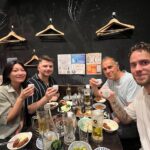
Shibuya is famous for its giant crossing, but its best food is often found above, below, or behind the main streets. This three-hour evening tour takes you to four local eateries for 13 Japanese dishes, including sushi, yakiniku, udon, karaage, dumplings, tuna, drinks, and dessert. Guides such as Hoshi, Naruto, and Kei lead the walk.
I like the small maximum of 10 people, which makes a busy-night food crawl easier to manage. I also like that food and drinks are included, so you can focus on tasting instead of studying a menu in Japanese or guessing what to order. The main caution is that the guide experience can vary, and a few visitors felt the cultural explanations did not match the quality of the food.
In This Review
- Key points at a glance
- Four eateries, thirteen Japanese dishes
- Starting at Shibuya Crossing
- Hachiko and the route around the station
- Dogenzaka after dark
- Center-gai and the final tastes
- What the guide adds
- Is 77.44 dollars good value?
- Who should book this Shibuya food walk?
- Timing, group size, and practical details
- Food allergies and personal preferences
- My call: book it for food, not for sightseeing
- FAQ
- How long does the Shibuya food tour last?
- How many dishes and eateries are included?
- What types of food might I taste?
- How large is the tour group?
- Is alcohol included for every participant?
- Where does the tour start and end?
Key points at a glance
- Thirteen tastes in three hours: Expect a broad sample of Japanese food rather than one large meal.
- Four eateries around Shibuya: The tour moves through Dogenzaka and Center-gai, with short walks between stops.
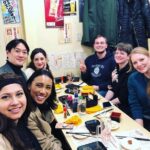
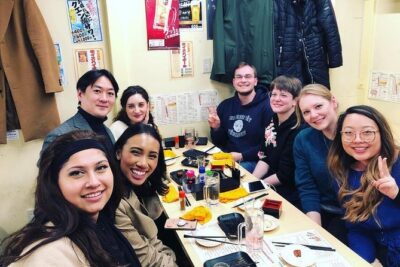
- Small-group format: No more than 10 people makes it easier to ask questions and keep the group together at night.
- Food is included: Sushi, grilled meat, noodles, fried chicken, dumplings, drinks, and dessert may all appear.
- Strong guide potential: Hoshi, Naruto, Kei, Will, Mat, and Benjamin have each been praised for warmth, humor, and food knowledge.
- A few gaps are possible: Hachiko may not always be covered, and some guides offer less commentary than expected.
Four eateries, thirteen Japanese dishes
The appeal here is range. Rather than asking you to commit to one unfamiliar restaurant, the tour gives you small tastes at four different places. That makes it a useful first-night activity in Tokyo, especially if you want help choosing food for the rest of your stay.
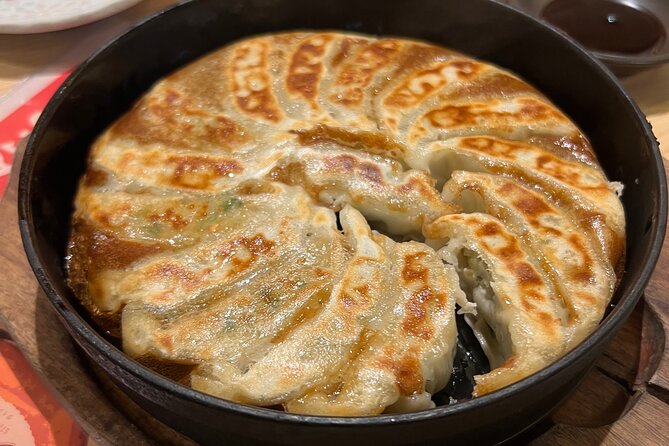
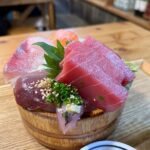
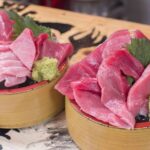
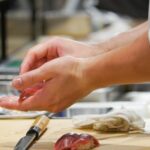
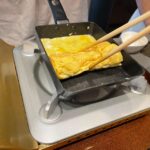
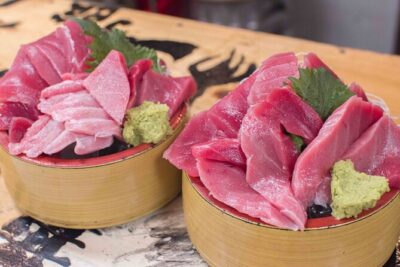
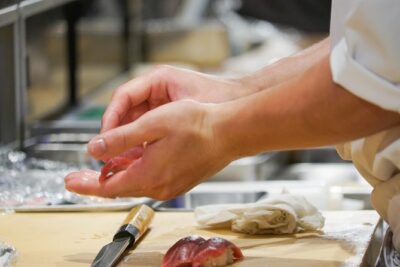
The exact menu can vary, but the food examples include sushi, several types of tuna, yakiniku, udon, karaage, dumplings, drinks, and dessert. One evening may lean toward seafood and grilled dishes, while another may include a different mix. The point is not a fixed restaurant meal. It is a guided sampling of familiar Japanese staples and items you might not choose on your own.
I would arrive hungry. Several people found the portions generous enough to make the tour a full meal, not just a snack walk. Still, one person felt the price was high compared with the amount of food and drink received, so value depends on how much you normally pay for restaurant meals in Tokyo and how much you value the guide.
The included drinks add to the fun, but alcohol is served only to people aged 20 and older. If you are under 20, or simply do not drink, the food remains the main reason to book.
A few more Tokyo tours and experiences worth a look

Starting at Shibuya Crossing
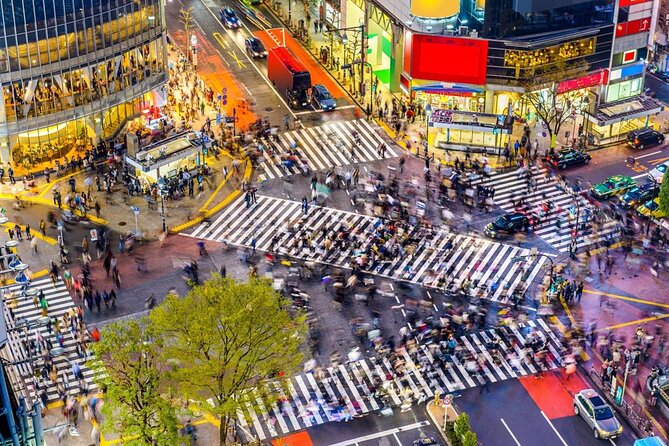
The tour begins near Kusumoto Building at 1-chome-3-3 Dogenzaka. From there, the route includes Shibuya Crossing, the famous intersection where several streams of pedestrians cross at once.
The stop lasts about 15 minutes and has no admission charge. That is enough time to look at the crossing, take photos, and get your bearings before the meal begins. You should not expect a long sightseeing lecture here. The tour is built around food, and the crossing is more of an opening landmark than a full sightseeing stop.
This is still a useful start. Shibuya can feel confusing when you first arrive, with station exits, large signs, side streets, and crowds all competing for attention. Meeting with a guide gives you a clear starting point and removes the stress of trying to find the first restaurant alone.
Hachiko and the route around the station
The stated route also includes a 15-minute stop at Hachiko, the statue of the loyal dog near Shibuya Station. Your guide is meant to explain Hachiko’s story and why the statue became such a well-known meeting point.
There is an important practical note here: the route does not always appear to cover every listed stop in the same way. One person specifically missed Hachiko and visited the statue afterward. If seeing it matters to you, ask your guide at the start whether the stop is included that evening.
Hachiko is easy to visit independently, so this is not a serious problem. It is close to the station and well known. But it does show why you should treat the tour primarily as a food walk, not as a complete introduction to Shibuya’s sights.
Dogenzaka after dark
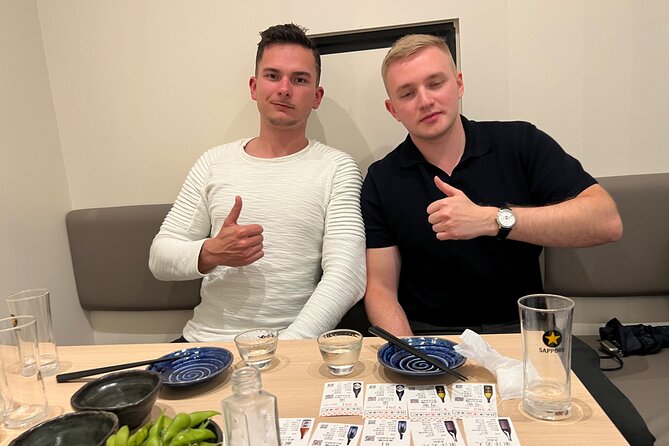
Dogenzaka is the first major food area on the route. This sloping district is packed with small bars, izakayas, restaurants, and shops. The tour spends about an hour in this part of Shibuya, including time at local eateries.
The advantage of going with a guide becomes clear here. At night, Dogenzaka can be hard to read. Restaurants may be tucked into upper floors or down narrow entrances, and not every place is designed for casual drop-in visitors. A guide handles the route and the ordering, allowing you to pay attention to what is on the plate.
The short walks between restaurants also help pace the meal. You are not sitting in one place for three hours, but neither are you rushing across the city. Several people liked that the restaurants were an easy walk apart and that the route offered a practical introduction to the area.
The tradeoff is that the walking route may not feel especially varied. One person felt the group circled around Shibuya Station and passed near the starting point again. If you want a carefully designed sightseeing route with a different neighborhood at every turn, this may feel repetitive. If you want food with minimal transport time, the compact route works well.
Center-gai and the final tastes
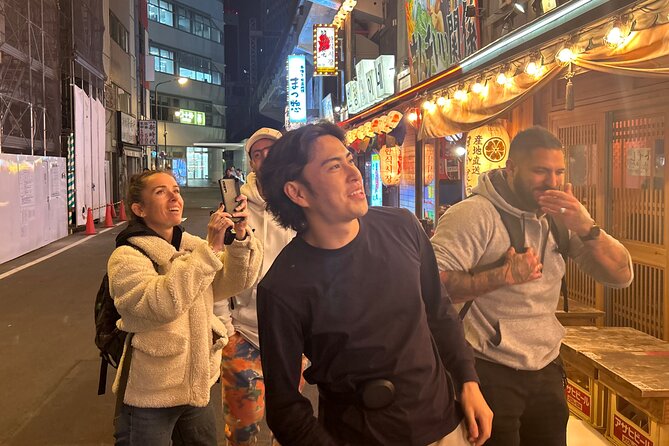
The tour then reaches Shibuya Center-gai, one of the district’s busiest central streets. This is a very different mood from a quiet local lane. You will see bright signs, shops, restaurants, and a constant flow of people.
The stated time here is about an hour, including food stops. Center-gai gives you a sense of modern Shibuya nightlife, while Dogenzaka offers more of the small izakaya atmosphere. Together, the two areas show why Shibuya is such a popular evening base.
The final stop includes dessert. The format may not always be a traditional sit-down dessert course. One account described a pre-ordered pastry served in a basement area of a mall. That may sound less polished than a dedicated dessert restaurant, but it can also be part of the tour’s practical, local-food character.
You should see this tour as a sequence of real food stops, not a restaurant tasting menu with formal presentation at every stage. If you care most about flavor, variety, and trying dishes you would miss alone, that format is a plus. If you want a stylish setting at each stop, manage your expectations.
A few more Tokyo tours and experiences worth a look
What the guide adds
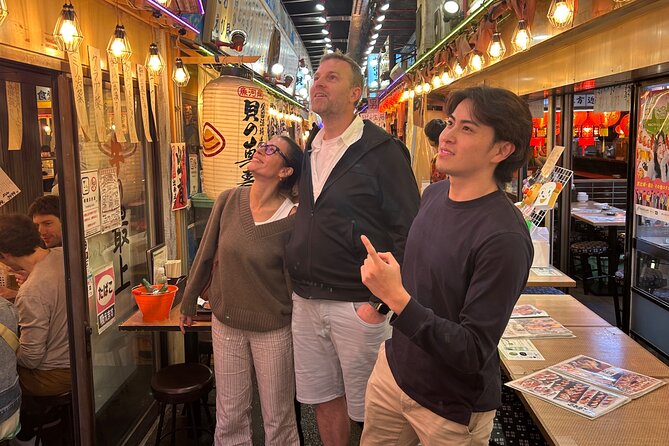
The guide can make or break this kind of tour. Food is only half the job. The other half is helping you understand what you are eating, showing you how to approach a Japanese restaurant, and giving you useful ideas for later meals.
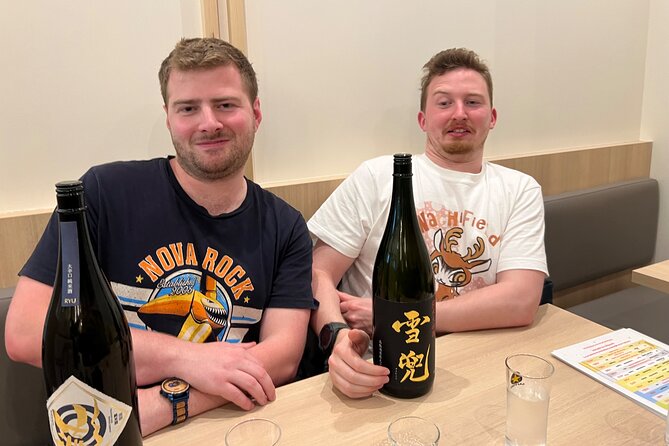
The strongest guide experiences have included Hoshi, Naruto, Kei, Will, Mat, and Benjamin. Hoshi has been praised for explaining dishes, demonstrating how to eat them, and keeping the group comfortable. Naruto is often described as funny, friendly, and good at connecting with families and children. Kei has received praise for restaurant suggestions and clear communication before the meeting point.
The guides also offer advice for the rest of your trip. That can be valuable in Tokyo, where the best meal is not always on the main road and where restaurant choices can feel endless. You can ask what to eat in another neighborhood, where to find a particular dish, or how to shape your next few days.
Still, the level of commentary is not guaranteed to be uniform. A few people found the guide friendly but too quiet, with little information about Shibuya Crossing, Hachiko, or the food itself. One person expected more help with ordering, local customs, and neighborhood history. That criticism is worth taking seriously because the guide is the main reason to pay more than you would for the food alone.
Is 77.44 dollars good value?
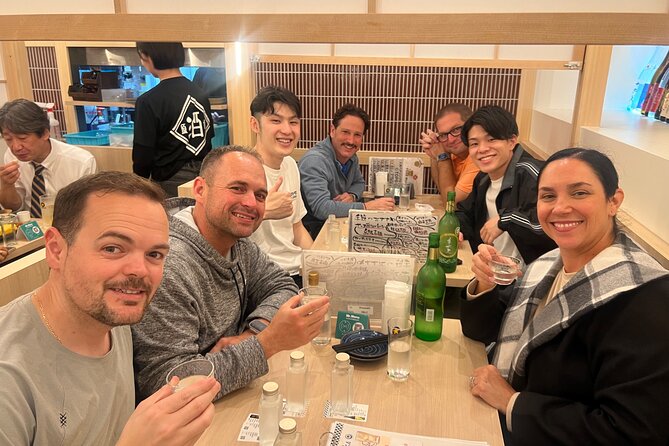
At $77.44 per person, this is not a cheap way to eat in Tokyo. You can find individual Japanese meals for much less, especially if you are comfortable choosing a restaurant and ordering on your own.
The price makes more sense when you count the four stops, 13 dishes, included drinks, route planning, and English-speaking guide. You are paying for access and convenience as well as food. A guide can take you directly to places you might overlook, organize shared orders, explain unfamiliar dishes, and keep the evening moving.
The value is strongest for first-time visitors who feel unsure about Tokyo’s food culture. It is also good for families, couples, and solo visitors who want a social evening without planning four separate restaurants. Several people found there was enough food to satisfy a family group, though appetites vary.
The value is weaker for experienced Tokyo diners. If you already know how to navigate Shibuya, read menus, and choose izakayas, you may prefer spending the same money on one excellent meal. The tour also does not promise luxury restaurants or a fixed premium menu. You are paying for variety and guidance.
Who should book this Shibuya food walk?
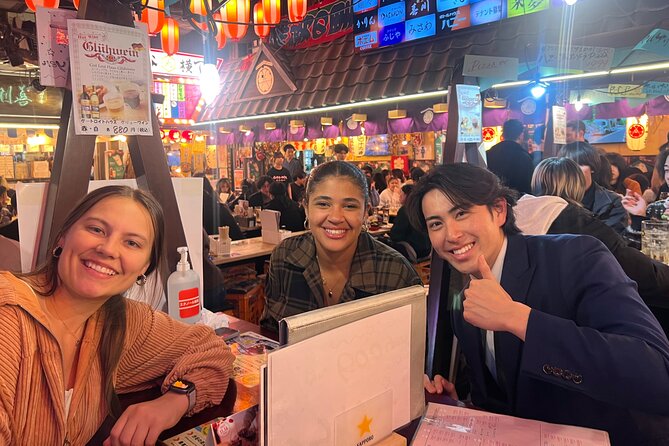
I would recommend it most strongly if you fit one of these profiles:
- You are visiting Tokyo for the first time and want a gentle introduction to Japanese food.
- You want to try several dishes without ordering full portions at four restaurants.
- You are nervous about getting lost at night in Shibuya.
- You enjoy meeting other people in a small group.
- You want restaurant ideas for later in your trip.
- You are traveling with children or relatives who need an easy, organized evening.
Food-focused visitors should also like the range. Dumplings, tuna, grilled meat, noodles, fried chicken, drinks, and dessert provide more variety than a single restaurant meal. The tour can help you discover what you like before ordering it elsewhere.
I would hesitate if you want a detailed history walk, a precise sightseeing itinerary, or a guaranteed guide who gives long explanations at every stop. The route is mainly about eating. Sightseeing elements such as Hachiko and Shibuya Crossing are brief, and the guide’s style can range from lively and informative to fairly hands-off.
Timing, group size, and practical details
The tour lasts about three hours and ends in Shibuya. Your guide can take you to Shibuya Station afterward, which is helpful if you are still learning the area or plan to continue into the evening.
The maximum group size is 10 people. That is small enough for personal attention, though the actual feel will depend on how many people book that date. The tour is near public transportation, and most people can participate.
You receive confirmation when booking, and the ticket is mobile, so you do not need a printed voucher. Wear comfortable shoes because this is a walking tour, and leave room in your evening schedule rather than trying to squeeze in another fixed activity immediately afterward.
Free cancellation is available up to 24 hours before the start time. Changes or cancellations inside that window are not accepted for a refund. The activity can also be canceled for poor weather or if the minimum number of participants is not reached, with a different date or a full refund offered.
Food allergies and personal preferences
The available information confirms that the guide can arrange some accommodations for people in the group, but it does not promise that every allergy or dietary requirement can be handled. If you have a serious allergy, contact the operator before booking and explain exactly what you cannot eat.
The included food is selected for the group, rather than chosen dish by dish by each person. That is convenient, but it means you should not expect a fully customizable menu. Additional food and drinks are not included, so anything beyond the planned tastings costs extra.
Alcoholic beverages are available only to participants aged 20 or older. If your group includes younger people, the guide should be able to explain what nonalcoholic choices are available, but the supplied details do not specify a separate drink menu.
My call: book it for food, not for sightseeing
I would book this tour if I wanted an easy, social way to taste across Shibuya on my first or second night in Tokyo. The combination of four eateries, 13 dishes, a compact walking route, and included drinks offers a useful introduction, and the best guides add humor, practical advice, and real enthusiasm.
I would not book it expecting a formal history tour or a flawless gourmet itinerary. The food appears to be the dependable part. The guiding can be excellent, but the commentary may be light, and Hachiko may not always receive the promised attention.
For the best chance of a satisfying evening, arrive hungry, confirm the meeting point carefully, ask questions throughout the walk, and tell the guide early about allergies or foods you cannot eat. At $77.44, this is a convenience-and-discovery purchase. It suits you if you value help finding places and trying many dishes more than you value the lowest possible meal cost.
FAQ
How long does the Shibuya food tour last?
The tour lasts approximately three hours.
How many dishes and eateries are included?
The tour includes 13 Japanese dishes at four different local eateries in Shibuya.
What types of food might I taste?
The food selection may include sushi, yakiniku, udon, karaage, dumplings, tuna, drinks, and dessert.
How large is the tour group?
The activity has a maximum of 10 participants.
Is alcohol included for every participant?
Alcoholic beverages are served only to participants aged 20 or older. Food and drinks are included, but additional food and drinks are not.
Where does the tour start and end?
The tour starts at Kusumoto Building, 1-chome-3-3 Dogenzaka, Shibuya, Tokyo. It ends in Shibuya, and the guide can take you to Shibuya Station.
More Food Experiences in Tokyo

More Tokyo Food Tours in Tokyo
More Shibuya Tours in Tokyo
More tours in Tokyo we've reviewed




Tokyo Food Tours, compared.
 ★ 5.0Tokyo: Shinjuku Food Tour (13 Dishes at 4 Local Eateries)From $86
 ★ 4.9Tokyo: Shinjuku Food Tour (15 Dishes and 4 Eateries)From $853 hours
 ★ 5.0Best of Shinjuku: Izakaya Food Tour (4 Stops, 14+ Tastings)From $92
 ★ 5.0Tokyo Night Foodie Tour in Shinjuku – Seasonal Sushi, Wagyu BeefFrom $111
 ★ 5.0Eat and Drink Like a Local: Tokyo Ueno Food Tour-Taverns&RamenFrom $95
Tokyo: Shinjuku Food Tour – 15 Dishes, 3 Drinks, 4 EateriesFrom $723 hours
★ 5.0Eat and Drink Like a Local: Tokyo Ueno Food Tour-Taverns&RamenFrom $95
Tokyo: Shinjuku Food Tour – 15 Dishes, 3 Drinks, 4 EateriesFrom $723 hours