
Reviewed · SUMO EXPERIENCES
Tokyo Sumo Experience: Chanko & Mochi with a Former Pro
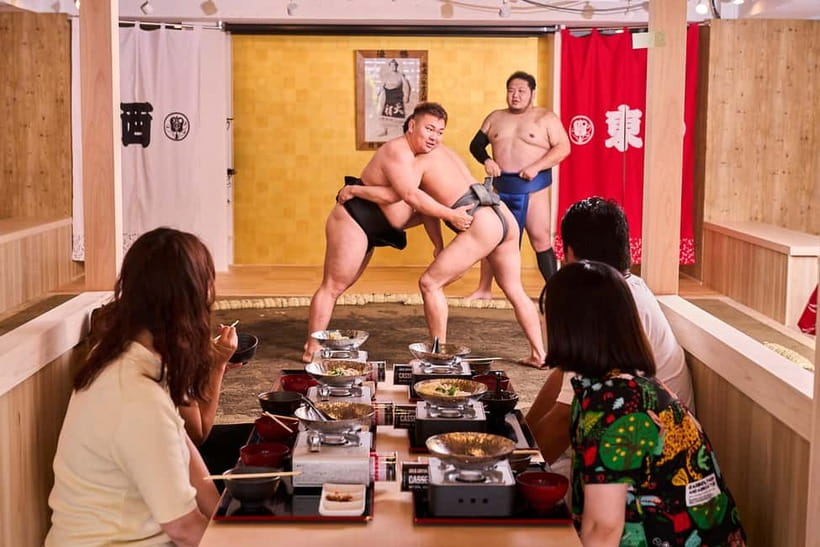
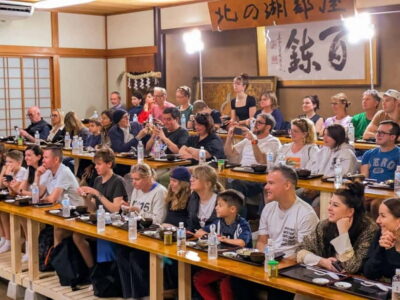
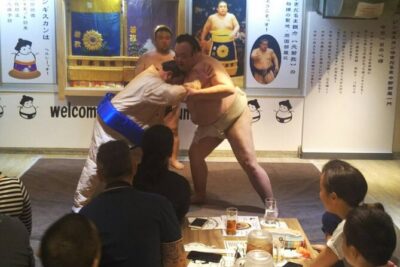
The best part of this Ryogoku sumo experience is the close range. You sit beside the dohyo, eat the wrestlers’ traditional chanko nabe, and watch powerful demonstrations only a few steps away. Then the line between audience and performer disappears: you can pound mochi and test your balance against a former professional.
I like the friendly participation and the meal. The wrestlers and master of ceremonies make it easy to join in, even if you know nothing about sumo, while the hot pot gives the evening a proper Japanese food connection. The main consideration is that this is a lively, entertaining show, not a quiet visit to serious morning training. Seats are assigned, and the venue is not suitable for wheelchair users.
In This Review
- Key points to know before you book
- Why Ryogoku is the right place for sumo
- What the two-hour program feels like
- Chanko nabe brings the stable tradition to your table
- Watching the wrestlers at close range
- Stepping onto the dohyo
- Mochi pounding adds a hands-on Japanese tradition
- Is $103 a fair Tokyo price?
- Who will enjoy this most?
- Planning the rest of your Ryogoku visit
- Should you book this sumo experience?
- FAQ
- How long does the Tokyo sumo experience last?
- Where is the meeting point?
- What food is included?
- Can I try sumo wrestling?
- Can vegetarian, vegan, or gluten-free meals be provided?
- Are seats selectable, and is the venue wheelchair accessible?
Key points to know before you book
- Former professionals explain the sport: Learn about sumo techniques, training, diet, and lifestyle in English or Japanese.
- Chanko nabe is part of the event: Eat the hearty hot pot traditionally associated with sumo stables.
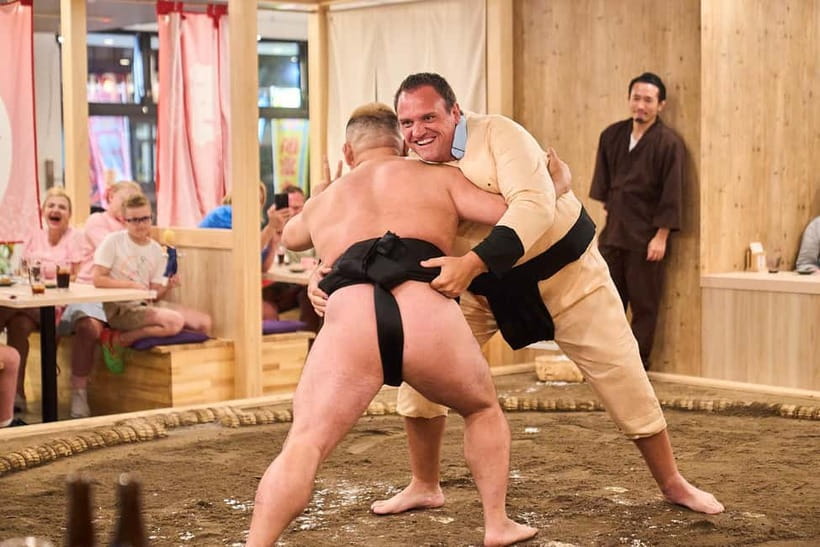
- You can step onto the dohyo: Adults and children can try sumo techniques and, if selected, wrestle a professional.
- Mochi is both a demonstration and an activity: Watch the pounding process, take a turn, and eat sweet mochi afterward.
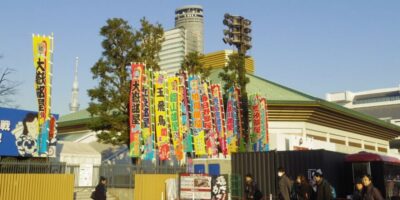
- Ryogoku Station is the easy landmark: Find the first-floor venue by its large sumo wrestler sign and flags.
- The format suits families and groups: The two-hour program mixes food, instruction, demonstrations, laughter, and hands-on moments.
Why Ryogoku is the right place for sumo
Ryogoku is Tokyo’s sumo district, so this activity begins in the sport’s natural home rather than in a generic theater. The meeting point is a short walk from Ryogoku Station, on the first floor, with a large sumo wrestler sign and flags to help you spot it.
That location makes the event easy to pair with other sightseeing. You can combine it with Asakusa, Akihabara, Nihonbashi, or Tokyo Skytree, all listed as nearby points of interest around the station area. I would allow a little extra time to find the entrance, since one person noted that the venue can be slightly hard to locate. Arriving early is sensible.
Ryogoku gives the evening useful context. Sumo is not simply a sport you watch for a few minutes. It connects food, physical discipline, ceremony, clothing, training, and a distinctive way of life. This short program cannot show every part of that world, but it gives you several clear pieces of it in one sitting.
A few more Tokyo tours and experiences worth a look
What the two-hour program feels like
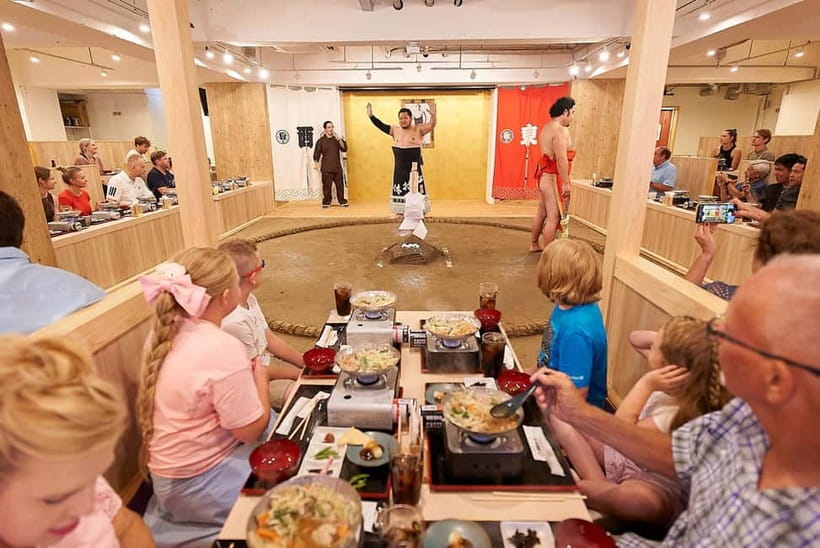
You settle into an assigned seat facing the dohyo, the raised sumo ring. You cannot select a particular seat, so book with the understanding that the venue decides where you sit.
The event then moves through several short sections rather than asking you to watch one long performance. You eat, listen, watch demonstrations, and take part in activities. That changing pace is a strength, especially for families. A young child may not sit still for a long lecture about sumo, but can pay attention to mochi pounding or a short wrestling demonstration.
The hosts explain the action as it happens. The format is designed for adults and children, and the tone is intentionally social. You will get information about sumo training and techniques, but you will also get comic moments, audience participation, and encouragement to join the action.
This is not the place to study an official tournament match in silence. It is a polished introduction with a show-business side. If you want to see how a professional bout unfolds at full competitive intensity, attend a tournament instead. If you want an approachable first meeting with the sport, this two-hour structure works well.
Chanko nabe brings the stable tradition to your table
Chanko nabe is the meal that gives the activity more substance than a standard stage show. It is a hot pot dish associated with sumo wrestlers and their training life, and the recipe here is supervised by wrestlers from an actual stable.
The dish is described as hearty, fresh, healthy, and filling. That matters because the meal is not just a small sample between activities. It forms part of the evening and helps explain how sumo culture reaches beyond the dohyo.
You may find the food especially useful if you want a cultural meal without committing to a long restaurant evening. The hot pot gives you something warm and substantial while the demonstrations take place nearby. Several families also found the food accessible to children, including one six-year-old who enjoyed it.
I would not book this solely as a gourmet meal. The main value comes from the combination of food, teaching, and interaction. Still, the food receives unusually strong praise, and it appears to be one of the reasons the $103 price feels reasonable to many people.
Vegetarian, vegan, and gluten-free meals can be arranged if you notify the provider at least two days before your reservation. Halal meals are not available, though you may bring your own food. The supplied information does not specify every ingredient, so anyone with a serious allergy should contact the provider before booking.
Watching the wrestlers at close range
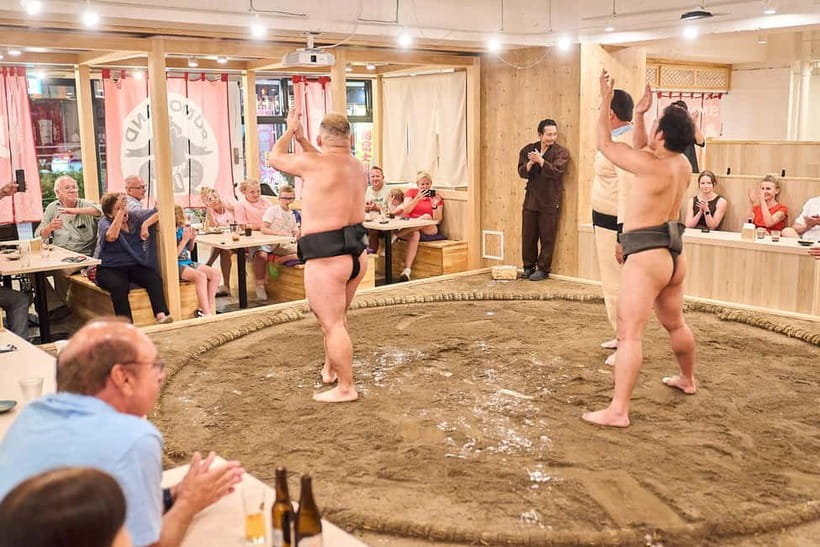
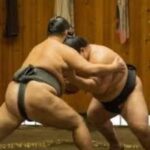
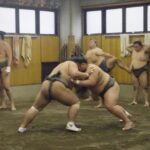
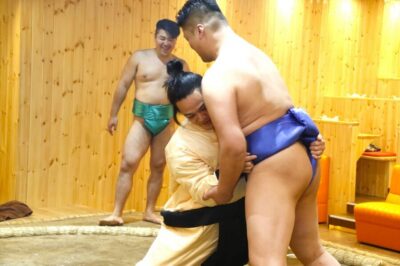
The demonstrations are the visual heart of the activity. From your seat near the dohyo, you watch the wrestlers show their strength, movement, and techniques at close range. The program includes demonstrations of sumo training and several rounds of wrestling, with one participant describing four different rounds.
That close view changes how you see the sport. On television, sumo can look slow between bursts of action. From nearby, the force and speed are easier to understand. A brief charge, shove, or change of balance suddenly explains why timing and footwork matter as much as size.
The wrestlers also explain parts of their training, diet, and lifestyle. This is valuable because it gives the physical display a human frame. You are not just watching large athletes collide. You are learning how the sport is practiced and how its daily routines support that performance.
The English and Japanese instruction makes the activity workable for international visitors. The host guides the program, keeps participation moving, and encourages people who may be nervous about stepping forward. You should expect a social presentation rather than a formal lecture.
Stepping onto the dohyo
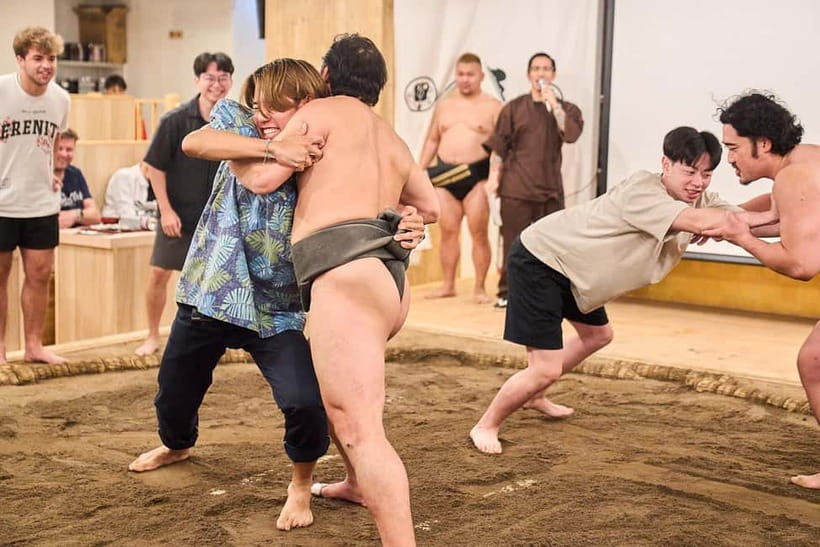
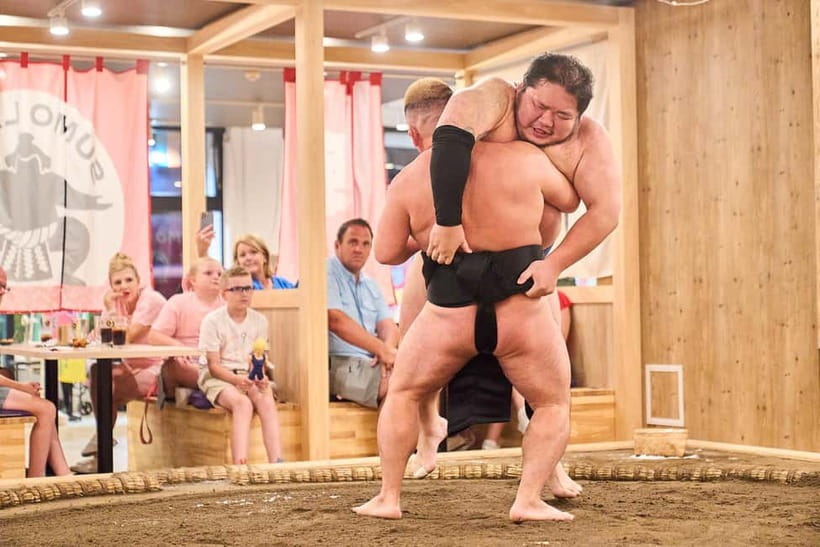
The hands-on sumo section is where this activity earns its family-friendly reputation. You may be invited onto the dohyo to try sumo techniques or wrestle with a professional. Children, teenagers, adults, and work groups have all found this part easy to enjoy.
You do not need to arrive with athletic skill. The point is to feel how difficult it is to move someone who knows how to use weight, stance, and balance. Even a playful attempt makes the size difference clear.
Participation is voluntary, but the event encourages you to take part. If you are shy, you can remain in your seat and watch others. If you are willing to join in, wear comfortable clothes. You should also bring a camera, since the close-up demonstrations and participation create some of the best photo opportunities of the evening.
The activity is controlled and presented for fun. It is not a hard training session, and you should not confuse it with a professional bout or serious morning practice. That distinction is important. You are buying a safe, entertaining introduction, not access to an active stable during its private routine.

Mochi pounding adds a hands-on Japanese tradition
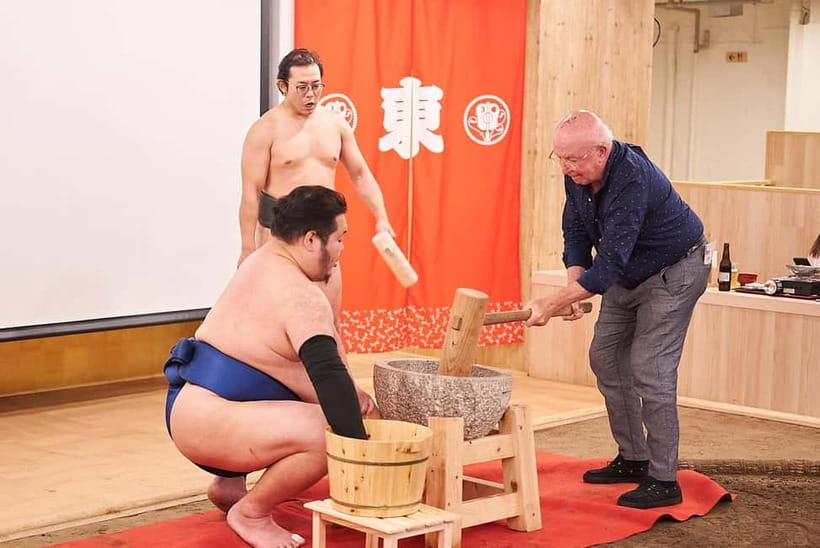
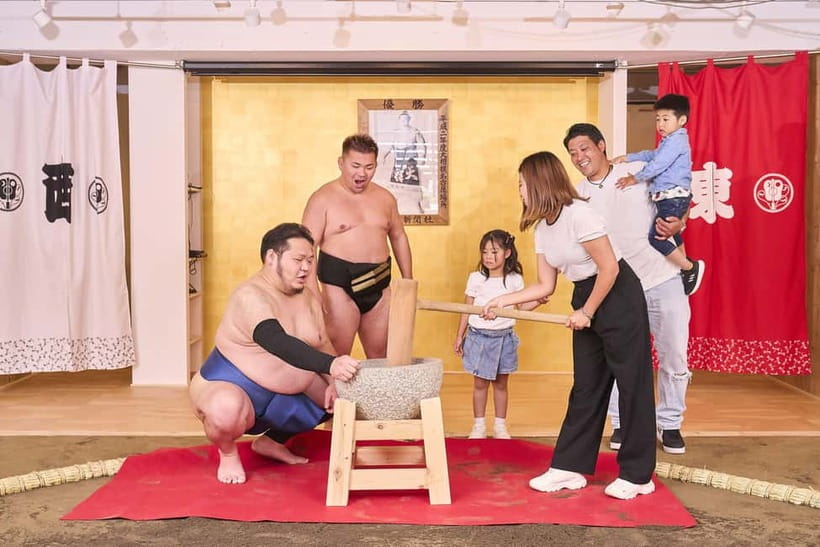
The mochi segment gives the event a welcome change of rhythm. You first watch a demonstration of the traditional pounding process, then get a chance to pound mochi with the wrestlers. Sweet mochi follows as dessert.
This works particularly well because the activity is simple to understand without much explanation. The wooden mallet, the rhythm, and the teamwork make it a natural group moment. You can take part, watch from the side, or photograph the process.
Mochi also links the meal and the sport to a broader Japanese food tradition. The sumo theme remains central, but the program is not limited to wrestling. You leave with a better sense of how food and physical culture meet in Japan.
The mochi activity may be the favorite part for some visitors, especially children and anyone who enjoys making rather than only watching. It also gives non-sports fans a reason to book. If somebody in your group has little interest in sumo, the food and mochi sections help keep the experience balanced.
Is $103 a fair Tokyo price?
At $103 per person, this is not a cheap meal or a free neighborhood performance. The price makes more sense when you count what is bundled into the two hours: a chanko nabe meal, a sumo presentation, instruction from former professionals, mochi making, a mochi demonstration, and the chance to try sumo on the dohyo.
You are also paying for convenience. Instead of arranging separate food, a sumo museum visit, and a performance, you get a guided evening in one venue near a major station. For a first-time visitor with limited time, that compact format has real value.
I especially like the fact that the event is active rather than purely theatrical. Many cultural shows ask you to sit and watch. Here, you can eat the food associated with wrestlers, ask questions through the host, pound mochi, and test a sumo stance yourself.
The value is weaker if you want a tournament ticket, a private lesson, or an unfiltered look at professional training. This event is built for entertainment and broad appeal. You should pay for it because you want a memorable cultural activity with food and participation, not because you expect an elite sporting seminar.
The rating is 4.8 from 567 reviews, and the praise is remarkably consistent around four points: the wrestlers’ friendliness, the quality and quantity of the food, the amount of audience participation, and the balance between learning and laughter. Those are exactly the areas where the price earns its keep.
Who will enjoy this most?
I would recommend this to families with children, first-time visitors to Japan, and groups looking for one shared activity. It gives everyone something to do, and the program does not require prior knowledge of sumo.
It also works well for people visiting Tokyo outside a major tournament period. One participant specifically found it a good option during the off-season. You can get close to the sport even when an official competition is not part of your schedule.
Food-focused visitors should consider it too. Chanko nabe is not presented as a detached restaurant meal. You eat it while learning why it matters to sumo culture, which gives the dish more meaning.
This may not suit you if you dislike audience participation, prefer quiet museum-style visits, or want a strictly authentic training session. The event is warm, playful, and organized around fun. That is a feature for most people, but it is also the clearest limit.
The venue is not suitable for wheelchair users. Seat locations are assigned. Standard seats are not safe for holding a child on your lap, so reserve a place for every person, including children. Box seats can hold up to six people and allow a child to sit on a parent’s lap.
Planning the rest of your Ryogoku visit
Because the event lasts two hours and begins near Ryogoku Station, it fits neatly into a larger Tokyo day. You can visit nearby Asakusa or Tokyo Skytree, then continue to the sumo venue. Akihabara and Nihonbashi are also practical additions depending on your route.
Do not plan on smoking during the activity. Bring a camera and wear comfortable clothing if you hope to participate in sumo or mochi pounding.
The provider offers free cancellation up to 24 hours before the start time, with a full refund, and you can reserve now and pay later. Those terms help if your Tokyo schedule is still shifting. Check the available start times before building the rest of your day around it.
Should you book this sumo experience?
Book it if you want close-up sumo, a filling Japanese meal, and real participation in a compact two-hour program. The strongest part is the mix: you learn about training and lifestyle, see powerful demonstrations, eat chanko nabe, make mochi, and may wrestle a professional yourself.
I would make it a clear choice for families and groups, especially those visiting outside tournament season. I would skip it only if your main goal is serious training, an official competition, or a quiet cultural talk.
For most first-time visitors, this is a practical way to meet sumo in Ryogoku without needing specialist knowledge. Arrive early to find the flagged entrance, reserve the exact number of seats, request dietary accommodations at least two days ahead, and be ready to step onto the dohyo.
FAQ
How long does the Tokyo sumo experience last?
The activity lasts two hours. Check the available starting times when booking.
Where is the meeting point?
The venue is on the first floor, a short walk from Ryogoku Station. Look for the large sumo wrestler sign and flags.
What food is included?
The experience includes chanko nabe, a traditional hot pot dish associated with sumo wrestlers, plus sweet mochi after the mochi-making activity.
Can I try sumo wrestling?
Yes. You can try sumo techniques and may step onto the dohyo to wrestle with the wrestlers. Participation is designed for both adults and children.
Can vegetarian, vegan, or gluten-free meals be provided?
Yes. Vegetarian, vegan, and gluten-free meals can be provided if requested at least two days before the reservation date. Halal meals cannot be provided, but you may bring your own food.
Are seats selectable, and is the venue wheelchair accessible?
Seats are assigned by the venue, and specific seats cannot be requested. The activity is not suitable for wheelchair users. Standard seats require a separate reservation for each person because holding a child on your lap is not considered safe there.
More Sumo Experiences in Tokyo
More tours in Tokyo we've reviewed



Sumo Experiences, compared.
 ★ 4.8Tokyo: Sumo Show Experience with Chicken Hot Pot and a PhotoFrom $1032 hours
 ★ 4.8Tokyo: Sumo Show and Dining ExperienceFrom $7990 minutes - 2 hours
 ★ 5.0the SUMO showFrom $89
 ★ 5.0Tokyo Shinjuku Sumo Show & Experience with PhotoFrom $79
 ★ 4.8Tokyo: Sumo Show and Experience in ShinjukuFrom $691h 30m
 ★ 4.6Tokyo: Sumo Tournament Tour with Chair Seat TicketsFrom $141