
Reviewed · TSUKIJI MARKET TOURS
Tokyo: Private Tsukiji Fish Market Tour with 3 Food Stops
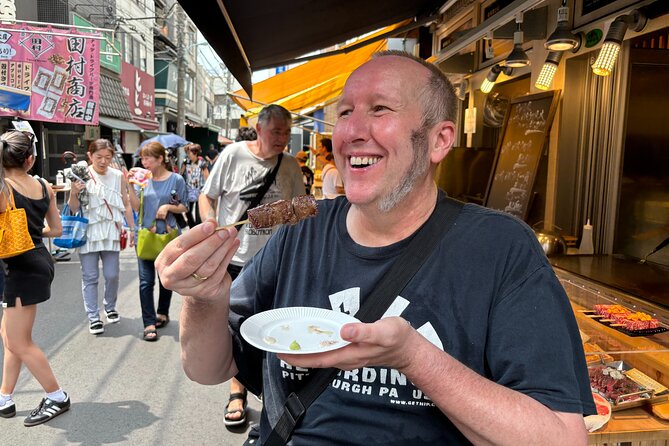
Tsukiji is best understood on foot, with seafood stalls, old lanes, prayer sites, and quick bites all packed into a compact part of Tokyo. This private two-hour tour gives you a local guide to explain what you are seeing rather than leaving you to guess your way through the market.
I like the smart mix of three included food stops and two important religious sites. I also like the small-group format, which lets your guide adjust the pace and offer practical advice in an area that can feel very touristy. The main drawback is that two hours passes quickly, and the included foods are selected for you, so this may not suit picky eaters or anyone hoping for a long, sit-down meal.
In This Review
- Key points to know before booking
- Why this short Tsukiji walk works
- Starting at the market near the Lawson store
- Three food stops with room for personal choice
- Namiyoke Inari Shrine and Tsukiji’s protective spirit
- Tsukiji Hongwanji Temple’s unusual architecture
- A private guide makes the difference
- Timing, pace, and what to bring
- Who will get the most from this tour
- Is $52.12 a fair price?
- Should you book this Tsukiji experience?
- FAQ
- How long does the Tsukiji tour last?
- Where does the tour begin?
- Where does the tour end?
- How many foods are included?
- Are additional foods and purchases included?
- Is the tour private?
- Which cultural sites are visited?
- Is the tour near public transportation?
- Can I cancel for a full refund?
Key points to know before booking
- Three local foods are included, with additional food and purchases at your own cost.
- The private format keeps the walk personal, with only your group taking part.
- Namiyoke Inari Shrine has striking lion heads and has protected Tsukiji since the Edo period.
- Tsukiji Hongwanji Temple brings a very different mood, with Indian-inspired Buddhist architecture.
- Guide Cass received special praise for explaining the market and shrine’s background.
- The tour starts and ends near Tsukiji Market, at the LAWSON Tsukiji 4 Chome Store.
Why this short Tsukiji walk works
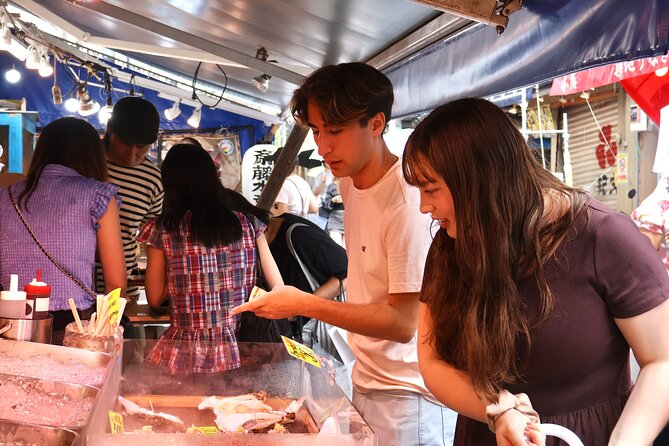
Tsukiji is no longer Tokyo’s main wholesale fish market. That role moved to Toyosu, but Tsukiji remains a busy food district where you can see seafood, produce, cooking ingredients, small shops, and traditional food businesses serving local customers and sightseers.
That difference matters. You will not be touring the wholesale auction floor here. Instead, you will explore the public market streets and the culture that grew around them. The experience is less about watching commerce from behind a barrier and more about learning how ingredients, rituals, and everyday eating fit together in Tokyo.
I like the tour’s compact shape. You begin with the market, stop at Namiyoke Inari Shrine, return to the food streets for three tastings, then visit Tsukiji Hongwanji Temple. The route links food and faith in a way that makes sense for this neighborhood.
The private setup is another advantage. Only your own group participates, so you can ask questions without holding up a large party. If you want to pause at a stall, need a little help understanding a food, or prefer a slower pace, a private guide has more room to adapt than a standard group tour.
The trade-off is that this is a sampler, not a full morning of eating. Three foods are included, but extra dishes and purchases cost more. You should also expect a walking tour through active market streets rather than a seated tasting menu.
A few more Tokyo tours and experiences worth a look


Starting at the market near the Lawson store
The meeting point is the LAWSON Tsukiji 4 Chome Store at 4-chōme-8-1 Tsukiji, Chuo City, Tokyo. The tour ends back at this same meeting point, which makes planning easier if you have another activity afterward.
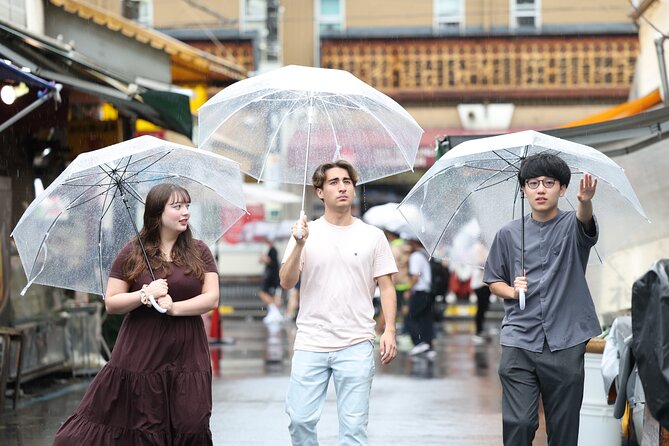
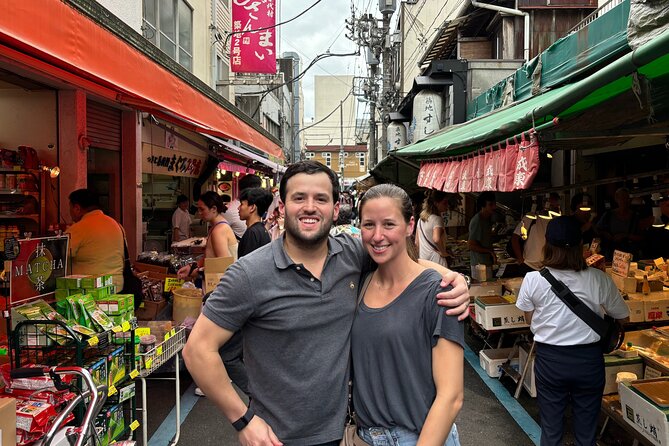
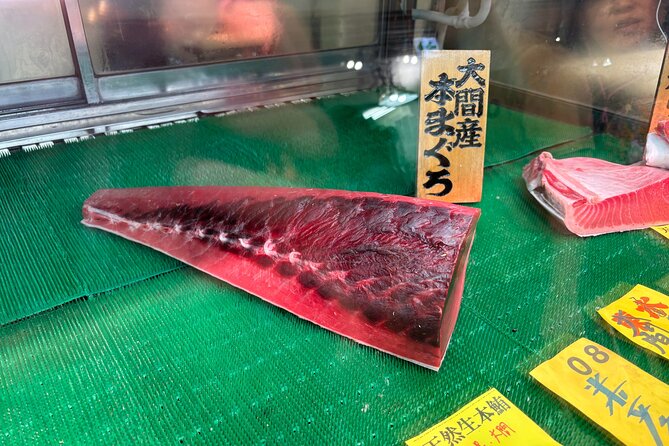
The first market section lasts about 30 minutes. Your guide will lead you through lively stalls selling fresh seafood, produce, and traditional ingredients, while explaining why Tsukiji still matters to Japanese cuisine.
This opening is useful because a market can be visually loud but culturally quiet if nobody explains it. You may see products you cannot identify, ingredients you have never cooked with, and displays arranged according to customs you do not know. A local guide helps turn those sights into a story about food, shopping, and neighborhood life.
I would use this part to ask practical questions. Ask what locals buy, how the market changed after the wholesale operation moved, and which foods are most closely tied to Tsukiji. The tour description promises less-visited spots and local favorites, but the exact stalls can vary, so the value depends partly on your guide’s choices and the conditions that day.
The market is also the part most affected by crowds and business hours. You are walking through working streets, not a museum. Keep your group together, watch where you step, and follow your guide’s lead around stalls and shop fronts.
Three food stops with room for personal choice
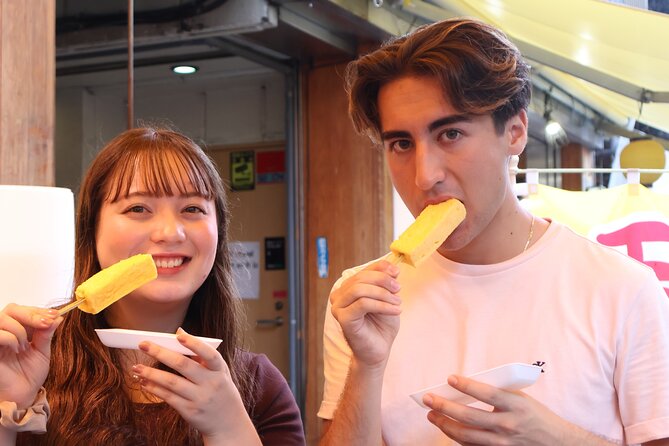
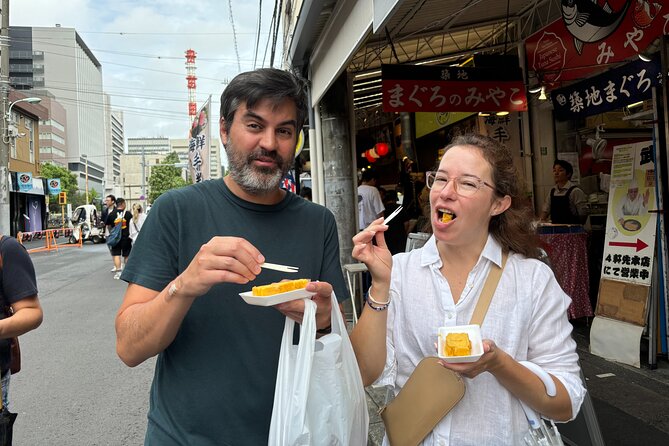
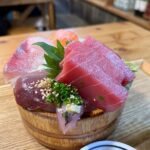
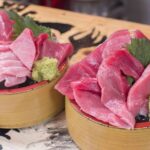
The main eating section lasts about 45 minutes and includes three must-try foods selected by your Japanese guide. This is likely the tour’s strongest practical feature for first-time visitors.
Tsukiji offers plenty of things to eat, but choice can be a burden. Menus may be unfamiliar, prices may not be obvious, and you may not know which items are local favorites and which are aimed mainly at sightseers. Having a guide select three foods gives you a starting point without requiring you to research every stall.
The food selection is not specified in advance, so do not book this expecting a fixed menu. That uncertainty can be a benefit because your guide may choose what is best available that day. It also means you should tell the guide about food preferences or restrictions before ordering, if relevant. The available information does not promise substitutions, so you should not assume every dietary need can be handled.
The included tastings are also not meant to cover your whole breakfast or lunch. You can buy additional food and items, but those costs are separate. I would bring a little flexibility in both appetite and budget. The three included samples give you a taste of the area, while extra spending lets you follow your nose if a stall catches your attention.
This arrangement offers good value at $52.12 per person, especially for a private tour. A portion of the price pays for the guide’s time and local interpretation, not just the food. If you would rather spend that amount entirely on seafood and snacks, exploring alone may be cheaper. If you want help finding your way and understanding what you eat, the price is easier to justify.
Food also gives the guide a natural way to explain custom. You may learn why certain ingredients matter, how market foods connect with Japanese cooking, or why particular dishes are common in this district. The experience is strongest when you treat each tasting as a conversation, not simply as a snack handed over at a stall.
Namiyoke Inari Shrine and Tsukiji’s protective spirit
The visit to Namiyoke Inari Shrine takes about 15 minutes. This small stop adds a different layer to the market, showing how food districts are also shaped by prayer and local tradition.
The shrine has protected Tsukiji since the Edo period and is known for its powerful lion heads. You will have a chance to watch how locals pray for safety and good fortune, while your guide explains the shrine’s role.
I like this stop because it is short but focused. You do not need an hour to appreciate the contrast between a working market and a sacred site. Fifteen minutes is enough to look closely, hear the basic customs, and understand why a shrine belongs in a tour of Tsukiji rather than being treated as an unrelated photo stop.
Your guide can also help you approach respectfully. A shrine visit may involve customs that are unfamiliar if this is your first time in Japan. The point is not to perform a ritual perfectly, but to notice how ordinary people use these places as part of daily life.
The short duration has a limit. If you want a detailed study of Shinto architecture, religious history, or every feature of the grounds, this tour will not provide it. The shrine is one piece of a broader neighborhood walk.
Tsukiji Hongwanji Temple’s unusual architecture
The final cultural stop is Tsukiji Hongwanji Temple, also written as Tsukiji Honganji, with about 20 minutes set aside for the visit. Its Indian-inspired architecture creates a sharp visual contrast with the shrine and the market streets.
That contrast is one of the tour’s best ideas. At Namiyoke Inari, you see a Shinto place connected with protection and good fortune. At Hongwanji, you encounter a Buddhist temple and learn about religious views commonly held in Japan. The two sites help you see that Japanese spiritual life is not limited to one tradition.
The temple is also a welcome change of pace after the food section. A market can leave you focused on movement, smells, and quick decisions. A temple visit gives you a quieter place to look at architecture and consider how religion fits into the city.
Twenty minutes is enough for an introduction, not a full temple study. Your guide can point out the building’s unusual style and explain its place in the neighborhood, but you should not expect an extended lecture or a broad tour of Buddhist history.
The tour ends after this stop back at the original meeting point. That return is handy. You are not left trying to find a new location in an unfamiliar part of Tokyo, and you can continue sightseeing from an area you now understand better.
A few more Tokyo tours and experiences worth a look


A private guide makes the difference
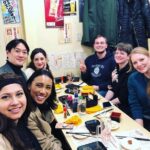
The tour is designed for one private group, which is a meaningful feature at this price. You are not sharing the guide with a large crowd, and the experience can feel more like a guided introduction than a fixed procession from stop to stop.
One named guide, Cass, received particular praise for explaining the history of the market and shrines. That detail suggests the guide’s storytelling is a major part of the experience, though guide assignments can vary. If Cass is leading your tour, you can expect an approach that places weight on historical and cultural explanation.
A private guide is especially useful in Tsukiji because the area rewards questions. You might ask why a food is popular, how the market has changed, what the shrine protects, or how Shinto and Buddhism differ. A guide can also offer practical advice in a heavily visited district, which one booking described as useful for handling the area’s tourist side.
The tour is conducted in English based on the supplied details, though the specific language options are not listed. Confirmation arrives when you book, and the mobile ticket makes it easy to keep the booking on your phone.
Most people can participate, and the tour is near public transportation. Still, remember that this is a two-hour walking experience through market streets. If someone in your group has mobility concerns, contact the provider before booking, since no detailed accessibility information is supplied.
Timing, pace, and what to bring
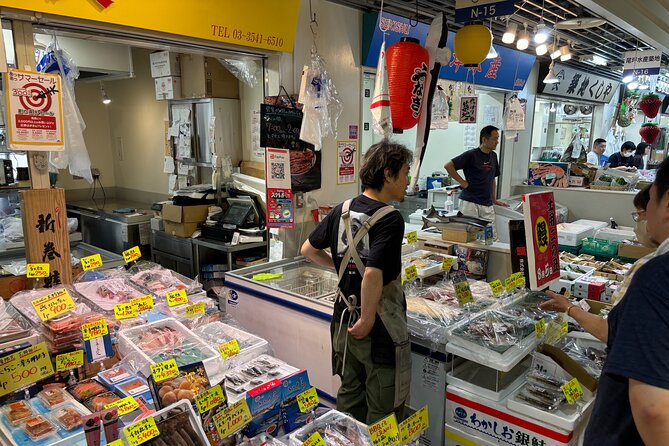
The listed timing adds up to two hours: 30 minutes at the market, 15 minutes at the shrine, 45 minutes for food and further market exploration, and 20 minutes at Hongwanji Temple.
That schedule is brisk but sensible. The market gets the first look, the shrine breaks up the food focus, and the longer tasting section gives you time to stop at several places. The temple closes the walk with a cultural visit rather than another purchase.
I would avoid scheduling something immediately afterward. The formal duration is about two hours, but market conditions, questions, and food service can affect the pace. Since the tour returns to its starting point, you can plan the next activity nearby without having to cross the city.
Wear comfortable shoes and arrive ready to walk. The supplied information does not specify weather arrangements, so check the forecast and dress for the conditions. A phone with the mobile ticket is enough for entry and meeting details, while a little extra money is useful for food beyond the three included tastings.
This is also a good first or second activity in Tokyo. One booking called it a good way to start a trip, and I can see why. You receive an introduction to local eating, a major neighborhood, and two religious traditions without committing half a day.
Who will get the most from this tour
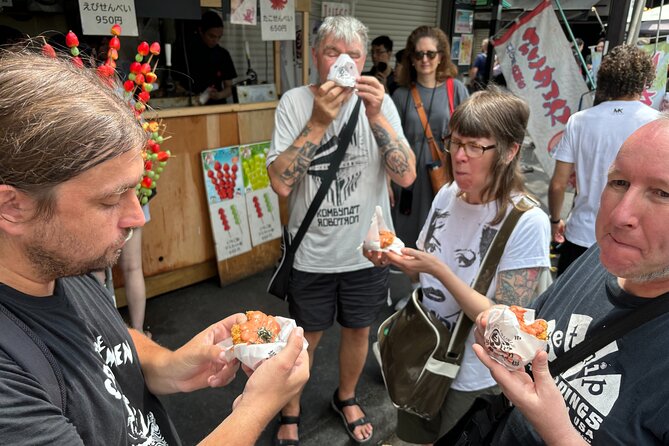
I would recommend this tour to first-time visitors who want structure without joining a large group. It suits couples, families, and small friend groups that enjoy tasting food but also want context for what they see.
It is a good match if you prefer local guidance over a long list of market stalls. The guide’s selections save you from making every decision yourself, while the private format leaves room for questions and personal interests.
It also suits anyone curious about the connection between food and religion in Japan. The shrine and temple are not filler. They help explain how this neighborhood functions as more than a place to buy seafood.
I would think twice if your main goal is the wholesale fish auction, since this tour takes place in the public Tsukiji area. I would also look elsewhere if you want a full meal, a fixed food menu, extensive shopping time, or a long specialist tour of Buddhist and Shinto traditions.
The same applies if you have strict dietary requirements. The tour includes three foods, but the exact choices and substitution policy are not provided. Ask before booking rather than assuming the guide can change every tasting.
Is $52.12 a fair price?
At $52.12 per person, the value depends on what you want from the morning. You are paying for a private local guide, three included foods, market orientation, a shrine visit, a temple visit, and photos sent at the end.
That is a reasonable package if you would otherwise feel uncertain about ordering food or finding the cultural sites. The guide’s explanations are the part that makes the price worthwhile. Without them, the market, shrine, and temple could be visited independently for far less.
The price is less attractive if you plan to explore Tsukiji alone and spend freely on your own food. Since additional foods and items are not included, your total cost can rise if you turn the walk into a larger eating expedition.
I see it as a paid introduction rather than a bargain food crawl. You get a focused route, a private guide, and enough tastings to learn what interests you. Afterward, you can return to the market on your own with better bearings and more confidence.
Free cancellation is available up to 24 hours before the local start time. Changes or cancellations made less than 24 hours ahead are not accepted for a refund, so keep that deadline in mind when setting your Tokyo schedule.
Should you book this Tsukiji experience?
Book it if you want a friendly private introduction to Tsukiji, with food, local customs, and two contrasting religious sites in one compact walk. The strongest reasons are the three included tastings, the personal guide service, and the chance to ask questions as you go.
I would especially choose it early in a Tokyo visit. Guide Cass was praised for making the market and shrine history clear, and that kind of explanation can improve the rest of your time in the city.
Skip it if you want the wholesale auction, a long meal, or a guaranteed list of specific foods. For everyone else, $52.12 is a fair cost for a well-shaped two-hour orientation to one of Tokyo’s most interesting food districts.
FAQ
How long does the Tsukiji tour last?
The walking tour lasts approximately two hours.
Where does the tour begin?
It begins at the LAWSON Tsukiji 4 Chome Store, located at 4-chōme-8-1 Tsukiji, Chuo City, Tokyo 104-0045, Japan.
Where does the tour end?
The activity ends back at the meeting point.
How many foods are included?
Three must-try local foods are included during the tour.
Are additional foods and purchases included?
No. Additional foods and items are not included in the tour price.
Is the tour private?
Yes. Only your group takes part in this private activity.
Which cultural sites are visited?
The tour visits Namiyoke Inari Shrine and Tsukiji Hongwanji Temple.
Is the tour near public transportation?
Yes. The additional information states that the experience is near public transportation.
Can I cancel for a full refund?
Yes. You can cancel at least 24 hours before the experience start time for a full refund. Cancellations or changes made less than 24 hours before the start time are not refunded or accepted.
More Private Tours in Tokyo



More Food Experiences in Tokyo
More Tsukiji Market Tours in Tokyo

More tours in Tokyo we've reviewed




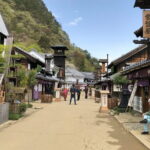
Tsukiji Market Tours, compared.
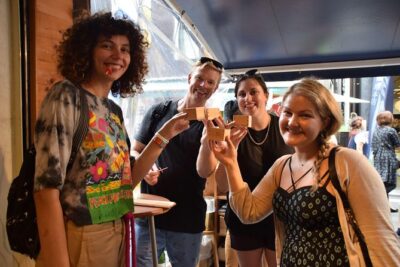 ★ 5.0Tokyo Tsukiji Fish Market Food and Culture Walking TourFrom $99
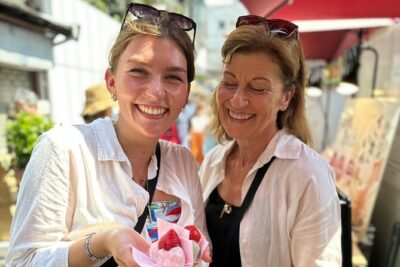 ★ 5.0Tokyo: Tsukiji Fish Market Food and Walking tourFrom $30
 ★ 4.9Tokyo: Tsukiji Fish Market Guided Walking TourFrom $222 hours
 ★ 5.0Tokyo Sushi Making Class in Tsukiji with Professional ChefFrom $49
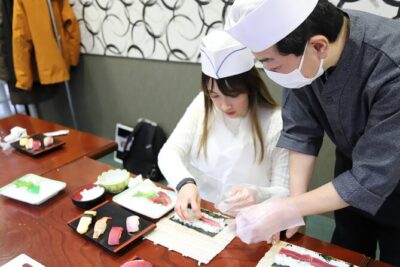 ★ 5.0Tsukiji Fish Market Guided Tour and Sushi Making with Pro ChefFrom $104
★ 4.7Tokyo: Tsukiji Fish Market Food and Culture Walking TourFrom $963 hours
★ 5.0Tsukiji Fish Market Guided Tour and Sushi Making with Pro ChefFrom $104
★ 4.7Tokyo: Tsukiji Fish Market Food and Culture Walking TourFrom $963 hours