
Reviewed · TOKYO FOOD TOURS
Shinjuku: Food Tour – 15 Dishes at 4 Eateries
Shinjuku’s best food often hides behind unmarked doors, down narrow lanes, and inside small izakayas. This three-hour walk gives you a practical shortcut, with 15 dishes at four eateries and drinks included as you move through Kabukicho, Omoide Yokocho, and Nishishinjuku.
I like the small group limit of 10 people, which makes it easier to ask questions and share dishes. I also like the range, from sashimi and pork tonkatsu to Okinawan food and sake-based drinks. The main caution is the walking: the stops are spread out, and one weak point for some people is that the food quality can vary from restaurant to restaurant.
In This Review
- Key points to know
- Why Shinjuku works so well for a food tour
- Starting near Shinjuku Station’s west side
- Kabukicho: food beneath Tokyo’s neon
- Omoide Yokocho and its 1950s atmosphere
- Nishishinjuku: a quieter side of the district
- Godzilla Head and the final neighborhood views
- What the 15 dishes are really worth
- The guide can make or break the evening
- Who should book this Shinjuku food walk
- The practical verdict
- FAQ
- How long is the Shinjuku food tour?
- How many dishes are included?
- How many people can join the tour?
- What areas does the route visit?
- Are food and drinks included?
- Where does the tour start?
- Where does the tour finish?
- Can I cancel for a refund?
Key points to know
- Fifteen tastings in four eateries: You get enough food for a full meal, not just a few samples.
- Three very different parts of Shinjuku: The route links Kabukicho, Omoide Yokocho, and Nishishinjuku.
- Small groups capped at 10: This suits people who want conversation and direct help from the guide.
- Okinawan food may be part of the meal: Several guides have served distinctive dishes from Japan’s southern islands.
- Drinks are included: Sake sours and other drink choices have been part of the experience.
- Plan for plenty of walking: The route is a food tour and a neighborhood walk, not a seated tasting event.
Why Shinjuku works so well for a food tour

Shinjuku is one of Tokyo’s great eating districts, with more than 10,000 restaurants around one of the world’s busiest railway stations. That scale is exciting, but it can also make dinner decisions exhausting. You can spend an hour comparing signs and still miss the small places that locals use.
A guide changes the evening. Instead of trying to decode every menu, you follow someone who knows where the group can eat, what to order, and how to connect the food with the neighborhood around it. The result is less about one famous dish and more about seeing how different parts of Shinjuku fit together.
This is especially useful on your first night in Tokyo. You get a quick orientation to the district, learn a few customs, and collect ideas for later meals. One useful bonus is that the route passes places you might otherwise walk past without noticing.
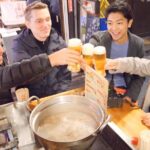
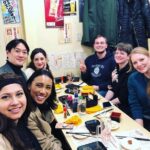
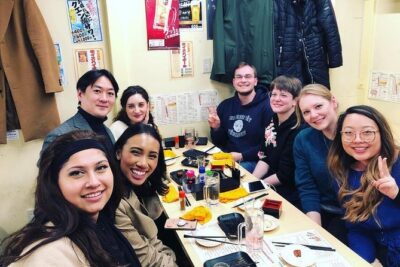
The tour has a strong social side, too. You share dishes at several stops, sit with a small international group, and walk between meals. If you enjoy food more when there is a story attached to it, this format works well.
A few more Tokyo tours and experiences worth a look
Starting near Shinjuku Station’s west side
The meeting point is outside AOKI Shinjukunishiguchi Honten at 1-chome-8-5 Nishishinjuku. That puts you on the west side of the station, so leave time to find the correct exit and meeting spot. Shinjuku Station is huge, and a short map distance can become a much longer walk once you are inside the station.
You receive confirmation when booking, and the mobile ticket makes the start fairly simple. The tour finishes back at the same meeting point, so you do not need to plan a separate return trip from an unfamiliar part of Tokyo.
The guide is an important part of the experience. Past tours have been led by people including Dai, Haydn, Lisa, Alma, Mak, Naruto, Yota, Naoya, Izzy, and Fu. The strongest guide comments consistently point to clear English, good humor, food knowledge, and stories about local customs.
That variation matters. A food tour can be excellent with a warm, engaged guide and merely average with someone who walks too fast or does not keep the group together. If your group includes older people, children, or anyone who walks slowly, stay near the guide from the start and say so early.
Kabukicho: food beneath Tokyo’s neon
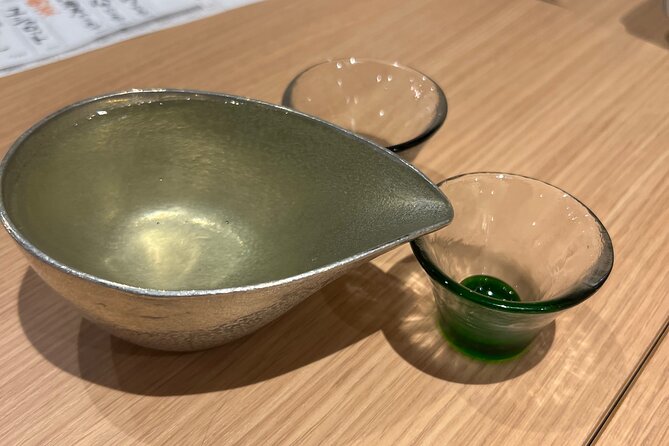
The first major stop is Kabukicho, one of Tokyo’s largest entertainment districts. It is famous for its bright signs, nightclubs, restaurants, and unusual mix of ordinary dining and adult entertainment. You do not need to visit the district’s more questionable venues to enjoy it. The point here is to understand how the area works and eat at a local restaurant within it.
This portion gives the tour its strongest sense of place. The guide may explain the district’s social history, the role of organized crime, and how the entertainment area developed. Several guides have also pointed out narrow alleys and streets connected with older parts of Kabukicho.
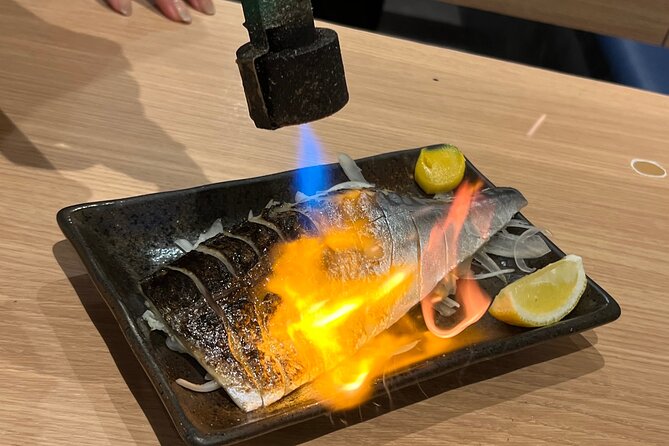
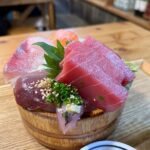
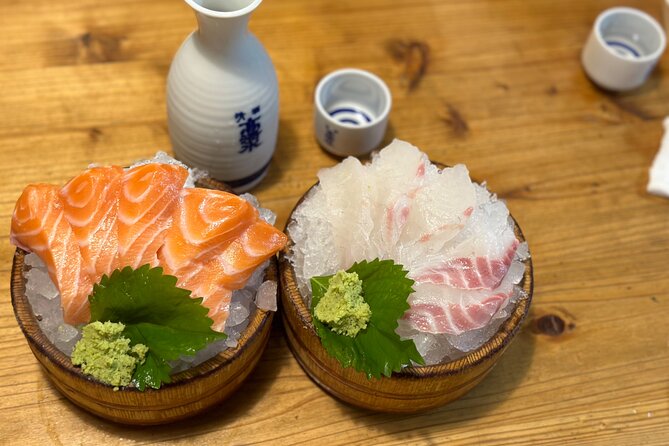
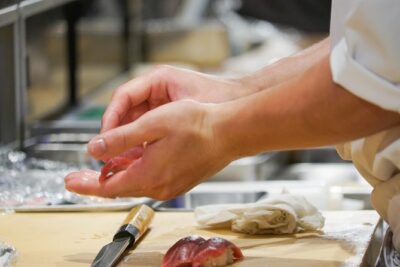
The food begins here, and it appears to be one of the more reliable parts of the evening. Seafood, sashimi, and drinks have received especially strong praise. One version of the meal included about seven kinds of sashimi, which made the first stop feel like a substantial course rather than a token taste.
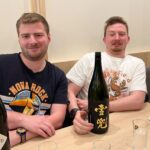
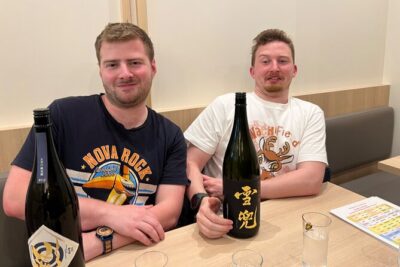
You may also get a sake sour or another drink here. Alcohol is part of the experience for some people, but you do not need to drink to take part. The supplied information confirms food and drinks are included, though the exact dishes can change.
Kabukicho is also where the tour can feel most tourist-oriented. If you want a quiet, refined meal in a traditional dining room, this is not that kind of evening. You are here for atmosphere, variety, and an introduction to a famous entertainment district.
Omoide Yokocho and its 1950s atmosphere
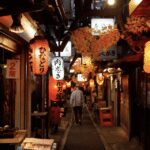
From Kabukicho, the route passes Omoide Yokocho, often called Memory Lane. The alley is lined with tiny izakayas and restaurants dating in style from the 1950s. It is one of the most recognizable old-style corners near Shinjuku Station.
The scheduled stop here is about 15 minutes, so do not expect a full meal in every narrow doorway. This is mainly a walking and photo section, with the guide explaining the character of the lane and pointing out places you might return to later.
Omoide Yokocho is compact and can feel crowded. The restaurants are small, the lanes are narrow, and the route may require you to move carefully rather than stroll shoulder to shoulder. Keep your phone and belongings secure, and listen for instructions when the group turns into a side lane.
I like this short stop because it breaks up the meal with a visual reminder of older Tokyo. It also helps you understand the contrast between the district’s postwar-style drinking alleys and the giant commercial buildings around Shinjuku Station.
Nishishinjuku: a quieter side of the district
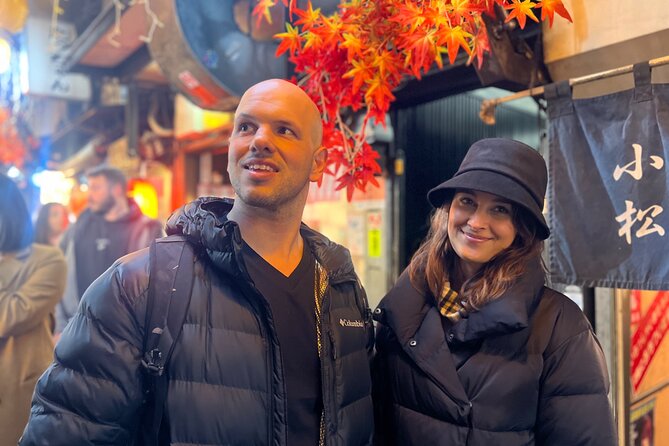
The route then heads into Nishishinjuku, an area with local restaurants that many international visitors miss. The change is useful. Kabukicho supplies the lights and nightlife, while Nishishinjuku gives you a calmer look at ordinary dining streets.
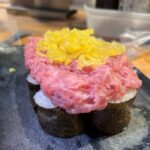
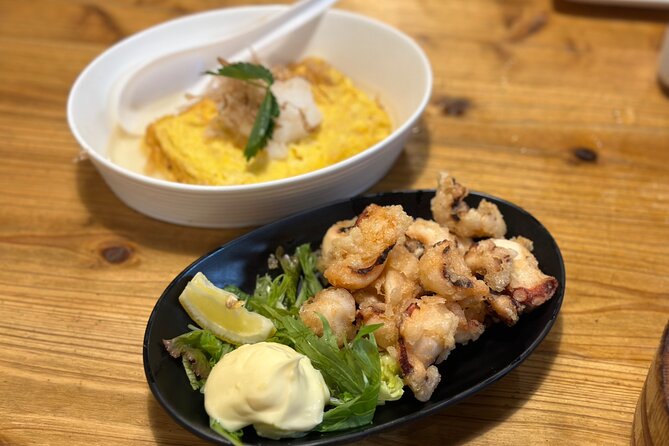
The group eats at another local restaurant here, and the dishes add variety to the evening. Okinawan food has been a favorite part of several tours. It gives you a taste of Japan beyond the standard sushi, ramen, and tempura menu, and it can be one of the more memorable surprises of the night.
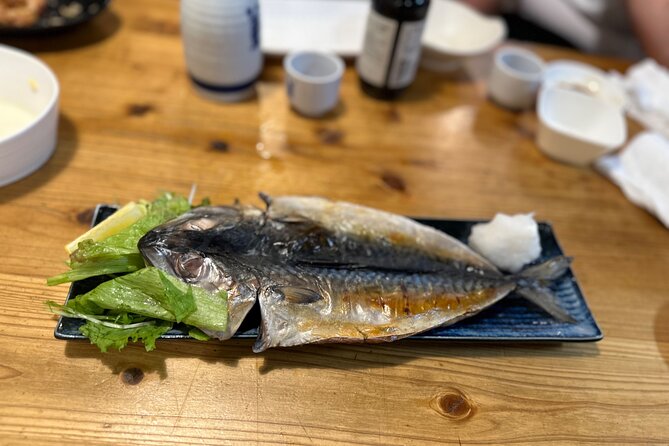
Pork tonkatsu has also received strong praise, while other dishes have been described as more ordinary. That is worth keeping in mind. The advertised total of 15 dishes sounds impressive, and the portions are said to be plentiful, but not every plate will have the same impact.
The strongest food experiences appear to combine a good restaurant choice with a guide who explains what you are eating. Dai, Haydn, Lisa, Alma, Naruto, and Naoya have all been singled out for making the meal more engaging through explanations of ingredients, customs, and regional food.
The walk between Kabukicho and Nishishinjuku is the main physical demand. One route may feel like an enjoyable food crawl, while another may seem too spread out. The tour is about three hours, and the distance between eateries means you should wear comfortable shoes and avoid booking a tight commitment immediately afterward.
A few more Tokyo tours and experiences worth a look
Godzilla Head and the final neighborhood views
Shinjuku’s Godzilla Head rises above Kabukicho and has become a playful symbol of the district. The giant head gives you a good photo stop and adds a touch of cinema to an otherwise very urban evening.
The landmark is less important for the food than for orientation. It helps you see how the entertainment district is arranged, and it makes a useful reference point if you return later. The tour also uses the surrounding streets to explain the area’s character rather than treating dinner as a series of disconnected restaurant visits.
Because the route ends back at the starting point, you can use the rest of the evening for another drink, shopping, or a return to a place that caught your eye. You will have a better sense of which alleys suit your mood and which restaurants you might want to approach on your own.
What the 15 dishes are really worth
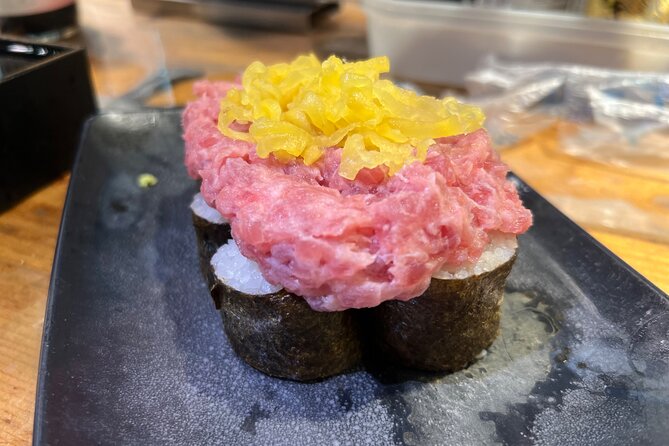
The price is $77.60 per person. Since food and drinks are included, the useful comparison is not simply the cost of three hours with a guide. You are paying for a full meal, a route through several parts of Shinjuku, local explanations, and the convenience of walking into restaurants without having to choose each one yourself.
For a visitor who would otherwise order cautiously, the value is strong. You can try food you may not recognize, share plates with the group, and learn enough to order more confidently later. The portions are generally described as generous, and you should not expect to leave hungry.
Still, the price is not automatically a bargain for every kind of eater. If you already know Shinjuku well, speak Japanese, and enjoy choosing small restaurants on your own, you may prefer to spend the money on one excellent meal. Some dishes can be average, and the quality is not perfectly even across all four eateries.
The drink inclusion adds value for people who want to try local alcoholic specialties. If you do not drink, the tour remains worthwhile for the food and guide, but part of the package will matter less to you. The supplied details do not promise a fixed drink menu, so treat the exact beverages as flexible.
The guide can make or break the evening
The best guides do more than carry the group from door to door. They explain how to eat the dishes, connect food with local customs, and give you enough neighborhood context to make the route feel purposeful.
Naruto, for example, has been praised for strong English, broad cultural experience, and explanations of Shinjuku’s less polished side. Dai has been described as friendly, punctual, and generous with food and neighborhood information. Haydn has been noted for discussing the area’s food, culture, and social setting with energy.
Yota has been appreciated for his knowledge of food and drinks, while Naoya has been praised for selecting places that showed different sides of Tokyo’s food scene. Guides such as Lisa, Alma, Mak, Izzy, and Fu have also been associated with friendly service and useful explanations.
There is one clear warning. A guide who walks too quickly or speaks mainly to the people nearest him can make the route frustrating. Stay close, especially when crossing busy streets or entering narrow lanes. A maximum of 10 people is a good size, but it does not remove the need to keep the group together.
Who should book this Shinjuku food walk
I would choose this tour if you are visiting Tokyo for the first time, want a full dinner rather than a single tasting, or feel unsure about ordering in small Japanese restaurants. It also suits solo visitors and couples who want an easy way to meet people without committing to a large coach group.
It is a good pick for adventurous eaters. You may sample sashimi, tonkatsu, Okinawan dishes, local drinks, and other items that are not obvious from an English menu. The range is more valuable than any one plate.
I would hesitate if you dislike walking, need a fixed restaurant menu, or want every dish to be high-end. The tour moves through lively nightlife areas, and the meal is designed for variety rather than fine dining. People seeking a quiet evening should also know that Kabukicho is loud, bright, and full of activity.
Most people can participate, and the route is near public transportation. The tour ends where it begins, which makes it easier to fit into a Tokyo evening. Gratuity is optional, and cancellation is free if you cancel at least 24 hours before the start time. Changes or cancellations inside that window are not accepted.
The practical verdict
I would book this early in a Tokyo stay, ideally near the beginning of your visit. You will get a meal, a neighborhood orientation, and a short list of dishes and alleys to revisit later.
At $77.60, the tour earns its price when you value guidance, variety, and the chance to try 15 dishes without planning four restaurant stops yourself. The main tradeoff is that the food quality may not be equal at every stop, and the walking is more than some people expect.
Book it if you want a friendly, food-focused introduction to Shinjuku with local stories along the way. Skip it if you prefer to choose one restaurant, sit for the whole evening, and control every dish yourself.
FAQ
How long is the Shinjuku food tour?
The experience lasts approximately three hours.
How many dishes are included?
The tour includes 15 dishes served across four eateries.
How many people can join the tour?
The group has a maximum of 10 travelers.
What areas does the route visit?
The route includes Kabukicho, Omoide Yokocho, and Nishishinjuku. It also includes a view of Shinjuku’s Godzilla Head.
Are food and drinks included?
Yes. Food and drinks are included in the tour price. The exact dishes and beverages may vary.
Where does the tour start?
The meeting point is AOKI Shinjukunishiguchi Honten at 1-chome-8-5 Nishishinjuku, Shinjuku City, Tokyo 160-0023, Japan.
Where does the tour finish?
The activity ends back at the meeting point.
Can I cancel for a refund?
You can cancel at least 24 hours before the experience start time for a full refund. Cancellations and changes made less than 24 hours before the start time are not accepted.
More Food Experiences in Tokyo

More Tokyo Food Tours in Tokyo
More Shinjuku Tours in Tokyo

More tours in Tokyo we've reviewed











Tokyo Food Tours, compared.
 ★ 5.0Tokyo: Shinjuku Food Tour (13 Dishes at 4 Local Eateries)From $86
 ★ 4.9Tokyo: Shinjuku Food Tour (15 Dishes and 4 Eateries)From $853 hours
 ★ 5.0Best of Shinjuku: Izakaya Food Tour (4 Stops, 14+ Tastings)From $92
 ★ 5.0Tokyo Night Foodie Tour in Shinjuku – Seasonal Sushi, Wagyu BeefFrom $111
 ★ 5.0Eat and Drink Like a Local: Tokyo Ueno Food Tour-Taverns&RamenFrom $95
 ★ 5.0Tokyo: Shibuya Food Tour (13 dishes and 4 Eateries)From $77