
Reviewed · WALKING TOURS
Tokyo Private Guided 1/2-Day Walking Subway Tour English guide
Tokyo’s subway is the key to this private half-day tour. In about four and a half hours, you move from the wooded grounds of Meiji Jingu to the bright scramble of Shibuya, old Asakusa, and the food stalls of Tsukiji. I like the hotel pickup and included one-day Metro Pass, and I like that guides such as Yoshi, Hiromi, and Izumi have helped visitors save time on tricky routes.
The tradeoff is pace. You get a useful first look at several major areas, but you will not have long at any one stop. Expect plenty of outdoor walking, crowded streets, stairs, and subway transfers, so comfortable shoes and a good night’s rest matter.
In This Review
- Key points at a glance
- Why this private Tokyo tour works well on a first visit
- Meiji Jingu begins the morning under the trees
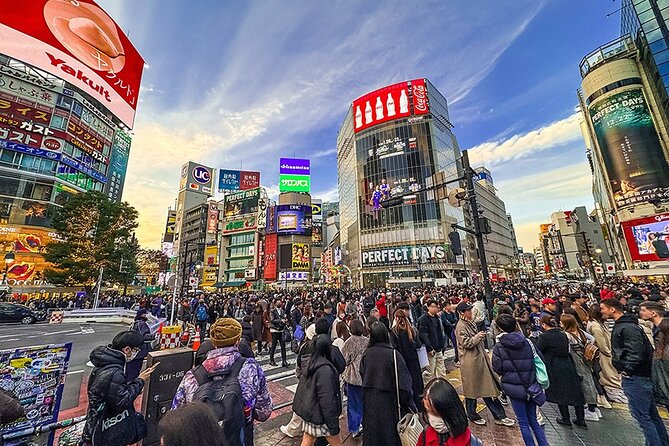
- Shibuya Crossing shows Tokyo in motion
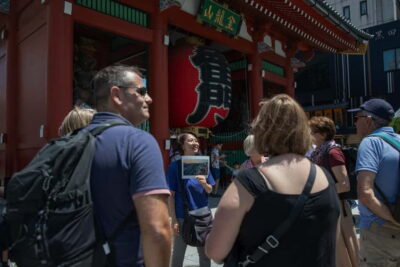
- Asakusa brings back old Tokyo
- Senso-ji offers the tour’s strongest historical stop
- Tsukiji finishes with food and a practical lunch option
- The subway is the hidden star of the morning
- What the private format adds at $136.82 per person
- Walking, weather, and the real pace
- Who will get the most from this experience
- Should you book this Tokyo walking tour?
- FAQ
- How long does the Tokyo private subway tour last?
- Is hotel pickup included?
- Is transportation included in the price?
- What attractions are visited?
- Is lunch included?
- Can I cancel for a full refund?
Key points at a glance
- Five major Tokyo stops in one morning: Meiji Jingu, Shibuya Crossing, Asakusa, Senso-ji Temple, and Tsukiji Outer Market.
- Private English-speaking guide: Your group travels alone, allowing the guide to answer questions and adjust the pace where possible.
- Subway help is part of the value: Hotel pickup and a one-day Metro Pass make Tokyo’s rail system less intimidating.
- A strong orientation tour: You see modern, traditional, religious, and food-focused sides of the city in one outing.
- Plan for serious walking: The route includes outdoor sightseeing, station movement, and time between neighborhoods.
- Tsukiji is the finish: The tour ends around 2:00 pm, with lunch not included but the Outer Market nearby.
Why this private Tokyo tour works well on a first visit
Tokyo can feel like several cities joined together by rail. One minute you are beneath tall trees at a shrine, and soon after you are watching waves of people cross one of the world’s best-known intersections. This tour makes that contrast the point.
I love the private format. You are not managing the needs of a large group, and your guide can explain what you are seeing without turning the morning into a lecture. The guide can also help when a station feels confusing or a popular area is crowded.
I also like the subway training built into the sightseeing. The included one-day Metro Pass is useful, but the greater benefit is learning how to move around Tokyo with help. Yoshi was praised for finding efficient routes, while Izumi helped one group see much more than they expected on their own. That practical skill can continue to pay off after the tour ends.
The limitation is clear: this is a sampler, not a slow study of Tokyo. The listed stop times add up to about 160 minutes, leaving the rest of the 4.5-hour schedule for hotel pickup, subway rides, and movement between sites. You will see a lot, but you will need to keep moving.
Other walking tours we've reviewed in Tokyo

Meiji Jingu begins the morning under the trees
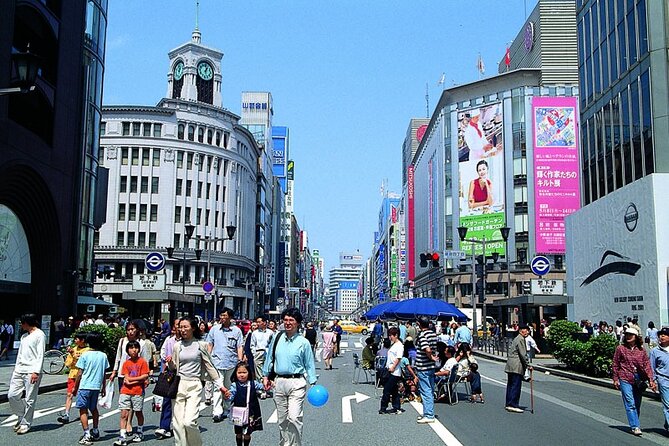
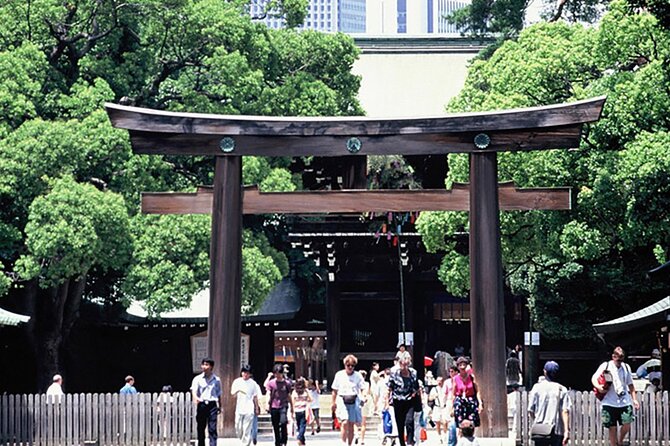
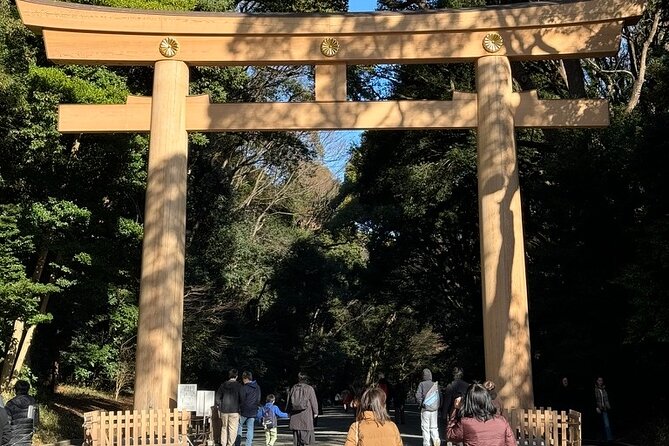
The tour starts by taking the subway from a station near your hotel to Meiji Shrine, also called Meiji Jingu. The shrine was completed in 1920 and honors Emperor Meiji, an important figure in Japan’s move into the modern era during the 19th century.
You have about 50 minutes here, the longest stop on the route. That gives you time to walk through the shrine grounds, take in the setting, and hear about the religious and historical meaning of the site. Admission is free.
This is a good opening stop because it gives you a quieter introduction to Tokyo before the city’s larger crowds and signs take over. The grounds offer a strong contrast with the commercial districts later in the morning. Your guide can also explain customs and background that are easy to miss if you simply walk through the entrance and take a few photos.
Do not expect a private, silent visit. Meiji Jingu is a major Tokyo sight, and conditions can vary with the weather and time of day. The route also involves walking outdoors, so rain gear is worth carrying even if the forecast looks fine.
Shibuya Crossing shows Tokyo in motion
From Meiji Shrine, the ride to Shibuya Station takes only a few minutes. The stop at Shibuya Crossing lasts about 20 minutes and focuses on the famous intersection in the center of Shibuya City.
Twenty minutes is enough to see the crossing, watch the traffic of people, and get a basic sense of the district. It is not enough for an extended shopping visit or a long search for the best view. That short timing is important when you decide what kind of tour you want.
I find Shibuya useful here because it gives you a direct picture of modern Tokyo after the shrine’s traditional setting. Your guide can help you navigate the station and surrounding streets, which is valuable in an area where signs, exits, and crowds can quickly make a simple walk feel less simple.
The crossing itself is free, but the experience depends on timing and crowd levels. You should think of this as a focused sightseeing stop, not free time in Shibuya. If you want to shop, eat, or explore the neighborhood at length, plan a separate visit.
Asakusa brings back old Tokyo
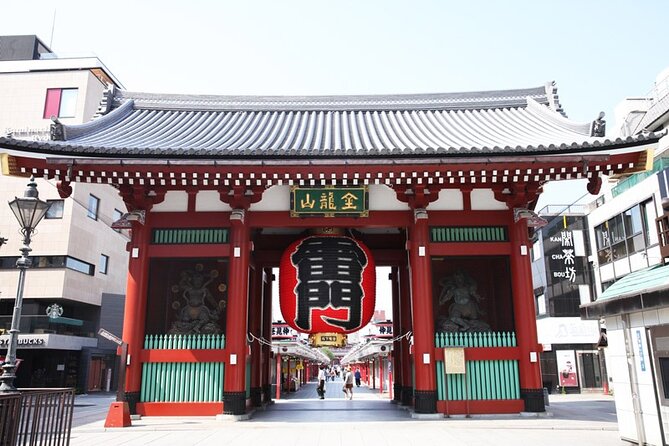
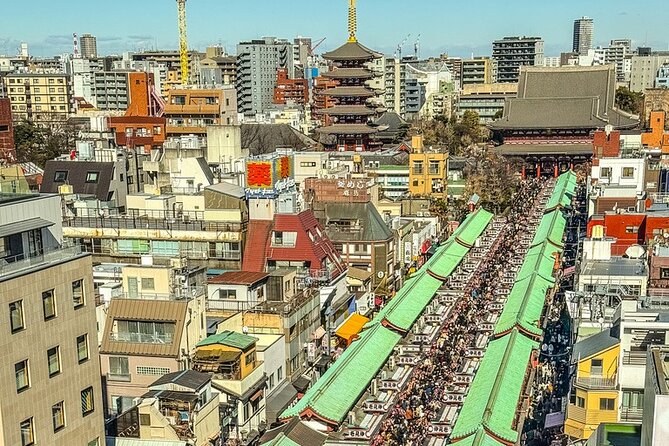
The tour then shifts to Asakusa, a district known for traditional crafts, souvenirs, street food, and local shops. You have about 20 minutes to look around before the longer visit to Senso-ji Temple.
Asakusa gives the route a different mood from Meiji Jingu and Shibuya. Here, the emphasis is on older customs, temple streets, food, and handmade goods. Your guide can add context to what you see and point out the difference between simply passing through a shopping street and understanding why the area matters.
The short stop means you should keep your priorities simple. You might browse a few shops, take in the street scene, or sample the area’s food if time allows, but lunch is not included and the schedule continues to Senso-ji. Save serious shopping for another part of your trip.
Asakusa is also one of the places where crowds can affect the pace. The route is designed to keep you moving through a popular district rather than give you a long, unplanned break. That can be helpful if you want structure, but less appealing if you prefer to wander.
Senso-ji offers the tour’s strongest historical stop
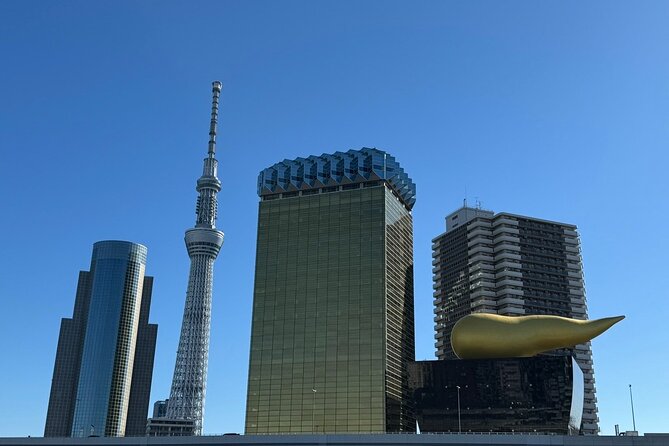
Senso-ji is one of Tokyo’s oldest and largest Buddhist temples, with origins dating to 645. The visit lasts about 40 minutes, making it the second-longest stop after Meiji Jingu.
This is where the guide’s cultural explanations can make the biggest difference. The temple is more than a striking building and a photo stop. Its long religious history and connection with Asakusa help explain why this district remains one of Tokyo’s best places to encounter traditional Japan.
You will have time to look around the temple area and hear about its significance. Admission is free. Since Senso-ji is a major sight, expect other visitors and a lively setting rather than a quiet private moment.
I appreciate the order of the morning here. You first get a broad taste of Asakusa, then spend more focused time at the temple. That makes the stop easier to understand than arriving with no context. Still, 40 minutes passes quickly, especially if you stop for photos or browse near the approach.
Other guided tours in Tokyo


Tsukiji finishes with food and a practical lunch option
The final stop is Tsukiji Fish Market, with the tour ending around 2:00 pm. The wholesale fish market moved to Toyosu in 2018, but Tsukiji’s Outer Market remains in place. It continues to draw people for its food stalls, shops, and market atmosphere.
You have about 30 minutes here. That is enough to get a taste of the area and decide what you want to return to, but it is not enough for a long meal and careful shopping. Lunch is not included, so the end of the tour gives you a natural chance to continue on your own and eat nearby.
This finish works well because it leaves you in a food-focused district at lunchtime. I would treat the guided portion as an introduction, then stay longer if Tsukiji interests you. Ask your guide for practical help before the tour ends, especially if you want to know how to continue exploring the market area.
The market is also a useful reminder that Tokyo changes over time. The wholesale operation moved elsewhere, while the Outer Market remained a working food district. Your guide can help place what you see in that larger story.
The subway is the hidden star of the morning
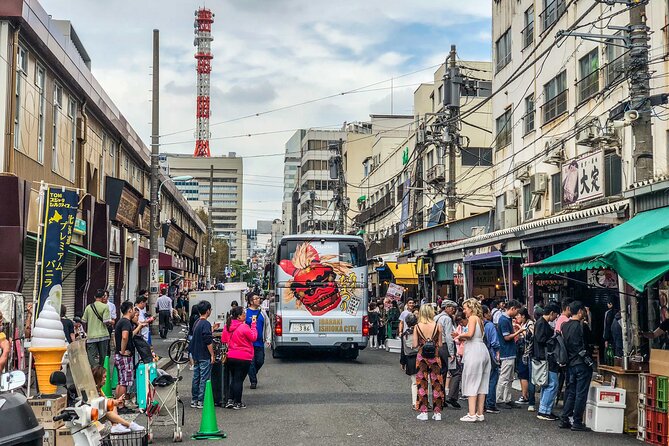
The tour includes transportation fees through a one-day Metro Pass. That removes one small layer of work, but the guide’s route planning is the real advantage.
Tokyo’s rail network can be fast once you understand it, yet the first few rides may involve unfamiliar station layouts, transfers, and exits. A private guide can show you how the system connects the main sights and help you feel less dependent on taxis.
The schedule also shows why the pass matters. Meiji Jingu, Shibuya, Asakusa, and Tsukiji are not one compact walking loop. Public transportation makes it possible to cover these districts in a single morning, while a guide handles the route between them.
Pickup is offered at your hotel, but there is an important boundary. If your hotel is outside the designated pickup area and a subway alternative is not practical, you may need to pay the guide’s transportation costs to the first stop and back from the final stop. Confirm your hotel location before booking if this could apply to you.
What the private format adds at $136.82 per person
At $136.82 per person, this is not the cheapest way to see Tokyo’s free sights. You could visit every listed site without paying admission. The price pays for the guide, hotel pickup, route planning, private attention, and the included Metro Pass.
The value is strongest if you are new to Tokyo, short on time, or uneasy about using the subway. A private guide can answer your specific questions and adjust small parts of the visit. One guide was described as patient with slower members of a group, while another helped a party manage crowded sites and different interests.
The value is weaker if you already know Tokyo’s rail system or prefer to spend an entire morning in one neighborhood. You are paying for efficiency and orientation, not long stays, included meals, or special access.
Group discounts may be available, which could make the per-person cost more attractive for a family or small party. Because this is a private activity, only your group participates. That gives you more control than a standard shared sightseeing outing, even though the main route remains fairly structured.
Walking, weather, and the real pace
The physical demand is moderate, but the schedule includes a good amount of outdoor walking. You will walk through shrine and temple grounds, across city streets, around market areas, and through subway stations. Wear sneakers or other comfortable shoes.
The schedule may feel long if someone in your group is not used to walking. Rest before the tour, as one guest’s advice makes clear, and carry rain gear such as an umbrella or raincoat. The tour requires suitable weather and may change or omit stops because of weather or operational reasons.
A weather-related change does not automatically mean the tour is canceled or refunded. If the provider cancels because of poor weather, you are offered another date or a full refund. Otherwise, the itinerary may be adjusted without a fare refund, so keep your expectations flexible.
The route is not designed for a slow, leisurely morning. It is designed to help you get your bearings, cover major ground, and learn how Tokyo’s subway fits the city together.
Who will get the most from this experience
I would recommend this tour to a first-time visitor who wants a quick introduction to several sides of Tokyo. It is especially useful during an early day in your trip, since you can learn the rail system and return to areas that deserve more time later.
It also suits families or mixed-age groups that want a private guide and some flexibility. A patient guide can help when walking speeds differ, though everyone should still be ready for a full morning on foot.
This tour is less suited to you if your main goal is food tasting, shopping, photography, or detailed temple study. The stops are short, and lunch is not part of the price. It is also not ideal if you dislike crowds or want to avoid public transportation.
The consistently praised guides make the human side of the tour important. Yoshi helped with efficient subway routes and questions about Japanese culture. Hiromi was kind and helpful, while Izumi helped one group see more than it expected. Your guide will shape how useful the morning feels, so take advantage of the private setting and ask questions.
Should you book this Tokyo walking tour?
Book it if you want a fast, well-organized introduction to Tokyo and would benefit from help with the subway. The mix of Meiji Jingu, Shibuya, Asakusa, Senso-ji, and Tsukiji gives you a broad first look at the city, and the private English-speaking guide adds value beyond simply following a map.
Skip it if you want long visits, a relaxed pace, or a food tour with lunch included. You will see many major sights, but you will also spend a substantial part of the morning moving between them.
For most first visits, I see this as a useful orientation tour rather than a complete Tokyo day. Wear good shoes, rest beforehand, check the pickup range, and leave time after 2:00 pm for lunch and a closer look at Tsukiji.
FAQ
How long does the Tokyo private subway tour last?
The tour lasts approximately 4 hours and 30 minutes. The listed stop times total about 160 minutes, with the remaining time used for hotel pickup and travel between attractions.
Is hotel pickup included?
Yes. Hotel pickup is included within the provider’s designated pickup range. If your hotel is outside that range and subway travel is not practical, you may be responsible for the guide’s transportation costs to the first stop and back from the final stop.
Is transportation included in the price?
Yes. A one-day Metro Pass is included as the transportation fee. The tour uses the subway to connect the different areas of Tokyo.
What attractions are visited?
The route includes Meiji Jingu Shrine, Shibuya Crossing, Asakusa, Senso-ji Temple, and Tsukiji Fish Market, specifically the remaining Outer Market area.
Is lunch included?
No. Lunch is not included. The tour ends around 2:00 pm at Tsukiji, where you can continue exploring and arrange your own meal.
Can I cancel for a full refund?
You can cancel for a full refund up to 24 hours before the experience start time. Changes or cancellations made less than 24 hours before the start time are not accepted for a refund. If the tour is canceled because of poor weather, you will be offered another date or a full refund.
More Private Tours in Tokyo

More Guided Tours in Tokyo
More Walking Tours in Tokyo

More tours in Tokyo we've reviewed




Walking Tours, compared.
 ★ 5.0Tokyo Tsukiji Fish Market Food and Culture Walking TourFrom $99
 ★ 5.0Tokyo: Imperial Palace and Shogun Historical Walking TourFrom $22
 ★ 4.9Tokyo: Shinjuku Local Bar and Izakaya Guided Walking TourFrom $343 hours
 ★ 5.0Tokyo: Tsukiji Fish Market Food and Walking tourFrom $30
 ★ 4.8Tokyo: Asakusa Walking Tour with Sensoji Temple VisitFrom $222 hours
 ★ 4.9Tokyo: Tsukiji Fish Market Guided Walking TourFrom $222 hours