
Reviewed · TEMPLES & MEDITATION
Tokyo: Meiji Jingu Shrine & Inner Garden Guided Tour (2h)
Meiji Jingu is one of Tokyo’s best places to slow down. Behind the city streets, a broad forest path leads you toward a shrine tied to Emperor Meiji and Empress Shoken. This tour adds meaning to the walk with simple shrine rituals, a look at the sake barrels, and a visit to the quiet Shinen Garden.
I like two things right away: the guide gives you a clear way to take part rather than asking you to watch from the sidelines, and the $48 price includes the garden entrance, omikuji fortune-telling, and other activity fees. The main consideration is time. Two hours is enough for the key sights, but the garden and well may feel rushed if the group spends extra time at the shrine.
In This Review
- Key points at a glance
- Why Meiji Jingu works so well with a guide
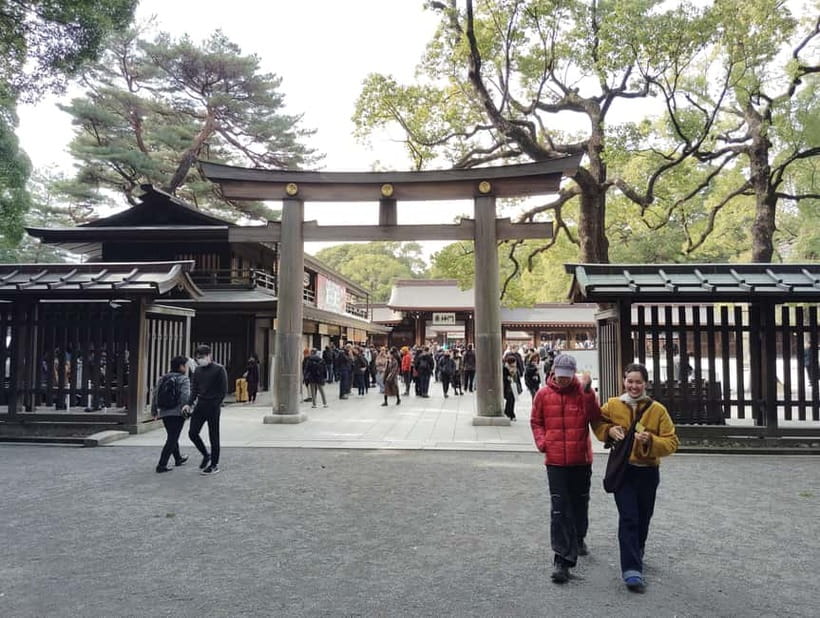
- The first torii and the walk through the forest
- Sake barrels and the meaning of an offering
- The grand torii and handwashing ritual
- Meiji Jingu Shrine and the proper way to pray
- Omikuji, fortune-telling, and protective charms
- Shinen Garden and the South Pond
- Kiyomasa’s Well, if time allows
- How the $48 price measures up
- Who should book this two-hour walk
- Should you book the Meiji Jingu tour?
- FAQ
- How long is the Meiji Jingu shrine and garden tour?
- Where does the tour meet?
- What language is the tour offered in?
- Is the Meiji Jingu Garden entrance included?
- Is fortune-telling included?
- Is private transportation included?
- Can I cancel the booking for a refund?
Key points at a glance
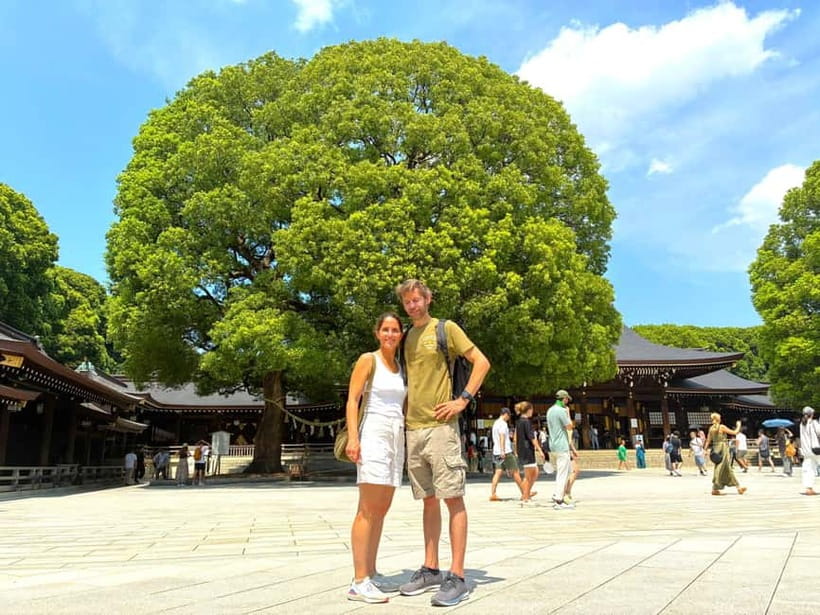
- Walk through the Eternal Forest: Follow the long approach beneath trees planted for the shrine, with an introduction to Meiji Jingu’s setting and purpose.
- Learn the handwashing and prayer customs: Your guide explains the correct sequence before you enter the shrine area.
- See the sake barrel offering: Stop for photos and a lesson about why the barrels are displayed here.
- Visit Shinen Garden’s South Pond: The garden offers a quieter, more reflective side of the Meiji Jingu grounds.
- Try omikuji fortune-telling: The fee is included, and you can also receive a protective charm if you choose.
- Benefit from a small-group or private format: The available format gives you more room to ask questions than a large coach tour.
Why Meiji Jingu works so well with a guide
You can walk into Meiji Jingu on your own, but it is easy to miss the meaning behind what you see. The shrine grounds are spacious, and the forest approach can feel like a pleasant walk without much context. A guide helps connect the trees, offerings, rituals, and buildings into one story.
The tour begins at the first torii, the large gateway at the start of the approach. This is a practical meeting place because it marks the beginning of your route and gives the guide room to explain the plan before the walk begins. Look for the yellow DeepExperience sign held by your guide.
The English-speaking guides bring different personalities to the walk. Minoru is described as kind and generous with anecdotes. Kai brings in Japanese culture beyond the shrine itself. Kyo is noted for an easygoing manner, humor, and contemporary explanations of Japanese religious practice. Takashi focuses on historical background and brings clear enthusiasm to the subject.
That range matters because Meiji Jingu is not only a place for photographs. You are looking at a living religious site, a memorial connected with the Meiji period, and a carefully maintained forest in the middle of Tokyo. A good guide helps you understand how those parts fit together without turning the visit into a lecture.
A few more Tokyo tours and experiences worth a look

The first torii and the walk through the forest
The first section is a gentle walk toward the shrine. Your guide starts with an overview, then points out the role of the torii and the character of the forest. The path gives you a little breathing room before the main shrine buildings appear.
The forest is known as the Eternal Forest. That name refers to the long-term idea behind the planting: trees were selected and planted so the woodland could continue with limited human interference over time. Your guide uses this area to explain why the approach feels so different from nearby Harajuku, where shops and city traffic are close at hand.
This is also a good place for photographs. The route is visually simple, with tall trees, gravel paths, and changing light. You will want comfortable shoes because the tour involves steady walking over shrine grounds and garden paths.
The forest walk is one of the tour’s strengths, but it is not a wilderness outing. You remain on established paths, and the focus is cultural rather than botanical. If you want a detailed study of individual tree species, this tour may not be the right choice. If you want to understand why the shrine feels calm despite its central Tokyo location, the walk does the job.
Sake barrels and the meaning of an offering
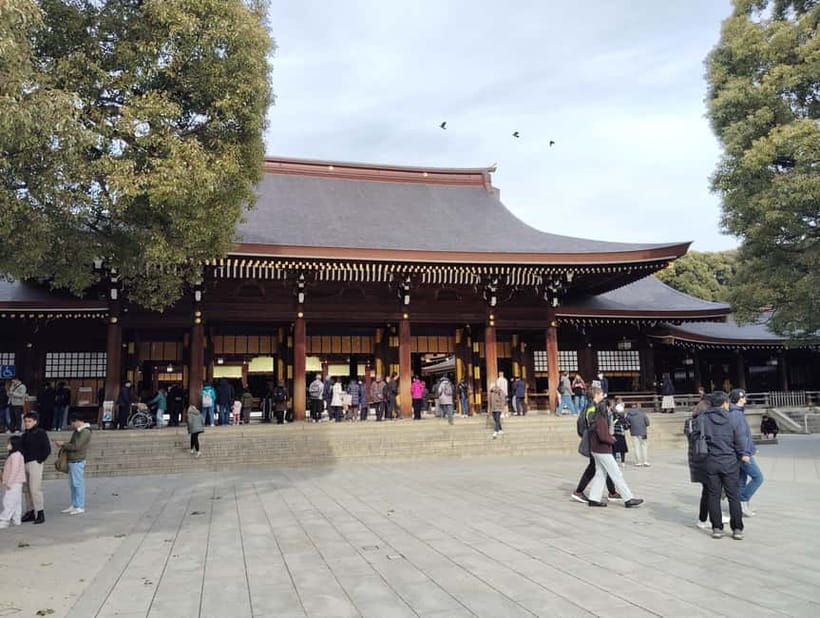
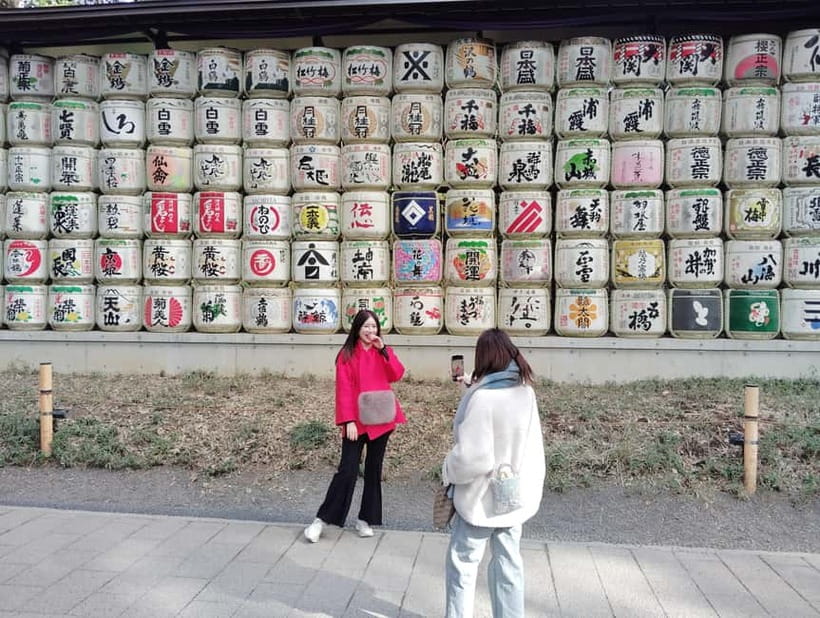
One memorable stop comes at the sake barrel display. The barrels are offered to the shrine and arranged in a way that makes an excellent photo stop. Your guide explains the custom and places the offering in its religious and cultural setting.
This is a useful moment for first-time visitors because sake has a role in Japanese ceremonies that goes beyond an ordinary drink. The display also shows the connection between Shinto shrines and the people, businesses, and communities that support them.
The stop is brief, but it breaks up the walk and gives you a concrete detail to remember. I appreciate that the tour does not rush straight to the main shrine building. Small details such as the barrels often help you notice more during the rest of your Japan trip.
You should not expect a tasting here. Food and drinks are not included, and the sake barrels are for viewing and explanation. The value comes from understanding the offering, not from consuming anything.
The grand torii and handwashing ritual
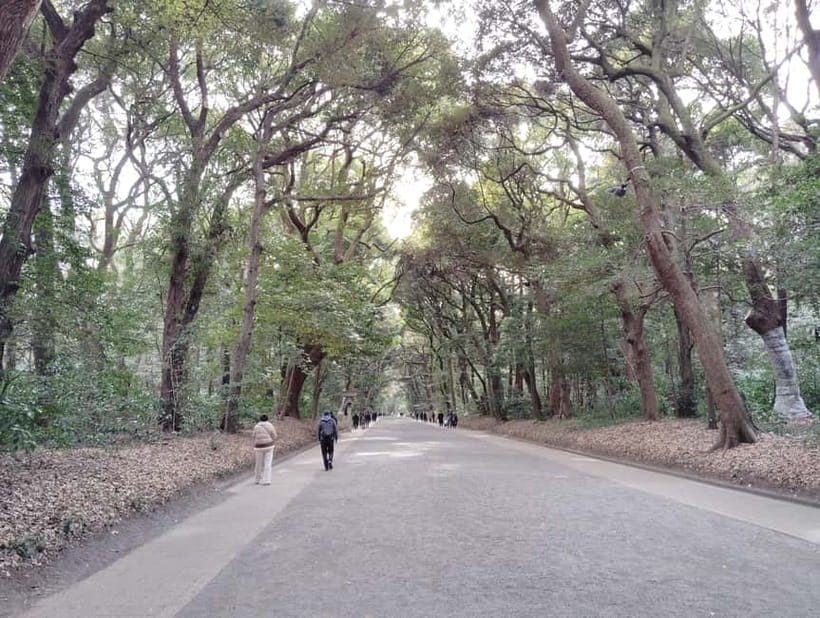
After the opening walk, you reach the grand torii near the main shrine approach. Before going farther, the guide shows you how to perform the traditional handwashing ritual at the purification fountain.
The ritual is straightforward, but the order and gestures matter. Your guide demonstrates how to rinse your hands and mouth before entering the sacred area. This gives you a respectful way to participate, and it also helps you feel less uncertain about local customs.
I like this part because it is practical. Many visitors see people washing at a shrine and copy them as best they can. With a guide, you learn what the action means and how to take part without treating it as a photo opportunity.
The handwashing stop can also be useful for families and first-time visitors who want a clear introduction to shrine etiquette. Keep in mind that this is a public religious site. Your guide can explain the custom, but the atmosphere should remain quiet and respectful.
Meiji Jingu Shrine and the proper way to pray
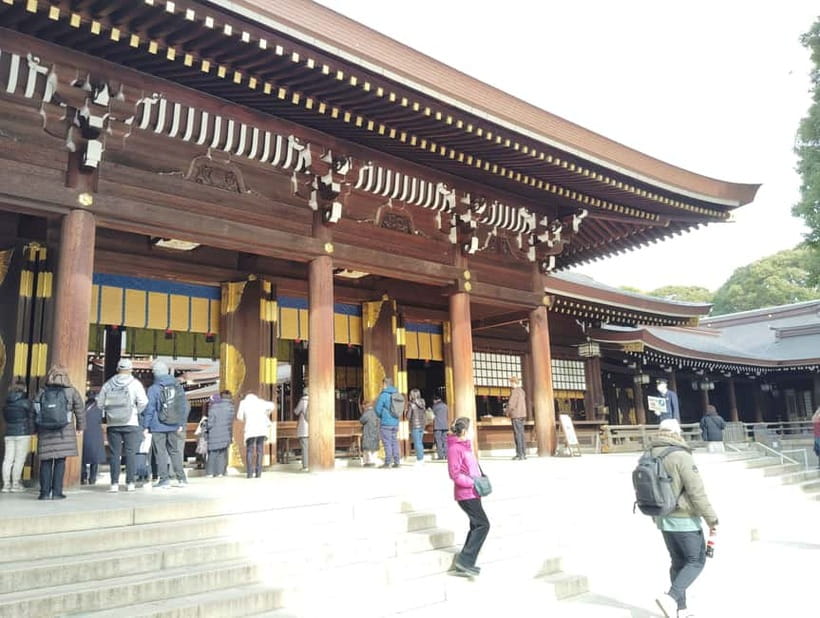
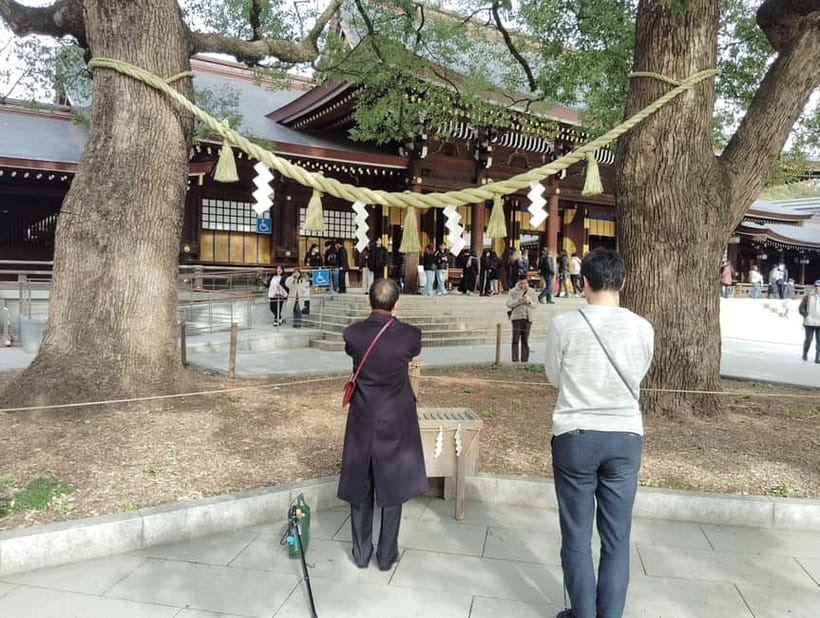
At the main shrine, the guide explains how to approach the offering area and how to pray. You will learn the basic sequence and then have a chance to pause for your own reflection.
This is the heart of the tour. The explanation gives you cultural context, while the prayer itself leaves room for a personal moment. You do not need to know any Japanese, and you do not need previous experience at a Shinto shrine.
The tour is especially useful here because religious customs can be easy to confuse. A guide can help you understand the difference between washing, making an offering, bowing, and praying. The point is not to perform perfectly. It is to show care and awareness while visiting the shrine.
Meiji Jingu can become busy, especially around popular travel times, so the quality of the visit depends partly on the pace of the group and the conditions on the day. A private or small-group option should make it easier to ask questions and spend a little longer at points that interest you.
Other guided tours in Tokyo





Omikuji, fortune-telling, and protective charms
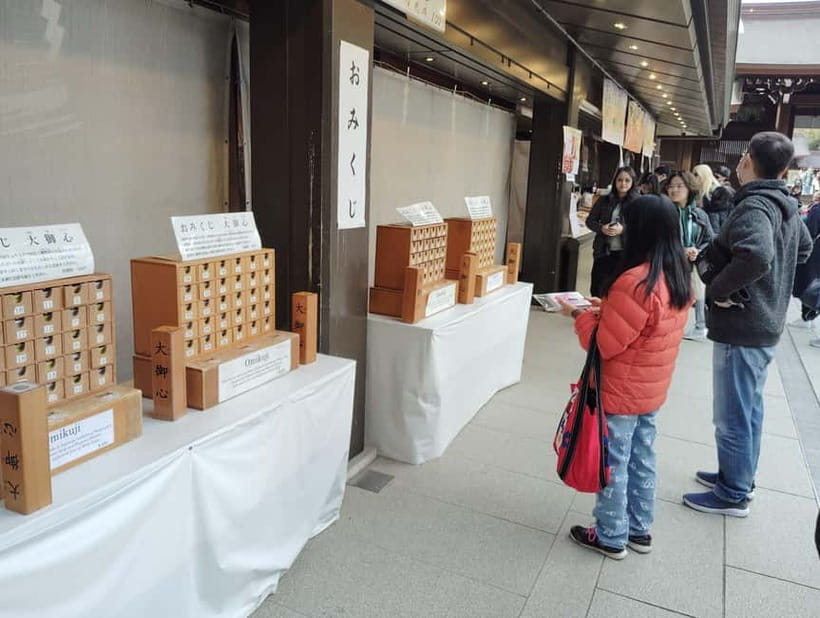
After the shrine visit, the tour includes an omikuji fortune-telling experience. This is one of the lighter moments of the route and gives you a traditional souvenir of the visit.
Omikuji are written fortunes found at many Japanese shrines and temples. The paper may offer guidance about different parts of life. Your guide can help explain what you receive and how the practice fits into shrine culture.
A protective charm is also available if you would like one. The charm is not required, and you should treat it as a personal choice rather than an extra that you must buy. Since omikuji and other experience fees are included, this part adds value to the tour price.
The fortune-telling stop changes the mood after the more formal prayer instruction. It is playful without being disconnected from the religious setting. If you prefer a strictly historical tour, this section may feel less essential. For most first-time visitors, it gives you an easy and memorable way to engage with Japanese custom.
Shinen Garden and the South Pond
The second hour continues into Meiji Jingu’s Shinen Garden. The garden entrance fee is included, which matters because the garden is a separate experience from simply walking through the shrine’s forest.
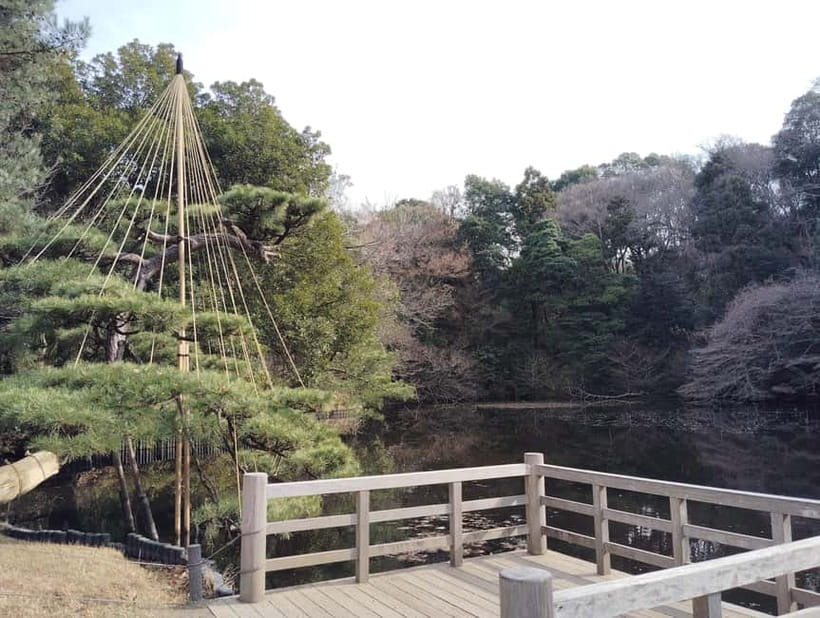
The South Pond is the main focus. Compared with the broad shrine approach, the garden feels more enclosed and peaceful. Water and greenery create a slower setting, and the guide can explain how this part of the grounds differs from the shrine approach and main worship area.
The garden visit gives the tour balance. You begin with a long walk, move into ritual and prayer, and then finish with a quieter garden setting. I like this progression because you get both the major cultural sight and a calmer place to absorb what you have learned.
The garden is not simply extra scenery. It helps show how Japanese sacred spaces can include both formal structures and carefully shaped natural areas. The South Pond gives you time to look around rather than move from one explanation to the next.
Time is the key issue here. The tour lasts two hours, and the schedule includes the first torii, forest, sake barrels, grand torii, shrine, fortune-telling, and garden. If the group pauses often for photos or questions, the final garden section may be shorter than expected.
Kiyomasa’s Well, if time allows
The route may also include Kiyomasa’s Well. The wording matters: this stop depends on the available time. You should regard it as a welcome addition, not a guaranteed centerpiece.
The well is one of the more distinctive points within the garden area, and it adds another layer to the visit. Your guide can explain why it is associated with the grounds and help you understand its place within the wider shrine setting.
If seeing the well is especially important to you, ask about timing early in the tour. A private or small-group format may allow a little more flexibility, though the tour still has a fixed two-hour duration. Do not assume that extra time will be available.
The garden and well also require walking, so plan for a route rather than a sit-down visit. Comfortable shoes and a willingness to follow paths at a steady pace will make the experience easier.
How the $48 price measures up
At $48 per person, this is not the cheapest way to walk through Meiji Jingu. You can enter the shrine grounds without paying for a guided explanation, and independent visitors can see much of the same physical setting.
The price makes more sense if you want context and participation. You are paying for a live English-speaking guide, the garden entrance, omikuji, and other experience fees. You also receive help with rituals that are easy to misunderstand when you are on your own.
The tour becomes a better value for visitors with limited time in Tokyo. In two hours, you cover the shrine approach, offerings, purification, prayer, fortune-telling, and part of the garden. That leaves you free to continue exploring Harajuku or nearby Tokyo sights afterward.
It is less useful if you already know Shinto customs, have visited Meiji Jingu before, or prefer to wander without a schedule. You may find the two-hour route too structured, especially if you want a long, quiet stay at the pond.
Private and small-group formats are available. The exact cost or size difference is not specified here, so check the available option before booking. A smaller format should suit you if questions and a more personal pace are important.
Who should book this two-hour walk
I would recommend this experience to first-time visitors to Meiji Jingu, especially those who want to take part in shrine customs respectfully. It also suits anyone interested in how religious practice and daily Japanese culture connect.
Families may find the combination of forest, ritual, photos, garden, and fortune-telling easier to enjoy than a long history-only walk. The omikuji adds a hands-on element, while the guide keeps the cultural explanation moving.
The tour is also a good fit for travelers who want a calm break from Tokyo’s busy shopping districts. The forest provides that change of pace without requiring a trip outside the city.
You should think twice if you want a deep historical tour of the Meiji period, since the supplied details focus more broadly on the shrine, customs, and cultural setting. You should also allow for a brisk pace if you want to see every listed point within two hours.
The meeting point is in front of the first torii. Bring the booking details, arrive ready to identify the yellow DeepExperience sign, and wear shoes suitable for walking. There is no private transportation, and food and drinks are not included, so plan those separately.
Cancellation is free up to 24 hours before the tour for a full refund, and you can reserve now and pay later. Starting times depend on availability, so check the schedule that fits your day.
Should you book the Meiji Jingu tour?
Book it if you want more than a quick photograph at the shrine gate. The best parts are the guide-led handwashing and prayer instruction, the explanation of the Eternal Forest and sake barrels, and the included garden and omikuji fees.
The $48 cost is fair for a small-group or private cultural walk, though independent visitors can see the grounds for less. Choose this tour when understanding the customs matters as much as seeing the buildings.
I would be most inclined to book it early in a Tokyo stay. The guide can give you a useful foundation for shrine etiquette, and the forest route offers a quiet counterpoint to the city. If you value a flexible, unhurried pace above explanation, visit independently instead.
FAQ
How long is the Meiji Jingu shrine and garden tour?
The tour lasts two hours. Starting times depend on availability.
Where does the tour meet?
Meet in front of Ichinotorii, the first torii of Meiji Jingu Shrine. The guide will hold a yellow sign with the DeepExperience logo.
What language is the tour offered in?
The tour includes an in-person guide in English. Japanese is also listed among the guide languages.
Is the Meiji Jingu Garden entrance included?
Yes. The entrance fee to Meiji Jingu Garden is included in the activity price.
Is fortune-telling included?
Yes. Omikuji and other experience fees are included. You may also receive a protective charm if you choose.
Is private transportation included?
No. Private transportation is not included, and food and drinks are also excluded.
Can I cancel the booking for a refund?
Yes. You can cancel up to 24 hours in advance for a full refund. Reserve now and pay later is also available.
More 2-Hour Experiences in Tokyo




More Guided Tours in Tokyo
More Temples & Meditation in Tokyo


More tours in Tokyo we've reviewed











Temples & Meditation, compared.
 ★ 4.7Tokyo: Meiji Shrine, Asakusa, Skytree Bus Tour and CruiseFrom $12210 hours
 ★ 4.8Tokyo: Asakusa Walking Tour with Sensoji Temple VisitFrom $222 hours
 ★ 4.6Nikko: Kegon Falls, Lake Chuzenji & Toshogu TempleFrom $8911 hours
 ★ 4.5Tokyo: Kamakura & Enoshima Day Trip including Temple TicketsFrom $589 hours - 570 minutes
 ★ 4.5Tokyo: Nikko Toshogu Shrine and Kegon Waterfall TourFrom $8410h 30m
 ★ 4.5Tokyo Panoramic 1 Day: Meiji Shrine, Asakusa, Odaiba and SKYTREE®From $85