
Reviewed · ASAKUSA TOURS
Asakusa:Japanese Calligraphy & Make your original folding fan!
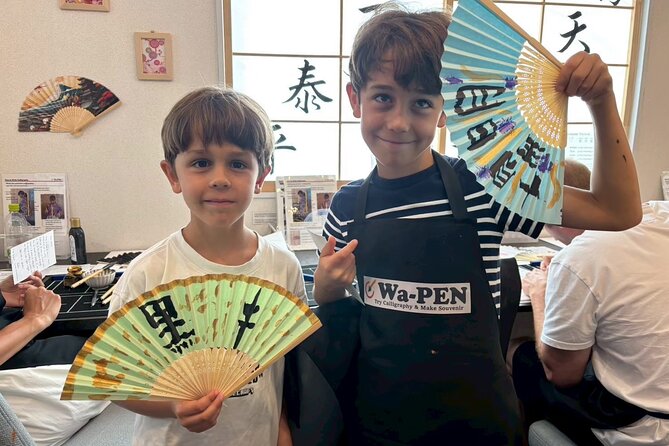
The best part of this Asakusa activity is that you do not simply watch a calligrapher work. You learn the basic brush strokes, choose a Japanese name or kanji, then put your own writing on a folding fan you can take home. The short lesson also explains how Japanese writing developed, so the finished souvenir has meaning rather than just a Tokyo label.
I like the patient instruction and the generous practice time. I also like the chance to learn what your chosen name means in Japanese, with instructor Mana offering friendly guidance in English. The possible drawback is the one-hour format: it gives you a satisfying introduction, but not enough time for advanced calligraphy or a long cultural workshop.
In This Review
- Key points to know before booking
- Why the folding fan makes this more than a brush lesson
- Starting with kanji, language, and ink
- Choosing a name or favorite kanji
- The final fan in a private session
- Finding the studio from Senso-ji and Asakusa
- Is $43 a fair price for one hour?
- Who will enjoy this Asakusa activity most?
- What makes the teaching effective
- Practical tips for getting the most from your hour
- Should you book this calligraphy experience?
- FAQ
- How long does the calligraphy and folding fan activity last?
- Where does the activity begin and end?
- Is the activity private?
- What will I learn during the session?
- What can I write on the folding fan?
- Can I put the calligraphy on clothing?
- What is the cancellation policy?
Key points to know before booking
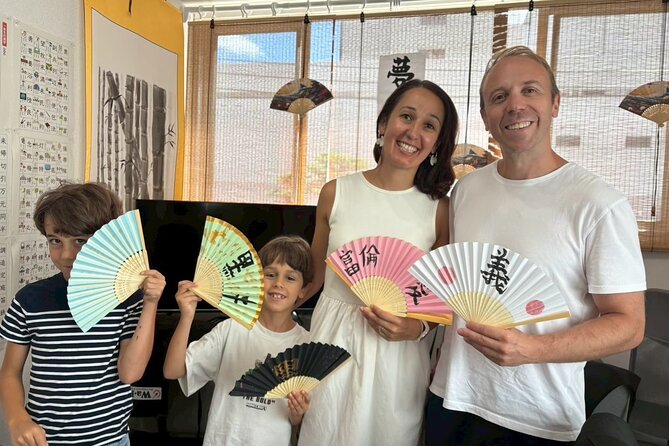
- Write on a real folding fan: Your final calligraphy becomes a useful, portable souvenir rather than a loose practice sheet.
- Start with the basics: You learn posture, brush grip, ink preparation, and the essential eight strokes before making the final design.
- Choose your own word: Write a Japanese version of your name or a favorite kanji, with help selecting and understanding it.
- Private one-hour session: Only your group participates, which makes it easier to ask questions and work at your own pace.
- Meet near Senso-ji: The studio is in Asakusa, close to public transportation and the area’s major temple stop.
- Optional clothing design: You can also have your calligraphy printed on clothing for an added souvenir option.
Why the folding fan makes this more than a brush lesson
Calligraphy can be a hard souvenir to bring home. A sheet of practice paper may curl in your luggage, and a mass-produced item says little about your own time in Japan. Here, your final work is placed on an original folding fan, giving you something personal, light, and easy to carry.
The fan also changes the mood of the lesson. You are not only trying to copy a character correctly. You are making a design that will be seen as a complete object, with the brushwork becoming part of the souvenir.
That does not mean the result has to be perfect. In fact, the appeal is seeing your own hand in the finished piece. The instruction helps you make deliberate strokes, but the fan remains your work.
You can also choose to print the characters you create on clothing. This is an optional extra, so check the cost and process before committing if that possibility interests you. It may appeal most to people who want a wearable reminder of Japan rather than a decorative object.
A few more Tokyo tours and experiences worth a look


Starting with kanji, language, and ink
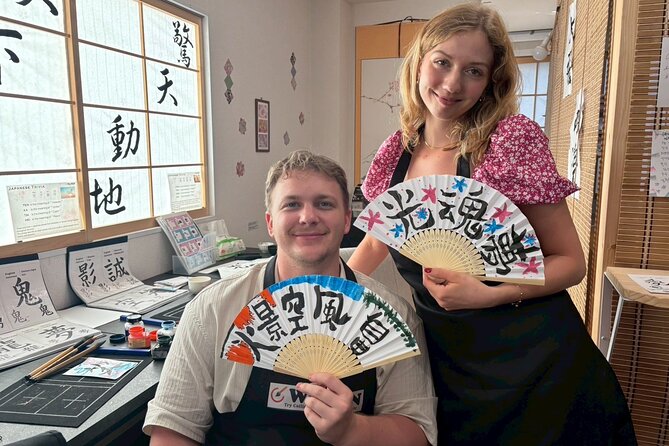
The session begins with a short video about the Japanese language and the history of calligraphy. This opening matters because kanji are not simply attractive symbols to copy. Their meanings and forms are part of the writing system, and knowing what you are writing makes the finished fan more personal.
You then learn how the ink is made and how to hold the brush. A relaxed grip, correct posture, and controlled movement matter more than brute force. The lesson introduces the basic eight strokes, giving you a small set of skills you can use immediately.
The teaching is aimed at first-time participants. You do not need previous calligraphy training, and the instructor guides you through each stage rather than handing you a brush and hoping for the best.
Several people found the instruction patient and calming, which fits the structure of the class. You have time to repeat the motions and correct your technique. The tone appears friendly rather than formal, so this should work well if you are curious but slightly nervous about making a mess.
Green tea is also offered during the experience. That small touch helps the class feel like a cultural activity rather than a quick craft purchase, though the main value remains the instruction and your finished fan.
Choosing a name or favorite kanji
After the basic practice, you choose what to write. You can use your name in Japanese or select a favorite kanji. Staff can write your name in Japanese and explain its meaning, which is especially useful if you do not know how names are represented in Japanese writing.
I recommend deciding in advance whether you want your own name or a meaningful word. A name gives you a direct connection to the trip. A word such as love, peace, or strength may create a more visual design, but the right choice depends on what you want the fan to represent.
Do not worry if you cannot identify a character before arriving. The staff support this part of the process, and Mana has been praised for her friendly manner, clear English, and willingness to help. The important thing is to understand the word before you write it.
You get practice sheets before moving to the fan. Use them. This is your best chance to test brush pressure, spacing, and the shape of each stroke. It is also where you can try more than one version of the character and choose the one you like best.
The final fan in a private session
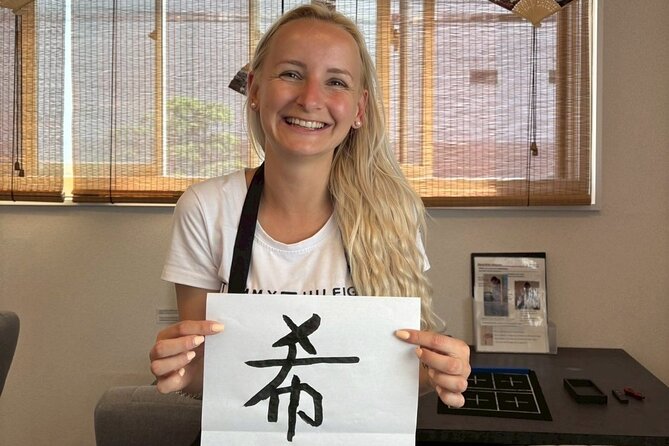
The activity is private, so only your group takes part. That is a real advantage for couples, families, and friends. You can ask questions without holding up a larger class, and the instructor can focus on the level of help you need.
A private format is also useful when people in the same group have different confidence levels. One person may want careful guidance on every stroke, while another may prefer to practice independently. The one-hour schedule keeps the experience focused, but private instruction should make that hour feel less rushed than a large group workshop.
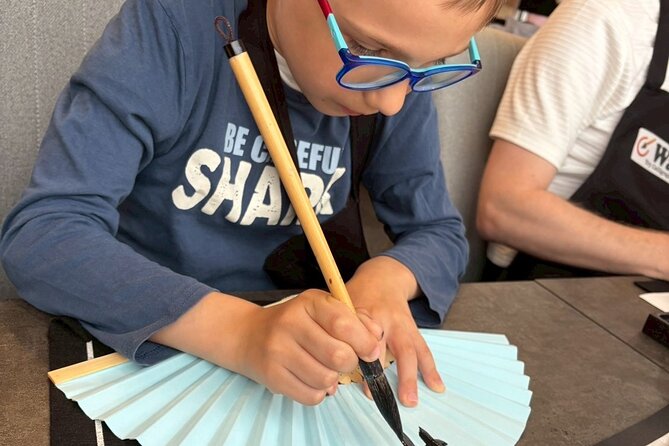
Once you are ready, you transfer your chosen calligraphy onto the folding fan. This is the moment to slow down. The practice stage is forgiving. The fan is the part you will keep, so it is worth listening closely to the guidance on brush angle, ink amount, and stroke order.
The final result may not look like professional calligraphy, and that is not a flaw. You are learning a traditional art in a short session, not training for an exhibition. The appeal is the story attached to the fan: you learned the basic method, chose the word, and made the marks yourself.
Finding the studio from Senso-ji and Asakusa
The activity lists Senso-ji Temple and Asakusa as its main stops, but this is not a sightseeing tour through the temple complex. They provide the setting and orientation for the experience. You meet at Wa-PEN Calligraphy Attractions and Make Design clothesJapan, at 3F, 3-chome 27-2, Nishiasakusa, Taito City, Tokyo 111-0035.
The location is near public transportation, which helps when fitting the class into a day in Asakusa. Allow enough time to find the building and reach the third floor. The supplied meeting point is specific, but the address formatting is compact, so checking the confirmation details before leaving is sensible.
The activity ends back at the same meeting point. That makes planning easy. You can schedule it before or after time around Senso-ji and Asakusa without arranging a separate return transfer.
The nearby temple stop is useful for a first or last look at the neighborhood, but keep your expectations clear. The paid activity is the calligraphy lesson and fan-making session, not a guided temple tour. If you want detailed temple commentary, you will need to arrange that separately.
A few more Tokyo tours and experiences worth a look


Is $43 a fair price for one hour?
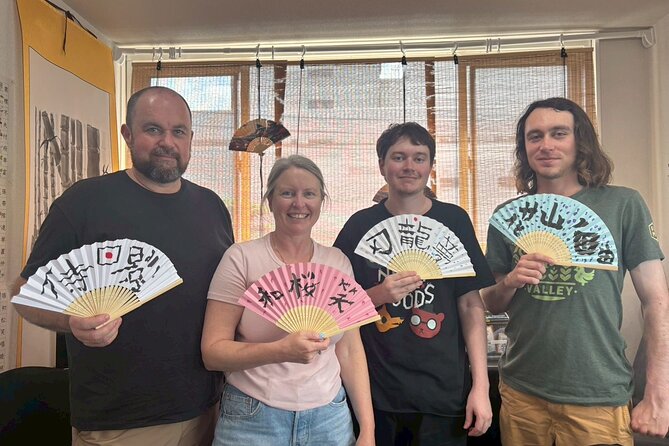
At $43 per person, this is not the cheapest craft activity you will find in Tokyo. The value comes from several parts working together: private instruction, the language and calligraphy introduction, guided brush practice, your folding fan, and help with choosing and understanding your Japanese word.
For a simple souvenir, you could spend less elsewhere. You are paying here for the chance to make the object yourself and receive help along the way. That makes the price easier to justify if you value hands-on activities and want something tied to your own experience.
The price works particularly well for two people who want a quiet shared activity. A couple can practice together, compare results, and leave with separate fans. Families with older children may also find it appealing, provided everyone can take part in a focused one-hour lesson.
The optional clothing print may change the final cost. Treat it as an add-on, not part of the advertised base price. If your budget is tight, the fan alone is the core experience.
The activity is often booked about 17 days ahead. That suggests you should reserve early if your Tokyo dates are fixed, especially since the session is private and has limited capacity. Free cancellation is available if you cancel at least 24 hours before the start time. Changes or cancellations inside that window are not accepted for a refund.
Who will enjoy this Asakusa activity most?
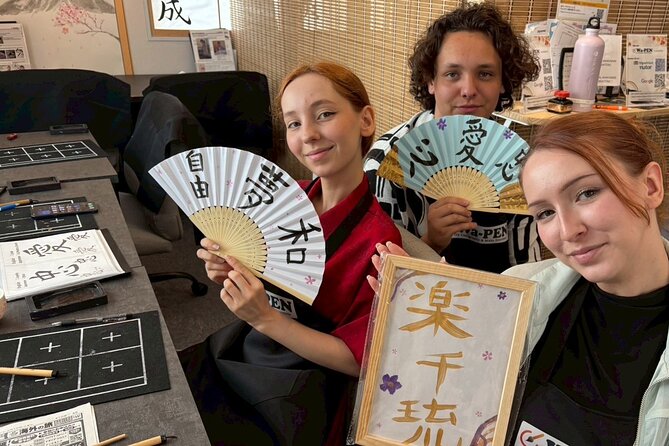
I would recommend it to you if you want a cultural activity that produces a physical souvenir and does not take half a day. The short length fits neatly between sightseeing plans, and the hands-on format gives you a break from simply moving between attractions.
It is a good match for:
- First-time visitors who want an approachable introduction to calligraphy
- Couples looking for a shared creative activity
- Families seeking something different from temple visits and shopping
- People interested in Japanese names, kanji, and writing systems
- Anyone who prefers a personal souvenir to a standard shop purchase
- Visitors who enjoy calm, structured activities
It may not suit you if you want advanced calligraphy, a long workshop, or a full guided tour of Asakusa. The class covers the fundamentals and gives you one finished fan. That is enough for a memorable introduction, but not a serious course in the art.
Children’s participation is not specifically described, so families should confirm suitability before booking. The information says most people can participate, but it does not provide an age range.
What makes the teaching effective
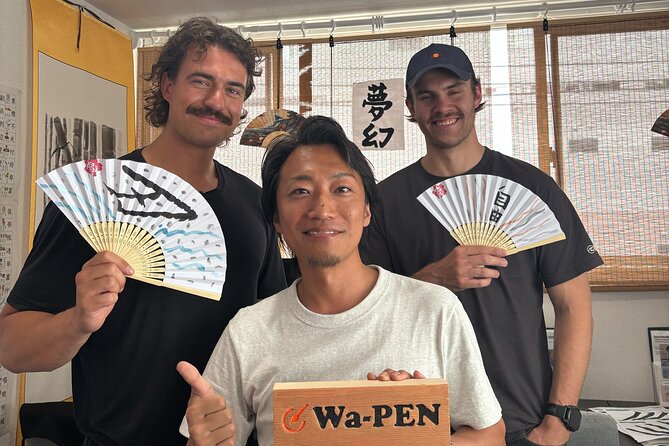
The strongest feature is the step-by-step approach. You begin with background, move into brush technique, practice the eight basic strokes, try several versions on paper, and only then write on the fan.
That order lowers the pressure. You are not expected to produce a polished character immediately. You get a chance to learn how the brush behaves and see how small changes affect the line.
Staff support is another important part of the experience. Mana is described as friendly, patient, and able to communicate well in English. Staff can also explain the meaning of your name, which prevents the activity from becoming a purely decorative exercise.
The class has a calm quality that may surprise you. Calligraphy requires attention to posture, pressure, and movement, so you naturally slow down. If your Tokyo schedule has been crowded, this can be a welcome change of pace.
At the same time, the lesson is not presented as a silent or highly formal ceremony. The staff offer help, conversation, and green tea, creating a relaxed introduction for people who may never have held a calligraphy brush before.
Practical tips for getting the most from your hour
Arrive with a rough idea of the name or word you want to write, but keep an open mind about the final choice. Staff can help with the Japanese version and explain its meaning.
Use the practice sheets fully. Try different amounts of ink and brush pressure before you touch the fan. A little extra practice is more useful than rushing to the final design.
Ask about the clothing-print option early if you are considering it. Since it is optional, you will want to understand the extra cost and how the design will be used.
Plan the class alongside your Asakusa sightseeing rather than treating the Senso-ji stop as part of a guided visit. The meeting point is in Nishiasakusa, the experience returns there, and the location is near public transportation.
Finally, leave room in your luggage for the fan. It is a compact souvenir, but you will want to protect it from being bent during the rest of your trip.
Should you book this calligraphy experience?
Book it if you want a friendly, private introduction to Japanese calligraphy with a souvenir you make yourself. The patient teaching, practice time, name explanations, and folding fan give the $43 price a clear purpose.
I would be more cautious if you are looking for a full cultural lecture, advanced brush training, or a longer art class. This is a focused one-hour experience. Its strength is accessibility: you learn enough to create something personal without giving up an entire afternoon.
For a first visit to Tokyo, especially one that already includes Asakusa and Senso-ji, this is a practical way to add a quieter, creative hour to your schedule. Reserve ahead if your dates are firm, choose your word thoughtfully, and use the practice paper before making your final marks.
FAQ
How long does the calligraphy and folding fan activity last?
The activity lasts approximately one hour.
Where does the activity begin and end?
It begins and ends at Wa-PEN Calligraphy Attractions and Make Design clothesJapan, 3F, 3-chome 27-2, Nishiasakusa, Taito City, Tokyo 111-0035.
Is the activity private?
Yes. Only your group participates in the activity.
What will I learn during the session?
You learn about the history of the Japanese language and calligraphy, how to prepare ink, how to hold and use a brush, proper posture, writing style, and the basic eight strokes.
What can I write on the folding fan?
You can write your name in Japanese or choose a favorite kanji. Staff can help with the Japanese name and explain its meaning.
Can I put the calligraphy on clothing?
Yes. Printing the characters you create on clothing is available as an optional choice.
What is the cancellation policy?
You can receive a full refund if you cancel at least 24 hours before the experience start time. Cancellations or changes made less than 24 hours before the start time are not accepted for a refund.
More Craft Workshops in Tokyo
More Asakusa Tours in Tokyo
More tours in Tokyo we've reviewed





Asakusa Tours, compared.
 ★ 4.8Tokyo: Japanese Dance Cabaret Theater Asakusa-Kaguwa TicketFrom $492 hours
 ★ 4.7Tokyo: Meiji Shrine, Asakusa, Skytree Bus Tour and CruiseFrom $12210 hours
 ★ 4.9Tokyo: Roll and Authentic Sushi Making Class in AsakusaFrom $581h 40m
 ★ 4.8Tokyo: Asakusa Walking Tour with Sensoji Temple VisitFrom $222 hours
 ★ 5.0Tokyo Asakusa Rickshaw TourFrom $42
 ★ 4.5Tokyo Panoramic 1 Day: Meiji Shrine, Asakusa, Odaiba and SKYTREE®From $85