
Reviewed · IMPERIAL PALACE & SHOGUN TOURS
Tokyo: Imperial Palace, the history of Japan (ENGLISH GUIDE)
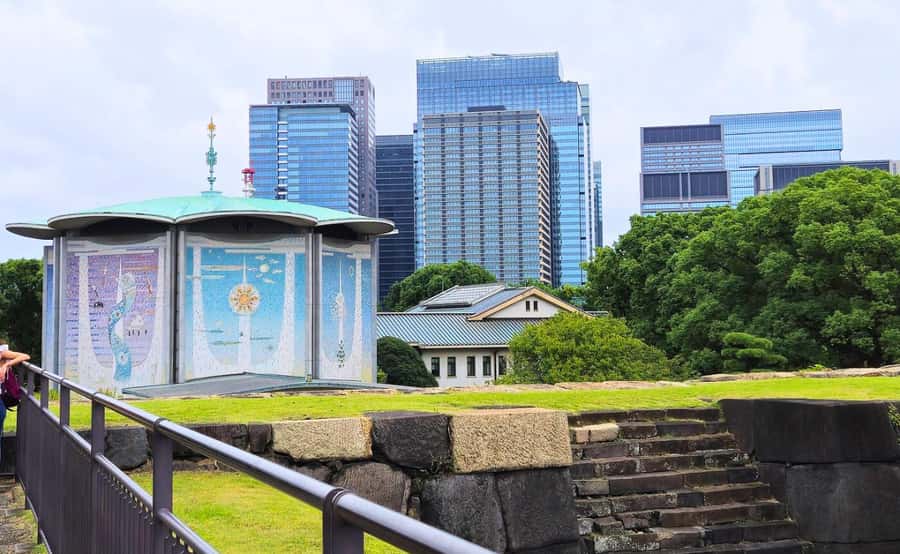
The most revealing part of this walk is that you are not touring a grand castle. You are exploring the eastern gardens of Edo Castle, where stone walls, former barracks, gardens, and a small palace model help explain how Japan moved from shogun rule to the modern imperial state. The vanished main castle is part of the story.
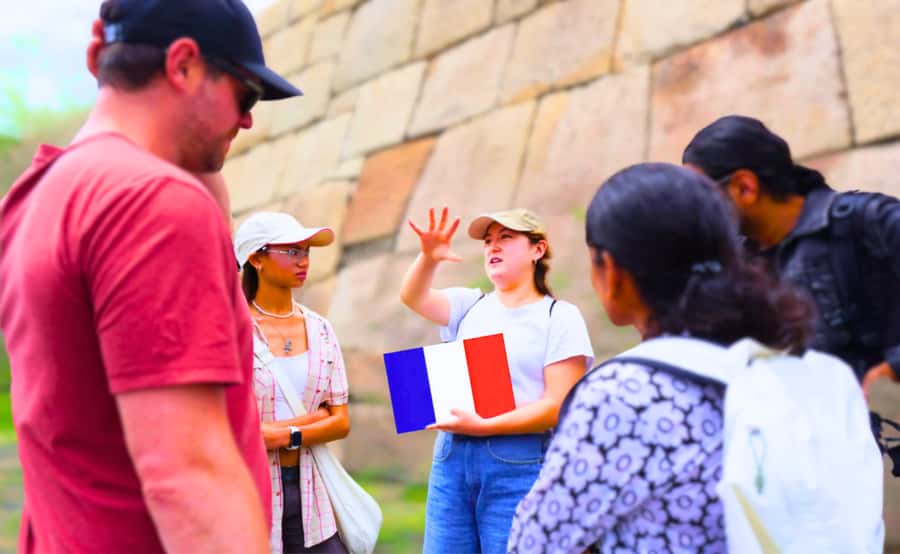
I like the small-group feel, especially since a group of five made it easy to ask questions and talk with the guide. I also like the chance to see unusual koi found only here, along with trees sent from different prefectures. The main drawback is the language detail: despite the English wording in the title, the supplied information says the guide speaks French, so confirm this before paying.
In This Review
- Key points to know
- Why Edo Castle tells Japan’s story so well
- Meeting at Wadakuramon Fountain Park
- Passing through Otemon, the great main gate
- Gardens, castle ruins, and the missing main structure
- Former barracks and the daily life of Edo Castle
- The koi and trees from across Japan
- What makes the guide useful
- Photo opportunities without losing the story
- Is $40 a fair price?
- Who should book this Imperial Palace walk?
- My verdict on the eastern gardens tour
- FAQ
- Where does the tour begin?
- How will I identify the guide?
- Does the tour enter the inner palace?
- What language is the tour conducted in?
- Who is the named guide?
- What can I see during the walk?
- What happens if I arrive late?
- Can I cancel for a full refund?
Key points to know
- Edo Castle’s former base: Walk across the grounds of the palace that once served as the center of shogun power more than 350 years ago.
- A history-led garden walk: The gardens are the setting, but the main purpose is learning how Japan changed over time.
- Special palace koi: Look for a distinctive breed of koi associated with this site.
- Small-group conversation: A group of five allowed for easy questions and a friendly atmosphere.
- French guide listed: Nicolas is one guide named in the supplied information, but English is also used in the tour title, so check the language carefully.
- No inner palace access: This visit covers the eastern gardens and former Edo Castle grounds, not the inner palace.
Why Edo Castle tells Japan’s story so well
The Imperial Palace can seem closed off and formal if you only see its outer walls and broad approaches. This walk gives you a more useful way to read the site. You are visiting the eastern gardens of the former Edo Palace, once part of Edo Castle, the seat of shogun power for more than 350 years.
That setting lets the guide explain more than dates and names. You can connect the physical remains to Japan’s political change, the role of the shoguns, the imperial family, and the creation of modern Japan. The tour is aimed at people who want a clearer sense of how the country became what it is today.
I like that the castle itself is not treated as a missing attraction. The main structure is gone, and the reason why is part of the explanation. You will also see a miniature structure of the former palace, which helps you picture a complex that otherwise survives mainly through walls, foundations, gardens, and stories.
This is not the right outing if you expect to enter lavish palace rooms. The inner palace is not included, and much of the value comes from listening carefully and imagining what stood here before.
A few more Tokyo tours and experiences worth a look

Meeting at Wadakuramon Fountain Park
You begin near the center of Tokyo, between Tokyo Station and Otemachi Station. From either station, the walk to Wadakuramon Fountain Park takes about five to ten minutes.
Look for the Starbucks near the fountain. The guide waits there with a sign marked SUNRISE ADVENTURE. This is a simple meeting point, but Tokyo Station has many exits and can feel confusing, so allow enough time to find the park rather than arriving at the last second.
The meeting point also makes the tour easy to fit into a day of sightseeing around Marunouchi, Otemachi, or Tokyo Station. At the end, you return to the same place, which is useful if you want to continue exploring nearby.
Be punctual. If you are more than ten minutes late, the group may leave without you. That rule matters here because the tour moves on foot through a large historic area, and the guide cannot reasonably wait at the entrance.
Passing through Otemon, the great main gate
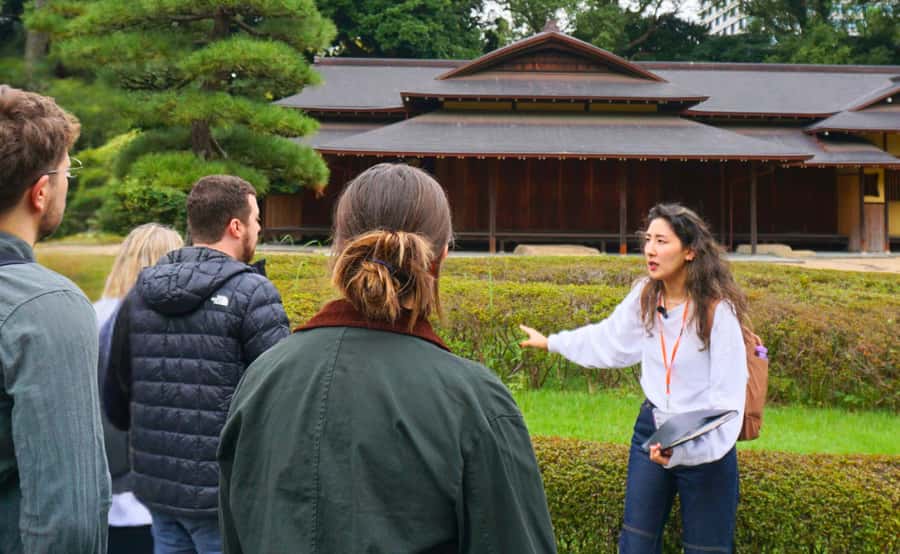
From the fountain park, you walk with the guide toward Otemon, the large main gate of the palace grounds. The gate marks a shift from Tokyo’s office towers and train traffic into a quieter historic setting.
This transition is one of the pleasures of the experience. You do not simply arrive at a museum and read labels. You approach the old castle area on foot, then pass through an entrance that once controlled access to Edo Castle.
Your guide can give the gate a human meaning by explaining who used it and how the castle functioned. That context helps you pay attention to scale, stonework, and the defensive layout instead of treating the entrance as just another photo stop.
The walk is outdoors and takes place in good weather or bad weather. Wear suitable clothing and shoes for the conditions. Smoking, drones, alcohol, drugs, littering, and skateboards are not allowed.
Gardens, castle ruins, and the missing main structure
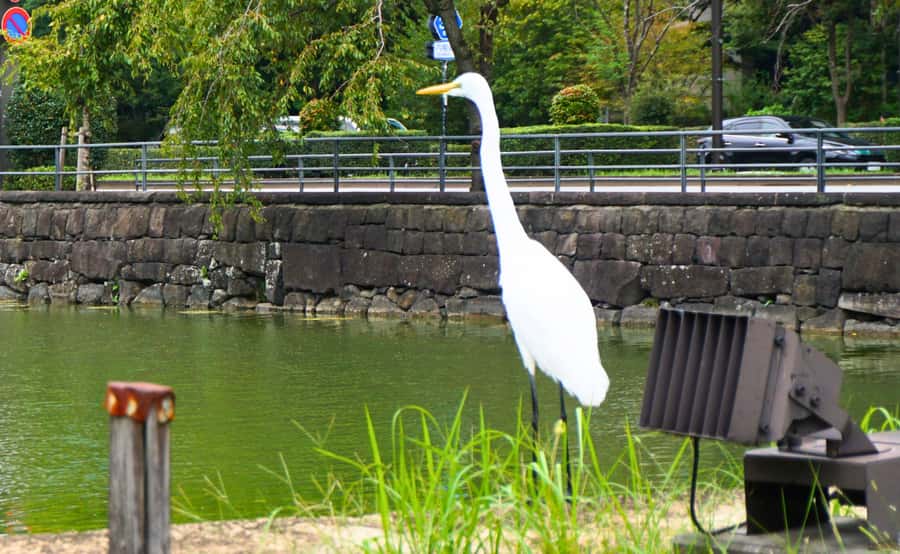
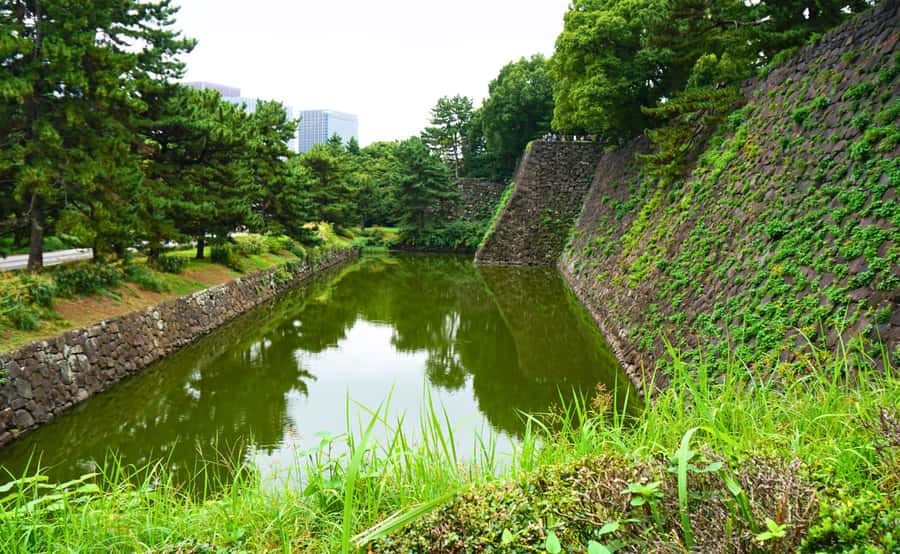
Inside, the route combines oriental gardens with the remains of the old castle. The gardens provide calm views and attractive places for photographs, while the ruins give the walk its historical weight.
You will not see the original main castle standing above the grounds. Instead, the guide explains why it disappeared and points out what remains of the former palace area. The miniature model is especially helpful because it gives you a visual reference for the lost structure.
I find this kind of visit more rewarding when you enjoy reading a place through clues. A wall foundation or open garden may not explain itself, but the right story can make it meaningful. You will need to give the guide your attention, since there is no promise of a large collection of signs or indoor displays.
The ruins also keep the experience grounded. You are not being shown a reconstruction presented as if it were original. You see a site shaped by change, loss, and later use, and the guide connects those layers to Japan’s wider story.
Former barracks and the daily life of Edo Castle
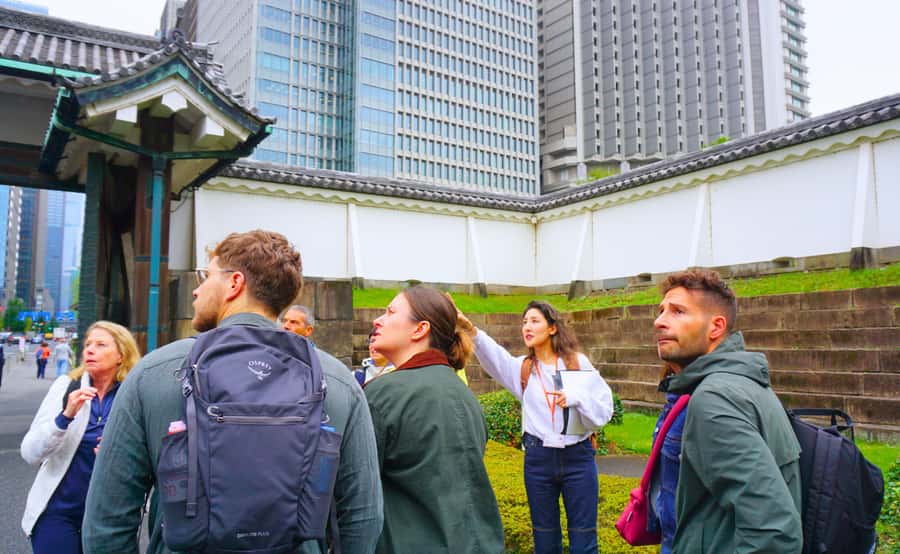
The tour also covers the former soldiers’ barracks. This adds an important practical side to the visit.
Grand political history can focus on rulers, ceremonies, and battles. Barracks remind you that a castle was also a working institution, filled with guards, soldiers, officials, and daily routines. The details help you picture how the grounds operated rather than seeing them only as a scenic garden.
This is one reason I would choose a guided walk over a quick solo visit. Without explanation, the palace gardens may look like a pleasant green space with a few old stones. With a guide, each area can support a larger story about authority, security, and the organization of Edo Castle.
The tour is especially suited to you if you enjoy asking questions. Nicolas, identified as a Franco-Japanese guide, was able to discuss Japanese mythology, the Japanese language, the imperial family, and Japan in general. That suggests the conversation can move beyond the basic route when the group is interested.
Still, your experience depends on the language you receive. The tour title refers to an English guide, while the included and additional information identifies French as the guide language. Check this point directly before booking, particularly if you do not speak French.
Other guided tours in Tokyo




The koi and trees from across Japan
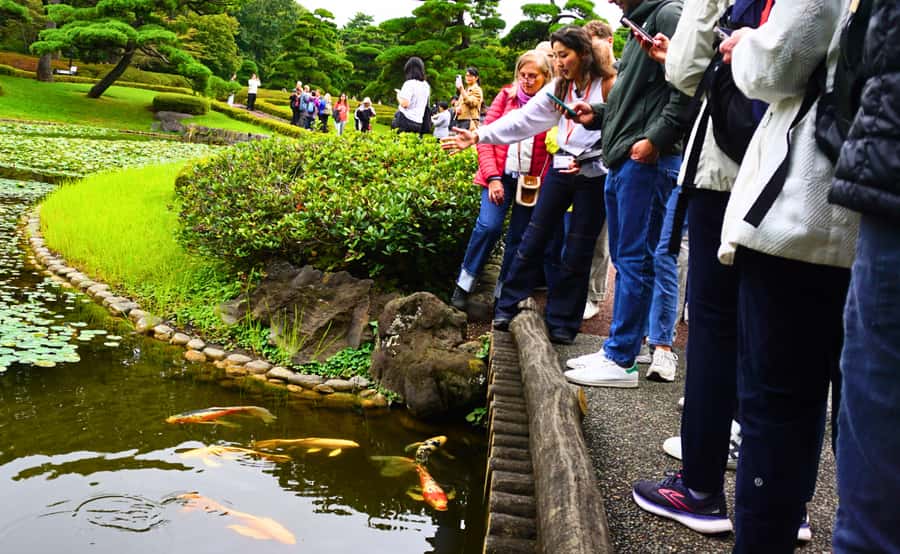
The gardens are not only about stones and political history. You will also have a chance to see a special breed of koi that can only be found here.
That is a small detail, but it gives the tour a memorable focus. You can look for the fish as part of the story of the palace grounds rather than passing the water without noticing what makes it unusual.
The route also includes trees from different prefectures of Japan. These plantings add a national dimension to the garden. Instead of viewing the palace as a place belonging only to Tokyo, you see reminders of the country’s regions gathered within the grounds.
These details are useful for younger visitors and for anyone who wants something concrete to look for during a history walk. The gardens offer plenty of photo opportunities, but the guide’s explanations give those pictures a stronger sense of place.
Do not expect a formal wildlife tour or a botanical lesson. The koi and trees are parts of a broader historical walk. Their value comes from how they add texture to the palace story.
What makes the guide useful

The strongest part of this experience is the chance to ask questions as you walk. The guide is not simply leading you from one marked point to another. The supplied information names Nicolas, a Franco-Japanese guide who discusses mythology, language, Japan in general, and the imperial family alongside the main history.
That matters because Japanese history can be hard to place in order. Shoguns, emperors, Edo, and modern Japan are often presented as separate subjects. A good conversation can connect them and help you understand why Edo Castle matters to Tokyo today.
The small-group format is another advantage. A group of five allowed for easy conversation and a friendly mood. I would value that more than a large tour with a polished speech, especially at a site where questions can make the ruins and gardens easier to understand.
The experience is not presented as a silent audio walk. You should expect direct interaction with the guide. If you like to move at your own pace and photograph every corner without stopping, a self-guided visit may suit you better.
Photo opportunities without losing the story

The palace gardens provide several good spots for photographs. You can capture the contrast between quiet garden paths, historic stonework, open spaces, and the modern city nearby.
The best pictures here are not only postcard views. Try to photograph the details the guide explains, such as the ruins, the former palace model, the gate, the koi, and the trees from different parts of Japan. Those images will help you remember the meaning of the visit instead of producing a set of attractive but interchangeable garden shots.
Keep in mind that the tour is still a walking history lesson. You may stop for explanations, and the group will follow the guide’s route. If photography is your main purpose, ask early about suitable pauses so you can take pictures without holding up the group.
Is $40 a fair price?
At $40 per person, this is not a costly Tokyo tour, but its value depends on what you want from the palace grounds.
You are paying for a historical walking tour and a guide, not entry to the inner palace or a private room inside a major museum. The price makes the most sense if you want someone to explain Edo Castle, Japan’s political changes, the former barracks, the gardens, and the palace family connection in one organized visit.
I think the cost is reasonable for a small group, especially if the guide gives you room to ask about mythology, language, and modern Japan. A large part of the value is interpretive. You could walk through the eastern gardens on your own, but you would not necessarily understand why the castle disappeared or how each part fits into the wider story.
The tour also offers reserve-and-pay-later booking and a full refund if you cancel at least 24 hours ahead. Those terms help if your Tokyo plans are still changing. They do not remove the need to arrive on time.
Who should book this Imperial Palace walk?
I would recommend it to you if you enjoy history but want it explained in plain language while you walk. It also suits first-time visitors who want a stronger introduction to Japan’s political past before visiting other historic places.
Families may appreciate the koi, model, gate, and gardens, since these give children specific things to watch for. The format can also work well for curious adults who prefer conversation to a formal lecture.
You should think twice if your main goal is to enter the inner palace, see preserved royal interiors, or spend the visit independently. None of those are part of this experience.
The weather is another consideration. The tour runs in good weather or bad weather, so bring clothing that matches the forecast. Tokyo heat, rain, or cold can change how enjoyable an outdoor walk feels.
Finally, check the language before booking. The experience title identifies an English guide, but the supplied tour details say French and describe Nicolas as Franco-Japanese. That inconsistency is the one practical issue I would resolve before committing.
My verdict on the eastern gardens tour
Book this tour if you want the Imperial Palace grounds to make historical sense rather than serve only as a scenic backdrop. The former Edo Castle site, special koi, regional trees, barracks, ruins, and palace model give the walk enough variety to stay interesting.
I especially like the small-group setting and the broad conversations described with Nicolas. You can learn about the imperial family, mythology, language, and Japan’s political development in one outing. Just confirm the guide language and remember that the inner palace is not included.
For $40, this is a solid choice for a history-minded visit near Tokyo Station. It offers context, conversation, and a look at a place where Japan’s past is still visible, even though the main castle itself is gone.
FAQ
Where does the tour begin?
Meet the guide at the Starbucks near the fountain in Wadakuramon Fountain Park. The park is about a five to ten minute walk from Tokyo Station or Otemachi Station.
How will I identify the guide?
The guide will be near the fountain and will hold a sign with the SUNRISE ADVENTURE logo.
Does the tour enter the inner palace?
No. The experience covers the eastern gardens and the former Edo Castle grounds. Access to the inner palace is not included.
What language is the tour conducted in?
The tour title refers to an English guide, but the included and additional information identifies French as the guide language. Confirm the language with the provider before booking.
Who is the named guide?
Nicolas is identified as a Franco-Japanese guide. The supplied information does not confirm that he leads every departure.
What can I see during the walk?
You can see oriental gardens, palace ruins, former soldiers’ barracks, a miniature structure of the former palace, special koi, and trees from different prefectures of Japan.
What happens if I arrive late?
If you do not arrive within ten minutes of the meeting time, the tour may begin without you.
Can I cancel for a full refund?
Yes. You can cancel up to 24 hours in advance for a full refund.
More Historical Tours in Tokyo


More Guided Tours in Tokyo
More Imperial Palace & Shogun Tours in Tokyo

More tours in Tokyo we've reviewed











Imperial Palace & Shogun Tours, compared.
 ★ 5.0Tokyo: Imperial Palace and Shogun Historical Walking TourFrom $22
 ★ 4.9Tokyo: Imperial Palace Japanese History Walking TourFrom $32
 ★ 4.9Tokyo: Imperial Palace and Shogun Walking TourFrom $162 hours
 ★ 5.0Imperial Palace East Garden and Edo Castle Walking Tour in TokyoFrom $25
 ★ 4.8Tokyo: Imperial Palace East Gardens Walking TourFrom $192h 30m
 ★ 4.5Tokyo: Imperial Palace, Sensō-ji Temple, & Tokyo Tower TourFrom $404 hours