
Reviewed · WORKSHOPS
Manga Lesson with a Professional Japanese Manga Artist in Nakano
A professional manga artist in Nakano can take you far beyond sketching a cartoon face. In about two hours, you work through the real production process, from pencil draft to ink, white highlights, corrections, and screen tones. The result is a finished piece you can take home.
I like the chance to handle authentic tools, including dip pens, specialized nibs, manga ink, and screen tones. I also like the teaching style: artist Nao Yazawa is known for adjusting the pace to children, first-time artists, and practiced drawers in the same private session.
The main consideration is finding the school. One family had trouble locating the building and found the English directions limited, so leave time to reach the address in Nakano. You also need to request your preferred start time, since the listed slot may not be available.
In This Review
- Key Points Before You Book
- What You Actually Learn in Two Hours
- Drawing With Nao Yazawa and Other Professional Artists
- The Nakano Setting and Finding the School
- From Pencil Draft to Manga Finish
- Pencil drafting
- Inking
- Black areas, corrections, and highlights
- Screen tones
- A Private Lesson for Solo Artists, Couples, and Families
- Is $67.77 a Fair Price?
- What to Bring and How to Prepare
- Who Will Get the Most From This Experience?
- Cancellation and Booking Details
- Should You Book the Nakano Manga Lesson?
- FAQ
- How long does the manga lesson last?
- Where does the manga class take place?
- Who teaches the manga lesson?
- Is the lesson suitable for beginners?
- Can experienced artists join?
- What manga tools are provided?
- Do I get to keep my drawing?
- Is this a private activity?
- Can I choose the start time?
Key Points Before You Book
- Traditional manga production: Learn the full sequence, including pencil drafting, inking, black areas, white corrections, and screen tones.
- Instruction by professional artists: Nao Yazawa is specifically praised for patient, clear guidance and a long career creating manga series.
- Tools included: Use manga paper, dip pens, several specialized nibs, ink, screen tones, and other class materials.
- Private and adaptable: Book a solo lesson or a private session for two to four people, with teaching adjusted to each person.
- A finished souvenir: You take home the manga artwork you produce during the class.
- Good for mixed ages and skill levels: Families, teens, adults, beginners, and experienced artists can work together.
What You Actually Learn in Two Hours
This is not simply a quick drawing demonstration. The lesson introduces the working habits and materials used in traditional manga production, then gives you time to try them yourself.
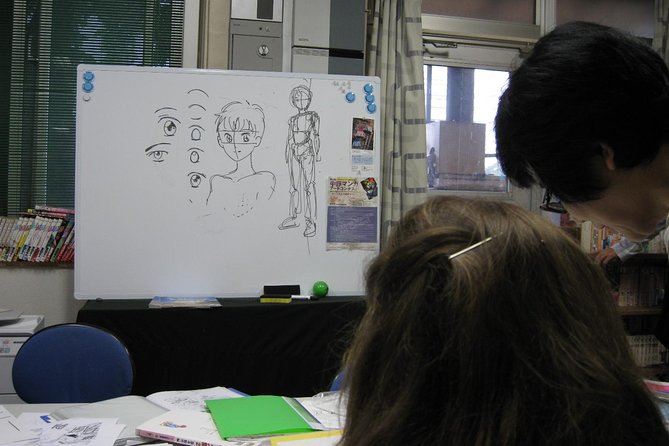
You begin at Manga School Nakano with a short explanation of manga techniques and its development. The introduction gives useful context before the drawing starts, especially if your experience comes mostly from reading manga or watching anime rather than making art.
The teacher then explains the tools. You may work with manga paper, ink, screen tones, and three types of specialized pen nibs. These supplies matter because each creates a different line or surface. A nib can give you a fine contour, a heavier outline, or a more expressive stroke, while screen tones add gray areas, texture, and effects without painting every mark by hand.
The class proceeds step by step. You first create a pencil draft, then ink over the drawing. After the ink is dry or set, you erase the remaining pencil lines. You add solid black sections, fix small errors, place white highlights, and finish by applying screen tones.
That sequence is valuable for beginners because it shows how a finished manga image is built. You are not expected to produce a polished character from memory at the start. You can use one of the supplied manga references and copy it with help from the instructor.
A few more Tokyo tours and experiences worth a look



Drawing With Nao Yazawa and Other Professional Artists
Nao Yazawa is the instructor most often identified with this experience. She is described as a professional manga artist and series creator, and her teaching is particularly well suited to families and mixed-ability groups.
Her strength seems to be close, patient correction. She works beside students, points out what to change, and explains the reason for each step. That approach helps if you are unsure how to draw expressions, shape a face, or move from a loose pencil sketch to confident ink lines.
A solo lesson can move quickly through drawing basics, expressions, and inking. That is useful if you already draw and want focused advice rather than a long introductory talk. For a beginner, the same structure gives you a clear path through an art form that can initially seem full of unfamiliar rules.
Families have a practical advantage here. A parent may need basic help while a manga-loving child wants finer details, and the instructor can work at different levels in the same private class. The teaching can also be adjusted for different ages and drawing styles.
The class is conducted with English guidance without an interpreter. That makes the experience easier for English-speaking visitors, but the directions to the school may still require care. Keep the exact address and activity messages available on your phone.
The Nakano Setting and Finding the School
The meeting point is Manga School Nakano at:
Japan, 165-0026 Tokyo, Nakano City, Arai, 2-chōme 7-13, Nankoku Building
The school is near public transportation, but the information provided does not specify a station, walking time, or a detailed route. I would not arrive at the last minute. Use the address exactly as provided, check your booking messages for the final meeting details, and allow extra time to identify the building.
This is a practical issue rather than a problem with the lesson itself. One family found the location difficult to identify and felt the directions needed improvement. If you are visiting Nakano for the first time, build in a cushion before the start time.
The activity returns to the meeting point after the lesson. There is no separate end location to plan around, and drinks are not included, so bring or buy refreshments before or after class if needed.
From Pencil Draft to Manga Finish
The most interesting part of the experience is the production method. Manga art is not just about drawing large eyes or dramatic hair. The final look depends on a series of controlled stages.
Pencil drafting
You begin with a light draft. This is where you work out the character’s pose, proportions, face, and expression. Beginners can select from references, while more experienced artists may use the lesson to refine their own approach.
A teacher’s correction at this stage can save time later. If the structure is wrong in pencil, inking will only make the mistake harder to remove. The instructor reviews your drawing and offers guidance before you commit to the next stage.





Inking
Next comes the distinctive manga process of drawing clean lines with ink. The dip pens and different nibs let you feel how line weight changes the character. A heavier outer line can separate the figure from the page, while thinner lines can describe smaller details.
For many people, this is the stage that makes the drawing begin to look like manga. It also requires more control than an ordinary pencil sketch, so patient instruction is useful.
Black areas, corrections, and highlights
After the main lines are inked, you add solid black sections. You then erase pencil marks, correct mistakes, and use white ink for highlights.
This part gives you a realistic sense of the craft. Manga artists do not need every line to be perfect on the first try. The process includes correction and cleanup, which can make the activity less intimidating for beginners.
Screen tones
Screen tones provide gray areas, textures, shadows, and visual effects. You paste them onto the manga paper as the final major stage.
This is an unusual souvenir-making activity because the finished work shows more than your drawing. It also records the traditional materials and techniques you tried in class. Handle the page carefully when you leave, since the artwork includes ink and pasted tone sheets.
A Private Lesson for Solo Artists, Couples, and Families
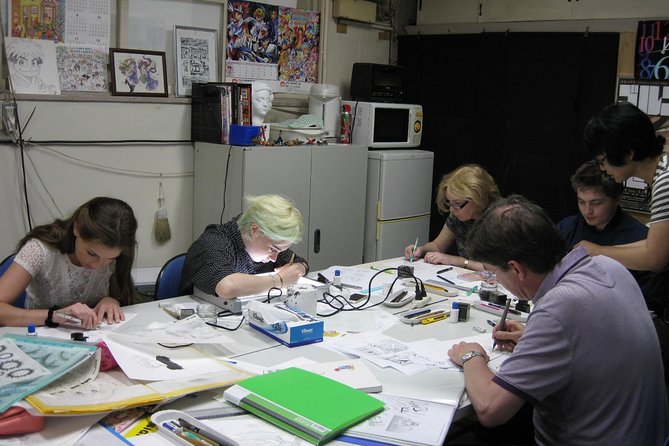
The activity is private, meaning only your own group takes part. That is a major benefit if you do not want to draw in front of strangers or if your party includes people with very different abilities.
A solo visitor can choose single-person tuition. A group of two to four people should choose the matching group tuition option. This distinction matters, so check the booking choice carefully rather than assuming one group format fits every party.
The private structure also lets you talk about favorite manga and anime while choosing a character or reference. Families have used the time as a shared project, with children drawing alongside parents and, in one case, three generations working together.
The class is not limited to children. Teenagers, university-age manga fans, adult beginners, and practiced artists can all find a suitable level. One experienced artist and a beginner can receive different advice while sharing the same session.
Still, you should book this for people who want to draw. The class involves steady attention and hands-on work for two hours. It is not a passive cultural demonstration, and someone with no interest in making art may find the pace less appealing.
Is $67.77 a Fair Price?
At $67.77 per person, this is not the cheapest creative activity in Tokyo. The value comes from several things being combined: a professional instructor, private teaching, specialized tools, materials, English guidance, and a finished artwork.
You are not paying only for a short introduction. The teacher reviews and corrects your work as you progress, which is more useful than a general demonstration if you want to leave with a better understanding of manga technique.
The included tools also matter. Dip pens, manga ink, and screen tones are not the supplies most visitors carry around Tokyo. Trying them during a guided session lets you decide what interests you before buying materials of your own.
For a family, the total cost can add up, particularly if four people attend. The benefit is that everyone receives direct guidance and takes home a personal drawing. If your main goal is simply to watch a manga artist work, the price may feel high. If you want a hands-on lesson with a professional and a tangible result, it is easier to justify.
The strong rating, 4.9 out of 5 from 77 ratings, and 99 percent recommendation figure support the value, though one payment issue has been reported. Confirm your booking details and keep your payment confirmation available so there is no confusion at the school.
What to Bring and How to Prepare
The manga tools are provided, so you do not need to pack specialist pens or paper. Drinks are not included, and the class lasts about two hours, so plan refreshments around the activity.
Before booking, choose the right format:
- Select single-person tuition if you are attending alone.
- Select the two-to-four-person group option for a private party of that size.
- Enter your preferred departure time in the special requirements box.
- Check the supplier’s message for the confirmed activity time and meeting details.
The requested time is not guaranteed until confirmed. If your preferred slot is full, the local supplier will offer an alternative. This is worth sorting out before you build other Nakano plans around the lesson.
I would also save the meeting address offline or take a screenshot. Since directions may be limited, this small step can prevent a rushed start.
Who Will Get the Most From This Experience?
This lesson is a strong match for a manga fan who wants to understand how the art is made, not just buy character goods. It is also a good choice for a child who loves drawing, since the teacher can guide a first manga-style character without demanding prior skill.
Families benefit from the private format and the ability to learn at different levels. A parent does not need to be an artist to join in, and an older child or practiced drawer can receive more detailed feedback.
Solo artists can get concentrated help with basics, expressions, and inking. If you already have drawing experience, tell the teacher what you want to improve so the session does not spend too much time on material you already know.
The class may be less suitable if your Tokyo schedule is extremely tight. The lesson itself lasts about two hours, but finding the building and allowing for the requested start-time confirmation requires some planning. It is also not the right pick if your group would rather watch than create.
Cancellation and Booking Details
Free cancellation is available if you cancel at least 24 hours before the local start time. Cancellations made inside that window are not refunded, and changes made less than 24 hours ahead are not accepted.
Confirmation is sent within 48 hours, subject to availability. Your confirmed time and activity details arrive through the Viator message system, so check those messages before setting out.
The activity uses a mobile ticket. Most people can participate, and the meeting point is near public transportation, although detailed accessibility information is not provided.
Should You Book the Nakano Manga Lesson?
Book it if you or someone in your group genuinely enjoys manga, anime, or drawing. The strongest reasons are the professional feedback, the chance to use traditional tools, and the finished artwork that comes home with you.
Nao Yazawa is a particularly good match for families and beginners who need calm, clear help. Practiced artists can also benefit, especially in a solo lesson where they can ask for targeted advice on expressions, line work, or inking.
I would hesitate only if your party is not interested in drawing, if the $67.77 price feels high for a two-hour activity, or if you cannot allow extra time to find the school. For the right person, this is a more personal Tokyo experience than simply shopping for manga souvenirs. You make one yourself, with a professional artist showing you how.
FAQ
How long does the manga lesson last?
The lesson lasts approximately two hours.
Where does the manga class take place?
It takes place at Manga School Nakano in Arai, Nakano City, Tokyo, at Japan, 165-0026 Tokyo, Nakano City, Arai, 2-chōme 7-13, Nankoku Building.
Who teaches the manga lesson?
The class is taught by a professional manga artist. Nao Yazawa is one named instructor associated with the experience.
Is the lesson suitable for beginners?
Yes. Beginners can use supplied manga references and receive step-by-step guidance. The instructor adjusts the lesson to each person’s level.
Can experienced artists join?
Yes. The lesson is also intended for practicing artists who want to improve their manga skills.
What manga tools are provided?
The class provides manga tools and materials such as manga paper, screen tones, manga pens, dip pens, ink, and three types of specialized pen nibs.
Do I get to keep my drawing?
Yes. You take your finished manga drawing home as a souvenir.
Is this a private activity?
Yes. Only your own group participates. Solo visitors should choose single-person tuition, while groups of two to four should choose the corresponding group tuition option.
Can I choose the start time?
You can provide a preferred departure time in the special requirements box when booking. The time is subject to availability, and an alternative may be offered if the requested slot is full.
More Workshops & Classes in Tokyo

More tours in Tokyo we've reviewed











Workshops, compared.
 ★ 5.0Sushi Making Tokyo Roll and Authentic Japanese Sushi ClassFrom $59
 ★ 4.9Tokyo: Roll and Authentic Sushi Making Class in AsakusaFrom $581h 40m
 ★ 5.0Tokyo Shinjuku Chopsticks Making ClassFrom $20
 ★ 4.9Tokyo: Sushi Making Class in a Happi Coat near a Famous SpotFrom $421h 30m
 ★ 4.8Chopstick Making Workshop in GinzaFrom $251 hour
 ★ 5.0Tokyo Sushi Making Class in Tsukiji with Professional ChefFrom $49