
Reviewed · ASAKUSA TOURS
Asakusa: Tokyo Skytree Exploration and History Tour
Asakusa gives you more than old gates and temple photos. This walking tour uses the Sumida River, Kaminarimon, Nakamise Street, and Sensō-ji to explain how Japan moved from feudal rule and isolation toward the modern country you see today. Then a short train ride carries you from old Tokyo to Tokyo Skytree.
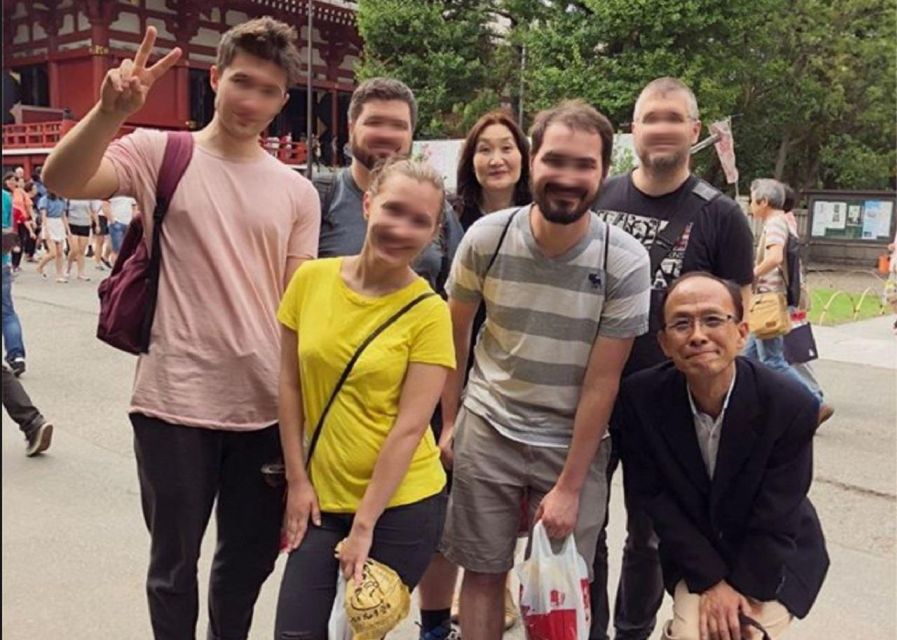
I especially like the history-first approach, since the landmarks have meaning instead of becoming a rapid-fire photo stop. I also like the small group of up to eight people, which gives guides such as Machiko, Keiko, Aki, and Yasu room to answer questions and help with photos.
The main drawback is the amount of walking and standing. One section includes stairs and crowded streets, and one guest found a softly spoken guide hard to hear. You also pay the 160-yen train fare separately, and the non-refundable ticket rules require careful planning.
In This Review
- Key points to know before booking
- Why this Asakusa walk is more than a temple tour
- Starting beside the Sumida River
- Asakusa Culture Tourist Information Center and Kaminarimon
- Nakamise Street, where shopping and ritual meet
- Hōzōmon Gate, Sensō-ji, and Asakusa Shrine
- The two-minute ride from old Tokyo to Skytree
- Tokyo Skytree at 350 meters
- Tokyo Skytree Tembo Galleria at 450 meters
- How much walking and effort should you expect?
- Is $116 good value?
- Who should choose this experience?
- Final call: book it for the connection
- FAQ
- Where does the tour start?
- Where does the tour finish?
- Is the train fare included?
- Which Tokyo Skytree areas are included?
- Is the tour conducted in English?
- How large is the group?
Key points to know before booking
- Asakusa tells the bigger Japan story: The Sumida River and major Buddhist and Shinto sites are used to explain Japan’s isolation, reopening, and modernization.
- Both Skytree decks are included: You visit the Tembo Deck at 350 meters and the Tembo Galleria at 450 meters.
- The group stays small: A maximum of eight participants makes it easier to ask questions and keep close to the guide.
- The old-to-new transition is the point: You walk through historic Asakusa, then cross the river by train to Tokyo’s tallest modern landmark.
- Plan for warm-weather effort: The walk can be tiring in heat, rain, or cold, and there are stairs along the way.
- The price covers the major admission: At $116 per person, the package includes both observation decks, but not hotel transport or the 160-yen train ride.
Why this Asakusa walk is more than a temple tour
The best reason to choose this experience is its order. You do not begin at Tokyo Skytree, stare at the city, and then try to work out what you are seeing. You first build a sense of place on the ground.
The tour starts near Asakusa subway station, in front of the Burger King beside Exit 4 on the Ginza line. That meeting point is practical, but give yourself enough time to find the correct exit. You finish at Tokyo Skytree, so this is not a round trip back to Asakusa.
With 210 minutes in all, the pace is substantial but not frantic. The walking section covers several important sites, followed by the Skytree visit. The guide leads in English, and an English audio guide is also included. The small group limit matters here because Asakusa can become crowded, especially around the temple approach.
I like the way this format links history to geography. The Sumida River is not just a scenic backdrop. It helps explain how Tokyo developed and how the city connected to trade, government, religion, and later international contact. The guide then carries that story through the gates and temple grounds.
Starting beside the Sumida River
The first stop is the Tokyo Cruise Asakusa Pier, reached with a guided walk of about 15 minutes. This is where the tour begins to frame Asakusa as part of a larger city rather than an isolated tourist quarter.
You will hear about Japan’s period of limited contact with the outside world and the pressure that eventually brought the country back into international affairs. The point is not to overload you with dates. It is to give you a useful timeline before you reach the most famous buildings.
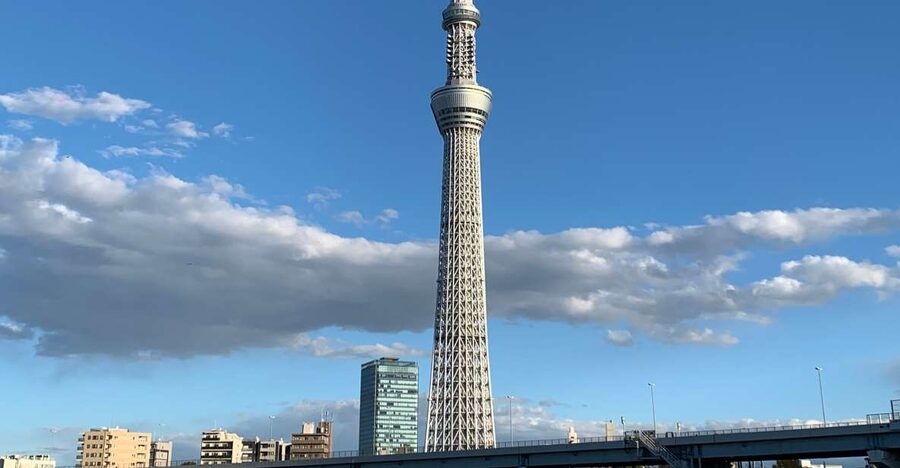
The river also gives you a chance to understand the physical connection between Asakusa and Tokyo Skytree. At this stage, Skytree represents modern Tokyo in the distance. Later, you will cross toward it and look back across the same urban area from high above.
That change in viewpoint is one of the tour’s smartest features. You begin at street level, where the city’s traditions are visible in gates, rituals, and shops. You end hundreds of meters above the ground, where the size of Tokyo becomes clear.
Asakusa Culture Tourist Information Center and Kaminarimon
The Asakusa Culture Tourist Information Center is scheduled as another 15-minute guided stop. Its position near Kaminarimon makes it a useful place to orient yourself before entering the temple district.
Next comes Kaminarimon, or the Thunder Gate. This is one of Asakusa’s most recognizable sights, with its large lantern and strong visual symbolism. A guide can point out why the gate matters instead of leaving you with only the familiar front-facing photograph.
Expect crowds around here. You may need to pause at the edge of the flow to hear the explanation and take pictures. A small group helps, but it cannot remove the crowd entirely. Keep your belongings close and listen for the guide’s instructions before moving on.
The value of this stop is context. Kaminarimon is an entrance, but it also sets the tone for the religious district beyond it. The tour treats it as part of a functioning sacred space, not simply as a backdrop.
Nakamise Street, where shopping and ritual meet
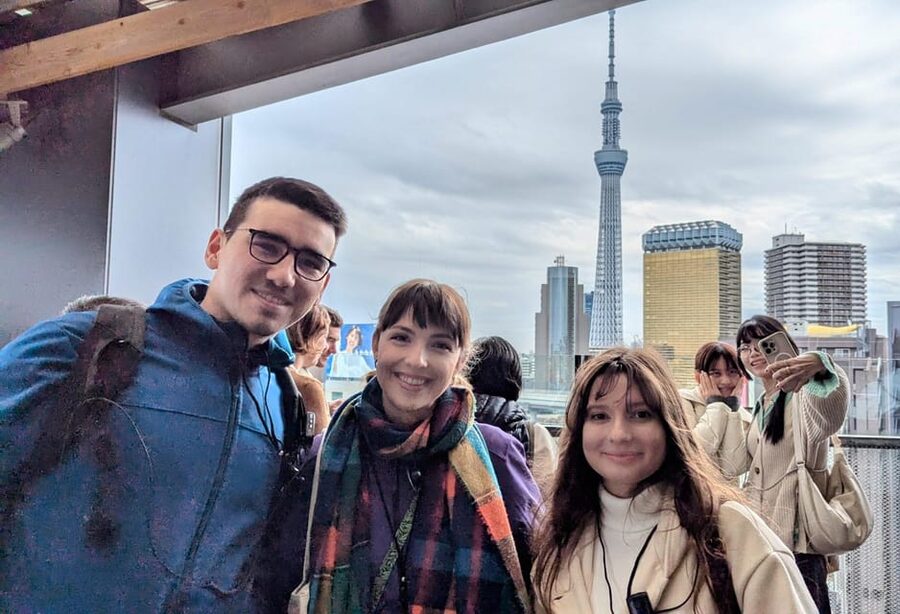
The walk continues along Nakamise Shopping Street for about 30 minutes. This is the longest stop in the Asakusa section, and rightly so. The street leads toward Sensō-ji and mixes souvenirs, snacks, sweets, and traditional items with the steady movement of people heading to the temple.
You should expect time to look around rather than a hurried march. Guides have stopped for questions and shopping, and one guide even offered local treats for tasting. That kind of pause gives the street more life than a simple explanation delivered while passing through.
Nakamise can also be crowded and noisy. If you want to browse every shop, you will probably need to return later on your own. The guided time is best used to learn what you are seeing, sample something if offered, and note the shops or treats you want to revisit.
This part suits you if you want a little local texture without giving up the history lesson. It is also a useful place to buy small souvenirs before the final free time at Skytree.
Hōzōmon Gate, Sensō-ji, and Asakusa Shrine
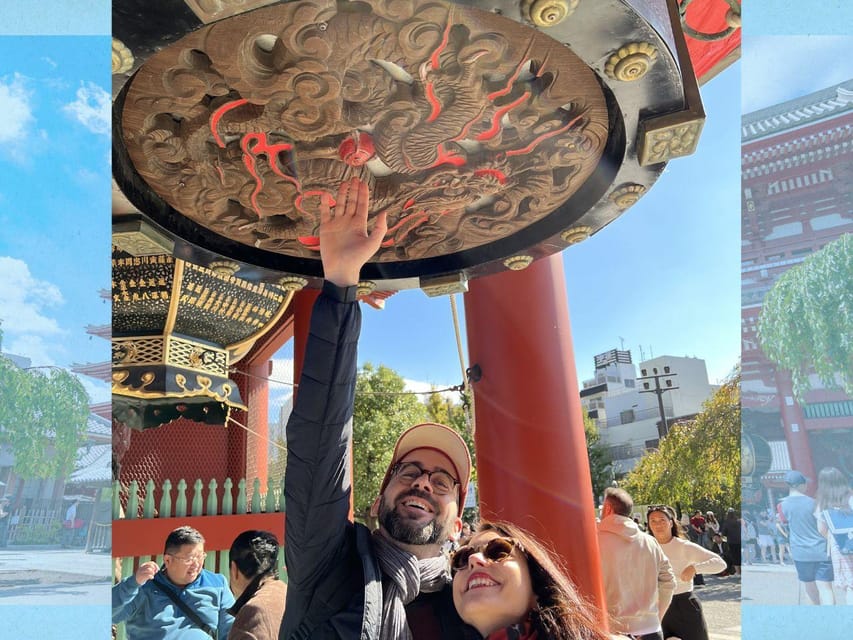
Hōzōmon Gate follows Nakamise, with about 15 minutes set aside for the guided visit. The gate marks another important threshold on the approach to Sensō-ji. Its scale and detail make it worth a pause, but the guide’s explanation is what turns the stop into something more than architectural sightseeing.
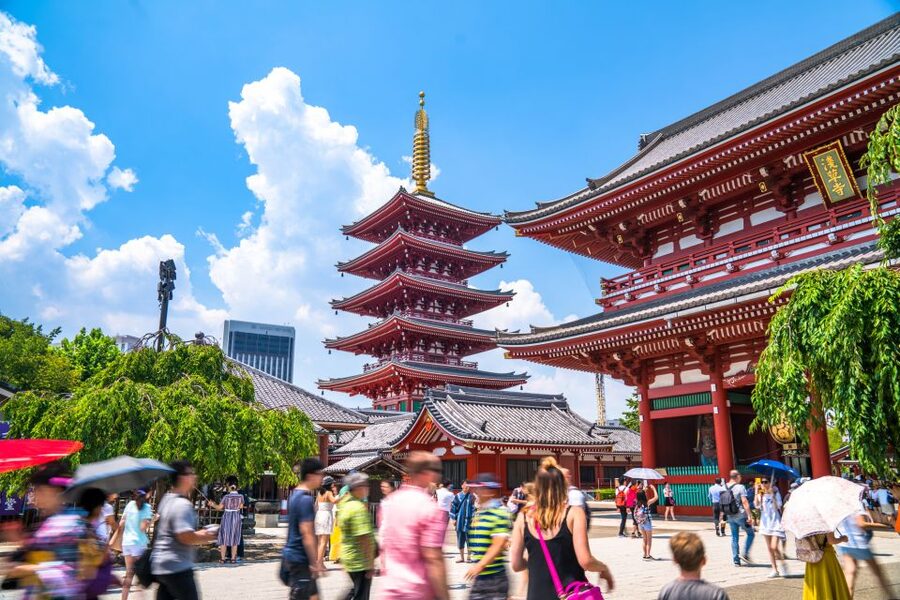
Sensō-ji receives another 15-minute visit. This is the central religious sight in Asakusa and one of the places where the tour’s focus on meaning is most useful. You will learn about the role of Buddhist tradition and the symbolism connected with the temple grounds.
The schedule is short, so do not expect a full private temple seminar. You will get a focused introduction and time to look around. If you want extended worship, detailed photography, or a slow examination of every feature, return after the tour.
The final Asakusa stop is Asakusa Shrine. The inclusion of both Sensō-ji and Asakusa Shrine helps show the relationship between Buddhist and Shinto traditions in the same district. Your guide connects religion, local identity, and the way these sites function within modern Tokyo.
This is where guides have made the greatest difference. Yasu was praised for explaining the meaning of the sites and Japanese culture clearly. Keiko has been especially good at answering questions, stopping for pictures, and managing the crowds. Aki has used a headset in English, which helped during a wet and busy visit. Guide quality can vary, but the small group gives you a fair chance to ask for clarification.
The two-minute ride from old Tokyo to Skytree
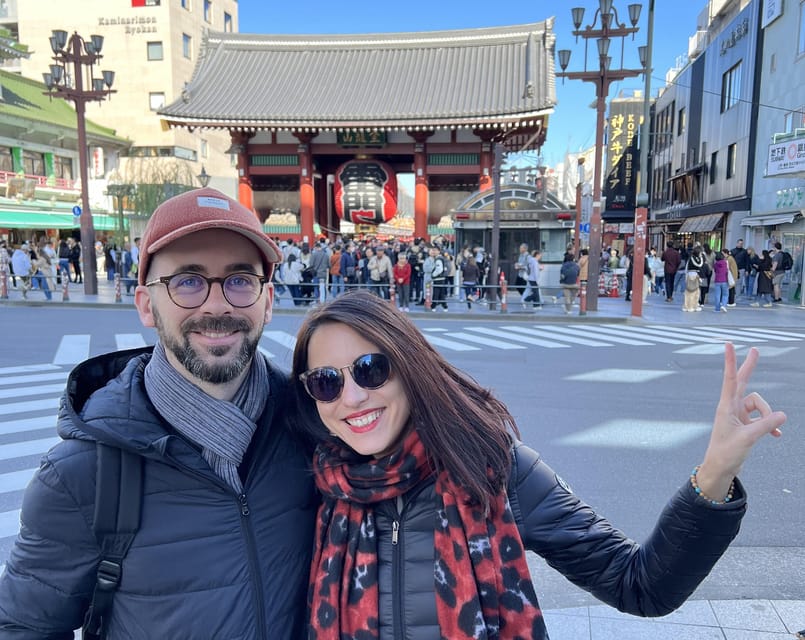
After Asakusa, you take a short train ride across the Sumida River to Tokyo Skytree Station. The fare is 160 yen and is not included, so carry a little cash or be ready to pay through your normal transit method.
This transfer is brief, but it gives the tour its strongest structure. You have just walked through a district shaped by temples, river traffic, and long-standing customs. Now you move into one of Tokyo’s clearest symbols of modern engineering and high-rise growth.
The guide accompanies you to the tower and helps with the transition. Since the Skytree entry is included, you avoid having to arrange the observation deck tickets yourself. That is especially useful during busy periods, when buying a ticket on the spot may mean waiting or missing the desired timing.
Tokyo Skytree at 350 meters
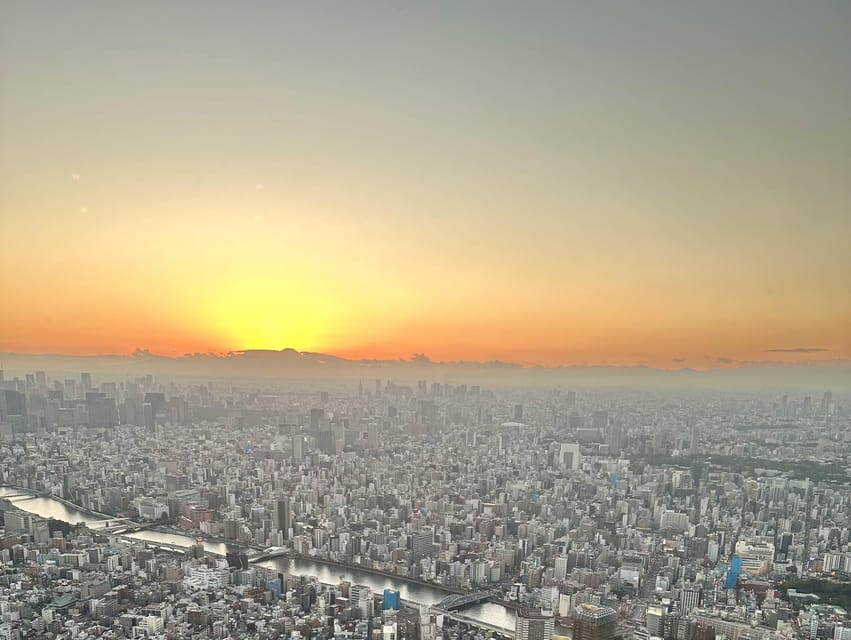
The first observation area is the Tembo Deck at 350 meters. From here, your guide can help identify major landmarks spread across Tokyo. That service is more useful than it sounds. On a clear day, the city extends so far that individual districts can blur into one huge built-up area.
At ground level, you have been learning how places connect. From the deck, you can see the scale of those connections. The Sumida River becomes a thin line, Asakusa shrinks into a compact district, and Tokyo’s vast reach becomes easier to understand.
The tour allows about 30 minutes for this deck. Use the guide’s orientation first, then take your own photographs and look for the landmarks you want to remember. Weather matters greatly. Rain, haze, or low cloud can limit the view, though the tower remains an impressive interior experience.
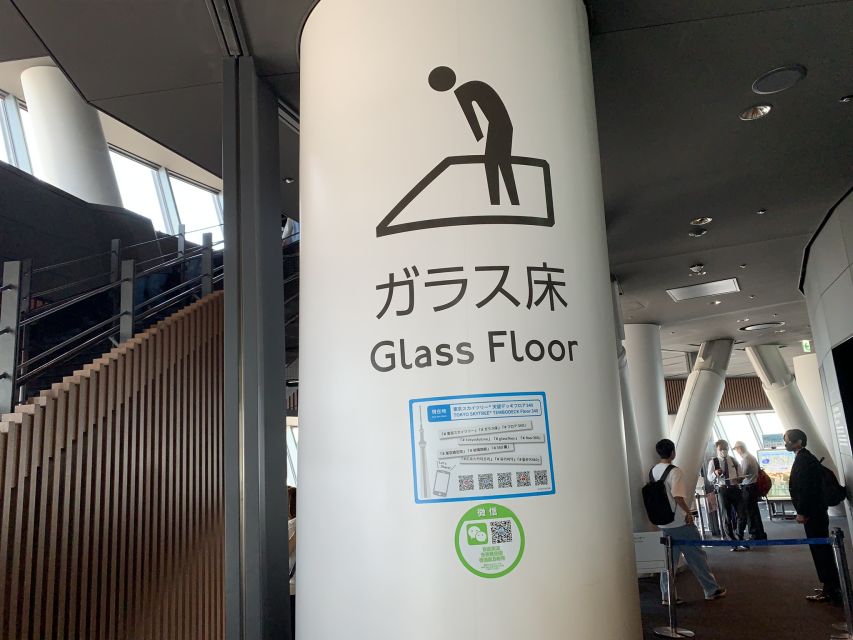
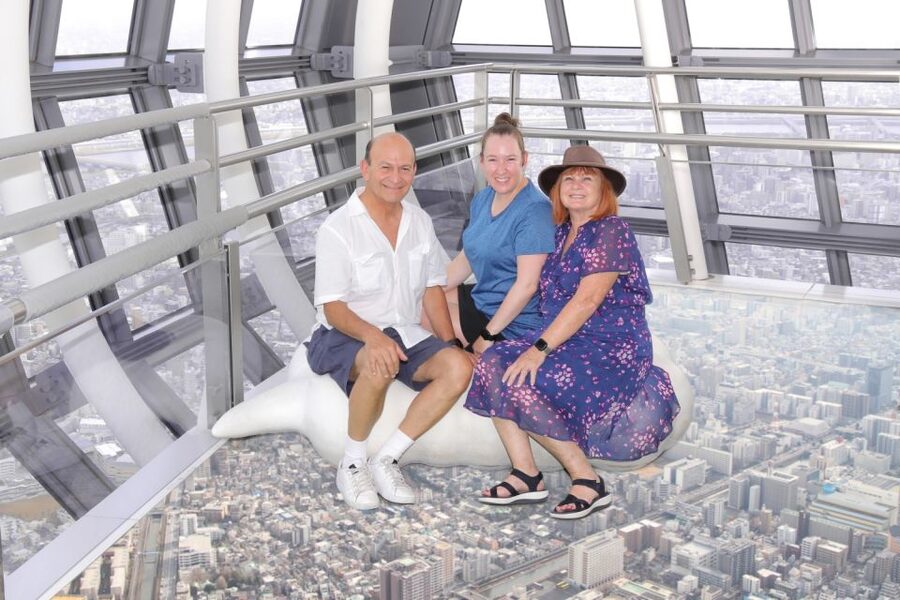
You can also step onto the glass floor for a direct view of the streets below. It is a simple feature, but it gives the visit a little physical drama after the history-focused walk. If heights make you uneasy, you can skip it and still enjoy the main viewing areas.
A commemorative photo is available, with the option to buy a downloadable copy. That purchase is optional and should not be confused with the tour price.
Tokyo Skytree Tembo Galleria at 450 meters
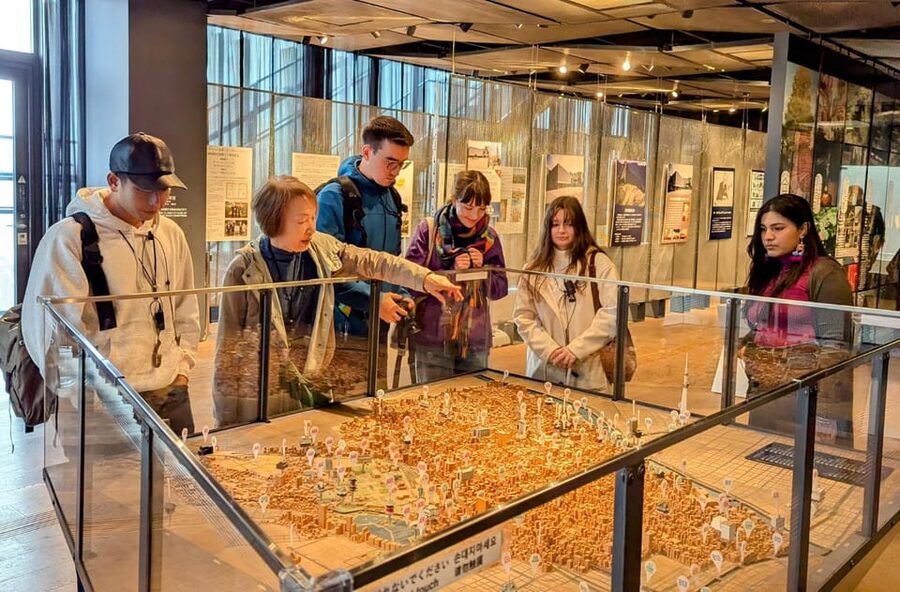
The upper stop takes you to the Tembo Galleria at 450 meters, with about 30 minutes scheduled for the visit. The higher deck changes the sense of scale again. Tokyo appears less like a collection of separate neighborhoods and more like an enormous continuous city.
Your guide can continue pointing out major landmarks, which helps prevent the view from becoming a wall of anonymous buildings. I would still treat this as a shared orientation rather than a private city-planning lesson. The time passes quickly once you begin taking pictures.
The tower also offers a Skytree-exclusive postcard that you can send anywhere in the world. It is a pleasant detail for anyone who likes physical souvenirs, especially after seeing Tokyo from above. Postage and any other purchase costs are not specified, so check at the tower.
After descending, you get free time at the large shopping complex at the base. This is a useful finish because you can browse for souvenirs, local treats, or gifts without the guide needing to hurry you through another formal stop.
How much walking and effort should you expect?
The route is described as relaxing by some guests, but it is not a low-effort outing. You walk through several Asakusa sites, spend time in crowds, use stairs, and remain on your feet for much of the 210 minutes.
Weather can change the experience. Aki continued guiding during heavy rain and cold conditions, while Machiko made a point of offering rest and drink opportunities during a sunny 30-degree day. That tells you what to prepare for: comfortable shoes, water, weather protection, and a willingness to adjust your pace.
If you are in your 60s or simply prefer frequent seating, tell the guide early. One guest felt that a dedicated 10-minute drink break would have helped. The route may work well for many fitness levels, but the published information does not promise step-free access or a specific accessibility plan.
The headset and audio guide are useful in crowded areas. Still, one softly spoken guide was difficult to hear unless standing close. Stay near the guide and ask for repetition when needed. In a group of eight, drifting to the back can make explanations harder to catch.
Is $116 good value?
At $116 per person, this is not the cheapest way to see Asakusa and Tokyo Skytree. You are paying for a live English-speaking guide, a structured history walk, a small group, and admission to both the 350-meter and 450-meter decks.
The value improves if you want interpretation rather than independent sightseeing. You could visit the temple district on your own, pay the train fare, and arrange Skytree tickets separately. That approach costs less in guiding fees, but you would need to research the sites, manage the transfer, and handle ticket timing yourself.
The included upper deck admission is important. Skytree tickets can be difficult to arrange at busy times, and advance purchase is recommended. The tour provider buys tickets close to the cancellation cutoff so they are not wasted, which creates a strict booking condition.
The activity is non-refundable, and the Skytree tickets cannot be changed once bought. The information says tickets are purchased after the free cancellation period ends, 24 hours before the tour, unless you commit earlier and waive that cancellation privilege. If you cancel during that period after making the commitment, half the tour cost may be charged.
Read that condition before paying. This tour makes the most financial sense when your Tokyo schedule is firm and you specifically want both observation decks.
Who should choose this experience?
I would choose this tour if you are visiting Tokyo for the first time and want a clear introduction to Asakusa without separating culture from city history. It is also a good fit if you like asking questions, prefer a small group, and want help making sense of the view from Skytree.
Families can benefit from the mix of temple grounds, market treats, train travel, and the glass floor. The 210-minute length is long enough to feel substantial but short enough to fit into a day of sightseeing.
You should think twice if you want to move quickly, spend a long time shopping, or explore Sensō-ji at your own pace. Independent visitors may find the fixed schedule limiting. People sensitive to crowds, stairs, heights, heat, or long periods on their feet should also plan carefully.
Final call: book it for the connection
Book this experience if you want Asakusa explained, not simply photographed, and you value having both Tokyo Skytree decks arranged in one outing. The walk gives the tower a useful human and historical scale, while the tower gives the old district a new perspective.
Skip it if you already know Asakusa well, dislike guided pacing, or have an uncertain schedule. For everyone else, the strongest reason to book is the careful movement from riverfront history to 450-meter views, with a small English-speaking group and practical help along the way.
FAQ
Where does the tour start?
It starts in front of the Burger King restaurant beside Exit 4 of Asakusa subway station, station code G19, on the Ginza Line.
Where does the tour finish?
The experience ends at Tokyo Skytree after the observation decks and free time at the shopping complex.
Is the train fare included?
No. The short train ride from Asakusa Station to Tokyo Skytree Station costs 160 yen and must be paid separately.
Which Tokyo Skytree areas are included?
Your ticket includes the Tembo Deck at 350 meters and the Tembo Galleria at 450 meters.
Is the tour conducted in English?
Yes. It includes a live English-speaking guide and an English audio guide.
How large is the group?
The group is limited to eight participants. Hotel pickup and drop-off are not included.
Asakusa Tours, compared.
 ★ 4.8Tokyo: Japanese Dance Cabaret Theater Asakusa-Kaguwa TicketFrom $492 hours
 ★ 4.7Tokyo: Meiji Shrine, Asakusa, Skytree Bus Tour and CruiseFrom $12210 hours
 ★ 4.9Tokyo: Roll and Authentic Sushi Making Class in AsakusaFrom $581h 40m
 ★ 4.8Tokyo: Asakusa Walking Tour with Sensoji Temple VisitFrom $222 hours
 ★ 5.0Tokyo Asakusa Rickshaw TourFrom $42
 ★ 4.5Tokyo Panoramic 1 Day: Meiji Shrine, Asakusa, Odaiba and SKYTREE®From $85