
Reviewed · ASAKUSA TOURS
Tokyo Asakusa Rickshaw Tour
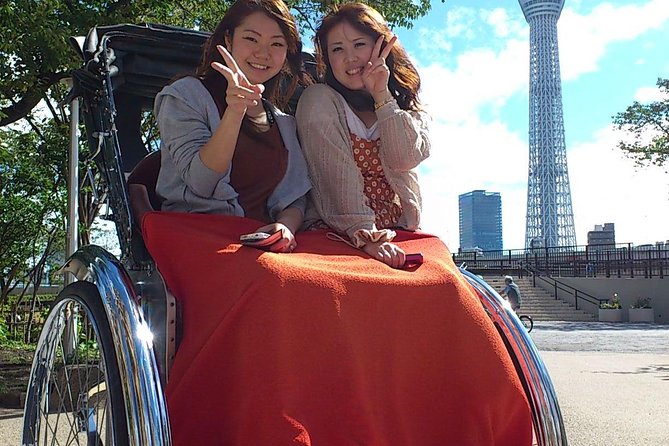
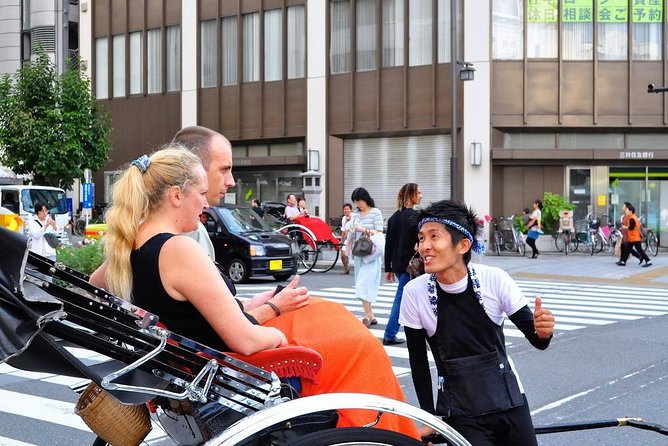
Asakusa is one of Tokyo’s best neighborhoods for seeing old and new Japan side by side. From a rickshaw seat, you can glide past Edo-era facades, small shrines, cherry trees, and the Sumida River, with the Tokyo Skytree and Asahi Beer Headquarters rising behind them. Your guide pedals, explains, and often takes photos along the way.
I like the tour’s private, flexible format. You can ask to focus on temples, local traditions, photo spots, or old entertainment streets. I also like how much ground you can cover without turning the outing into a bus tour. The main drawback is the narrow seat. Two adults can fit, but it may feel snug, and a second rickshaw should be booked ahead if you need more room.
In This Review
- Key points to know before you book
- Why a rickshaw works so well in Asakusa
- Pick the right length for your Asakusa visit
- Ushijima Shrine and the Lucky Fortune Cow
- Honryuin Matsuchiyama Shoden and its radishes
- Imado Shrine and Japan’s beckoning cats
- Sensoji, Asakusa Shrine, and the busy temple approach
- Edo streets, raccoons, and old Tokyo entertainment
- Sumida River views and the Asahi golden flame
- What the ride feels like for couples and families
- English guides, weather, and practical comfort
- Is $42.90 a fair price?
- Should you book the Asakusa rickshaw tour?
- FAQ
- Where does the Tokyo Asakusa Rickshaw Tour begin?
- Where does the tour finish?
- How long does the rickshaw tour last?
- Can I customize the route?
- How many people can ride in one rickshaw?
- Are English-speaking guides available?
- Can I cancel for a refund?
Key points to know before you book
- Choose from 30 minutes to 3 hours: Short rides give you a quick look at Asakusa, while longer options can include several shrines, temples, parks, and old streets.
- Your route is flexible: Tell the guide what interests you, then agree on the best route for the time you have.
- Expect a private experience: Only your group rides together, with one local rickshaw driver guiding the way.
- The seat is 74 centimeters wide: Two adults fit, but booking separate rickshaws can be more comfortable for larger passengers.
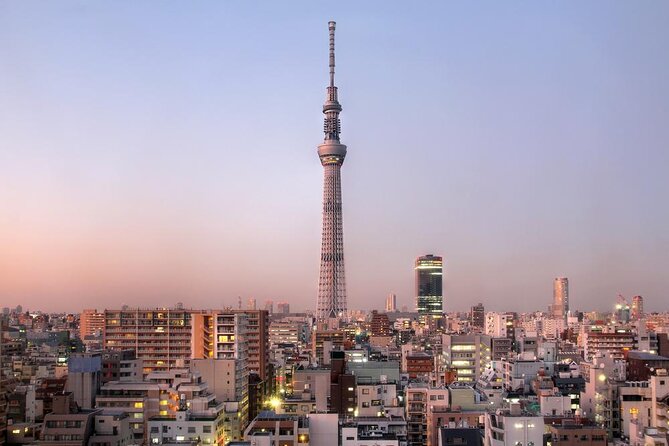
- The best views mix old and new Tokyo: Expect Edo-period houses, religious sites, Sumida Park, the Asahi headquarters, and Skytree views.
- Weather matters: The tour requires good weather, and poor conditions can lead to a new date or a full refund.
Why a rickshaw works so well in Asakusa
Asakusa rewards slow sightseeing. The neighborhood is compact, but its streets shift quickly from major temple gates to quiet lanes, small religious sites, old shopfronts, and entertainment streets with a distinctly retro feel.
Walking is easy here, but a rickshaw gives you a raised seat and a local escort who can point out details you could miss on your own. You are not simply being transported from one attraction to another. You can talk with the driver as you move, ask about customs, and stop for photographs.
The experience is also more personal than a large group tour. Drivers such as Issy, Micchy, Kei, Koko, Taisei, Nene, Yusuke, Takumi, and Kazumasu-san have received especially warm praise for their humor, energy, cultural explanations, and photography. Your own driver depends on availability, so treat those names as examples rather than a guarantee.
The tour begins outside Asakusa Station at 1-chōme-1-4 Asakusa. You make your own way there, meet the guide, and board the rickshaw. The ride ends near Kan’non-dōri, though you can discuss another finishing point with the guide. A different drop-off may bring an extra fee.
A few more Tokyo tours and experiences worth a look


Pick the right length for your Asakusa visit
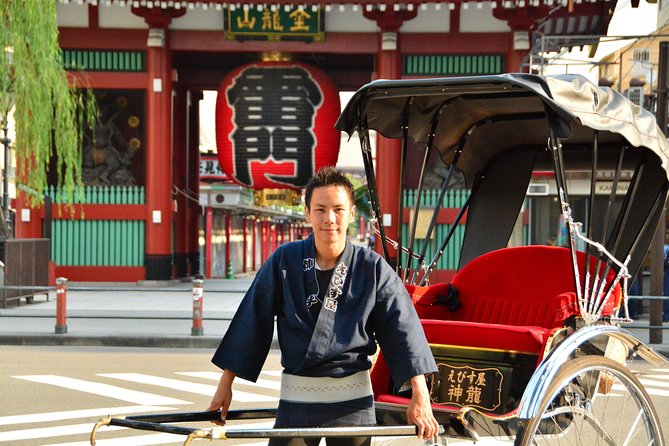
The major decision is duration. Available rides run from about 30 minutes to three hours, and the route changes with the option you select.
A 30-minute ride is useful if you want a quick introduction before exploring on foot. It can help you get your bearings, see a few key streets, and capture a Skytree photograph without giving up much of your day. It will not cover every place listed here.
A ride around 45 minutes to an hour gives you more breathing room. You can see several local sights, hear some background from the guide, and stop for photographs without feeling rushed. This is a sensible choice for first-time visitors who want an overview of Asakusa.
The three-hour option is the fullest experience. One person who took that length described it as much more than sitting on a bus, and that is the point. With extra time, the guide can include smaller shrines, old streets, river views, and cultural details that a short ride must skip.
If you have a specific wish, such as Imado Shrine, the raccoon-themed street, or a particular photo stop, say so when booking and again at the meeting point. The shorter the ride, the more important this becomes.
Ushijima Shrine and the Lucky Fortune Cow
Ushijima Shrine is one of the possible principal stops. The shrine is Shinto, and the guide explains why its entrance has three openings instead of the more usual single entrance. That small architectural detail makes the visit more than a quick photograph.
The surrounding garden offers a calmer pause from the main streets. You can look for the Lucky Fortune Cow Shrine and learn about the local meaning attached to it. This is the sort of stop that gives the ride its character. You are not only collecting famous sights, but also seeing the symbols and customs that shape neighborhood life.
Admission is not included, though the supplied information does not list a separate admission price. Ask the guide how much time is practical at the shrine if you have selected a shorter ride.
Honryuin Matsuchiyama Shoden and its radishes
Honryuin Matsuchiyama Shoden is a Buddhist temple connected with the wider Sensoji temple complex. Its most memorable detail is the number of radishes displayed at the temple and painted on its lanterns.
Your guide explains why the radish is important here. This is a good example of the kind of cultural question that is easy to miss when you visit alone. The temple is not only a religious building. Its visual symbols give you a small entry point into Japanese beliefs and everyday offerings.
The stop is planned for about 15 minutes, and admission is not included. The temple’s position also helps show how closely Buddhism and Shinto exist together in Asakusa. The two traditions have different practices and origins, but they share the same neighborhood with little fuss.
Imado Shrine and Japan’s beckoning cats
Imado Shrine adds a playful note. It is filled with cat figures, especially manekineko, the beckoning cat associated with good fortune.
This stop suits visitors interested in Japanese popular culture, traditional symbols, or cat-themed souvenirs and images. The guide can explain the meaning behind the figures rather than leaving you to guess why so many cats are gathered there.
Like Ushijima Shrine and Honryuin Matsuchiyama Shoden, Imado Shrine is listed as a 15-minute stop, with admission not included. You may not visit all three on a short ride, so tell your driver which matters most to you.
A few more Tokyo tours and experiences worth a look

Sensoji, Asakusa Shrine, and the busy temple approach
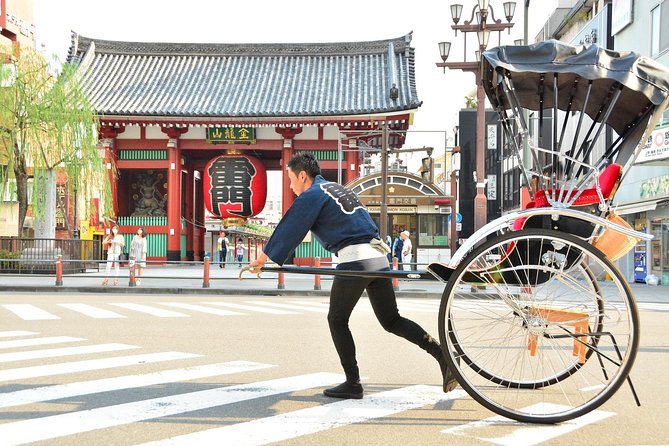
The colorful gate leading toward Sensoji Temple and Asakusa Shrine is one of the area’s most recognizable sights. The nearby approach brings together religious buildings, shopping, and a steady flow of people.
There is an important restriction here: the rickshaw cannot ride inside the Sensoji and Asakusa temple area, including the temple buildings, temple grounds, and Nakamise shopping street. You can pass nearby or stop at an appropriate point, but you will need to walk through the temple grounds if you want a closer look.
That rule is easy to understand. The temple area is too crowded and too important as a place of worship for rickshaw traffic. Still, it affects expectations. This is not a ride through every part of Sensoji. It is a guided circuit around Asakusa, with walking needed for the central temple zone.
The stop is valuable because your guide can explain the difference between Shinto and Buddhism and show how both traditions appear in the same district. If this is your first time in Asakusa, allow time before or after the ride to explore Sensoji and Nakamise on foot.
Edo streets, raccoons, and old Tokyo entertainment
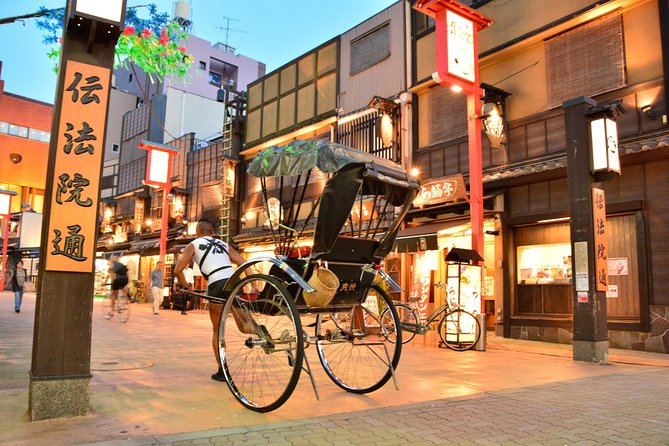
The route can include a historic street lined with stores and housing facades that recall the Edo period. These are not just isolated monuments. They show how the neighborhood’s older character survives beside modern Tokyo businesses.
Another unusual stop is the raccoon-themed street. Small raccoon figures appear every few meters, giving the lane a quirky local identity. It is a fine reminder that Asakusa is not only temples and formal gardens. The district also has humor and neighborhood oddities.
The ride may also pass one of Japan’s oldest amusement parks, which is still operating. That stop connects Asakusa’s present with its long role as an entertainment center.
Rokku Street offers more of that past. Before the war, it was Tokyo’s leading entertainment district, filled with cinemas and theaters. It now forms part of Asakusa’s retro quarter. If you like old movie districts, local performance culture, or streets with a slightly worn-in character, ask the guide to include it.
The tour can also point out a venue that remains at the heart of Asakusa’s entertainment scene, where Japanese comedy and shows are still performed. The exact route depends on timing, so a longer booking gives you a better chance of including these places.
Sumida River views and the Asahi golden flame
The Sumida River provides some of the ride’s best open views. Sumida Park follows the river and offers a place to pause, especially during cherry blossom season. Maple trees and gardens add seasonal color, while the opposite bank gives you a clear look toward Tokyo Skytree.
This is a strong photo stop because the view gives you space. Much of central Asakusa can feel close and crowded, but the river opens the scene and lets you see the scale of Tokyo.
Across the water, you can also spot the headquarters of Asahi Beer, marked by its famous golden flame shape on top of the building. It is a striking modern contrast to the shrines and old houses nearby. The juxtaposition is one of the tour’s main pleasures: traditional buildings and religious sites share the frame with tall towers, offices, and modern architecture.
Your driver may take photos of you during the ride. Several guides have been praised for finding good angles and including themselves in photographs when appropriate. Still, bring your own phone or camera, and ask before stopping if you have a particular view in mind.
What the ride feels like for couples and families
A maximum of two adults can ride in one rickshaw. Children aged five and under may ride free if they sit on an adult’s lap, and up to two young children can join two adults under that arrangement.
A child using one of the two seats must be booked as an adult. This matters for families planning seating, so check the passenger count carefully before paying.
The rickshaw is 74 centimeters wide. Two adults can fit, and one couple with a larger build found the seat snug but comfortable. That will not be true for everyone. If you want more room, or if both passengers may not fit comfortably, book one rickshaw per person in advance. An extra rickshaw might not be available on the day, especially with an English-speaking guide.
Families have also found the drivers willing to pause when needed. One outing included an eight-month-old baby, with the driver stopping so the parent could adjust the child. That is encouraging, but the ride is still an outdoor activity, and you should consider your child’s comfort before booking.
The experience works especially well for couples, families with young children, older visitors who want a break from constant walking, and anyone making a short first visit to Asakusa. It is less suitable if you dislike confined seating or want a fully walking-based temple visit.
English guides, weather, and practical comfort
English and Japanese-speaking drivers are available, subject to availability. Specify your preferred language at checkout. If cultural explanation is a major reason for booking, confirm that the requested language is noted before your visit.
The guides are a major part of the experience. The strongest accounts describe drivers as energetic, polite, funny, and good at explaining Japanese history and customs in a relaxed way. Takumi, for example, was praised for patient explanations and restaurant suggestions. Taisei was remembered for his high energy and photography, while Koko was praised for being friendly, careful, and fit enough to make the ride feel easy.
Rickshaw rides are weather dependent. In rain, the driver can keep you dry and warm with protective coverings, rugs, and, according to one account, seat warmers. Even so, the operator may cancel for poor weather. You can then choose another date or receive a full refund.
Wear clothing suited to the season and bring only what you can hold comfortably. The ride itself is not a strenuous activity for the passenger, but boarding, sitting, and getting out of the narrow vehicle require ordinary mobility.
Is $42.90 a fair price?
At about $42.90 per person, the price is reasonable if you treat the ride as both transport and a private introduction to Asakusa. The fee includes the rickshaw ride and local driver, but not food, drinks, hotel pickup, or drop-off.
For a short 30-minute outing, you are paying for a memorable way to see the neighborhood and for the guide’s attention. It is not the cheapest way to move around Tokyo, and you could walk through parts of Asakusa for free.
The value improves with a longer ride or with a private group that wants a tailored route. You save time, avoid navigating every turn yourself, and can ask questions as you go. For two adults, the cost also buys a shared experience with good photo opportunities.
Group discounts are available, and mobile tickets make the booking simple. Since the experience is often reserved well ahead of time, booking around 54 days in advance is a sensible guide if your dates are fixed.
Free cancellation is available up to 24 hours before the start time. Changes or cancellations inside that window are not accepted for a refund. If weather forces cancellation, you are offered another date or a full refund.
Should you book the Asakusa rickshaw tour?
I would book it if you want a friendly, efficient introduction to Asakusa with room for personal questions and photographs. It is especially good near the start of a Tokyo visit, when you want to understand how the district fits together before returning to explore its temples and shopping streets on foot.
Choose a longer option if you care about smaller shrines, the raccoon street, Rokku Street, Sumida Park, and the temple stops. Choose a short ride if you mainly want the experience, a few city views, and a quick overview.
Book separate rickshaws for extra comfort, request your preferred guide language, and tell the driver your priorities at the start. If you want a calm look at old Tokyo with a little humor, local context, and a memorable seat, this is a strong choice. If you need a spacious vehicle or want to spend the entire time inside the Sensoji grounds, walk the area instead.
FAQ
Where does the Tokyo Asakusa Rickshaw Tour begin?
The meeting point is outside Asakusa Station at 1-chōme-1-4 Asakusa, Taito City, Tokyo 111-0032, Japan.
Where does the tour finish?
The listed finishing point is near Kan’non-dōri at 1-chōme-2-11 Asakusa, Taito City, Tokyo 111-0032, Japan. You can discuss a different finishing location with your guide, though an extra drop-off fee may apply.
How long does the rickshaw tour last?
Available tour lengths range from approximately 30 minutes to three hours. The sights included depend on the option selected and the time available.
Can I customize the route?
Yes. The tour can be adjusted to your interests. Tell your guide what you most want to see, such as shrines, temples, Edo-era streets, photo spots, or the Sumida River.
How many people can ride in one rickshaw?
A maximum of two adults can ride in one rickshaw. Up to two children aged five or under can ride with two adults if the children sit on an adult’s lap.
Are English-speaking guides available?
English and Japanese-speaking driver-guides are available subject to availability. You should specify your preferred language when booking.
Can I cancel for a refund?
You can cancel up to 24 hours before the experience start time for a full refund. Poor weather may also lead to a rescheduled tour or full refund.
More Rickshaw Rides in Tokyo
More Asakusa Tours in Tokyo
More tours in Tokyo we've reviewed


Asakusa Tours, compared.
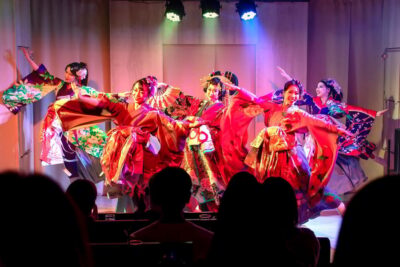 ★ 4.8Tokyo: Japanese Dance Cabaret Theater Asakusa-Kaguwa TicketFrom $492 hours
 ★ 4.7Tokyo: Meiji Shrine, Asakusa, Skytree Bus Tour and CruiseFrom $12210 hours
 ★ 4.9Tokyo: Roll and Authentic Sushi Making Class in AsakusaFrom $581h 40m
 ★ 4.8Tokyo: Asakusa Walking Tour with Sensoji Temple VisitFrom $222 hours
 ★ 4.5Tokyo Panoramic 1 Day: Meiji Shrine, Asakusa, Odaiba and SKYTREE®From $85
 ★ 5.0Tokyo Go Kart: Asakusa, Skytree, and Akihabara **IDP MUST**From $99