
Reviewed · SUMO EXPERIENCES
Sumo Practice Viewing Guided Tour and Photo with Sumo Wrestlers
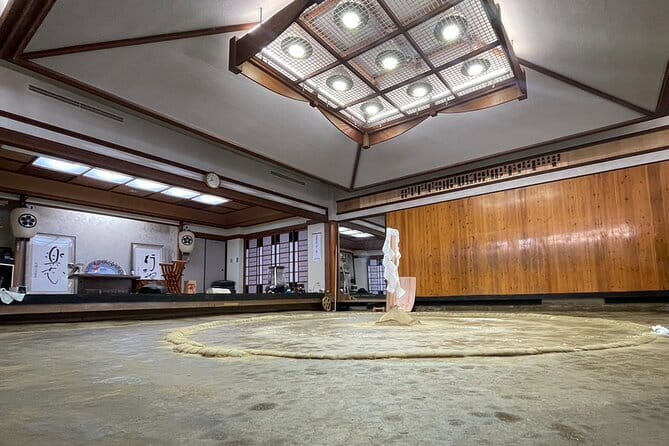
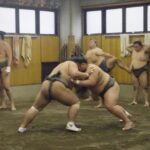
Tokyo sumo is at its most revealing before the matches, inside the stable where wrestlers live and train. At Tatsunami-beya, you sit close to the practice ring and watch the hard, repetitive work behind the sport, followed by a photo with the wrestlers.
I like the licensed English guide, who explains the etiquette and meaning of the training, and the rare access to a working sumo stable rather than a staged cultural display. I also like the audio guide, since it lets you learn while keeping the room silent. The main drawback is simple: if you expect a match, a show, or constant action, the quiet practice session may feel too slow.
In This Review
- Key points to know before you book
- Why watching practice is different from seeing a sumo tournament
- Arriving at Tatsunami-beya for the 8:30 a.m. start
- The 10-minute introduction makes the silence easier
- Forty-five minutes beside the practice ring
- What you may see, and what you should not expect
- The photo and personal belongings viewing
- Is $118.60 a fair price?
- Who will enjoy this most
- Practical ways to make the visit go well
- Should you book Tatsunami-beya?
- FAQ
- Where does the sumo practice tour meet?
- What time does the tour begin?
- How long does the experience last?
- Is an English guide included?
- Can I talk while watching the practice?
- Can I take a photo with a sumo wrestler?
- Will the yokozuna be present?
- Are children allowed to join?
Key points to know before you book
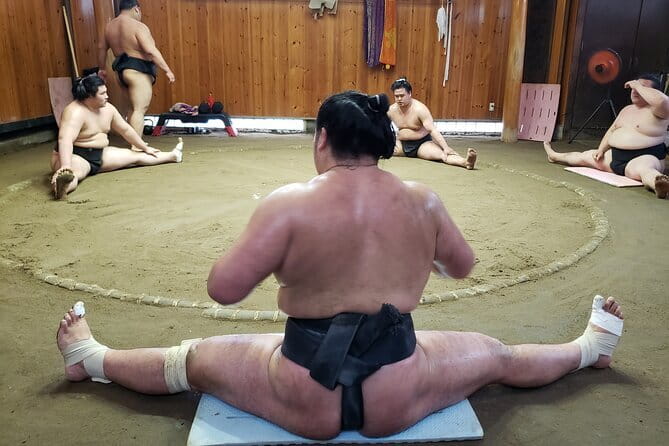
- Tatsunami-beya is a working sumo stable: Wrestlers train here daily, and the stable currently houses an active yokozuna, though that top-ranked wrestler may not appear during your visit.
- Silence is part of the experience: Talking, whispering, standing, eating, and drinking are not allowed during practice.
- You watch from a cushion on tatami flooring: Chairs are available if sitting on the floor is difficult, but you need to request one in advance.
- The viewing lasts about 45 minutes: The session can be shorter or longer depending on how many wrestlers are training.
- The photo comes after practice: You can take a commemorative picture with the wrestlers and view personal belongings connected with sumo.
- The stable is about 30 minutes on foot from Asakusa: The meeting time is 8:30 a.m., so plan your route carefully and use the toilet before entering.
Why watching practice is different from seeing a sumo tournament
A professional sumo tournament gives you noise, ceremony, judges, packed seating, and short bursts of combat. This visit gives you the work behind those few minutes in the ring.
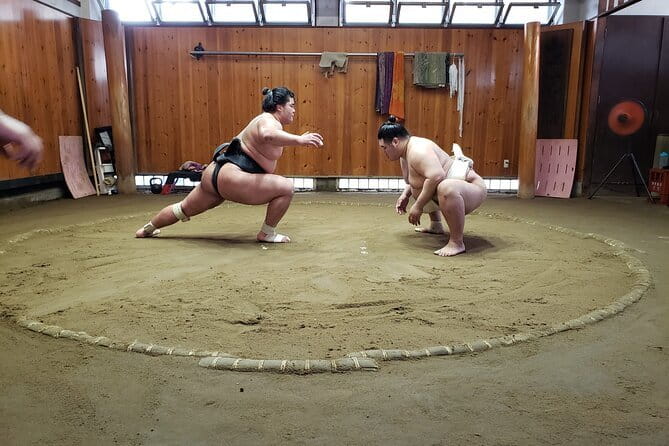
You watch wrestlers repeat drills, stretch, push, grapple, and prepare their bodies for the six annual Grand Sumo Tournaments. The effort can look plain at first. That is also the point. Sumo depends on strength, balance, timing, footwork, and endurance, and practice makes those qualities visible in a way a quick tournament bout may not.
The stable is treated as a sacred training space. You are not entering a theater where the wrestlers perform for an audience. You are observing their morning routine, and your behavior affects the room. That makes the visit feel more personal, but it also places real limits on what you can do.
I would book this experience if you enjoy watching people work at a demanding craft. If you need a lively, chatty activity, you may find the session restrained. One honest description of the visit is that it can feel like watching a small group of athletes train in a gym, with about six to eight trainees visible at times. The difference is the setting, the customs, and the chance to see sumo at close range.
A few more Tokyo tours and experiences worth a look

Arriving at Tatsunami-beya for the 8:30 a.m. start
The meeting point is Tatsunami-beya Sumo Stable at 1-chome-16-5 Hashiba in Taito City. The entrance is about a 30-minute walk from Asakusa Station on the Toei, Tokyo Metro, and Tobu lines.
That walk can be useful if you want to reach the stable without rushing, but an early start makes timing important. You can also use the Toei Bus East 42-Ko route or the Taito Ward Kita-Megurin loop bus. Check your route before leaving, since arriving late could be especially awkward when the group must enter and settle quietly.
The tour accepts up to 45 people. That is not a tiny private visit, so your view can depend on where you sit and how full the session is. The stable setting remains the main attraction, but you should not expect the personal attention of a one-guide, one-family outing.
Take off your shoes before entering and place them neatly. Remove your hat and sunglasses inside. Large bags, suitcases, and strollers cannot come in, and restroom access is limited. I would use a toilet before arrival and bring only what you need.
The 10-minute introduction makes the silence easier
The first part lasts about 10 minutes. A National Government Licensed English Guide Interpreter explains basic sumo information and the rules for watching practice.
This briefing matters more than it may sound. You learn why the room must stay quiet, where you can sit, how to position your legs, and why you must not step onto the ring or touch a wrestler without permission. You also get context for the movements you are about to see.
The guide’s narration is one of the strongest parts of the experience when it is clear and well delivered. It turns simple exercises into part of a larger system of training and rank. One point to keep in mind is that English quality can vary. A previous participant found the guide’s English and audio equipment difficult to understand, so do not assume every explanation will be perfectly easy to follow.
You will receive an audio guide for the practice itself. This is a smart solution to the no-talking rule. You can listen to explanations while the wrestlers train, without disturbing the stable.
Forty-five minutes beside the practice ring

You watch from a wooden floor covered with tatami mats, using the provided cushions. The close seating lets you see the physical strain clearly. You are not looking through a distant stadium lens or watching only the final clash. You can observe the preparation, repetition, and concentration that shape a professional wrestler’s day.
Practice time is listed as about 45 minutes, but it is not fixed. The session may be shorter if fewer wrestlers are training, or longer if the morning practice continues. If it ends early, there is no refund, so I would book this for the access and setting, not for a guaranteed number of minutes.
The room stays quiet throughout. Do not whisper, talk, use flash photography, or move around. Keep your mobile phone silent or switched off. You should not leave midway unless necessary, since opening and closing doors or shifting seats can interrupt the wrestlers.
Your posture also matters. Do not stretch your legs toward the ring, since showing the soles of your feet to the wrestlers is considered rude. Chairs are available for people who have difficulty sitting on the floor, but request one in the booking remarks ahead of time.
Perfume and strongly scented fabric softener are prohibited. This may seem unusually strict until you consider that you are sitting in an enclosed training hall where wrestlers are working hard. Follow the rule without debate. Food and drinks are not allowed inside.
What you may see, and what you should not expect
The stable is home to an active yokozuna, the highest rank in professional sumo. That detail gives the visit extra interest, but the yokozuna does not attend every practice session. Book this to see a genuine training session, not to guarantee a meeting with the top-ranked wrestler.
The practice may include only a handful of trainees. You might see six to eight wrestlers working through exercises rather than a large group filling the room. That can make the experience feel intimate, but it also means the action may be repetitive.
This is not a tournament and there is no promise of full bouts. The focus is training. If your idea of sumo is two wrestlers charging into one another under bright lights, adjust your expectations before paying.
I like that the tour does not hide the quiet parts. You see how much effort goes into an ancient sport that is often reduced to a few dramatic seconds. Still, I would pair this with a tournament ticket or a sumo museum visit if you want ceremony, competition, and a wider picture of the sport. This tour by itself is strongest for close observation.
Other guided tours in Tokyo




The photo and personal belongings viewing
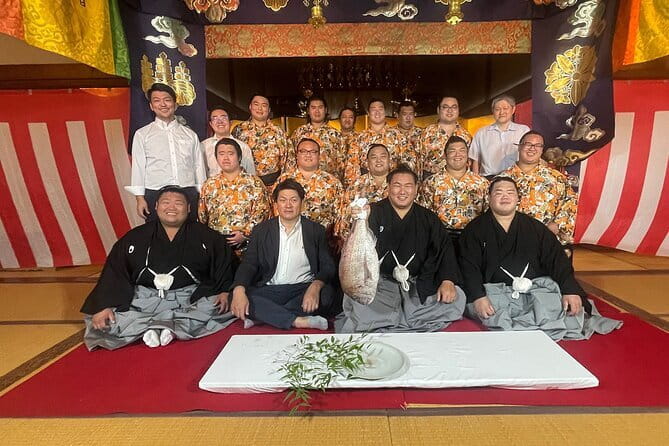
After practice, the mood changes. You can take a commemorative photo with the wrestlers, which gives the visit a clear personal finish. You may also view personal belongings and ask questions in a dedicated corner.
The photo is included in the tour, along with original JTB Sunrise Tours merchandise. You do not need to arrange a separate photo session, and the opportunity comes after you have respected the stable’s rules during practice.
You must still follow instructions carefully. Do not touch the wrestlers without permission, and do not treat the photo as an invitation to behave casually inside the stable. The setting remains a working place, not a photo studio.
The question period is useful if you want to clarify something you could not ask during practice. Since talking is prohibited while the wrestlers train, save your questions for this part. It is also the best time to make sense of the clothing, equipment, and daily objects you have seen.
Is $118.60 a fair price?
At $118.60 per person, this is not a cheap one-hour sightseeing stop. The price pays for access to a working stable, an English-speaking licensed guide, the audio service, the practice viewing, the photo, and the included merchandise.
The value depends almost entirely on your interest in sumo. If you already follow the sport or want a rare behind-the-scenes cultural experience, the price can make sense. You are paying for access that is difficult to arrange independently, plus the etiquette briefing that helps you enter the space respectfully.
If you simply want to see large athletes exercising, the cost may feel high. The activity can last as little as 1 hour and 20 minutes, though the total duration may reach 2 hours if practice runs long. It is not a full morning of entertainment.
I would also factor in the group size of up to 45 people. A large group can lower the personal feel and may affect your view. The photo and stable access help support the price, but you should not confuse this with a private tour.
Who will enjoy this most
I recommend the experience to you if you:
- Follow sumo or want to understand the sport beyond tournament broadcasts
- Enjoy quiet observation and traditional customs
- Appreciate seeing daily training rather than a staged performance
- Can sit quietly on a cushion for about 45 minutes
- Are comfortable following strict rules inside a sacred space
- Want a photo with a sumo wrestler as part of the experience
I would hesitate if you need frequent movement, conversation, or guaranteed access to a yokozuna. Young children aged 0 to 3 cannot join. Anyone under 18 needs written parental permission, and anyone under 15, or not yet enrolled in middle school, must attend with a parent or guardian.
Most people can participate physically, but sitting on tatami flooring may be uncomfortable. Request a chair in advance if needed. You also need to remove your shoes and avoid bringing large luggage.
Practical ways to make the visit go well
Arrive ready for a quiet morning. Wear clothing that lets you sit comfortably, and avoid perfume or strongly scented laundry products. Keep your phone away, leave food and drinks behind, and use the restroom before entering.
Plan your route to Hashiba with extra time. The walk from Asakusa takes about 30 minutes, while bus service offers another option. Do not rely on a last-minute arrival, since the group must enter and settle without disrupting practice.
Bring only a small personal bag. Strollers and suitcases are not permitted. You will also need to remove sunglasses and hats indoors.
Most important, treat the stable as a place of work. Do not stand, wander, stretch your legs toward the ring, talk, whisper, or use flash. These rules are not decorative customs. They protect the wrestlers’ concentration and help prevent accidents.
The tour offers free cancellation up to 24 hours before the 8:30 a.m. start time. Changes or cancellations made less than 24 hours before the experience are not accepted for a refund.
Should you book Tatsunami-beya?
Book this tour if you want a close, respectful look at the discipline behind professional sumo. The best parts are the working stable, the clear introduction to proper etiquette, the audio explanation during silent practice, and the photo after training.
Do not book it expecting a match, a guaranteed yokozuna appearance, or nonstop action. The practice may be short, the English audio may not always be easy to follow, and the quiet rules are strict.
For the right audience, $118.60 buys more than a quick photo. It gives you a rare look at how sumo wrestlers prepare when no tournament crowd is watching. For everyone else, a tournament or public sumo performance may offer better value.
FAQ
Where does the sumo practice tour meet?
The meeting point is Tatsunami-beya Sumo Stable at 1-chome-16-5 Hashiba, Taito City, Tokyo 111-0023, Japan.
What time does the tour begin?
The tour starts at 8:30 a.m.
How long does the experience last?
The experience takes about 1 hour 20 minutes to 2 hours. Practice viewing is scheduled for about 45 minutes, but the length can change depending on how many wrestlers are training.
Is an English guide included?
Yes. A National Government Licensed English Guide Interpreter provides the introduction and information about sumo. An audio guide service is also available during practice, when talking is prohibited.
Can I talk while watching the practice?
No. Talking and whispering are strictly prohibited during practice. You must also keep your phone silent or turned off.
Can I take a photo with a sumo wrestler?
Yes. A commemorative photo with the wrestlers is included after the practice session.
Will the yokozuna be present?
The stable currently houses an active yokozuna, but the yokozuna does not appear at every practice session.
Are children allowed to join?
Children aged 0 to 3 may not join. Participants under 18 need written parental permission. Anyone under 15, or not yet enrolled in middle school, must attend with a parent or guardian.
More Guided Tours in Tokyo
More Sumo Experiences in Tokyo

More tours in Tokyo we've reviewed








Sumo Experiences, compared.
 ★ 4.8Tokyo: Sumo Show Experience with Chicken Hot Pot and a PhotoFrom $1032 hours
 ★ 4.8Tokyo: Sumo Show and Dining ExperienceFrom $7990 minutes - 2 hours
 ★ 5.0the SUMO showFrom $89
 ★ 5.0Tokyo Shinjuku Sumo Show & Experience with PhotoFrom $79
 ★ 4.8Tokyo: Sumo Show and Experience in ShinjukuFrom $691h 30m
 ★ 4.6Tokyo: Sumo Tournament Tour with Chair Seat TicketsFrom $141