
Reviewed · SUSHI MAKING CLASSES
Sushi Cooking Class: AKEMI’s SUSHiKiTCHEN in Tokyo
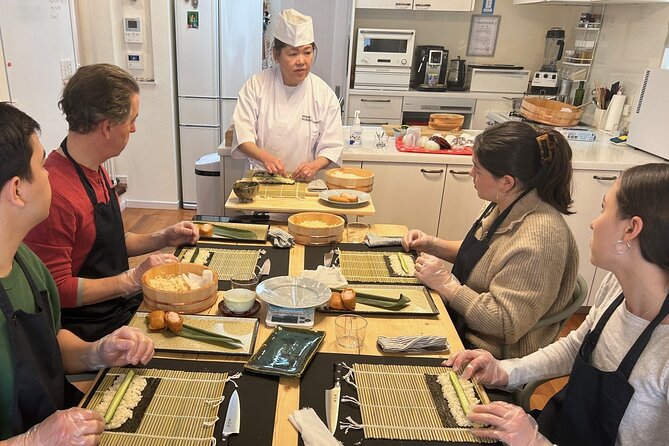
Tokyo sushi usually arrives on a lacquered plate, already perfect. Akemi’s Sushikitchen lets you see the work behind it, inside a quiet Tokyo home in Sasazuka. Akemi, who has seven years of restaurant experience and completed the Edomae Sushi Technique Acquisition Course at Tokyo Sushi School, teaches you to make four types of sushi.
I like the small-group format, since the lesson is designed for personal guidance rather than a crowded demonstration. I also like the serious ingredients: rice ordered from Kyoto’s Hachidaime Gihey, founded in 1787, plus fresh fish sourced from Toyosu and Tsukiji markets. The main consideration is the price, $105.68 per person, which is a fair deal for a full cooking lesson and meal but more than a quick market snack or casual sushi lunch.
In This Review
- Key points to know before booking
- Why this home lesson feels different from a sushi meal
- Meeting Akemi and getting started in Sasazuka
- Learning four types of sushi by hand
- Why the rice and fish make a difference
- The food culture lesson beyond the cutting board
- Eating what you prepare at the end
- Is $105.68 a good value?
- Who will enjoy this class most
- Timing, transport, and practical details
- Should you book Akemi’s Sushikitchen?
- FAQ
- Where does the sushi class take place?
- How long does the experience last?
- Where does the activity finish?
- How many sushi types will I make?
- Do I need previous sushi-making experience?
- Who teaches the class?
- What ingredients are used?
- What else will I learn besides making sushi?
- How large is the class?
- Can I cancel for a full refund?
Key points to know before booking
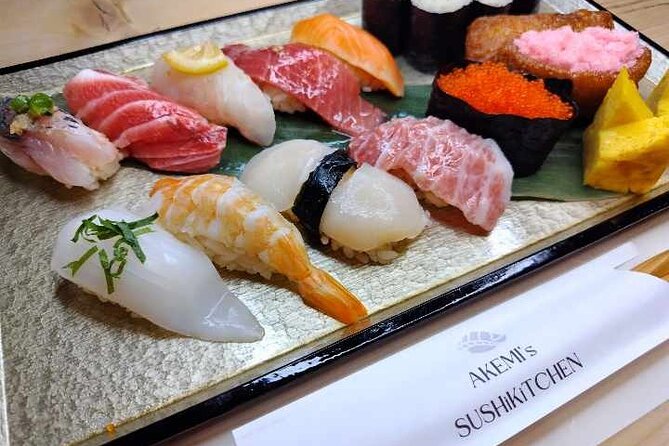
- Four sushi styles: You make four types of sushi during the lesson, then eat what you prepare.
- Akemi’s training: She has seven years in Japan’s restaurant industry and formal Edomae sushi training.
- A real Tokyo home: The class takes place in a residential part of Sasazuka, not in a restaurant or tourist kitchen.
- Specialty ingredients: Rice comes from Kyoto’s Hachidaime Gihey, while fish is sourced from Toyosu and Tsukiji.
- Food culture included: You learn sushi terms, history, and Japanese eating etiquette along with the cooking.
- Small class size: The lesson is described as limited to five students, while the booking details list a maximum of six people, so confirm the current group size if that matters to you.
Why this home lesson feels different from a sushi meal
The appeal here is not simply learning how to roll or shape sushi. You get a look at how Japanese food culture connects ingredients, technique, language, and manners.
A restaurant can show you the finished product. Akemi’s class lets you handle the rice, work with the fish, and understand why sushi has its own vocabulary and eating customs. That makes the meal at the end more satisfying because you know what went into it.
The setting matters, too. You meet in Akemi and Dan’s home at 1-chōme-56-18 Sasazuka, in Shibuya, rather than in a commercial cooking school. Sasazuka is a residential Tokyo neighborhood, so this activity gives you a quieter side of the city. I would allow a little extra time to find the address, since a home-based meeting point can be less obvious than a hotel or major station.
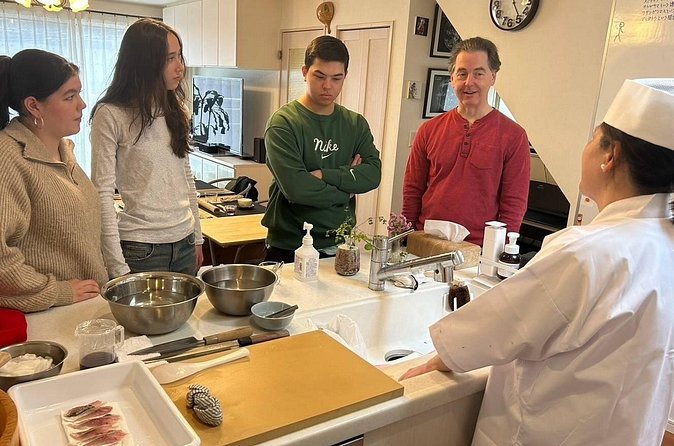
The home setting also means the class may feel more personal than a standard food workshop. The published maximum is six people, while the lesson description says no more than five students. Either way, this is a small class, not a large group standing around one demonstration table.
A few more Tokyo tours and experiences worth a look

Meeting Akemi and getting started in Sasazuka
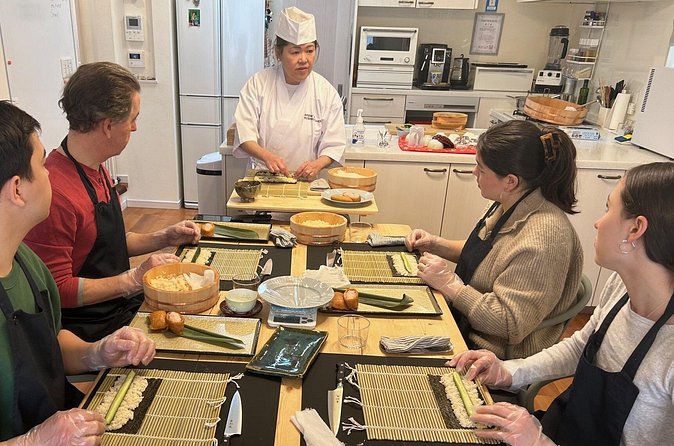
The experience begins at Tamanosato Sasazukaten, at 1-chōme-56-18 Sasazuka, Shibuya, Tokyo 151-0073. It ends back at the same meeting point.
Akemi brings both restaurant experience and formal sushi training to the table. Her Edomae Sushi Technique Acquisition Course at Tokyo Sushi School is especially relevant because Edomae sushi is tied to the traditional Tokyo approach to sushi preparation. You are not simply following a generic home recipe.
Her English skills are also part of the experience. That matters when you are learning small hand movements, Japanese terms, and food customs. Cooking lessons can become frustrating when instructions are unclear, but the class is designed for English-speaking participants.
The lesson lasts about two and a half hours. That is long enough to cover more than one dish, but short enough to fit into a busy Tokyo itinerary. You will want to arrive ready to take part rather than treat this as a passive food tasting.
Learning four types of sushi by hand
The central part of the class is making four types of sushi. The specific four styles are not listed, so I would not book this expecting one particular roll or specialty unless you confirm it ahead of time.
What is clear is that you learn several forms rather than repeating one basic recipe. That gives you a better sense of how sushi changes with shape, filling, rice, and handling. You get to practice techniques under Akemi’s direction, then eat the finished food as the lesson’s final meal.
This is where the small group makes a real difference. Sushi can look simple, but rice texture, portion size, shaping, and presentation all require control. With only a handful of students, Akemi can watch your work and offer corrections instead of leaving you to copy a demonstration from across the room.
You do not need prior sushi experience. The class is specifically presented as suitable for people who have never tried making sushi before. That makes it a reasonable choice for first-time cooks, families with older children, and curious eaters who want more than a restaurant visit.
The hands-on format also helps you remember the lesson. You may forget a lecture about sushi production, but you are more likely to remember how the rice felt, how much filling was manageable, and how carefully the finished piece had to be handled.
Why the rice and fish make a difference
Akemi uses rice specially ordered from Hachidaime Gihey in Kyoto. The shop dates to 1787, and its inclusion signals that rice is being treated as a key part of sushi, not just a filler beneath the fish.
That detail matters because sushi rice is not ordinary steamed rice. Its texture and seasoning affect how well it holds together and how it balances the topping. You may not become an expert in rice preparation during one class, but you will gain a better sense of why sushi rice deserves attention.
The fish is sourced from the Toyosu and Tsukiji markets. Toyosu is Tokyo’s major modern fish market, while Tsukiji remains closely associated with the city’s seafood trade. Fresh neta, the Japanese term for sushi toppings, gives the class a direct connection to Tokyo’s seafood culture.
Ingredient quality is one of the strongest reasons to consider the price. You are not paying only for access to a kitchen and a recipe. You are also paying for carefully selected food, instruction, and a prepared meal at the end.
Still, the ingredient information does not mean every possible dietary need can be met. If you have allergies, avoid seafood, or follow a restricted diet, ask the provider before booking. The supplied details do not promise substitutions or a vegetarian version.
The food culture lesson beyond the cutting board
Akemi covers sushi history, essential terminology, and eating etiquette as part of the class. These details help place the practical work in context.
Japanese food terms can otherwise pass you by at the restaurant. Learning words such as neta gives you a small but useful key to menus and conversations. You also gain a better understanding of why sushi is served and eaten in a particular way.
The etiquette section is useful for the rest of your Japan trip. You may eat sushi at a counter, in a department store food hall, or at a casual neighborhood restaurant. Knowing the basic customs helps you feel comfortable without turning every meal into a guessing game.
The cultural material also keeps the activity from becoming a basic cooking demonstration. Even Japanese participants have reportedly learned new things about their own food culture through the lesson, which suggests that the discussion goes beyond the most familiar tourist facts.
I like this balance. You get practical instruction, but you also learn why the food matters. The class should appeal to you if you want an experience that connects a meal with local customs rather than simply producing something photogenic.
Other cooking classes in Tokyo

Eating what you prepare at the end
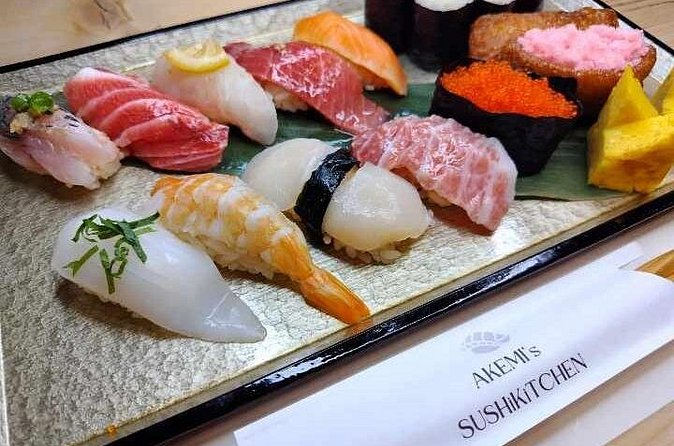
The lesson finishes with a meal made by the class. This is an important part of the format. You are not only practicing and then leaving before the payoff.
The finished sushi gives you a chance to notice the results of your technique. A piece that is too loose, too large, or poorly balanced can teach you as much as a neat one. You get to taste the rice and fish together, and you can ask questions while the lesson is still fresh.
There is also a simple pleasure in eating food you have just made in a home environment. It is more relaxed than a formal sushi counter, and it gives the class a clear beginning, middle, and end: learn, prepare, eat.
Do keep your expectations sensible. This class teaches sushi-making skills, but one session will not turn you into an Edomae sushi chef. You will leave with useful techniques and a better understanding of the food, not a professional qualification.
Is $105.68 a good value?
At $105.68 per person, this is not the cheapest food activity in Tokyo. You could spend far less on conveyor-belt sushi or a market lunch.
The comparison is not quite fair, though. The fee includes about two and a half hours of instruction, access to a trained host, a small-group setting, premium rice, fresh market-sourced fish, cultural background, and the meal you prepare. If you value personal teaching and good ingredients, the cost is reasonable.
I would see this as a better value than a short restaurant meal if you are interested in how sushi is made. It is also a good use of time on a rainy day or early in a Tokyo visit, since the skills and etiquette can inform later meals.
It is less appealing if you only want to eat sushi, have a very tight budget, or prefer a fast activity between sightseeing stops. The lesson needs your attention and participation. You are paying for the process, not just the plate.
The experience is often booked well ahead, with an average booking point of 49 days before the date. That is useful planning information if your Tokyo schedule is fixed. If you want a particular day, I would not leave it until the last minute.
Who will enjoy this class most
I would recommend the lesson to first-time visitors who want a personal introduction to Japanese food culture. It also suits people who enjoy cooking, small groups, and learning directly from a local host.
Couples and families may like the shared activity, provided everyone is comfortable taking part in a food-focused lesson. The maximum group size keeps the class manageable, but the exact current limit should be checked because the details refer to both five students and six people.
Sushi fans will appreciate the ingredient quality and the Edomae training. You get more than a generic roll-making session, especially in the sections on terminology, etiquette, and sushi history.
I would hesitate to recommend it if you dislike raw fish, since the class uses fresh fish from Toyosu and Tsukiji. The information does not say that alternatives are available, so ask before reserving if that is a concern.
The class is also not the right pick if you want a major sightseeing stop. The attraction is the home kitchen, the food, and the instruction. Sasazuka is a residential setting, not a landmark visit.
Timing, transport, and practical details
The meeting point is near public transportation, which makes Sasazuka a practical base for the activity. You receive confirmation when you book, and the experience uses a mobile ticket.
Plan your route before the day of the class. A residential address can take longer to locate than a marked attraction, especially if you are new to Tokyo’s address system. Keep the meeting details available on your phone.
The activity returns to the starting point, so you do not need to arrange a separate pickup or work out where the lesson finishes. That makes it easier to plan lunch, dinner, or another activity afterward.
Service animals are allowed. Other accessibility details are not provided, so contact Akemi’s Sushikitchen directly if you need information about mobility, seating, stairs, or food accommodations.
Free cancellation is available if you cancel at least 24 hours before the start time. Changes or cancellations inside that window are not accepted for a refund, and the cut-off follows local Tokyo time.
Should you book Akemi’s Sushikitchen?
Book this class if you want to make sushi in a real Tokyo home, learn from a trained host, and understand the customs behind the food. The combination of four sushi styles, Kyoto rice, fresh market fish, and a small class gives the experience real substance.
I would especially choose it for a first or second Tokyo visit, when you want a friendly introduction to Japanese cuisine that goes beyond eating at a counter. The $105.68 price makes sense if you care about instruction and ingredients.
Skip it if your budget is tight, you want only a quick meal, or raw fish is not for you. Also confirm the current group size and ask about dietary needs before paying. For everyone else, this is a practical, personal way to turn sushi from something you order into something you understand.
FAQ
Where does the sushi class take place?
The class takes place at Akemi’s home at Tamanosato Sasazukaten, 1-chōme-56-18 Sasazuka, Shibuya, Tokyo 151-0073, Japan.
How long does the experience last?
The lesson lasts approximately two hours and 30 minutes.
Where does the activity finish?
The activity ends back at the meeting point in Sasazuka.
How many sushi types will I make?
You will learn to make four types of sushi during the lesson.
Do I need previous sushi-making experience?
No. The class is designed so that people with no previous sushi-making experience can take part.
Who teaches the class?
Akemi teaches the class. She has seven years of restaurant industry experience in Japan and completed the Edomae Sushi Technique Acquisition Course at Tokyo Sushi School. Dan is also identified as a host in the home setting.
What ingredients are used?
Akemi uses rice specially ordered from Hachidaime Gihey in Kyoto and fresh fish sourced from the Toyosu and Tsukiji markets.
What else will I learn besides making sushi?
The class covers sushi history, Japanese food terminology, and sushi eating etiquette, along with cooking techniques and ingredients.
How large is the class?
The lesson description says it is limited to five students. The additional booking information lists a maximum of six people, so confirm the current group size if this is important to you.
Can I cancel for a full refund?
Yes. You can cancel at least 24 hours before the experience starts for a full refund. Cancellations or changes made less than 24 hours before the start time are not accepted for a refund.
More Cooking Classes in Tokyo
More Cooking Classes in Tokyo
More Sushi Making Classes in Tokyo
More tours in Tokyo we've reviewed




Sushi Making Classes, compared.
 ★ 5.0Sushi Making Tokyo Roll and Authentic Japanese Sushi ClassFrom $59
 ★ 4.9Tokyo: Roll and Authentic Sushi Making Class in AsakusaFrom $581h 40m
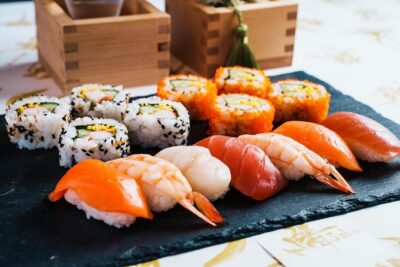 ★ 5.0Make Sushi and Create Unforgettable Memories in TokyoFrom $79
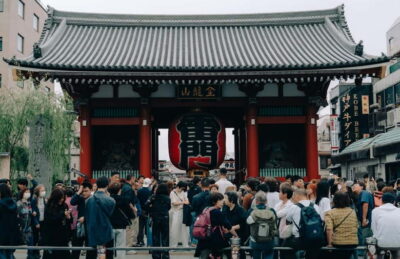 ★ 4.9Tokyo: Sushi Making Class in a Happi Coat near a Famous SpotFrom $421h 30m
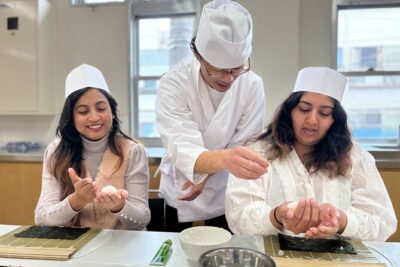 ★ 5.0Tokyo Sushi Making Class in Tsukiji with Professional ChefFrom $49
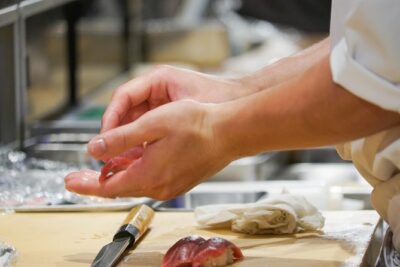 ★ 5.0Tokyo Night Foodie Tour in Shinjuku – Seasonal Sushi, Wagyu BeefFrom $111