
Reviewed · SUMO EXPERIENCES
Tokyo: Sumo Tournament with Guide & Assigned Reserved Seat
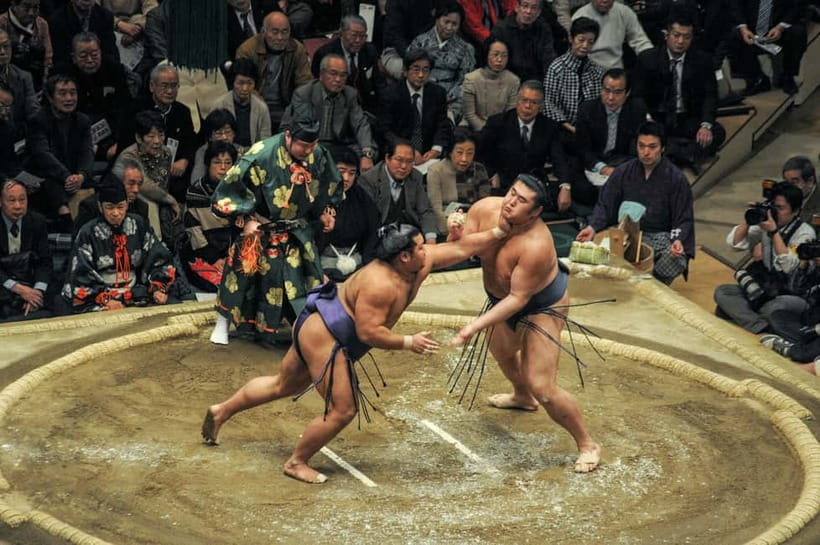
A live sumo tournament is one of Tokyo’s best chances to see old Japan operating in the present tense. At Ryogoku Kokugikan, the ceremony matters as much as the clash: wrestlers enter, salt is thrown, and a few seconds of explosive action can follow several minutes of ritual. Your English-speaking guide helps you understand what you are seeing instead of leaving you to guess.
I like two things here. First, the guide explains the rankings, customs, and basic rules before the action gets serious. Second, you receive a guaranteed reserved B or C class seat in the arena, a real advantage during a tournament that can be hard to book independently.
The drawback is price. At $209 per person, this is far more than the face value of many second-floor tickets, and your seat is assigned rather than selected. You are paying for access, guidance, and convenience, not simply for a chair in the stadium.
In This Review
- Key points at a glance
- Why a sumo tournament feels different from a normal sporting event
- Meeting near Ryogoku’s sumo district
- The 30-minute introduction: the part that makes the bouts understandable
- Inside Ryogoku Kokugikan for four hours
- What your guide adds once the matches begin
- The value question: convenience versus ticket cost
- Who will get the most from this afternoon
- Practical details worth knowing before you book
- Is this Tokyo sumo tour worth booking?
- FAQ
- Where does the sumo tour take place?
- How long does the experience last?
- What type of seat is included?
- Is a guide included?
- Are food and drinks included?
- Can I choose the tournament starting time?
- Is the activity suitable for people with mobility impairments?
- Can I cancel for a refund?
Key points at a glance
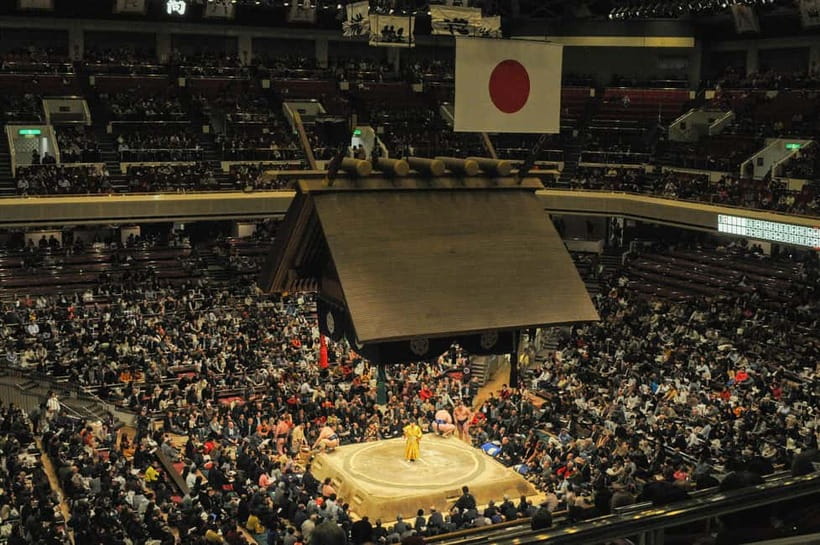
- Sumo at Ryogoku Kokugikan: Watch an official tournament in Tokyo’s famous sumo venue.
- A guide who explains the action: Guides such as Jorge, Lily, Cesar, Erik, Miki, and George have been praised for clear explanations and friendly help.
- Assigned second-floor seating: You receive a B or C class reserved seat, but you cannot choose the exact location.
- About four hours inside the arena: The guided introduction lasts around 30 minutes, followed by roughly four hours at the tournament.
- A useful introduction to sumo: Learn about rankings, promotion, rituals, and the culture around the bouts.
- A costly but practical option: The tour can make sense when official tickets are sold out, but the markup is substantial.
Why a sumo tournament feels different from a normal sporting event
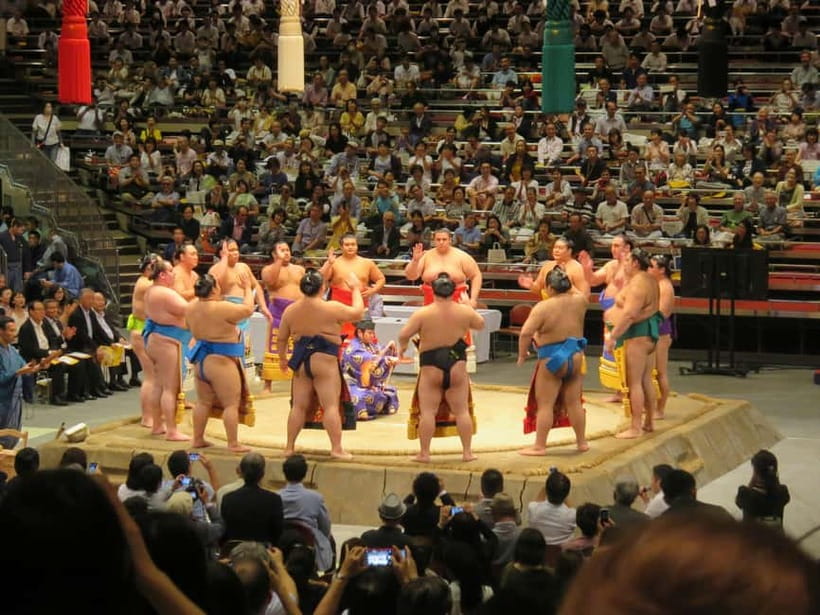
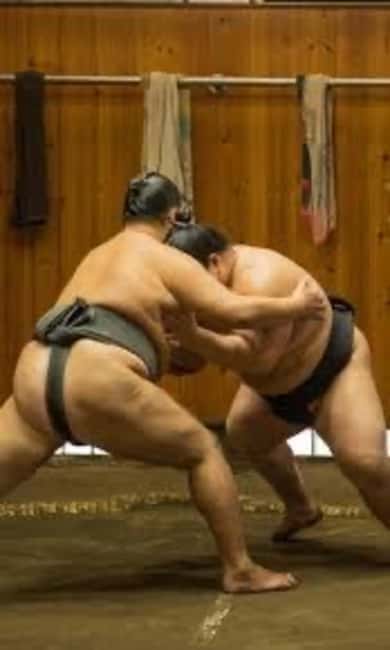
Sumo is easy to misunderstand if you arrive expecting a standard wrestling match. The bout itself may last only seconds, but the wrestlers spend much longer preparing the ring and testing one another’s resolve. Stamping, staring, crouching, salt throwing, and slow footwork are not filler. They are part of the contest’s ritual language.
A guide gives you the missing key. You learn why wrestlers take so long before the initial charge, how a wrestler’s rank affects his position, and why a victory can matter far beyond one isolated bout. The guide also helps you follow the names and rankings, which is useful once the arena fills with unfamiliar faces and Japanese announcements.
I especially like this for first-time visitors. You do not need to study sumo in advance, though a little preparation helps. One attendee who read about the sport before arriving found the tournament much easier to follow, a sensible tip if you want to get more from the afternoon.
The atmosphere is part of the reward. You are not watching a staged cultural show designed only for tourists. You are attending an official tournament in a venue closely linked with Tokyo’s sumo world. That gives the rituals more weight, even when you cannot understand every announcement.
A few more Tokyo tours and experiences worth a look

Meeting near Ryogoku’s sumo district
The meeting point can vary according to the option you book, so read your confirmation carefully. The listed starting location is the Matsuura-Bungo Mansion Site, and the meeting arrangements may place you near a temple or another point in the Ryogoku district.
That location makes sense. Ryogoku is the heart of Tokyo’s sumo culture, and meeting there gives the guide room to explain the neighborhood before you enter the stadium. Some guides have also included short visits to Ekoin Temple and a nearby garden, which can add a pleasant cultural frame to the tournament.
Do not expect a full sightseeing tour of Ryogoku. The extra stops are brief, and the main purpose is to get you ready for the match. If your guide speaks outdoors on a noisy street, hearing every word may be difficult. Stand close, ask for repetition, and move nearer if the group spreads out.
The meeting point is also important for timing. This is not a tour where you can casually wander in at any point during the day. You need to arrive at the specified place and time, then stay with the guide for the introduction and arena entry.
The 30-minute introduction: the part that makes the bouts understandable
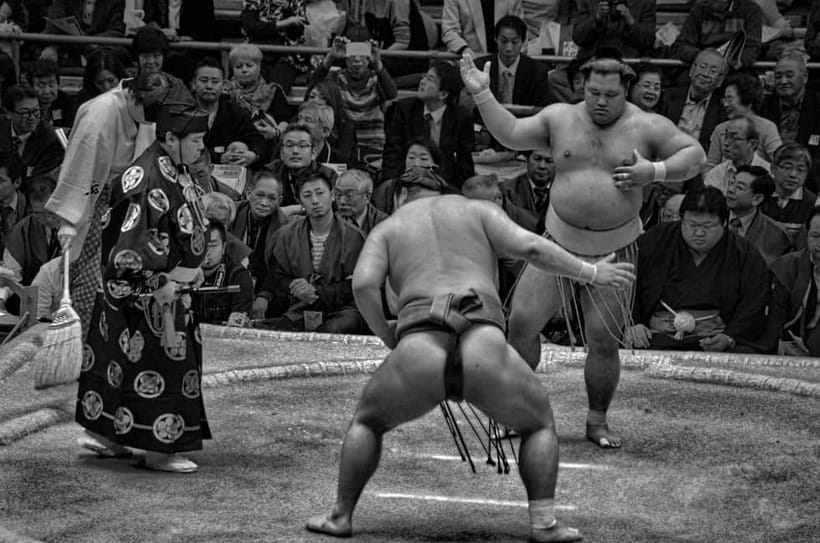
The first guided section lasts about 30 minutes. This is where you learn the basic machinery of sumo: the ranking system, promotion, rituals, and the meaning of the action in the ring.
The strongest guides appear to be the ones who enjoy sumo themselves. George, Jorge, Lily, Cesar, Erik, Miki, and several others received especially warm praise for being approachable, lively, and able to answer questions. Their value is not just translation. A good guide tells you what to watch for before it happens.
I would have liked a little more emphasis on techniques and the origins of certain rituals. That is the most useful criticism to keep in mind. The introduction may focus more on general culture, buildings, rankings, and customs than on the precise mechanics of each wrestling move.
If you want technical detail, ask directly. Questions about how advancement works, why a wrestler has a certain rank, or what a particular technique is meant to achieve can turn a general talk into a more useful lesson. Guides have also made an effort to find answers when they did not know something immediately.
The group size can affect this portion. One group found it hard to hear because the party was fairly large, while other groups praised the personal attention they received. You may not stand beside the guide for every minute of the tournament, so listen closely during the opening talk and make sure your most important questions are answered early.
Inside Ryogoku Kokugikan for four hours
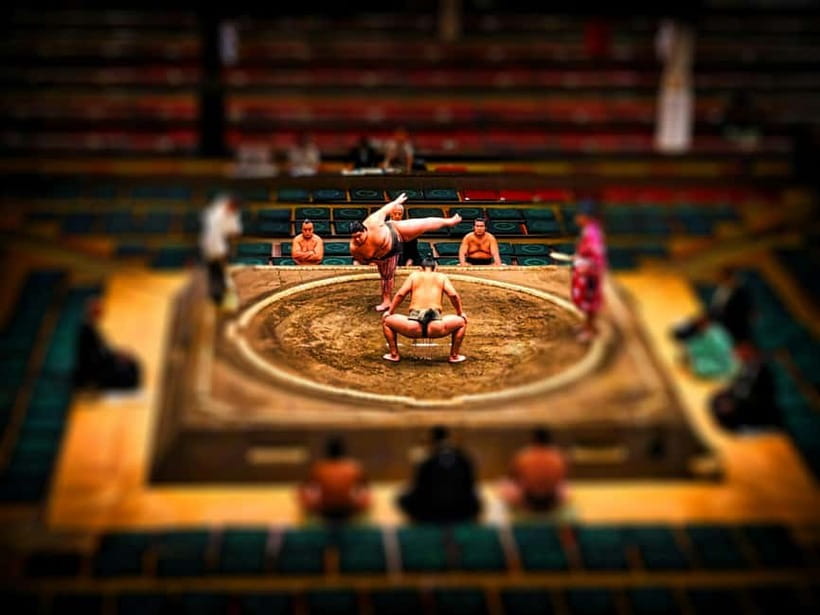
The tournament visit lasts about four hours, making the total experience roughly four to five hours. That is enough time to settle into the rhythm of the event rather than seeing only a few headline bouts.
Your assigned seat is in B or C class on the second floor. Several people found the view good, with a clear look at the dohyo and the surrounding arena. Second-floor seating also lets you take in the crowd and the full geometry of the venue, though it is not the same as sitting close to the ring.
The seat is assigned, not chosen from a map. That matters if you are particular about your view or want to sit beside a specific companion. The booking information promises a reserved seat, but it does not promise an exact location within the B or C section. Groups may also be split up, and the guide may need to speak with different clusters during the event.
For most people, the security of having a seat will matter more than choosing a precise row. Tournament tickets can be difficult to obtain through the official site, especially for popular dates. This tour solves that problem, but it does so at a steep cost.
You should also know that food and drinks are not included, and the activity information says food and drinks are not allowed. Plan on following the venue’s rules rather than assuming you can bring refreshments into your seat. Four hours is a long stretch, so check the current instructions before you go.
What your guide adds once the matches begin
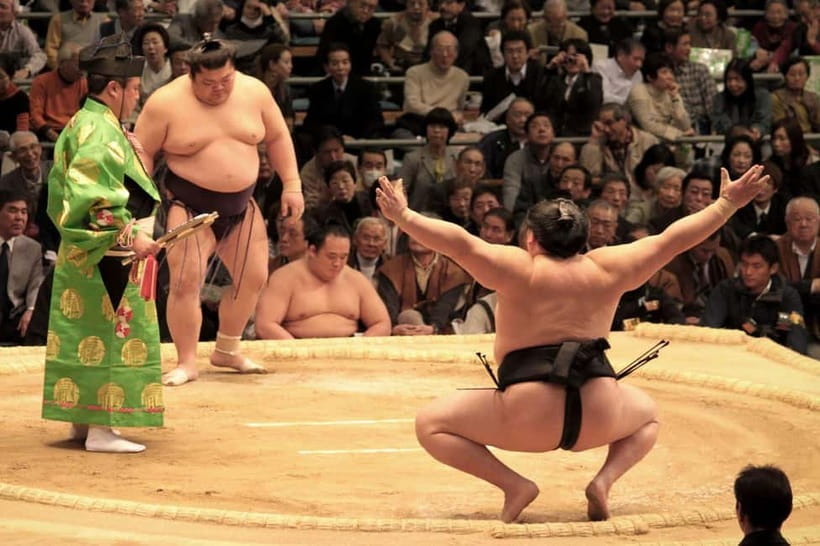
The guide’s greatest service comes when the tournament is underway. Sumo has a quiet visual code that is easy to miss. A guide can point out rank, explain the significance of the pre-bout gestures, and help you understand why one wrestler’s win affects his standing.
This is particularly useful during bouts involving wrestlers you have never heard of. Instead of seeing two large men push and shove, you begin to notice balance, timing, foot placement, grip, and the sudden change from stillness to force. The sport becomes more legible with each match.
Guides named George and Jorge were repeatedly praised for humor and clear explanations. Lily was described as warm and attentive, while Cesar was valued for answering questions and helping the group enjoy the day. Erik was also praised for adding landmarks before the tournament and for making the outing feel organized.
Do not expect a private guide at your shoulder for all four hours. This is a group activity, and the guide must divide attention among several people. If you sit away from the rest of your party, catching every explanation may be harder. The experience works best when you treat the guide as an interpreter and teacher at key moments, not as a personal commentator for every bout.
Other guided tours in Tokyo


The value question: convenience versus ticket cost
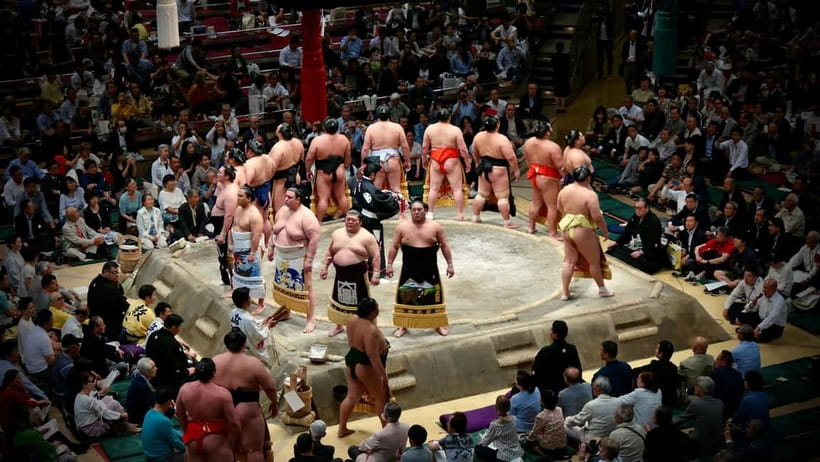
The price is $209 per person. That is the central issue, and you should decide honestly how much convenience is worth to you.
The underlying B or C class ticket can cost roughly ¥5,000 to ¥6,000, based on the price comparisons provided by people who attended. The gap between that amount and $209 is large. The guide’s time, ticket sourcing, group organization, and access to a sold-out event account for part of the difference, but not everyone will feel the added value reaches the full markup.
I would not call this a bargain. You are paying a premium service fee for a difficult-to-book cultural event. If you are comfortable navigating Japanese ticket systems and can secure an official ticket, you may prefer to do that and learn the rules beforehand.
The calculation changes if official tickets are unavailable. Several people booked this route because getting seats through the official sumo website was nearly impossible. In that case, the tour offers certainty. A guaranteed place at a tournament during a short Tokyo visit can be worth more to you than the difference in ticket price, especially if this is a top priority.
Think of the cost in three parts:
- The ticket gives you entry and a reserved place.
- The guide gives you context, translations, and help with the unfamiliar format.
- The booking service gives you a way into a scarce event.
Only you can decide how much the last two are worth. I would book early if you choose this option, since late availability can mean paying a premium for a date that may not be your first choice.
Who will get the most from this afternoon
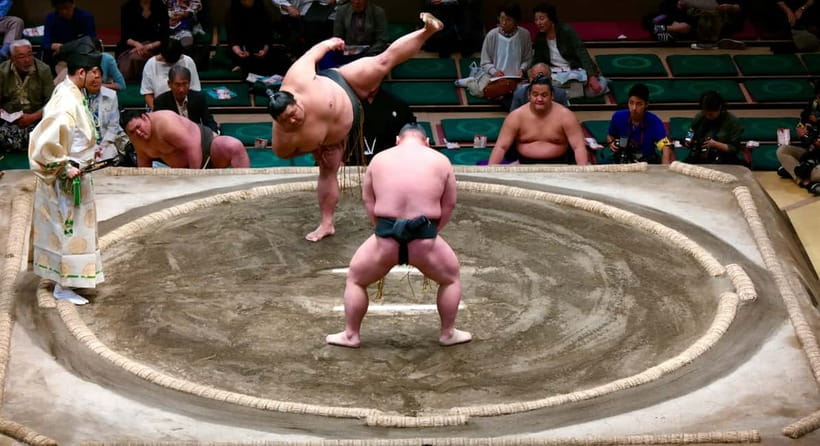
This experience suits a first-time sumo viewer who wants the sport explained in English. You will get more from the event if you are curious about Japanese customs, rankings, and ceremony, not just the physical contest.
It also suits people with limited time in Tokyo. The plan is simple: meet near Ryogoku, receive an introduction, walk to the arena, and spend the afternoon watching the tournament. You do not need to build your own sumo itinerary or worry about finding a seat after arriving.
Families and mixed-interest groups may also find the format helpful, provided everyone can manage a long afternoon in a fixed seat. A child or adult who knows little about sumo can follow along more easily with an explanation of what is happening.
It is less suitable for a budget-focused visitor, a serious sumo fan who wants exact seat selection, or someone who dislikes group tours. People with mobility impairments should also take note, since the activity is not listed as suitable for them.
Practical details worth knowing before you book
The tour lasts four to five hours, with starting times depending on the date and availability. Your meeting location may vary, so use the exact location attached to your booking rather than relying only on the general Ryogoku area.
The tour is conducted in English. The guide is included, and so is the sumo tournament ticket. Food and drinks are not included, and the activity information says they are not allowed.
The cancellation policy is strict: the booking is non-refundable. I would only reserve after confirming your Tokyo schedule, the tournament date, meeting point, and assigned seat terms.
Take a moment to check the booking details for your group. Exact seats cannot be selected, and seating may be split. If sitting together is essential, confirm the arrangement before paying rather than assuming a shared booking guarantees adjacent seats.
Is this Tokyo sumo tour worth booking?
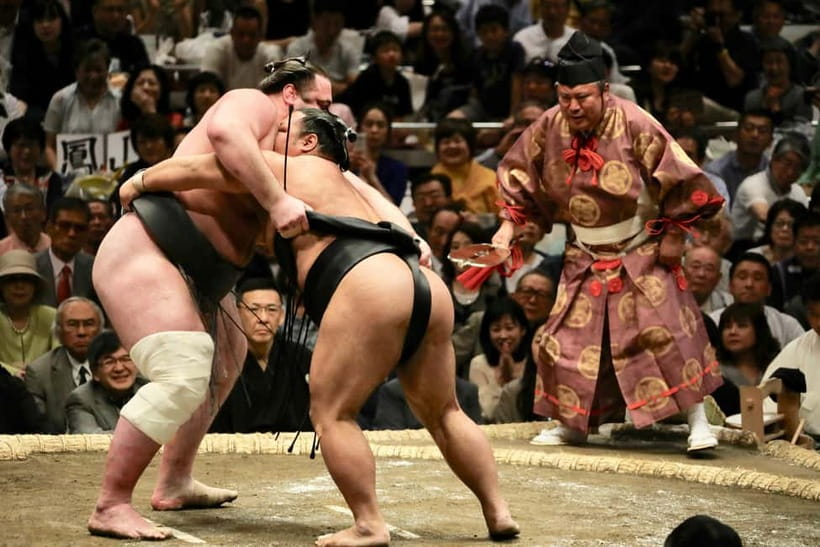
I would book it if seeing a grand sumo tournament is one of your main Tokyo goals and you cannot secure official tickets yourself. The guide can change the event from a confusing series of rituals into a sport you understand, and the arena setting is genuinely special.
I would skip it if $209 feels uncomfortable or if you are willing to spend time trying for a cheaper official ticket. The assigned second-floor seat is useful, but the price is high relative to the ticket’s face value.
For the best chance of a satisfying afternoon, book early, prepare with a little basic sumo reading, arrive at the stated meeting point on time, and ask your guide about techniques and rituals during the opening talk. You are paying a lot, so make the guide earn that premium by asking questions.
FAQ
Where does the sumo tour take place?
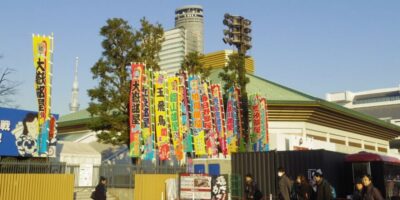
The tournament takes place at Ryogoku Kokugikan in Tokyo, on Honshu, Japan. The meeting location can vary by booking option, with the Matsuura-Bungo Mansion Site listed as a starting point.
How long does the experience last?
The total duration is about four to five hours. The guided introduction at Ryogoku Kokugikan lasts around 30 minutes, followed by about four hours at the tournament.
What type of seat is included?
The ticket includes an assigned reserved seat in B or C class on the second floor. You do not select the exact seat location.
Is a guide included?
Yes. An English-speaking sumo guide explains the rules, rituals, rankings, techniques, and cultural meaning of the event.
Are food and drinks included?
No. Food and drinks are not included, and the activity information says food and drinks are not allowed.
Can I choose the tournament starting time?
Starting times depend on availability. You need to check the available dates and times when booking.
Is the activity suitable for people with mobility impairments?
The activity is listed as not suitable for people with mobility impairments.
Can I cancel for a refund?
No. The activity has a non-refundable cancellation policy.
More Guided Tours in Tokyo
More Sumo Experiences in Tokyo

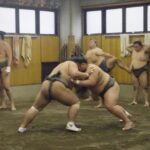
More tours in Tokyo we've reviewed




Sumo Experiences, compared.
 ★ 4.8Tokyo: Sumo Show Experience with Chicken Hot Pot and a PhotoFrom $1032 hours
 ★ 4.8Tokyo: Sumo Show and Dining ExperienceFrom $7990 minutes - 2 hours
 ★ 5.0the SUMO showFrom $89
 ★ 5.0Tokyo Shinjuku Sumo Show & Experience with PhotoFrom $79
 ★ 4.8Tokyo: Sumo Show and Experience in ShinjukuFrom $691h 30m
 ★ 4.6Tokyo: Sumo Tournament Tour with Chair Seat TicketsFrom $141