
Reviewed · TOURS
Tokyo Full Course Tour: Explore 15 Must-See Sights & Hidden Gems
Tokyo can feel like several cities stitched together, and this 10-hour small-group tour gives you a brisk way to see many of them in one day. You move from Meiji Shrine and Harajuku to Shibuya, Tsukiji, Akihabara, Ueno, and Asakusa, using the metro and your own feet.
I like the tiny group size, capped at five, and I like the guides’ personal touch. Yasuko is praised for her clear explanations and care, Michiko for her history and culture commentary, and Takashi for adjusting a route when a guest wanted to see the pandas. The main drawback is the pace: this is a long day with many short stops, and transportation, lunch, drinks, and snacks cost extra.
In This Review
- The Tokyo highlights packed into one long day
- Why this route works for a first Tokyo day
- Meiji Shrine and Harajuku: a calm start beside youth culture
- Hachiko and Shibuya Crossing in short, sharp bursts
- Tsukiji Hongwanji and the fish market lunch
- Imperial Palace, Marunouchi, and Tokyo Station
- Akihabara and Ueno: technology, parks, and markets
- Asakusa’s temples provide the right ending
- What the guide adds to the day
- The real price, pace, and physical effort
- Who should book this Tokyo overview
- Should you book the full-course Tokyo tour?
- FAQ
- How long does the Tokyo tour last?
- Where does the tour start?
- Where does the tour end?
- How many people can join the tour?
- Are transportation costs included?
- Is sushi lunch included in the tour price?
- Does the tour enter the Imperial Palace?
- Can children join the tour?
- What happens if I arrive late or cancel?
The Tokyo highlights packed into one long day
- A route from Meiji Shrine to Asakusa: You cross several distinct parts of Tokyo rather than staying in one neighborhood.
- A maximum of five people: The small group allows more direct help with directions, questions, and individual needs.
- Sushi at Tsukiji: Lunch is planned at a Japanese sushi restaurant, but food and drinks are not part of the tour fee.
- Local transport practice: You ride the metro and should prepare a Suica or PASMO card before starting.
- Strong guide feedback: Yasuko and Michiko receive repeated praise for their explanations, kindness, and ability to keep the day moving.
- A useful first or second day: The route works well if you have only a short stay or want a city orientation before exploring alone.
Why this route works for a first Tokyo day
Tokyo is not a city you understand from one viewpoint. A shrine, a department-store district, a fish market, a railway hub, and a temple quarter each show you a different side of daily life. This tour links those pieces into one long east-west sweep.
You begin at Yoyogi Station and finish near Asakusa Station. That matters because the tour does not return you to the starting point. You can keep exploring Asakusa afterward, or use the nearby rail connections to continue elsewhere.
The route is best understood as an orientation rather than a slow visit to every sight. Most stops last 10 to 30 minutes. You get context, photographs, and a sense of place, then move on. I find that useful early in a trip, since you can return later to the areas that catch your interest.
The group limit of five is a real advantage in Tokyo. Stations and crossings can be confusing, and a guide can keep the route clear without the feel of a large coach excursion. You still need to stay close. If you leave the group, the host is not responsible for finding you, and no refund is offered.
If you're still narrowing it down, here are other tours in Tokyo we've reviewed.

Meiji Shrine and Harajuku: a calm start beside youth culture
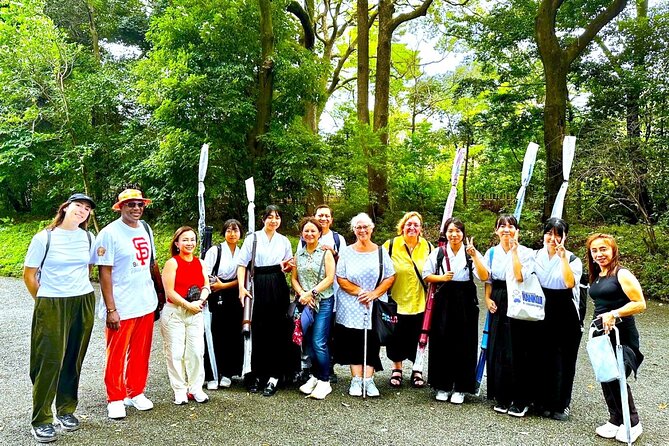
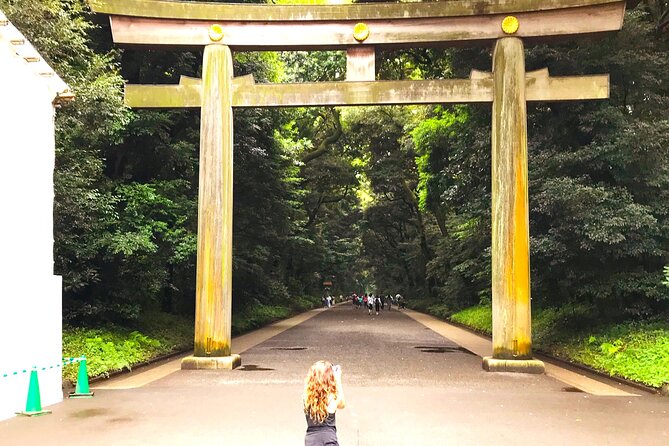
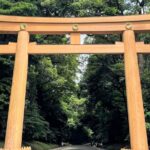
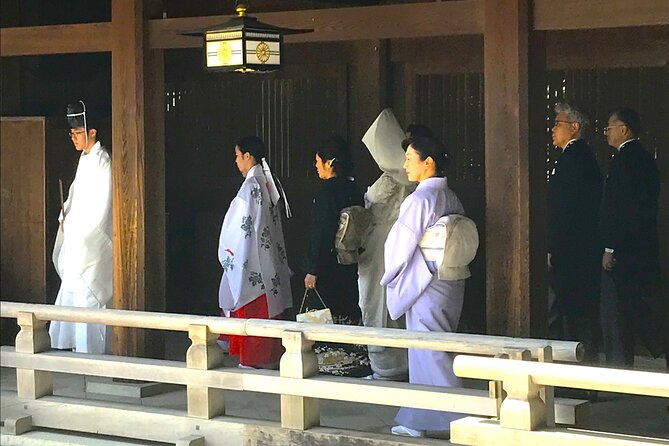
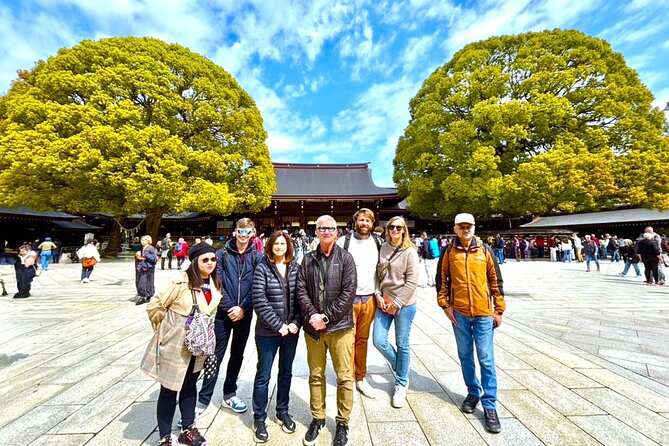
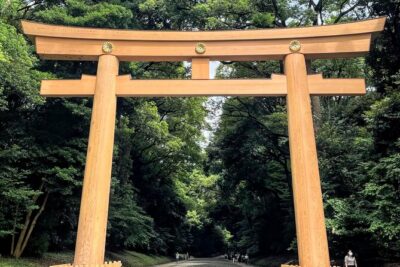
The first stop is Meiji Jingu, one of Tokyo’s best-known Shinto shrines. You have about 30 minutes here, with no admission charge. The visit gives you an early look at Japanese religious customs and the contrast between a quiet shrine setting and the city surrounding it.
The time is enough for an introduction, but not for an unhurried shrine visit. If you want a long look at every path and offering area, you may wish you had more time. The guide’s explanation is therefore important. Yasuko and Michiko are both praised for making cultural and historical subjects easy to follow.
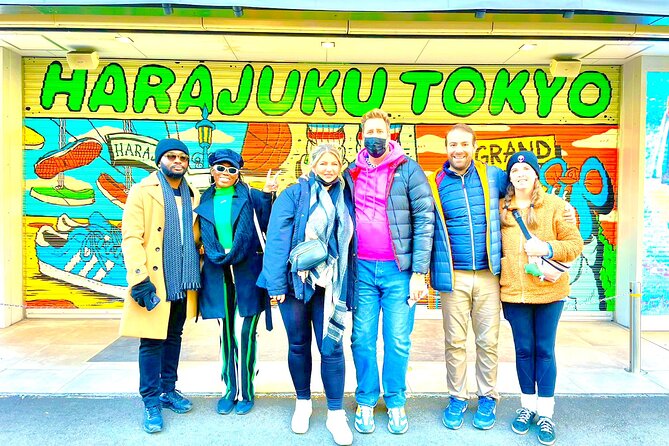
From there, you reach Harajuku, known here for its fashion street. The stop lasts another 30 minutes and is free. This is a chance to see a very different Tokyo, one shaped by clothing, youth trends, and busy shopping streets.
The pairing is smart. Meiji Shrine shows tradition, while Harajuku shows modern self-expression. You do not spend hours in either place, but you quickly see why both belong on a first visit.
Hachiko and Shibuya Crossing in short, sharp bursts
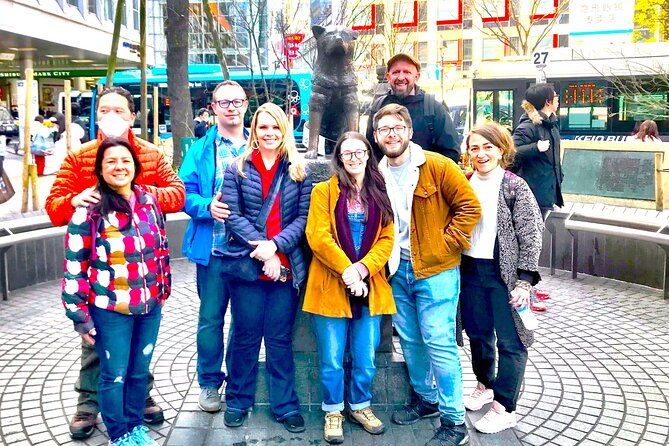
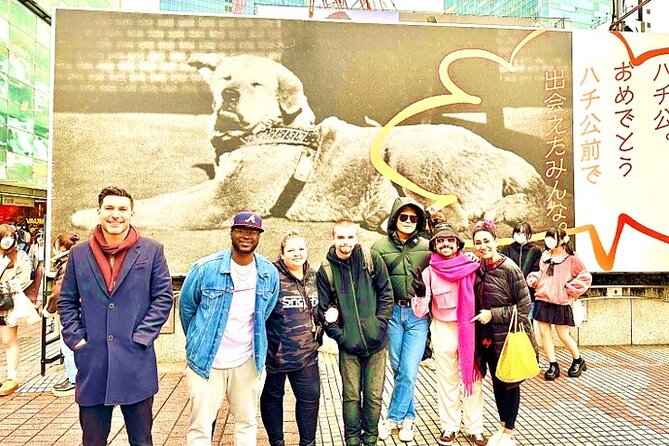
The tour then heads to the Hachiko statue, the famous Shibuya dog, for about 10 minutes. This is a quick stop, mainly for the story, the statue, and a photograph.
Next comes Shibuya Crossing, also about 10 minutes. The crossing is one of Tokyo’s most recognizable public spaces, and seeing it in person helps explain the city’s scale and energy better than a photograph can.
Do not expect a long period to watch the crossing from several viewpoints. The schedule is tight, so your guide will likely keep the group moving. Still, this section gives you two iconic Tokyo moments without requiring you to work out the station exits and streets yourself.
For me, the value here is not only the photo opportunity. Your guide can connect Hachiko’s story with the way Shibuya functions as a meeting place, transport center, and shopping district. The stop is brief, but the surrounding neighborhood is easy to revisit later.
Tsukiji Hongwanji and the fish market lunch
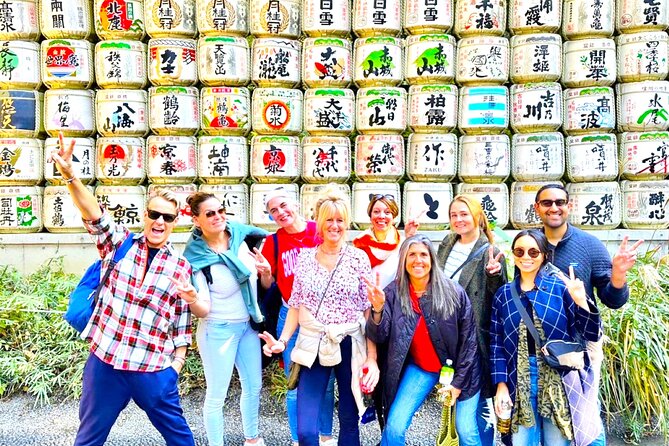
Tsukiji Hongwanji Temple receives about 30 minutes. Admission is free, and the temple adds another change of mood to the day. After the bright fashion streets and huge Shibuya crossing, you have time to look at a religious site before entering the food-focused Tsukiji district.
The next part is the longest scheduled section, about 90 minutes at Tsukiji’s traditional fish market. Sushi lunch at a Japanese restaurant is included in the planned experience, but the price of the food and drinks is not included in the $104.34 tour fee.
That distinction is important. Keep cash ready, as the tour information specifically recommends it. You should also ask your guide how the meal will be handled on your date, since the menu, bill, and drink choices are separate from the tour charge.
Tsukiji is one of the stronger sections of the day because it combines food with local context. You are not simply given a restaurant address and left to manage on your own. The guide can help you understand what you are seeing and make the lunch stop feel connected to the neighborhood.
The 90-minute block is still not a leisurely food crawl. If you want to sample many stalls or shop slowly, save extra time for another visit. This tour gives you a taste of Tsukiji, not an entire morning there.
Imperial Palace, Marunouchi, and Tokyo Station
After lunch, you walk outside the Imperial Palace area for about 15 minutes. The route does not include entry into palace buildings, so keep your expectations focused on the exterior setting and the guide’s explanation.
The short Marunouchi stop follows. Marunouchi is Tokyo’s polished business district, and its streets provide a useful contrast with Tsukiji’s market atmosphere. You then reach Tokyo Station’s Marunouchi Ekimae Hiroba for about 15 minutes.
Tokyo Station is one of the city’s key landmarks, but the listed details do not include an admission ticket. In practical terms, this is an exterior and public-square visit rather than a special paid attraction.
This section works because it shows Tokyo’s formal center in a compact way. You see government, business, transport, and public space close together. The drawback is again the clock. Fifteen minutes gives you an introduction, not time to explore the station’s interior or surrounding shops.


Akihabara and Ueno: technology, parks, and markets
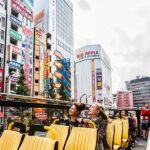
Akihabara gets about 30 minutes. The stop focuses on the street and the district’s famous connection with electronics, games, anime, and related youth culture. The tour does not promise specific shop visits, so treat this as a neighborhood overview.
That may suit you if you want to see Akihabara but do not know where to start. It may feel too short if you have a specific store or collection in mind. You can mark the area for a return visit after the tour.
Ueno Park follows for 30 minutes. The park gives the day another visual and cultural shift. It is also a useful place for your guide to explain how public parks fit into Tokyo life. One guest was able to change the route with Takashi to visit the zoo and see the pandas, but you should not assume that option is available on every departure.
Ameyoko Shopping Street then receives 15 minutes. This market street is a quick look at Tokyo’s informal shopping side. You will have enough time to get a feel for the area, but not necessarily enough to browse every stall or stop for a long snack.
The sequence from Akihabara to Ueno and Ameyoko is valuable because it keeps the day from becoming a string of temples and monuments. You get streets tied to entertainment, green space, and everyday shopping.
Asakusa’s temples provide the right ending
The final major area is Asakusa, where you visit Asakusa Higashi Hongan-ji Temple, identified in the schedule alongside Sensoji, for about 30 minutes. You also visit Asakusa Shrine for about 10 minutes.
The Asakusa section brings together some of Tokyo’s most recognizable traditional sights. Your guide can explain the difference between Buddhist and Shinto places of worship, along with the customs you have seen at earlier stops.
The short Asakusa Shrine visit is a fitting final stop because the tour ends near Asakusa Station. You are not dropped in an unfamiliar suburb. You can stay in the area for more sightseeing, food, shopping, or an evening walk.
The tour description also refers to enjoying a drink at an izakaya bar, and the day may include drinks and small dishes according to the planned experience. Food and beverage expenses are excluded, so budget separately and confirm with the host how that portion is arranged.
What the guide adds to the day
The strongest part of this experience is the human guide. A route this packed could easily become a simple checklist, but the guide gives meaning to the changes in scenery.
Yasuko is repeatedly praised for her explanations, patience, and personal care. Michiko is also praised for connecting each sight with Japanese history and culture. Several guests describe the guides as kind, helpful, and attentive to individual concerns.
That matters when you are crossing Tokyo by metro. A good guide can save you from wasting time at a station, explain what you are seeing, and answer small questions that do not occur to you until you are standing in front of a shrine or market stall.
The small group makes this even more useful. With no more than five people, you have a better chance to ask about food, customs, neighborhoods, and practical matters. The tour is not private, but it should feel more personal than a large city sightseeing group.
The real price, pace, and physical effort
The listed price is $104.34 per person. I see reasonable value in that price if you want a full-day introduction and would otherwise spend time planning the route, buying metro tickets, and finding each district yourself.
The fee covers the tour and consumption tax. It does not cover transportation, food, or drinks. Those extras can affect the final cost, especially with sushi lunch and a possible izakaya stop.
Prepare a Suica or PASMO card before the tour if possible. You are expected to pay your own transportation costs, and having an IC card is easier than stopping to buy individual tickets. Keep some cash available as well.
This is a moderate-activity day. You walk through several districts, use public transportation, and keep to a strict schedule. Comfortable shoes are sensible, though the supplied information does not list a dress code or special equipment.
The tour starts exactly on time. Late arrivals cannot join, and no refund is offered. I would arrive early at Yoyogi Station, especially if you are unfamiliar with Tokyo’s station system.
The experience is for people aged 18 and over unless accompanied by a guardian. If you want to bring anyone under 13, you must request a private tour. Anyone who is unwell or under the influence of alcohol will not be admitted.
Who should book this Tokyo overview
I would choose this tour if you have only two days in Tokyo, want a guided first or second day, or feel uneasy about handling several metro transfers alone. It is also a good match for curious visitors who want explanations of Japanese history, society, religion, food, and local customs as they move around.
I would be more cautious if you prefer slow travel. Fifteen sights in roughly 10 hours means short visits, frequent movement, and little spare time. If you want a full museum visit, a long market meal, or extended shopping, plan those separately.
The 4.8 rating from 18 reviews and 94 percent recommendation figure point to a strong overall experience, with guide quality receiving the clearest praise. Still, the route depends on good weather and a minimum number of participants. If the operator cancels for either reason, you are offered another date, another experience, or a full refund.
The cancellation terms are strict for you: the booking is non-refundable and cannot be changed for any reason. Read that carefully before paying.
Should you book the full-course Tokyo tour?
Book it if your priority is coverage. In one day, you see shrines, fashion streets, a famous statue, Shibuya Crossing, a temple, Tsukiji, the Imperial Palace exterior, Marunouchi, Tokyo Station, Akihabara, Ueno, Ameyoko, and Asakusa.
The best reason to book is the guide-led structure, especially with Yasuko, Michiko, or another guide who can explain what you are seeing while helping you manage the metro. The main tradeoff is speed. You pay for orientation and range, not long, quiet visits.
For a first day in Tokyo, I think the balance is good. You get your bearings fast, learn which districts deserve a return visit, and finish in Asakusa with the evening still open. Just budget for transport and food, arrive early, stay with the group, and bring the stamina for a full day on the move.
FAQ
How long does the Tokyo tour last?
The tour lasts approximately 10 hours.
Where does the tour start?
The meeting point is Yoyogi Station at 1 Chome-34 Yoyogi, Shibuya, Tokyo 151-0053, Japan.
Where does the tour end?
The tour ends around Asakusa Station at 1-chōme-1-3 Asakusa, Taito City, Tokyo 111-0032, Japan.
How many people can join the tour?
The maximum group size is five people.
Are transportation costs included?
No. Transportation expenses are not included, so you pay for your own metro travel. A Suica or PASMO card is recommended.
Is sushi lunch included in the tour price?
No. Food and beverage expenses are not included. The route includes sushi lunch at a Japanese restaurant, but you pay for the meal and drinks separately.
Does the tour enter the Imperial Palace?
No. The itinerary specifies a walk outside the Imperial Palace.
Can children join the tour?
Anyone under 18 must be accompanied by a guardian. If you include someone under 13, you must request a private tour.
What happens if I arrive late or cancel?
The tour begins exactly on time, and late arrivals cannot participate without a refund. The experience is non-refundable and cannot be changed for any reason. If the operator cancels because of poor weather or too few participants, you are offered another date or experience, or a full refund.
More tours in Tokyo we've reviewed



Tours, compared.
 ★ 5.0Mt Fuji and Hakone 1-Day Bus Tour Return by Bullet TrainFrom $163
 ★ 5.01-Day Tokyo Bus TourFrom $129
 ★ 5.0Tokyo: Shinjuku Food Tour (13 Dishes at 4 Local Eateries)From $86
 ★ 4.4Tokyo Mt Fuji 5th St & Hakone Cruise Bus Tour w/Bullet TrainFrom $15410 hours
 ★ 5.0Flagship 2-Hours Official Street Go-Kart Tour – Tokyo Bay ShopFrom $642 hours to 2 hours 30 minutes (approx.)
 ★ 4.7Tokyo: Mt. Fuji Tour, Hakone Ropeway, Owakudani, Lake AshiFrom $5410 hours