
Reviewed · COOKING CLASSES
Ramen and Gyoza Cooking Class in Tokyo
Ramen and gyoza are not just quick Japanese comfort foods here. You learn how regional broth, noodles, and toppings change ramen across Japan, then put that lesson to work with miso ramen, kelp, chicken or scallop broth, and homemade toppings. The class also includes three gyoza styles: regular fried, cheese, and kimchi.
I like two things right away: the food is practical, since you get recipes you can make at home, and the class is private, so your group can work at its own pace. Sioji is described as patient and friendly, with a translator available to help communication. The main consideration is time. At about 90 minutes, this is a focused cooking lesson, not a long market visit or full-day food tour.
In This Review
- Key points to know before booking
- Why this Yanaka cooking class is more than lunch
- Meeting Sioji near Ueno and Nippori
- The opening food lesson: ramen and gyoza in Japan
- Making three kinds of gyoza
- Building miso ramen with Japanese broth
- A 90-minute schedule with food at the center
- The value of $91.76 per person
- Who should book this class?
- Practical details before you reserve
- Should you book the Yanaka ramen and gyoza class?
- FAQ
- Where does the ramen and gyoza cooking class meet?
- What time does the class begin?
- How long does the experience last?
- What food will I make?
- Is a vegan option available?
- Is this a private activity?
- Can I cancel for a full refund?
Key points to know before booking
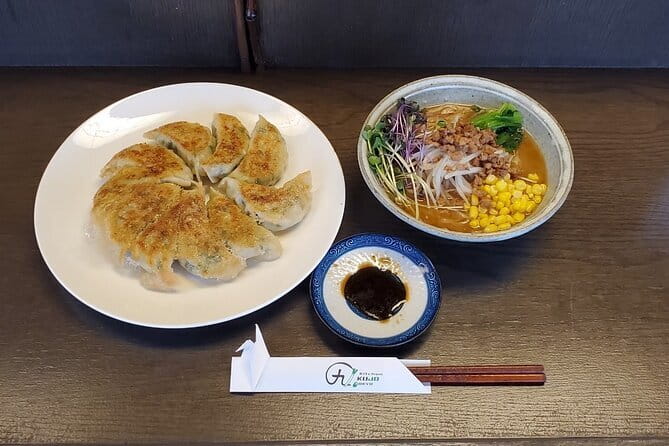
- Three gyoza styles in one class: Make regular fried gyoza, cheese gyoza, and kimchi gyoza.
- Miso ramen with a choice of broth: The standard broth uses kelp with chicken or scallops, while a kelp-and-vegetable broth is available for vegans.
- A useful ramen lesson: Learn how noodles, broth, and regional habits create different ramen styles across Japan.
- Yanaka location: Meet at Yanaka Space in Taito City, near Ueno and Nippori stations.
- Private format: Only your own group participates, with a minimum booking of two people.
- Easy cancellation: Cancel at least 24 hours before the 11 am start for a full refund.
Why this Yanaka cooking class is more than lunch
The best reason to book this class is that it connects cooking with food culture. You are not simply shown how to assemble a bowl of noodles. You get a short lesson on how ramen and gyoza arrived in Japan and developed into foods that now feel completely Japanese.
That distinction matters. Ramen varies widely across the country, and the class introduces the basic logic behind those differences: noodles, broth, and toppings all shape the final bowl. I like this because it gives you a better way to order ramen later in your trip. Instead of treating every bowl as the same, you can pay attention to what makes one style different from another.
Gyoza gets similar treatment. The class looks at how these dumplings became part of Japanese food culture, then moves quickly into hands-on preparation. You make three versions, so the lesson is not limited to one standard filling or cooking method.
The setting is a Japanese-style house in Yanaka. That should appeal to you if you prefer a local neighborhood atmosphere to a large cooking school with several unrelated groups. Since the activity is private, a couple, family, or small group of friends can share the class without being mixed into a public session.
Other cooking classes in Tokyo
Meeting Sioji near Ueno and Nippori
The meeting point is Japan, 110-0001 Tokyo, Taito City, Yanaka 1-chome 2-10, at Yanaka Space. The class begins at 11 am, and the activity finishes back at the same location.
Yanaka is a useful part of Tokyo for this kind of experience. It is near Ueno and Nippori, both practical transport points, and the area gives you a change from Tokyo’s biggest commercial districts. You should allow enough time to reach the address without rushing. Confirmation is sent within 48 hours of booking, subject to availability, so check the confirmed meeting details before setting out.
The mobile ticket is convenient, but it does not remove the need to arrive prepared. Keep the meeting address and start time easy to access on your phone. The activity is near public transportation, but no hotel pickup is included in the information provided.
The minimum is two people. That makes this unsuitable for a solo booking unless you arrange another participant through the provider. For couples and families, though, the private format is a real advantage. You get one shared activity rather than a meal where everyone simply sits and watches a demonstration.
The opening food lesson: ramen and gyoza in Japan
The class begins with a short history lesson about both dishes. It is not presented as an academic lecture. Instead, it gives you enough background to understand why foods with origins outside Japan became everyday Japanese favorites.
For ramen, the useful point is variety. Across Japan, the bowl changes according to broth, noodle style, and toppings. This class focuses on miso ramen, which gives you a strong, savory base and a clear way to understand how broth affects the finished dish.
I would pay attention here, especially if you plan to eat ramen in several cities. The lesson is meant to function as a ramen guide for the rest of your Japan trip. It will not cover every regional style in detail, but it should help you notice the difference between a bowl built around miso, one built around another soup base, and the many choices in noodles and toppings.
The gyoza lesson adds a second angle. You learn that Japanese gyoza has developed its own identity rather than simply copying another country’s dumpling tradition. Then you make three types, which turns the history into something you can taste immediately.
Making three kinds of gyoza

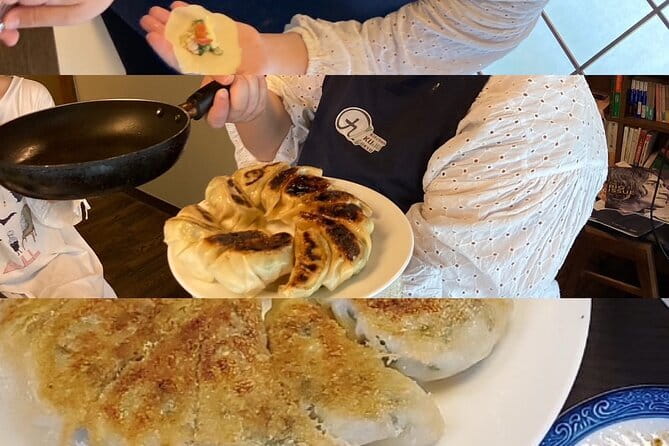
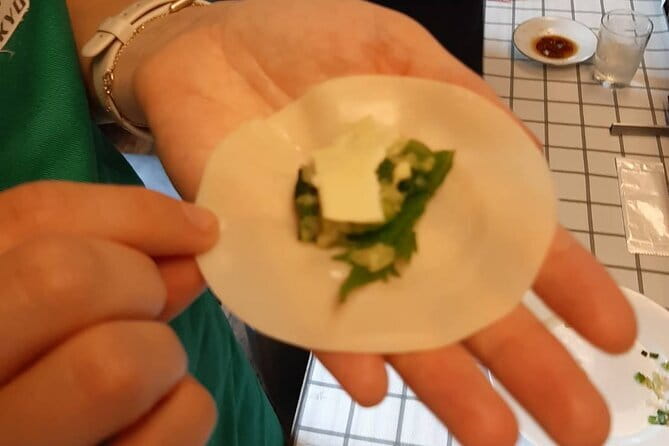
The gyoza portion includes regular fried gyoza, cheese gyoza, and kimchi gyoza. That is a smart lineup for a short class. The regular version gives you the familiar baseline, while cheese and kimchi show how Japanese home cooking adapts a basic dumpling into something more playful.
You should expect hands-on preparation rather than a demonstration with no participation. The class is designed so you make the food yourself, with guidance along the way. That matters if your goal is to repeat the recipes at home. You learn not only what goes into the filling, but also how the finished dumplings are shaped and cooked.
The cheese version may be especially useful for families or mixed-age groups because it offers a familiar flavor alongside the more traditional and spicy kimchi option. I would not assume every participant will prefer all three, but making several versions keeps the activity lively and gives you ideas for adapting the recipe later.
One practical benefit is flexibility. Once you understand the basic gyoza method, you can experiment with fillings at home. The class does not promise a full masterclass in Japanese dumpling technique, and the 90-minute schedule limits how far it can go. Still, it gives you a workable starting point instead of a recipe you only watch someone else prepare.
Building miso ramen with Japanese broth
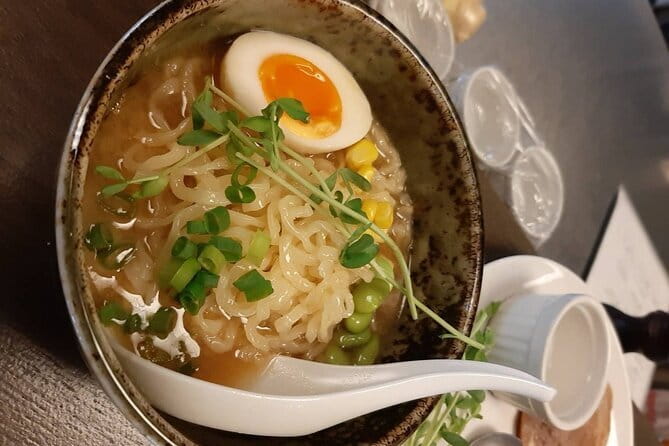
The ramen portion centers on miso ramen made with an original soup and toppings. The standard broth combines kelp with chicken or scallops, two basic ingredients used in Japanese soup-making. For a vegan version, the broth uses kelp and vegetables instead.
This is one of the strongest parts of the experience for anyone with dietary needs. The vegan option is not described as a separate passive meal. You make miso ramen with a vegetable-and-kelp broth, so you still take part in the main cooking activity. Vegetarian and vegan cooking has also been accommodated in the class before, and a translator can help with communication.
You should still communicate your needs clearly when booking. The provided information confirms vegan preparation, but it does not list every possible allergy or ingredient substitution. If you have a serious allergy, ask the provider before arrival rather than relying on an assumption.
The broth lesson is valuable because it shows how a few core ingredients can create a distinctly Japanese flavor. Kelp provides a savory foundation, while chicken or scallops add another layer. The vegetable version keeps the same basic idea without animal ingredients.
After preparing the soup, you add the ramen toppings. The exact toppings are not specified, so I would treat this as a guided preparation rather than expect a fixed list of elaborate garnishes. The focus is the balance between soup, noodles, and toppings, not a restaurant-style production with endless choices.
Other cooking classes in Tokyo



A 90-minute schedule with food at the center
The entire activity lasts about 1 hour and 30 minutes. That is enough time for a short lecture, guided preparation, cooking, and eating, but it leaves little room for delays.
I see the compact length as a plus if you are fitting the class between sightseeing plans. A 11 am start also gives you a useful meal near midday. You can visit Yanaka afterward or connect the class with time around Ueno or Nippori.
The tradeoff is that you should not book this expecting a slow cultural workshop. There is no stated market stop, walking tour, or extended discussion of Japanese cooking beyond the ramen and gyoza lesson. The experience is concentrated on making and eating the two dishes.
The private format may help the class feel less hurried for your particular group. Sioji is described as patient and friendly, and the use of a translator helps bridge language gaps. Still, the pace depends on your group and the number of cooking tasks, so arrive ready to participate rather than spend most of the time taking photos.
The value of $91.76 per person

At $91.76 per person, this is not the cheapest way to eat ramen and gyoza in Tokyo. You could buy both dishes for far less at a casual restaurant. The price makes more sense when you count the private instruction, the ingredients, the meal, the history lesson, and the recipes you can use after Japan.
I think the value is strongest for you if cooking is part of the trip, not just a break between sights. A restaurant gives you a finished bowl. This class explains how the bowl comes together and lets you make it with your own hands.
The price is also easier to justify for a small private group. You are not paying for a large event with a crowd of strangers. Your group shares the session, and the instructor can respond to your questions and dietary needs within the time available.
For a family, the value depends on how much everyone enjoys cooking. Children may like the cheese gyoza and the hands-on work, but the supplied information does not specify a child age range or special children’s program. I would confirm those details if they affect your booking decision.
The high rating and full recommendation rate indicate a strong record, though the number of published ratings is modest. I would read that as a promising sign, not a guarantee that every group will have the same experience. Your enjoyment will depend on how actively you take part and how comfortable you are with a translator-assisted lesson.
Who should book this class?

I would choose this for:
- Couples who want a shared activity near Ueno or Nippori
- Families looking for a meal that involves making food
- First-time visitors who want context for Japan’s ramen culture
- Home cooks who want repeatable ramen and gyoza recipes
- Vegans who want a clearly stated plant-based ramen option
- Small private groups that prefer their own pace
I would look elsewhere if your main goal is a long culinary tour, a market visit, professional chef training, or a broad survey of Japanese cuisine. This class does two foods well enough to make them useful, but it does not attempt to teach everything.
It also suits people who like to carry a piece of a trip home. One participant specifically felt confident making the dishes at home, and the provider says some people later send photos of their own ramen and gyoza. That is a good test of value: if you will actually try the recipes later, the class has a longer life than a single Tokyo meal.
Practical details before you reserve
The experience requires at least two participants and operates as a private activity. Confirmation arrives within 48 hours, subject to availability, so do not assume the reservation is final until you receive it.
You can cancel for a full refund up to 24 hours before the start time. Cancellations or changes made less than 24 hours before 11 am are not accepted for a refund. Cutoff times follow Tokyo local time.
If the provider cancels because the minimum number is not met, you will be offered another date or experience, or receive a full refund. That policy gives you some protection, but you should still avoid placing an important connecting plan immediately after the class.
The experience provider is 九条tokyo. The class has been offered since 2018, apart from the coronavirus period, and more than 500 foreign visitors have taken part. That operating history is useful, particularly for a small private activity where communication and timing matter.
Should you book the Yanaka ramen and gyoza class?
Book it if you want more than a bowl of noodles. The combination of miso ramen, three gyoza styles, a short history lesson, and a vegan broth option gives you a useful, friendly introduction to two major Japanese comfort foods.
I especially like the private setting, the practical recipes, and the way the ramen lesson can improve your food choices later in Japan. The drawbacks are clear: the price is high compared with eating out, the class lasts only 90 minutes, and the information does not promise a wide tour of Japanese cuisine.
For a couple, family, or small group near Ueno or Nippori, I think it is a good use of a late morning. Go in expecting focused instruction, not a full culinary school. If you want to make ramen and gyoza at home after your trip, this class earns its price.
FAQ
Where does the ramen and gyoza cooking class meet?
The class meets at Yanaka Space, Japan, 110-0001 Tokyo, Taito City, Yanaka 1-chome 2-10.
What time does the class begin?
The scheduled start time is 11 am.
How long does the experience last?
The activity lasts approximately 1 hour and 30 minutes.
What food will I make?
You will make miso ramen and three kinds of gyoza: regular fried gyoza, cheese gyoza, and kimchi gyoza.
Is a vegan option available?
Yes. Vegan participants can make miso ramen with broth made from kelp and vegetables.
Is this a private activity?
Yes. Only your own group participates, and the minimum booking is two people.
Can I cancel for a full refund?
Yes. You can cancel at least 24 hours before the start time for a full refund. Cancellations or changes made less than 24 hours before the start time are not accepted for a refund.
More Workshops & Classes in Tokyo


More Cooking Classes in Tokyo
More Cooking Classes in Tokyo
More tours in Tokyo we've reviewed





Cooking Classes, compared.
 ★ 5.0Ramen & Gyoza Cooking Class in Tokyo with Local Supermarket VisitFrom $122
 ★ 5.0Ramen and Sushi Cooking Class with Sake Pairing Set in TokyoFrom $79
 ★ 4.9Tokyo: Wagyu and 7 Japanese Dishes Cooking ClassFrom $673 hours
 ★ 5.0Tokyo Washoku 4-hour Cooking Class: From Market to TableFrom $79
 ★ 5.0Professional Ramen & Gyoza with Ramen Chef in a restaurant!From $159
 ★ 5.0Small-Group Wagyu Beef and 7 Japanese Dishes Tokyo Cooking ClassFrom $72