
Reviewed · JDM & CAR CULTURE
Daikoku Car meet: Tokyo Drift Car Club membership
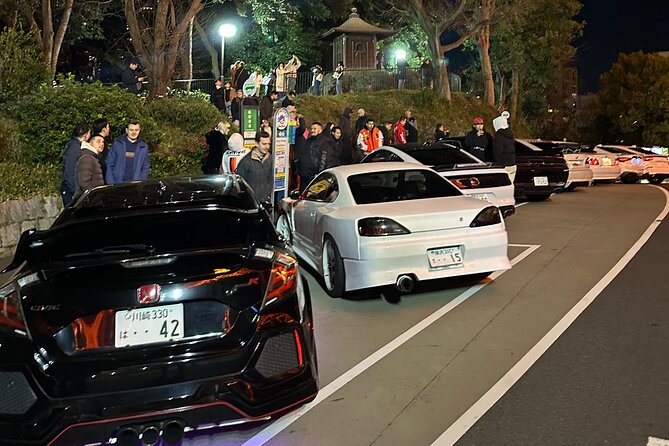
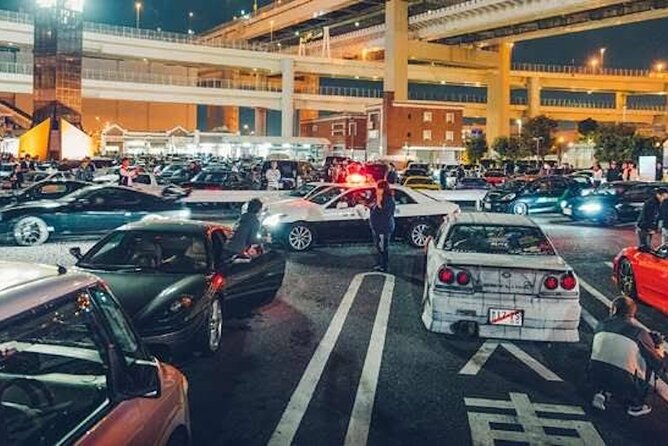
Daikoku Parking Area is the star here: a huge highway service stop where Japanese car culture gathers after dark. You ride there from Akihabara in a small convoy, often in a car such as a Silvia S15 or Toyota Chaser, then have about two hours to see the cars and atmosphere for yourself.
I like the included transport and the route along the famous Wangan highway, which turns a simple car-spotting visit into a proper Tokyo night out. I also like the Super Autobacs stop for parts, magazines, clothing, and small souvenirs. The main caution is that the exact vehicle is not guaranteed, and one booking resulted in a van rather than a sports car, so confirm that point before paying.
In This Review
- Key points to know before booking
- Why Daikoku PA matters to car fans
- Starting in Akihabara at Tully’s Coffee
- Riding the famous Wangan highway
- Rainbow Bridge from the road
- A useful 30 minutes at Super Autobacs
- Two hours at Daikoku Parking Area
- Choosing the ride you actually want
- Tokyo Tower and the ride back to Akihabara
- Is $171.93 a fair price?
- Who should book this car club outing?
- Should you book Daikoku Car Meet?
- FAQ
- Where does the experience start?
- Where does the experience end?
- How long does the activity last?
- What is the maximum group size?
- Is transport included?
- Does the activity enter Tokyo Tower?
- How long is the stop at Daikoku Parking Area?
- How long is the Super Autobacs stop?
- Is Rainbow Bridge a photo stop?
- Can I cancel for a full refund?
Key points to know before booking
- Daikoku PA is the main event: Plan on roughly two hours among Japanese performance cars and car clubs.
- The drive is part of the experience: The route uses Tokyo’s Wangan highway and passes Rainbow Bridge.
- Your car depends on availability: Possible vehicles include a Silvia S15, Toyota Chaser, or other enthusiast cars.
- Super Autobacs adds useful browsing time: You get about 30 minutes for parts, clothing, magazines, and gifts.
- Tokyo Tower is a photo stop only: You do not go inside, and admission is not included.
- Expect a small group, not a private tour: The maximum is 12 people, with the full outing lasting about four to five hours.
Why Daikoku PA matters to car fans
For a car enthusiast, Daikoku Parking Area is not just a convenient place to stop for coffee. It is one of the best-known meeting points for Japanese car culture around Tokyo. Cars gather here from across the Greater Tokyo area, and the appeal comes from the changing mix rather than a fixed display.
You might see tuned Japanese cars, performance models, unusual imports, or carefully kept classics. The exact selection depends on the night, the weather, and who turns up. That uncertainty is part of the charm, but it also means nobody can promise a particular model or size of gathering.
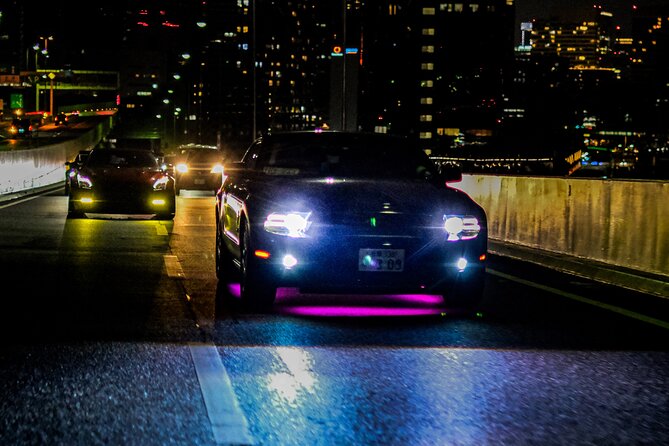
The visit gives you more than a quick photograph from a roadside viewpoint. You have about two hours at Daikoku PA, enough time to walk around, take pictures, look at details, and talk with fellow car fans. One especially praised part of the experience is arriving in a group of interesting cars. The convoy itself creates much of the evening’s energy, especially when several cars travel together through Tokyo.
You should keep expectations sensible. This is not a formal auto show with signs, exhibits, or a planned presentation. It is an active parking area used by ordinary drivers, with the car meet forming around it. Some nights are packed, while others may be quieter.
A few more Tokyo tours and experiences worth a look
Starting in Akihabara at Tully’s Coffee
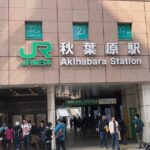
The meeting point is Tully’s Coffee at Akihabara UDX, on the first floor at 4 Chome 14-1 Sotokanda, Chiyoda City. Akihabara is a practical place to begin because you can spend the afternoon around electronics shops, anime stores, arcades, and gaming retailers before the evening drive.
If you arrive early, Yodobashi Multimedia Akiba is close by, and Radio Kaikan offers several floors of toys, trading cards, and collectibles. The Tokyo Anime Center is another nearby option. You can make a full afternoon of the area, but allow enough time to reach the coffee shop without rushing.
The address is worth saving on your phone. Akihabara has several large buildings and busy streets, and UDX can be confusing if you are moving quickly. The activity uses a mobile ticket, and confirmation is provided when you book.
The group can include up to 12 people. That is small enough to keep the outing fairly personal, though you should not expect the attention of a private guide. The duration is about four to five hours, and that total includes driving time.
Riding the famous Wangan highway
The Wangan, or Bayshore Route, is a major reason this experience appeals to fans of Japanese street-car culture. It is a long highway through the Tokyo Bay area, but its reputation goes far beyond ordinary transport.
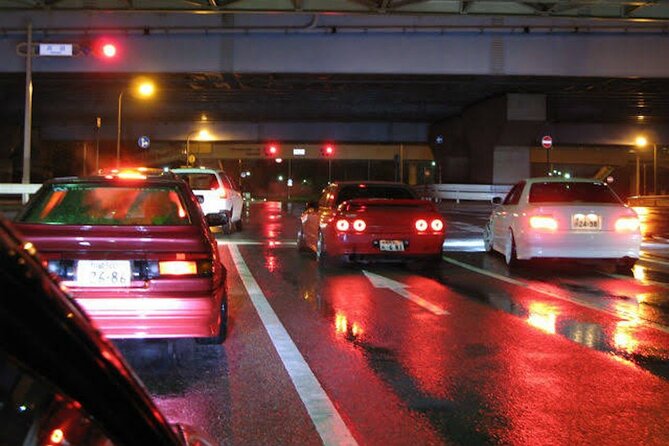
The road is linked with Japan’s famous high-speed racing mythology and with the Midnight Club, also known as the Mid Night Club. You are not booking a race, and the experience should not be treated as a chance to drive recklessly. The value is in traveling the same broad route associated with Japan’s performance-car scene while riding in an enthusiast vehicle.
The convoy format adds a visual element. You are not simply being taken from one address to another in an anonymous taxi. You travel with other cars, stop at the same places, and have a chance to photograph the group. Several particularly positive accounts focused on the drive itself, calling out the fun of being part of a line of striking cars.
The guide’s commentary may vary. Some drivers provide useful information about Tokyo and car culture, while the amount of conversation can depend on the guide and language comfort. You should book this for the ride, the cars, and Daikoku, not for a nonstop history lecture.
Rainbow Bridge from the road
The route passes Rainbow Bridge, the large suspension bridge linking Odaiba with central Tokyo. Its lights and broad span make it one of the most recognizable sights around Tokyo Bay.
You pass the bridge as part of the drive, but there is no dedicated photo stop there. That distinction matters. If you want a proper Rainbow Bridge picture, plan a separate visit to Odaiba or another viewing point on a different day.
Even without stopping, the bridge helps make the route feel like a Tokyo experience rather than a simple transfer to a distant parking area. Odaiba’s modern buildings, the bay, and the illuminated bridge provide a strong setting for the drive. You will need to keep your camera ready because the view is part of the moving route.
A useful 30 minutes at Super Autobacs
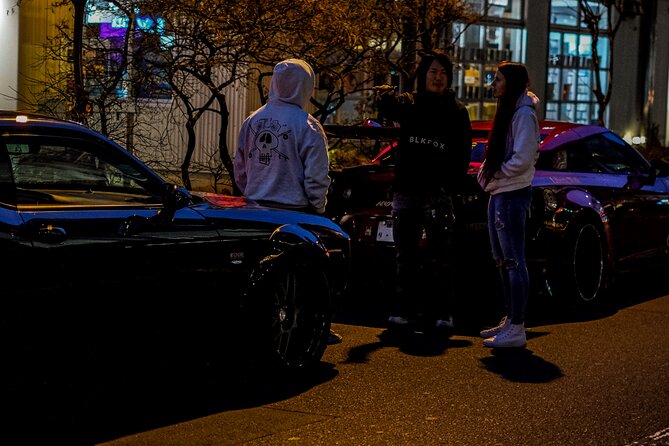
The Super Autobacs stop gives the evening a practical break before or around the Daikoku visit. It is described as Japan’s largest auto parts and accessories shop, and it serves as a gathering place for owners of Japanese performance cars.
You get about 30 minutes here. That is enough to browse, grab a coffee, and look through the shelves, but not enough for a relaxed examination of every section. You can find car parts, accessories, clothing, key chains, stickers, magnets, and other small gifts.
The car magazines are particularly worthwhile if you read Japanese or collect automotive print material. Japanese car magazines sold overseas can be limited and expensive, so this is a sensible place to look for something specific to the local scene. Books and magazines also pack more easily than large car parts.
I see this stop as a good bonus rather than the main reason to book. If you are not interested in cars, 30 minutes may feel long. If you are, it gives you a chance to browse the local retail side of the hobby and pick up souvenirs that are more distinctive than a standard Tokyo gift.
Two hours at Daikoku Parking Area
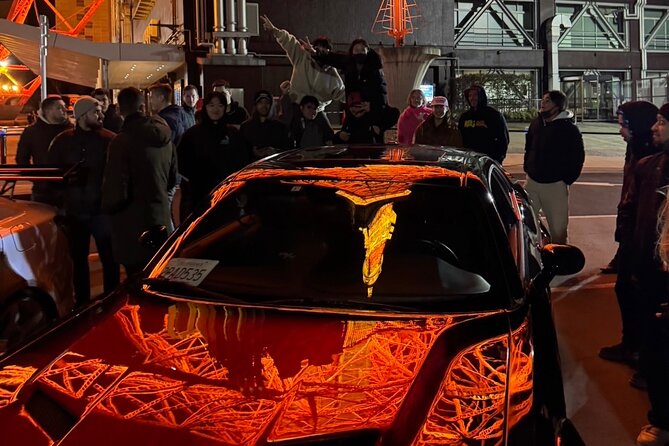
Daikoku PA is where the outing earns its price. You have roughly two hours to explore the parking area and see what has gathered that night.
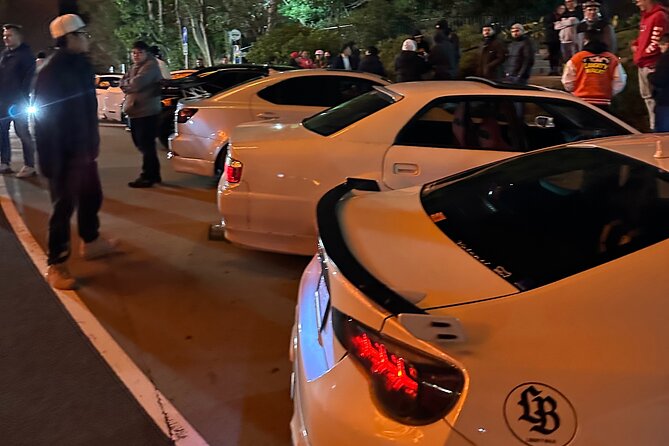
The best approach is to treat it as a live scene, not a guaranteed checklist. You might find rows of Japanese sports cars, modified vehicles, performance parts, and owners comparing their cars. You might also find a quieter night. Weather and timing can affect the crowd, which is one reason the activity requires good weather.
The location itself is part of the appeal. Daikoku is a working highway service area, so you may also see ordinary traffic, food facilities, and the usual activity of a major rest stop. The car gathering shares the space rather than occupying a private exhibition hall.
You should be respectful with cameras and people. The experience provides access and transport, but it does not turn every parked car into a public display. Follow the guide’s directions, avoid blocking vehicles, and remember that the drivers are using the parking area for their own purposes.
The amount of free time is generous compared with the 30-minute retail stop. You can walk, take photographs, study the cars, and enjoy the setting without being hurried from one corner to another. For many people, those two hours will be the most memorable part of the evening.
Choosing the ride you actually want
The vehicle is a major part of the booking decision. Possible cars include a Nissan Silvia S15 and a Toyota Chaser, with other enthusiast vehicles also appearing depending on the guide. A review account also described a comfortable V8 Mustang and an English-speaking driver named Kaito, with the spelling recorded uncertainly.
Do not assume you can select one specific car unless the operator confirms it in writing. The experience description makes clear that the ride depends on the guide, and availability can change. That is normal for a car club outing, but it needs to be clear before you commit.
One serious negative account involved a family who expected sports cars and instead rode in a van. That does not mean every booking uses a van, but it does show why you should confirm the vehicle type, seating arrangement, and whether your group will share a car or travel in several cars.
A private sports-car ride may be available for some bookings, but the supplied details do not establish that as a standard feature for every participant. If the car itself is your top priority, ask the provider directly before booking. The price of $171.93 per person makes sense for a memorable ride and organized transport, but it feels less attractive if the vehicle does not match your expectations.
Tokyo Tower and the ride back to Akihabara
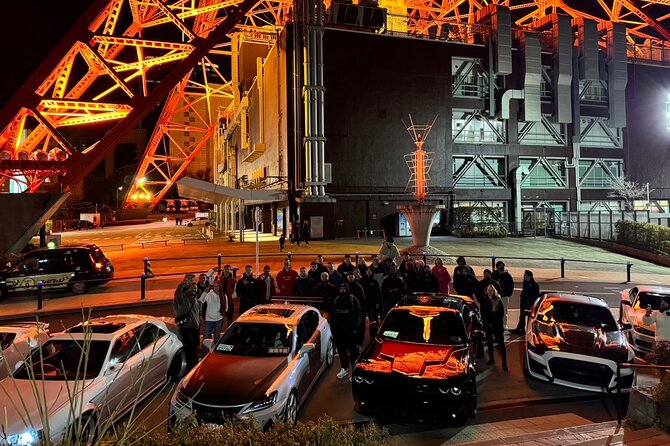
The final stop is outside Tokyo Tower, where you get about 20 minutes for photographs. At 333 meters, the red-and-white tower remains one of Tokyo’s most familiar sights and makes a good closing picture after a night around the bay.
You do not enter Tokyo Tower. Admission is not included, and this is strictly an exterior photo stop. That keeps the evening moving and avoids adding the cost of an observation deck, but it also means you should not book this outing if going inside the tower is important to you.
The stop is brief, so think in terms of a few good photographs rather than a full visit. Afterward, the activity returns to the Akihabara meeting point. The route passes Rainbow Bridge again, but the bridge is not a separate photo stop on the return journey.
Is $171.93 a fair price?
The price is reasonable if you value the whole package: a four to five-hour evening, transport to a location that is awkward to reach independently, a car enthusiast ride, the Wangan route, Super Autobacs, and about two hours at Daikoku.
Daikoku PA is not the easiest place for an independent visitor to reach by ordinary public transport. Organized transport removes much of the planning problem and lets you focus on the cars. That convenience is a real part of the price.
The value drops if you mainly want Tokyo sightseeing. The Rainbow Bridge is passed without a photo stop, Tokyo Tower is seen only from outside, and much of the evening is spent driving or at a car meet. You are paying for access to a niche scene, not for a broad introduction to Tokyo.
The rating is 4.5 from 21 reviews, with repeated praise for the convoy, friendly drivers, strong car selection on good nights, and Daikoku itself. There is also a serious complaint about receiving a van instead of the expected sports-car experience. Taken together, the message is simple: the outing can be excellent for the right customer, but vehicle expectations must be clear.
Who should book this car club outing?
I would recommend it to you if you already care about Japanese cars, Tokyo street-car culture, tuning, or automotive photography. It is also a good choice if you want an evening activity that feels different from temples, shopping streets, and observation decks.
You do not need to be an expert. The chance to ride with car fans, see the Wangan route, browse Super Autobacs, and spend time at Daikoku is accessible even if you cannot identify every engine or model. A basic interest in cars will help you get more from the evening.
I would be more cautious if you are traveling with young children, dislike late evening drives, or need a guaranteed luxury vehicle. The group can reach 12 people, the exact car is not fixed, and the activity includes several hours of travel. Physical demands are described as moderate, but you should still be comfortable getting in and out of cars and walking around the parking area.
The weather rule also matters. If poor weather cancels the activity, you are offered another date or a full refund. You can cancel for a full refund up to 24 hours before the start time, but cancellations or changes inside that window are not refunded or accepted.
Should you book Daikoku Car Meet?
Book it if the drive and car meet matter more to you than conventional sightseeing. The Wangan route, convoy, Super Autobacs, and two-hour Daikoku stop form a focused evening for automotive fans, and the included transport solves the hardest part of getting there.
Before booking, contact GAIJIN TUNED and confirm the vehicle you can expect, especially if you are paying extra attention to a Silvia, Chaser, Mustang, or another sports car. If the provider confirms a suitable ride and the weather looks good, this is one of the more distinctive ways to spend an evening in Tokyo.
FAQ
Where does the experience start?
It starts at Tully’s Coffee in Akihabara UDX, on the first floor at 4 Chome 14-1 Sotokanda, Chiyoda City, Tokyo 101-0021.
Where does the experience end?
The activity ends back at the Akihabara meeting point.
How long does the activity last?
The total duration is approximately four to five hours, including travel time.
What is the maximum group size?
The experience has a maximum of 12 participants.
Is transport included?
Yes. Transport for the route and stops is included.
Does the activity enter Tokyo Tower?
No. Tokyo Tower is an exterior photo stop only, and admission is not included.
How long is the stop at Daikoku Parking Area?
You have approximately two hours at Daikoku Parking Area.
How long is the Super Autobacs stop?
The stop lasts about 30 minutes, with admission included.
Is Rainbow Bridge a photo stop?
No. The route passes Rainbow Bridge, but there is no dedicated photo stop there.
Can I cancel for a full refund?
Yes. You can cancel at least 24 hours before the local start time for a full refund. Cancellations and changes made less than 24 hours before the start time are not refunded or accepted.
More JDM & Car Culture in Tokyo
More tours in Tokyo we've reviewed


JDM & Car Culture, compared.
 ★ 4.7FAST&FURIOUS EXPERIENCE Tokyo Car Club membershipFrom $138
 ★ 4.8GT-R35 800hp Club Membership – secret underground car meetFrom $205
 ★ 4.8Tokyo: Fast & Furious Tokyo Drift 3 Experience (Kaila Yu SP)From $157
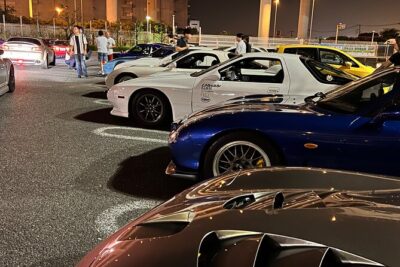 ★ 4.8Tokyo: Daikoku JDM Car Meet & Night Car Culture TourFrom $984 hours
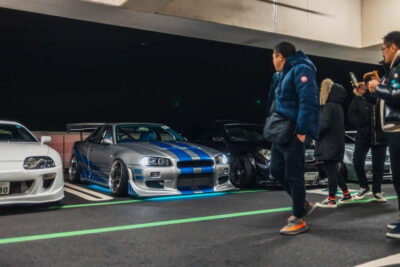 ★ 4.8Secret Car Meet: R34 Skyline Car Club MembershipFrom $236
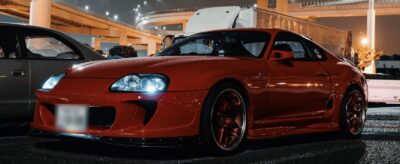 ★ 4.7Tokyo Drift: Daikoku PA Supreme Car Experience 大黒PAFrom $583 hours