
Reviewed · HALF-DAY
Private Half-Day Grand Bike Tour in Tokyo
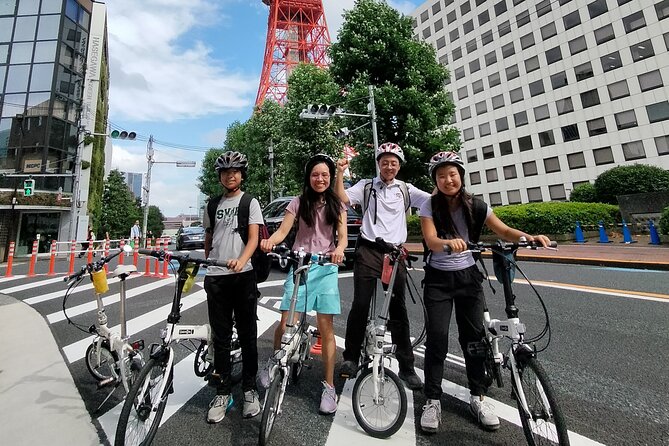
Tokyo makes far more sense from a bicycle. This private ride links Senso-ji, the Imperial Palace, Tokyo Tower, and Shibuya Crossing in one long sweep, while also taking you along canals, back streets, fashionable avenues, and the Sumida River.
I like the personal format, since your group rides with its own guide rather than being folded into a large cycling pack. I also like the route’s variety: old temples and waterways sit beside Ginza, Roppongi, Omotesando, and Takeshita Street. The catch is the distance and duration. Five to six hours on a small folding bike calls for decent fitness, and one rider felt that a shorter three-hour version would have been preferable.
In This Review
- Key points at a glance
- Why a bicycle works so well in Tokyo
- Starting at Sakura Bridge and the Sumida River
- Crafts, Senso-ji, and old Tokyo in Asakusa
- Ryogoku and the city’s waterways
- Ginza, the Imperial Palace, and Japan’s political center
- Tokyo Tower, Jingu Gaien, and Aoyama
- Takeshita Street and Omotesando
- Meiji Jingu and the final ride to Shibuya
- The bikes, pace, and physical demands
- What the private format is worth
- Who should book this Tokyo bike tour
- Should you book it?
- FAQ
- How long does the private Grand Bike Tour in Tokyo last?
- What time does the tour start?
- Where does the tour begin and end?
- What is included in the price?
- What height range suits the rental bikes?
- Can I cancel for a full refund?
Key points at a glance
- Sakura Bridge opens with a Skytree photo stop, giving you an early view of Tokyo’s famous tower.
- The route covers both classic sights and ordinary city scenes, from Senso-ji and the Imperial Palace to canals and neighborhood streets.
- Guide Takeshi, also called Take by one rider, focuses on safety and helps you ride through busy parts of central Tokyo.
- The folding bikes fit riders from 140 to 180 centimeters, so taller riders should contact the operator before booking.
- The tour finishes at Shibuya Station, a useful endpoint for continuing by train after the ride.
- Bottled water, a bicycle, and a helmet are included, while food and personal spending are not.
Why a bicycle works so well in Tokyo
Tokyo is huge, yet many of its most interesting areas sit close enough together to connect by bike. On foot, you would spend much of the day moving between train stations. By bicycle, you can cover more ground and notice the spaces between the major sights.
That middle ground is the real appeal. You are not only stopping at famous landmarks. You are also passing through side streets, crossing old bridges, and seeing small waterways that are easy to miss from a train window.
This is a private tour, so the guide can keep the pace with your group. That matters in Tokyo, where road conditions, crowds, and photo stops can change the rhythm of the day. The guide stays with you, and the equipment includes a helmet and bottled water.
The advertised cost is $130.07 per person. That is not a cheap bike rental, but it is fairer when you consider the private guide, bicycle, helmet, and the amount of Tokyo covered. A normal rental gives you wheels. This experience gives you a route, local direction, and someone watching the traffic while explaining what you are seeing.
Other cycling tours in Tokyo
Starting at Sakura Bridge and the Sumida River
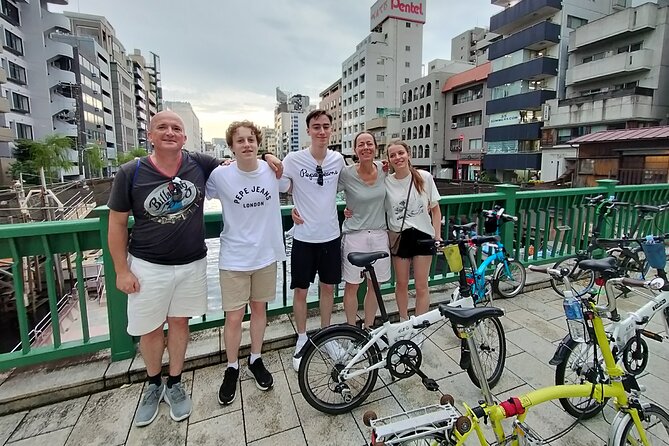
The meeting point is Tokyo Backstreets Bike Tour in Sumida City, near Higashimukojima. The ride starts at 11:30 a.m., and the first stop is Sakura Bridge.
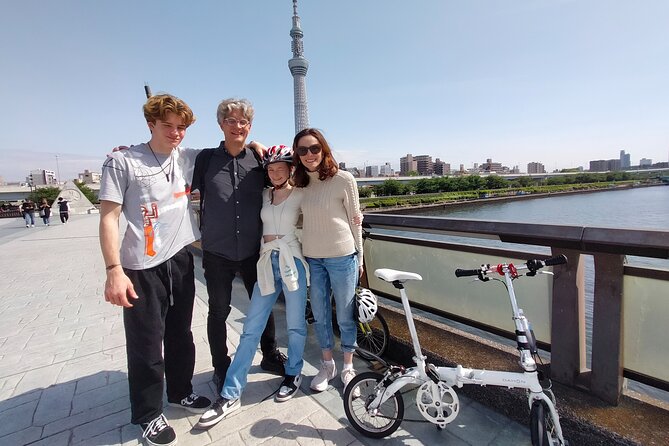
The bridge provides a clear photo opportunity with Tokyo Skytree. You get only about ten minutes here, so this is a quick orientation rather than a long sightseeing session. Still, it is a smart opening stop because it places you beside one of Tokyo’s most recognizable structures before the route heads toward older parts of the city.
The start point is not beside Shibuya or Tokyo Station. You need to reach Sumida City on your own, using public transport or another option. Plan that transfer carefully so you arrive ready to ride at 11:30.
Crafts, Senso-ji, and old Tokyo in Asakusa
The Edo Taito Traditional Crafts Center follows with about 20 minutes inside. The museum presents Japanese handicrafts and shows the care behind traditional making. It adds substance to the sightseeing, especially if you want more than quick photographs.
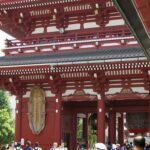
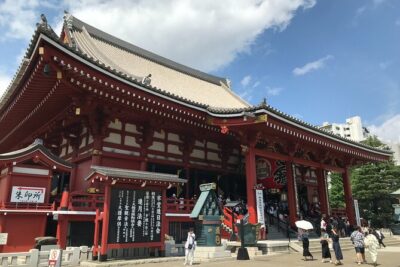
Next comes Senso-ji, one of Tokyo’s major Buddhist temples. You will see the traditional gate, pagoda, main hall, shops, and snack stalls. The stop lasts around 20 minutes, which is enough to look around and learn how worship takes place, but not enough for a slow temple visit.
That short timing is worth noting. Senso-ji is a place where you could easily spend much longer, especially if you want to browse the stalls or study the architecture. Here, the goal is to fit the temple into a much bigger city circuit.
The bicycle lets you leave the packed temple area and quickly shift into less obvious parts of Tokyo. That contrast is one of the strongest features of the ride. You get the major sight, then return to the city streets instead of spending the whole morning in one tourist district.
Ryogoku and the city’s waterways
At Ryogoku Kokugikan, the national sumo stadium, the stop is brief, about five minutes. The guide may give you time for a photograph outside. This is a glimpse rather than a stadium visit, so do not expect a sumo match, museum entry, or long explanation inside the building.
The route then reaches Yanagi Bridge, where you can see an older waterside side of central Tokyo. The canal is lined with yakatabune party-boat jetties, giving the area a different feel from the commercial streets ahead.
Nihonbashi Bridge receives about 20 minutes. From here, you can look across old waterways and see the town around the bridge. Nihonbashi is especially useful for understanding how Tokyo’s central districts combine older transport routes with modern business streets.
These stops are easy to skip if you follow only the standard headline sights. They are also where the ride earns its private tour price. The guide can point out what you are passing while you move between better-known destinations, rather than treating the city as a series of disconnected photo stops.
Ginza, the Imperial Palace, and Japan’s political center
The bicycle route continues through Ginza, one of central Tokyo’s high-end shopping districts. You pass luxury stores such as Louis Vuitton and Chanel while riding along streets that feel polished and commercial.
Ginza is not a quiet neighborhood, and traffic conditions can affect your pace. The benefit of a guide is practical here: you are not trying to work out the route while also watching vehicles and pedestrians.
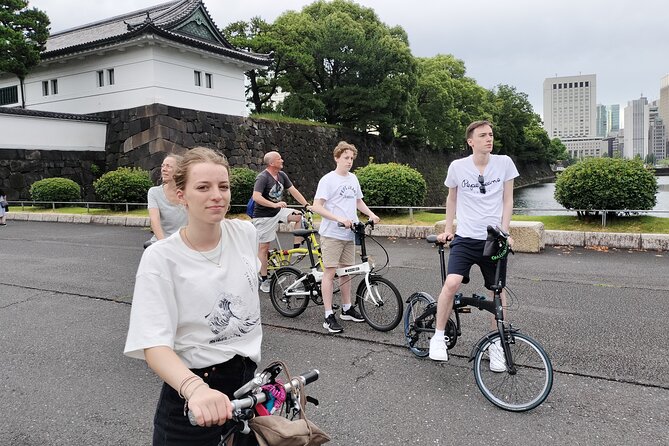
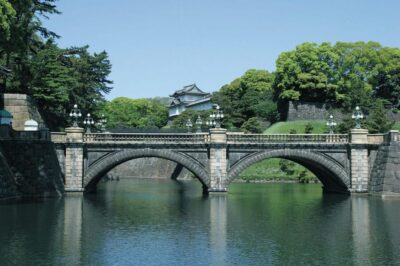
The Imperial Palace is one of the longer sightseeing stops, with about 30 minutes. The palace occupies 115 hectares and was built on the former Edo Castle site, once the home of the Tokugawa shoguns and the center of the Edo government.
You mainly see the outside area on this tour. That makes the stop a concise introduction to the palace grounds and the political history tied to the site, not a full palace tour.
You also cycle near the National Diet Building. Completed in 1936, it houses Japan’s House of Representatives and House of Councillors. Again, this is an exterior view from the road, but it helps connect the imperial center with Japan’s modern government.
Other private tours in Tokyo


Tokyo Tower, Jingu Gaien, and Aoyama
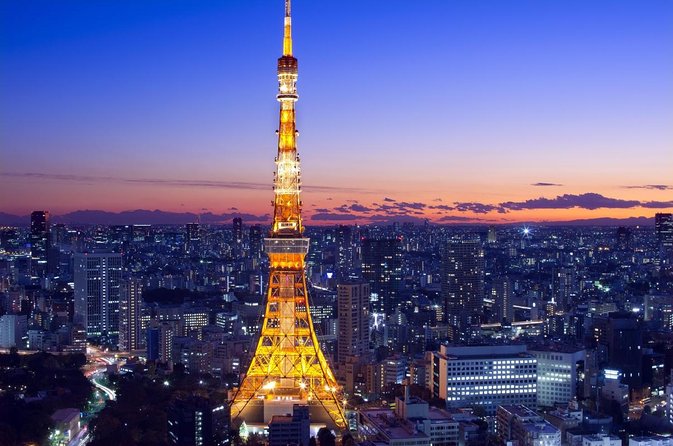
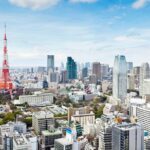
Tokyo Tower appears next. At 333 meters, it opened in 1958 as a broadcasting tower and remains one of the city’s best-known sights. The route takes you beneath the tower, with roughly ten minutes for photographs and a look upward.
That short stop suits the overall design. You are not paying for admission to the observation decks, and no tower entry is included. Instead, Tokyo Tower becomes one piece of a moving city portrait.
The ride then passes through the Jingu Gaien Ginkgo Tree-lined Street. The trees turn yellow in autumn, but the avenue is attractive in other seasons as well. You cycle between the rows rather than simply stopping at the end for a photograph.
After that comes Roppongi, known for nightlife, and Aoyama Street, one of central Tokyo’s fashionable roads. The Aoyama stop lasts about 20 minutes. This section shows the city’s polished, design-conscious side, following the temple districts and government buildings earlier in the day.
The changing character of Tokyo is easier to grasp on a bike. You feel the distance between districts and see the streets change around you. On a train, those transitions disappear underground.
Takeshita Street and Omotesando
At Takeshita Street, you push the bikes inside the popular shopping area and have around 30 minutes for browsing. That detail matters. This is not a normal riding section, since the crowds make cycling unsuitable.
Takeshita Street is a lively shopping stop, but it may feel crowded and commercial after the quieter waterways and palace grounds. If you like fashion, snacks, and youth culture, you will appreciate the pause. If you prefer temples and architecture, this may be the least appealing part of the route.
The next stop is Omotesando, a broad high street lined with luxury brands. You cycle along the avenue for about ten minutes. Together, Takeshita and Omotesando show two different sides of Harajuku: youthful shopping on one street, polished retail on the other.
The timing also gives your legs a break. After several hours of riding, a walk through a shopping street can be welcome, even if you do not plan to buy anything.
Meiji Jingu and the final ride to Shibuya
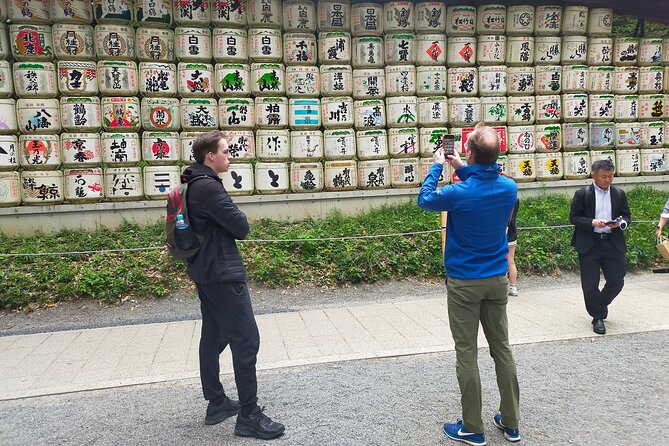
Meiji Jingu is the longest stop, with about one hour. You park the bicycles and walk into the shrine grounds, which were established in 1920 and dedicated to the former Emperor.
You can see sake barrels dedicated to the shrine, along with the traditional shrine setting. This pause is important because the rest of the day is built around movement. Here, you leave the road and have time to walk at a slower pace.
The shrine stop also gives you a clearer sense of the difference between riding through Tokyo and visiting a major sacred site. You are not just looking at the entrance from a bicycle. You have time to go inside on foot and observe the worship space.
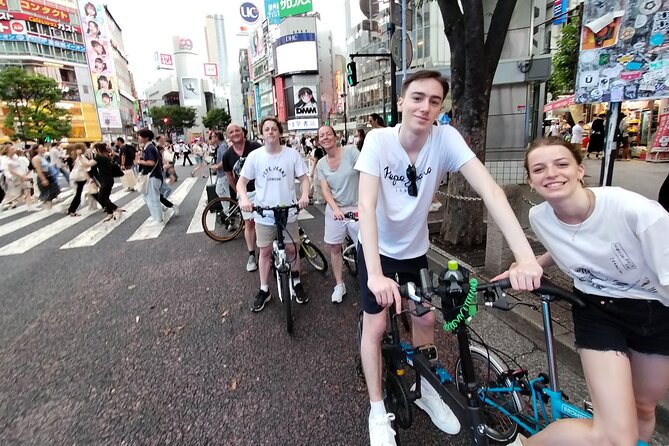
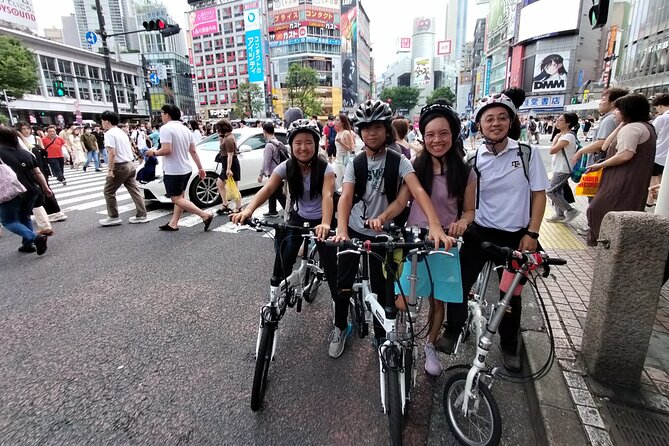
The final major stop is Shibuya Crossing, with about 15 minutes. The famous zebra crossing is always busy, and the tour finishes near Shibuya Station, close to the crossing.
This is a practical ending. You can continue to your next destination by public transport without returning across the city to collect a vehicle. If you have evening plans in Shibuya, the endpoint works especially well.
The bikes, pace, and physical demands
The rental bikes are folding models with 14 to 20-inch wheels. They are designed for riders between 140 and 180 centimeters tall. If you are taller than 180 centimeters, contact the operator ahead of time rather than hoping the fit will work on the day.
Small folding bikes are useful in Tokyo because they are easier to manage around stops and crowded areas. They may not feel as natural as a full-size bicycle for every rider, though. The tour’s physical requirement is listed as moderate fitness, and that is a sensible warning.
You will ride for five to six hours, with stops for sightseeing and walking. The route includes major roads, smaller streets, crowded shopping areas, and stretches beside waterways. You should be comfortable cycling in an urban setting and spending a long period on a bike.
One rider who chose the five-hour option felt that three hours would have been better. That is useful advice, not a criticism to ignore. The longer route is excellent for first-time visitors who want a broad view of Tokyo, but it can feel demanding if you dislike long rides or prefer extended time at each temple and museum.
Complimentary bottled water is included. Bring suitable clothing, and remember that food and personal expenses are your responsibility. No private transport is included, so you must make your own way to the start and from the finish.
What the private format is worth
The private arrangement is the main reason to choose this over a basic rental. Only your group participates, and the guide can keep an eye on safety while you move through the city.
A guide named Takeshi responds to the tour, while one rider refers to him as Take. He is described as service-minded and as someone who knows Tokyo well. Another rider particularly appreciated the care taken with safety and the chance to reach back streets that would have been difficult to find alone.
Those details point to the experience’s best quality: efficient access to many districts without making you solve the city’s roads yourself. You still need to pedal, but you are not constantly checking a map or guessing which turn comes next.
The tradeoff is that private does not mean slow. The route is ambitious. With stops at 14 main locations plus several riding sections, you will see a lot, but the time at each place is controlled.
Who should book this Tokyo bike tour
I would choose this tour if you have limited time in Tokyo and want to connect Asakusa, the Imperial Palace, Tokyo Tower, Meiji Jingu, and Shibuya in one day. It suits active visitors who enjoy seeing a city from street level and do not mind a full schedule.
It is also a good match if you have already seen the main sights and want the connective tissue between them: canals, bridges, fashionable avenues, government buildings, and neighborhood roads.
I would think twice if your priority is long temple visits, museum interiors, shopping, or a relaxed pace. The tour includes many places, but most stops are short. Families and groups should also check the bike size carefully, especially for anyone below 140 or above 180 centimeters.
The activity requires good weather. If rain or other poor conditions cancel the tour, you can choose another date or receive a full refund. You can cancel for a full refund up to 24 hours before the 11:30 a.m. start time, but changes or cancellations inside that window are not accepted.
Should you book it?
Book it if you want a broad, active introduction to Tokyo and value a private guide who can handle the route and watch your safety. The mix of Senso-ji, old bridges, Ginza, the palace, Tokyo Tower, Meiji Jingu, and Shibuya is hard to match on foot in half a day.
Skip it if five to six hours on a folding bike sounds tiring, or if you would rather spend a full morning in one district. Before paying, check your height, consider your cycling fitness, and make sure the long route matches your style. For an energetic first look at Tokyo, this is a strong value.
FAQ
How long does the private Grand Bike Tour in Tokyo last?
The tour lasts approximately five to six hours. One rider felt a shorter three-hour option would have been preferable, so consider your fitness and preferred pace before booking.
What time does the tour start?
The tour starts at 11:30 a.m.
Where does the tour begin and end?
It begins at Tokyo Backstreets Bike Tour in Sumida City, at 2-chome 24-14 Higashimukojima. It ends at Shibuya Station near the Shibuya zebra crossing.
What is included in the price?
The price includes use of a bicycle, a helmet, and bottled water. Private transportation and personal expenses are not included.
What height range suits the rental bikes?
The folding bikes are suitable for people from 140 to 180 centimeters tall. You should inform the operator in advance if you are taller than 180 centimeters.
Can I cancel for a full refund?
Yes. You can cancel at least 24 hours before the experience start time for a full refund. Cancellations or changes made less than 24 hours before the start are not accepted. If poor weather causes the tour to be canceled, you will be offered another date or a full refund.
More Half-Day in Tokyo
More Private Tours in Tokyo
More Cycling Tours in Tokyo
More tours in Tokyo we've reviewed



Half-Day, compared.
 ★ 4.0Half-day Tokyo Afternoon Tour by Hato BusFrom $41
 ★ 4.6Tokyo: A Half-Day Trip Bus Tour in the MorningFrom $404 hours - 270 minutes
 ★ 4.0Half-day Tokyo Morning Tour by Hato BusFrom $41
 ★ 5.0Tokyo Private Half-Day Tour with a Local – Secrets & HighlightsFrom $143
 ★ 5.0Private Hakone Half-day Car Tour with Hotel Pickup – Local GuideFrom $277
 ★ 4.9Old and Nostalgic Tokyo: Half-Day Yanaka Walking TourFrom $833h 30m