
Reviewed · HALF-DAY
Tokyo: A Half-Day Trip Bus Tour in the Morning
Tokyo is huge, and this $40 half-day bus tour tackles three of its essential sights without making you decode the train map first thing in the morning. You’ll see the Imperial Palace Outer Garden, Tokyo Tower, and Sensō-ji, with a nationally certified English-speaking guide such as Aki, Kumiko, Yuko, or Kiki filling in the cultural details.
I especially like the air-conditioned hybrid bus, a real comfort in Tokyo’s hot summers, and the smart stop order, which gives you guided context plus free time to explore. The main limitation is clear: you see the palace only from outside, and the tour’s brisk schedule leaves no time for the East Gardens or a fuller look at any one district.
In This Review
- Key points at a glance
- Why this bus tour works well on a first morning
- Boarding near Shinjuku or Tokyo Station
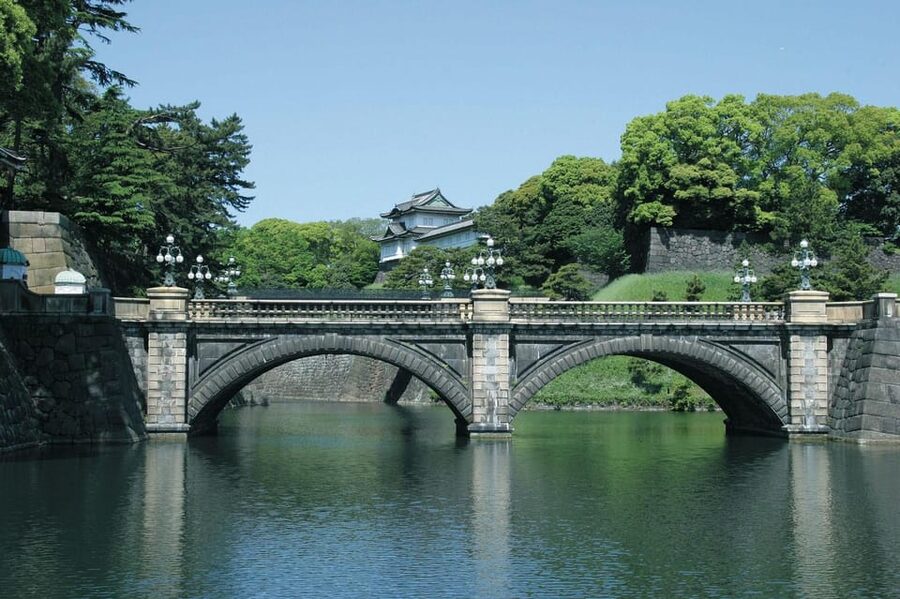
- Imperial Palace Outer Garden and Nijubashi Bridge
- Tokyo Tower from 150 meters up
- Sensō-ji, Nakamise, and the customs of Asakusa
- What the English guiding adds
- The timing: efficient, but not leisurely
- Comfort, access, and booking details that matter
- Who should book this Tokyo tour
- Should you book the $40 half-day tour?
- FAQ
- How long does the Tokyo bus tour last?
- What sights are included?
- Can I enter the Imperial Palace?
- Is Tokyo Tower admission included?
- Can I see Mount Fuji from Tokyo Tower?
- Is the tour conducted in English?
- Where does the tour begin?
- Is hotel pickup included?
- Can children under six join for free?
Key points at a glance
- Three major sights in about four hours: Cover the Imperial Palace Outer Garden, Tokyo Tower, and Sensō-ji in one compact outing.
- A certified English-speaking guide: Expect explanations of the emperor, Shinto, Buddhism, temple customs, and Tokyo’s past.
- A cool, comfortable bus ride: The hybrid coach saves your legs and helps link sights that are spread across the city.
- Free time at Nakamise: Browse the traditional shopping street near Sensō-ji, with snacks, meals, and souvenirs available at your own cost.
- Tokyo Tower’s 150-meter observatory: Look over the capital and possibly spot Mount Fuji on a clear day.
- Best for a first Tokyo day: This is a practical orientation tour, not a slow, detailed study of each neighborhood.
Why this bus tour works well on a first morning
I would use this tour to get my bearings fast. Tokyo’s major sights are separated by busy roads, large train stations, and districts that each deserve far more time than a half-day allows. A bus takes care of the connections while your guide explains what you are seeing.
The route gives you three very different slices of the city. The Imperial Palace offers royal and civic Tokyo, Tokyo Tower gives you the big-picture view, and Sensō-ji brings you into an active Buddhist temple district with food and traditional shops. That variety is the tour’s real strength.
The price is also sensible for a short introduction. At $40 per person, you are paying not just for transport, but for three admission stops and live English commentary. Tokyo Tower admission alone has value, and the bus spares you the cost and effort of arranging several separate trips.
You should not expect a private tour or much personal flexibility. The group follows a fixed timetable, and sightseeing happens at the pace of the bus schedule. One account described a group of about 20 people, though the exact size can vary. The guide generally keeps things moving, but you need to stay aware of the meeting points.
A few more Tokyo tours and experiences worth a look


Boarding near Shinjuku or Tokyo Station
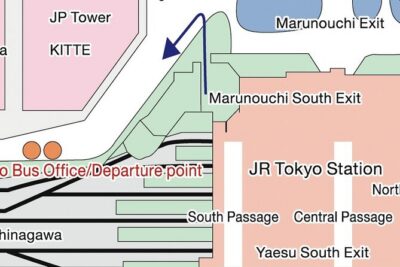
You can book a departure connected with the Hato Bus Tokyo office or Hato Bus at Shinjuku Station East Exit. The exact meeting point depends on the option you choose, so check your confirmation carefully rather than assuming every departure leaves from the same place.
Hotel pickup and drop-off are not included. You need to reach the designated meeting point yourself, which is simple if you are staying near Shinjuku or Tokyo Station but adds a small planning chore if your hotel is elsewhere.
Once aboard, you get the benefit of a dedicated sightseeing coach instead of changing trains with a group. Several tour accounts specifically praised the clean bus, and the air conditioning matters greatly in July and August. One guide kept the group comfortable during temperatures above 35 degrees Celsius, while another tour member appreciated the cool bus during an August outing.
You will need to manage a few steps when boarding and getting off. The activity is described as wheelchair accessible, but the step warning is still worth noting if you use a mobility aid or have difficulty with stairs. Ask the operator for the practical boarding details before you reserve.
Imperial Palace Outer Garden and Nijubashi Bridge
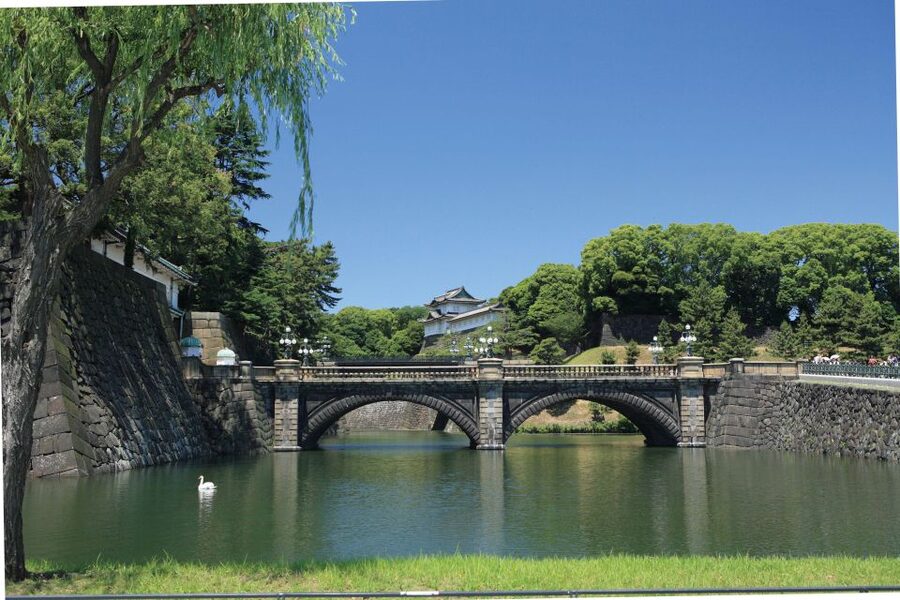
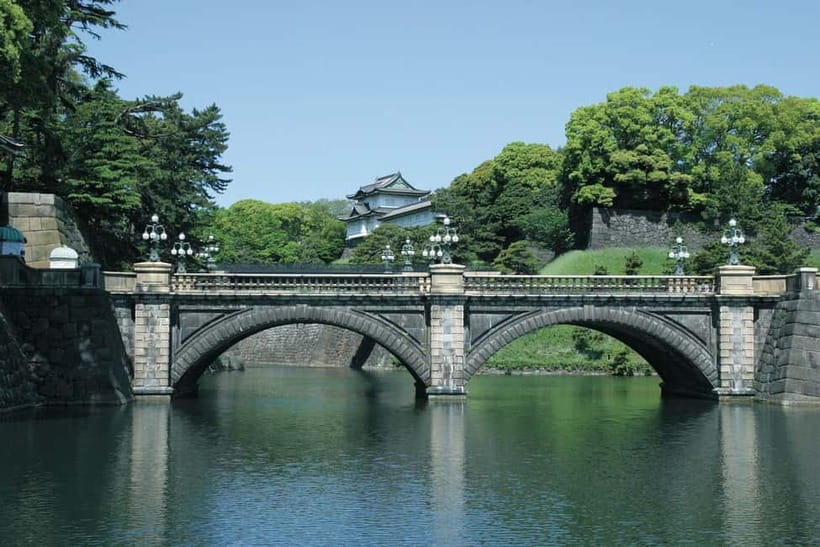
The first major stop is the Imperial Palace Outer Area. You do not enter the palace or the East Gardens. Instead, you walk through the outer garden area toward the Nijubashi Bridge and see the statue of Masashige Kusunoki.
This is a photo and orientation stop rather than a palace tour. The bridge area gives you a useful sense of the separation between modern Tokyo and the imperial grounds. You can take in the stone walls, open space, and formal surroundings, while your guide explains the site’s place in Japan’s government and royal story.
Allow about 40 minutes here. That is enough for the principal views and a guided walk, but not enough for an extended garden visit. If you had hoped to wander among the palace gardens, adjust your expectations now. The East Gardens are specifically excluded.
I like this stop because it gives the rest of the tour a historical frame. Tokyo can feel like an endless wall of glass, signs, and traffic. The palace grounds interrupt that rhythm with a quieter, more ceremonial setting.
Your guide may also help with photos, a small but useful service when everyone in your party wants to appear in the picture. Guides such as Aki and Kumiko were praised for explaining the places clearly and making time for photographs. The quality of the commentary can shape this stop, since the outer grounds alone do not tell the whole story.
Tokyo Tower from 150 meters up
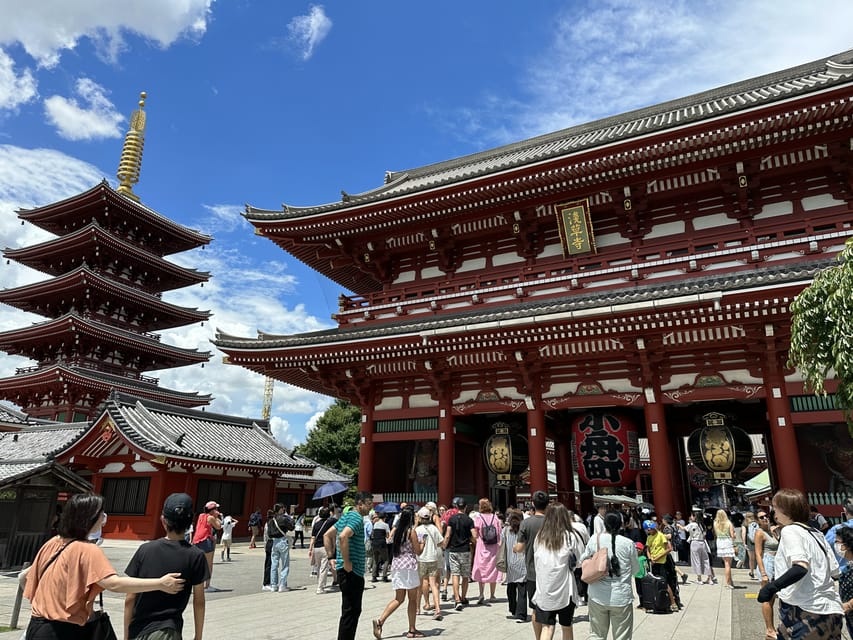
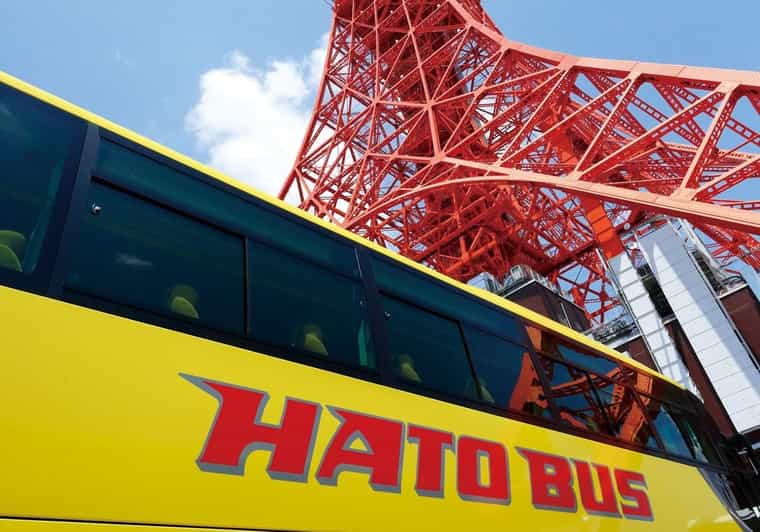
The tour continues to Tokyo Tower, one of the city’s best-known symbols. You enter the main observatory at 150 meters, where the reward is a broad view over Tokyo’s dense center.
The weather controls how much you get from this stop. On a clear day, you may see Mount Fuji. On hazy or rainy days, the city view is still worthwhile, but distant sights can fade into the sky. A four-star assessment specifically blamed poor weather for limiting the experience, not the tour arrangement.
You have roughly 40 minutes at the tower. That is enough to enjoy the main observatory and take photographs, but it is not an invitation to explore every level or linger over a long meal. The tower can be crowded, particularly on popular dates, so expect some waiting and shared viewing areas.
I like the contrast between Tokyo Tower and the palace grounds. At the palace, you look across history from the ground. Here, you rise above the city and see how large Tokyo really is. It also helps you understand why using a bus for this route can be useful. The city’s sights are not clustered in one walkable square.
The tower stop is included in the tour price, including the entrance fee. That makes the $40 cost easier to justify, especially if you want a guide and do not want to arrange your own transport.
Sensō-ji, Nakamise, and the customs of Asakusa
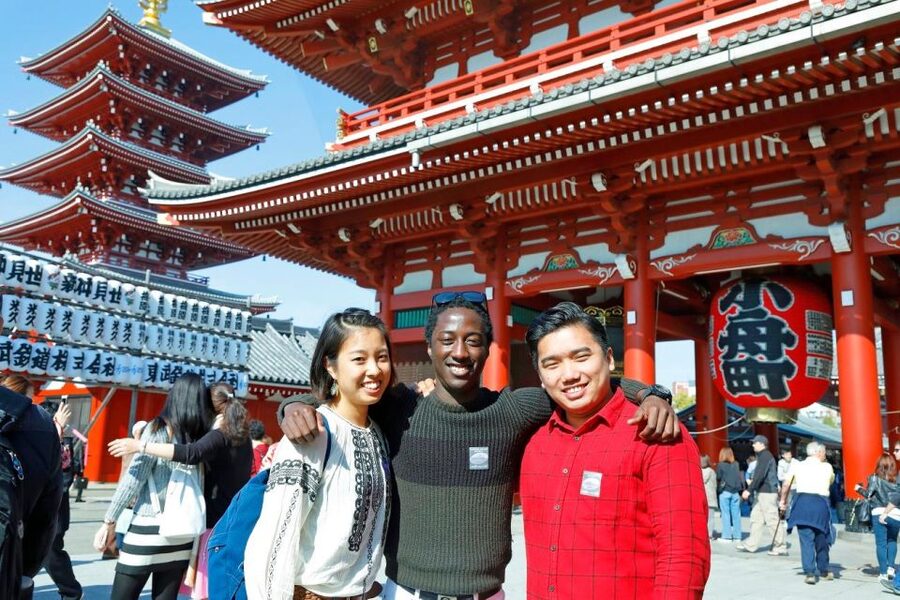
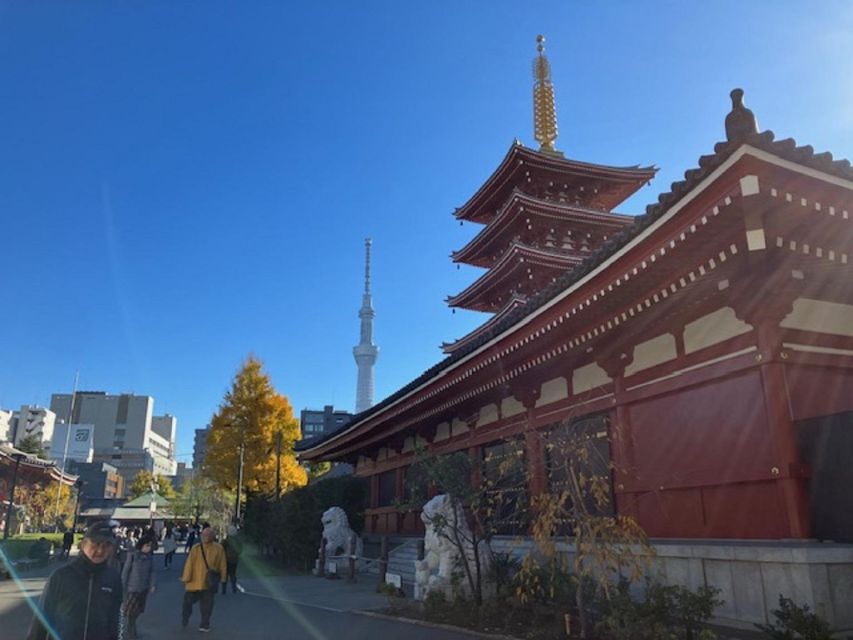
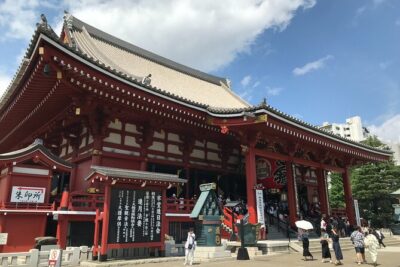
Sensō-ji is the final main stop and the one where you get the most freedom. This is Tokyo’s oldest temple, located in Asakusa, and the complex includes Nakamise, a traditional shopping street running about 200 meters toward the temple.
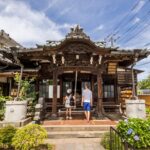
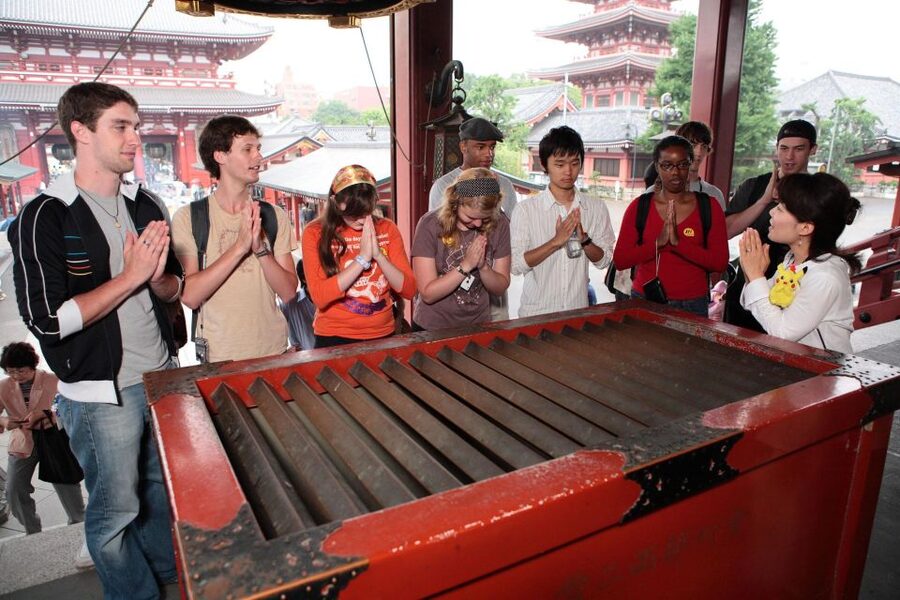
Your guide first gives you a structured look at the temple and its craftsmanship. You may also learn how temples differ from Shinto shrines, how to pray, and why particular parts of the complex matter. Kumiko, Aki, Yuko, and other guides received especially warm praise for making Japanese history and customs understandable in English.
Then you get free time. This is an excellent design choice because Asakusa is best enjoyed with a little room to wander. You can browse souvenir shops, sample local snacks, or find a meal at your own expense. Food and shopping are not included, so bring spending money.
One useful practical tip is to carry cash. The shopping street is described as mostly cash only. You may find some modern payment options, but cash keeps the experience simple and avoids an awkward purchase refusal.
Sensō-ji can be very crowded, especially around holidays and at popular times of day. That does not make the temple unworthy, but it does change the mood. You will need to keep track of the guide and return point while moving through the crowds.
This is also the stop where group discipline matters most. One person lost sight of the guide near the final stop and ended up exploring alone. You get free time, but you should confirm exactly when and where to regroup. Do not assume the bus will wait beside the temple entrance.
A few more Tokyo tours and experiences worth a look

What the English guiding adds
The guide is not just a voice on the bus. The tour includes a professional, nationally certified English-speaking guide, and the strongest part of the experience is often the interpretation between stops.
The guides bring different personalities. Aki has been described as funny and welcoming, and one person enjoyed learning how she put on her kimono and obi. Yuko added simple Japanese phrases to the tour. Kumiko connected temple customs, Japanese culture, and historical events in a way that made familiar sights more understandable. Other guides, including Atsushi, Azumi, Kiki, Makoto, Takako, Shota, and Kioko, were also praised for clear English, humor, patience, and care.
That list does not mean you can choose a particular guide. Your guide depends on the departure date and assignment. It does show the kind of service this tour aims to provide: friendly instruction, cultural context, and help with practical matters such as photographs and directions.
I would value this most at Sensō-ji. Without explanation, you can admire the lanterns, gates, and temple buildings, but miss the difference between Buddhist and Shinto practice or the meaning behind the rituals. A good guide turns a photo stop into a place you understand.
The tradeoff is that commentary may continue while the bus is moving, and the tour cannot pause for every question. If you want a private discussion about Japanese religion or imperial history, book a private guide instead. If you want a clear introduction without reading a guidebook on the bus, this format works well.
The timing: efficient, but not leisurely
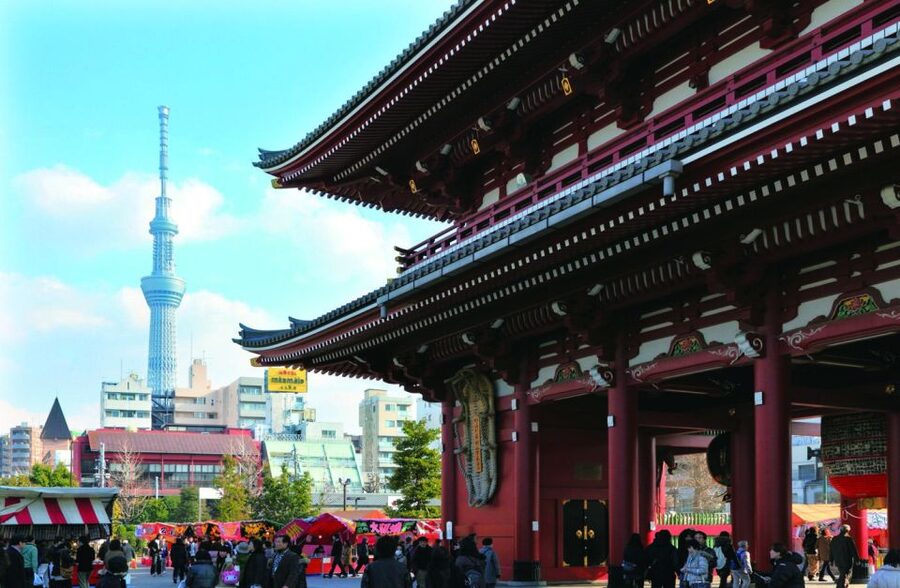
The advertised duration is about four hours, with the full schedule listed as up to 270 minutes. Treat it as a compact half-day rather than a strict promise that every minute will be identical. Tokyo traffic and crowd levels can affect the pace.
The stops are allocated roughly as follows:
- Imperial Palace Outer Area: about 40 minutes
- Tokyo Tower: about 40 minutes
- Sensō-ji and Asakusa: about one hour
The remaining time covers boarding, traffic, and the bus ride between districts. That balance is sensible. You get enough time to see the main feature at each location, but not enough for a relaxed neighborhood walk at the palace or an extended Tokyo Tower visit.
Several people found the tour efficient without feeling rushed. That is exactly the right expectation. You can take photographs, listen to the guide, and enjoy some independent time at Asakusa, but you should not plan a long café stop or a museum visit within the schedule.
The tour returns to the Hato Bus Tokyo office according to the stated plan. One account noted that a departure ended at Tokyo Station instead of the original pickup location, so confirm your return point before making a tight train or airport connection. Do not schedule an important onward departure immediately after the tour.
Comfort, access, and booking details that matter
The coach is a major practical advantage. Tokyo’s summer heat can turn a simple outdoor sightseeing plan into hard work, and the air-conditioned bus gives you a cool break between walks. The hybrid vehicle also fits the tour’s effort to use an eco-friendlier form of city transport.
You will still walk at every stop. The palace requires a walk around the outer area, Tokyo Tower involves time on your feet, and Sensō-ji can mean moving through crowds and shopping streets. Wear shoes that can handle several hours of walking.
Children under six can travel free, but no seat is provided for them. That is an important distinction for families. A young child may ride without a ticketed seat, but you should decide if that arrangement is suitable for your group.
The experience is wheelchair accessible, though the operator warns about steps when boarding and getting off. If you need extra assistance, contact the provider before booking so you know how the specific bus handles access.
Cancellation is flexible: you can cancel up to 24 hours ahead for a full refund. The reserve-now, pay-later option is useful if your Tokyo schedule is still shifting.
Who should book this Tokyo tour
I would recommend it to you if this is your first visit to Tokyo, your stay is short, or you want a guided introduction before exploring alone. It is especially useful if Shinjuku or central Tokyo is your base and you want to see Tokyo Tower and Asakusa without planning the route yourself.
It also suits families and older visitors who prefer a seated ride between major stops. The coach, included admissions, and English guide keep the day simple.
You may want something else if you have several days in Tokyo and enjoy slow neighborhood exploration. You could spend half a day in Asakusa alone, then give the palace gardens or Tokyo Tower more time on separate visits. This tour gives you breadth, not depth.
It is also a poor match if entering the Imperial Palace is your main goal. The tour visits the outer garden and Nijubashi Bridge area only. The East Gardens are not part of the plan.
Should you book the $40 half-day tour?

Book it if you want three famous Tokyo sights, reliable transport, and useful English explanations in one morning. The price is fair because it includes the bus, guide, all listed entrance fees, and the valuable convenience of moving between distant districts without changing trains.
Skip it if you dislike fixed schedules or already know Tokyo well. For most first-time visitors, though, this is a practical opening chapter. You will leave with a view from Tokyo Tower, a first look at imperial Tokyo, and enough time at Sensō-ji to shop, eat, and continue exploring Asakusa on your own.
FAQ
How long does the Tokyo bus tour last?
The tour is advertised as about four hours, with the duration also listed as up to 270 minutes. Traffic and crowd conditions can affect the exact finish time.
What sights are included?
The tour visits the Imperial Palace Outer Area, Tokyo Tower, and Asakusa Kannon Temple, also called Sensō-ji.
Can I enter the Imperial Palace?
No. The tour does not include entry into the Imperial Palace or the East Gardens. You visit the outer garden area, view the statue of Masashige Kusunoki, and walk around Nijubashi Bridge.
Is Tokyo Tower admission included?
Yes. Admission to Tokyo Tower’s main observatory is included, with views from 150 meters above the ground.
Can I see Mount Fuji from Tokyo Tower?
You may see Mount Fuji if the weather is clear. Haze, rain, or clouds can block the view.
Is the tour conducted in English?
Yes. A live, nationally certified English-speaking guide accompanies the tour.
Where does the tour begin?
The available starting points include the Hato Bus Tokyo office and Hato Bus at Shinjuku Station East Exit. The meeting point varies by the option booked.
Is hotel pickup included?
No. You must make your own way to the selected meeting point, and hotel pickup and drop-off are not included.
Can children under six join for free?
Yes. Children aged zero to under six can travel free, but they do not receive a seat.
More 1-Day Tours in Tokyo


More Half-Day in Tokyo
More Morning in Tokyo
More tours in Tokyo we've reviewed





Half-Day, compared.
 ★ 4.0Half-day Tokyo Afternoon Tour by Hato BusFrom $41
 ★ 4.0Half-day Tokyo Morning Tour by Hato BusFrom $41
 ★ 5.0Tokyo Private Half-Day Tour with a Local – Secrets & HighlightsFrom $143
 ★ 5.0Private Hakone Half-day Car Tour with Hotel Pickup – Local GuideFrom $277
 ★ 4.9Old and Nostalgic Tokyo: Half-Day Yanaka Walking TourFrom $833h 30m
 ★ 5.0Half-Day Local Tokyo Tour in Adachi Market and ShibamataFrom $91