
Reviewed · KAMAKURA & ENOSHIMA DAY TRIPS
Kamakura Zen Temples and Gardens Private Trip with Government-Licensed Guide
Kamakura’s best experiences are often quiet: a round temple window framing a garden, bamboo whispering above a narrow path, or a shrine tucked into a wooded hill. This private six-hour tour lets you choose three or four sites instead of rushing through every famous stop.
I like the personal format and the guide’s ability to explain Japanese customs, architecture, and religious practice as you go. I also like the flexibility. You can focus on Zen temples, the Great Buddha, seasonal flowers, or a short hike. The main drawback is cost: at $153.11 per person, you still pay separately for transport, meals, and most entrance fees.
In This Review
- Key points to know before booking
- Why a private Kamakura day can be worth it
- Starting at Kamakura’s five great Zen temples
- Gardens, bamboo, and seasonal beauty
- The Great Buddha and Hasedera
- Shrines that show another side of Kamakura
- Enoshima, Nichiren temples, and forest paths
- How the six hours work in real life
- Is $153.11 per person good value?
- Should you book this Kamakura tour?
- FAQ
- How long does the Kamakura tour last?
- Is the tour private?
- How many sites can I visit?
- Is transportation included?
- Are entrance fees included?
- Is lunch included?
- What kind of guide leads the tour?
- Can most people participate?
- Can I cancel for a full refund?
Key points to know before booking
- Choose only three or four sites: The long attraction list is a menu, not a promise to visit everything.
- Meet on foot in Kamakura: This is a walking tour, not a private-car excursion.
- Plan your transport budget: Train and bus fares, admission charges, lunch, and personal costs are extra.
- Expect a private guide: Only your group participates, so the pace and focus can be adjusted.
- Pick sites for your season: Meigetsuin is especially appealing during hydrangea season, while Hokoku-ji is known for its bamboo grove.
- Guide quality shapes the day: Guides such as Kei, Kappa, and Seky have led visits that included local food advice and thoughtful route changes.
Why a private Kamakura day can be worth it
Kamakura is close enough to Tokyo for a day trip, but its temples and shrines are spread across several neighborhoods. The town lies between the sea and wooded hills, and the most interesting places do not all sit along one simple street.
That makes a guide useful. You can ask why Kamakura has five great Zen temples, how samurai-era politics shaped the town, or how Zen temples differ from Nichiren temples and Shinto shrines. You also avoid spending half the day studying maps and transport connections.
The private format matters most if your group has mixed interests. One person can ask about Buddhist statues, another can focus on gardens, and everyone can agree to skip a crowded or less relevant stop. The guide can also adjust the plan around weather, walking energy, and opening conditions.
Still, six hours is not enough for the entire list. The advertised choices include 18 possible stops, but the included service covers a customizable visit to three or four sites. Treat the tour as a planning framework, not a greatest-hits race.
A few more Kamakura tours and experiences worth a look
Starting at Kamakura’s five great Zen temples
If Zen is your main reason for coming, begin with the temples around Kita-Kamakura. Engaku-ji, Kencho-ji, Jochi-ji, Jufuku-ji, and Tokei-ji each offer a different scale and mood, but they work best when you have someone to explain their place in Kamakura’s religious story.
Engaku-ji is ranked number two among Kamakura’s five great Zen temples. It was founded in 1282 by Hojo Tokimune, the regent who ruled during the Mongol invasions. The grounds are a strong opening choice because the temple connects religious practice with the political world of medieval Kamakura.
The listed visit time is only 10 minutes, but that is a suggested stop length rather than a limit on your private conversation. If you want gardens, architecture, and historical explanation, tell the guide before the day begins that Engaku-ji deserves real time.
Kencho-ji is ranked number one and is described as Kamakura’s oldest Zen temple. Founded in 1253 during the Kencho Era by Hojo Tokiyori, it gives you a useful starting point for understanding how Zen institutions developed under the ruling class.
The suggested visit is 30 minutes. That is a sensible amount of time for a focused look, though you should not expect to explore every corner of a large temple complex at that pace.
Jochi-ji is ranked number four and belongs to the Rinzai Zen tradition under the Engaku-ji school. It can pair naturally with Engaku-ji because the two temples are connected through the same Zen lineage.
Jufuku-ji, ranked number three, was established by order of Hojo Masako, the wife of Minamoto Yoritomo. Its story brings women and political power into Kamakura’s early religious history, something many quick sightseeing routes leave out.
Tokei-ji is another Rinzai temple linked to Engaku-ji. The small branch temple is only a short distance from Engaku-ji, making it a practical choice if you prefer several nearby sites rather than a day of cross-town movement.
Gardens, bamboo, and seasonal beauty
Kamakura’s temples are not only history lessons. They are places where design, plants, rock, water, and silence do much of the talking.
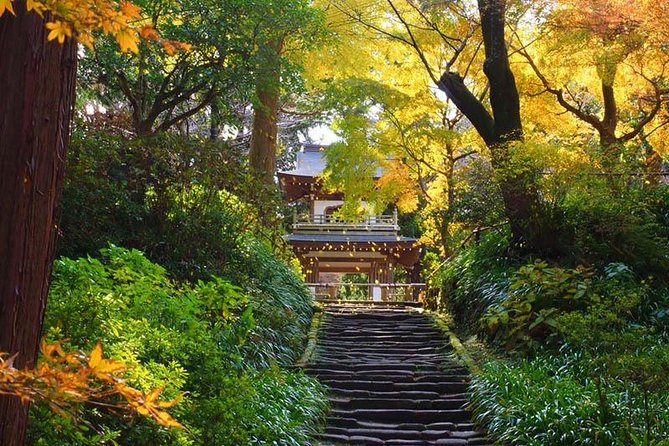
Meigetsu-in, often called Hydrangea Temple, is associated with the Rinzai Zen sect and dates to 1160. Its grounds are especially appealing when hydrangeas bloom. If your visit falls outside that season, the temple can still be worthwhile, but the famous flower display will not have the same impact.
The suggested stop is 30 minutes. Tell your guide if photography, garden design, or seasonal flowers matter more to you than temple history. That small bit of planning can make the visit feel much less generic.
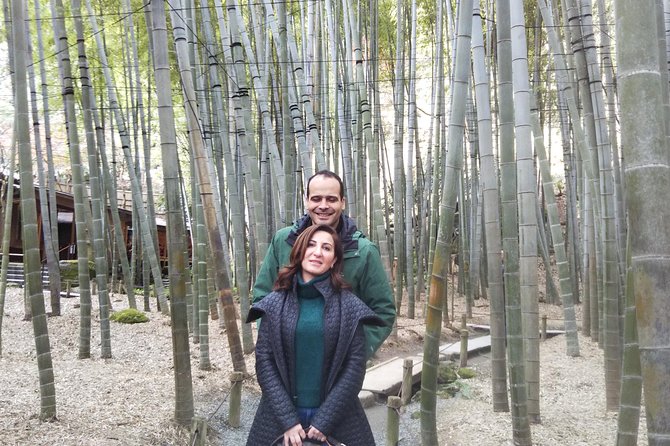
Hokoku-ji is one of the clearest choices for a short, memorable stop. Behind its main hall is a compact bamboo grove with more than 2,000 dark green stalks and narrow paths through the trees. The visit also offers the possibility of green tea in the bamboo setting, a detail that guide Seky highlighted during one particularly hot August tour.
The grove is small, so do not expect a long forest walk. Its value is the atmosphere, not its size. A 30-minute visit works well, especially when paired with another eastern Kamakura temple.
Jomyo-ji is a Zen temple in the eastern hills and the fifth of the five great Zen temples. It was founded by the influential Ashikaga family. Choose it if you want a hill setting and a temple connected to another important ruling family.
Zuisen-ji is farther east, at the back of a narrow valley surrounded by wooded hills. It is a branch temple of Engaku-ji and suits people who prefer a quieter setting. The tradeoff is time: reaching the far eastern side can limit how many other sites fit into your six-hour plan.
The Great Buddha and Hasedera
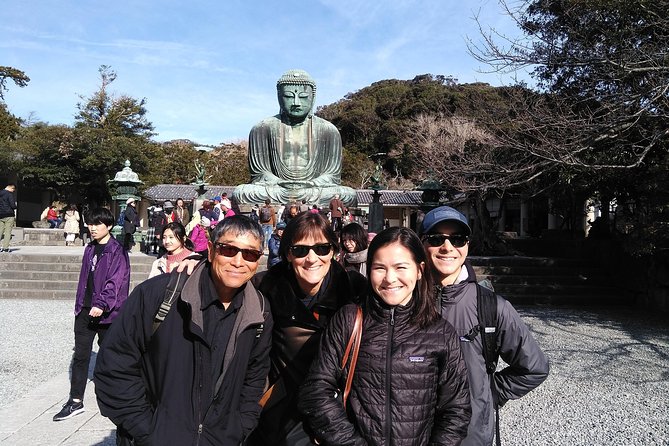
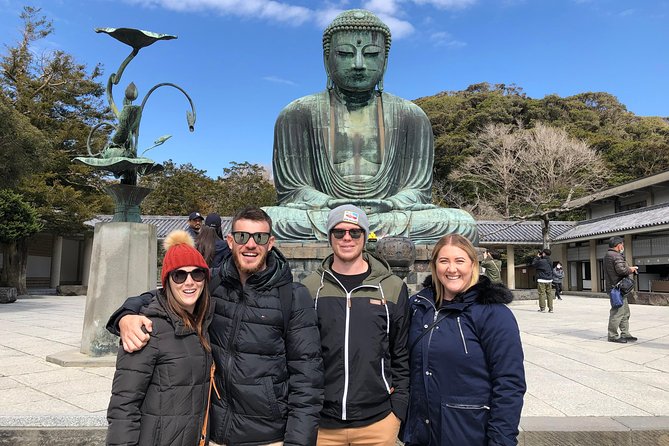
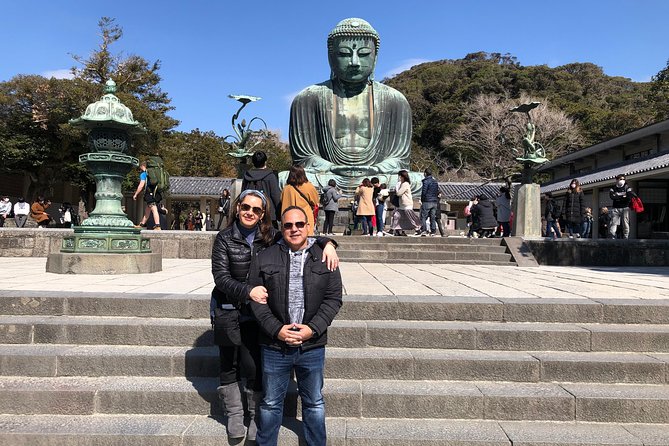
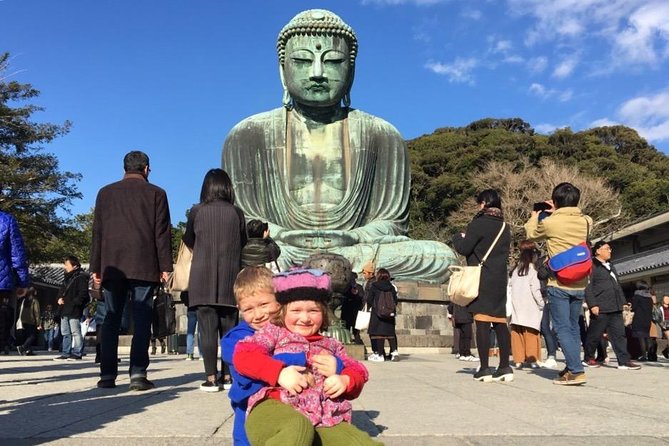
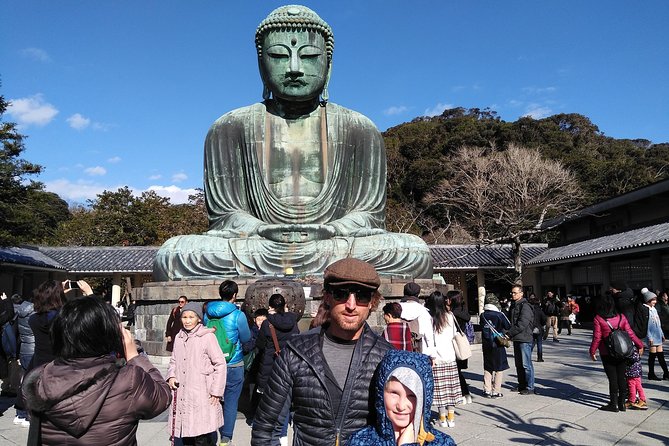
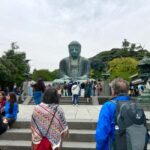
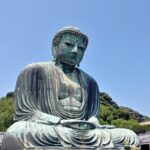
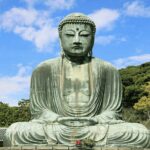
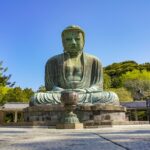
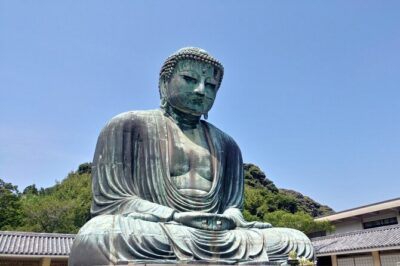
For a first visit to Kamakura, Kotoku-in’s Great Buddha is hard to ignore. The bronze Amida Buddha is 11.4 meters tall and has long been regarded as Japan’s second-largest bronze Buddha. The statue is outdoors on the temple grounds, giving you a direct, powerful view rather than a distant glimpse through a building.
The suggested time is 30 minutes. That allows time to see the statue and hear its background, but the stop is not a full temple tour. If the Great Buddha is your top priority, make it one of your selected three or four sites.
Hasedera is famous for its 9.18-meter gilded wooden statue of Kannon, the Buddhist figure associated with mercy. It belongs to the Jodo sect, so it gives you a useful contrast with the Rinzai Zen temples.
The listed 10-minute stop is brief. I would clarify your expectations with the guide before booking if Hasedera is important to you, because the temple deserves more than a rushed photo stop. The same applies to the Great Buddha if you want time for questions.
One practical route described by guide Kei began at JR Kamakura Station, continued by bus to Kotoku-in, and then moved to Hasedera. That is a sensible example of how the tour can work: use public transport to reach the western sights, then build the rest of the day around nearby or central stops. The bus fare is extra.
Shrines that show another side of Kamakura
Kamakura is not only a Zen destination. Adding a Shinto shrine helps you see how different religious traditions share the town.
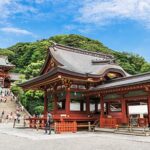
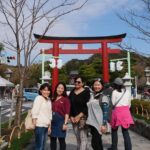
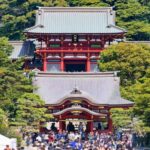
Tsurugaoka Hachimangu Shrine is dedicated to Hachiman, the patron deity of the Minamoto family and of samurai more generally. The shrine is central to Kamakura’s political and military identity, so it makes a good choice if you want the broadest cultural picture.
The listed stop is 10 minutes and admission is free. That is enough for a short orientation, but you may want longer if you wish to examine the approach, shrine architecture, and ceremonial spaces at an unhurried pace.
Zeniarai Benten Shrine is known for coin washing. You bring money to the shrine’s spring and wash it as part of a popular custom said to increase its value or fortune. It is a distinctive local practice and a nice change from formal temple grounds.
The shrine is in western Kamakura and the listed time is 30 minutes. The route includes wooded approaches and uneven walking, so wear shoes you can use comfortably for several hours.
A few more Kamakura tours and experiences worth a look
Enoshima, Nichiren temples, and forest paths
The tour can reach beyond the central temple circuit, but these choices require careful planning.
Enoshima Island is connected to the mainland by a bridge and lies a short train ride west of Kamakura. It offers a shrine and other attractions in a seaside setting. A 30-minute stop gives you only a quick taste, not a complete island visit. Choose it if you want a change from temples, not if you want to explore Enoshima in depth.
Ankokuron-ji and Myohon-ji belong to the Nichiren tradition. Ankokuron-ji was founded by Nichiren around 1253, when he first came to Kamakura. Myohon-ji was founded in 1260 by Hiki Yoshimoto. Both help broaden the religious picture beyond Zen.
The suggested stops are only 10 minutes each. That is enough for a short introduction, but not for a detailed comparison of Nichiren teachings, buildings, and grounds. They make better additions for someone who already has a main temple choice and wants a more specialized stop.
Kamakura’s hiking trails run through the wooded hills and connect atmospheric temples. The listed time is 10 minutes, which should be read as a brief trail segment or orientation, not a full hike. Ask the guide exactly how much walking you want before the route is set, especially if your group includes anyone who tires easily.
Eisho-ji is the only surviving nunnery in Kamakura. Founded in the early Edo period by a woman connected to the Tokugawa family, it adds a useful perspective on women’s religious life and the role of elite families in temple history.
How the six hours work in real life
The guide meets you on foot within a designated area of Kamakura. Pickup does not mean a private car arriving at your hotel. If you are staying outside Kamakura, you need to reach the meeting area yourself unless you separately arrange other transport.
You are responsible for train and bus fares, entrance fees, lunch, and personal expenses. Most listed temples charge admission, while Tsurugaoka Hachimangu, Zeniarai Benten, Enoshima, and the hiking trails are shown with no admission charge. The guide’s entry fees are covered only for sights included under the tour’s stated expectations, so confirm the exact plan and costs before setting out.
Lunch is not included, but the flexible format can make a local meal part of the day. Guide Kappa helped one group choose a traditional restaurant and try chilled white wheat noodles called hiyashi udon. That kind of practical food guidance is one of the better reasons to use a private guide, particularly if you want to eat something local without losing time searching.
The experience has a 4.9 rating from seven reviews, which is a very small sample. The consistent strengths are personalized routing, clear cultural explanation, and guides who adapt to the conditions. One group traveled in rain and still enjoyed the natural setting. Another visited in the humid August heat and appreciated an air-conditioned private car that had been arranged separately. Do not assume that car service is included.
Guide names connected with past bookings include Kei, Kappa, and Seky. Your assigned guide may be different, but these accounts suggest that the company’s approach can include route advice, food recommendations, and changes based on weather or your interests.
Is $153.11 per person good value?
The price makes the most sense for a small group that values time and interpretation. If two or more people share the cost, you are paying for a private six-hour guide rather than joining a large group with a fixed route.
The cost is harder to justify if you only want to see the Great Buddha and one temple. You could visit a small number of Kamakura sights independently for much less, especially since transport and admissions remain extra here.
I see the strongest value in the planning. Kamakura’s attractions spread across Kita-Kamakura, central Kamakura, the western Hase area, and the eastern hills. A guide can help you avoid an inefficient route and explain what you are looking at once you arrive.
Before booking, send your top priorities. Say clearly if you want gardens, Zen history, bamboo, a shrine, the Great Buddha, a meal, or hiking. Pick three or four realistic sites rather than asking for everything.
Should you book this Kamakura tour?
Book it if you want a private, adjustable day and care about the meaning behind the buildings. It is especially suitable for first-time visitors, families or couples with different interests, and anyone who would rather ask questions than follow a printed route.
Choose the Great Buddha and Hasedera for Kamakura’s famous western sights. Choose Engaku-ji, Kencho-ji, and one nearby branch temple for a focused Zen day. Choose Meigetsu-in or Hokoku-ji if gardens, flowers, and bamboo matter most.
Skip it if you prefer complete independence, need to keep costs low, or want to visit all 18 listed places. The tour gives you a guide and a private plan, not private transport or an all-inclusive ticket. Canceling is free up to 24 hours before the start time, which gives you some useful flexibility if your schedule changes.
FAQ
How long does the Kamakura tour last?
The tour lasts approximately six hours.
Is the tour private?
Yes. Only your group participates in the activity.
How many sites can I visit?
The tour includes a customizable walking tour of your choice of three or four sites from the listed attractions.
Is transportation included?
No. Transportation fees are extra, and private transportation is not included. The guide meets you on foot within the designated Kamakura area.
Are entrance fees included?
No. Entrance fees are generally extra. The guide’s entry fees are covered only for sights listed under the stated tour expectations.
Is lunch included?
No. Lunch and other personal expenses are extra.
What kind of guide leads the tour?
A licensed local English-speaking guide leads the experience. Guides associated with past bookings include Kei, Kappa, and Seky, though your assigned guide may vary.
Can most people participate?
Yes. Most people can participate, and service animals are allowed. The experience is a walking tour, so you should be prepared to walk between sites and use public transportation if needed.
Can I cancel for a full refund?
Yes. You can cancel at least 24 hours before the local start time for a full refund. Cancellations or changes made less than 24 hours before the start time are not accepted for a refund.
More Guided Tours in Kamakura
More Temples & Meditation in Kamakura
More Kamakura & Enoshima Day Trips in Kamakura
More tours in Kamakura we've reviewed

Kamakura & Enoshima Day Trips, compared.
 ★ 4.5Tokyo: Kamakura & Enoshima Day Trip including Temple TicketsFrom $589 hours - 570 minutes
 ★ 4.5Tokyo: Mt. Fuji, Kamakura, Big Buddha, & Lake Ashi Day TripFrom $4910 - 11 hours
 ★ 4.5From Tokyo: Kamakura & Enoshima 1-Day Bus TourFrom $66
 ★ 5.0Kamakura Historical Walking Tour with the Great BuddhaFrom $98
 ★ 5.0Kamakura Private Tour: Temples, Nature, and the Great BuddhaFrom $98
 ★ 5.0Kamakura Walking Tour – The City of ShogunFrom $35