
Reviewed · GUIDED
Tokyo Baseball Experience Tour with Expert English-Speaking Guide
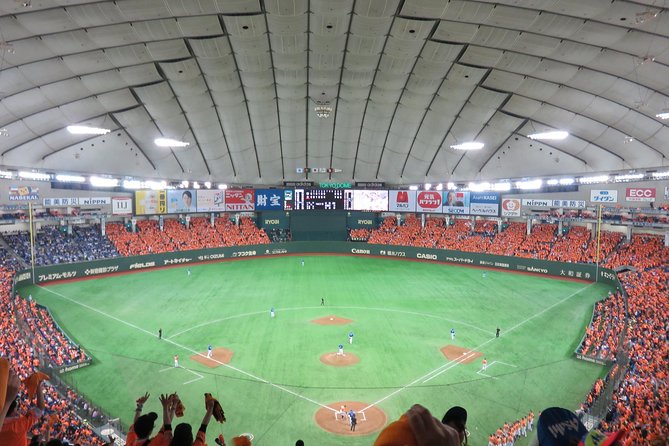
Japanese baseball is more than nine innings and a scoreboard. At Meiji Jingu Stadium, fans sing organized chants, follow familiar anthems, and create a steady wall of sound around the field. This four-hour tour gives you a guide to that culture before the game begins, with admission and a reserved seat included.
I like the small group of up to 12 people, which keeps the guide’s explanations useful rather than lost in a crowd. I also like the choice of S, A, or B seats, since each offers a different view of the action. The main drawback is timing: the tour ends when the game starts, so you may not watch the full match.
In This Review
- Key points at a glance
- Why Japanese baseball feels different
- Meeting at Meiji Jingu Baseball Stadium
- The pre-game lesson and fan chants
- Choosing among S, A, and B seats
- How much of the game will you see?
- What to eat and buy inside the stadium
- Is $98 a fair price?
- Weather, cancellation, and practical limits
- Who will enjoy this most?
- Should you book the Tokyo Baseball Experience?
- FAQ
- Where does the Tokyo baseball tour begin and end?
- How long does the tour last?
- Is admission to the baseball game included?
- What are the differences between the seat categories?
- Is food included?
- What happens if it rains?
- Can children join the tour?
Key points at a glance
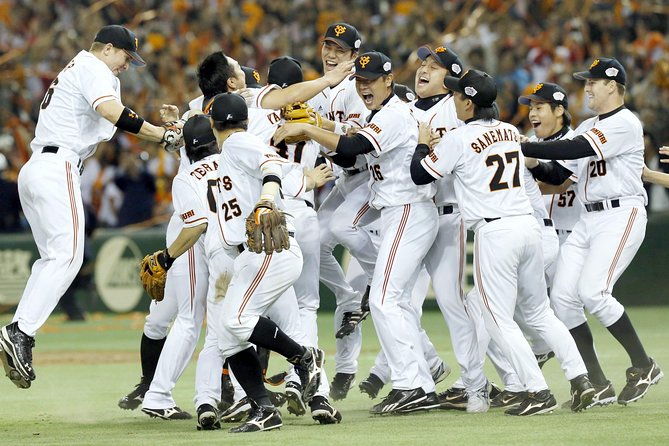
- Japanese fan culture comes first: Learn chants, anthems, and the customs that shape a game at Meiji Jingu Stadium.
- A live game is included: Your ticket covers an S, A, or B seat, depending on availability.
- The guide explains the differences: An audio headset helps you hear commentary about Japanese baseball and MLB.
- Small groups keep it personal: The tour accepts up to 12 people, with at least 8 required for it to operate.
- Plan for an open-air stadium: Light rain may not stop the match, but heavy rain can lead to cancellation.
- Bring money for stadium food: Snacks, drinks, and merchandise are available, but none are included.
Why Japanese baseball feels different
If you know Major League Baseball, you already understand the basic rules. What may surprise you is the organized energy in the stands. Japanese fans use chants and anthems tied to players and teams, and joining in is part of the pleasure.
This tour puts that fan culture at the center. Your English-speaking guide explains the history of baseball in Japan and points out differences between the Japanese game and MLB. The audio headset matters here. A stadium can be loud, and without amplification, useful explanations can disappear under cheers, music, and bat-on-ball noise.
I like this approach because you are not simply handed a ticket and left to work out the customs alone. You get context before settling into your seat. You can then watch the crowd with a better sense of what is happening around you.
The tour is not designed as a formal stadium museum visit or a behind-the-scenes sports tour. Its focus is the live match and the way Japanese fans support it. If you want a long lesson about stadium architecture, team history, or a guided look through every part of the venue, this may feel narrow. If you want to understand what is happening in the stands, it has a clear purpose.
Other guided tours in Tokyo


Meeting at Meiji Jingu Baseball Stadium
You meet at Meiji Jingu Baseball Stadium, 3-1 Kasumigaokamachi, Shinjuku City, Tokyo 160-0013. The stadium is near public transportation, but you should still allow time to find the entrance and meeting point. Arrive at least 10 minutes before the scheduled start.
That early arrival is not just a polite suggestion. This is a join-in tour, and the guide may not be able to wait for late arrivals. If you miss the start, you may have to meet the group at the next location, using the guide’s phone number provided before the tour.
The meeting point is also the end point, which keeps the logistics simple. You do not need to figure out a second drop-off location after the game portion of the tour. Transportation to the stadium is not included, so you make your own way there and back.
The pre-game lesson and fan chants
The most distinctive part of the tour comes before the first pitch. Your guide introduces baseball in Japan, explains how it compares with MLB, and teaches you the chants and anthems used by Japanese supporters.
This preparation changes the way you watch the game. Instead of hearing a wall of sound and wondering what it means, you can recognize the repeated patterns and join in. You are not expected to be a lifelong baseball expert. The format is meant to help you take part, even if you know the sport mainly through American baseball.
The guide is described as both an English speaker and an expert fan of Japanese baseball. No guide name is provided in the booking information, so you should not expect to select a particular person. The audio headset lets you hear the explanation clearly while you are seated in the stadium.
I especially like the contrast between the quiet instruction and the loud match atmosphere. You first get the tools to understand the crowd, then you see those customs in use. That makes the tour more useful than a generic introduction to baseball rules.
Choosing among S, A, and B seats
Your seat is included, but the exact section depends on availability. The three options offer different views:
- S Seats: Located behind the batter, in the heart of the action.
- A Seats: Behind first or third base, with a broad view of the field and the players on the bench.
- B Seats: Behind the foul pole, with a good view of outfield play.
S Seats are the most direct choice if you want to feel close to the batter and pitcher. A Seats may suit you better if you prefer to see the full field and watch activity around the benches. B Seats are less central, but they can be useful for following plays in the outfield.
The important point is that the ticket category is not guaranteed in advance. You may receive an S, A, or B seat depending on availability. Since all three are described as offering good stadium views, the tour gives you a useful ticket without promising one exact angle.
How much of the game will you see?
The match itself can last about three hours, but the tour ends when the game commences. That distinction deserves attention before you book.
You receive admission to the game, yet the guided portion finishes as soon as play begins. The supplied information does not promise that the guide will remain with you for the whole match, and one published comment noted an expectation of arriving before the game to enjoy the full event. In practical terms, you should confirm the exact schedule if watching every inning is important to you.
This setup may work well if your main goal is learning the fan customs and attending a live game for a while. It may disappoint you if you are planning your day around a complete baseball match. Baseball has no fixed running time, so a three-hour game can also affect later plans.
I would treat the included ticket as a chance to continue watching on your own after the guided portion, only if the tour instructions and ticket arrangements allow it. Do not assume that the guide will stay for the entire match. The stated tour duration is about four hours, while the game can run around three hours, so the schedule needs careful reading.
What to eat and buy inside the stadium
Food and drinks are not part of the $98 price. Snacks, beverages, and merchandise are available at stadium stands, so you can buy refreshments once inside.
This is a modest extra cost, but it is worth planning for. A baseball outing feels more relaxed when you are not trying to leave the seating area to find something to eat. You may want to arrive with enough time to purchase what you need before the game begins, although the tour’s timing may limit how much free time you have.
Merchandise is also sold at the stadium. The information does not specify which teams or products will be available, so consider it an option rather than a promised shopping stop. The tour includes the seat, guide, headset, service fee, and tax, but not personal purchases.
Is $98 a fair price?
At $98, this is not the cheapest way to attend a baseball game. A basic ticket bought independently would likely cost less than a package that includes an English-speaking guide, a headset, and a lesson in Japanese fan culture. The value depends on how much help you want understanding the setting.
I see the price working best for a first visit to Japanese baseball, especially if you do not speak Japanese or do not know the local customs. You are paying for the explanation, the group arrangement, and the chance to learn the chants before joining the crowd. A regular baseball fan may also appreciate the comparison with MLB, though a seasoned visitor could prefer buying a ticket alone and watching the whole game.
The small group improves the value. With no more than 12 people, you have a better chance to hear the guide and ask questions than you would on a large coach-style outing. The minimum of eight people does create some uncertainty, since the tour can be canceled if too few bookings are made. In that case, a full refund is provided.
Weather, cancellation, and practical limits
Meiji Jingu Stadium is open-air. Light rain does not necessarily stop the match, but heavy rain can lead to cancellation and a full refund. If rain begins after the game is already underway, no refund is provided.
That makes a weather check important, especially during Tokyo’s rainy periods. Bring suitable rain protection if the forecast looks unsettled, but remember that stadium rules may affect what you can carry inside. The supplied details do not list a specific rain gear policy.
The cancellation terms are strict. The provider describes the booking as non-refundable and says it cannot be changed for any reason. The additional terms specify cancellation fees that rise as the date approaches, reaching 100 percent seven days or less before the event. Read the final conditions carefully before paying, especially if your Tokyo plans may shift.
There is no age requirement, but every person needs a reservation. Children must be accompanied by an adult. Most people can participate, and the tour is near public transportation.
Who will enjoy this most?
I would recommend this tour to you if you meet several of these conditions:
- You want a local sports event rather than a standard sightseeing stop.
- You enjoy learning fan customs and joining chants.
- You speak English and want live explanations in English.
- You are comfortable with a group format of up to 12 people.
- You do not mind that the guided tour ends when the game starts.
- You want a reserved seat without handling all the arrangements yourself.
It is less suitable if you want to watch a full game with no interruption, choose your exact seat, or keep your schedule flexible. It may also be poor value for a baseball fan who already understands Japanese stadium traditions and can arrange a ticket independently.
The 4.9 rating from seven ratings suggests a very positive response so far, but the small number means you should weigh the details more heavily than the score. The most important question is not simply whether the tour is popular. It is whether you value the guided cultural introduction enough to accept the fixed terms and partial-game schedule.
Should you book the Tokyo Baseball Experience?
Book it if you want the game and the meaning behind the game. The chants, anthems, headset commentary, and small-group setting give you a way into Japanese baseball culture that a stand-alone ticket may not provide.
Skip it if your priority is seeing every inning. The tour’s clearest weakness is also its most important scheduling point: it ends when the game begins, even though admission is included. At $98, the package makes the most sense for a first-time visitor who wants guidance, a good seat category, and an easy introduction to the Japanese style of baseball fandom.
FAQ
Where does the Tokyo baseball tour begin and end?
It begins and ends at Meiji Jingu Baseball Stadium, 3-1 Kasumigaokamachi, Shinjuku City, Tokyo 160-0013, Japan.
How long does the tour last?
The tour lasts approximately four hours. The baseball game itself can last about three hours, but the guided tour ends when the game commences.
Is admission to the baseball game included?
Yes. A baseball seat ticket is included, with an S, A, or B seat assigned depending on availability.
What are the differences between the seat categories?
S Seats are behind the batter. A Seats are behind first or third base. B Seats are behind the foul pole and provide a good view of outfield play.
Is food included?
No. Snacks, drinks, and merchandise are available for purchase at stadium stands.
What happens if it rains?
If heavy rain causes the match to be canceled, you receive a full refund. If there is light rain, the match proceeds. If rain begins after the game has started, no refund is provided.
Can children join the tour?
There is no age requirement, but every person must have a reservation. Children must be accompanied by an adult.
More Guided Tours in Tokyo


More tours in Tokyo we've reviewed











Guided, compared.
 ★ 5.0Tokyo 6hr Private Tour with Government-Licensed GuideFrom $155
 ★ 4.9Tokyo: Shinjuku Local Bar and Izakaya Guided Walking TourFrom $343 hours
 ★ 4.8Tokyo: Private City Highlights Tour with Local GuideFrom $1064 - 8 hours
 ★ 4.9Tokyo: Tsukiji Fish Market Guided Walking TourFrom $222 hours
 ★ 5.0Tokyo 4hr Private Tour with Government-Licensed GuideFrom $109
 ★ 5.0Tokyo Guided Small-Group Biking TourFrom $106