
Reviewed · HISTORICAL TOURS
Modern Japanese History Tour in Tokyo
Japan’s modern wartime story is not tucked away in one tidy museum. This three-hour tour brings you to Yasukuni Shrine and its Yushukan War Museum, then shifts to the civilian experience at the Showa-kan Museum. You’ll hear about Japan’s 2.5 million war dead, kamikaze pilots, starvation, military life, and the difficult ways a country remembers its past.
I like the private format, since you can ask direct questions and set the pace with your own English-speaking guide. I also like the sharp contrast between military exhibits and everyday objects from wartime homes. The main caution is that this is a sensitive subject, and some museum displays are in Japanese, making your guide especially important.
In This Review
- Key points
- Three hours with Japan’s wartime past
- Yasukuni Shrine: a calm setting with a difficult purpose
- Yushukan Museum: military history through Japan’s eyes
- Showa-kan: the civilian cost of wartime Japan
- What the private guide adds
- The difficult subject and the right attitude
- Timing, meeting point, and practical details
- Who will get the most from this tour?
- Should you book the Modern Japanese History Tour?
- FAQ
- How long is the Modern Japanese History Tour in Tokyo?
- Where does the tour begin and end?
- What time does the tour start?
- Is the tour private?
- Are the museum entrance fees included?
- Is this tour refundable if I cancel?
Key points
- Three museums and shrine grounds in about three hours: The route stays compact around Kudanshita and Kudan, with little time lost to transport.
- Private English-speaking history guide: Guides such as Shun, Yasuhiro Suzuki, Hiro, and Izumi have led this experience, with special help interpreting Japanese-only displays.
- Two very different views of World War II: Yushukan focuses on Japan’s armed forces, while Showa-kan shows civilian hardship and daily life.
- A serious look at kamikaze attacks: The tour explains the practice, the soldiers involved, and the messages they sent to their families.
- Admission is included: Entry to Yushukan and Showa-kan is covered in the listed price of $204.58 per person.
- A private, sensitive experience: You should arrive ready for frank discussion and respectful questions, not a light sightseeing stroll.
Three hours with Japan’s wartime past
This is a specialized history walk, not a general Tokyo orientation. You meet at Kudanshita Station at 9:00 a.m., then spend the morning at places tied to Japan’s modern military memory and the lives of ordinary people during and after World War II.
The route works because the subjects are placed side by side. At Yasukuni and Yushukan, you examine how Japan honors soldiers and frames military sacrifice. At Showa-kan, you look at food shortages, household goods, photographs, and civilian survival. I find that contrast more useful than visiting only a military museum or only a peace museum.
Your guide is the key to making sense of the morning. The museums were not designed primarily for English speakers, and some exhibits are Japanese only. A guide can translate labels, explain context, and help you understand why a particular object matters rather than leaving you to guess from a display case.
The tour is private, so only your group takes part. That gives you room to ask about difficult subjects, including Japan’s imperial expansion, the wartime role of ordinary citizens, and how kamikaze pilots understood their orders. The stated purpose is education, not argument. You’ll get the most from it by asking sincere questions and allowing room for more than one interpretation.
Other historical tours in Tokyo
Yasukuni Shrine: a calm setting with a difficult purpose
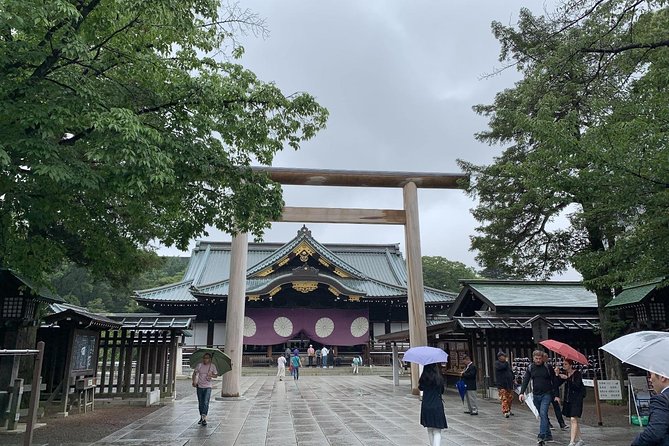
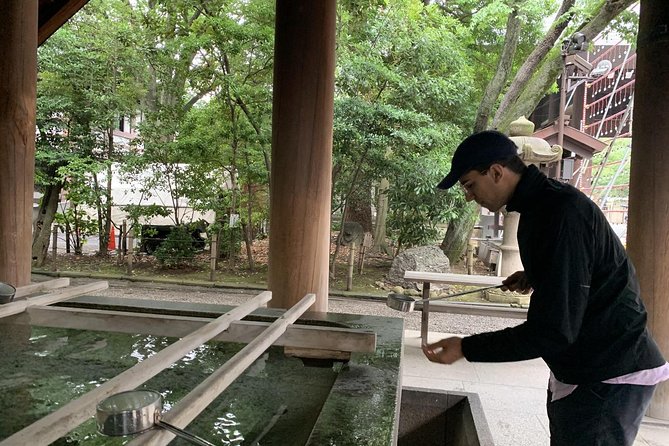
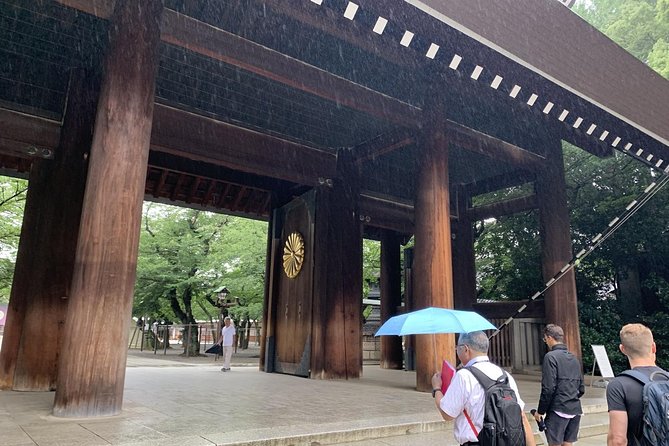
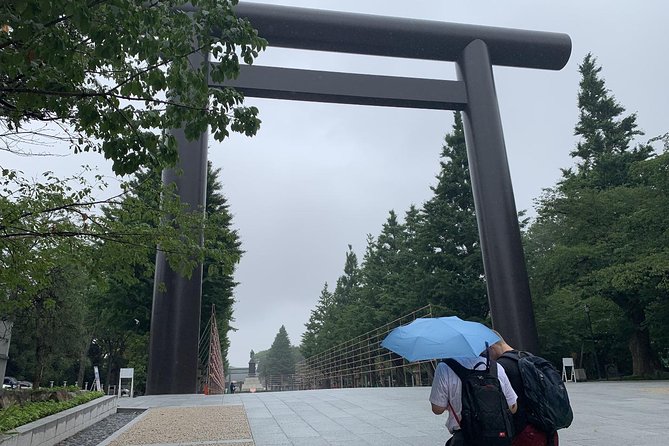
The first stop is Yasukuni Shrine, where about 2.5 million people who died in wars involving Japan since 1869 are commemorated. The shrine grounds offer traditional architecture and a quiet setting, which can feel at odds with the weight of the subject.
You’ll have about 30 minutes here, with admission included. That is enough time to see the grounds, take photographs, and learn why Yasukuni remains an important and contested place in modern Japanese history.
The shrine is not simply a memorial in the neutral sense. Its meaning is tied to Japan’s state and military history, and the site has drawn debate because some convicted wartime leaders are also enshrined there. The supplied tour details do not promise a full political lecture on this issue, so ask your guide directly if you want to understand the controversy in greater detail.
I like beginning here because it introduces the central question of the morning: how does Japan remember those who died in war? You’ll see that remembrance can honor grief, sacrifice, duty, and national identity all at once. Those ideas do not always fit comfortably together.
The setting also gives you a pause before the museum work begins. Wear comfortable shoes, since you’ll be moving between outdoor shrine grounds and indoor exhibits. The tour ends back at the meeting point, so you do not need to arrange a separate ride from the final museum.
Yushukan Museum: military history through Japan’s eyes
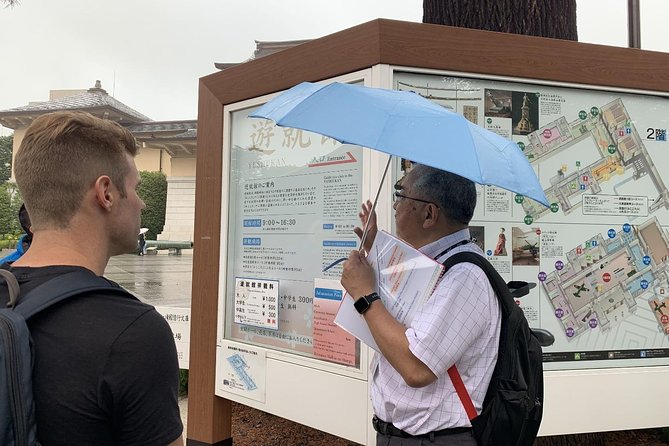
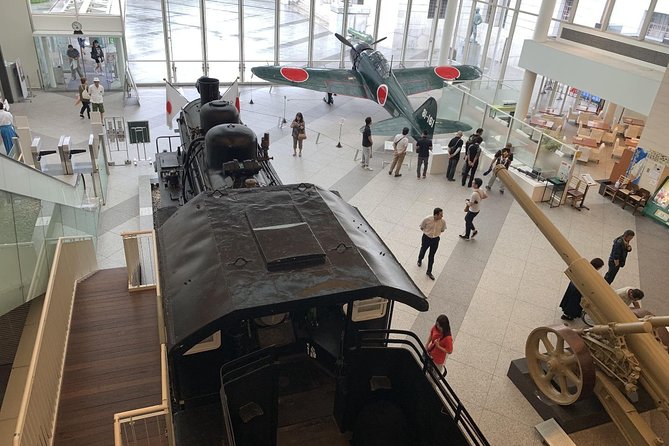
You spend about 90 minutes at Yushukan Museum, located on the Yasukuni Shrine grounds. This is the longest stop and the most focused on Japan’s military history, from the Meiji period through World War II and later remembrance.
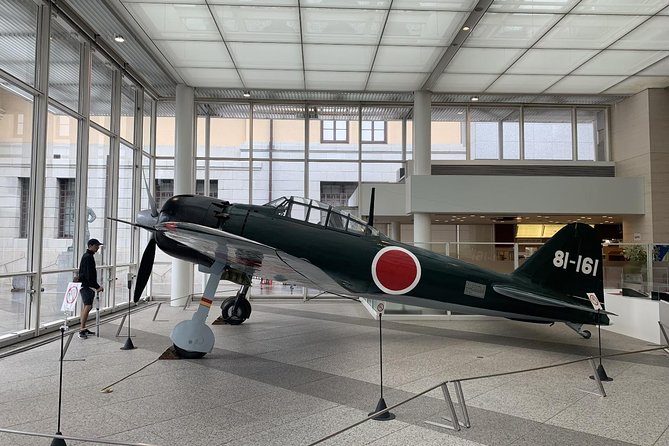
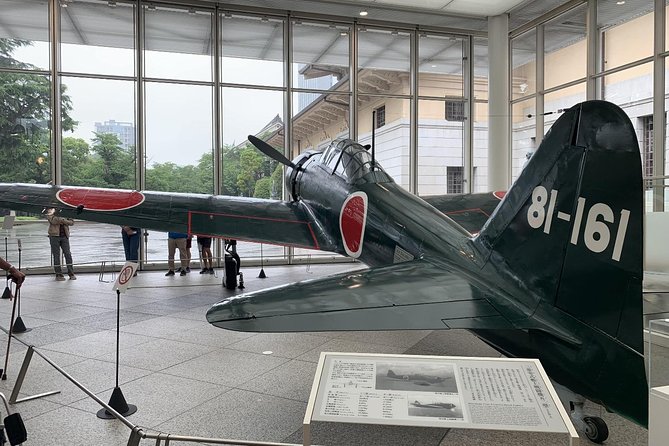
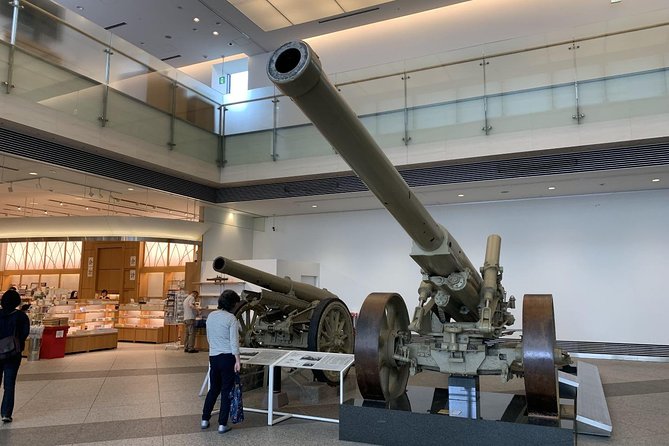
The museum displays artifacts, documents, military equipment, and related material. The content helps explain how Japan’s armed forces developed and how military service was presented to soldiers and families. It also provides the setting for the tour’s discussion of kamikaze attacks, also known in Japan as tokotai.
That discussion is one of the strongest reasons to book this experience with a guide. The subject is often reduced to a single dramatic image of a pilot making a final attack. Here, you can ask about the military system behind the practice, why it became common, and how pilots communicated with their families before leaving.
The tour description specifically promises attention to what the soldiers felt and how they behaved. That does not mean the guide will give you one simple answer. It means you’ll examine the pressure of military duty, the expectations placed on young men, and the human cost behind the official language of sacrifice.
The museum can be difficult to follow on your own. Several exhibits are in Japanese only, and the displays may reflect a distinctly Japanese presentation of wartime events. Guides such as Izumi have helped explain the exhibits and answer questions, while other named guides include Shun, Yasuhiro Suzuki, and Hiro. Guide assignments can vary, so you should not book solely on the expectation of one particular person unless the operator confirms it.
Give this stop your full attention. It is not the kind of museum where you quickly glance at a few famous objects and move on. The 90-minute visit lets your guide connect individual artifacts with larger issues, including military culture, family expectations, and Japan’s way of honoring its dead.
At the same time, keep your critical thinking switched on. A museum focused on military remembrance may present the past from a particular angle. Hearing the material with a guide is useful precisely because you can ask what is emphasized, what is missing, and how other countries might describe the same events.
Showa-kan: the civilian cost of wartime Japan
The final stop is the National Showa Memorial Museum, usually called Showa-kan. You spend about one hour here looking at the lives of Japanese civilians during World War II and the years that followed.
This museum changes the emotional scale of the tour. Yushukan deals with military institutions and national sacrifice. Showa-kan brings the story down to the household level, using personal items, photographs, and material connected with daily life.
You’ll learn about problems such as starvation and shortages, along with the ordinary strain placed on families. The exhibits also cover the postwar years and the difficult process of rebuilding. This makes the stop useful even if your main interest is not military history. You’ll see how major events affected food, work, family life, and the objects people kept around them.
I especially like the pairing of these two museums. One asks you to think about soldiers and the state. The other asks you to think about parents, children, food, clothing, and survival. Together, they help explain why war history is not only a matter of battles and commanders.
As at Yushukan, some material is presented in Japanese. Your guide can interpret the displays and explain the connection between an everyday object and the wider period. Without that help, you might still see the exhibits, but you could miss much of their meaning.
The route is compact, which matters in Tokyo. You are not spending half the morning crossing the city between unrelated attractions. The short distance between the shrine, Yushukan, and Showa-kan keeps the focus on the subject and makes the three-hour length feel purposeful.
What the private guide adds
The advertised price is $204.58 per person, and the tour is private. That is a serious cost for a three-hour activity, especially if you are traveling alone or as a couple. The value depends largely on how much you want help interpreting Japanese-language museum material and discussing the subject in detail.
For a larger group, the price may make more sense because group discounts are available. You also avoid paying separate entrance charges for Yushukan and Showa-kan. Those admissions are included, along with a private English-speaking guide and the chance to take photographs at suitable points.
The guide is not just a person who leads you from door to door. You need someone who can connect museum displays to the broader story and answer questions without turning the morning into a lecture. The strongest guide experiences described here feature calm explanation, patience, and a good mix of military events and everyday life.
A private tour also gives you flexibility in conversation. You can spend longer on kamikaze history, ask about civilian shortages, or move along when a display feels too heavy. That personal control is harder to get in a large group.
The drawback is that the quality of the morning depends heavily on the guide assigned to you. The tour information identifies several guides who have led it, including Shun, Yasuhiro Suzuki, Hiro, and Izumi, but it does not guarantee a specific guide. If a named guide matters to you, confirm before booking.
The difficult subject and the right attitude
This tour deals with death, military sacrifice, starvation, and the destruction caused by war. Some material may be upsetting, particularly the discussion of young men sent on one-way missions and families facing hunger and loss.
You should arrive with an open mind and a respectful manner. Open-minded does not mean accepting every interpretation without question. It means listening carefully, asking fair questions, and understanding that memorial sites can carry strong feelings.
The operator notes that the tour can end if the guide feels threatened, with local law enforcement contacted if needed. That warning is unusually direct, but it tells you how seriously the provider treats respectful conduct. Most people will have no trouble with this. Still, it is worth knowing before you book.
This is not the best choice if you want a cheerful morning of Tokyo highlights. It is a good fit if you want to understand how Japan remembers its war dead and how the conflict affected people far beyond the battlefield.
Timing, meeting point, and practical details
You meet at Kudanshita Station at 1-chōme-13-19 Kudankita, Chiyoda City, at 9:00 a.m. The activity ends back at the same meeting point. Hotel pickup and drop-off are not included, so plan your route to the station in advance.
The full program lasts about three hours:
- Yasukuni Shrine: about 30 minutes
- Yushukan Museum: about 1 hour 30 minutes
- National Showa Memorial Museum: about 1 hour
Food and drinks are not included, and souvenirs are available for purchase. Gratuities are optional. The tour includes the scheduled entrance fees, but any add-on tour or extra attraction costs more.
Most people can participate, according to the supplied information. No special accessibility details are provided, so if you have mobility concerns, contact the operator before booking and ask about walking distances, stairs, and museum access.
Booking confirmation normally arrives at once, though bookings made within seven days may take up to 48 hours and remain subject to availability. Pay close attention to the cancellation terms. The experience is described as non-refundable and unchangeable, while another set of terms lists partial fees at 20, 14, and 7 days before departure. Since those statements do not match perfectly, confirm the exact policy before paying.
Who will get the most from this tour?
I would recommend this experience to anyone with a serious interest in modern Japanese history, World War II, military remembrance, or the civilian experience of war. It also suits you if you have already seen Tokyo’s famous sights and want a more focused morning in an important part of the city.
It is particularly useful for English speakers who would otherwise struggle with Japanese-only museum labels. The guide’s translation and explanation can turn two difficult museums into a connected lesson.
Families with older teenagers may find the subject valuable, but I would judge readiness carefully. The themes are heavy, and the tour does not soften its focus on death, hunger, and kamikaze attacks.
I would skip it if you have only one morning in Tokyo and prefer gardens, markets, temples, or pop culture. I would also skip it if you want a neutral, fully international account of the war, since Yasukuni and Yushukan present history through Japan’s own memorial traditions. The guide can help you question and compare those views, but the setting itself has a clear point of view.
Should you book the Modern Japanese History Tour?
Book it if you want context that is difficult to find on a standard Tokyo sightseeing route. The strongest parts are the private guide, the translation help, and the contrast between military memory at Yushukan and civilian life at Showa-kan.
At $204.58 per person, it is not a bargain for a short outing. It becomes easier to justify if you are sharing the private tour with a group, using the included admissions, and making full use of the guide’s explanations.
My practical advice is to book this for a morning when you have the mental space for serious history. Ask questions, take notes if that helps, and allow the two museums to show different sides of the same period. If that sounds worthwhile, this focused tour offers a thoughtful way to understand a difficult part of Tokyo’s past.
FAQ
How long is the Modern Japanese History Tour in Tokyo?
The tour lasts approximately three hours, with about 30 minutes at Yasukuni Shrine, 1 hour 30 minutes at Yushukan Museum, and one hour at Showa-kan.
Where does the tour begin and end?
The tour begins at Kudanshita Station at 1-chōme-13-19 Kudankita, Chiyoda City, Tokyo. It ends back at the meeting point.
What time does the tour start?
The scheduled start time is 9:00 a.m.
Is the tour private?
Yes. Only your group participates, and the experience includes a private English-speaking guide with history expertise.
Are the museum entrance fees included?
Yes. Admission to Yushukan War Museum and the National Showa Memorial Museum is included. Food, drinks, souvenirs, gratuities, and add-on attractions are not included.
Is this tour refundable if I cancel?
The experience is described as non-refundable and unable to be changed for any reason. The supplied terms also show a separate graduated cancellation schedule, so confirm the exact policy with the provider before booking.
More Historical Tours in Tokyo
More tours in Tokyo we've reviewed





Historical Tours, compared.
 ★ 5.0Tokyo: Imperial Palace and Shogun Historical Walking TourFrom $22
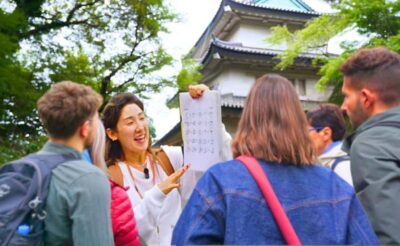 ★ 4.9Tokyo: Imperial Palace Japanese History Walking TourFrom $32
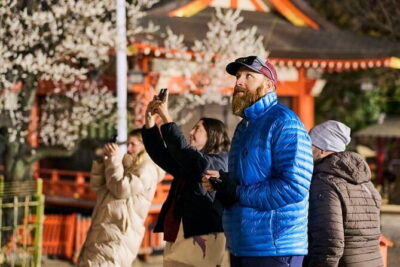 ★ 5.0Tokyo: Shinjuku Historical Walking Tour & Secret BackstreetsFrom $25
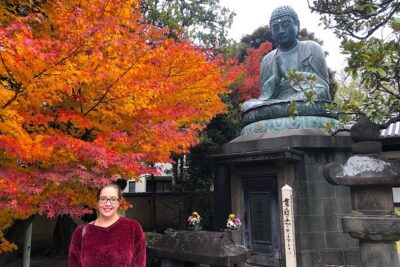 ★ 5.0Yanaka Walking Tour: Historic and Traditional District of TokyoFrom $72
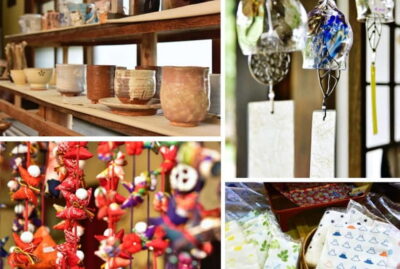 ★ 4.5Mt. Fuji Heritage Tour: Traditional Villages, Lakes & ShrineFrom $5010 hours
 ★ 4.9From Tokyo: Nikko World Heritage Site Private Full-Day TripFrom $4831 day