
Reviewed · KAMAKURA & ENOSHIMA DAY TRIPS
Kamakura Bamboo Forest and Great Buddha Private Tour
Kamakura packs temples, shrines, gardens, food, and Japan’s most famous outdoor Buddha into one very full day. This private tour begins with pickup in Tokyo’s 23 wards, then uses public transportation to reach five major sights, including the Great Buddha and the cool bamboo grove at Hokoku-ji.
I like the private format, since your family or friends can set the pace and ask for help along the way. I also like the mix of quiet temple grounds and busy Komachi Street. The tradeoff is clear: nine hours of sightseeing by train and on foot can be tiring, especially if your knees or stamina are not at their best.
In This Review
- Key points to know before booking
- Why this Kamakura day works well from Tokyo
- Hasedera, a flower-filled opening to the day
- Meeting the Great Buddha at Kotoku-in
- Hokoku-ji and its 2,000 bamboo stalks
- Tsurugaoka Hachimangu in the city center
- Komachi Street for a short food break
- Public transportation and the pace of the day
- Guide quality and the value of a private group
- Is $176.37 per person a fair price?
- Who should book this Kamakura tour?
- Should you book it?
- FAQ
- How long does the Kamakura private tour last?
- Does the tour pick up from Tokyo hotels?
- Is this a private tour?
- Is public transportation included in the price?
- Are temple and shrine admission fees included?
- Can I cancel for a full refund?
Key points to know before booking
- Five major Kamakura stops: Hasedera, Kotoku-in, Hokoku-ji, Tsurugaoka Hachimangu, and Komachi Street fill the day.
- Private English-speaking guide: Guides named Kono, Akira, Kimo, Noby Kono, and Yumiko have led this experience at different times.
- Public transportation is part of the day: Your guide helps with the route, but train and local transport costs are extra.
- Hokoku-ji includes about 2,000 bamboo stalks: You can pause for matcha while looking into the grove.
- Admission fees are not included: You pay separately at the temples and shrine.
- Walking matters: The schedule can be covered in one day, but you need to be ready for plenty of walking.
Why this Kamakura day works well from Tokyo
Kamakura is close enough to visit from Tokyo, yet it feels quite different from the capital. The old religious sites are spread around the city, so the challenge is not finding things to see. The challenge is fitting them together without wasting time or missing the point of each place.
That is where a private guide helps. You are not simply being dropped at a station with a list of names. The guide accompanies you on public transportation and explains the sites as you go. Several guides have been praised for helping with trains, fitting in all five stops, and keeping the group moving without making the day feel hurried.
The tour lasts about nine hours. That is long enough to see the main Kamakura sights, but it is not a slow temple retreat. You get roughly an hour at each of the first four stops, followed by 30 minutes on Komachi Street. Your guide may adjust the rhythm depending on train timing, walking speed, and your interests.
I especially like that the tour is private. If one person in your group wants more time at a shrine, or someone wants help understanding a ritual, you can ask without holding up a larger group. The guide can also offer a more personal explanation than a standard audio guide.
A few more Kamakura tours and experiences worth a look
Hasedera, a flower-filled opening to the day
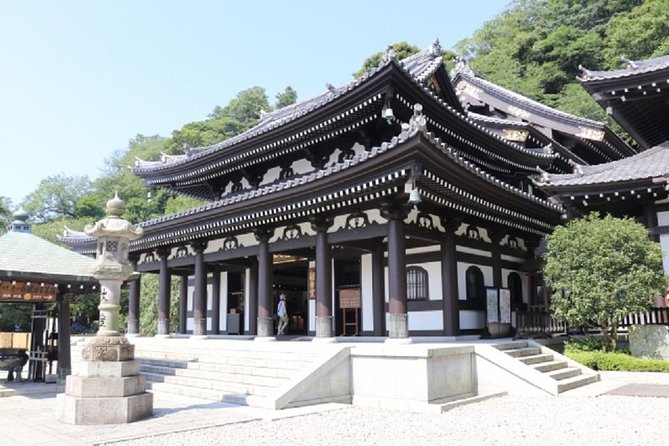
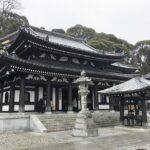
Hasedera is the first stop, with about an hour set aside for the temple. It is known for seasonal flowers and has long been called a temple of flowers. That makes the visit change with the calendar, so the feel of the grounds depends on when you go.
This is a good first stop because it introduces Kamakura through gardens, religious spaces, and scenic temple grounds rather than beginning with the city’s most famous statue. You can expect a visual setting where flowers and cultivated grounds are part of the attraction, not just background decoration.
The admission fee is extra. Since the tour visits several paid sights, keep a little cash or another accepted payment method ready for separate entry costs.
An hour gives you time to see the key areas with a guide, but not to linger over every corner. If flowers are a major reason for choosing Hasedera, tell your guide early in the day. Private touring gives you some room to express priorities, though the full schedule still has to fit together.
Meeting the Great Buddha at Kotoku-in
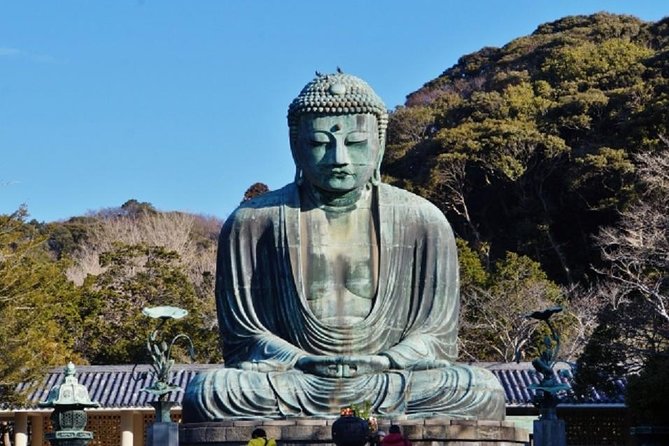
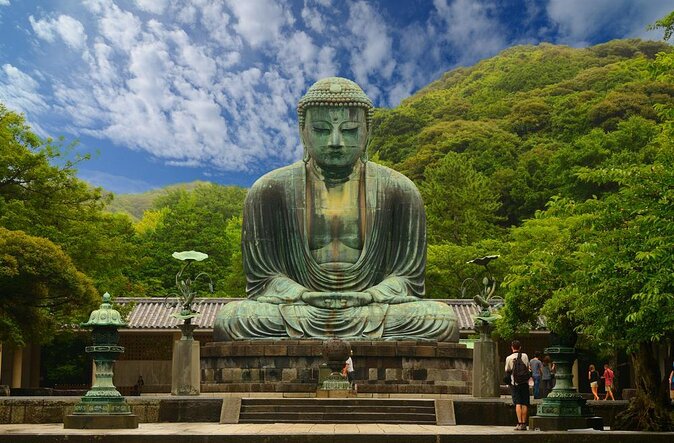
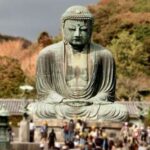
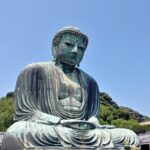
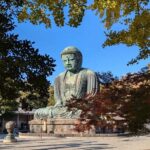
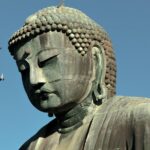
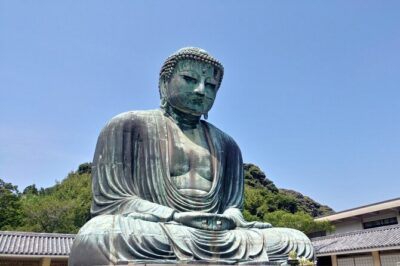
Kotoku-in holds the outdoor bronze Great Buddha of Kamakura, a 13.35-meter image of Amida Buddha. It is one of the city’s defining sights and the point where Kamakura’s scale becomes easy to grasp. The statue is not tucked inside a dark interior. You meet it outdoors, with room to take in its size and setting.
Your guide’s explanations add value here. The statue is familiar from photographs, but the visit becomes more rewarding when you understand its religious role and the place it has in Kamakura’s story. One of the strongest parts of this tour is the chance to ask questions rather than simply take a picture and move on.
The scheduled visit lasts about an hour, and admission is not included. That separate fee is worth remembering when comparing the tour price with a self-guided day trip.
The guide quality may vary by assignment. Akira and Kono have received especially warm praise for clear explanations, good organization, and strong English. One account of Kimo’s guiding describes a pleasant day that covered the planned sights, but also notes that conversation and unscripted history questions were harder. I would book the tour for the private guidance and route help, while keeping expectations realistic about how deeply every guide may handle follow-up questions.
Hokoku-ji and its 2,000 bamboo stalks
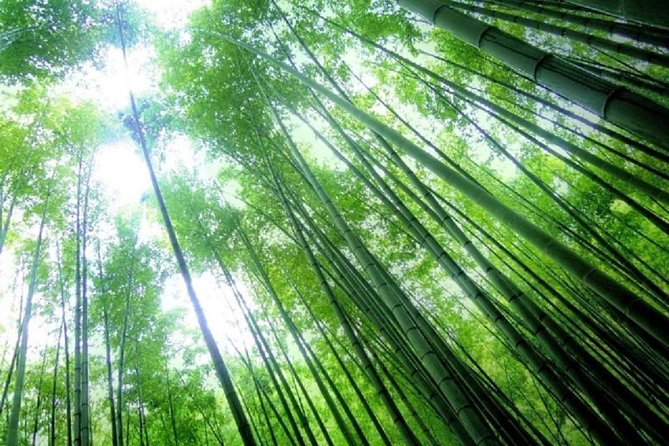
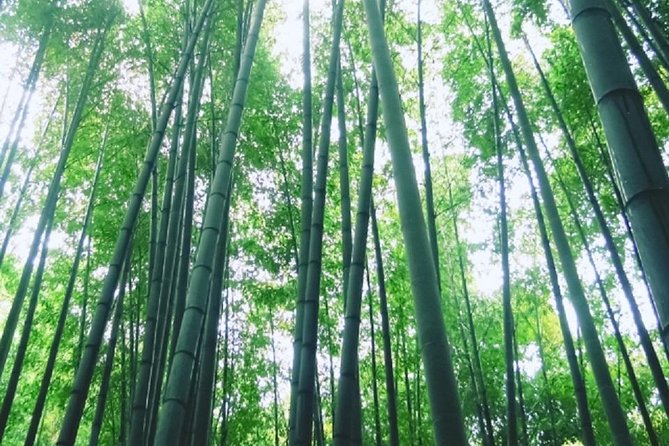
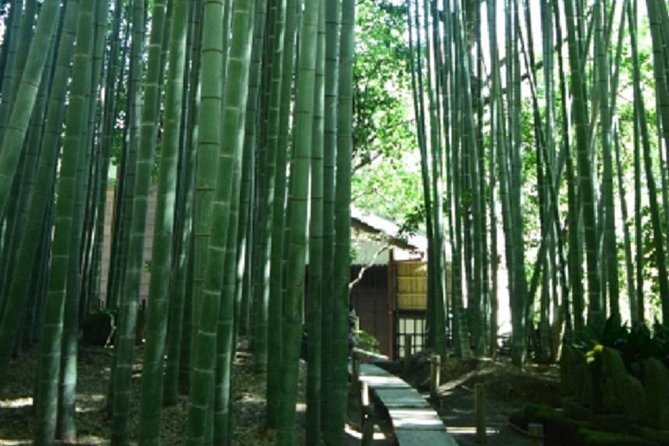
Hokoku-ji is the tour’s most atmospheric stop. The temple is famous for its bamboo garden, with approximately 2,000 bamboo stalks creating a cool, shaded space. It is also listed in the Michelin Green Guide as a three-star attraction, one of only two such locations in Kamakura according to the tour information.
The grove is compact, but its mood is powerful. You move from the open city into a quieter space where the bamboo changes the light and sound around you. This is not a place to rush through in a few minutes. The hour allotted here gives you time to walk the garden and pause for matcha while looking toward the bamboo.
Admission and food or drinks are extra. Matcha is one of the most appealing optional purchases on the route, since it gives you a seated pause in the garden rather than another quick stop between trains.
Hokoku-ji also helps explain why this tour is more than a Great Buddha transfer. You get a different side of Kamakura here, one built around stillness, gardening, and a carefully shaped temple setting. If bamboo is your main reason for booking, confirm the planned timing with your guide on the day, since the five-stop schedule is active.
Tsurugaoka Hachimangu in the city center
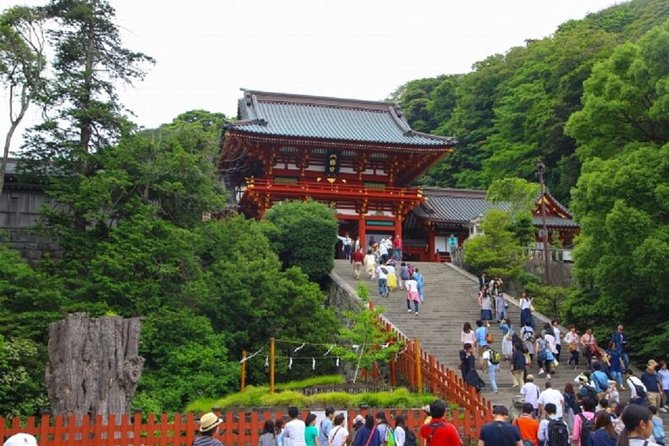
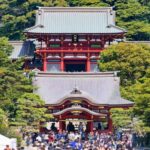
Tsurugaoka Hachimangu is Kamakura’s major shrine, positioned in the middle of the city. For centuries it was connected with the worship of gods of war, and it remains one of the key places for understanding Kamakura’s public and religious identity.
The shrine gives the day a different rhythm from the temples. You can expect broad approach areas, shrine architecture, and opportunities to observe sacred customs. A guide can explain what you are seeing and help you understand the difference between visiting a Buddhist temple and a Shinto shrine.
The allotted time is about an hour. That is enough for a focused visit, but not an unhurried study of every building or ritual. I would use this stop to ask your guide about the customs you notice. Kono has been praised for explaining sacred practices and Japanese culture in a way that made the visit feel personal and clear.
Because the shrine is in the city center, this stop also connects Kamakura’s religious sites with everyday urban life. You are not touring isolated monuments all day. Shops, streets, commuters, and visitors form part of the setting.
Other private tours in Kamakura
Komachi Street for a short food break
The final stop is Komachi Street, where you get about 30 minutes to stroll among food shops and distinctive stores. This is a brief visit, so think of it as a chance to sample the atmosphere and pick up a small bite or souvenir, not a full meal.
Food and drinks are not included. That is useful in one way, since you choose what interests you, but half an hour goes quickly. If you want to shop or eat at length, ask your guide if the schedule allows any adjustment.
Komachi Street gives the tour a practical finish. After temples, gardens, and a shrine, you get time among local retail streets before returning toward Tokyo. It is also a good place to make a quick decision about snacks, since the tour itself does not provide meals.
Public transportation and the pace of the day
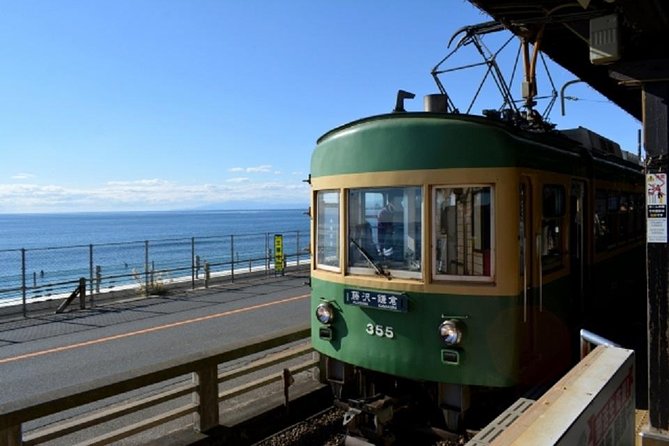
This is not a private vehicle tour. Pickup is offered from hotels in Tokyo’s 23 wards, but you and your group pay for public transportation to and from the tour as well as transport during the day. The guide travels with you and helps manage the route.
That arrangement has advantages. You experience Kamakura as a destination reached by ordinary trains and local transit, rather than viewing it through a car window. You also avoid being limited to a fixed vehicle route.
The drawback is effort. You need to walk between stations, streets, temple grounds, shrine areas, and shops. One account specifically describes the day as requiring a lot of walking, and another points out that Kamakura can be difficult for someone with knee problems. I would not choose this outing for a group that needs frequent seated breaks unless you first confirm what can be adjusted.
The tour is listed as suitable for most participants, but that does not mean it is effortless. Wear practical shoes, keep your bag light, and treat the schedule as an active day rather than a gentle sightseeing ride.
Guide quality and the value of a private group
The guide is the main reason to choose this experience instead of arranging Kamakura alone. Kono has been praised for patience, cultural explanations, photo help, and making sure the group saw the main sites without feeling rushed. Akira has also received strong praise for organization, friendly service, and detailed explanations.
A particularly useful strength is route support. One account describes the guide helping with transportation from Tokyo and within Kamakura, which can save you time and reduce the stress of reading station signs or choosing connections.
The experience is private, so only your group participates. That matters most if you have children, older relatives, different interests, or a limited time window. It also lets you ask for explanations at the level you need.
Still, I would not assume every guide has the same English ability or the same depth of historical knowledge. Kimo was described as pleasant and effective at covering the planned stops, but less able to answer basic questions beyond prepared material. The overall rating is 4.8 from 12 reviews, with 100 percent recommending the experience, but a small set of reviews cannot guarantee your exact guide.
Is $176.37 per person a fair price?
At $176.37 per person, this is not the cheapest way to reach Kamakura. You still pay separately for admission fees, food, drinks, and public transportation. If you are comfortable navigating Japanese trains and researching the temples yourself, an independent visit will likely cost less.
The price becomes easier to justify if you value time and personal help. A private English-speaking guide handles the day’s structure, accompanies you through five major stops, explains cultural details, and helps with public transit. For a family or small group, the private format may also feel more worthwhile than paying for several separate activities.
I would compare the price with your own priorities. If the Great Buddha and bamboo grove are your only must-sees, you may not need a nine-hour private tour. If you want Hasedera, Kotoku-in, Hokoku-ji, Tsurugaoka Hachimangu, and Komachi Street in one organized day from Tokyo, the service has a clearer value.
The tour is often booked about 44 days ahead, so early planning makes sense if your Japan schedule is fixed. Free cancellation is available up to 24 hours before the start time. The experience requires good weather, and if poor weather causes cancellation, you are offered another date or a full refund.
Who should book this Kamakura tour?
I would recommend it to first-time visitors who want Kamakura’s main sights without planning every train and temple connection. It also suits families and friend groups that prefer a private guide and want cultural explanations along the way.
It is a good fit for strong walkers who enjoy a full day of sightseeing. The schedule can cover a lot, and the guides have shown they can shorten or adjust time at stops when a departure deadline matters.
I would think twice if you dislike public transportation, need a vehicle between sites, or have serious walking and knee concerns. I would also avoid booking it solely for long, relaxed time at the bamboo garden. The tour gives you a focused hour there, but the day is built around seeing several places.
Should you book it?
Book this tour if you want an organized, private introduction to Kamakura and value a guide who can explain rituals, history, and transport as you go. The combination of the outdoor Buddha, flower temple, bamboo grove, major shrine, and shopping street gives you a well-rounded day.
Skip it if your top goal is saving money or moving at a slow pace. For everyone else, the strongest case is simple: you see the essential Kamakura sights in one day, with the freedom of a private group and the practical help that makes public transit less daunting.
FAQ
How long does the Kamakura private tour last?
The tour lasts approximately nine hours.
Does the tour pick up from Tokyo hotels?
Pickup is offered from hotels in Tokyo’s 23 wards.
Is this a private tour?
Yes. Only your family or group participates in the activity.
Is public transportation included in the price?
No. Customers pay for public transportation to and from the tour and during the tour.
Are temple and shrine admission fees included?
No. Admission fees are paid separately by customers.
Can I cancel for a full refund?
Yes, if you cancel at least 24 hours before the experience start time. If poor weather causes the tour to be canceled, you are offered a different date or a full refund.
More Private Tours in Kamakura
More Kamakura & Enoshima Day Trips in Kamakura
More tours in Kamakura we've reviewed

Kamakura & Enoshima Day Trips, compared.
 ★ 4.5Tokyo: Kamakura & Enoshima Day Trip including Temple TicketsFrom $589 hours - 570 minutes
 ★ 4.5Tokyo: Mt. Fuji, Kamakura, Big Buddha, & Lake Ashi Day TripFrom $4910 - 11 hours
 ★ 4.5From Tokyo: Kamakura & Enoshima 1-Day Bus TourFrom $66
 ★ 5.0Kamakura Historical Walking Tour with the Great BuddhaFrom $98
 ★ 5.0Kamakura Private Tour: Temples, Nature, and the Great BuddhaFrom $98
 ★ 5.0Kamakura Walking Tour – The City of ShogunFrom $35