
Reviewed · SHOPPING TOURS
Kappabashi Knife Shopping Tour with Government-Licensed Guide
The best part of this Tokyo outing is the mix of serious knife shopping and classic city sights. You move from Tsukiji’s food stalls and market shops to Kappabashi’s kitchen-supply stores, then continue through Asakusa. It feels more useful than a simple sightseeing walk because you can learn what Japanese knives are made for before buying one.
I like the private format, since your group can ask questions without competing with a large crowd. I also like the practical route: the guide helps you connect three areas that make sense together, and a past guest found that following the guide’s walking and train instructions worked well. The main drawback is that this is a true walking tour, with transport costs and meals extra, so hot weather, tired feet, or a packed shopping bag can change the mood.
In This Review
- Key points to know before booking
- Why this route works for knife shoppers
- Tsukiji Outer Market: start with Tokyo’s food trade
- Kappabashi Dougu Street: the main stop for kitchen tools
- Asakusa: finish with old Tokyo atmosphere
- Walking, trains, and the pace of four hours
- What the private guide adds
- Price, group size, and what you actually receive
- Practical details that affect your day
- Who will enjoy this Tokyo knife tour
- Should you book the Kappabashi knife tour?
- FAQ
- How long does the tour last?
- Which places does the tour visit?
- Is the tour private?
- Is hotel pickup included?
- Is transportation included in the price?
- Are lunch and admission fees included?
- Can I cancel for a refund?
Key points to know before booking
- Knife shopping has a real purpose: Learn about different Japanese cooking knives before comparing shops in Tsukiji and Kappabashi.
- Three Tokyo districts fit into four hours: The route covers Tsukiji Outer Market, Kappabashi Dougu Street, and Asakusa.
- Your group stays private: Only your party participates, rather than joining a mixed group.
- The guide pickup is on foot: Pickup is offered within a designated Tokyo area, but there is no private vehicle.
- Kappabashi is more than knives: You can browse Japanese kitchenware and see the famous plastic food displays used outside restaurants.
- Tokyo Skytree is optional: You may finish near Skytree, but admission for both you and the guide is not included.
Why this route works for knife shoppers
Tokyo can feel scattered on a first visit. Tsukiji, Kappabashi, and Asakusa are not one compact attraction, yet together they form a useful half-day route for anyone interested in Japanese food culture and cooking tools.
You begin with the market side of the story. Tsukiji shows you where food businesses shop for ingredients and supplies. Kappabashi then shifts your attention to the tools used to prepare and serve that food. Asakusa adds temples, old shopping streets, and a more traditional Tokyo setting.
I like this order because the knife purchase does not happen in isolation. You first see the food culture that gives Japanese kitchen tools their importance. Then you can ask the guide about blade types, intended uses, and the differences between shops before deciding what belongs in your luggage.
The tour costs $107.50 per person. That is not a bargain if you only want to browse stores on your own. The value comes from having a licensed local English-speaking guide, a private route, and help connecting the districts by foot and train. If you are already confident buying knives in Tokyo, the price may be harder to justify. If you want context and help navigating, it becomes more reasonable.
Other guided tours in Tokyo

Tsukiji Outer Market: start with Tokyo’s food trade
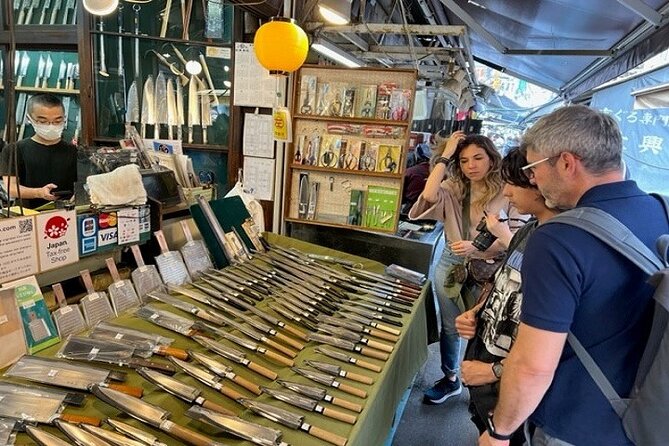
The first stop is Tsukiji Outer Market, where roughly 400 shops occupy an area measuring about 400 meters. The market mainly serves retailers, restaurants, and other buyers, so it gives you a look at the working side of Tokyo’s food trade rather than a staged tourist display.
Your guide explains why many top Japanese chefs come here daily for fresh ingredients and kitchen knives. That background matters when you begin shopping. A Japanese knife is not just a souvenir with a famous name. Different blades suit different food preparation tasks, and the guide can help you understand those differences before you reach the larger knife selection in Kappabashi.
The planned time here is about one hour. That is enough for an introduction and some browsing, but not enough for a slow, meal-heavy market visit. If you want to stop for food, remember that lunch is not included and any personal purchases are your responsibility.
I would treat Tsukiji as the warm-up rather than the main shopping stop. You get a sense of the ingredients, businesses, and cooking culture first. Save your most serious knife comparisons for Kappabashi, where the entire street is built around restaurant and food-service supplies.
Kappabashi Dougu Street: the main stop for kitchen tools
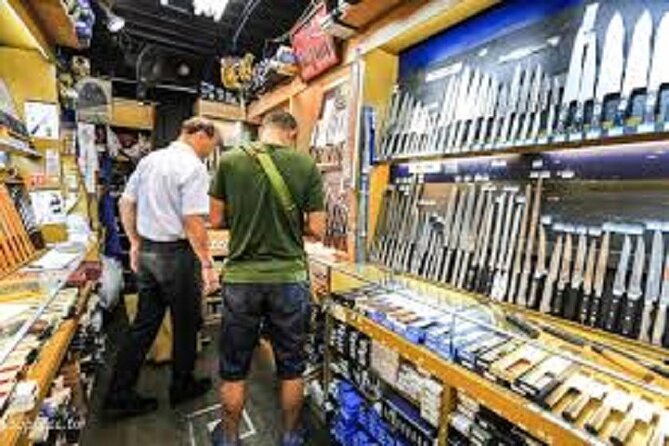
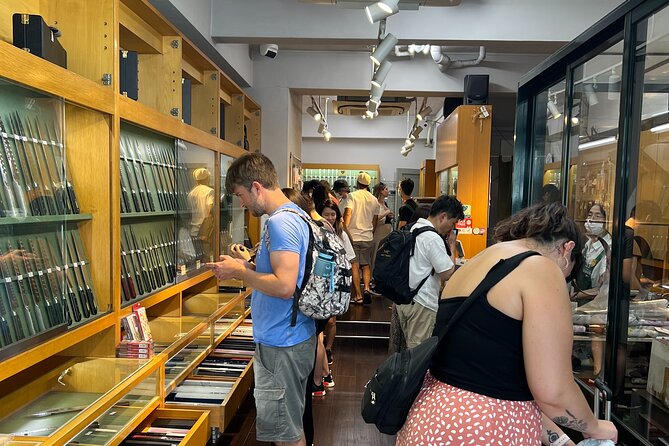
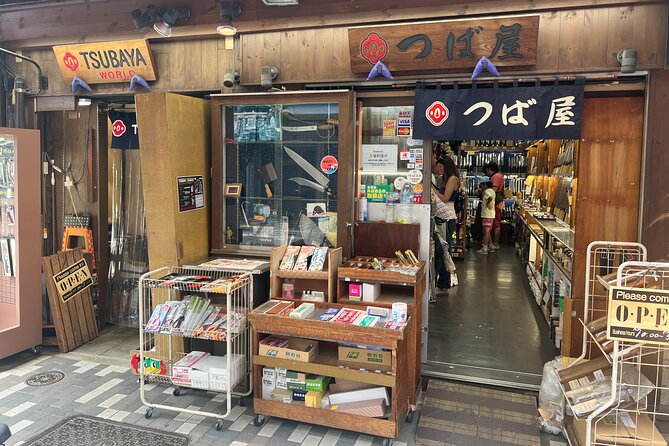
Kappabashi Dougu Street is the heart of this experience. Located in Taito City between Ueno and Asakusa, the street has long supplied the food and beverage industry. Here you can find Japanese kitchenware and knives at prices described as reasonable, though the final cost will depend on the blade, finish, maker, and shop.
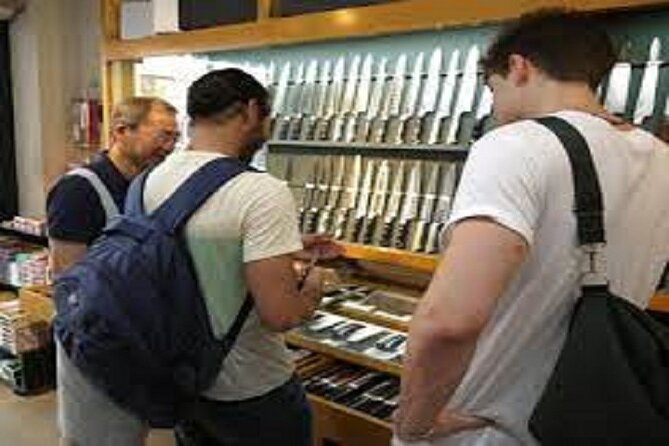
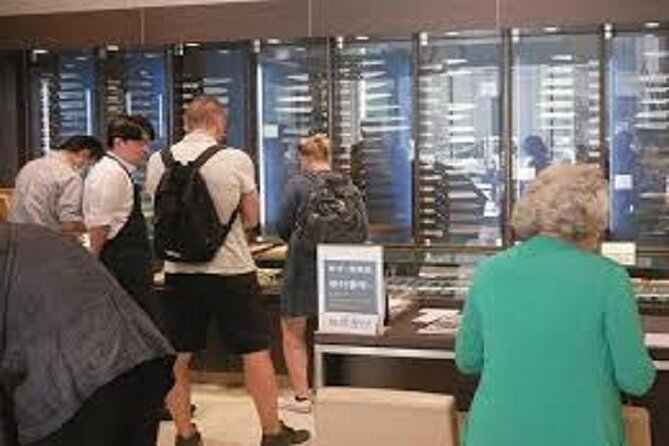
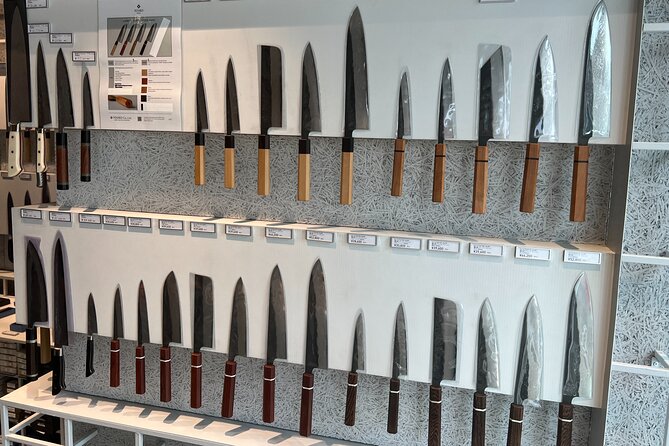
This is where the tour earns its name. You can compare famous Japanese knives and learn about the types used in Japanese cooking. A guide can also help you slow down and think about what you actually need. A beautiful blade is not automatically the right blade for your cooking style, and a large selection can make an unplanned purchase tempting.
The scheduled visit lasts about one hour. That is useful for an introduction, but serious shoppers should keep expectations realistic. You may have time to inspect several shops and identify a knife, yet you may not have enough time for a long search across every store. Ask your guide early how to use the hour well.
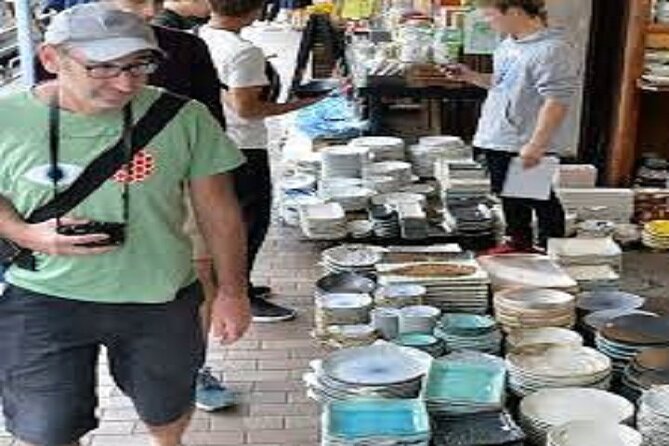
Kappabashi also has plenty beyond knives. You can browse other Japanese kitchenware and visit shops selling plastic food models. Those realistic displays appear outside restaurants across Japan, helping customers understand the menu before ordering. They are an entertaining part of the stop, especially if your companions are less interested in blades.
I like this mix because it prevents the tour from becoming a narrow shopping errand. You can look at professional-style equipment, serving pieces, and restaurant displays, then decide how much shopping suits you. If you are buying a knife, plan for the practical burden of carrying it through the rest of the day.
Asakusa: finish with old Tokyo atmosphere
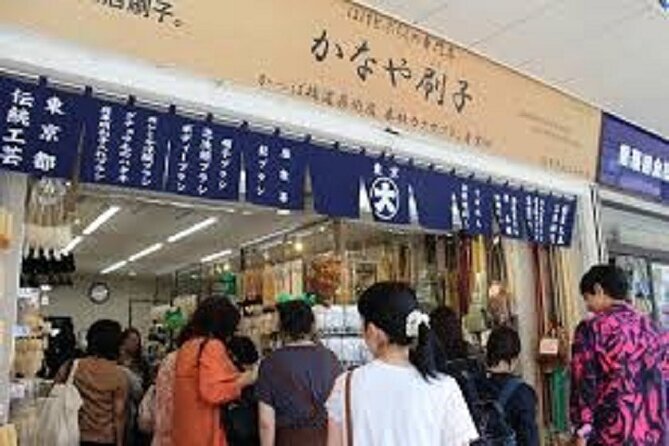
The final planned stop is Asakusa, one of the most recognizable historic areas in Tokyo. The route includes Nakamise-dori, the shopping street leading from Kaminarimon Gate to Senso-ji Temple, along with the smaller and larger retro shopping streets and alleys around it.
The scheduled time here is about one hour. That gives you enough time to see the main approach and get your bearings, but it is not a full Asakusa sightseeing day. The district has more to offer than can fit into the final portion of a four-hour tour, so you may want to remain afterward if your schedule allows.
This is a sensible ending. After the practical focus of the markets and stores, Asakusa gives you a place to enjoy Tokyo at a slower pace. You can continue exploring after the tour rather than rushing back to a hotel or meeting point.
The tour may also finish near Tokyo Skytree. This is not a fully included Skytree visit. Admission for both you and the guide is extra, and the experience specifically notes that neither entry fee is covered. Think of Skytree as an optional end point, not a guaranteed included attraction.
Walking, trains, and the pace of four hours
The experience lasts approximately four hours, and the movement between areas is part of the plan. A past guest described the tour as taking place by foot and train and found that following the guide’s directions worked well. That is useful information for setting expectations: you are not riding in a private car from one door to the next.
The pickup is also on foot within a designated area of Tokyo. The tour offers pickup, but that wording does not mean hotel-door vehicle service. You meet the guide and begin moving through the city on foot, with public transport used as needed.
I would wear comfortable shoes and keep your day bag light. Tokyo walking can be easy in short sections but tiring when combined with market browsing, station transfers, and shopping. Weather matters too. The tour provider specifically advises you to watch your stamina, health, and the conditions outside.
The private format helps with pace. Your group does not need to match strangers, and you can spend more time on knife questions if that is your priority. Still, four hours passes quickly across three districts. If you stop often for food, photos, or extended shopping, the route may feel tight.
Transportation fees are not included. That means you should budget separately for trains or other public transport used during the tour. The guide is there to direct you, but your package does not include a private vehicle.
Other shopping tours in Tokyo

What the private guide adds
A licensed local English-speaking guide is included. The most useful role is not simply pointing out shops. It is helping you understand how the areas fit together and making the knife search less confusing.
Japanese cooking knives come in different forms and serve different jobs. The supplied details do not list specific knife models or brands, so you should not expect a fixed catalog or a promised purchase. Instead, the guide introduces the range and helps you learn what to look for as you shop.
Because only your group participates, you can make the tour more personal by explaining what you cook, whether you are buying for yourself or as a gift, and how much time you want to spend in stores. The guide can then focus the route around your interests, within the time available.
That private setup is especially useful for couples, families, or small groups with mixed interests. One person can ask about blades while others look at plastic food samples or general kitchenware. A large shared group would make that kind of flexible conversation harder.
Price, group size, and what you actually receive
At $107.50 per person, this is a midrange private city experience rather than a low-cost shopping walk. You receive a licensed local English-speaking guide and a four-hour route focused on three districts. Group discounts are available, which may improve the value when several people book together.
The strongest value comes if you want guidance. You are paying for more than directions to Kappabashi. The guide provides a structure for understanding Japanese knives, connects the shopping district with Tsukiji and Asakusa, and helps you handle the walking and train route.
The value is weaker if you only want to visit one knife shop. Kappabashi is accessible as an independent outing, and this tour does not include knife purchases, transport, meals, private driving, or Skytree admission. You should compare the cost with your own interest level and available time.
This is a private activity, so the group arrangement is clear. You cannot combine multiple tour groups, but your own party participates together. That makes the price easier to assess: the more people in your group, the more practical the per-person cost may feel, especially with group discounts.
Practical details that affect your day
Confirmation arrives at booking, and free cancellation is available up to 24 hours before the start time. Changes or cancellations within 24 hours are not accepted for a refund, and the cutoff follows local Tokyo time.
The tour requires a minimum number of participants. If that minimum is not met and the activity is canceled, you are offered another date or experience, or a full refund.
Service animals are allowed, and the route is near public transportation. Most people can participate, but this remains a walking tour, not a seated sightseeing trip. If you have limited stamina, discuss your needs with the provider before booking rather than assuming pickup means vehicle assistance.
Lunch, entrance fees, personal expenses, and transport are extra. Skytree admission is also extra for you and the guide if you choose to include it. These costs are easy to overlook, particularly if you plan to finish the day at Skytree.
Who will enjoy this Tokyo knife tour
I would recommend this tour most strongly if you meet several of these conditions:
- You want to buy a Japanese kitchen knife but need help understanding the choices.
- You enjoy food markets and restaurant culture as much as major monuments.
- You prefer a private experience over a large shared group.
- You want to combine Tsukiji, Kappabashi, and Asakusa in one half-day.
- You are comfortable walking and using trains.
- You want the option to continue independently after the tour.
It is less suited to you if your main goal is a long, leisurely market meal, a full tour of Asakusa, or a guaranteed visit inside Tokyo Skytree. It may also disappoint if you expect a private car, included lunch, or a knife purchase bundled into the price.
The route is particularly useful early in a Tokyo visit. You gain an introduction to three districts and can return later if one deserves more time. You may also prefer to schedule it when you have energy for walking and enough room in your luggage for kitchenware.
Should you book the Kappabashi knife tour?
Book it if the knife shopping is the main reason you are interested and you also want a guided look at Tsukiji and Asakusa. The private English-speaking guide, four-hour route, and train-and-walking help give the experience more value than simply finding Kappabashi on a map.
Skip it if you want the cheapest possible way to shop, plan to spend hours comparing every knife shop, or dislike walking in warm or uncertain weather. In that case, visit Kappabashi independently and keep your budget for the knife itself.
For the right person, this is a smart Tokyo combination: food trade in Tsukiji, cooking tools in Kappabashi, and traditional streets in Asakusa. Just budget for transport and meals, wear good shoes, and remember that Skytree is an optional extra rather than part of the base price.
FAQ
How long does the tour last?
The tour lasts approximately four hours.
Which places does the tour visit?
The route includes Tsukiji Outer Market, Kappabashi Dougu Street, and Asakusa. You may also finish near Tokyo Skytree.
Is the tour private?
Yes. Only your group participates, and multiple tour groups cannot be combined.
Is hotel pickup included?
Pickup is offered on foot within a designated area of Tokyo. The tour does not include a private vehicle.
Is transportation included in the price?
No. Transportation fees are not included. The experience uses walking and may include train travel between areas.
Are lunch and admission fees included?
No. Lunch, entrance fees, and personal expenses are extra. Tokyo Skytree admission is also not included for either you or the guide.
Can I cancel for a refund?
You can cancel up to 24 hours before the experience start time for a full refund. Cancellations or changes made less than 24 hours before the start time are not refunded or accepted.
More Shopping Tours in Tokyo
More Guided Tours in Tokyo
More tours in Tokyo we've reviewed




Shopping Tours, compared.
 ★ 5.0Tokyo Tsukiji Fish Market Food and Culture Walking TourFrom $99
 ★ 5.0Tokyo: Tsukiji Fish Market Food and Walking tourFrom $30
 ★ 4.9Tokyo: Tsukiji Fish Market Guided Walking TourFrom $222 hours
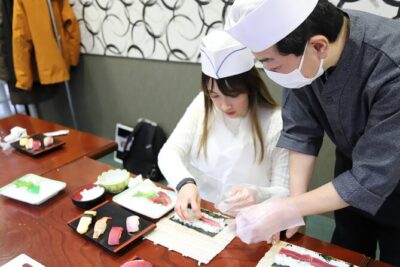 ★ 5.0Tsukiji Fish Market Guided Tour and Sushi Making with Pro ChefFrom $104
★ 4.7Tokyo: Tsukiji Fish Market Food and Culture Walking TourFrom $963 hours
★ 5.0Tsukiji Fish Market Guided Tour and Sushi Making with Pro ChefFrom $104
★ 4.7Tokyo: Tsukiji Fish Market Food and Culture Walking TourFrom $963 hours
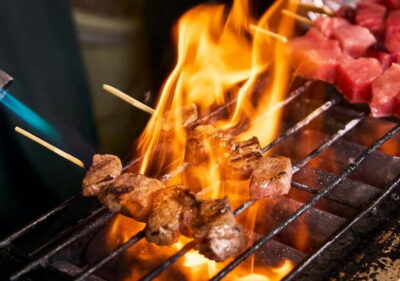 ★ 5.0Tsukiji Fish Market: Street Food & Culture Walking TourFrom $33