
Reviewed · TSUKIJI MARKET TOURS
Calligraphy Experience at Tokyo Ginza and Tsukiji Area
Japanese calligraphy becomes much more interesting when you stop treating it as a picture for the wall and start learning how each brush stroke works. In this private class near Tsukiji, Yuko-sensei leads you from simple patterns to a finished piece featuring your chosen Japanese word, with Kenji-san helping along the way.
I like the private format, since you can ask questions without waiting for a large group to catch up. I also like the useful setting: after class, you can shop in nearby Ginza or head to the Tsukiji food street for dinner. The main consideration is time. At about 90 minutes, this is an introduction, not a full course in Japanese calligraphy.
In This Review
- Key points at a glance
- Starting near Tsukiji with brush, ink, and patience
- Step one: learning the basic patterns
- Step two: taking on a difficult character
- Step three: choosing a favorite Japanese word
- Why a private class makes a difference
- Yuko-sensei and Kenji-san’s teaching style
- Tsukiji after class, Ginza nearby
- Who will enjoy this calligraphy workshop
- Timing, booking, and cancellation details
- Is $51.24 good value?
- Should you book this Tsukiji calligraphy class?
- FAQ
- Where does the calligraphy experience begin?
- How long does the activity last?
- Is the class private?
- Are calligraphy supplies included?
- Can I take my calligraphy home?
- What is the cancellation policy?
Key points at a glance
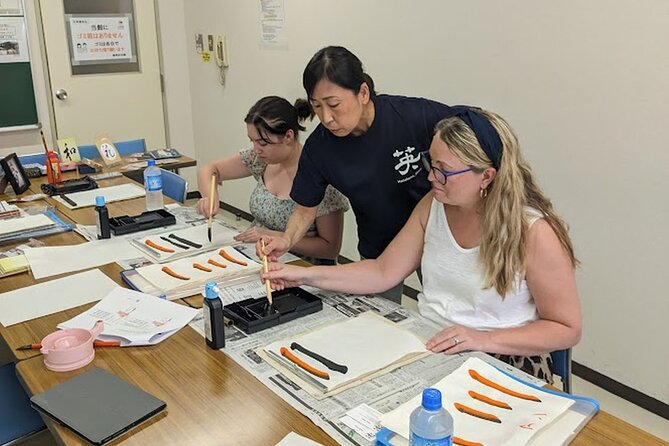
- Private instruction with Yuko-sensei and Kenji-san: Only your group takes part, so the lesson can move at your pace.
- A clear three-step lesson: You begin with basic patterns, try a harder character, then create a piece using your favorite Japanese word.
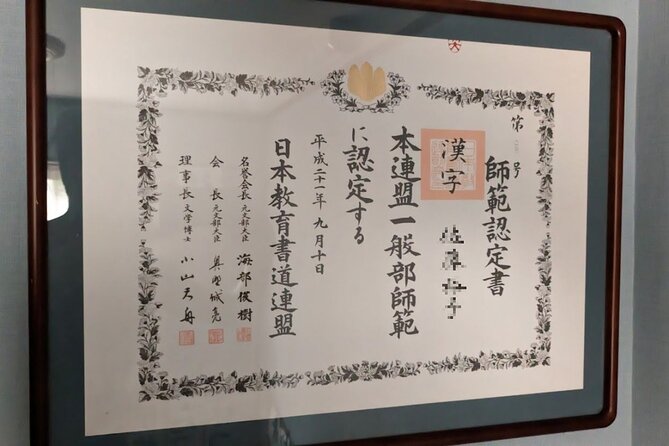
- A qualified calligraphy teacher: Yuko-sensei is authorized by the Japan Educational Calligraphy Federation and works as a professional calligraphy writer.
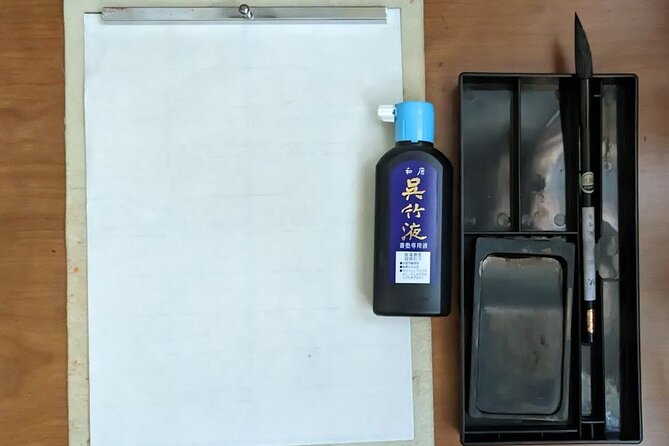
- A souvenir you make yourself: Brushes, ink, paper, and a paper stone are provided, and you take your finished work home.
- A smart Tsukiji and Ginza pairing: The class ends where it begins, close to public transportation, shopping, and the Tsukiji food street.
- A good fit for beginners: The lesson is patient and step by step, with most participants able to take part.
Starting near Tsukiji with brush, ink, and patience
The meeting point is at 3-chōme-15-1 Tsukiji, Chuo City, Tokyo 104-0045. The activity is near public transportation, and you return to the same meeting point when the lesson ends. Since private transportation is not included, plan your own route to Tsukiji and allow time to find the address.
Once you arrive, the tools are ready: brush, ink, paper, and paper stone. That matters because you do not need to buy supplies or know what to bring. You can focus on the feel of the brush and the shape of each stroke.
The class is led by Yuko-sensei, a professional calligraphy writer authorized by the Japan Educational Calligraphy Federation. Kenji-san assists with the lesson. The pair are described as warm, funny, patient, and supportive, with Kenji-san also helping explain the finer points of the art.
That human side is a major reason this class works well for first-time students. Japanese writing can look intimidating when you first see it on signs or menus. Here, you can ask basic questions freely, including questions about the writing systems and the meaning of the characters you are practicing.
A few more Tokyo tours and experiences worth a look



Step one: learning the basic patterns
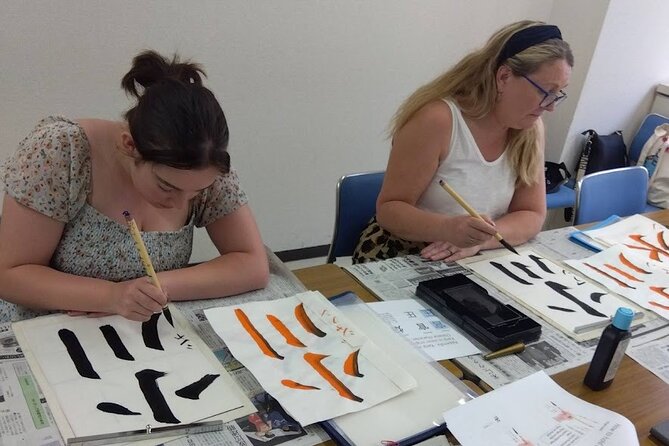
The first part of the lesson covers basic pattern writing. You are not expected to pick up a brush and produce a perfect character at once. Instead, you work on the movements that make Japanese calligraphy look balanced and deliberate.
This is where the private setting earns its keep. Yuko-sensei can show you how to approach a stroke and then give you room to try it yourself. If your hand is too heavy, too light, too fast, or out of position, you can ask for help right away.
The process also gives you a better sense of why calligraphy is more than decorative handwriting. A character may have only a few strokes, but the order, pressure, spacing, and finish all affect how it looks. Even a simple practice sheet can show you how much control the art requires.
Some people may find this opening stage slower than expected. If you are hoping to create a polished wall piece in the first few minutes, you may need to adjust your expectations. The repetition is part of the lesson, and it gives your final work a clearer connection to what you have learned.
Step two: taking on a difficult character
The second step asks you to try a more difficult character. This is the point where the class moves beyond basic marks and begins to test your concentration.
You may find that the character you like best is not the easiest one to write. That is not a problem. The instruction is designed to help you work through the challenge, not simply choose the simplest shape and finish quickly.
I like this part because it gives the lesson a sense of progress. You start with controlled patterns, then attempt something that demands more care. The result may not look like a master’s work, but you will understand more about the decisions behind it.
The class also introduces the difference between writing a character and writing it with calligraphic purpose. A beginner can copy the outline of a symbol, but calligraphy asks you to consider rhythm and balance. That distinction makes the activity useful for anyone who wants more than a quick craft project.
Past participants have especially praised the patience shown during this stage. That is important if you have no art background. You do not need to arrive with a steady hand or any previous calligraphy practice.
Step three: choosing a favorite Japanese word
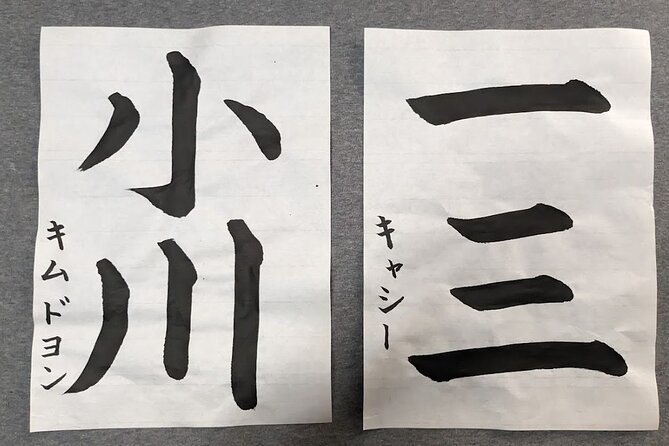
The final step is the personal one. You choose a favorite Japanese word or words and use them to complete your products.
The supplied information does not list a set menu of words, so you should decide in advance what kind of result you want. You can ask your instructor about the meaning and writing of a word you have in mind. The private class gives you time to ask questions rather than relying on a quick explanation.
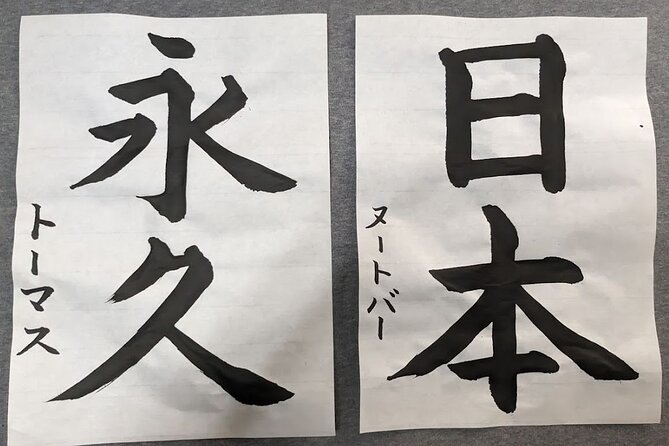
This is also where the class becomes a personal souvenir. Instead of buying a mass-produced character print, you make something connected to your own trip. You can take the finished pieces home for display.
I would not book this class only for the promise of a perfect piece of art. Your work will be made by a beginner, and the appeal is the process as much as the finished item. The value comes from learning the strokes, understanding a little about Japanese writing, and leaving with something you produced yourself.
Photos may also be taken during the class and shared afterward. That gives you another way to remember the lesson, though the finished calligraphy remains the main keepsake.
Why a private class makes a difference
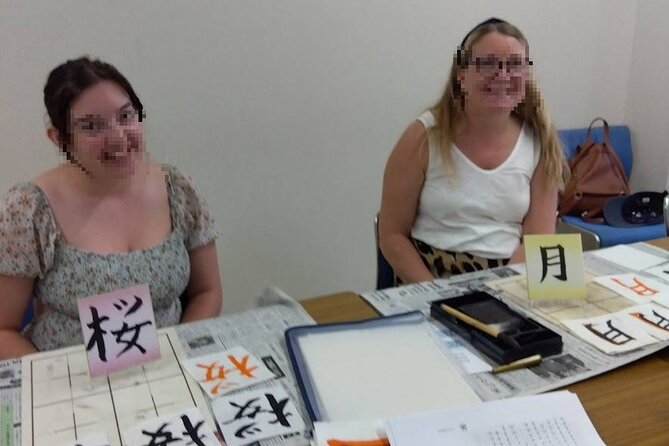
The experience is private, meaning no other group joins your session. Only your own party participates. This is a strong advantage for families, couples, and small groups with different comfort levels.
A family of four can learn together without being mixed into a larger class. A parent can ask questions for children, while a serious beginner can spend extra time on a tricky character. You also avoid the awkwardness of practicing in front of a room full of strangers.
The private format has one tradeoff: the price is per person, not a single fee for the whole group. At $51.24 per person, the cost is higher than a casual drop-in craft activity, but it includes the instruction and the calligraphy tools. For a private 90-minute lesson with a professional teacher, I consider it a fair price if you value personal attention and a take-home result.
The class is particularly good for people who enjoy quiet, hands-on activities. It gives you a pause from Tokyo’s busy commercial districts without taking half a day from your schedule.
A few more Tokyo tours and experiences worth a look




Yuko-sensei and Kenji-san’s teaching style
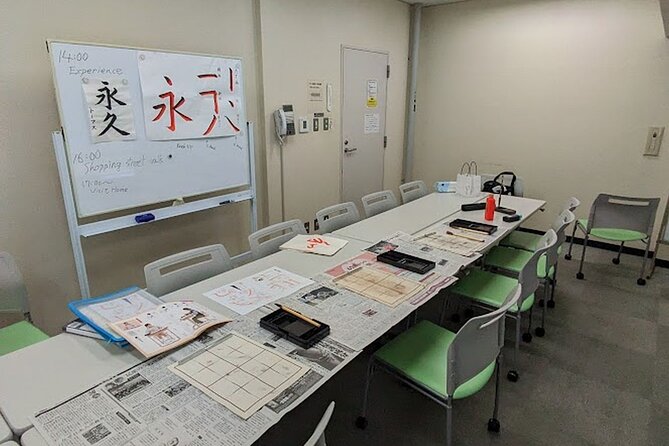
The strongest praise focuses on the instructors. Yuko-sensei is repeatedly described as patient, passionate, and generous with her instruction. Kenji-san is presented as a kind and funny assistant who helps with explanations and keeps the mood relaxed.
That combination matters. Calligraphy can feel formal, especially when you are handling traditional tools for the first time. A patient teacher makes it easier to accept mistakes and try again.
The lesson also covers basic information about Japanese writing, including the differences among kanji, hiragana, and katakana. You should not expect a full language lesson in 90 minutes, but this introduction can help you recognize why Japanese writing uses several systems.
The class is conducted as a cultural activity as well as a craft workshop. You learn about the place calligraphy holds in Japanese culture, then put that knowledge into practice with your own brush.
Several comments about the lesson describe it as informative, educational, artistic, and fun. Those are useful distinctions. This is not simply a demonstration where you watch an expert write. You spend time practicing yourself.
Tsukiji after class, Ginza nearby
The class begins and ends at the Tsukiji meeting point, which makes planning easy. Afterward, you can continue your day without arranging a separate transfer.
Tsukiji food street is nearby and offers a natural way to follow a creative morning or afternoon with a meal. Dinner is not included in the activity, so budget separately and choose what suits your appetite. The food street is an optional add-on, not part of the 90-minute lesson.
Ginza is also close enough for shopping. This gives you two very different ways to use the surrounding area. You can head toward Ginza for department stores and retail browsing, or stay near Tsukiji for food.
Do not confuse those nearby options with included tour stops. The activity itself is the calligraphy class, and it ends back at the meeting point. The location is valuable because it puts you near two well-known Tokyo districts, not because the class provides a guided tour of either one.
I would schedule this class with a little space before your next fixed booking. The lesson is approximately 1 hour and 30 minutes, and local transport time is your responsibility. A relaxed schedule lets you enjoy the class rather than watching the clock.
Who will enjoy this calligraphy workshop
This experience suits first-time visitors who want a cultural activity with a clear result. You do not need prior calligraphy training, and most people can participate.
It is also a good choice for:
- Families looking for a shared activity
- Couples who want a small souvenir made during the trip
- Solo visitors who prefer direct instruction
- People interested in Japanese writing and visual arts
- Anyone who wants a quieter break from sightseeing
- Repeat visitors seeking a hands-on activity rather than another landmark
Children may enjoy the brushwork, but the supplied information does not specify a minimum age. If you are booking for young children, confirm suitability before reserving.
This is less suitable if you want an extensive course, a tour of several neighborhoods, or a large cultural performance. The lesson has one clear focus: learn basic calligraphy and make a personal piece.
Timing, booking, and cancellation details
The experience lasts about 90 minutes. It is booked an average of 34 days ahead, so reserve early if your Tokyo dates are fixed or if you want a particular time.
You receive confirmation when booking, and the activity uses a mobile ticket. You do not need to arrange private transportation, since none is included. The meeting point is near public transportation, and the class returns there at the end.
Free cancellation is available up to 24 hours before the local start time. Cancel at least 24 hours ahead for a full refund. Cancellations or changes made less than 24 hours before the start are not accepted for a refund.
The activity is described as basically low risk, but personal travel insurance is not included. That is standard advice for an optional activity, and you remain responsible for getting to the meeting point.
Is $51.24 good value?
The price makes the most sense when you count the parts together: a private lesson, a professional instructor, an assistant, prepared tools, practice time, and a finished item to take home.
A cheaper group workshop might suit you if you only want to try a brush once or twice. This class offers more personal attention and lets you ask as many questions as you like. For a family or small group, that private setting can make the cost feel worthwhile.
The souvenir also has more meaning than a purchased object. You choose the word, write it yourself, and take the result home. It may not be flawless, but it records an actual skill you practiced in Tokyo.
I would regard the price as reasonable for someone who values instruction. If you are mainly seeking a polished souvenir and do not care about learning the process, buying a finished calligraphy piece may be a better use of your money.
Should you book this Tsukiji calligraphy class?
Book it if you want a calm, personal cultural activity and like the idea of leaving Tokyo with something you made yourself. The private class, patient teaching, prepared tools, and convenient location create a solid package at $51.24 per person.
I would especially recommend it for families, couples, and beginners who want to ask questions without feeling rushed. Pair it with a meal in Tsukiji or shopping in Ginza, but keep those plans separate from the class itself.
Skip it if your schedule is packed, if you want a longer formal course, or if you prefer sightseeing that requires little participation. For everyone else, this is a thoughtful way to spend 90 minutes learning a traditional Japanese art with Yuko-sensei and Kenji-san.
FAQ
Where does the calligraphy experience begin?
It begins at 3-chōme-15-1 Tsukiji, Chuo City, Tokyo 104-0045, Japan.
How long does the activity last?
The calligraphy class lasts approximately 1 hour and 30 minutes.
Is the class private?
Yes. Only your group participates, and no other group joins the activity.
Are calligraphy supplies included?
Yes. Brushes, ink, paper, and a paper stone are prepared for the class.
Can I take my calligraphy home?
Yes. The class is designed to help you create products for display at home, and you can take your finished work with you.
What is the cancellation policy?
You can cancel up to 24 hours before the local start time for a full refund. Cancellations or changes made less than 24 hours before the start are not accepted for a refund.
More Craft Workshops in Tokyo


More Ginza Tours in Tokyo
More Tsukiji Market Tours in Tokyo

More tours in Tokyo we've reviewed




Tsukiji Market Tours, compared.
 ★ 5.0Tokyo Tsukiji Fish Market Food and Culture Walking TourFrom $99
 ★ 5.0Tokyo: Tsukiji Fish Market Food and Walking tourFrom $30
 ★ 4.9Tokyo: Tsukiji Fish Market Guided Walking TourFrom $222 hours
 ★ 5.0Tokyo Sushi Making Class in Tsukiji with Professional ChefFrom $49
 ★ 5.0Tsukiji Fish Market Guided Tour and Sushi Making with Pro ChefFrom $104
★ 4.7Tokyo: Tsukiji Fish Market Food and Culture Walking TourFrom $963 hours
★ 5.0Tsukiji Fish Market Guided Tour and Sushi Making with Pro ChefFrom $104
★ 4.7Tokyo: Tsukiji Fish Market Food and Culture Walking TourFrom $963 hours