
Reviewed · GO-KARTS
Official Japan Go-Kart Through Tokyo Bay / Ginza (IDP Required)
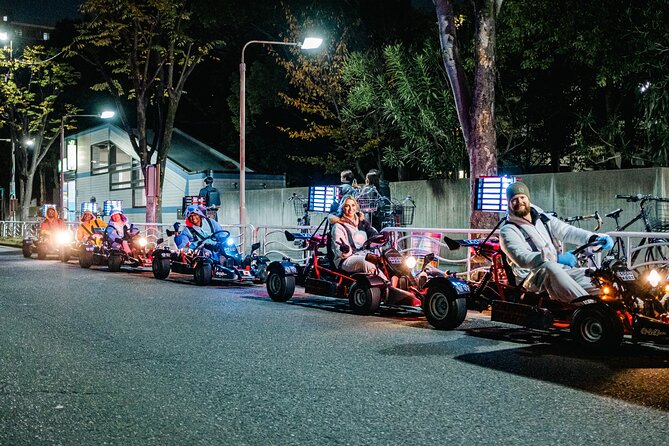
Tokyo is best seen at street level, and this tour gives you an unusually exciting way to do it. You drive a go-kart on public roads through Ginza, Asakusa, Akihabara, and Tokyo Bay, following guide vehicles that keep the group together.
I like the detailed road-safety briefing and the two support vans, one leading and one behind. I also like the free costume choice and included photos, which turn a simple drive into a memorable Tokyo story. The big catch is serious: you must bring the correct driving documents, or you can be refused with no refund.
In This Review
- Key points to know
- What this Tokyo go-kart tour is really like
- Toyosu and the Tokyo Bay opening
- Ginza by go-kart
- Nihonbashi, where old roads meet new Tokyo
- Akihabara and Ueno from the street
- Asakusa and the Tokyo Skytree view
- Costumes and the curious Tokyo audience
- Safety, traffic, and the support vans
- The evening departure can change the mood
- The documents you must check before paying
- Price and practical value at $85.89
- Who should book this experience
- Should you book the JapanKart Tokyo Bay and Ginza tour?
- FAQ
- Do I need an International Driving Permit?
- Is a 1968 Vienna Convention permit accepted?
- Are there different rules for some nationalities?
- What areas does the route visit?
- What should I wear?
- What happens if the weather is bad?
Key points to know
- You drive on real Tokyo roads: This is not a closed track or a slow amusement ride.
- A 1949 Geneva Convention IDP is required: A 1968 Vienna Convention permit is not accepted in Japan.
- The lead and follow vans add confidence: They guide the route and help keep the group together in traffic.
- The route covers East Tokyo highlights: Expect Toyosu, Ginza, Nihonbashi, Akihabara, Ueno, Asakusa, and views near Tokyo Skytree.
- Costumes, fuel, and photos are included: You may choose a supplied costume, provided it is safe to drive in.
- Arrive 15 minutes early: The operator allows a maximum of 10 minutes after the reserved start time.
What this Tokyo go-kart tour is really like
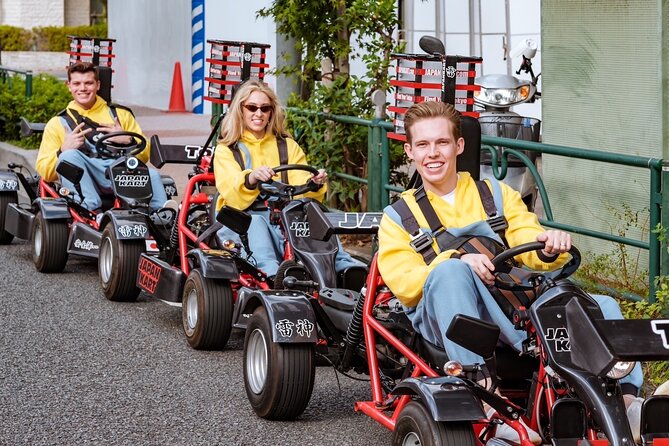
This is sightseeing with a steering wheel. Instead of walking from Ginza to Asakusa or watching Tokyo traffic from a bus window, you sit low in a go-kart and pass through the city under your own control.
The karts are described as easy to handle once you have completed the briefing. You still need to pay close attention. Japan drives on the left, and the tour uses public streets, traffic lights, and ordinary city traffic. That makes the experience more exciting, but it also means this is not the right pick if you want a relaxed ride with little responsibility.
The group can include up to 20 people. Support vans at the front and rear guide the line, manage the pace, and help prevent anyone from being left behind. That arrangement matters in Tokyo, where traffic lights can split a group in seconds. The route may pause so everyone can regroup.
There is no regular sightseeing commentary while you drive. You get a safety and operating briefing, but this is primarily a driving activity, not a guided history tour. I would pair it with a conventional walking tour or museum visit if you want detailed explanations of the neighborhoods.
A few more Tokyo tours and experiences worth a look
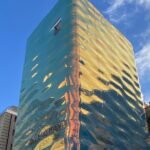
Toyosu and the Tokyo Bay opening
The route begins near the JapanKart shop at 2-chōme-18-15 Azumabashi in Sumida City, then heads toward the Tokyo Bay area and Toyosu. Toyosu is known for its modern waterfront setting and the Toyosu Fish Market, one of Tokyo’s major seafood centers.
The Toyosu stop is listed as about 10 minutes, with no separate admission charge. Think of it as a short pause to stretch, take photos, and enjoy a change from the kart seat rather than a full market visit.
This first portion helps you get used to the kart and the road pattern. You can settle into the pace before the route reaches denser central districts. If you expect time to browse the fish market or eat a sushi breakfast, adjust your expectations. The tour passes through the area, but it is not a market food tour.
Ginza by go-kart
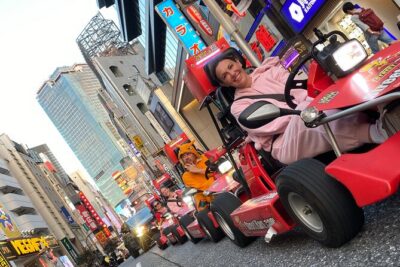
Ginza is one of the most striking parts of the route. Its broad streets, department stores, designer shops, bright signs, and polished storefronts create a sharp contrast with old Tokyo neighborhoods.
Seeing Ginza from a go-kart gives you a different view than walking its shopping streets. You feel the scale of the avenues and get a quick look at the city’s luxury center without spending the afternoon inside stores or restaurants.
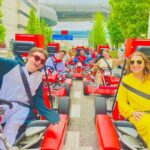
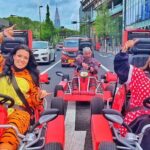
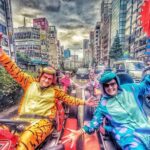
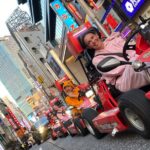
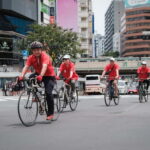
The tradeoff is that you will not stop to shop, eat, or examine buildings closely. This is a moving view, so keep your eyes on the road and enjoy the city between traffic signals. The costume adds a comic touch here. You may attract smiles, waves, and phone cameras from people on the sidewalks and in nearby vehicles.
Nihonbashi, where old roads meet new Tokyo
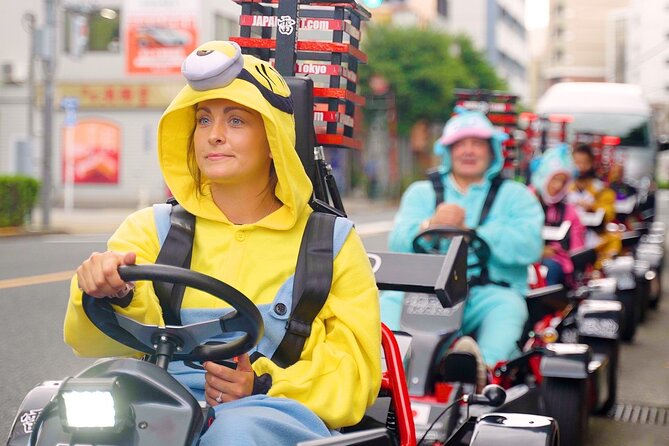
Nihonbashi Bridge marks one of Tokyo’s historic centers. It was the starting point for major roads during the Edo period, and today it sits among office towers, department stores, and busy city streets.
From the kart, you get a quick sense of that contrast. Traditional Tokyo references appear beside modern commercial buildings, all within a compact central area. It is a good example of why this route works: you cover several parts of the city without spending most of the day changing trains.
Again, this is a pass-through experience. The guide does not provide a long explanation of the bridge while you drive. If Nihonbashi interests you, return later on foot for a slower look.
Akihabara and Ueno from the street
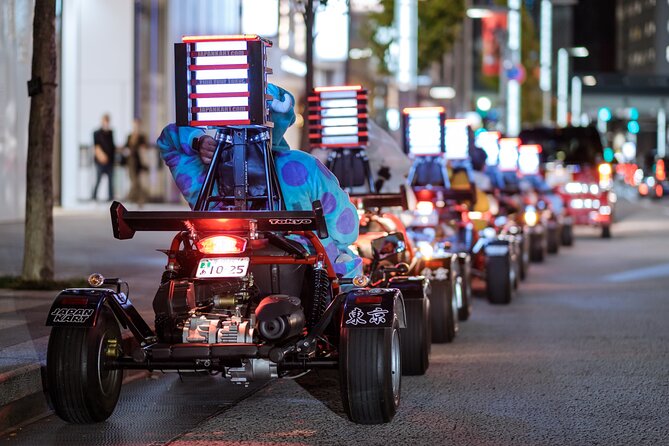
Akihabara brings a completely different mood. The district is famous for anime, gaming, electronics, arcades, and multi-story shops. Driving through it lets you see the signs and crowds as part of the street scene, rather than approaching the neighborhood as a shopping mission.
You will not have time to browse collectible shops or play arcade games during the tour. Still, a go-kart line moving through Akihabara fits the area’s playful character remarkably well.
The route also includes Ueno, a major cultural area with Ueno Park, museums, a zoo, temples, and seasonal cherry blossoms. From a kart, you get a brief look rather than a proper visit. I like having Ueno included because it broadens the tour beyond neon and shopping districts, but you should set aside another visit if you want the park or museums.
A few more Tokyo tours and experiences worth a look
Asakusa and the Tokyo Skytree view
Asakusa is the route’s strongest connection to old Tokyo. The district is home to Senso-ji Temple, Nakamise shopping street, traditional snacks, crafts, and a more historic atmosphere.
You drive near the area rather than stopping for a temple visit. That is important. The tour gives you a lively street-level introduction, but it cannot replace time walking through the temple grounds and shopping lanes.
The route also passes near Tokyo Skytree, which rises 634 meters above the city. This is one of the clearest photo opportunities, especially when the group stops in an area with a view toward the tower or Tokyo Bay. Some departures include a stop near the Rainbow Bridge for pictures.
The photo pause is short, commonly described as around five minutes in one account. Use it wisely. Get your photos first, then take a breath and enjoy the view. The operator includes photos from the tour, which is useful because handling a phone while driving is not appropriate.
Costumes and the curious Tokyo audience
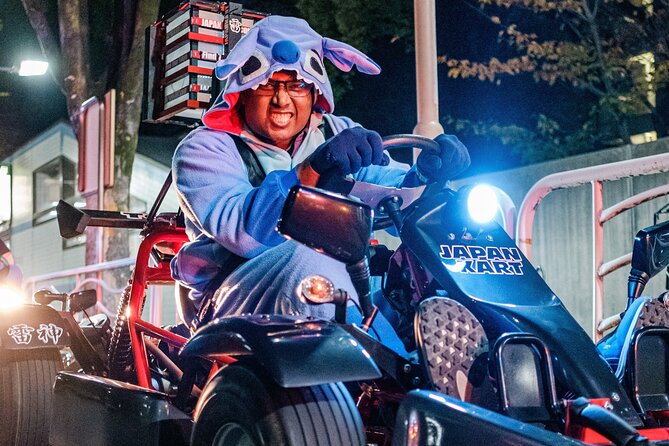
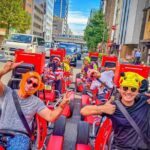
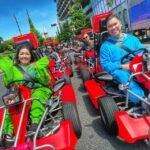
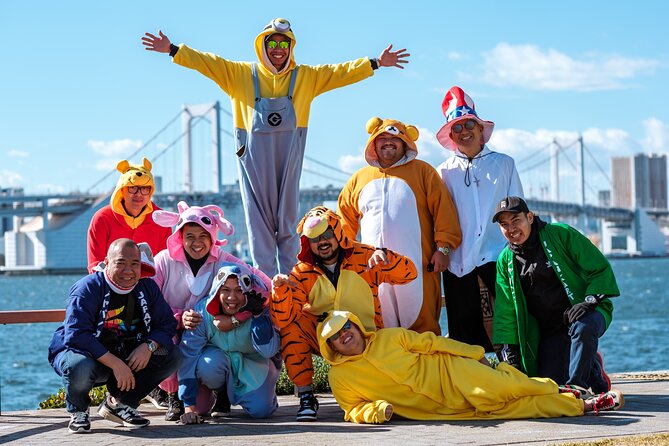
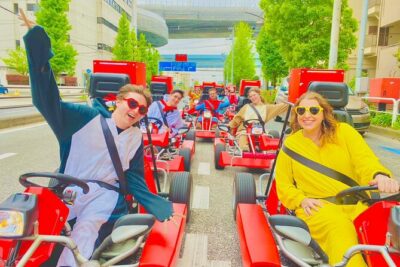
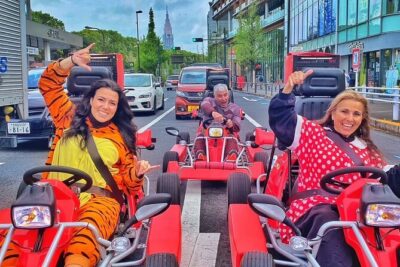
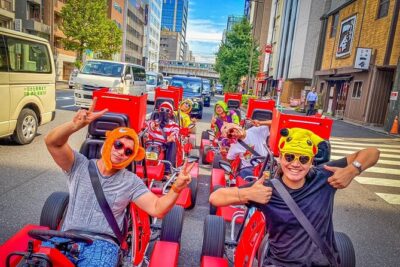
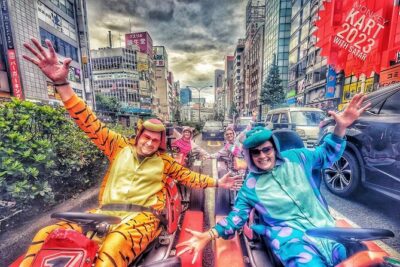
Costumes are included, and choosing one is part of the fun. Past participants have described dressing as Pikachu and a Minion, among other characters. You can also choose not to make the costume the center of the experience, but the supplied outfits add a playful edge.
The costumes attract attention. People may wave, smile, or take pictures as the group passes. That public reaction is part of the appeal, but it also means you need to be comfortable being noticed. If you prefer to blend into the city, this is not a discreet sightseeing option.
Wear practical clothes. Long skirts, high heels, and sandals are not permitted. Comfortable shoes and clothing that will not catch on the kart are the sensible choice.
Safety, traffic, and the support vans
The strongest part of the operation is the preparation. Before leaving, you receive instruction on kart handling, Japanese road rules, and safe driving. This matters even more if you are not used to driving on the left.
The lead van shows the route, while the rear van helps protect and marshal the group. The staff work to keep everyone together, though traffic lights can still create short waits. You need to follow directions, respect traffic laws, and avoid racing other drivers.
This is not a track experience. You are not supposed to compete with the other karts or treat the public road as a racetrack. The fun comes from the unusual vehicle, the city views, and the shared spectacle.
The karts are described as having a manageable speed and handling well. Still, I would not recommend booking this as your first ever motor vehicle experience if you are nervous in traffic. Most participants can take part, but you need to be alert and physically comfortable sitting and driving for a long outing.
The evening departure can change the mood
A late afternoon departure can be especially appealing. One outing began in daylight, passed through sunset, and reached Tokyo’s bright city lights during the same ride.
That timing gives you more visual variety than a midday trip. Toyosu and the bay can look open and modern in daylight, while Ginza and Akihabara become more colorful after dark.
Weather matters. The activity requires good conditions, and poor weather can lead to cancellation, a different date, or a full refund. Bring that possibility into your schedule, especially if this is one of the main activities during a short Tokyo stay.
The documents you must check before paying
This is the most important practical issue, and it has caused preventable disappointment. You must bring:
- Your passport
- Your valid driving license from your home country
- An International Driving Permit issued under the 1949 Geneva Convention
The IDP must be an official booklet. A paper or A4 printout is not accepted. A permit issued under the 1968 Vienna Convention is also not accepted in Japan.
The permit must come from an approved issuer in your country. Examples given by the operator include AAA or AATA in the United States, AAA in Australia, AA or RAC in the United Kingdom, and CAA in Canada.
There are special rules for licenses from Switzerland, Germany, France, Taiwan, Belgium, and Monaco. In those cases, you need your original license plus a Japanese translation from the Japan Automobile Federation, also called JAF. The passport is still required.
Do not assume a normal international license from a rental-car website will work. Check the issuing organization and format before booking. If the documents are wrong, the operator can deny participation and the payment will not be refunded.
The confirmation email also includes an instructional video. Watch it before arriving. It gives you a head start and reduces the chance of losing valuable briefing time.
Price and practical value at $85.89
At about $85.89 per person, this costs more than a basic Tokyo neighborhood walk, but the comparison is not quite fair. The price includes the kart, fuel, costume, guide support, and photos. You are also paying for a route that links several distant districts in about two and a half hours.
I see good value here if you want an unusual activity and would otherwise spend money on separate transport between East Tokyo sights. You get a memorable city ride rather than a standard attraction visit.
The value drops if you mainly want cultural interpretation, shopping time, or close access to temples and museums. You will see many places, but most are viewed from the road. The tour is about motion and atmosphere, not extended stops.
The cancellation policy is straightforward but strict. Cancel at least 24 hours before the start for a full refund. Changes or cancellations within 24 hours are not accepted for a refund. Arriving late can also cost you the booking, so plan to reach the meeting point 15 minutes early. The operator may wait no more than 10 minutes after the scheduled time.
Do not drink alcohol before the tour. That rule is explicit, and it makes sense given the public-road setting.
Who should book this experience
I would recommend it to adults, couples, families with older children who meet the driving rules, and anyone who wants a story to tell after Tokyo. It suits confident drivers who enjoy novelty, public attention, and a planned route through busy streets.
It is also a good choice if you have already seen Tokyo’s major sights and want a fresh way to connect neighborhoods. The experience can appeal across age groups, but each driver must meet the licensing requirements and handle a motorized kart safely.
I would skip it if you dislike city traffic, cannot obtain the correct IDP, want a quiet tour, or expect a guide to explain every landmark. It is also not ideal for someone whose footwear or clothing makes kart driving difficult.
Should you book the JapanKart Tokyo Bay and Ginza tour?
Book it if you want active sightseeing, a little harmless silliness, and a fast look at several East Tokyo districts. The lead and rear vans, briefing, regrouping, and photo stops make the outing feel organized rather than improvised.
Before booking, verify your IDP format, check your shoes and clothing, watch the instructional video, and allow extra time to reach the shop. If those details are in order, the $85.89 price buys an experience that is far more distinctive than another ride on the Tokyo subway.
FAQ
Do I need an International Driving Permit?
Yes. Most participants must present a valid home-country driving license, passport, and an International Driving Permit issued under the 1949 Geneva Convention.
Is a 1968 Vienna Convention permit accepted?
No. International Driving Permits issued under the 1968 Vienna Convention are not accepted in Japan for this activity.
Are there different rules for some nationalities?
Yes. Participants with licenses issued in Switzerland, Germany, France, Taiwan, Belgium, or Monaco need their original license and a Japanese translation issued by the Japan Automobile Federation.
What areas does the route visit?
The route includes Toyosu, Ginza, Nihonbashi, Akihabara, Ueno, Asakusa, and an area near Tokyo Skytree. It also includes photo opportunities along the way.
What should I wear?
Do not wear long skirts, high heels, or sandals. Costumes, fuel, karts, and tour photos are included.
What happens if the weather is bad?
The tour may be canceled because of poor weather. You can then receive a full refund or reschedule, depending on availability.
More Go-Kart Tours in Tokyo
More Ginza Tours in Tokyo


More tours in Tokyo we've reviewed
Go-Karts, compared.
 ★ 5.0Flagship 2-Hours Official Street Go-Kart Tour – Tokyo Bay ShopFrom $642 hours to 2 hours 30 minutes (approx.)
 ★ 5.0Official Street Go-Kart in ShibuyaFrom $76
 ★ 5.0Official Street Go-Kart Tour – AkihabaraFrom $61
 ★ 5.0Tokyo Go Kart: Asakusa, Skytree, and Akihabara **IDP MUST**From $99
 ★ 5.0Shibuya Official Street Go-Kart in Shibuya AnnexFrom $69
 ★ 4.7Tokyo: Asakusa, Skytree & Akhihabara Go-Kart City ExperienceFrom $961h 10m