
Reviewed · CRAFT WORKSHOPS
Tokyo: Chopstick-Making Workshop
Making chopsticks turns a simple souvenir into something you can actually use. At this one-hour workshop in Shinjuku, you choose the wood and length, shape the pair with a hand plane, sand the edges, and finish the surface with natural oil. I like the hands-on work and the chance to add your name in Japanese or English. I also like the low price: at $6 per person, it is an easy activity to fit into a Tokyo day.
The staff are a major strength. Koji, Mimi, Masa, Lucy, Shu, Kiwa, and others are repeatedly praised for clear instructions, patience, and friendly help. The main thing to consider is the location. The workshop is on the 10th floor of the Shinjuku West Square Building, and finding the entrance can take a little care.
In This Review
- Key points
- Why this small workshop works so well in Tokyo
- Finding the workshop in Shinjuku
- Choosing wood with color and character
- Shaping the chopsticks with a hand plane
- Sanding for a comfortable finish
- Natural oil and the final reveal
- Adding your name in Japanese or English
- The English-speaking staff make the difference
- Who will enjoy this one-hour activity
- Is $6 a good value?
- Booking and timing tips
- Should you book the Tokyo chopstick workshop?
- FAQ
- Where is the chopstick-making workshop held?
- How long does the activity last?
- Is the workshop suitable for beginners?
- What is included in the $6 price?
- Can I have my name engraved?
- Can I cancel or pay later?
Key points
- Choose your own wood: Pick from several types with different colors, grains, and textures. The first two choices are included, while some more unusual woods cost extra.
- Use a real hand plane: You shape the chopsticks while they are held in place, then refine them with sandpaper.
- Personalize the finished pair: Add an engraving in Japanese, English, or your own language. Light-colored wood can also allow more detailed engraving.
- Beginner-friendly instruction: English-speaking staff guide you through each stage and help if you make a mistake.
- A practical Tokyo souvenir: You leave with chopsticks you made yourself, not just another small item bought from a shop.
- Easy to fit into a busy day: The activity lasts about an hour and costs only $6 per person, with free cancellation up to 24 hours ahead.
Why this small workshop works so well in Tokyo
Tokyo can fill your day with grand sights, crowded shopping streets, and enough neon to make your eyes tired. This chopstick workshop offers a quieter hour. You sit down, work with your hands, and leave with something personal.
I like that the activity is simple without feeling empty. You are not expected to master a difficult craft. The basic task is to shape prepared pieces of wood, smooth them, and finish them. That makes it suitable for first-timers, children, couples, families, groups, and solo visitors.
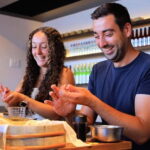
The activity has earned a 4.9 rating from 348 ratings, and the praise is remarkably consistent. The strongest theme is the staff. Koji is often singled out for patient, clear help, while Mimi, Masa, Lucy, Shu, Kiwa, and Jen are also praised for making the process easy to follow. You get real assistance rather than a quick demonstration followed by guesswork.
A few more Tokyo tours and experiences worth a look

Finding the workshop in Shinjuku
The meeting point is the Shinjuku West Square Building, 10th floor, at 35.6959774, 139.6984349. The address is central to the Shinjuku area, but the entrance is the one logistical wrinkle worth taking seriously.
One participant found the building entrance hard to locate. That is useful advice for you: allow a few extra minutes, check the building name carefully, and use the coordinates if your map app places you near several large office buildings. The workshop itself is upstairs, so do not assume the street-level entrance will look like a craft studio.
Transportation is not included, and you make your own way to the building. Once inside, the one-hour format makes this easy to pair with other Shinjuku plans. It can work before dinner, between shopping stops, or as a calmer evening activity after a long day on foot.
Choosing wood with color and character
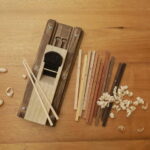
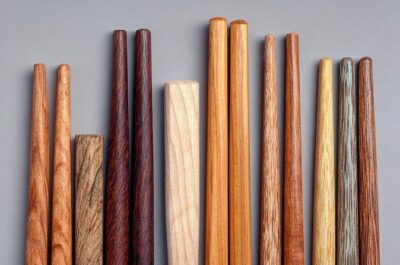
The workshop begins with one of the most enjoyable decisions: selecting your wood. You can compare different colors, grains, and textures, then choose a length that suits your hand. Shorter chopsticks may appeal to children, while adults can select a longer pair if that feels more natural.
The basic selection includes two types of wood. Other choices are available for an additional charge, so ask about the price before choosing one of the more unusual pieces. One participant was especially drawn to a purple-toned wood, which shows why this stage is more than a routine material choice.
This is also where your finished pair begins to feel personal. Two sets made at the same table may look completely different because of the wood alone. A pale, understated pair will have a different character from a darker or more colorful choice.
Do not rush this part. Look at the grain and hold the wood if you can. The point is not to find the technically best material. It is to choose the piece you will enjoy seeing at home.
Shaping the chopsticks with a hand plane
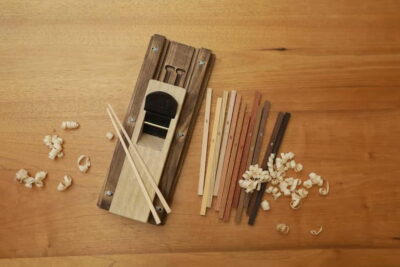
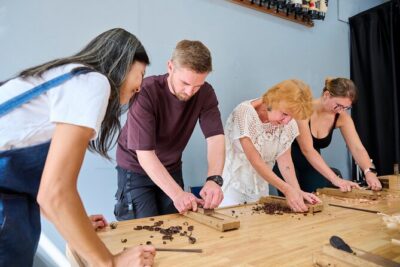
After choosing your wood and length, you place the pieces on a stand and use a hand plane to carve them into shape. Staff explain how to hold and guide the tool, then help you work gradually.
The process is deliberately basic. You remove small amounts of wood instead of trying to create the final form in one bold stroke. That makes it forgiving, and it gives you time to notice how the grain feels under the tool.
I like this stage because it gives the workshop its craft element. You are not simply decorating a finished product. You are changing the shape yourself, with the small sounds and resistance of wood under a hand tool.
Still, you need to pay attention. Chopsticks should match reasonably well, and it is easy to remove too much from one piece if you work quickly. The instructors are there to correct your technique and help you judge the shape. If you make a mistake, staff may allow you to start again, depending on the situation and available materials. One participant ended up with a bonus third chopstick after restarting.
That possibility takes the pressure off, but do not count on receiving an extra piece. Treat the first pair as your project and listen closely when the instructor shows you how much to remove.
Sanding for a comfortable finish
Once the main shape is ready, you use sandpaper to smooth the surface and round off the edges. This step may sound less exciting, but it matters most for daily use.
A chopstick should feel comfortable between your fingers. Rough spots, sharp edges, or an uneven finish will be noticeable every time you eat with it. Sanding lets you correct small flaws left by the hand plane and bring out the natural look of the wood.
This is the most relaxing part of the activity. You can work slowly and compare the two pieces as you go. The workshop is also forgiving of different speeds. Some people finish quickly, while others take longer to refine the surface. Staff have allowed participants to continue beyond the scheduled hour when needed, though your exact time may depend on the session.
If you want to add your own pattern, ask before you begin. The standard personalization option is engraving, and detailed carving tools may not always be available. One participant wanted to carve a pattern and was given other knives and scissors to experiment with, but that should be viewed as an occasional accommodation, not a promised part of the package.
A few more Tokyo tours and experiences worth a look



Natural oil and the final reveal
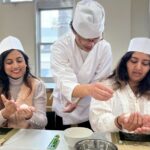
After sanding, you apply natural oil to protect the wood and give it a soft, polished appearance. This small finishing step changes the look of the grain and helps the chopsticks feel more complete.
The oil is included in the activity. So are the wood selection from the standard range, carving and shaping, sanding, and smoothing. Meals and transportation are not included, which is hardly surprising for a short craft session, but it helps you understand exactly what the $6 covers.
The final result will reflect your own level of patience. It may not look like a factory-perfect pair, and that is part of the charm. Small variations remind you that you made them. If you want a flawless decorative object, a shop-bought pair may be better. If you want a useful souvenir with a story attached, this is the better choice.
Adding your name in Japanese or English
Engraving is optional, but it gives the finished pair a clear connection to your trip. You can request your name in Japanese, English, or your native language.
Light-colored wood is especially useful if you want more than simple lettering. Detailed engraving, including pictures, may show more clearly on pale pieces. Ask the staff what will work best with your chosen wood before you settle on a design.
Japanese lettering makes a particularly nice souvenir, but check the spelling carefully. If you want a Japanese version of your name, have the preferred spelling ready or ask the English-speaking staff for help. The engraving is a final touch, so it is worth taking a moment before approving it.
The activity description lists engraving as an optional addition, but does not specify its price. Ask at the workshop if there is a separate charge.
The English-speaking staff make the difference
The tools are manageable, but good instruction still matters. The staff explain the process in English and remain available throughout the workshop.
Koji is repeatedly praised for patient, step-by-step help. Mimi is described as attentive and clear, while Masa receives praise for making the instructions easy to understand. Lucy is also noted for encouragement, especially when working with a child. Other staff members, including Shu, Kiwa, Jen, Fu, Arma, Kazuki, and Yuki, are praised for being friendly and involved.
That range of names points to a consistent feature of the workshop: you are not left alone with unfamiliar tools. The staff help with shaping, sanding, corrections, and questions about the wood. Some also offer suggestions for food and places to visit in Tokyo, which can be useful if you are still planning your Shinjuku day.
The activity is suitable for beginners and wheelchair accessible. The supplied information does not specify the exact layout or the assistance available for every mobility need, so contact the provider if you require particular arrangements.
Who will enjoy this one-hour activity
This is a strong choice for families because the steps are easy to understand and the finished object is useful. A nine-year-old participant was able to follow the process successfully, and the workshop is described as suitable for all ages.
Couples can make matching or contrasting pairs. Friends can compare wood choices and designs, while solo visitors get a low-pressure activity where the staff provide plenty of help. It also works well for anyone who wants a break from Tokyo sightseeing without giving up the feeling of doing something distinctly Japanese.
I would especially recommend it after a busy day. Sanding wood is calm, repetitive work, and one participant liked it as simple activity after hours of walking. The workshop also suits a rainy-day plan because it takes place indoors, though the supplied information does not give a weather-specific guarantee or describe the full venue layout.
You may want to skip it if you dislike guided craft activities, want a long traditional woodworking lesson, or expect to create a highly complex design. This is a short introduction, not an advanced class. The tools and process are accessible, but the finished chopsticks depend on your own care.
Is $6 a good value?
At $6 per person, this is unusually affordable for a Tokyo activity that includes materials and a take-home souvenir. You receive the wood, shaping work, sanding, and natural oil treatment, so the basic price covers the full making process rather than just admission to a demonstration.
The optional costs are the main point to watch. Some of the more distinctive wood types require extra payment, and engraving may also be optional. The exact additional prices are not provided, so ask before committing to an upgraded wood or personalization.
Even with a modest add-on, the value is strong. You get an hour of guided activity, English support, and a pair of chopsticks linked to your own visit. It is inexpensive enough for a family or group, and a practical souvenir is more likely to be used than another decorative trinket.
Booking and timing tips
The duration is listed as one hour, with starting times available according to the date you choose. Some sessions may run a little longer if you need extra time, but plan around the stated hour rather than assuming an open-ended class.
You can reserve now and pay later, which helps if your Tokyo schedule is still changing. Cancellation is free up to 24 hours in advance for a full refund. That policy is useful for a short activity because it lets you adjust around weather, jet lag, or a crowded sightseeing day.
Bring your name spelling if you want an engraving, and arrive with enough time to find the building entrance. If you are choosing a special wood, ask about added costs before work begins. Those two small checks will prevent the only common surprises.
Should you book the Tokyo chopstick workshop?
I would book it if you want an affordable, hands-on souvenir and a quiet change of pace in Shinjuku. The best parts are the choice of wood, the satisfying hand-plane work, and the patient English-speaking staff who help you get a good result.
Book with realistic expectations. You are making a simple pair in about an hour, not training as a professional woodworker. The entrance can be tricky to find, premium woods may cost more, and detailed carving is not guaranteed.
For $6, though, the risk is small. Families, couples, solo visitors, and anyone tired of ordinary shopping souvenirs get a personal object and a pleasant hour of making it. That is a very good bargain in central Tokyo.
FAQ
Where is the chopstick-making workshop held?
The meeting point is the Shinjuku West Square Building, 10th floor, in Tokyo. The coordinates are 35.6959774, 139.6984349.
How long does the activity last?
The scheduled duration is one hour. Some participants have been allowed to take extra time if their work required it, but you should plan for a one-hour session.
Is the workshop suitable for beginners?
Yes. The activity is specifically suitable for beginners, and English-speaking staff assist you through the carving, sanding, oiling, and finishing stages.
What is included in the $6 price?
The price includes the standard wood selection, carving and shaping, sanding and smoothing, and application of natural oil. Meals and transportation are not included.
Can I have my name engraved?
Yes. You can request an optional engraving in Japanese, English, or your native language. Light-colored wood may also work well for more detailed engraving. Ask about any additional charge.
Can I cancel or pay later?
You can reserve now and pay later. Cancellation is available up to 24 hours in advance for a full refund.
More Workshops & Classes in Tokyo
More Craft Workshops in Tokyo


More tours in Tokyo we've reviewed







Craft Workshops, compared.
 ★ 5.0Tokyo Shinjuku Chopsticks Making ClassFrom $20
 ★ 4.8Chopstick Making Workshop in GinzaFrom $251 hour
 ★ 5.0Kintsugi Experience: Art of Golden Joinery in TokyoFrom $59
 ★ 5.0Tokyo Chopstick Making Workshop with ArtisanFrom $26
Tokyo: Shinjuku Chopstick Making ClassFrom $121 hour
★ 5.0Tokyo Chopstick Making Workshop with ArtisanFrom $26
Tokyo: Shinjuku Chopstick Making ClassFrom $121 hour
 ★ 5.0Authentic Pure Gold Kintsugi Workshop with Master Taku in TokyoFrom $142