
Reviewed · GINZA TOURS
Private Ginza Architecture Walking Tour
Ginza is best understood by looking up. Behind the polished brand stores and traffic, you’ll find temple architecture, tiny shrines, postwar buildings, and bold work by world-class designers. This private walk connects those pieces, with guides such as Yoko, Yoshi, Mari, Eriko, and Makoto tailoring the talk to your interests.
I like the private format, which lets you ask about architecture without keeping up with a large group. I also like the mix of famous façades and modest places, including Toyoiwa Inari Shrine and the old Okuno Building. The main consideration is that the tour costs $132.10 per person and some stops are brief, so it suits curious walkers more than visitors seeking long indoor visits.
In This Review
- Key points to know before you book
- Why Ginza rewards an architecture walk
- Starting near Tsukiji Station
- Tsukiji Hongwanji Temple, a striking opening stop
- Kabukiza Theater and the design of performance
- Nicolas G. Hayek Center and Ginza’s luxury identity
- Toyoiwa Inari Shrine, a five-minute pause
- Maison Hermes and the building as artwork
- Mikimoto, Uniqlo, and the rhythm of Ginza façades
- Wako Ginza and the image of old Ginza
- Okuno Building, an older interior worth the time
- How the private guiding changes the experience
- What the $132.10 price buys you
- Timing, meeting point, and physical demands
- Who will get the most from this walk
- Should you book the Ginza Architecture Walking Tour?
- FAQ
- How long does the Ginza Architecture Walking Tour last?
- Where does the tour begin and end?
- Is this a private tour?
- Is the tour conducted in English?
- Are entrance fees included?
- What is the minimum age for this tour?
Key points to know before you book
- A private three-hour walk: Your guide can adjust the pace and discussion to your group’s interests and knowledge.
- Ginza beyond luxury shopping: The route includes Tsukiji Hongwanji Temple, Kabukiza Theater, shrines, boutiques, and landmark buildings.
- Good guide flexibility: Guides have tailored tours for architecture beginners, repeat Tokyo visitors, and people interested in shopping or local culture.
- A useful start in Tsukiji: The walk begins near Tsukiji Station and finishes at the Ginza 4-chome intersection.
- Mostly free sightseeing: There are no admission charges listed, and a drink pause is included.
- Walking is the price of entry: Expect about 40 minutes of movement between sites, plus standing and touring at each stop.
Why Ginza rewards an architecture walk
Ginza can look like a luxury shopping district at first glance. It is easy to focus on polished windows, department stores, and famous names, then miss the design above street level.
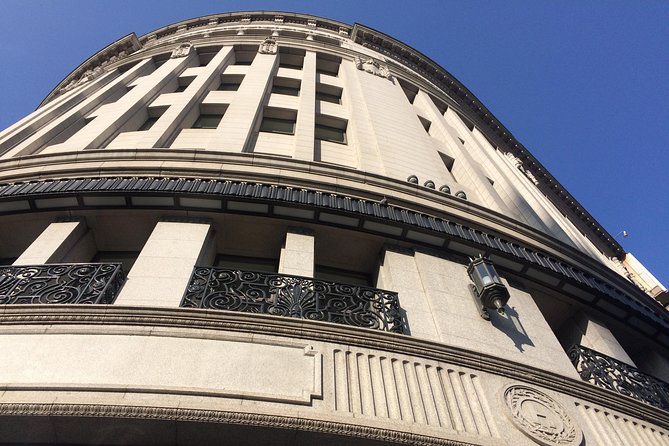
A guide changes your angle. You’ll hear about how old and new buildings share a tight urban district, why a small shrine can survive among high-rises, and how commercial buildings use glass, stone, lighting, and unusual shapes to draw the eye.
This is not a tour for people who want one grand monument and a long explanation beside it. It is a moving lesson in city design. You’ll stop often, look up, step inside selected buildings, and connect architecture with Japanese culture and commercial life.
The private setup matters here. If you know little about architecture, your guide can explain basic ideas without jargon. If you already follow architects or urban planning, you can ask sharper questions. One guide, Taka Yamamura, is an urban planner, and that background is particularly useful for understanding how Ginza works as a city district rather than just a shopping street.
A few more Tokyo tours and experiences worth a look

Starting near Tsukiji Station
The meeting point is near Exit 1 of Tsukiji Station, at 3-chome-15-1 Tsukiji. That location gives the tour a practical beginning outside the central Ginza core.
The first Ginza segment involves about 40 minutes of walking between sites. That sounds simple, but it sets the rhythm for the whole experience. You will not sit in a vehicle or move from one isolated attraction to another. You’ll walk at a private-group pace, with chances to stop and ask questions.
The route also begins with a useful contrast. Tsukiji and Ginza sit close together, yet they offer different impressions of Tokyo. That helps your guide explain how the district developed and why older religious and commercial places still fit beside sleek modern buildings.
Wear comfortable shoes. The stated fitness level is moderate, and the tour lasts roughly three and a half hours. There is a cozy drink pause along the way, which helps break up the walking.
Tsukiji Hongwanji Temple, a striking opening stop
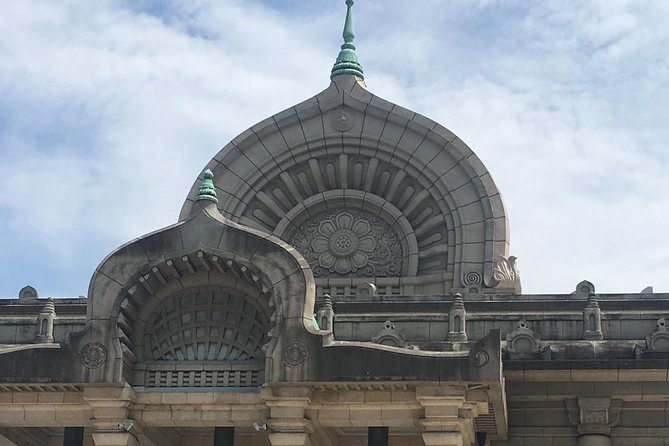
The tour goes inside Tsukiji Hongwanji Temple for about 10 minutes. The short visit gives you a look at a religious building before the route turns toward Ginza’s commercial architecture.
This stop is valuable because it widens the subject. You are not only studying offices and boutiques. You are also seeing how a temple serves as a cultural anchor in a dense part of Tokyo.
Ten minutes is not enough for a long temple visit, so keep your expectations in check. The point is orientation and interpretation, not an extended period of quiet sightseeing. Your guide’s explanation is what makes the stop worthwhile.
Kabukiza Theater and the design of performance
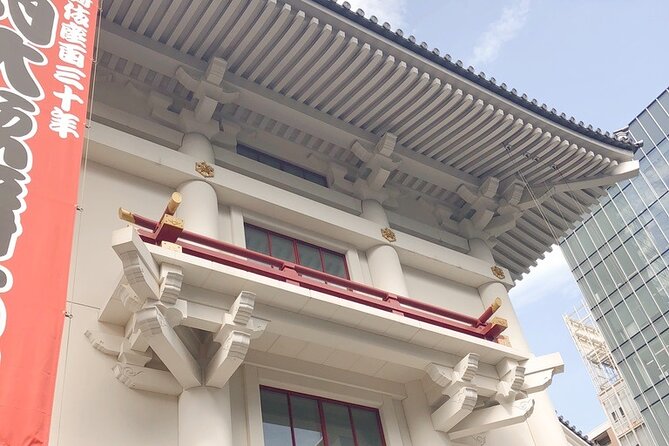
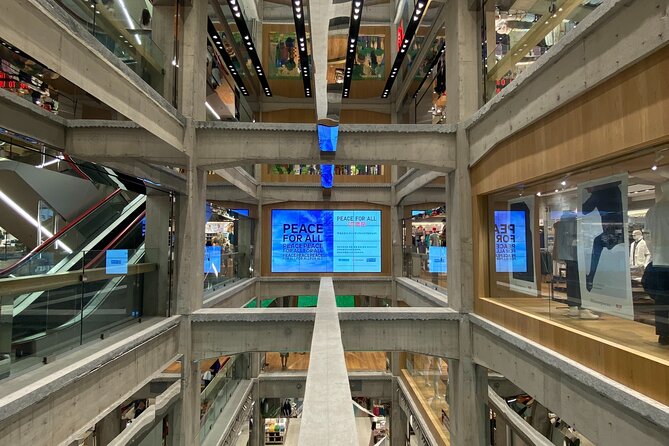
Kabukiza Theater receives about 20 minutes, including time inside to enjoy its features. It is one of the route’s stronger cultural stops because the building connects architecture with traditional Japanese performance.
Here, I would ask your guide how the theater’s appearance relates to kabuki and how modern urban needs affect a building with deep cultural associations. The tour description does not promise a performance, so you should expect architectural and cultural discussion rather than a show.
This is also a good place to ask questions about the difference between seeing a building from the pavement and entering it. A theater can reveal details of circulation, decoration, and public space that are invisible from outside.
Nicolas G. Hayek Center and Ginza’s luxury identity
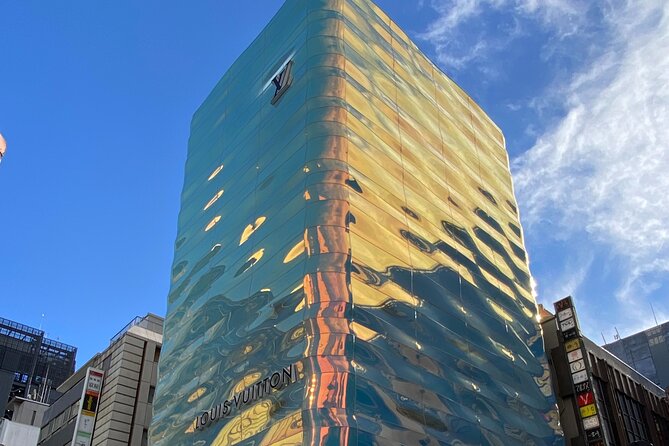
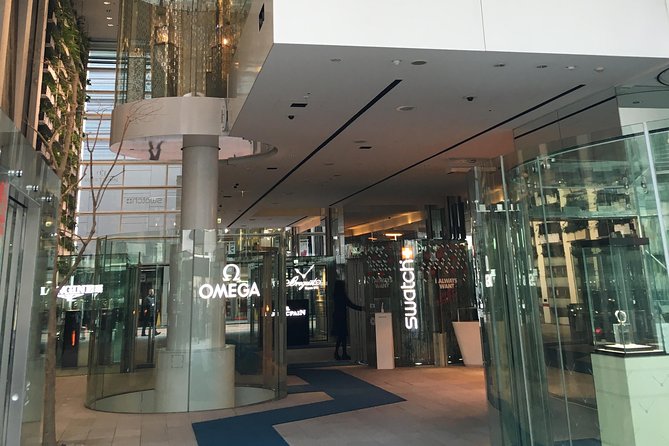
The Nicolas G. Hayek Center gets about 15 minutes inside. This stop represents Ginza’s newer commercial side, where major brands use architecture as part of their public identity.
The value here is not simply seeing an expensive retail building. Your guide can help you notice how the structure presents a company, handles street frontage, and invites people indoors. In Ginza, the building is often part of the advertisement.
If your main interest is historic architecture, tell your guide early. The private format makes that possible. If you enjoy contemporary design, ask for more detail about materials, shape, and how the building fits into the surrounding street.
Other walking tours we've reviewed in Tokyo



Toyoiwa Inari Shrine, a five-minute pause
Toyoiwa Inari Shrine is a very short stop, about five minutes. Its small scale creates one of the route’s useful contrasts.
You may find it easy to walk past a place like this without a guide. That is the point. Ginza is not made only of large, famous structures. Small religious sites can occupy a narrow pocket between commercial buildings, giving the district a different pace for a moment.
Do not expect a long shrine visit. Five minutes is enough to see the site and hear why it matters, but not enough for an extended cultural lesson.
Maison Hermes and the building as artwork
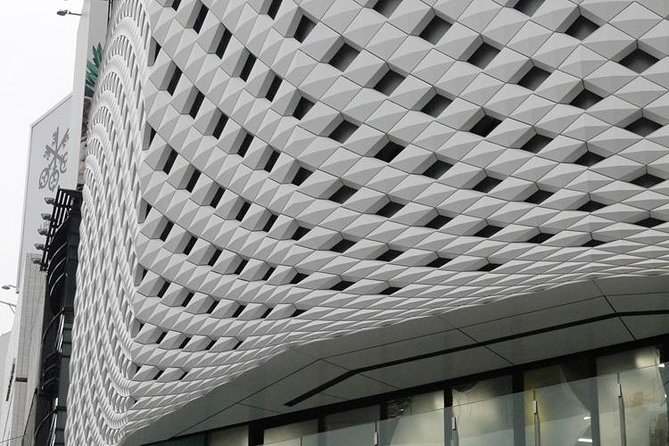
The Ginza Maison Hermes Le Forum receives about 15 minutes inside. This is one of the clearest examples of Ginza’s designer architecture, where the building itself carries the same visual care as the merchandise.
You’ll have a chance to consider how a brand uses light, transparency, texture, and scale to shape the shopping experience. The guide can also put the building in context with the other luxury façades nearby.
That comparison is important. Ginza works best when you look at several buildings together. One storefront may seem like an isolated statement, but the full street reveals a competition of ideas, each brand trying to make its corner memorable.
Mikimoto, Uniqlo, and the rhythm of Ginza façades
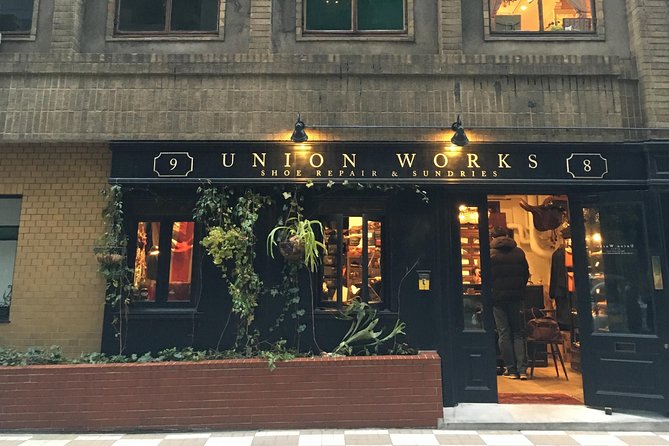
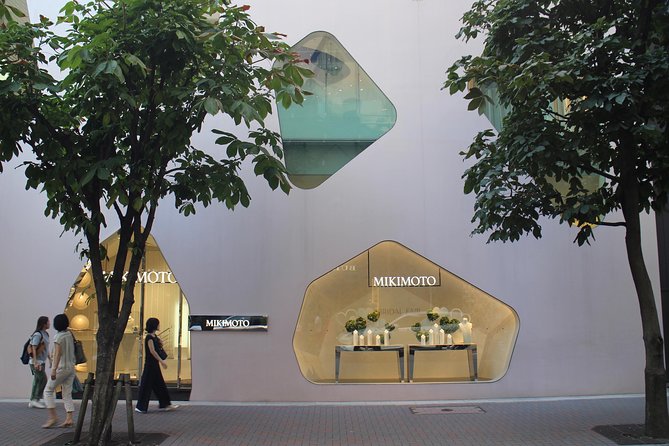
The route includes two Mikimoto buildings, the Mikimoto Boutique in Ginza 2-chome and the Mikimoto Ginza 4-chome Honten. The first may be entered if time allows, while the second is viewed from outside.
Uniqlo Tokyo is also viewed from outside for about 10 minutes. These stops show how different retail companies express their identity through architecture, even when the buildings serve similar commercial purposes.
The time limits are short, so your guide will likely focus on selected details rather than a full architectural lecture at every address. If one façade catches your attention, speak up. A private walk works best when you help shape the emphasis.
The outside viewing also has a practical benefit. You do not need to shop to appreciate the buildings, and you can compare the façades without turning the tour into a store visit.
Wako Ginza and the image of old Ginza
Wako Ginza is another exterior stop, with about 10 minutes allotted. Its clock tower and formal appearance provide a familiar image of Ginza, especially when set against the newer buildings around it.
This is a useful place to discuss continuity. Ginza’s appeal comes partly from the friction between established symbols and newer commercial architecture. The district does not present one tidy period. It gives you several eras in the same walk.
The stop is outside, so weather will affect your comfort. On a hot, wet, or cold day, the private pace and drink pause become more important.
Okuno Building, an older interior worth the time
The walk ends its architectural sequence at the Okuno Building, where you go inside for about 10 minutes. This is a welcome change from the polished, purpose-built commercial spaces earlier in the route.
The building offers a different feel and helps show that Ginza’s architectural story is not limited to luxury flagships. Older structures can reveal another side of the district, with more modest proportions and a stronger sense of the past.
Ten minutes is brief, but the contrast makes the stop count. If older buildings interest you most, tell your guide at the start so the discussion can give this part more weight.
How the private guiding changes the experience
The tour is designed for a maximum of five people per booking, and only your group participates. That is small enough for natural conversation. You can pause for a photo, ask about a façade, or admit that you have no idea what a particular architectural feature means.
Several guide styles are represented in the experience. Yoko has been described as clear, friendly, and adaptable. Yoshi has worked well with people who know little about architecture, while Haruka has provided broader context about Japanese history and current culture.
Mari has excellent English and has helped shape the route around a group’s interests. Eriko has also adjusted the pace and added shopping advice. Makoto has followed a visitor’s curiosity into local food and tea-related stops, including a brief tea tasting at a seaweed and tea distributor.
Those details suggest an important booking tip: send your interests ahead of time. The company has contacted participants before arrival to ask what they want to see. Mention modern design, religious buildings, retail architecture, Japanese culture, photography, or shopping, depending on your priorities.
English ability can vary by guide. Most of the feedback about the guides is strongly positive, but one experience found the English only adequate and wanted fuller explanations at the most notable buildings. If architectural detail in fluent English is essential to you, state that clearly when booking.
What the $132.10 price buys you
At $132.10 per person, this is not a cheap orientation walk. The value comes from privacy, guide time, customization, and access to interiors you might not notice or enter on your own.
The price is easier to justify for two to five people who care about architecture or want a focused introduction to Ginza. A private guide can spend more time on your questions than a standard group tour, and the route includes several free-entry locations.
The value is weaker if you mainly want photographs of famous buildings. You could view many exterior façades independently. You are paying for the explanations, the route planning, the cultural connections, and the chance to notice small places that are easy to miss.
Group discounts are available, so check the total cost for your party rather than judging only the per-person figure. Adult pricing applies to all participants, with a minimum age of 10.
Timing, meeting point, and physical demands
Two departure times make it easier to fit the tour around a Tokyo schedule. The duration is approximately three hours and 30 minutes, although the published sightseeing stops add up to less than that because walking and conversation fill the gaps.
You begin near Tsukiji Station and finish at the Ginza 4-chome intersection, in front of Mitsukoshi department store. The ending point is convenient for continuing your own Ginza visit, but hotel pickup and drop-off are not included.
Public transportation is nearby. Plan to arrive at the stated Tsukiji meeting point rather than assuming the guide will collect you from your hotel.
The walk calls for moderate physical fitness. Comfortable shoes are the sensible choice, and you should be prepared to spend time on your feet, moving between indoor and outdoor stops.
Free cancellation is available if you cancel at least 24 hours before the start time. Changes or cancellations made inside that window are not refunded.
Who will get the most from this walk
I would choose this tour for:
- First-time Ginza visitors who want more than shopping streets
- Repeat Tokyo visitors looking for a new angle on a familiar district
- People interested in modern commercial architecture
- Families with children aged 10 or older who can manage a long walk
- Visitors who prefer asking questions to listening quietly in a large group
- Shoppers who want architectural context along with local shopping suggestions
I would choose something else if you want a full-day architecture program, formal access to landmark interiors, or a tour centered on a particular architect. This route moves quickly and covers a broad mix of places.
It also may not suit you if walking in city streets is difficult. The private format allows some pace control, but it does not remove the distance between stops.
Should you book the Ginza Architecture Walking Tour?
Book it if you want to see Ginza as a city of ideas, not just a row of luxury stores. The combination of temple, theater, shrines, historic buildings, and designer façades gives you a fuller picture of the district, and the private guide makes the experience personal.
At $132.10 per person, I see the best value for small groups that will ask questions and use the customization. Tell the company what you care about before arrival, and ask for a guide whose English and architecture background fit your needs.
Skip it if you prefer to explore independently or want long visits at each site. For an architecture-minded visitor, though, this is a smart way to spend a half-day in Ginza, especially if you have already seen the obvious shopping streets and want to understand what is above, behind, and between them.
FAQ
How long does the Ginza Architecture Walking Tour last?
The tour lasts approximately three hours and 30 minutes, including walking between sites and time spent at the stops.
Where does the tour begin and end?
It begins near Exit 1 of Tsukiji Station at 3-chome-15-1 Tsukiji. It finishes at the Ginza 4-chome intersection, in front of Mitsukoshi department store.
Is this a private tour?
Yes. Only your group participates, and each booking can include a maximum of five people.
Is the tour conducted in English?
Yes. The experience is an English-language tour with architectural, cultural, and historical information.
Are entrance fees included?
The listed stops have no admission charge. The tour also includes a cozy pause with drinks along the way.
What is the minimum age for this tour?
Adult pricing applies to all participants, and the minimum age is 10.
More Private Tours in Tokyo



More Walking Tours in Tokyo
More Ginza Tours in Tokyo


More tours in Tokyo we've reviewed




Ginza Tours, compared.
 ★ 4.8Chopstick Making Workshop in GinzaFrom $251 hour
 ★ 4.5Tokyo: Art Aquarium Museum GINZA Entry TicketFrom $171 day
 ★ 4.5Official Japan Go-Kart Through Tokyo Bay / Ginza (IDP Required)From $85
 ★ 4.5【SUMO FESTIVAL】Tokyo Ginza: Sumo Show & Photo ExperienceFrom $63
 ★ 4.8Tokyo GINZA: KONPARU Japanese Cabaret Show with DrinkFrom $502 hours
 ★ 4.9Tokyo: Discover the Art of Kintsugi in GinzaFrom $751h 30m