
Reviewed · ASAKUSA TOURS
Tokyo:Calligraphy &Make your original folding fan in Asakusa
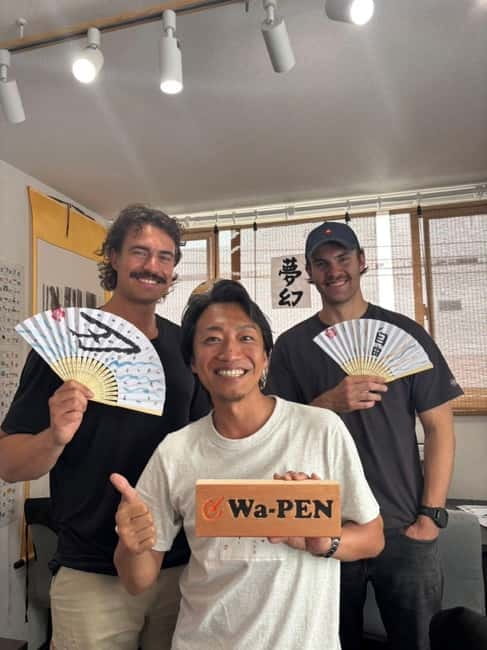
The best part of this Asakusa workshop is that you do not simply copy a Japanese character and leave. You learn how to hold the brush, sit correctly, control the ink, and build each stroke before creating a one-of-a-kind folding fan. It turns a short craft class into a calm lesson in Japanese culture.
I like the unhurried practice time and the small personal touches: green tea, a postcard to yourself, and help choosing a meaningful design. Instructor Mana is especially good at encouraging beginners, explaining names in kanji, and giving you room to practice until you feel ready. The main consideration is that ink can stain clothing, and the activity is not suitable for wheelchair users.
In This Review
- Key points to know before booking
- Why this small Asakusa class is worth your time
- Meeting Mana and learning why the strokes matter
- Melting solid ink and preparing the brush
- Thirty minutes of practice on thin paper
- Choosing a design for your folding fan
- Green tea and a postcard for the journey home
- The fan, optional T-shirt printing, and what you take home
- How long to allow in your Asakusa plans
- Who will enjoy this calligraphy experience most
- My practical verdict on the $16 price
- Should you book the Asakusa folding-fan class?
- FAQ
- How much does the calligraphy and folding-fan experience cost?
- How long does the activity last?
- Is the experience taught in English?
- What will I make during the activity?
- Do I need previous calligraphy experience?
- What should I wear?
- Is the activity suitable for wheelchair users?
Key points to know before booking
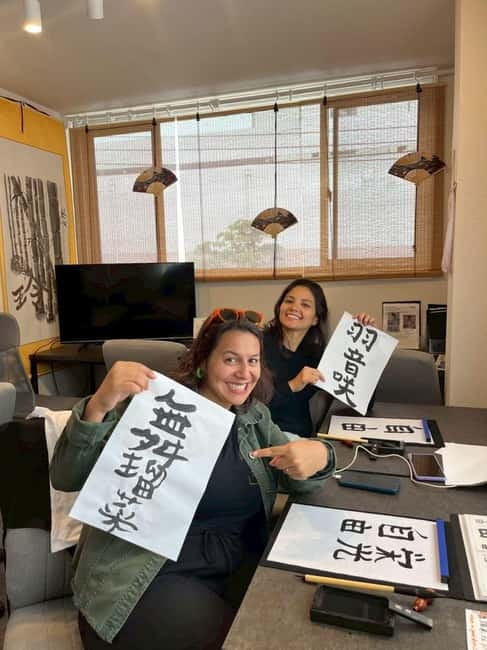
- Make a real souvenir: Your finished calligraphy becomes an original folding fan you can take home.
- Learn the basics first: You practice posture, brush handling, ink control, and eight basic techniques before the final design.
- Mana teaches in English: She explains Japanese calligraphy, hiragana, kanji, and modern culture in clear, friendly English.
- A peaceful break in Asakusa: The class offers a quiet creative pause from sightseeing around Senso-ji and the busy streets.
- Practice is not rushed: The writing session lasts about 30 minutes, with extra time possible depending on the session.
- Bring practical clothing: Aprons are provided, but wear something that can tolerate a stray spot of ink.
Why this small Asakusa class is worth your time
Asakusa is famous for Senso-ji, Nakamise shopping street, and old Tokyo atmosphere. It is also one of the city’s busiest sightseeing areas. A calligraphy workshop gives you a different way to spend time here. Instead of moving from gate to temple to shop, you sit down and focus on one brush and one sheet of paper.
That change of pace matters. Japanese calligraphy is not just handwriting with a decorative brush. The posture, the amount of ink, the speed of each stroke, and the pressure on the paper all affect the result. Even a simple character asks you to pay attention.
At $16 per person, this is inexpensive for a guided cultural activity in Tokyo. You receive instruction, materials, practice paper, traditional ink preparation, green tea, and a handmade fan. The value is strongest if you want a souvenir you helped create rather than another shop-bought trinket.
It is not the right choice if you want a fast photo stop or a polished professional artwork with no practice involved. Your final design is made by you, so small imperfections are part of the point.
A few more Tokyo tours and experiences worth a look

Meeting Mana and learning why the strokes matter
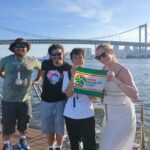
The English-speaking instructor, Mana, begins with an introduction to Japanese calligraphy. You learn about the development of the art and the place of hiragana in Japanese life. The workshop also touches on kanji, which can be useful if you want to write your name or select a character with a meaning that suits your trip.
I like this opening because it gives the brushwork a little context. You are not just choosing an attractive symbol from a sample book. You can ask what a character means and think about the idea you want your fan to carry home.
Mana’s teaching style is patient and practical. She demonstrates the correct attitude and posture, then shows you how to use a Japanese brush, called a fude. This is helpful for first-timers, since a brush does not behave like a marker or ballpoint pen. The angle of your hand and the pressure you use can change the width and shape of a stroke.
English is provided, so you can ask about technique and meaning without guessing. Several parts of the activity depend on clear instruction, especially when you are choosing kanji or trying to understand the order of the strokes.
Melting solid ink and preparing the brush
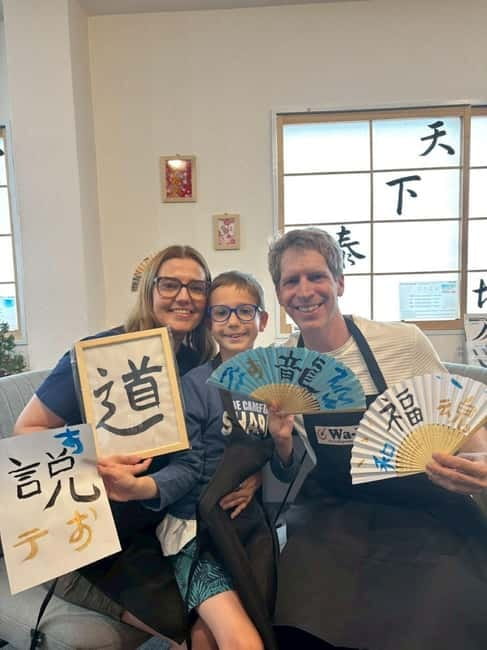
One of the more traditional parts of the session is preparing the ink. Rather than starting with a ready-made bottle, you use water to melt a solid ink stick. This slows the process down and gives you a direct connection to an older calligraphy method.
The amount of ink matters. Too much can make a stroke heavy or wet. Too little can leave a pale, broken line. Mana explains how much to use and helps you find a workable balance before you begin practicing.
This is a small detail, but it makes the class feel like more than a simple tourist craft. You see that the finished character comes from a series of choices: how you sit, how you load the brush, how quickly you move, and how firmly you touch the paper.
The ink preparation also explains the clothing warning. Aprons are available, which helps, but you should still wear comfortable clothes that can get a little dirty. Food and drinks are not allowed during the session, so save the green tea for the appropriate point at the end.
Thirty minutes of practice on thin paper
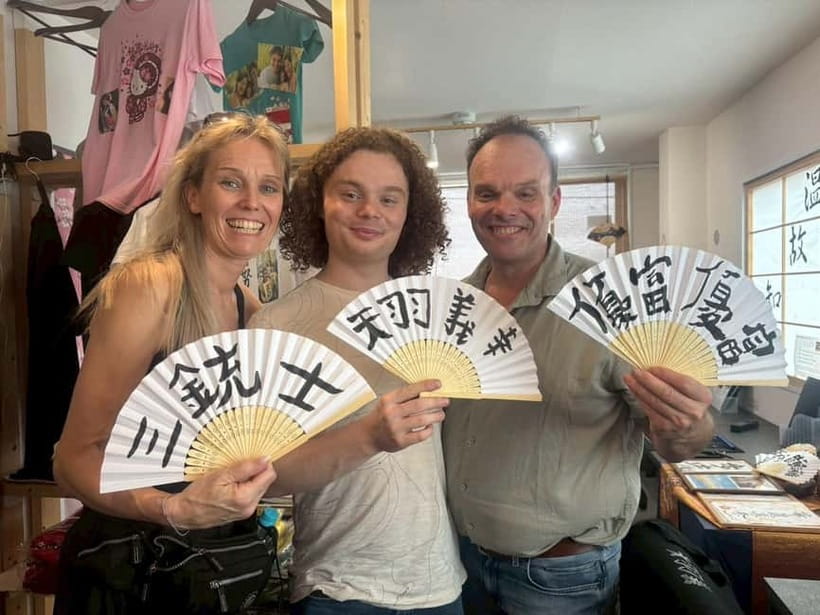
The main working portion gives you about 30 minutes to practice on thin calligraphy paper. Guide paper helps you position the strokes and keep the character in proportion. Expert support is available as you work through the basic techniques.
The session covers eight fundamental techniques. You do not need previous experience. The aim is to get comfortable with the brush and learn the movement, not produce museum-quality calligraphy on your first attempt.
This practice period is where the activity earns its relaxing reputation. You can repeat a stroke, compare attempts, and adjust your hand. Mana may correct your technique or encourage you to try again. The pace is more personal than a large demonstration class, although the exact amount of individual attention depends on the option and the number of people booked.
Several people have found the activity suitable for different ages and abilities, including a six-year-old working with a parent and an older relative taking a first proper calligraphy lesson. That does not mean every child will enjoy sitting still, but the simple practice sheets and friendly instruction make it accessible to beginners who are willing to focus.
If you are hard on yourself, remember that the workshop is about the process. Your lines may wobble. That is fine. The useful souvenir is the one that shows your hand, not a perfect character produced by someone else.
Choosing a design for your folding fan
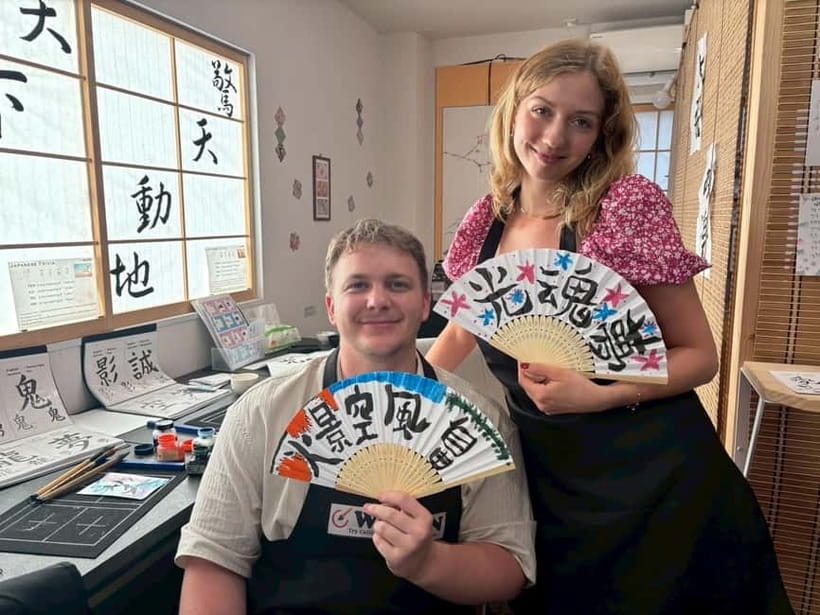
Once you have practiced, you choose a favorite design from a sample book or ask Mana to help you select one. You might write a kanji character, a name, or another design that has personal meaning. The exact choices available depend on the samples and the discussion during your session.
This is a good point to slow down. A character may look attractive, but its meaning matters more once it is printed across something you will carry home. Ask about the translation and pronunciation before committing to the final design.
You then create the calligraphy that will go on your fan. The staff can guide you, but the final work remains yours. You are allowed to continue until you are satisfied, and the flexible 30 to 90 minute duration reflects the fact that some people finish quickly while others want more practice.
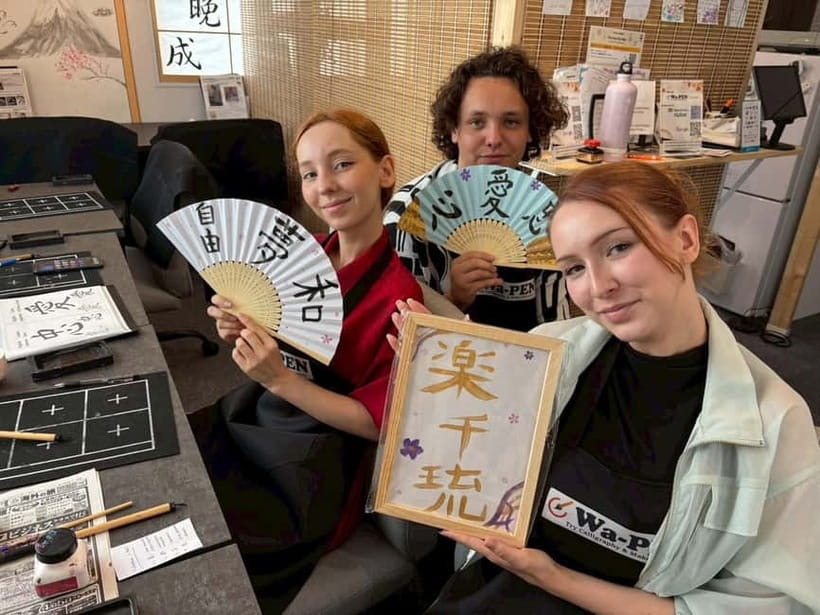
The fan is the strongest practical feature of the activity. A sheet of calligraphy can be framed, but a folding fan is light, easy to pack, and clearly connected to Japan. It also gives your work a useful form instead of leaving it as a loose piece of paper at the bottom of your suitcase.
A few more Tokyo tours and experiences worth a look


Green tea and a postcard for the journey home
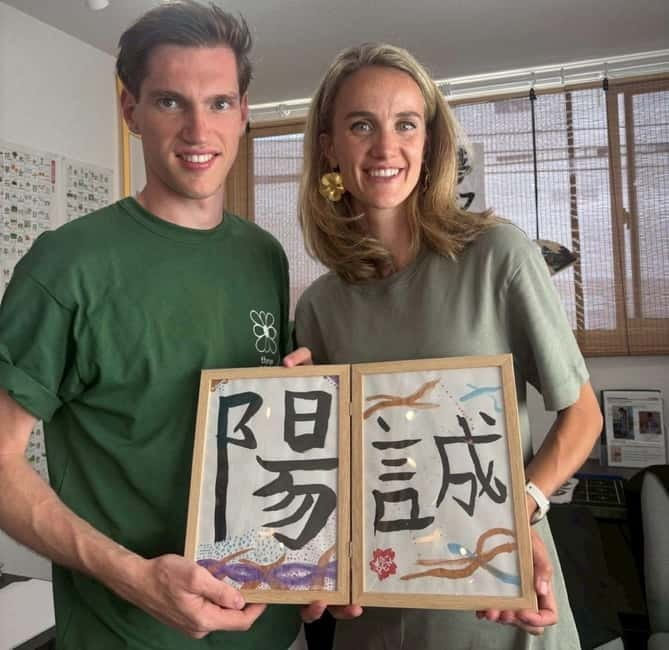
After the brushwork, you can enjoy a cup of green tea. It is a modest touch, but it fits the slower mood of the class. You have spent time concentrating on ink and paper, so a quiet drink makes a natural pause before leaving.
You can also write a postcard to yourself. The idea is to note your feelings about the calligraphy experience and your Tokyo trip, then have that reminder waiting at home. It is a simple way to preserve the memory beyond photographs.
I especially like this part because it asks you to record more than what you saw. Write down the character you chose, why it appealed to you, or how your first brush strokes felt. The postcard may become more meaningful after the trip, when the noise and rush of Tokyo have faded.
Do not confuse this with a full tea ceremony. The information provided describes a cup of green tea, not a formal ceremony with an extended set of rituals. Think of it as a pleasant ending to a hands-on class.
The fan, optional T-shirt printing, and what you take home
The original folding fan is included, and it is the main finished piece. You can take it home as a personal souvenir made during the session. The fan also makes the activity a good choice for people who want a craft they can display or use.
Printing your calligraphy on a T-shirt is not included. If you want that extra item, you can buy a T-shirt at the shop, but you should expect an additional cost. The clothing fee is also not included, so ask about the price before ordering the add-on.
One practical detail came up during a session when shirts were not ready before a visitor needed to meet a friend near Senso-ji. Mana later hand-delivered them, which shows useful local flexibility, but you should not plan your schedule around a special delivery. If you order an extra item, allow time for it to be completed.
The fan alone is enough for most people. I would choose the included fan if I wanted to keep the activity close to the advertised price. The T-shirt makes sense only if you want a wearable souvenir and are happy to pay more.
How long to allow in your Asakusa plans
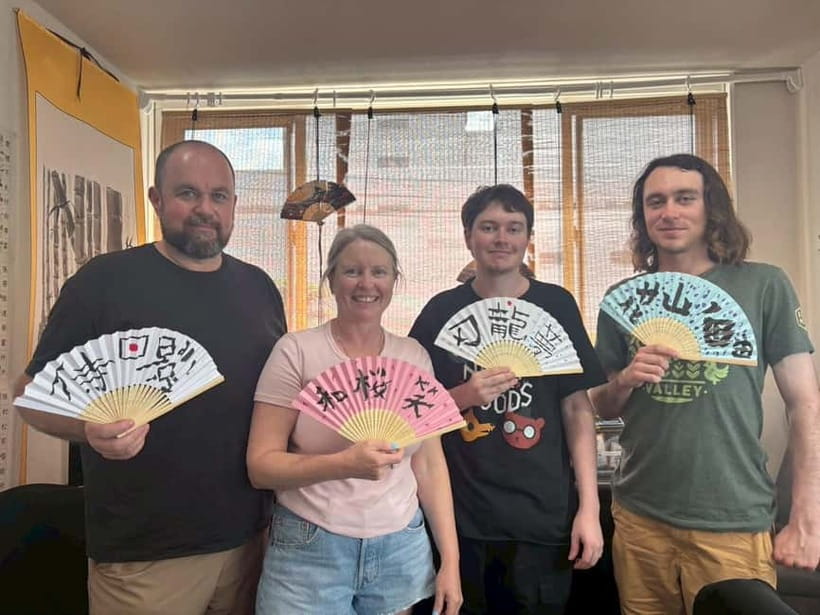
The listed duration is 30 to 90 minutes. That is a wide range, but it makes sense for a creative class. A quick participant may complete the essential practice and fan in around half an hour. Someone who wants to repeat strokes, discuss meanings, or refine the final design may stay much longer.
I would avoid booking this immediately before a timed train, restaurant reservation, or major attraction entry. The class is meant to be relaxed, and you do not want to rush the part that makes it worthwhile.
The meeting point can vary by the option you book. The supplied coordinates are 35.7162239, 139.7922354, so check the exact meeting instructions before setting out. The location is convenient for an Asakusa day, and you can combine the workshop with Senso-ji, but build in time to find the correct spot.
The experience is offered in English. Pets are not allowed, although assistance dogs are permitted. Wheelchair users should choose another activity because this class is not listed as suitable for wheelchair access.
Cancellation is flexible: you can cancel up to 24 hours ahead for a full refund. You can also reserve now and pay later, which is useful when your Tokyo schedule is still changing.
Who will enjoy this calligraphy experience most
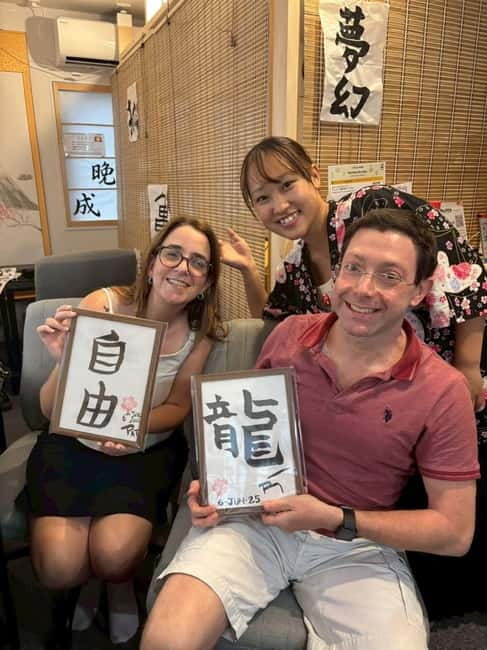
I would recommend this workshop to first-time visitors who want a cultural activity with a clear result. You do not need to know Japanese, own calligraphy supplies, or have artistic confidence. The lesson starts with basics and gives you guided practice.
It suits couples, families with children who can concentrate, grandparents and grandchildren, and solo visitors. It can also work well on a hot or rainy day because the class gives you a quiet indoor break from sightseeing.
It is especially good for anyone who enjoys meaningful souvenirs. Writing your name in kanji or choosing a character connected to your trip gives the fan a personal story. If you are buying for someone at home, the finished piece is more distinctive than a standard souvenir from a shop shelf.
I would be more cautious if you have limited mobility, dislike sitting through instruction, or want a highly polished result with no trial and error. The activity involves brush control and ink, so it rewards patience. You should also be ready for the possibility of a little mess, even with an apron.
My practical verdict on the $16 price
The $16 price is a strong value if the included fan is your main goal. You get an English lesson, cultural background, materials, traditional ink preparation, guided practice, tea, a postcard, and a finished keepsake.
The cost rises only if you add extras such as T-shirt printing. That is not a flaw, but it is important to separate the base experience from optional purchases when comparing it with other Tokyo activities.
The most valuable part is not the amount of ink or paper. It is the personal attention and the chance to keep practicing until your design feels right. Mana’s patience is repeatedly praised in the supplied feedback, and that matters more here than a long lecture or a large list of materials.
Should you book the Asakusa folding-fan class?
Book it if you want a gentle, hands-on introduction to Japanese culture and a souvenir with your own marks on it. Mana’s English instruction, patient coaching, and willingness to let beginners practice make this a good choice even if your first brush stroke looks nothing like the sample.
I would choose the class during an Asakusa day, especially when you want a pause between sightseeing stops. Wear clothes that can handle ink, confirm the meeting point, and leave some spare time around the session.
Skip it if you need wheelchair access, cannot tolerate a flexible end time, or want a formal calligraphy performance rather than a beginner lesson. For most visitors seeking an affordable creative activity, the fan, postcard, tea, and personal instruction make this a thoughtful buy.
FAQ
How much does the calligraphy and folding-fan experience cost?
The listed price is $16 per person. Optional T-shirt printing is not included and may require buying a T-shirt from the shop.
How long does the activity last?
The duration is listed as 30 to 90 minutes. Starting times depend on availability and the option you book.
Is the experience taught in English?
Yes. The instructor teaches in English, and Mana is identified in the available feedback as the guide for many sessions.
What will I make during the activity?
You will create an original folding fan featuring your calligraphy. You can also write a postcard to yourself to remember the experience at home.
Do I need previous calligraphy experience?
No previous experience is stated as necessary. The session covers posture, brush use, ink control, eight basic techniques, and practice with guide paper.
What should I wear?
Wear comfortable clothes that can get a little dirty from ink. Aprons are provided, but the activity still advises choosing clothing carefully.
Is the activity suitable for wheelchair users?
No. The activity is listed as not suitable for wheelchair users. Pets are not allowed, although assistance dogs are permitted.
More Craft Workshops in Tokyo
More Asakusa Tours in Tokyo
More tours in Tokyo we've reviewed




Asakusa Tours, compared.
 ★ 4.8Tokyo: Japanese Dance Cabaret Theater Asakusa-Kaguwa TicketFrom $492 hours
 ★ 4.7Tokyo: Meiji Shrine, Asakusa, Skytree Bus Tour and CruiseFrom $12210 hours
 ★ 4.9Tokyo: Roll and Authentic Sushi Making Class in AsakusaFrom $581h 40m
 ★ 4.8Tokyo: Asakusa Walking Tour with Sensoji Temple VisitFrom $222 hours
 ★ 5.0Tokyo Asakusa Rickshaw TourFrom $42
 ★ 4.5Tokyo Panoramic 1 Day: Meiji Shrine, Asakusa, Odaiba and SKYTREE®From $85