
Reviewed · ASAKUSA TOURS
Asakusa: Japanese kitchen knife store visits after history tour
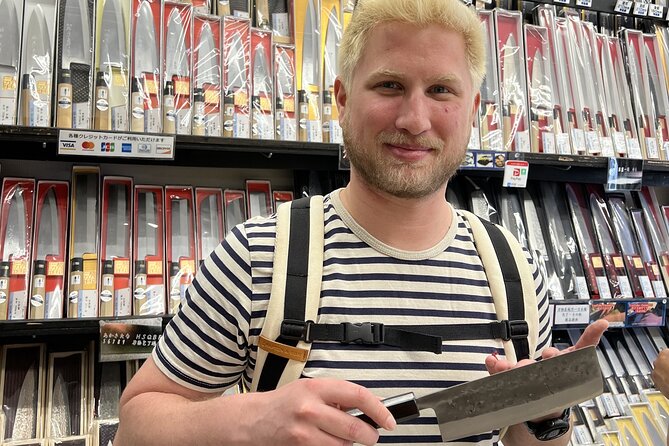
Asakusa’s temples are only half the story here. The real payoff comes later, when you reach Kappabashi, Tokyo’s famous kitchen-supply street, and get help choosing a Japanese knife that suits your cooking. History leads to shopping, which gives the morning a useful shape rather than another standard temple walk.
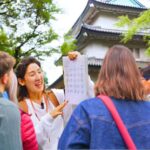
I like the small maximum of eight people, and I like that the guide can adjust the balance between sightseeing and knife buying. Guides named for this experience include Akiko, Kay, Sue, and Amy. The main catch is simple: if knives are your only goal, you may find the history walk longer than needed, since the shopping portion lasts about an hour.
In This Review
- Key points at a glance
- Why this Asakusa morning works
- Sumida Park and the river story
- The city from the Asakusa Culture Tourist Information Center
- Kaminarimon and the approach to Senso-ji
- Nakamise Shopping Street, where religion meets retail
- Hozomon, Senso-ji, and the five-story pagoda
- Asakusa Shrine and the local religious mix
- Denboin Garden and Asakusa’s entertainment past
- Kappabashi Street, the reason food lovers book
- What the small group changes
- The guide can shape the morning
- Is $78.18 a fair price?
- Who should book this experience?
- My booking verdict
- FAQ
- How long does the Asakusa knife tour last?
- What time does the tour start?
- Where does the tour begin?
- Where does the tour end?
- How large is the group?
- Are headsets provided?
- Is hotel pickup included?
Key points at a glance
- Kappabashi is the main event: Spend the final hour among shops used by restaurant operators and home cooks.
- Asakusa in a compact morning: See Sumida Park, Kaminarimon, Nakamise, Senso-ji, Asakusa Shrine, and nearby sights.
- A guide makes knife shopping easier: You can ask for help comparing options instead of choosing by appearance alone.
- Small groups keep the walk personal: The maximum is eight people, with headsets supplied for groups of three or more.
- The tour ends where you want to shop: There is no return to your hotel, but you finish on Kappabashi Street.
- A practical fit for food lovers: The experience works best if you want cultural context and a cooking purchase in one outing.
Why this Asakusa morning works
This 3-hour 30-minute experience joins two activities that are often booked separately: a guided walk through one of Tokyo’s oldest sightseeing areas and a visit to a specialist shopping street. That combination is its strongest feature.
A temple tour can leave you with photographs but few practical memories. A shopping trip can give you a knife but little sense of the neighborhood that surrounds it. Here, you first learn why Asakusa matters, then finish with something you can use or give as a gift.
The tour begins at 9:30 a.m. near Kaminarimon in Taito City. From there, the route crosses the riverfront area, passes through the temple grounds, and continues toward Kappabashi. The end point is at Kappabashi Dougugai Kitchen Town, not back at the starting point.
That one-way design matters. You should plan the morning around finishing in Kappabashi. It is convenient if you want to keep shopping, but less convenient if you have left luggage, a timed reservation, or a hotel pickup arranged elsewhere.
A few more Tokyo tours and experiences worth a look

Sumida Park and the river story
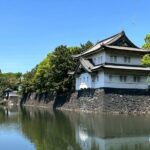
The first stop is Sumida Park, where you spend about 15 minutes near one of Tokyo’s important river crossings. The guide connects the Sumida River with the origin story of Senso-ji, said to reach back around 1,400 years.
This is a good opening because it gives the temple visit a setting and a story. You are not simply walking toward a famous gate. You are hearing how the river, the temple, and Asakusa became linked.
The stop is short, so do not expect a long riverside walk. Admission is not included, though no admission fee is listed for the stop itself. The value here is the guide’s explanation and the opening view, not a major attraction visit.
The city from the Asakusa Culture Tourist Information Center
The Asakusa Culture Tourist Information Center is a newer addition to the area and provides an open terrace observation deck near the top of the building. The scheduled visit lasts about 30 minutes.
This is one of the better pauses on the route. From above, you can get your bearings before entering the packed temple district. The elevated view helps you understand how the riverfront, Kaminarimon, shopping lanes, and temple complex sit together.
The stop also breaks up the walking. Asakusa can feel like a wall of gates, souvenir stalls, signs, and visitors when you first arrive. A high viewpoint gives the neighborhood some shape.
The itinerary description is cut off at the end of the observation-deck details, so exact viewing conditions are not specified. You should treat the stop as a useful city view rather than expect a private or lengthy lookout visit.
Kaminarimon and the approach to Senso-ji
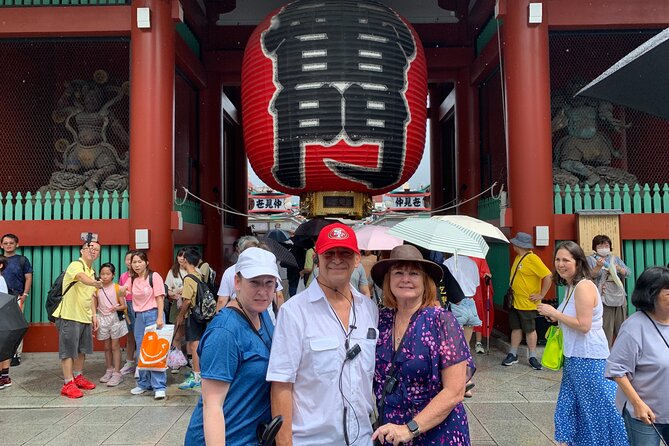
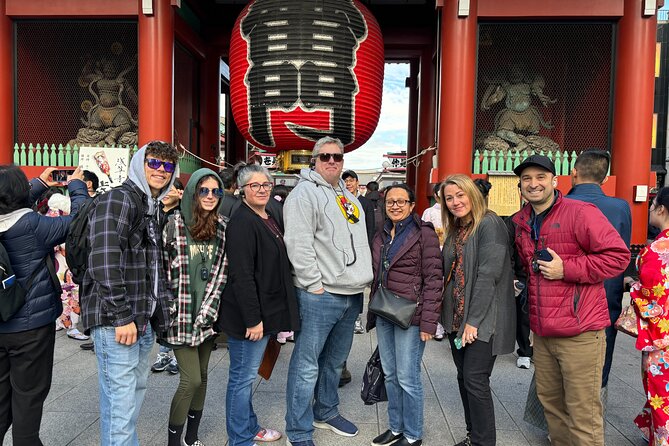
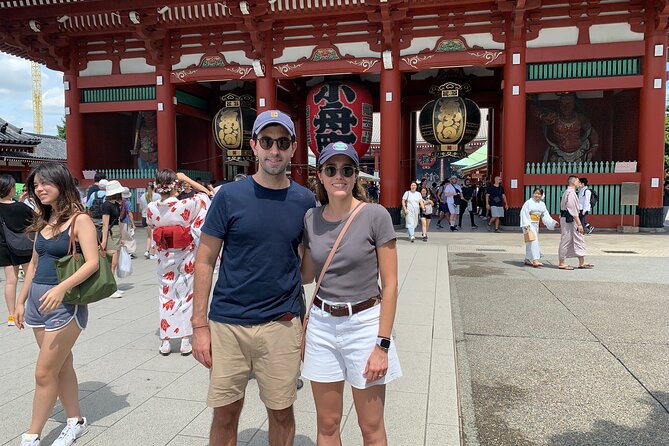
The tour then reaches Kaminarimon, or Thunder Gate, the famous entrance to Asakusa’s Buddhist temple and Shinto shrine district. Its huge red lantern is one of Tokyo’s most recognizable sights.
The guide’s role is important here. Kaminarimon is easy to photograph, but the gate can be hard to appreciate when you are surrounded by people stopping for pictures. A guide can explain where the gate fits within the wider religious complex and point out what you are seeing before you move into Nakamise.
You spend about 15 minutes at the gate. That is enough for orientation and photos, but not enough for a slow study of every detail. If you want quiet pictures, you will need to return on your own at another time.
Nakamise Shopping Street, where religion meets retail
Nakamise leads from Kaminarimon toward Senso-ji. It is lined with shops and has a friendly, commercial feel that may surprise you if you expect the approach to a major temple to be solemn.
That contrast is part of Asakusa’s appeal. The route shows how worship, food, souvenirs, and everyday shopping have long shared the same space. You get about 15 minutes here, so the guide will focus on the street’s role rather than give you free time to browse every stall.
Save serious shopping for later. Nakamise is a pleasant place for small souvenirs, but it is not the specialist knife district. Buying a large knife here would also mean carrying it through the rest of the walk.
Other historical tours in Tokyo
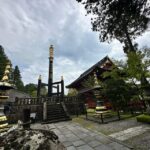
Hozomon, Senso-ji, and the five-story pagoda
Hozomon is the inner gate leading toward Senso-ji. Its name means Treasure-House Gate, and its second level holds Buddhist treasures. The stop lasts roughly 15 minutes.
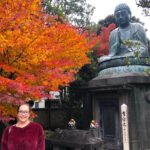
Then comes Senso-ji itself, Tokyo’s oldest temple and one of its most important. A five-story pagoda stands beside it, with Buddha’s ashes associated with a gift from Sri Lanka to mark goodwill between Sri Lanka and Japan.
This is the historical center of the tour. You get more from the temple if you know what you are looking at, and the guide’s explanations turn a busy photo stop into a place with religious and civic meaning.
Do not expect a private temple visit or a long period of silence. Senso-ji is a major Tokyo sight. The route gives you a guided introduction, not a retreat from the city.
Asakusa Shrine and the local religious mix
Next to Senso-ji is Asakusa Shrine, a Shinto shrine. The two sites sit side by side, representing Japan’s long overlap of Buddhist and Shinto traditions.
For many first-time visitors, this is one of the most useful teaching points. The guide explains how two distinct religious traditions can occupy the same grounds, which helps you read the area with more care.
The scheduled time is about 15 minutes. That is brief, but the stop works well after Senso-ji because the comparison is immediate. You do not need a long lecture to understand the basic point when the temple and shrine are right beside each other.
Denboin Garden and Asakusa’s entertainment past
The route continues toward Sensō-ji Denboin Garden and the Rokku area, Asakusa’s traditional entertainment district. This section lasts about 30 minutes and is meant to connect the Meiji period with the present day.
The appeal here is the change in mood. After the grand gates and temple buildings, you get a look at the neighborhood’s entertainment side and its older urban character. The walk is less about ticking off one landmark and more about seeing how Asakusa developed around worship, leisure, and commerce.
The garden’s access details are not specified, so you should not assume that every section is open for an independent visit or that you will have extended free time inside. The guide-led walk is the reliable part of this stop.
Kappabashi Street, the reason food lovers book
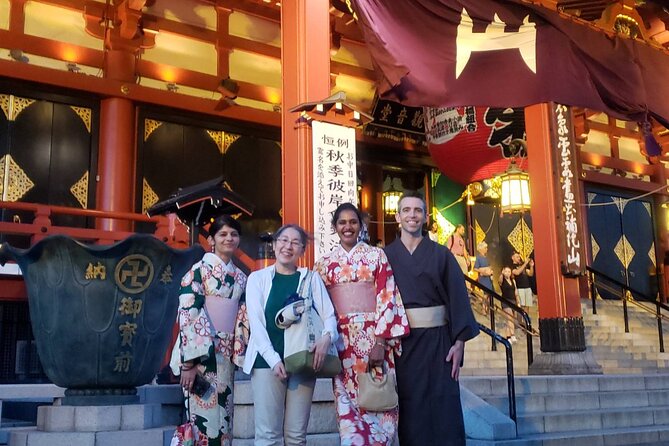
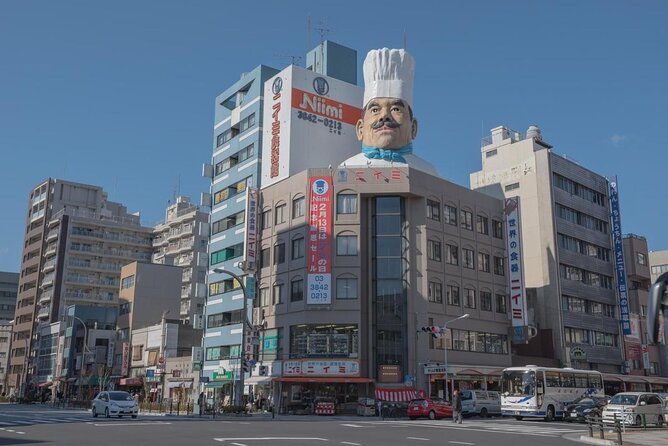
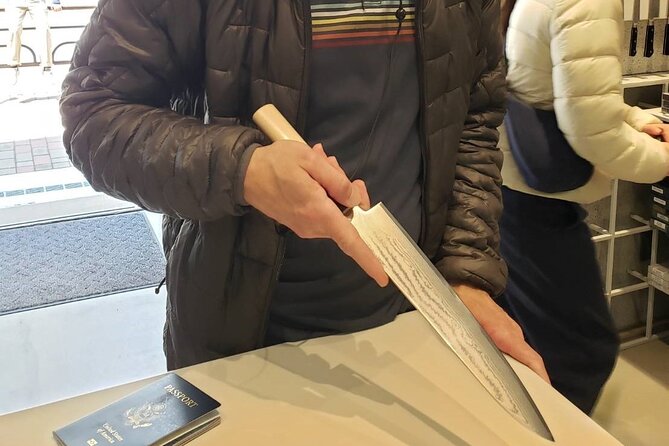
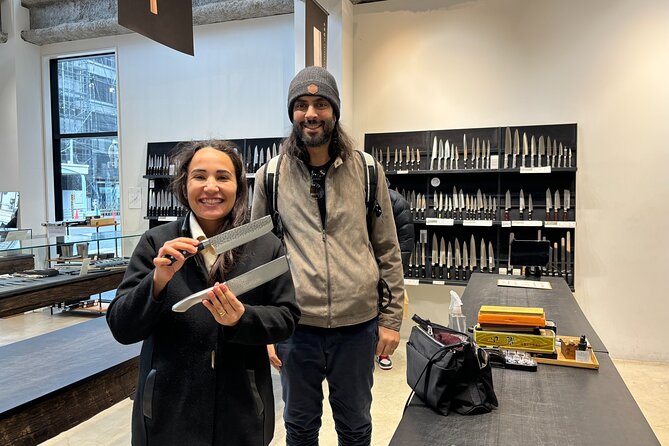
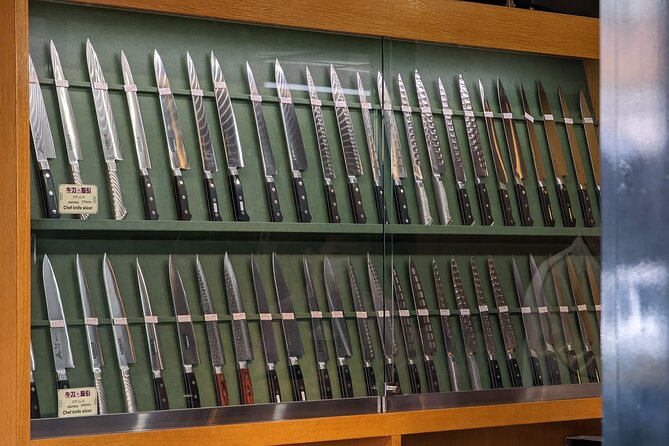
The final stop is Kappabashi Street, also called Kappabashi Dogugai. You spend about one hour here among dozens of shops selling supplies used by restaurant operators, including Japanese kitchen knives.
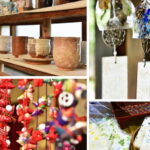
This is not a generic souvenir lane. Kappabashi is the place to compare cooking tools in a setting built around professional food service. You may find knives, cookware, tableware, restaurant equipment, and other kitchen goods in close range, though the experience specifically focuses on knives.
The guide can help you choose, which is especially useful if you do not know the difference between blade styles, sizes, or intended uses. A knife that looks impressive may not suit your cooking habits, and a practical guide can help you think about the purchase rather than simply choose the largest or most ornate blade.
One hour is enough for an introduction and a purchase, but it is not a full afternoon of browsing. If you are serious about Japanese knives, you may want to stay after the tour and compare more shops on your own. The tour gives you a starting point and advice, then leaves you in the right neighborhood to continue.
Several people have used the knife stop to buy gifts for chef friends, and that makes sense. The shopping area offers a more distinctive souvenir than mass-produced temple trinkets. Still, you should consider luggage space, airline rules, and the practicalities of transporting a kitchen knife before buying several.
What the small group changes
The maximum group size is eight. That is a useful limit for a walking tour in Asakusa, where narrow lanes and crowded temple approaches can make a large group awkward.
A small group also helps during knife shopping. You can ask a direct question, compare choices with the guide, and avoid waiting behind a long line of people seeking advice. The guide has a better chance of adjusting the pace to your interests.
The experience can be especially personal with only two people. One booking with a couple allowed the guide to shorten the history portion and focus more on knives. That flexibility is worth noting, but you should not count on a custom itinerary if the group is full.
For groups of three or more, headsets are supplied so you can hear the guide clearly from a short distance. That is helpful around Kaminarimon and Senso-ji, where street noise and crowds can swallow a quiet explanation.
The guide can shape the morning
The named guides connected with this experience include Akiko, Kay, Sue, and Amy. You may not receive a specific guide request, but the guidance appears to be a central part of the experience rather than a simple escort between locations.
Akiko has adjusted the pace toward knife shopping when that was the main interest. Kay has helped with knife selection after explaining the neighborhood. Sue has been praised for combining Asakusa stories with practical help in Kappabashi. Amy has focused on Senso-ji’s history and helped visitors make sense of the nearby knife street.
Those details point to the right expectation: this is not only a memorized walking route. You can tell the guide what matters most to you, especially if your group has a clear interest in cooking.
Still, the standard route covers many stops. If you want a long temple lecture, a slow photo walk, and detailed knife shopping all in one morning, the schedule may feel tight.
Is $78.18 a fair price?
At $78.18 per person, the tour is not the cheapest way to see Senso-ji or walk through Kappabashi. You can visit the public sights independently, and the shopping street itself does not charge admission.
The price is easier to justify if you value the guide’s time and advice. You are paying for a 3-hour 30-minute route, cultural explanation, a small group, and help with a purchase that could be confusing on your own. If you buy a quality knife, the guidance may matter more than the sightseeing portion.
The value drops if you already know Asakusa well or only want to shop for knives. In that case, go directly to Kappabashi and use your time to compare stores. One person on a private-feeling booking shortened the history section for exactly this reason.
Group discounts may improve the cost for larger parties, though the exact discount is not provided. The mobile ticket is convenient, and confirmation arrives at booking. Free cancellation is available until 24 hours before the 9:30 a.m. start, which gives you some planning flexibility.
Who should book this experience?
I would recommend it to first-time Tokyo visitors who want Asakusa explained rather than simply photographed. It is also a strong choice for home cooks, food writers, professional chefs, and anyone looking for a useful Japanese gift.
It suits couples and small groups particularly well. You can ask questions without holding up a large party, and the guide may be able to spend more time on the knife selection.
You may want to skip it if you have already toured Senso-ji, dislike guided walking, or want several hours in Kappabashi. The route includes many short stops, so people who prefer one long activity may find the morning divided into too many pieces.
The experience is near public transportation, and most people can take part. Hotel pickup and drop-off are not included, so you must reach the meeting point at 2-chōme-20-6 Kaminarimon yourself.
My booking verdict
Book this tour if you want the meaning of Asakusa and the practical fun of Japanese knife shopping in one morning. The history walk gives the purchase a sense of place, while the Kappabashi stop gives the tour a useful finish.
Skip it if knives are your only priority. Go straight to Kappabashi instead, where you can spend more time comparing shops. For everyone else, the small group, flexible guides, and one-way route make this a smart choice for a food-focused Tokyo morning.
FAQ
How long does the Asakusa knife tour last?
The experience lasts approximately 3 hours and 30 minutes.
What time does the tour start?
The tour starts at 9:30 a.m.
Where does the tour begin?
The meeting point is 2-chōme-20-6 Kaminarimon, Taito City, Tokyo 111-0034, Japan.
Where does the tour end?
The tour ends at Kappabashi Dougugai Kitchen Town, 3-chōme-18-2 Matsugaya, Taito City, Tokyo 110-0036, Japan.
How large is the group?
The activity has a maximum of eight travelers.
Are headsets provided?
For groups of three or more, each person receives a headset so the guide can be heard clearly from a distance.
Is hotel pickup included?
No. Hotel pickup and drop-off are not included.
More Shopping Tours in Tokyo



More Historical Tours in Tokyo
More Asakusa Tours in Tokyo
More tours in Tokyo we've reviewed





Asakusa Tours, compared.
 ★ 4.8Tokyo: Japanese Dance Cabaret Theater Asakusa-Kaguwa TicketFrom $492 hours
 ★ 4.7Tokyo: Meiji Shrine, Asakusa, Skytree Bus Tour and CruiseFrom $12210 hours
 ★ 4.9Tokyo: Roll and Authentic Sushi Making Class in AsakusaFrom $581h 40m
 ★ 4.8Tokyo: Asakusa Walking Tour with Sensoji Temple VisitFrom $222 hours
 ★ 5.0Tokyo Asakusa Rickshaw TourFrom $42
 ★ 4.5Tokyo Panoramic 1 Day: Meiji Shrine, Asakusa, Odaiba and SKYTREE®From $85