
Reviewed · ASAKUSA TOURS
Asakusa: Geisha Performance and Tea House Experience
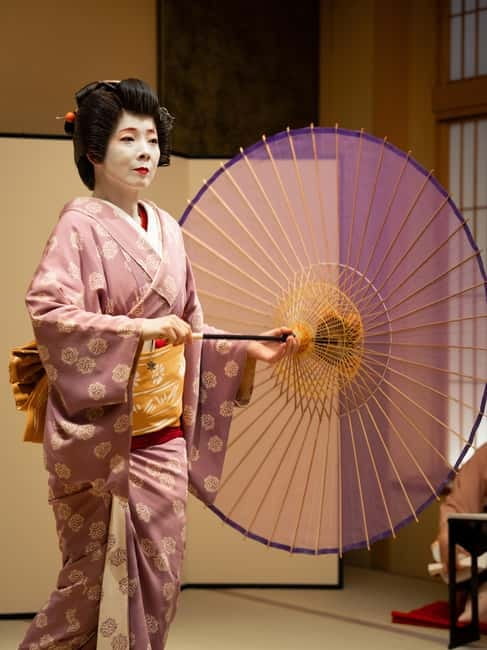
Meeting real geisha in a traditional tea house is the heart of this Asakusa experience. In 75 minutes, you’ll see graceful dance, hear live shamisen music, take part in a classic ozashiki-asobi game, and speak directly with the performers through an English-speaking host or translator.
I like the mix of polished performance and easygoing fun. The dance and music offer a careful look at Japanese arts, while Konpira Fune Fune gets everyone laughing. I also like the small details: seasonal sweets, freshly whisked matcha, and a photo with the geisha. The main thing to watch is the extra drink charge, since each person must order one alcoholic or non-alcoholic drink beyond the complimentary matcha.
In This Review
- Key points to know before booking
- Entering Miyakodori’s Ozashiki Tea House
- A graceful dance with shamisen accompaniment
- Playing Konpira Fune Fune with the room
- Questions, conversation, and a closer look at geisha life
- Matcha, seasonal sweets, and the required drink
- The commemorative photo at the end
- Who will get the most from this Asakusa activity
- Practical details that affect your decision
- My verdict: a rare cultural hour worth planning around
- FAQ
- Where does the geisha experience take place?
- How long does the activity last?
- What is included in the price?
- Is a drink included?
- Is English support available?
- Can I cancel for a full refund?
Key points to know before booking
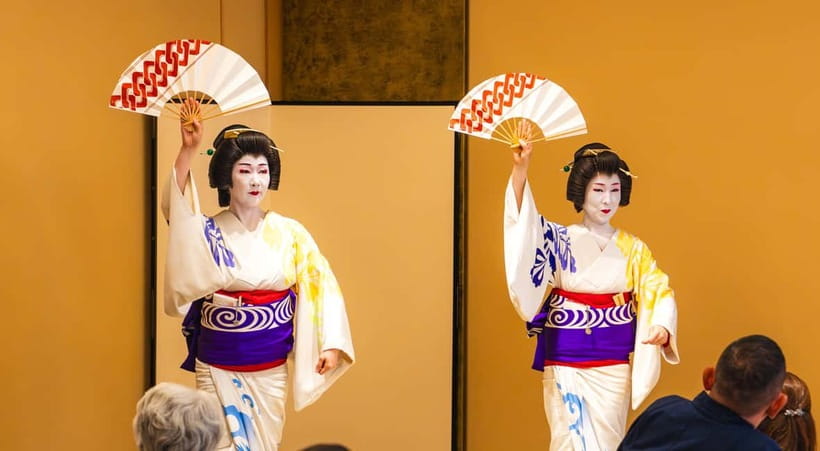
- Real geisha and live shamisen: Watch trained performers dance and listen to shamisen music and singing in an intimate tea house setting.
- Konpira Fune Fune: Join a playful ozashiki-asobi game that turns a formal cultural visit into a social, good-humored event.
- Direct conversation: Ask questions about geisha life with help from an English-speaking host or translator.
- Matcha and seasonal sweets: Enjoy freshly whisked tea and a small Japanese treat as part of the visit.
- About 75 minutes in Asakusa: The compact format fits neatly into a Tokyo sightseeing day, though transportation to the venue is not included.
- Budget for one extra drink: Every participant must order a drink, alcoholic or non-alcoholic, and pay for it separately.
Entering Miyakodori’s Ozashiki Tea House
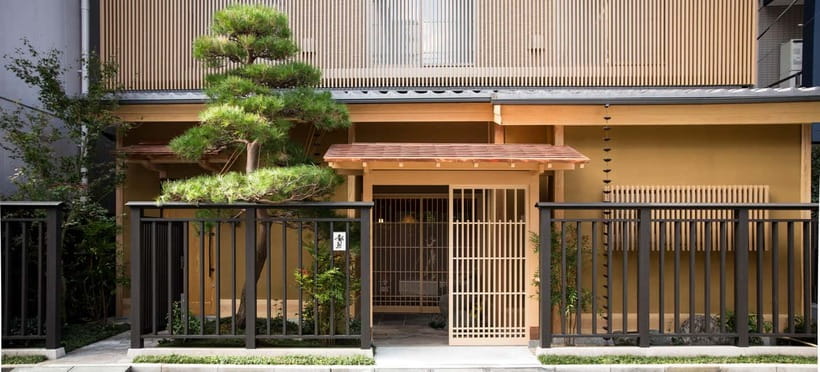
The setting is Miyakodori’s Ozashiki Tea House in Asakusa, one of Tokyo’s districts associated with old-style entertainment and traditional culture. The activity takes you beyond the usual temple visit or photo stop. You enter a world where music, dance, manners, costume, and conversation all work together.
The tea house atmosphere is part of the appeal. One account describes entering through a hidden door before meeting the owner and moving into the banquet area, where low stools were arranged for the participants. Details like this help the visit feel different from a stage show in a large theater. You are close enough to notice the performers’ movements and to take part rather than simply sit back.
The group can be relatively small. One visit had about 16 people, which allowed plenty of room for interaction without making the event feel private or exclusive. Group size may vary, but this is designed for solo visitors, couples, families, and small groups rather than a huge bus tour.
You should arrive a little early. The start time matters in a short 75-minute program, and arriving ahead of time gives you a calmer beginning. Transportation is not included, so leave room in your Tokyo schedule to reach Asakusa and find the venue.
A few more Tokyo tours and experiences worth a look


A graceful dance with shamisen accompaniment
The formal portion begins with a geisha dance accompanied by live shamisen music. This is the quietest and most focused part of the visit, and it gives you a chance to appreciate the precision behind the performance.
The shamisen is a traditional three-stringed Japanese instrument. Here, the music is not a recorded backdrop. It is performed live, with singing also part of the presentation. The combination of measured movement, music, costume, and posture creates the refined mood people hope to find in a geisha house.
The performers named in the supplied details include geiko Chizuru and maiko Tamaaki, with Shisa providing shamisen music and singing at one session. These names may not apply to every scheduled performance, but they show the level of individual artistry involved. A geiko is an accomplished geisha, while a maiko is an apprentice geisha. Seeing both together can give you a useful sense of the tradition’s different stages.
I would not treat this as a long concert. The entire program is compact, and the dance is one part of a broader cultural visit. That is a benefit if you want a clear introduction without spending a whole evening, but it also means anyone seeking an extended performance should adjust expectations.
The strongest praise for this activity centers on the dancing, music, costuming, and the performers’ skill. Families with children have found the visual beauty held their attention, while couples have used the visit as a special honeymoon or birthday outing. The formal performance is beautiful, but it is not stiff or distant for long.
Playing Konpira Fune Fune with the room
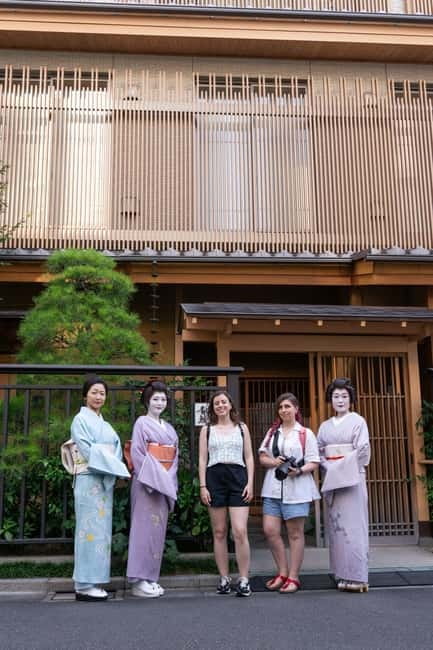
After the dance, the mood changes. You are guided through Konpira Fune Fune, a traditional ozashiki-asobi game. It is a lighthearted drinking-game tradition, although the activity also requires a drink order for each person who attends, and the drink can be alcoholic or non-alcoholic.
The rules are taught during the session, so you do not need prior knowledge. The point is not to prove your skill. It is to follow the rhythm and gestures, react quickly, and enjoy the inevitable mistakes. The game gives you a reason to interact with the performers instead of watching from a distance.
This is one of the best features for people who worry that a geisha performance might feel too formal. The game breaks the barrier quickly. You may find yourself laughing with people you have never met, and the performers’ warmth makes participation feel manageable even if you are shy.
Families should note the drink requirement. Children can attend, according to the family account provided, but each participant still needs the required drink order. Choose a non-alcoholic drink if that suits your group. The supplied information does not specify the drink menu or price, so factor in an additional cost beyond the $106 admission.
Questions, conversation, and a closer look at geisha life
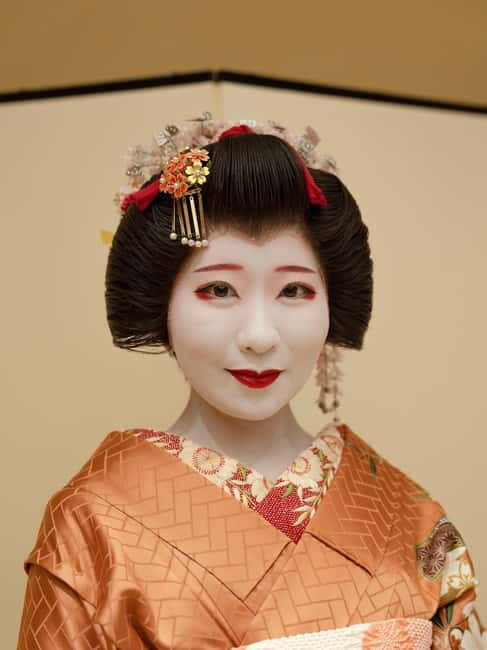
One of the most valuable parts comes after the performance, when you can ask questions. An English-speaking host or translator helps you communicate with the geisha, making this more than a visual show.
You can ask about their work and daily lives, as long as you keep your questions polite and suitable for a cultural setting. The chance to hear directly from the performers gives context that a museum label cannot provide. You begin to see the discipline behind the makeup, clothing, music, and dance.
The host and owner also matter. Multiple accounts describe the owner and staff as welcoming and attentive, and the translator as friendly and helpful. That support is important because the traditions may be unfamiliar, and a good explanation helps you understand what you are seeing without turning the visit into a lecture.
The conversation can also make the experience feel personal. The format allows the geisha to respond to the people in the room, not simply repeat a fixed show. One family even had help marking a birthday during the visit. That kind of personal touch is not guaranteed, but it shows how the tea house can adapt to a special occasion.
Still, you should remember that this is a shared cultural activity. You may not receive a long private conversation with each performer, especially when other people are present. The value lies in having a genuine chance to ask questions and listen, not in expecting an exclusive appointment.
Matcha, seasonal sweets, and the required drink
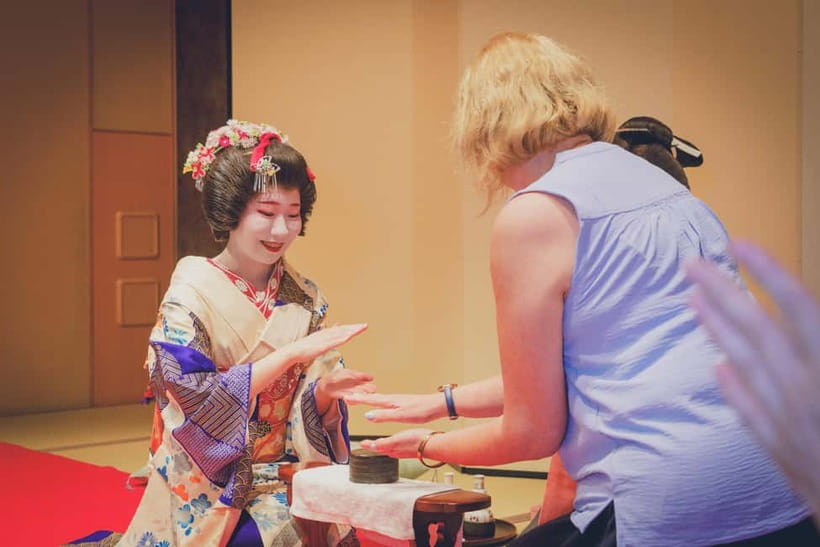
The refreshment portion includes freshly whisked matcha and seasonal Japanese sweets. These are modest servings rather than a meal, and meals beyond the sweets are not included.
Matcha adds a hands-on detail to the visit. You are not only looking at Japanese tradition, you are tasting one small part of it. The seasonal sweets pair naturally with the tea and offer a simple introduction to the balance of bitter matcha and delicate sweetness.
You must order one additional drink per person, alcoholic or non-alcoholic. This requirement is easy to miss when comparing the headline price, so include it in your budget. At $106 per person, the activity is not a cheap snack stop, and the extra drink makes the final cost higher.
The price makes more sense if you value access and interaction. You are paying for a 75-minute cultural program with real geisha, live music, a dance, a guided game, translation support, matcha, sweets, and a commemorative photograph. Compared with a standard performance viewed from a distance, the direct conversation and participation give the visit more substance.
On the other hand, this is not the best use of $106 if you mainly want a full meal, a long concert, or a general Tokyo sightseeing tour. Transportation and other food are separate, and the program moves quickly. I see it as a special cultural appointment, not an inexpensive casual activity.
A few more Tokyo tours and experiences worth a look

The commemorative photo at the end
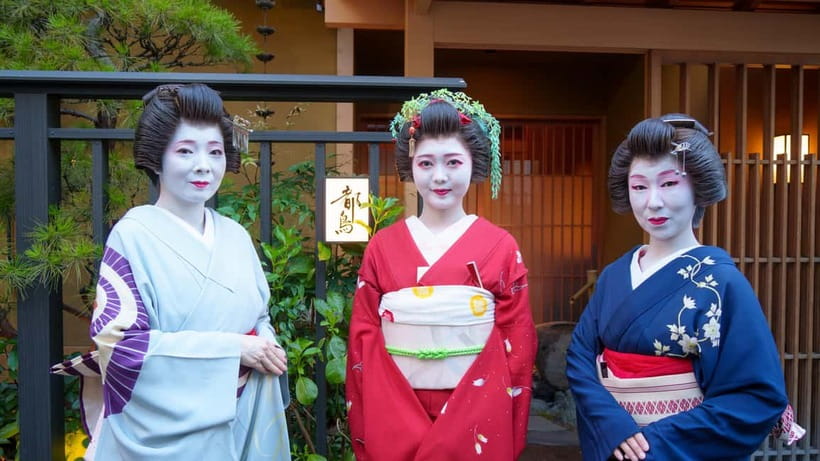
The visit finishes with a commemorative photo with the geisha. This is a practical keepsake and a chance to mark the occasion without needing to arrange your own portrait.
The photo also brings together the elements of the afternoon or evening: the costumes, the tea house setting, and the people who performed for you. It can be especially meaningful for a honeymoon, birthday, family trip, or first visit to Japan.
You should follow the host’s instructions about when and where to take photographs. The supplied details confirm that a commemorative photo is included, but they do not explain the exact format, number of photos, or delivery method. Treat it as one included keepsake rather than assuming a full photo package.
Who will get the most from this Asakusa activity
I would recommend this for first-time visitors who want cultural context, not just a quick photo. It gives you a manageable introduction to geisha arts while explaining some of the people and practices behind the performance.
It also suits couples looking for a distinctive evening or honeymoon activity. The music, costumes, sweets, and photo create a memorable occasion without requiring a full night at a formal restaurant.
Families can enjoy it too. The game brings energy to the room, and the colorful performance can hold children’s attention. Parents should consider the 75-minute length, the low stools described by one participant, and the required drink purchase for every person.
Solo visitors should feel comfortable booking. The format encourages participation, and the group setting gives you people to talk with during the game and conversation. You do not need to bring a large party to make the most of it.
I would be more cautious about recommending it to someone who dislikes audience participation. The game is a central part of the visit, and you are encouraged to join in. It is playful rather than demanding, but this is not a sit quietly in the back kind of event.
Practical details that affect your decision
The listed price is $106 per person, with one drink required separately. Matcha is included, as are seasonal sweets, but no other meal is provided. Plan to eat before or after if you want a full dinner.
The activity lasts 75 minutes, which is short enough to pair with other Asakusa sights. I would avoid scheduling it too tightly against another reservation, since finding the tea house and settling in takes time. The host or greeter speaks English, and English-language assistance is available during the cultural program.
Free cancellation is available up to 24 hours before the start time for a full refund. You can also reserve now and pay later, which helps if your Tokyo schedule is still changing.
The perfect group size is not specified. One session had roughly 16 people, so you might find a small, sociable room rather than a private performance. If you need a private booking or a guaranteed performer lineup, confirm those details before paying.
My verdict: a rare cultural hour worth planning around
I would book this if you want a direct, respectful introduction to geisha performance in Tokyo. The combination of dance, live shamisen, questions, matcha, sweets, a group game, and a photo gives you much more than a short stage presentation.
The biggest strengths are the quality of the performance and the chance to speak with the geisha. The activity also avoids becoming overly solemn. Konpira Fune Fune makes the room friendly and social, while the host and translator help bridge the language gap.
Think carefully about the total cost, mandatory drink, and 75-minute length. If those fit your plans, Miyakodori’s Ozashiki Tea House offers one of Asakusa’s more focused ways to encounter Japan’s living cultural arts. Arrive early, keep an open mind, and be ready to take part.
FAQ
Where does the geisha experience take place?
It takes place at Miyakodori’s Ozashiki Tea House in Asakusa, Tokyo, on Honshu.
How long does the activity last?
The cultural experience lasts 75 minutes.
What is included in the price?
The experience includes a meeting with real geisha, a dance performance, live shamisen music, an ozashiki-asobi game, seasonal Japanese sweets, freshly whisked matcha, and a commemorative photo with the geisha.
Is a drink included?
Complimentary matcha is included, but each person must order one additional alcoholic or non-alcoholic drink and pay for it separately.
Is English support available?
Yes. The activity provides an English-speaking host or greeter, and English translation support is available for interaction with the performers.
Can I cancel for a full refund?
Yes. You can cancel up to 24 hours in advance for a full refund.
More Shows & Performances in Tokyo
More Asakusa Tours in Tokyo


More tours in Tokyo we've reviewed






Asakusa Tours, compared.
 ★ 4.8Tokyo: Japanese Dance Cabaret Theater Asakusa-Kaguwa TicketFrom $492 hours
 ★ 4.7Tokyo: Meiji Shrine, Asakusa, Skytree Bus Tour and CruiseFrom $12210 hours
 ★ 4.9Tokyo: Roll and Authentic Sushi Making Class in AsakusaFrom $581h 40m
 ★ 4.8Tokyo: Asakusa Walking Tour with Sensoji Temple VisitFrom $222 hours
 ★ 5.0Tokyo Asakusa Rickshaw TourFrom $42
 ★ 4.5Tokyo Panoramic 1 Day: Meiji Shrine, Asakusa, Odaiba and SKYTREE®From $85