
Reviewed · ASAKUSA TOURS
Asakusa: A Big-picture History Walk to Know Japan
Japan’s past comes into focus on this compact Asakusa walk. From the Sumida River, you trace the country’s long isolation and forced reopening. At Senso-ji and Asakusa Shrine, you see how Buddhism and Shinto shared the same sacred ground for more than 1,000 years. I like the way the tour links famous sights to larger world events, especially Japan’s influence on Western art. I also like the clear, visual teaching style used by guides such as Choco, Sachi, Amy, and Yoko. The drawback is that two hours can only sketch Japan’s history, and the route includes a moderate amount of walking through crowded public areas.
What makes this experience useful is its focus. You are not simply shown a gate, temple, and shopping street. You are given a framework for understanding them. I would book it early in a Tokyo visit, then use that background to make better sense of shrines, temples, museums, and Japanese customs during the rest of your trip.
In This Review
- Key points to know before you go
- Why this short Asakusa walk has a wide reach
- Starting at the Sumida River and the Tokyo Cruise pier
- The Tourist Information Center explains the religious basics
- Kaminarimon turns a famous gate into a lesson about dragons
- Nakamise Shopping Street links souvenirs with world art
- Hozomon reveals an unexpected medieval comparison
- Senso-ji makes religious practice visible
- Asakusa Shrine shows a thousand years of coexistence
- What $58 buys you in practical terms
- Timing, walking, and useful preparation
- Who should book this Asakusa experience
- Should you book it?
- FAQ
- Where does the Asakusa history walk begin?
- How long does the tour last?
- What language is the tour offered in?
- Which places are visited?
- Are headsets provided?
- Are snacks included?
- Can children join the walk?
- What happens if the tour is cancelled?
Key points to know before you go
- The Sumida River begins the history lesson: Learn why Japan closed itself to most foreign contact, why the Netherlands kept a trading link, and how Admiral Perry forced the country to reopen.
- Buddhism and Shinto get a clear introduction: The guide explains the difference between the two traditions before you enter their sacred spaces.
- Ukiyo-e connects Asakusa to Europe: Nakamise becomes a lesson in how Japanese woodblock prints affected Western Impressionist painters.
- The temple and shrine share one religious story: Senso-ji and Asakusa Shrine show a long period of cooperation between Buddhist and Shinto practice.
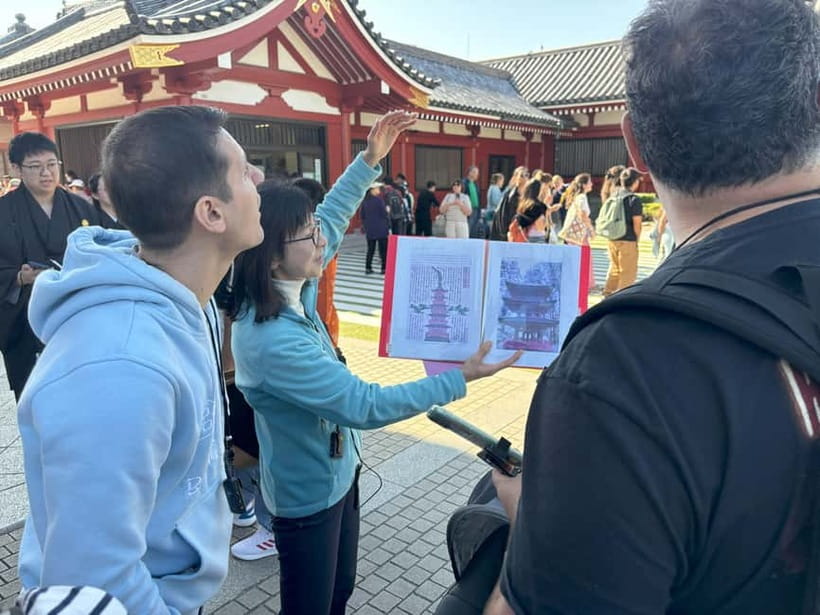
- The teaching is visual and family-friendly: Guides have used printed images, and children can take part in the fortune-telling activity at the temple entrance.
- The value is strongest for first-time visitors: At $58 per person, you pay for interpretation rather than transport or admission to a major paid attraction.
Why this short Asakusa walk has a wide reach
Asakusa is a good place to learn about Japan because several layers of the country’s story sit within a small area. The Sumida River points toward trade, defense, and foreign pressure. Kaminarimon and Nakamise show popular religion and commerce. Senso-ji and Asakusa Shrine reveal the long relationship between Buddhism and Shinto.
The route takes about two hours and covers seven stops. That is enough time for a useful outline, not a full course in Japanese history. I see this as a strong orientation walk. You leave with ideas you can recognize elsewhere, such as the difference between a temple and a shrine, the meaning of religious objects, and the role of foreign contact in modern Japan.
The guides make a real difference. Choco has been especially good at keeping both adults and children involved. Sachi is described as warm, clear, and able to answer questions as they come up. Amy has used printed images to make difficult points easier to grasp. Yoko has combined local information with practical advice about respectful shrine behavior. The guide assigned to your departure may be different, but the experience clearly depends on a live English-speaking guide rather than a simple audio recording.
A few more Tokyo tours and experiences worth a look


Starting at the Sumida River and the Tokyo Cruise pier
The meeting point is in front of the Burger King beside Exit 4 of Asakusa subway station on the Ginza Line, station G19. From there, the walk begins near Tokyo Cruise Asakusa Pier and the Sumida River.
This opening stop gives the tour its broadest historical view. The river is not treated simply as a photo stop. It becomes a way to discuss the Edo shogunate and the policy that kept Japan largely closed to foreign contact for more than 200 years.
You learn why the Netherlands was allowed to continue trading when most other foreign powers were shut out. That detail matters because Japan was not cut off from every outside idea. Information, goods, and news still came through a narrow channel, even during the period commonly described as national isolation.
The guide then connects the arrival of Admiral Perry with Japan’s reopening. This is a useful bridge between old and modern Japan. Instead of treating the opening of the country as an isolated textbook event, the walk ties it to Tokyo’s waterfront, including Odaiba’s former gun batteries and the modern Statue of Liberty replica facing the Pacific.
I like this start because it helps you read Tokyo as a city shaped by both defense and international exchange. The limitation is that the pier itself is not a museum presentation. The value comes from the guide’s explanation, so pay attention and ask questions rather than expecting a long list of visible remains.
The Tourist Information Center explains the religious basics
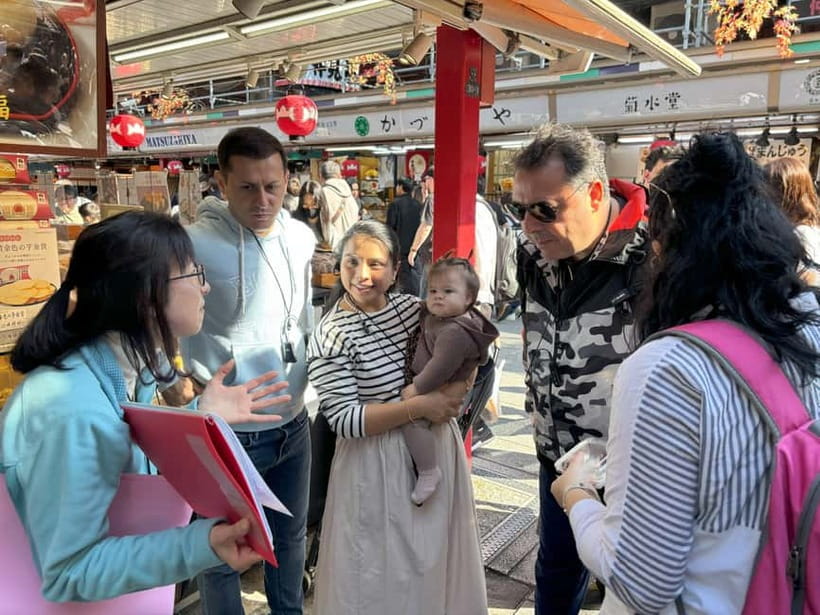
The Asakusa Culture Tourist Information Center is the next stop, with about 15 minutes of guided explanation and walking time. Here, the guide sets up the religious ideas you will need for Senso-ji and Asakusa Shrine.
The focus is on Buddhism and Shinto, Japan’s two major religious traditions. You learn the basic difference between Buddhist temples and Shinto shrines, along with how prayer works in each setting. This preparation is practical because many first-time visitors see a large red gate or incense burner without knowing what kind of place they have entered.
The guide’s job is not to bury you in religious vocabulary. The strongest explanations use simple comparisons and visible examples. This is where a guide such as Yoko can help, especially when explaining how to approach sacred sites respectfully.
Do not expect a full study of Buddhist schools or Shinto theology in 15 minutes. Instead, think of this stop as a key for the rest of the route. Once you understand the difference between a temple and shrine, the shared religious history of the final stops becomes much easier to follow.
Kaminarimon turns a famous gate into a lesson about dragons
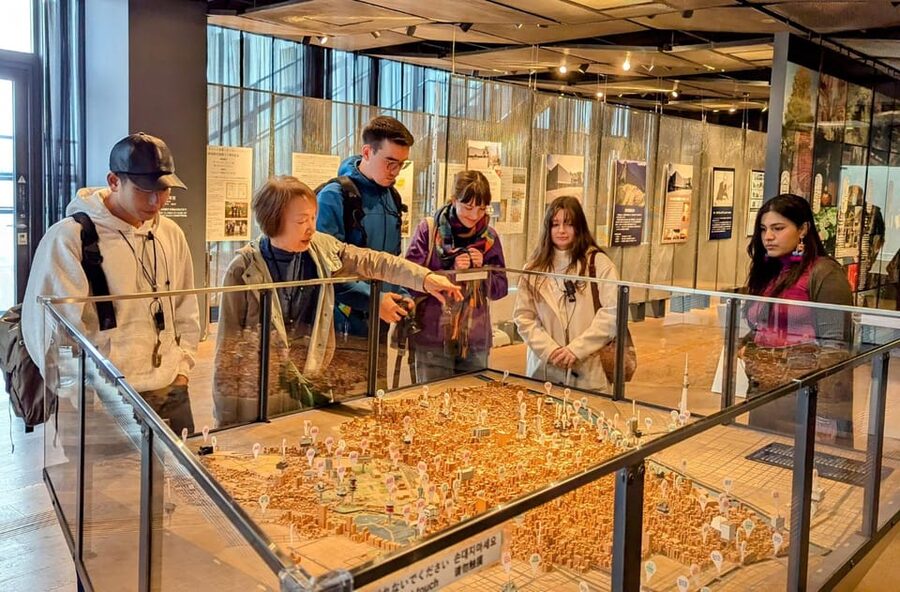
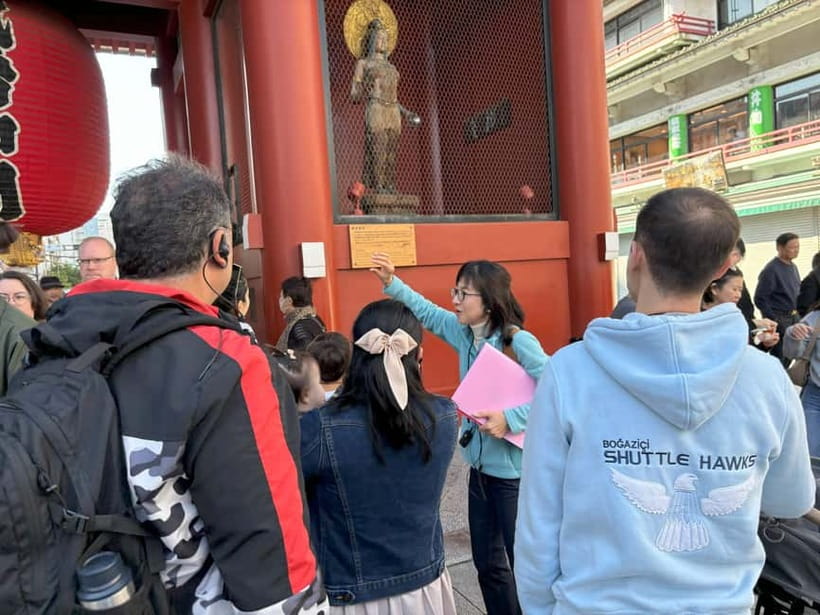
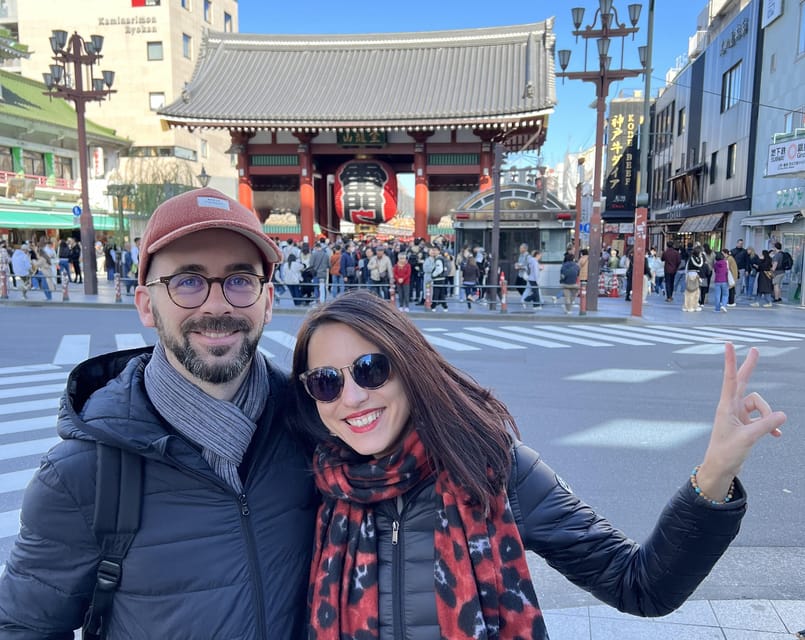
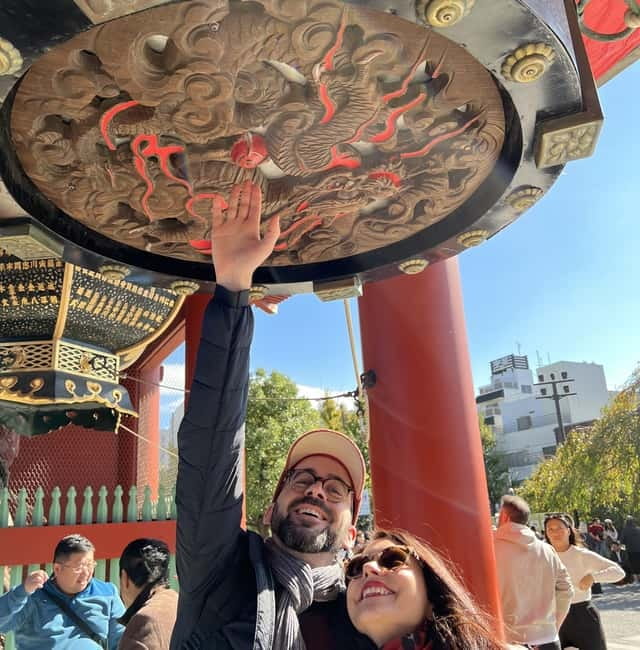
Kaminarimon, or Thunder Gate, is one of Asakusa’s best-known sights. Its giant lantern draws cameras, but the guide asks you to look beyond the obvious picture.
The discussion here centers on Japanese and Western dragons. In much of Western medieval tradition, the dragon is a dangerous creature to defeat. The Japanese dragon has an opposite role, connected with power and protection rather than simply evil. That contrast gives you a quick way to see how symbols change across cultures.
This is a good example of the tour’s method. You begin with a familiar object, then use it to compare Japan with Europe. The explanation is short enough to remember, but specific enough to make the gate more meaningful the next time you see it.
Kaminarimon can be crowded, and the area is an active passage rather than a quiet classroom. Stay close to the guide and keep your attention on the explanation. Groups of three or more receive headsets so the guide can be heard more easily, though one person found that the earpiece sometimes created an echo. That is a minor practical issue, but it is worth knowing if you are sensitive to audio equipment.
Nakamise Shopping Street links souvenirs with world art
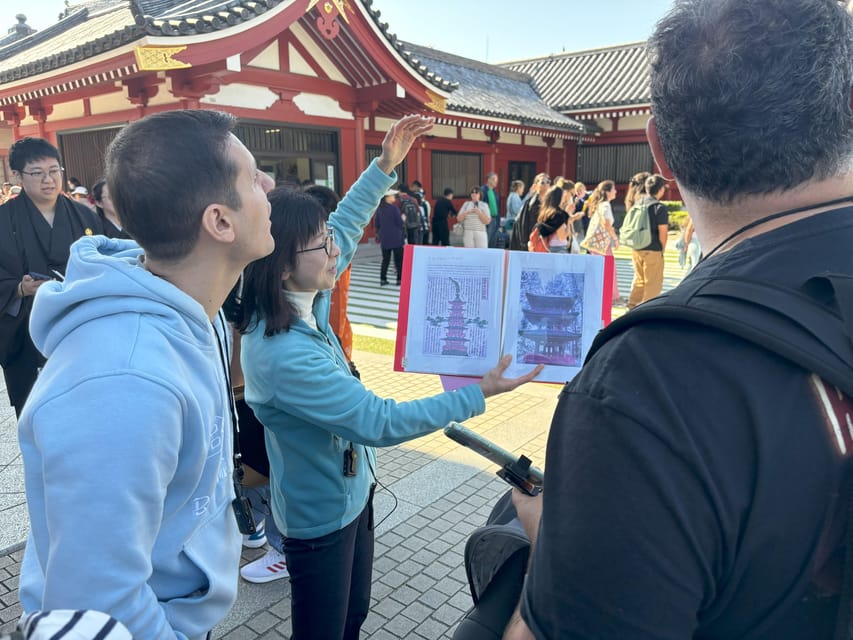
The 30-minute walk along Nakamise Shopping Street is the longest section of the tour. This is where the route shifts from religious history to popular culture, trade, and art.
Nakamise is one of Japan’s oldest shopping streets, leading toward Senso-ji. The shops and stalls give the guide a natural setting for discussing Buddhist symbols, including the vajra, also called tokko. You do not need a background in Buddhist art to follow the explanation. The point is to recognize that objects seen around a temple often carry specific religious meanings.
The more surprising topic is ukiyo-e woodblock printing. These prints eventually reached Europe and affected Western artists, including Impressionist painters. The guide uses this story to show that artistic influence did not move only from Europe to Japan. Japanese images changed how some Western painters thought about composition, framing, and everyday scenes.
This section is especially helpful if you plan to visit museums or art collections later in Japan. It gives you a reason to look at woodblock prints as more than attractive souvenirs. Amy’s use of printed images has been praised as a helpful way to make the comparison clear, and visual material is valuable here because the lesson concerns pictures.
Nakamise is also the most commercial part of the walk. You may want to shop or pause at a food stall, but stopping too often can make you miss the guide’s explanation. Traditional snack tastings are included, which adds a small local pleasure without turning the tour into a food crawl.
Other walking tours we've reviewed in Tokyo



Hozomon reveals an unexpected medieval comparison
At Hozomon Gate, the guide makes one of the tour’s more unusual claims: people in Japan and the West had surprisingly similar ways of thinking 1,000 years ago.
This comparison can sound broad, so the explanation matters. The point is not that medieval Japan and Europe were identical. It is that people separated by great distance could develop comparable ideas, social habits, and religious concerns. The gate becomes a prompt to question the easy idea that Japan and Europe followed completely separate paths.
For me, this is the kind of subject that makes a short city walk worth booking. A standard sightseeing route gives you the name of the gate and its date. This tour asks you to place the gate within a wider human story.
At the same time, a 15-minute stop cannot prove every part of a large historical comparison. Treat it as an introduction and ask the guide to clarify any point that interests you. The tour is strongest when it encourages curiosity, not when you expect every period of Japanese history to receive equal treatment.
Senso-ji makes religious practice visible
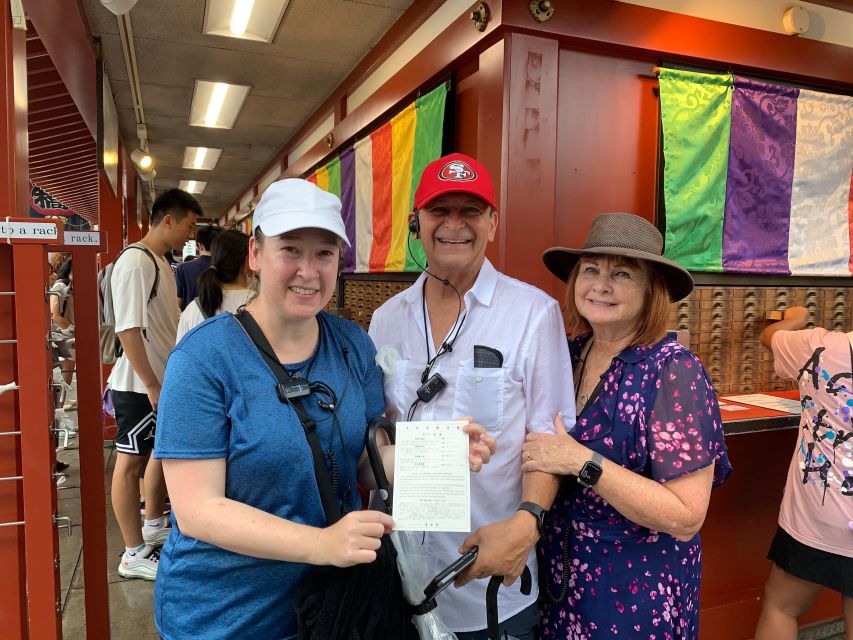
Senso-ji is Japan’s oldest Buddhist temple and the central sight of the walk. Here, the earlier explanation of Buddhism becomes something you can see in practice.
The guide compares medieval Japan with medieval Europe again, giving you another way to think about religion, society, and daily life in the past. You also get a clearer explanation of how prayer differs in Buddhism and Shinto. That distinction is useful because visitors often see people bowing, offering coins, or making wishes at both kinds of site and assume the actions mean exactly the same thing.
The tour can also be engaging for families. An 8-year-old enjoyed the fortune-telling activity at the temple entrance, and the historical content was presented in a way that kept a 13-year-old involved. Children younger than six may join without charge, but the subject matter is aimed mainly at adults. Families should be comfortable with a steady walking pace and regular listening stops.
Senso-ji is a working religious place as well as a major sight. Keep your voice low near worshippers, follow the guide’s instructions, and allow space for people who have come to pray. You will get more from the stop if you treat the temple as more than a backdrop for photos.
Asakusa Shrine shows a thousand years of coexistence
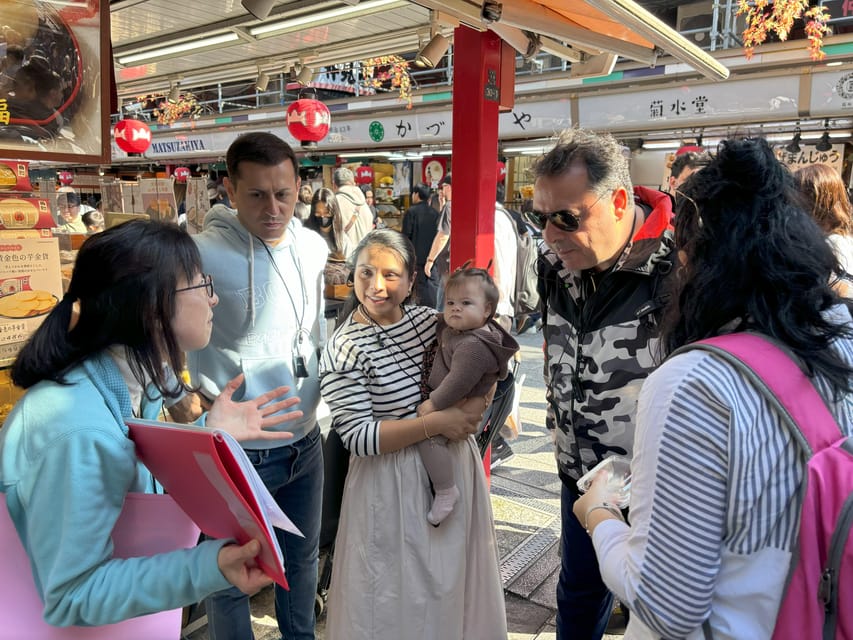
The final stop is Asakusa Shrine, located on the same grounds as Senso-ji. This is the point where the tour’s separate threads come together.
Many people expect Buddhism and Shinto to occupy clearly separate spaces. Asakusa offers a different picture. A Buddhist temple and a Shinto shrine have shared the same area, worshippers, and long history for more than 1,000 years. The guide explains why this coexistence developed and how the two traditions could operate alongside each other.
This is perhaps the most useful lesson for your time in Japan. The labels temple and shrine matter, but Japanese religious life has not always been divided into neat categories. Seeing both sites together gives you a more accurate starting point for understanding other sacred places.
The walk ends here rather than returning you to the subway station. That is convenient if you plan to continue exploring Senso-ji, shop around Nakamise, or visit another Asakusa attraction. If you need to catch a train, remember that you will have to make your own way back to the station.
What $58 buys you in practical terms
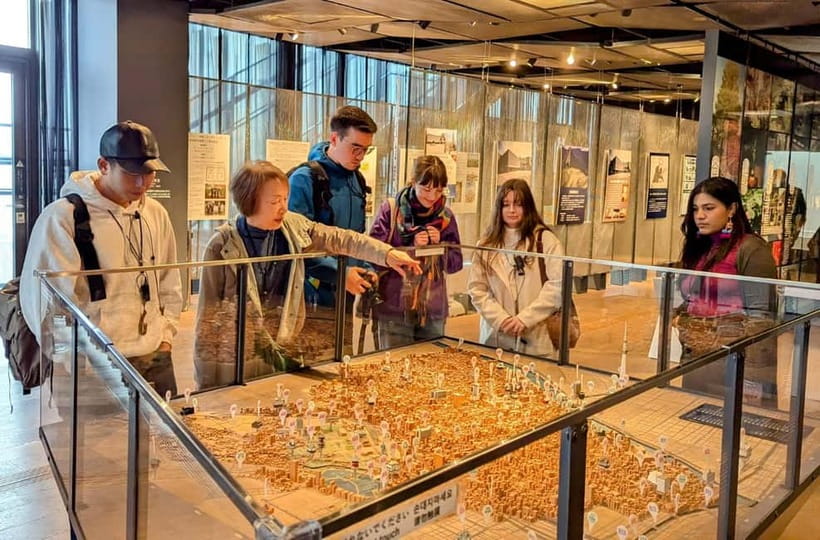
At $58 per person, this is not a cheap stroll if you judge it only by distance. The route covers a fairly small part of Asakusa, and there are no major admission tickets or hotel transfers included.
The value comes from the guide’s interpretation. In two hours, you receive a connected explanation of Japan’s foreign policy, religious traditions, visual culture, and relationship with Europe. You also get a certified guide, traditional snack tastings, and headsets for groups of three or more.
I would consider the price reasonable for a first visit if you want context and prefer asking questions in real time. It is less attractive if you already know Japanese history well or mainly want free time for photographs and shopping. A self-guided visit can cover the same buildings, but it will not automatically explain the Netherlands trade connection, the dragon symbolism, or the influence of ukiyo-e on Impressionism.
The overall rating is 4.6 from 77 ratings, with repeated praise for the guides’ warmth, clarity, and ability to keep younger participants interested. The one specific criticism concerns occasional echo from the headsets. That balance suggests a solid educational walk with a small audio risk, not a polished sightseeing machine.
Timing, walking, and useful preparation
Wear comfortable shoes. The tour involves a moderate amount of walking, with several 15-minute sections and a 30-minute passage through Nakamise. Bring water and clothing suited to the weather.
The walk operates rain or shine. Rain may make the river and open public areas less comfortable, but the tour does not simply stop because the forecast is poor. A compact umbrella or rain layer is sensible.
The meeting point is easy to identify once you exit Asakusa subway station at Exit 4 on the Ginza Line. Do not remain underground looking for the group. Step outside by the Burger King restaurant at 2-chome-20-6 Kaminarimon.
The activity is offered in English, with an English live guide and English audio support. If you have mobility concerns, contact the provider before booking. The route is not presented as suitable for people with mobility impairments, although the supplier will try to help when contacted in advance.
A minimum number of participants is required. If the tour is cancelled for that reason, notice is sent at least 24 hours ahead and the payment is refunded. You can also cancel up to 24 hours before the start for a full refund, and reserve now while paying later, which helps if your Tokyo schedule is still shifting.
Who should book this Asakusa experience
I would choose this walk for a first-time visitor who wants a clear starting point rather than a list of dates. It suits adults interested in history, religion, art, or the way Japan relates to Europe.
Families can also make it work, especially with a child old enough to enjoy stories and the temple fortune-telling activity. The guide’s style matters, but the experience has already shown that children around eight and teenagers can stay involved.
It is also useful for anyone who feels unsure about shrine etiquette. The explanations help you approach sacred places with more confidence and respect.
I would skip it if you dislike guided pacing, have significant difficulty walking, or want a food-focused or shopping-focused Asakusa outing. The route leaves little time for browsing, and its main reward is understanding rather than a long list of attractions.
Should you book it?
Book this tour if you want Asakusa to make sense beyond its postcard views. The best parts are the river story, the ukiyo-e connection to Western art, and the final explanation of why Senso-ji and Asakusa Shrine exist side by side.
At $58, you are paying for a focused English-language history lesson in the streets where the stories unfolded. That is good value for a curious first-time visitor, especially if you book early in your Tokyo stay. If you already have a strong grasp of Japanese history, use the same two hours to explore independently and spend your money on a museum or meal instead.
FAQ
Where does the Asakusa history walk begin?
The meeting point is in front of the Burger King restaurant next to Exit 4 of Asakusa subway station, G19, on the Ginza Line. The address given is 2-chome-20-6 Kaminarimon.
How long does the tour last?
The tour lasts two hours.
What language is the tour offered in?
The live tour guide speaks English, and English audio support is included.
Which places are visited?
The route includes Tokyo Cruise Asakusa Pier, Asakusa Culture Tourist Information Center, Kaminarimon, Nakamise Shopping Street, Hozomon Gate, Senso-ji Temple, and Asakusa Shrine.
Are headsets provided?
Headsets are provided for groups of three or more so you can hear the guide clearly. One participant found that the equipment sometimes created an echo.
Are snacks included?
Traditional snack tastings are included in the activity.
Can children join the walk?
Children younger than six may join free of charge. The historical focus is recommended mainly for adults, but families are welcome.
What happens if the tour is cancelled?
The tour requires a minimum number of participants. If that minimum is not reached, the provider sends notice at least 24 hours before the tour and gives a full refund. You may also cancel up to 24 hours in advance for a full refund.
More Historical Tours in Tokyo
More Walking Tours in Tokyo
More Asakusa Tours in Tokyo
More tours in Tokyo we've reviewed






Asakusa Tours, compared.
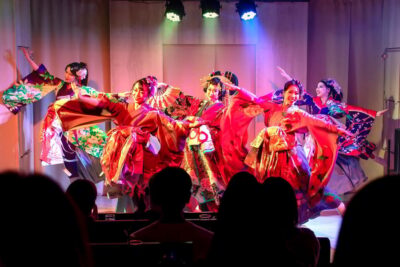 ★ 4.8Tokyo: Japanese Dance Cabaret Theater Asakusa-Kaguwa TicketFrom $492 hours
 ★ 4.7Tokyo: Meiji Shrine, Asakusa, Skytree Bus Tour and CruiseFrom $12210 hours
 ★ 4.9Tokyo: Roll and Authentic Sushi Making Class in AsakusaFrom $581h 40m
 ★ 4.8Tokyo: Asakusa Walking Tour with Sensoji Temple VisitFrom $222 hours
 ★ 5.0Tokyo Asakusa Rickshaw TourFrom $42
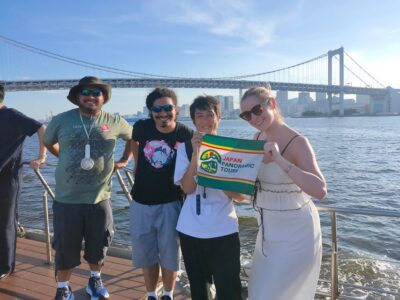
 ★ 4.5Tokyo Panoramic 1 Day: Meiji Shrine, Asakusa, Odaiba and SKYTREE®From $85