
Reviewed · KAMAKURA & ENOSHIMA DAY TRIPS
Yokohama and Kamakura Private Day Trip from Tokyo
Yokohama’s sleek harbor and Kamakura’s old temples make a fine pair for a day outside Tokyo. In one outing, you can eat through Japan’s largest Chinatown, stroll beside Minato Mirai, and see Kamakura’s famous Great Buddha.
I like the private car, which saves you from stitching together trains and buses. I also like the flexible schedule, especially if you want more garden time and less shopping. The main catch is that this is a chauffeur-led trip, not a walking tour, so much of the explanation comes between stops rather than beside the monuments.
In This Review
- Key points to know before booking
- Yokohama and Kamakura in one long day
- Minato Mirai: Yokohama’s polished waterfront
- Sankeien Garden: two hours among old buildings and ponds
- Landmark Tower Sky Garden: Yokohama from the 69th floor
- Yokohama Chinatown: food, color, and a quick meal option
- Kamakura’s Great Buddha at Kotoku-in
- Hokoku-ji’s bamboo grove and tea house
- Tsurugaoka Hachimangu, Kamakura’s major shrine
- Hasedera Temple and the Kannon statue
- What the chauffeur-led format means
- Is $360 good value for up to three people?
- Timing, comfort, and who should book
- Should you book this Yokohama and Kamakura day trip?
- FAQ
- How long does the Yokohama and Kamakura tour last?
- How many people can join the private tour?
- Is pickup from Tokyo offered?
- Is transportation included?
- Is an English-speaking guide included?
- Are admission fees included?
- Which stops are listed as free?
- Can the tour be canceled for a refund?
Key points to know before booking
- Two very different cities in one day: Yokohama brings harbor views, food, shopping, and modern architecture. Kamakura supplies shrines, temples, gardens, and old Buddhist monuments.
- A private vehicle for up to three people: The $360 group price works best for a small party sharing the cost.
- A flexible plan: You can adjust the pace and stops to suit your interests, although fitting all eight listed stops into one day will require efficient timing.
- Admission fees are separate: Sankeien Garden, the Sky Garden, the Great Buddha, Hokoku-ji, and Hasedera require payment on site.
- Chauffeur rather than full-time guide: Your English-speaking driver gives information mainly while driving. You will not have a dedicated walking guide at each site.
- Rudy receives special praise for punctual service: One account describes him as informative and consistently timely with pickups.
Yokohama and Kamakura in one long day
This outing covers a lot of ground. It lasts about nine to ten hours, with pickup offered from Tokyo and transportation in an air-conditioned private vehicle. Fuel, parking, tolls, and bottled water are included, which removes several small costs and practical worries.
The route also gives you a useful contrast. Yokohama is a port city shaped by modern development, international trade, shopping, and waterfront design. Kamakura feels quieter and more traditional, with major Buddhist and Shinto sites spread through an older setting.
The tradeoff is simple: this is a broad introduction, not a slow study of either city. Eight stops leave roughly an hour at many locations, with two hours set aside for Sankeien Garden. If you want long meals, extended shopping, or time to sit quietly at every temple, you will need to trim the plan.
I would consider this a good fit for a first visit to the area, particularly if you value ease and variety. It is also useful for a small family or group that would rather have one vehicle than manage several public transport connections.
A few more Tokyo tours and experiences worth a look
Minato Mirai: Yokohama’s polished waterfront
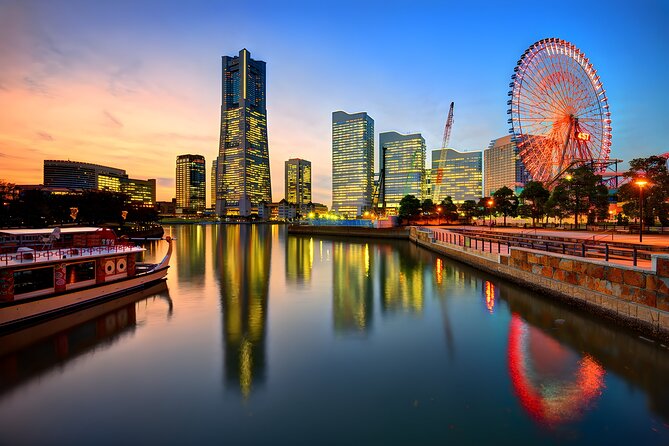
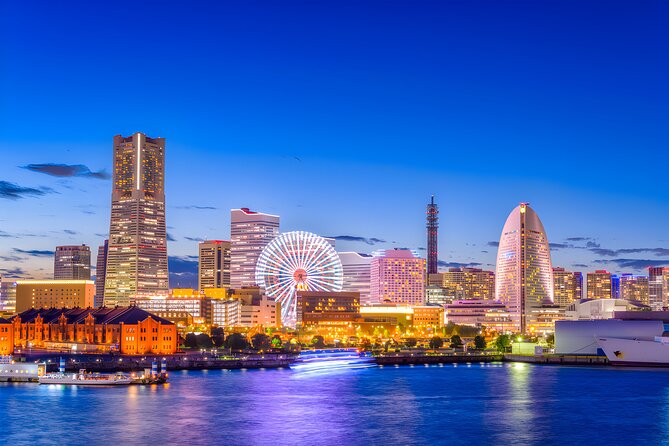
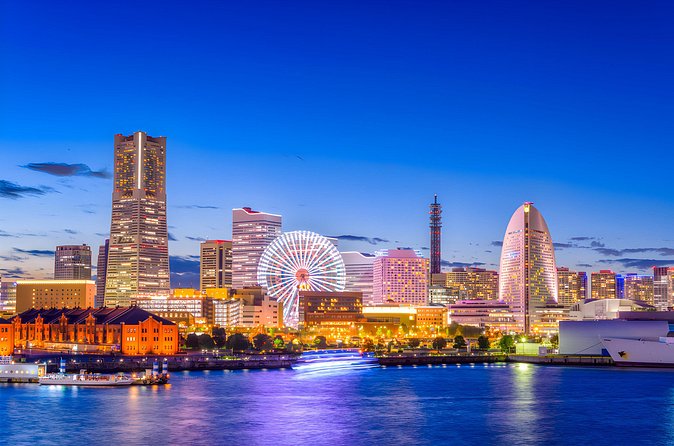
Your first stop is Minato Mirai 21, a modern waterfront district with broad harbor views, shopping centers, and recognizable sights such as Landmark Tower and the Cosmo Clock Ferris Wheel. You get about an hour here, and admission is free.
This is the place for a relaxed opening walk and photographs. The area shows Yokohama’s newer face: clean-lined buildings, open waterfront space, and a city center designed around the harbor.
The short visit works well if you mainly want to see the setting and take pictures. If you want to shop or visit more than one attraction, one hour will feel tight. The district is also less rewarding if your main interest is old Japan, since its appeal comes from modern architecture and the water rather than temples or historic streets.
Sankeien Garden: two hours among old buildings and ponds
Sankeien Garden is likely to be the calmest part of the Yokohama portion. This traditional garden has ponds, tea houses, and historic buildings moved here from different parts of Japan. The setting gives you a break from the city without requiring a separate trip far from Yokohama.
Two hours is a sensible allotment. You can walk at an unhurried pace, pause near the water, and look at the buildings rather than simply making a quick photo stop. The garden is especially appealing in spring and autumn, when seasonal color adds more interest to the paths and plantings.
Admission is not included, so keep a little cash or payment method ready for the entrance. The garden is also a stop where your own pace matters. Someone who enjoys quiet gardens may want to protect the full two hours. If you prefer shopping and city views, you may find this visit longer than necessary.
Landmark Tower Sky Garden: Yokohama from the 69th floor
The Sky Garden occupies the 69th floor of Yokohama Landmark Tower, which rises 296 meters. The observatory offers wide views over Yokohama and toward Tokyo, with Mount Fuji possible on a clear day according to the tour description.
This stop gives you a useful sense of the city’s shape. After seeing the waterfront at street level, you can look down on the port, dense urban districts, and surrounding area from above. The visit lasts about an hour.
Admission is separate. I would treat the Sky Garden as weather dependent. On a clear day, the height adds real value. On a hazy day, the view may be less impressive, so the flexible format matters. You can ask to spend more time elsewhere if the conditions are poor, though the exact ability to change the order depends on the day’s traffic and timing.
Yokohama Chinatown: food, color, and a quick meal option
Yokohama Chinatown is described as the largest Chinatown in Japan. Its streets are lined with Chinese-style architecture, shops, food stalls, and casual places selling steamed buns, dumplings, and bubble tea.
The planned visit is about an hour, with no admission charge. That makes it an easy stop for a snack or quick lunch. You can sample something without committing to a formal restaurant, then use the remaining time for a short walk through the main streets.
An hour is enough for a taste, not a full food crawl. If you want to browse carefully, sit down for a meal, and sample several dishes, you will have to negotiate for more time. This stop can also become crowded and lively, so it is less about quiet sightseeing and more about street food, signs, shops, and people moving through the district.
Because the day includes several temples and gardens, Chinatown provides a welcome change of mood. I like that balance. You are not spending the whole day looking at monuments.
Other private tours in Tokyo


Kamakura’s Great Buddha at Kotoku-in
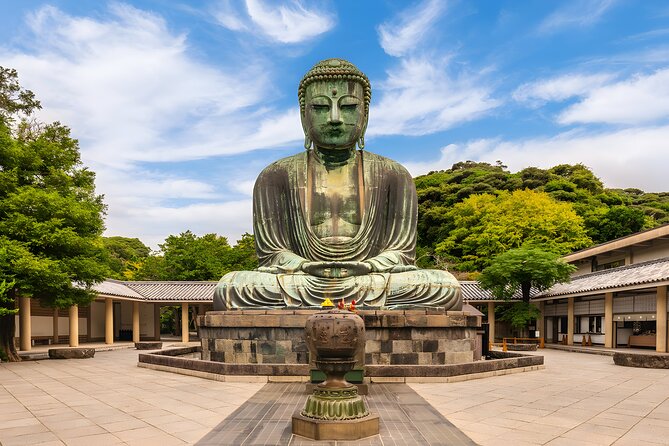
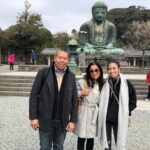
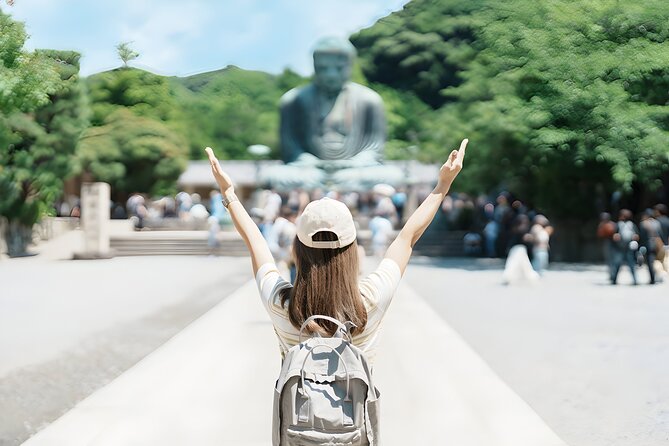
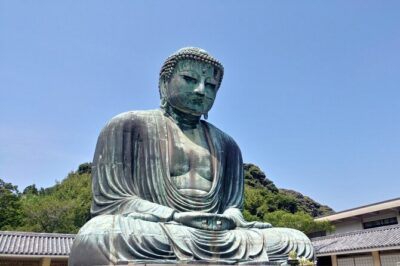
Kamakura begins with its best-known sight, the bronze Great Buddha at Kotoku-in. The seated figure dates from the 13th century and is one of the region’s essential sights.
You get about an hour here, with admission paid separately. That should give you time to see the statue, take in its scale, and walk around the grounds at a reasonable pace. The Great Buddha is powerful partly because of its simplicity. It is not an elaborate indoor display. The large bronze figure carries the stop.
This is one place where your driver’s role has limits. You will receive information mainly in the vehicle, but you should not expect a guide beside the statue explaining every detail. If you want a more detailed religious or historical interpretation, you may need to read the posted information on site or arrange your own background reading before the trip.
Hokoku-ji’s bamboo grove and tea house
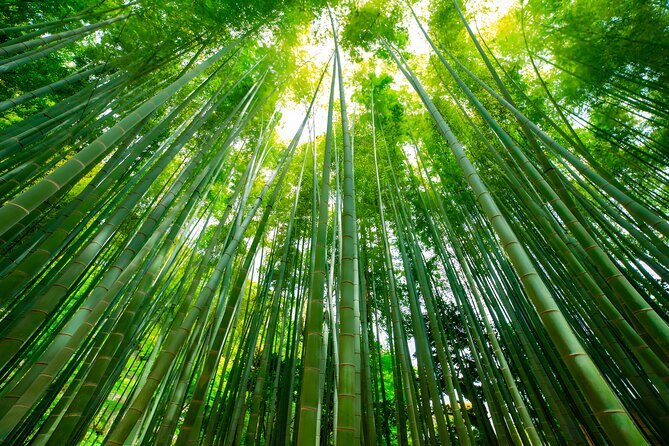
Hokoku-ji Temple offers a quieter Kamakura experience. Its bamboo grove has tall stalks close around the walking path, and a traditional tea house provides a place to pause. The visit is scheduled for about an hour, and admission is not included.
This stop is a good choice if you want a small, peaceful setting rather than a large temple complex. The bamboo grove is compact, so the value comes from the atmosphere and the chance to slow down. It also gives the day a change of rhythm after the Great Buddha.
The one-hour stop should be adequate for the grove and tea house, but it may feel short if you want to linger. Since the tour is customizable, you can tell the chauffeur what matters most. If Hokoku-ji appeals to you more than the observation deck or shopping time, this is the kind of stop worth protecting.
Tsurugaoka Hachimangu, Kamakura’s major shrine
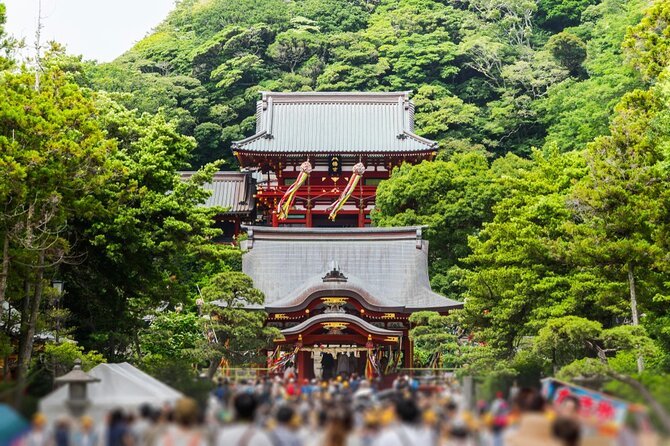
Tsurugaoka Hachimangu is Kamakura’s most important Shinto shrine. It was founded in 1063 by Minamoto no Yoriyoshi and later expanded by Minamoto no Yoritomo, founder of the Kamakura shogunate.
The stop lasts about an hour and is free to enter. It gives you a chance to see a major religious site tied to Kamakura’s political past, not just a beautiful building. The shrine helps explain why Kamakura became such an important center during the shogunate period.
Because the grounds are larger and more formal than Hokoku-ji, one hour is best used for the main approach and central areas. You may want to ask the driver where the most important parts are before walking off. Again, this is not a full-time guided visit, so the experience depends partly on how much context you bring with you.
I like including this shrine after the smaller bamboo grove. The contrast helps. Hokoku-ji offers quiet and close-up detail, while Tsurugaoka Hachimangu gives you a grander sense of Kamakura’s religious and civic importance.
Hasedera Temple and the Kannon statue
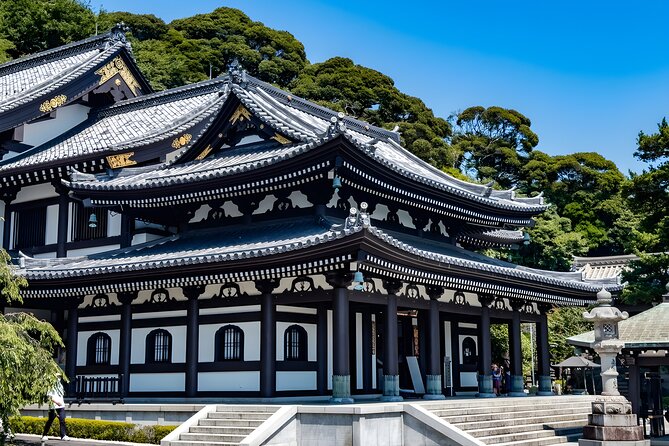
Hasedera is the final listed stop and one of the more varied temple visits. It is known for a large wooden statue of Kannon, the Goddess of Mercy. The grounds also include a cave, ocean views, and a hydrangea path that is especially attractive in early summer.
The planned visit is one hour, and admission is separate. That gives you enough time for a focused walk, but not necessarily a leisurely exploration of every corner. The ocean view adds something different from the inland temple settings, while the cave and Kannon statue make the visit more than a garden stop.
Hasedera can be especially appealing if your visit falls during the hydrangea season. At other times, the statue, cave, temple grounds, and views remain the main reasons to come. If you are tired by this point, the number of steps and sights may feel like a lot. Let your driver know if you need to keep the visit focused.
What the chauffeur-led format means
The English-speaking chauffeur is central to how this tour works. You have a private vehicle, a flexible plan, and a driver who can share information while taking you between locations. Rudy is specifically praised for being informative and punctual with pickups, qualities that matter on a day with many stops.
Still, you should book this knowing the difference between a chauffeur and a walking guide. The tour does not include a dedicated guide who accompanies you through every garden, shrine, and temple. If you want long explanations at each site, this format may feel light on context.
The benefit is freedom. You can adjust the pace, spend more time at a favorite stop, and avoid the rigid movement of a large group. You also have a private space between visits, which is valuable after a busy morning in Chinatown or a long temple walk.
Is $360 good value for up to three people?
The price is $360 per group of up to three people. At full capacity, that works out to $120 per person before admission fees. For a nine to ten-hour private vehicle with fuel, parking, tolls, bottled water, and an English-speaking chauffeur included, that can be a reasonable price for a small group.
The value drops if you are traveling alone or as a pair and do not place much worth on private transport. Public transportation may cost less, although it would require more planning and would not provide the same door-to-door convenience.
Remember that admission is extra at Sankeien Garden, the Sky Garden, Kotoku-in, Hokoku-ji, and Hasedera. Tsurugaoka Hachimangu and Minato Mirai Chinatown are listed without admission charges. Those separate fees are not a surprise, but they do raise the final cost.
I would choose this tour for convenience, flexibility, and coverage. I would not choose it if your top priority is a low-cost day or detailed temple instruction from a professional guide.
Timing, comfort, and who should book
A full day with eight stops can be tiring. You will spend time walking through gardens, shrine grounds, temple areas, and the waterfront, then return to the vehicle for the next leg. Comfortable shoes matter more here than fancy clothes.
The private car helps with recovery between stops. Bottled water is included, and the air conditioning is welcome after walking outdoors. Pickup is offered, and the tour is near public transportation, though the supplied details do not specify the exact pickup area or schedule.
This outing suits:
- Small groups of up to three who want a private day outside Tokyo
- First-time visitors who want both modern Yokohama and historic Kamakura
- Families or couples who prefer a vehicle to several train and bus connections
- People who like choosing their own pace
- Anyone happy with basic on-the-road commentary rather than a full guided walk
It may suit you less if you want an expert beside you at every attraction, a long food-focused visit in Chinatown, or a relaxed day with only two or three stops.
Should you book this Yokohama and Kamakura day trip?
Book it if you want to cover two very different destinations without managing the transport yourself. The private format, air-conditioned car, flexible pacing, and included road costs make the $360 group price easiest to justify for three people.
Before booking, decide which stops matter most. The full schedule is ambitious, so ask for extra time at Sankeien Garden, the Great Buddha, Hokoku-ji, or Hasedera if those are your priorities. Keep admission money separate, and remember that the English-speaking chauffeur provides most explanations from the car.
With free cancellation up to 24 hours before the start time, you have some planning flexibility. This is a practical, varied day for a small group, especially if Rudy is driving and his punctual, informative service is available. It is not a substitute for a specialist walking guide, but it is a comfortable way to see Yokohama and Kamakura in one outing.
FAQ
How long does the Yokohama and Kamakura tour last?
The experience lasts approximately nine to ten hours.
How many people can join the private tour?
The price covers one private group of up to three people.
Is pickup from Tokyo offered?
Yes, pickup is offered. The specific pickup details are confirmed when you book.
Is transportation included?
Yes. An air-conditioned private vehicle is included, along with fuel, parking, and toll fees.
Is an English-speaking guide included?
An English-speaking chauffeur is included. A walking guide is not included, and information is given mostly while traveling between destinations.
Are admission fees included?
No. Admission fees for Sankeien Garden, the Landmark Tower Sky Garden, Kotoku-in, Hokoku-ji, and Hasedera are paid separately on site.
Which stops are listed as free?
Minato Mirai 21, Yokohama Chinatown, and Tsurugaoka Hachimangu are listed with no admission fee.
Can the tour be canceled for a refund?
Yes. You can cancel at least 24 hours before the experience start time for a full refund. Changes or cancellations made less than 24 hours before the start time are not accepted for a refund.
More 1-Day Tours in Tokyo

More Private Tours in Tokyo
More Kamakura & Enoshima Day Trips in Tokyo
More tours in Tokyo we've reviewed


Kamakura & Enoshima Day Trips, compared.
 ★ 4.5Tokyo: Kamakura & Enoshima Day Trip including Temple TicketsFrom $589 hours - 570 minutes
 ★ 4.5Tokyo: Mt. Fuji, Kamakura, Big Buddha, & Lake Ashi Day TripFrom $4910 - 11 hours
 ★ 4.5From Tokyo: Kamakura & Enoshima 1-Day Bus TourFrom $66
 ★ 5.0Kamakura Historical Walking Tour with the Great BuddhaFrom $98
 ★ 5.0Kamakura Private Tour: Temples, Nature, and the Great BuddhaFrom $98
 ★ 5.0Kamakura Walking Tour – The City of ShogunFrom $35