
Reviewed · TSUKIJI MARKET TOURS
Tsukiji Food and Toyosu Market with Government-Licensed Guide
Tokyo’s seafood story makes the most sense when you see both sides of it: Toyosu’s orderly wholesale complex and Tsukiji’s lively food streets. This private, four-hour walk links the two with a guide who can explain the market system, steer you toward good stalls, and add local shrines and temples along the way.
I like the private format, since guides such as Koji, Mina, Suzuki, Show, and Toyo have adjusted walks to suit families, food lovers, and first-time visitors. I also like the practical help: guides have assisted with train routes, IC cards, menus, food choices, and crowded market lanes. The main catch is that food, transport, and some entry fees cost extra, and Toyosu can feel quiet if you visit when shops are closed.
In This Review
- Key points before you book
- Toyosu shows the modern face of Tokyo’s seafood trade
- The public-transport connection is part of the lesson
- Tsukiji brings back the pleasure of browsing
- Two small religious sites add meaning to Tsukiji
- A private guide changes the pace
- What the $109.01 price gets you
- Timing, walking, and what to carry
- Who should book this market tour?
- Should you book it?
- FAQ
- How long does the tour last?
- Where does the tour start?
- Where does the tour end?
- Is this a private tour?
- Is the tuna auction included?
- Is food included in the price?
- Are transportation costs included?
- Is a private vehicle provided?
- Can I cancel for a full refund?
Key points before you book
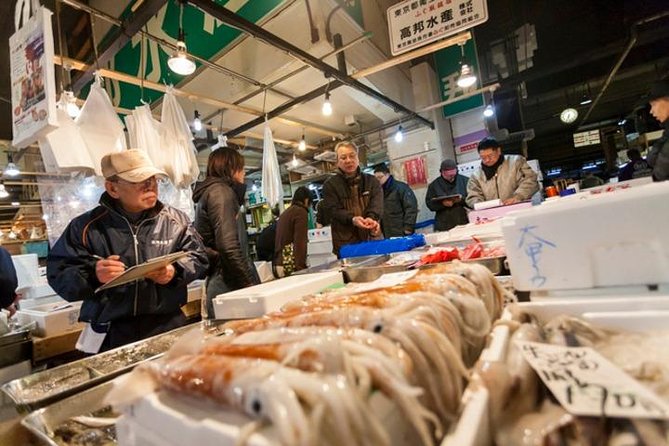
- Two very different markets: Toyosu is clean, spacious, and businesslike, while Tsukiji is compact, crowded, and built for browsing and eating.
- A genuinely private walk: Only your party joins, so you can ask questions and adjust the pace with your guide.
- Food is not included: Bring cash and budget separately for sushi, seafood, wagyu, snacks, and drinks.
- The tuna auction is not part of this tour: You need the separate morning tuna auction experience for that.
- Public transport links the markets: Your guide organizes the journey, but you pay the fares.
- Best used as a morning outing: An early start gives you the strongest chance of seeing open food counters and ending with a meal.
Toyosu shows the modern face of Tokyo’s seafood trade
Toyosu Market opened on October 11, 2018, taking over the wholesale work once carried out at the old Tsukiji market. The site sits on a man-made island in Tokyo Bay, and its design feels very different from the narrow lanes of Tsukiji.
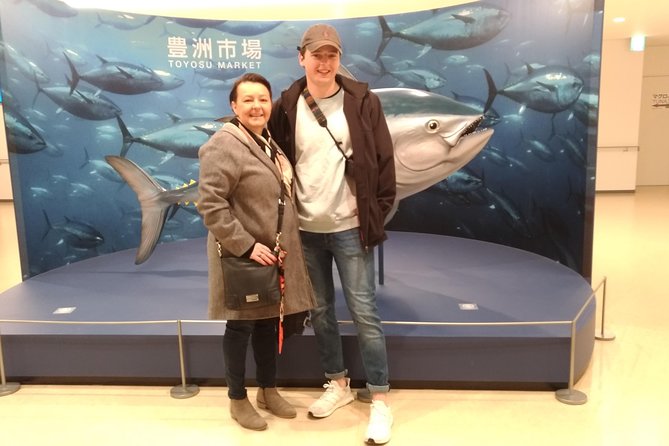
You begin at Toyosu Market, at 6-6-1 Toyosu, in Koto City. The planned visit lasts about one hour. Your guide helps you understand what you are seeing, including the role of wholesale markets and the way tuna auctions operate. One guide, Mio, explained the auction process and pointed out a replica of a huge tuna sold at auction. Even when the actual auction is not visible, the market’s viewing areas and videos can make the process easier to understand.
Toyosu is not mainly a street-food market. It is a working wholesale center with large buildings, viewing areas, restaurants, and shops. That difference matters. You will find fewer casual food stalls than at Tsukiji, and parts of the complex can feel quiet around midday.
I would not book this tour expecting four hours of nonstop eating. Toyosu is useful for context and scale. It shows the controlled, modern side of Japan’s food distribution system, while Tsukiji supplies the color, smells, samples, and small shops.
The visit may also include the fruit and vegetable building. Mio specifically took one family to Block 5, which added another useful layer to the market story. Ask your guide about this part if produce interests you.
The tuna auction needs special care when planning. This standard experience does not include the morning auction. The separate tuna auction option is the correct choice if seeing that event is your main reason for visiting. The auction begins very early, around 5:30 a.m., according to the tour information shared by a guide, so do not assume this four-hour itinerary includes it.
A few more Tokyo tours and experiences worth a look

The public-transport connection is part of the lesson
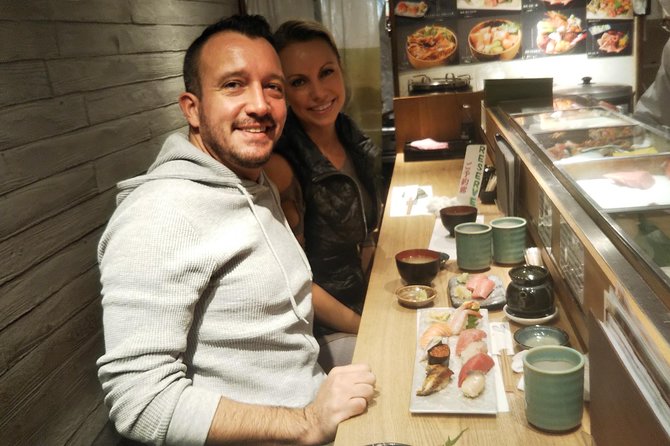
The two markets are not next door. You travel between them by public transport, with the guide arranging the route on foot and through Tokyo’s transit system. The transport fare is not included.
That sounds minor, but it can make a real difference. Tokyo’s stations can be confusing, especially when you are still learning the ticket machines and rail lines. Guides have helped visitors recharge Suica cards, find the right route, and handle busy stations. One guide even used the monorail journey as part of the experience, giving the group views of Tokyo Bay and central Tokyo.
I like this part because it turns a simple transfer into useful travel practice. You learn how to move around Tokyo with help, then you can repeat the route later. The downside is that the exact route and meeting arrangement can vary, so check the final instructions carefully.
The stated starting point is Toyosu Market, and the endpoint is the Tsukiji Outer Market. The tour is described as a walking experience with pickup and drop-off on foot within a designated Tokyo area. Some guides have met people in hotel lobbies, but you should confirm that arrangement rather than assume hotel pickup is included.
Tsukiji brings back the pleasure of browsing
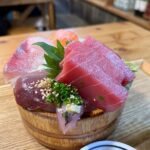
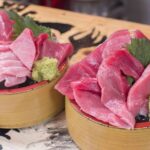
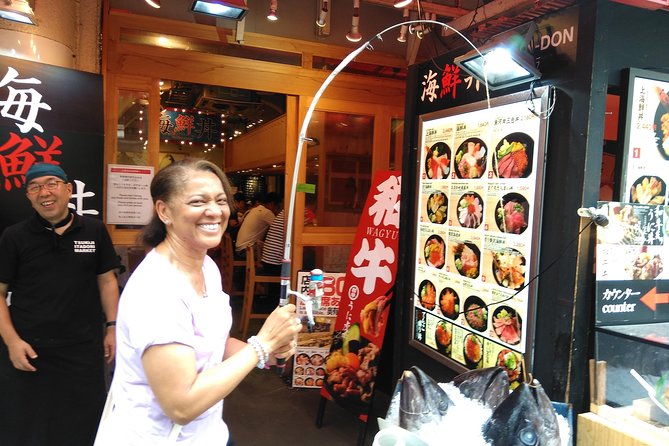
Tsukiji is the more immediately entertaining half of the tour. The old wholesale market moved to Toyosu, but Tsukiji’s Outer Market remains a major food district. Here, you walk through a maze of seafood shops, prepared-food counters, kitchen stores, and small places serving meals.
The Tsukiji portion lasts about two hours. That is enough time to get your bearings, learn how the area developed, stop at selected shops, and sample or buy food. It is not enough time to wander every lane, eat a full meal at several restaurants, and shop without watching the clock.
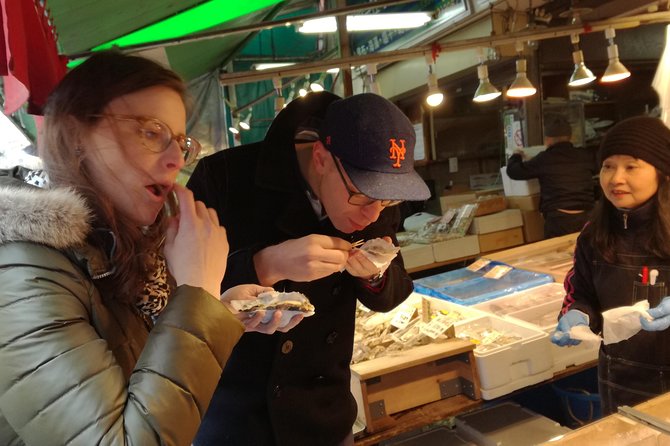
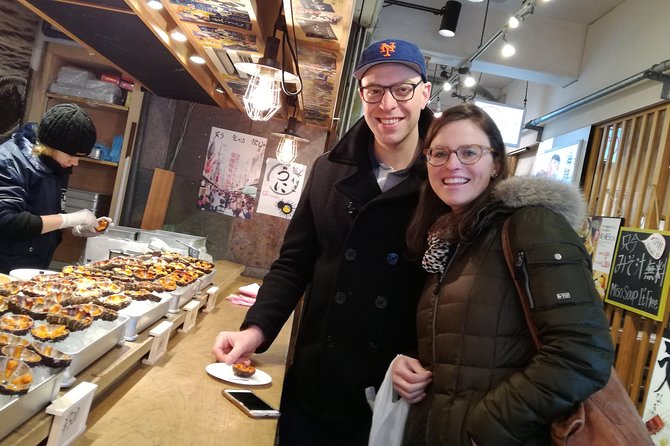
This is where a guide earns the fee. The lanes can be crowded, and it is easy to spend your time simply trying to work out where to go. Guides such as Mami have taken visitors beyond the most obvious stalls to find tuna and crab. Suzuki helped visitors try sea urchin and grilled eel. Other guides have directed families toward sushi, seafood, wagyu, and souvenirs.
Bring cash and an appetite. Food and drinks are your responsibility, and the most appealing purchases are usually optional rather than part of the tour price. The guide can help you choose, but you pay each shop or restaurant directly.
One important practical point: you may not have much time to eat during the walking portion. The best plan is to treat the tour as an introduction, then stay in Tsukiji for breakfast or lunch after the formal walk ends. Several guides have finished near a good sushi restaurant or food court, making the endpoint convenient for a meal.
If you want a particular restaurant, tell your guide before or at the start. One guide took a group to Daiwa Sushi, while another helped a family find specific foods and souvenirs. The exact stops depend on opening hours, your interests, and the guide assigned to you.
Two small religious sites add meaning to Tsukiji
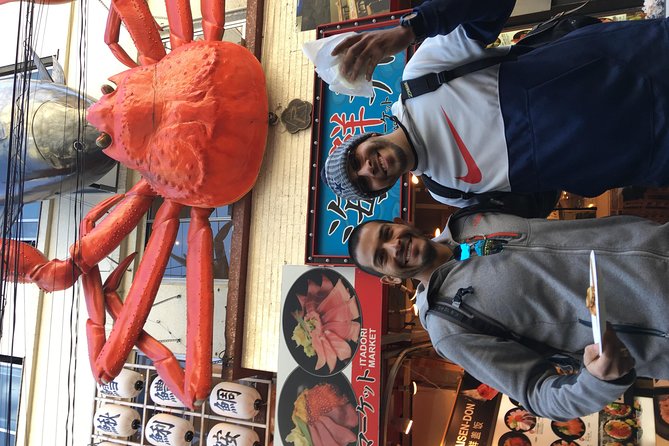
The tour is not only about fish. It includes Namiyoke Inari Shrine and Tsukiji Hongwanji Temple, giving you a short cultural break from the food lanes.
Namiyoke Inari Shrine stands near the market and is connected to Tsukiji’s reclaimed land. Its purpose is to protect the area from waves, a fitting detail for a district built from land taken from the sea. The stop lasts about 15 minutes, so expect a brief visit rather than a full religious tour.
Tsukiji Hongwanji Temple receives about 30 minutes. Its unusual architecture makes it easy to recognize, and the stop offers a chance to learn about Japanese Buddhism. One guide included a short meditation there, which can be a welcome pause after the noise and movement of the market.
These stops improve the tour because they explain why Tsukiji is more than a place to buy sushi. You see how food, reclaimed waterfront land, religion, and neighborhood life fit together. If your main goal is shopping, the temple time does reduce market time slightly, but I think the balance works well.
A private guide changes the pace
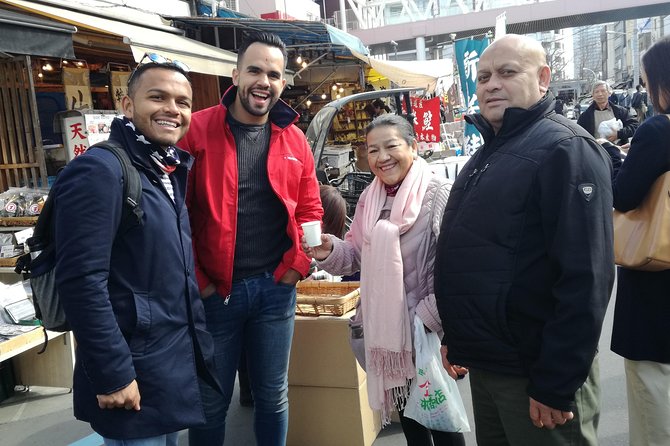
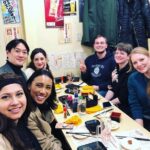
A private tour is a better match for this route than a large group. You can ask why a fish is prized, how an auction works, or what a shrine detail means without worrying about holding up strangers. You can also tell the guide if your family needs a slower pace or if you want to spend more time looking for particular foods.
The guide quality appears to be the strongest part of the experience. Mina has been described as easygoing and friendly, while Koji contacted people in advance to learn what they wanted to see. Show used a notebook to explain points visually, and guides such as Shuji adapted the outing for families with teenagers.
English ability and guiding style can vary from person to person, but the role is clear: explain the markets, interpret Japanese food culture, help you navigate, and make the visit less intimidating. The best guides do more than recite facts. They help you decide where to eat, explain unfamiliar foods, and answer practical questions about the rest of your Tokyo trip.
Some private bookings have included extra areas such as Asakusa, Sensoji Temple, Meiji Shrine, or a footbath. Those additions are not part of the stated Toyosu and Tsukiji route, so do not count on them unless your guide or booking confirmation specifically includes them.
A few more Tokyo tours and experiences worth a look

What the $109.01 price gets you
At $109.01 per person, this is not a bargain sightseeing stroll. The price covers a private experience with a licensed local English-speaking guide, but not transport, food, drinks, private vehicles, or unrelated admission fees.
The value depends on how much help you need. If you are comfortable navigating Tokyo, reading menus, and choosing market stalls alone, you can visit both areas for much less. You can also spend more freely on food when you are not paying for a private guide.
I see stronger value for first-time Tokyo visitors, families, and people who want food explained rather than simply photographed. The guide can save time, reduce the stress of the stations, and help you avoid wandering past the best options. A private booking also works well for a small group that wants to share the guide’s attention.
The tour averages booking about 39 days ahead, which suggests you should plan early for a preferred date. The operator offers group discounts, so the per-person cost may make more sense when shared among several people. Confirm the current rate and discount before booking.
Timing, walking, and what to carry
This is a four-hour walking tour, not a coach excursion. You should be prepared to walk through market lanes, stand at food counters, and use public transport between the two districts.
The morning is the safest choice. Tsukiji is most useful when food shops and restaurants are active. Toyosu can lose some of its appeal later in the day, since stalls may close by noon. One midday visit found the newer market quiet, while Tsukiji still had plenty of food and a fresh sushi lunch.
I would carry:
- Cash for food, drinks, and small purchases
- A charged phone for the mobile ticket and meeting messages
- Comfortable walking shoes
- A light bag that does not obstruct crowded lanes
- An open mind about unfamiliar seafood and Japanese market foods
Service animals are allowed, and most people can participate. The experience is near public transport, but it is still wise to tell the operator about any mobility needs before booking, since the route includes walking and transit.
Who should book this market tour?
I would choose this experience if you want a guided introduction to Tokyo food culture and prefer a private pace. It suits families, couples, small groups, and curious eaters who want help making sense of unfamiliar foods.
It is especially useful if you feel nervous about Tokyo’s train system. Guides have helped with station navigation and IC cards, and that practical support can pay off for the rest of your trip.
I would choose a different option if your only goal is the tuna auction. This tour does not include it. I would also skip this booking if you want a long, leisurely meal during the four-hour schedule, since food stops are optional and time is limited.
The one serious warning is the possibility of a meeting mix-up. One booking ended with the guide not appearing, followed by a refund. That appears to be an isolated failure rather than the normal pattern, but confirm the meeting point and keep the operator’s contact details handy.
Should you book it?
Book this tour if you want two contrasting markets explained by a private guide, with shrine and temple stops to add context. The strongest plan is to start early, bring cash, use the four hours to learn and sample, then stay at Tsukiji for lunch.
Skip it if you are happy to explore alone, want only the tuna auction, or dislike paying extra for food and transport. For most first-time visitors who want a stress-free introduction to Tokyo’s seafood districts, the price is reasonable when shared with a small group and used as a launch point for the rest of your Tokyo food adventures.
FAQ
How long does the tour last?
The experience lasts approximately four hours.
Where does the tour start?
The stated starting point is Toyosu Market at 6-6-1 Toyosu, Koto City, Tokyo.
Where does the tour end?
The tour ends at Tokyo’s Tsukiji Fish Market and Outer Market area.
Is this a private tour?
Yes. Only your group participates, and you cannot combine multiple tour groups.
Is the tuna auction included?
No. This is not the tuna auction tour. A separate Toyosu morning tuna auction and Tsukiji food tour is available for that experience.
Is food included in the price?
No. Food and drinks are not included. You can stay after the tour for breakfast or lunch at your own expense.
Are transportation costs included?
No. Public transportation fees between the markets are extra. The guide organizes the route.
Is a private vehicle provided?
No. This is a walking tour using public transportation, and no private vehicle is included.
Can I cancel for a full refund?
Yes, if you cancel at least 24 hours before the local start time. Cancellations made less than 24 hours before the start are not refunded, and late changes are not accepted.
More Guided Tours in Tokyo

More Food Experiences in Tokyo
More Tsukiji Market Tours in Tokyo
More tours in Tokyo we've reviewed




Tsukiji Market Tours, compared.
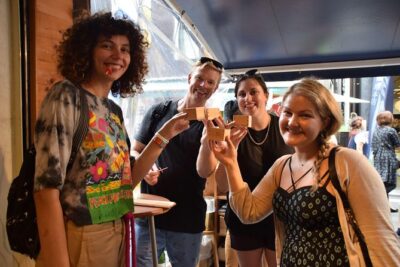 ★ 5.0Tokyo Tsukiji Fish Market Food and Culture Walking TourFrom $99
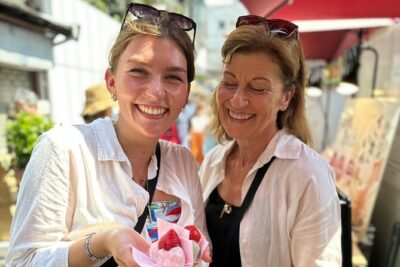 ★ 5.0Tokyo: Tsukiji Fish Market Food and Walking tourFrom $30
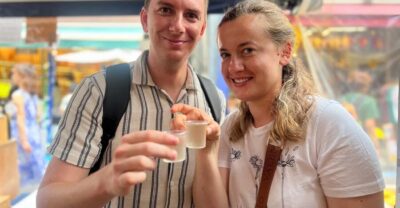 ★ 4.9Tokyo: Tsukiji Fish Market Guided Walking TourFrom $222 hours
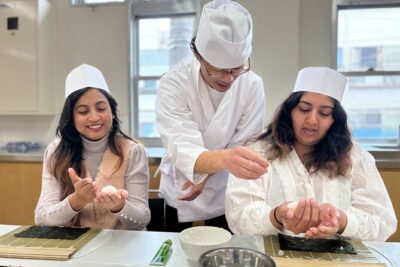 ★ 5.0Tokyo Sushi Making Class in Tsukiji with Professional ChefFrom $49
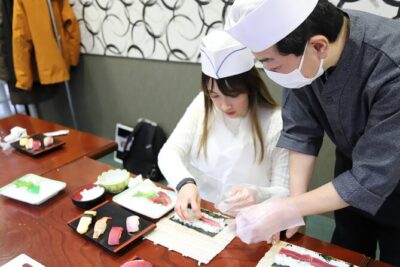 ★ 5.0Tsukiji Fish Market Guided Tour and Sushi Making with Pro ChefFrom $104
★ 4.7Tokyo: Tsukiji Fish Market Food and Culture Walking TourFrom $963 hours
★ 5.0Tsukiji Fish Market Guided Tour and Sushi Making with Pro ChefFrom $104
★ 4.7Tokyo: Tsukiji Fish Market Food and Culture Walking TourFrom $963 hours