
Reviewed · TSUKIJI MARKET TOURS
Tokyo: Tsukiji Market and Hama-rikyu Gardens Guided Tour
Tsukiji Market is the star here: narrow lanes, sizzling scallops, fresh sushi, tamagoyaki, wagyu skewers, and matcha sweets all packed into one memorable morning or afternoon. I especially like the way this tour links Japanese food culture with a quiet garden visit, rather than treating the market as a stand-alone snack stop.
I also like the short visit to Tsukiji Hongwanji Temple, whose unusual architecture gives the tour a thoughtful start, and the included entry to Hama-rikyu Gardens. The main drawback is the walking: you cover market lanes, a 15-minute walk between the market and garden, and about an hour in the garden, so comfortable shoes are a must.
In This Review
- Key points at a glance
- Start at Tsukiji Hongwanji Temple
- Read Tsukiji Market with a guide
- What the $31 price really covers
- Walk from the market to Hama-rikyu Gardens
- Slow down in a 370-year-old garden
- Timing, pace, and the walking reality
- Languages and guide style
- Who will enjoy this tour most
- Should you book the Tsukiji and Hama-rikyu tour?
- FAQ
- Where does the tour begin?
- Where does the tour finish?
- Is transportation included?
- Are food and market snacks included?
- How much does the matcha and wagashi tasting cost?
- Which languages are available?
- How long does the experience last?
Key points at a glance
- 480 types of seafood and 270 types of produce: Tsukiji offers a close look at the scale of Tokyo’s food trade.
- Three very different stops: Begin at Tsukiji Hongwanji Temple, eat and browse at the market, then slow down in Hama-rikyu Gardens.
- Food costs extra: Grilled scallops, sushi, tamagoyaki, wagyu skewers, and sweets are purchased directly at the stalls.
- Matcha is optional: A tea and wagashi tasting in the garden costs about 1,000 yen on site.
- A useful $31 package: Garden admission and a local guide are included, while transportation and food are not.
- Plan for two and a half to three hours: The advertised duration can range from 150 minutes to three hours, depending on the departure time and pace.
Start at Tsukiji Hongwanji Temple
Meet your guide in front of the Starbucks Coffee Tsukiji Station Front store. From there, the tour begins with a guided visit of about 15 minutes at Tsukiji Hongwanji Temple.
This is a smart first stop. Tsukiji Market can feel like a sensory rush, so the temple gives you a calm introduction before the food stalls take over. Its distinctive architecture is unlike the standard image many people have of a Japanese Buddhist temple, and the quiet atmosphere offers a brief pause in one of central Tokyo’s busiest areas.
You will not spend long here, but that is part of the appeal. The visit is meant to orient you, not replace a full temple tour. Listen for the guide’s explanation of the building and its place in the area, then take a moment to notice the contrast between the serene interior and the city outside.
A few more Tokyo tours and experiences worth a look



Read Tsukiji Market with a guide
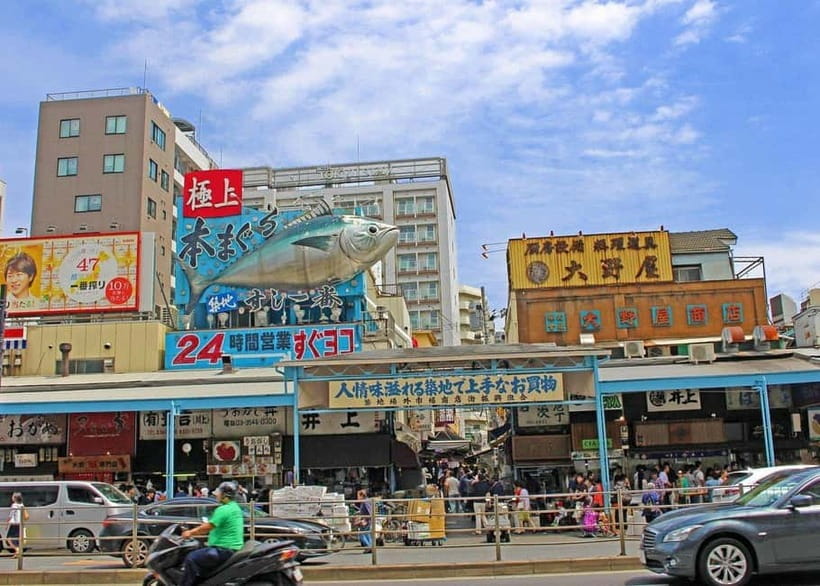
The tour then moves into Tsukiji Outer Market for roughly 45 minutes of guided touring, free time, and shopping. This is not a sit-down meal or a formal cooking class. It is a walking introduction to the market, with time to choose snacks and browse at your own pace.
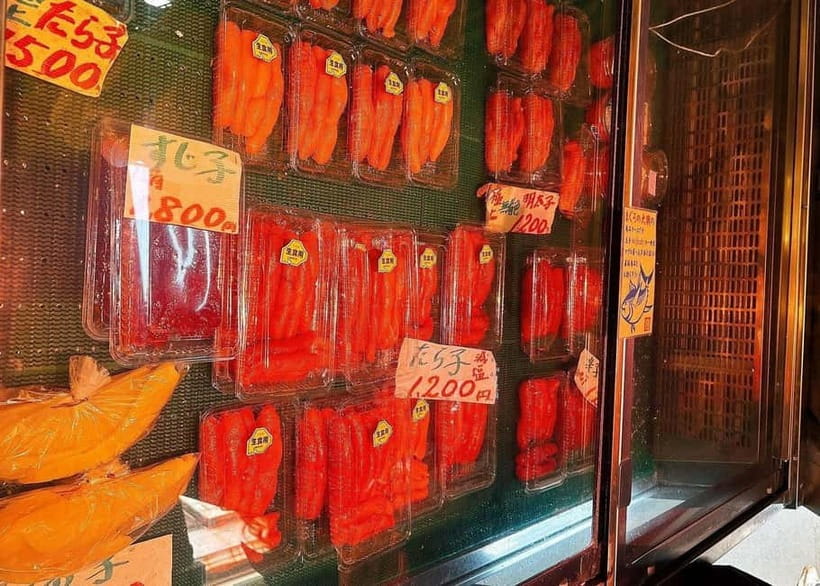
Tsukiji has an 83-year history as one of Tokyo’s central wholesale markets. The numbers help explain why the place feels so intense: about 480 kinds of seafood and 270 types of produce pass through its network of shops. You are not simply walking past a few souvenir stalls. You are seeing a working food district built around ingredients used in Japanese cooking.
The narrow alleys are part of the experience and part of the challenge. You will need to keep an eye on your footing and make room for other people. A guide can help explain what you are seeing, point out unfamiliar foods, and give the market a sense of order when the selection seems overwhelming.
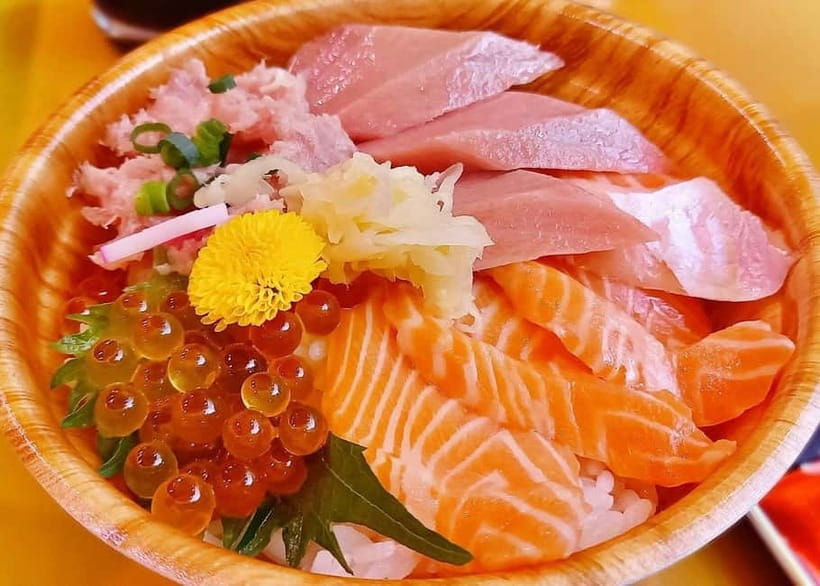
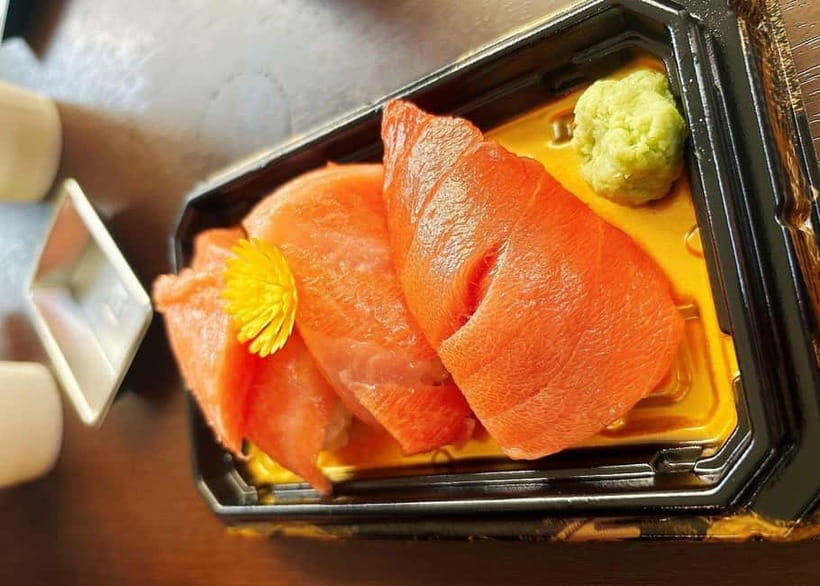
The food is the most tempting part, but remember that it is not included in the tour price. You may buy grilled scallops, tamagoyaki, sushi, wagyu skewers, or matcha sweets directly from the stall holders. The exact amount you spend depends on your appetite, so this format works well for people who prefer grazing instead of committing to one large meal.
I would arrive with some yen ready for small purchases, although the supplied information does not specify which stalls accept cards. Keep your food choices manageable. With a scheduled garden visit ahead, this is a snack walk rather than an invitation to eat everything in sight.
Tamagoyaki is an especially good choice if you want a simple introduction to a familiar Japanese food. Sushi and seafood offer a stronger connection to the market’s purpose, while wagyu skewers and matcha sweets broaden the experience beyond fish. You can pick one or two items and still enjoy the market without turning the tour into an expensive food crawl.
What the $31 price really covers

At $31 per person, this is a reasonably priced introduction to two well-known Tokyo sights. The admission fee for Hama-rikyu Gardens is included, as is the local guide. Those inclusions matter because the tour combines interpretation with a garden entrance that you would otherwise arrange yourself.
Food is extra, and so is any transportation to the starting point or after the tour. This is a walking tour from the Starbucks meeting point to the garden, where the experience ends. You should budget for market snacks and, if interested, about 1,000 yen for matcha and wagashi in Hama-rikyu Gardens.
The value is strongest if you want context. You could visit Tsukiji and Hama-rikyu on your own, but you would need to handle the route, decide how much time to spend at each place, and work out what you are looking at in the market. A guide helps connect the temple, food district, and garden into one story.
The format may be less useful if you already know Tsukiji well or prefer long, unhurried shopping time. Forty-five minutes is enough for an introduction and several tastes, but not for a detailed survey of every lane.
Walk from the market to Hama-rikyu Gardens
After the market, the group walks for about 15 minutes to Hama-rikyu Gardens. This transfer is short, but it is worth treating it as part of the tour rather than dead time. The route shifts you from the tight, food-filled lanes of Tsukiji into a more open setting.
The walk also means you are not being carried between attractions by bus or taxi. That keeps the price down and lets you see the city at street level, but it adds to the physical demand. Wear shoes that can handle several hours of walking and bring water.
The tour ends at Hama-rikyu Gardens, so you will need to arrange your own onward plans. This is convenient if the gardens fit naturally into your day, but less convenient if you need to return to your hotel as part of an organized transfer.
Slow down in a 370-year-old garden
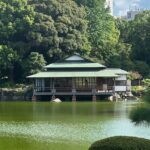
Hama-rikyu Gardens was created during the Edo period more than 370 years ago. The garden provides the tour’s strongest change of mood. After the market’s tight lanes and constant food choices, you have room to walk, look, and let the pace drop.
The most striking feature is the contrast between the traditional garden setting and Tokyo’s skyline. You get old Japan and modern Tokyo in the same view, which gives the stop more weight than a simple park visit. The garden is not just a place to recover from lunch. It shows how carefully planned green spaces remain part of the city.
Your guided time here lasts about an hour, with some free time included. The flowers change with the season, so the color and exact points of interest will depend on when you visit. In spring, summer, autumn, or winter, the garden offers a different visual experience, but no single season should be treated as guaranteed peak bloom.
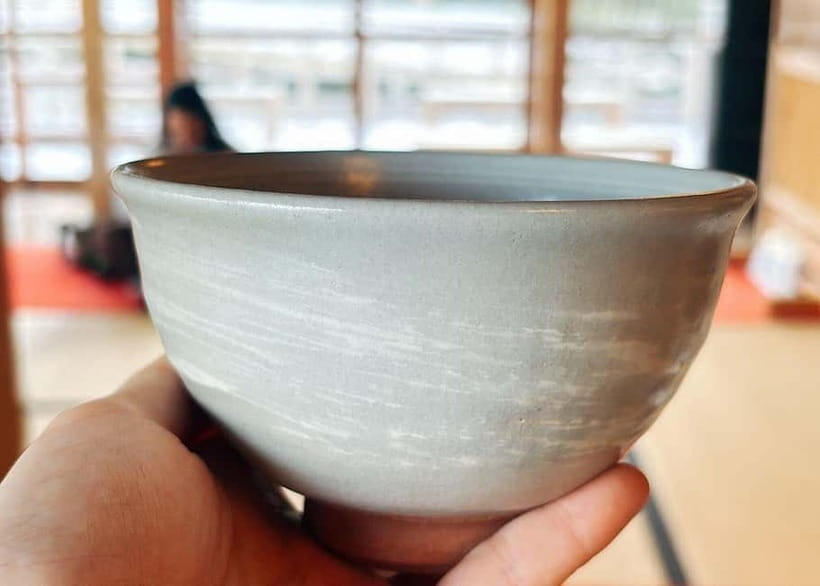
This is also where the optional tea experience fits. For about 1,000 yen, payable on site, you can taste matcha and wagashi while learning about Japanese etiquette. The tasting adds a cultural layer to the garden visit, especially if you have not taken part in a traditional tea setting before.
Do not confuse it with a full tea ceremony. The information provided describes a matcha and wagashi tasting with etiquette guidance, not a formal ceremony. It is best viewed as a short, accessible introduction that complements the garden.
Other guided tours in Tokyo




Timing, pace, and the walking reality
The listed duration ranges from 150 minutes to three hours. The stated route adds up to about two and a half hours: 15 minutes at the temple, 45 minutes at Tsukiji, 15 minutes on foot, and one hour at Hama-rikyu Gardens. The longer estimate likely allows for a slower pace, different start times, or extra time around the market and garden.
Check the available start time carefully when booking. A morning departure may fit nicely with Tsukiji’s food culture, while a later start may suit you if you dislike early outings. The supplied details do not promise a specific time of day, so confirm the schedule rather than planning a tight connection afterward.
You should also expect a moving tour, not a series of long seated explanations. There are market lanes to navigate, a city walk between stops, and garden paths. The activity is described as wheelchair accessible in one part of the information, but another section says it is not suitable for people with mobility impairments or wheelchair users. That is a clear point to verify directly before booking, since the walking route and market conditions may create practical limits.
Pregnant participants are also listed as unsuitable for this activity. If that applies to you, choose a gentler plan with more places to sit and less walking.
Languages and guide style
Live guiding is available in Chinese, English, French, Korean, and Spanish. That is useful for a food market, where explanations can add much more than a translation of the stall signs. You can ask about ingredients, customs, and the purpose of different market sections as you go.
No individual guide names are provided for this Tokyo experience, so do not book expecting a particular named guide. The quality of the tour will depend on the guide’s ability to keep the group together, explain the market clearly, and balance guidance with free time.
That balance matters. At Tsukiji, too much commentary could leave you with no time to buy food. Too little would make the market feel like a random collection of shops. The advertised structure, guided tour followed by free time and shopping, is a sensible compromise.
Who will enjoy this tour most
I would recommend this experience to first-time Tokyo visitors who want a compact introduction to food, religion, and traditional garden design. It suits curious eaters, couples, families with older children, and anyone who prefers a guide to help make sense of a busy market.
It is also a good option if you want to combine sightseeing with small snacks rather than book a long restaurant meal. You control what you buy, and you can keep the food budget modest.
You may want to skip it if your main goal is a long Tsukiji shopping session. The market portion is only about 45 minutes, and the tour continues on foot to the garden. It is also not ideal for anyone who needs frequent rest breaks or finds uneven, crowded walking areas difficult.
Photography is encouraged, and you should bring a camera if you want images of the temple architecture, food stalls, flowers, and skyline views. Smoking is not allowed during the activity.
Should you book the Tsukiji and Hama-rikyu tour?
Book it if you want a well-shaped half-day that moves from temple calm to market energy and then to garden quiet. For $31, the included guide and Hama-rikyu admission make it good value, especially if you would rather learn as you walk than assemble the route yourself.
Add a little extra money for food, and consider the matcha tasting if tea culture interests you. Skip it if you want a completely self-guided market visit, a full meal, or a low-walking outing.
The strongest reason to choose this tour is its contrast. You get seafood and sweets, an unusual temple, Edo-period garden design, seasonal flowers, and Tokyo’s skyline in one short route. That is a lot of Japan in 150 minutes to three hours, provided you are ready to keep moving.
FAQ
Where does the tour begin?
The meeting point is in front of Starbucks Coffee Tsukiji Station Front store.
Where does the tour finish?
The experience finishes at Hama-rikyu Gardens, also called Hama-rikyu Onshi Garden.
Is transportation included?
No. This is a walking tour, and transportation to and from the attractions is not included.
Are food and market snacks included?
No. Foods such as grilled scallops, tamagoyaki, sushi, wagyu skewers, and matcha sweets are optional purchases paid directly to stall holders.
How much does the matcha and wagashi tasting cost?
The optional tasting costs about 1,000 yen and is payable on site.
Which languages are available?
Live guides are available in Chinese, English, French, Korean, and Spanish.
How long does the experience last?
The duration is listed as 150 minutes to three hours. The planned route includes 15 minutes at Tsukiji Hongwanji Temple, 45 minutes at Tsukiji Outer Market, a 15-minute walk, and about one hour at Hama-rikyu Gardens.
More Shopping Tours in Tokyo

More Guided Tours in Tokyo
More Tsukiji Market Tours in Tokyo

More tours in Tokyo we've reviewed






Tsukiji Market Tours, compared.
 ★ 5.0Tokyo Tsukiji Fish Market Food and Culture Walking TourFrom $99
 ★ 5.0Tokyo: Tsukiji Fish Market Food and Walking tourFrom $30
 ★ 4.9Tokyo: Tsukiji Fish Market Guided Walking TourFrom $222 hours
 ★ 5.0Tokyo Sushi Making Class in Tsukiji with Professional ChefFrom $49
 ★ 5.0Tsukiji Fish Market Guided Tour and Sushi Making with Pro ChefFrom $104
★ 4.7Tokyo: Tsukiji Fish Market Food and Culture Walking TourFrom $963 hours
★ 5.0Tsukiji Fish Market Guided Tour and Sushi Making with Pro ChefFrom $104
★ 4.7Tokyo: Tsukiji Fish Market Food and Culture Walking TourFrom $963 hours