
Reviewed · WORKSHOPS
Tokyo Manga Drawing Workshop Guided by Active Pro Manga Artist
The best part of this Tokyo class is that you do not simply copy a printed cartoon. You choose a character or idea, then work through the real manga process with an active professional artist. In about two hours, you move from rough sketch to finished art, using tools such as screen tone and traditional manga techniques.
I like the small group of no more than eight, since the instructor can help with your drawing instead of giving a broad lecture. I also like that beginners and skilled artists can work side by side. The main catch is practical: the meeting address has caused confusion, so check the latest location carefully before leaving for class.
In This Review
- Key points at a glance
- What the Tokyo manga class is really like
- Starting with an idea instead of a blank page
- From rough sketch to finished character
- Screen tone and the details that make manga look like manga
- Help for beginners, room for experienced artists
- The instructors and the value of translation
- A finished souvenir you made yourself
- Getting to the studio near Ebisu
- Group size, booking, and the real price
- Who should book this class
- Booking details and cancellation
- Should you book the Tokyo manga workshop?
- FAQ
- Is prior drawing experience required?
- How long does the experience last?
- What is included in the price?
- Where does the class meet?
- How many people can join the class?
- Can I cancel for a full refund?
Key points at a glance
- Create your own subject: Draw a favorite character, a pet, a family portrait, or an original idea.
- Learn from working artists: Instructors such as Masa and Chie Sensei explain the process and offer hands-on help.
- Suitable for mixed abilities: You can arrive unable to draw a stick figure or already comfortable with manga.
- Use authentic tools: The class includes manga drawing materials and screen tone, a signature graphic technique.
- Small class, personal guidance: The maximum group size is eight, with an artist and, when needed, a translator or assistant.
- Plan the arrival carefully: The studio is close to public transportation, but address details have not always been consistent.
What the Tokyo manga class is really like
This is a practical art lesson, not a museum talk or a quick souvenir stop. You sit down with paper and manga tools, decide what you want to make, and receive instruction through the main stages of production.
The class is designed for fans of Japanese comics and animation, but you do not need to know the difference between every manga pen and brush before arriving. The artist explains each step and adjusts the amount of help to suit your level.
That flexibility matters. A confident drawer can change the suggested sketch and add personal touches. Someone with little art experience can follow a basic outline, trace a starting image, and still produce a finished piece. The goal is not to judge your drawing. It is to show you how professional manga artwork is built.
The session is advertised as roughly two hours, while the overall duration is listed at about two and a half hours. I would keep that longer window open, especially if you are planning another timed activity afterward.
Other guided tours in Tokyo


Starting with an idea instead of a blank page
The first challenge in any drawing class is the empty sheet. Here, you receive help with the starting idea, composition, and rough layout, so you are not left staring at a white page.
You can draw a manga or anime character you already like, such as a figure from One Piece, Naruto, or My Hero Academia. You can also turn a family photograph or a pet into manga-style art. One useful tip is to decide before class what you would like to draw. The instructor can suggest ideas, but having a subject ready gives you more time for the fun parts.
The class may begin with a quick sketch from the artist. That sketch can act as a guide for your own version. If your drawing experience is limited, you may trace or adapt the basic form. If you draw often, you can revise the pose, face, clothing, or details to make the image your own.
This approach keeps the class friendly without reducing it to paint by numbers. You still make choices, but you also have a professional hand nearby when proportions, composition, or manga details become difficult.
From rough sketch to finished character
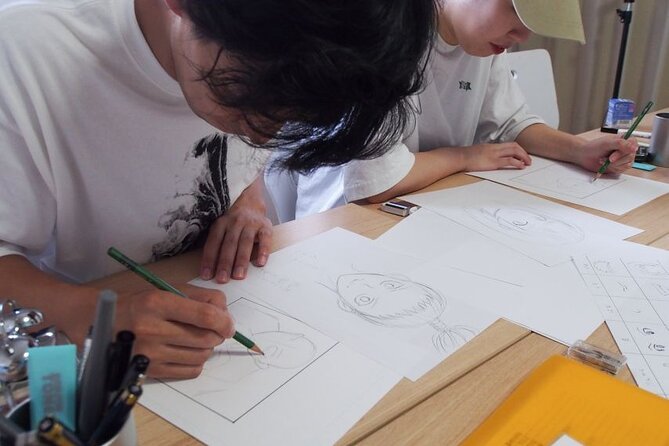
The drawing process is broken into manageable stages. You first establish the outline and scene. Then you add the defining lines, facial features, clothing, hair, and other details that make the character readable.
The instructor demonstrates the work and checks your progress. That personal help is one of the strongest reasons to choose this activity instead of trying to learn from a book or video after visiting Japan. A short correction at the right moment can save a page from going wrong.
The artists also explain industry methods and the purpose of the tools. You are not only trying to produce a nice souvenir. You get a working look at how manga artists organize a drawing and create a finished graphic image.
For an experienced artist, this is where the class may be most useful. You can ask about technique, adjust the example to your own style, and watch how a professional handles line work. For a beginner, the same stage offers reassurance. You do not have to solve every problem alone.
Screen tone and the details that make manga look like manga
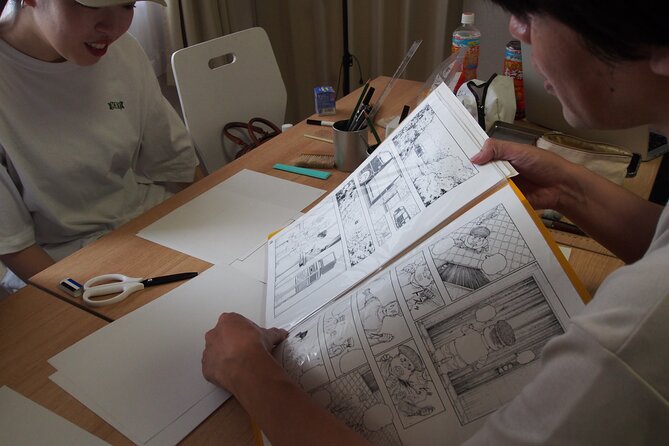
One of the more interesting parts of the class is the use of screen tone. This material adds texture, shading, and visual emphasis to black-and-white manga artwork. It can make clothing, hair, shadows, or backgrounds look more finished without requiring complicated painting.
The technique is easy to appreciate once you see it applied. A plain drawing gains depth and a stronger printed-comic feel. The instructor helps you place the material and finish areas that need extra work.
All drawing tools are provided, including screen tone. That makes the class easy to fit into a Tokyo trip because you do not need to pack pens, paper, or specialty supplies. It also lets you try traditional manga tools before deciding if you want to buy a set for home.
The class does not include bottled water or snacks, so bring anything you need for the session. That is a small point, but it matters when you are scheduling the activity between sightseeing stops.
Help for beginners, room for experienced artists
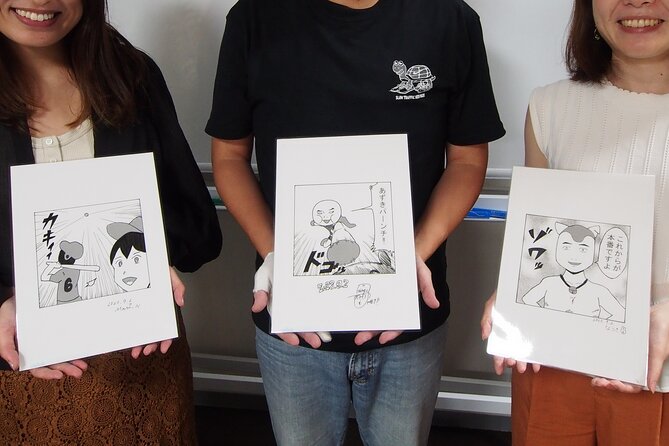
The best fit here is a mixed group. A parent can attend with a child who loves anime, while another family member with little interest in manga can still make a personalized picture.
The instructors use examples and direct assistance rather than assuming that everyone arrives with drawing skills. A complete beginner may work from a basic sketch or trace part of the design. That is not a shortcut to be embarrassed about. It is a sensible way to learn the structure of manga drawing while ending with something you can take home.
At the other end, an experienced drawer can modify the initial sketch and bring more of a personal style to the final image. The artist can also offer advice on composition, line work, and the use of manga tools.
I would be cautious with very young children. The techniques require some patience and care, and the practical lower age suggested by the experience is around nine. That is not a formal age rule in the details provided, but it is useful guidance for families considering the class.
Teenagers are a particularly good match. The activity gives them something more active than shopping for character goods, and the finished artwork becomes a personal memory rather than another purchased item.
A few more Tokyo tours and experiences worth a look




The instructors and the value of translation
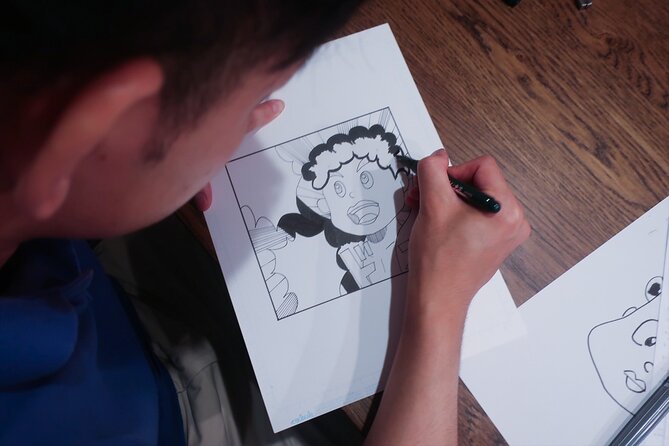
The teaching team has included manga artists such as Masa and Chie Sensei, along with assistants or translators. The artist leads the drawing work, while the language support helps explain the process and answer questions.
That division works well for a technical class. Drawing terms, tool names, and small corrections can be hard to communicate with gestures alone. A translator lets you ask why a technique is used, not just where to place a line.
Some instructors have professional manga experience, including work connected with well-known titles such as Hunter x Hunter. The important value is not simply the name of a series. You get to ask a working artist about the craft and see how professional methods translate into a short lesson.
The atmosphere is informal and encouraging. The teachers keep the tone light while still giving individual help. If you are nervous about showing your drawing, that matters. The class is meant to make you want to keep drawing after you leave.
A finished souvenir you made yourself
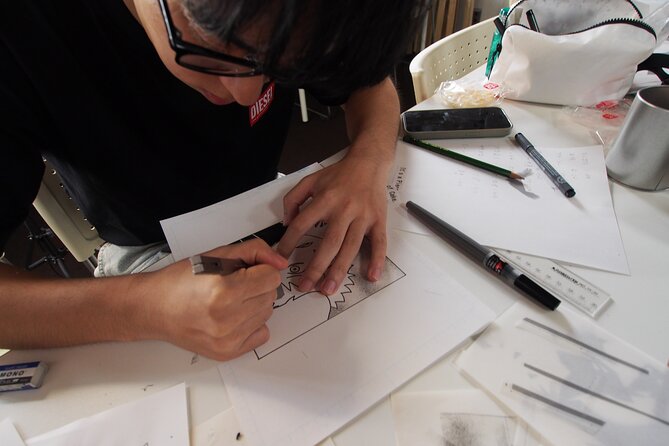
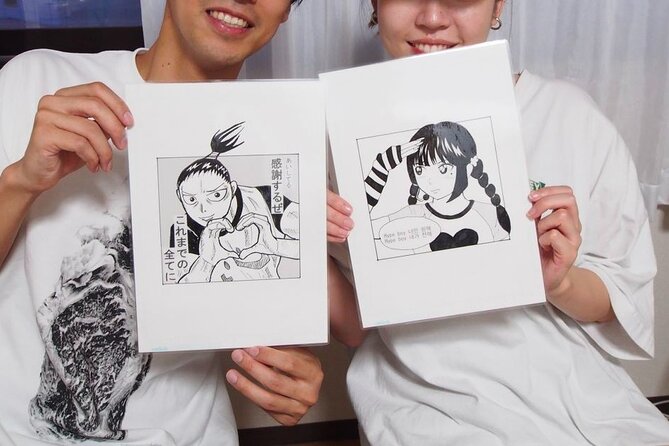
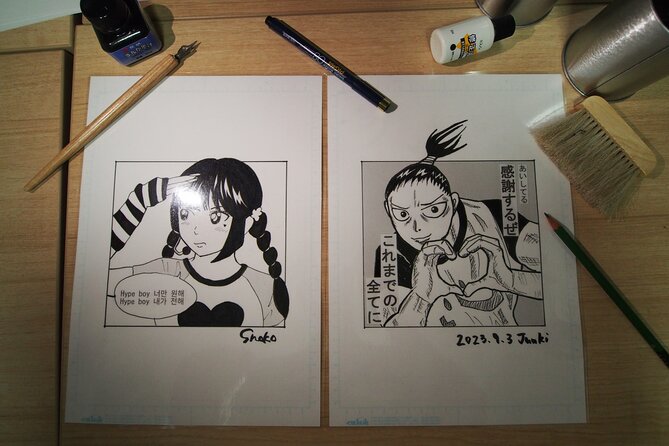
At the end, you keep your artwork. In some cases, the finished picture is laminated, which makes it easier to protect in a suitcase. That is a practical touch, especially when your Japan trip still has several days left.
The souvenir has more meaning than a bought postcard because you selected the subject and took part in each stage. A child might draw a favorite anime character. An adult might turn a family photograph into manga art. You can also create a pet portrait or an original character.
The final result will depend on your starting skill and the amount of help you accept. Do not expect to produce a professional comic page in one short class. You can, however, leave with a complete illustration and a clearer idea of how manga artwork is assembled.
The class can also spark a new hobby. The staff may point you toward places in Tokyo where you can buy more drawing supplies. Since the necessary tools are already provided, you can try the process first rather than buying a full set before knowing what you like.
Getting to the studio near Ebisu
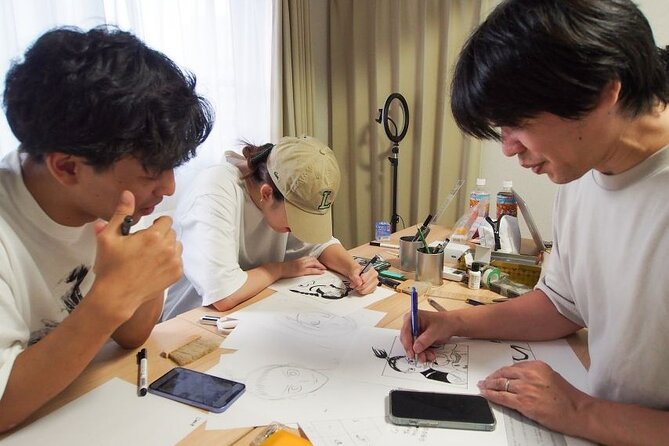
The experience is self-guided to the meeting point, with no hotel pickup. The supplied address is Ishikawa 3-chōme 8-11, Shibuya, Tokyo 150-0002, Japan, and the studio is described as being near Ebisu Station and public transportation.
This is the main logistical weakness. The address and venue information have not always matched perfectly. Some booking instructions have directed people toward an Ebisu office, while the actual class location has at times been in Shibuya. That has led to late arrivals and unnecessary backtracking through the train system.
I would not rely on an old confirmation alone. Check the address and any update from the operator shortly before class. Allow extra time for finding the building, especially if you are unfamiliar with Tokyo addresses. If you arrive early at the wrong office, contact the instructor or provider rather than assuming the class has been canceled.
The activity ends at the same meeting point. Since you make your own way there and back, you can easily combine it with other time in Ebisu or Shibuya, but leave enough room for the longer estimated duration.
Group size, booking, and the real price
The maximum group size is eight. That is small enough for individual attention but large enough to create a friendly class atmosphere. The minimum is two participants, and the participation fee is the same as the cost for two people even if only one person attends.
At $132.10 per person, this is not a cheap casual craft session. The value comes from the combination of a professional artist, supplied materials, personal instruction, traditional tools, and a finished artwork to carry home.
For two people, the cost buys a shared activity with plenty of room for help. It can make sense for a parent and child, two friends, or a couple with different levels of drawing experience. For a solo booker, the minimum charge is the bigger concern, since you pay as if two people were attending.
Compare it with the price of a standard souvenir and an ordinary short class. Here, you are paying for time with an active artist and a process you cannot easily reproduce during a normal Tokyo visit. If manga is central to your interests, the personal instruction makes the price easier to justify. If you only have a passing interest in anime, a free gallery visit or shop visit may be better value.
Who should book this class
I would recommend it most strongly to:
- Manga and anime fans who want to understand how the artwork is made
- Families with children or teenagers who enjoy hands-on activities
- Couples or friends with mixed drawing abilities
- Experienced artists who want to try Japanese manga tools and methods
- Visitors seeking a compact indoor activity near Ebisu and Shibuya
You do not need to be a fan of a particular series. The personal choice of subject makes the activity work for many interests. Still, you should enjoy drawing, making things, or Japanese pop culture. This is not a sightseeing tour with a quick demonstration.
Bring an idea with you. A favorite character, pet, family member, or original hero gives the class a clear starting point. Wear the attitude of someone willing to try, since the best part is learning through the corrections and suggestions.
Booking details and cancellation
You receive confirmation at booking, and the ticket is mobile. Materials, including manga drawing tools and screen tone, are included. Water and snacks are not.
The activity offers free cancellation if you cancel at least 24 hours before the local start time. Cancellations or changes made within 24 hours are not accepted for a refund, so check your Tokyo schedule before booking.
Should you book the Tokyo manga workshop?
Book it if you want more than a purchased anime souvenir. The strongest feature is the chance to make a personal piece while a working artist guides you through real manga methods. The class also handles a wide range of ability levels well, which makes it a smart family choice.
Think twice if your schedule is packed, you dislike drawing, or the minimum two-person charge makes the price uncomfortable. Most importantly, verify the meeting address before setting out. With that detail handled, this is a focused, memorable way to spend part of a Tokyo day and leave with art that belongs to you.
FAQ
Is prior drawing experience required?
No. The class is designed for complete beginners as well as people with previous drawing experience. The artist can provide a basic sketch or guidance, while more experienced participants can adapt the work to their own style.
How long does the experience last?
The approximate duration is two hours and thirty minutes. The hands-on drawing session is also described as a two-hour class, so allow the longer time when planning your day.
What is included in the price?
Manga drawing tools are included, including screen tone. Bottled water and snacks are not included.
Where does the class meet?
The meeting point is listed as Ishikawa 3-chōme 8-11, Shibuya, Tokyo 150-0002, Japan. The studio is described as being close to Ebisu Station and public transportation. Check the current address before leaving because venue directions have changed before.
How many people can join the class?
The maximum group size is eight people. At least two participants are required, and the fee for one participant alone is the same as the fee for two participants.
Can I cancel for a full refund?
Yes, if you cancel at least 24 hours before the experience start time, based on local time. Cancellations or changes made less than 24 hours in advance are not refundable.
More Workshops & Classes in Tokyo
More Guided Tours in Tokyo



More tours in Tokyo we've reviewed




Workshops, compared.
 ★ 5.0Sushi Making Tokyo Roll and Authentic Japanese Sushi ClassFrom $59
 ★ 4.9Tokyo: Roll and Authentic Sushi Making Class in AsakusaFrom $581h 40m
 ★ 5.0Tokyo Shinjuku Chopsticks Making ClassFrom $20
 ★ 4.9Tokyo: Sushi Making Class in a Happi Coat near a Famous SpotFrom $421h 30m
 ★ 4.8Chopstick Making Workshop in GinzaFrom $251 hour
 ★ 5.0Tokyo Sushi Making Class in Tsukiji with Professional ChefFrom $49