
Reviewed · ASAKUSA TOURS
Tokyo Early Morning Tour Asakusa Meiji Shrine (Private Opt)
Tokyo rewards early risers, and this five-hour route makes a smart morning of it. You move from Sensoji Temple and old Asakusa to Tsukiji’s food stalls, then on to the quiet woods of Meiji Jingu and the famous Hachiko Statue. I like the cool, calmer start and the way the route links very different sides of the city.
I also like having a guide for the small cultural details, especially at the temples and shrines, and the choice between a small group, private tour, or self-guided format. The main catch is pace: four major areas in one morning gives you a useful first look, not hours to linger. Add roughly 600 yen for transport, and expect plenty of walking.
In This Review
- Key points at a glance
- Why this early Tokyo route works
- Meeting your guide in Asakusa
- Asakusa and Sensoji before the crowds
- Tsukiji’s outer market and the price of breakfast
- Meiji Jingu’s forested approach
- Shibuya Crossing and the Hachiko finish
- How much time and energy should you plan?
- Is $59.46 a fair price?
- Small group, private, or self-guided?
- What this tour does especially well
- Who should book this morning?
- Should you book the Tokyo early morning tour?
- FAQ
- How long does the tour last?
- Where does the tour start?
- Where does the tour end?
- Which places are included?
- Is an English-speaking guide included?
- Is transportation included in the price?
- Are food and drinks included?
- How many people can join the tour?
- Can I cancel for a full refund?
Key points at a glance
- Early start, lighter crowds: See major sights before the afternoon rush and heat.
- Four distinct Tokyo experiences: Visit Asakusa, Tsukiji, Meiji Jingu, and Shibuya in one route.
- A guide adds context: Hana Tanaka and Kouta are among the guides praised for clear explanations and friendly help.
- Small maximum group: The tour is limited to eight people, with a private option available.
- Food is not included: Tsukiji purchases and all meals are paid separately, so bring money for snacks.
- Simple city finish: The tour ends at the Hachiko Statue outside Shibuya Station.
Why this early Tokyo route works
Tokyo can feel like several cities stitched together. Asakusa has temple gates and old shopping lanes. Tsukiji is all seafood, knives, and breakfast bites. Meiji Jingu gives you a wooded shrine setting, while Shibuya is pure modern city theater.
This tour connects those contrasts in one morning. That makes it useful on your first full day, when you want to get your bearings without spending time planning train routes and neighborhood order.
The early hour is the real trick. Asakusa and Tsukiji are both better before the busiest part of the day, and Meiji Jingu is more peaceful before large groups arrive. Shibuya Crossing is lively at almost any hour, but reaching it at the end gives the route a clear finish.
You should think of this as an introduction rather than a slow cultural study. The planned stops allow about one hour in Asakusa, one hour at Tsukiji, 90 minutes at Meiji Jingu, and 30 minutes in Shibuya. Travel between them takes part of the morning, so you will see the main points without exploring every side street.
A few more Tokyo tours and experiences worth a look


Meeting your guide in Asakusa
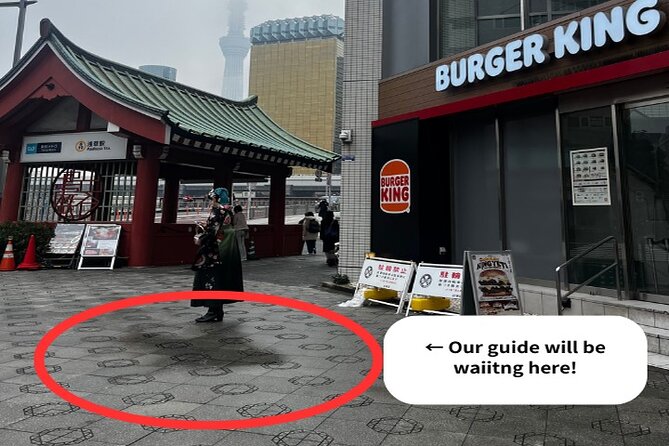
The start point is the Burger King near Azumabashi at Kaminarimon 2-chome, in Tokyo’s Taito City. The listed address is Japan, 111-0034 Tokyo, Taito City, Kaminarimon, 2-chōme 20-6, Cross Building Royal Palace.
Give yourself time to find the exact meeting spot. Tokyo station areas can be confusing, and this starting point is a business address rather than one of the city’s headline sights. Your confirmation arrives when you book, so check it closely for the current meeting instructions.
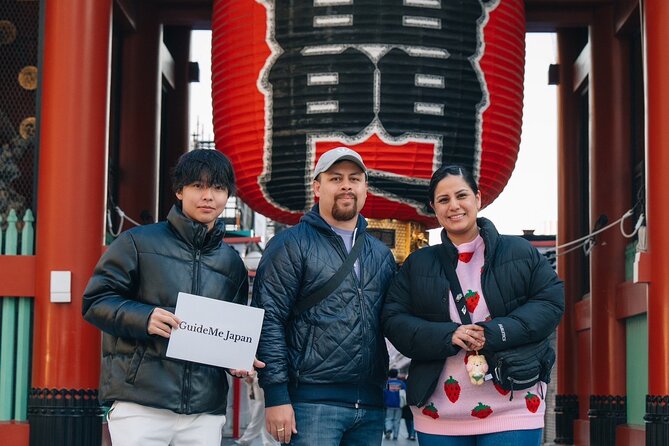
The tour has a maximum of eight people. That is small enough for questions and street-level guidance, but the private option is the better fit if you want the guide’s full attention or need a pace shaped around your group.
An English-speaking guide is included. Guides such as Hana Tanaka have helped families learn how to use Tokyo’s train system, explained local customs, and adjusted the conversation for teenagers. Kouta has also been praised for answering questions clearly and connecting well with young people. Guide assignment can vary, so booking does not guarantee a particular person.
Asakusa and Sensoji before the crowds
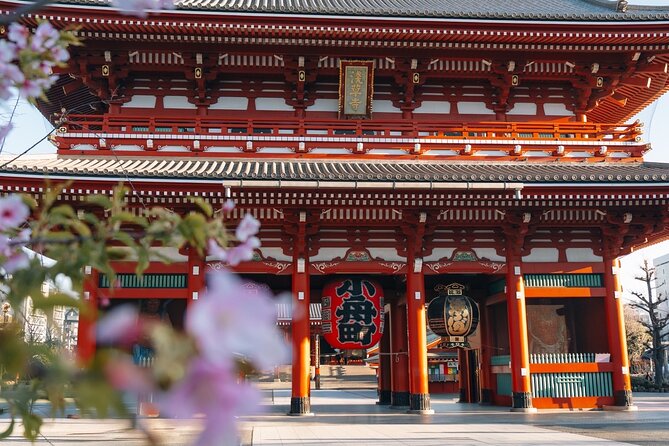
Asakusa is the strongest opening stop. It gives you old Tokyo atmosphere right away, centered on Sensoji, the city’s oldest and best-known Buddhist temple.
You will likely spend time around the Kaminarimon gate, the approach to the temple, and Nakamise Shopping Street. The route is free to enter, which keeps the first stop easy and flexible. Your guide can explain the difference between Buddhist and Shinto sites, temple customs, and the role of the surrounding district.
Morning matters here. Nakamise is more pleasant before it fills with shoppers, and the temple grounds are easier to take in when you are not constantly working around large crowds. You can look up at the gate details, watch people make their visit, and focus on the buildings instead of simply trying to move forward.
The tradeoff is that one hour goes quickly. Asakusa has enough shops, lanes, and small sights for much longer, so you will not have time to inspect every stall or shop for souvenirs. If Sensoji is high on your personal list, note what you want to revisit later.
The guide is especially useful here because the setting can seem straightforward at first glance. A temple visit has customs that are easy to miss, and clear explanations help you avoid treating the place like a quick photo stop.
Tsukiji’s outer market and the price of breakfast
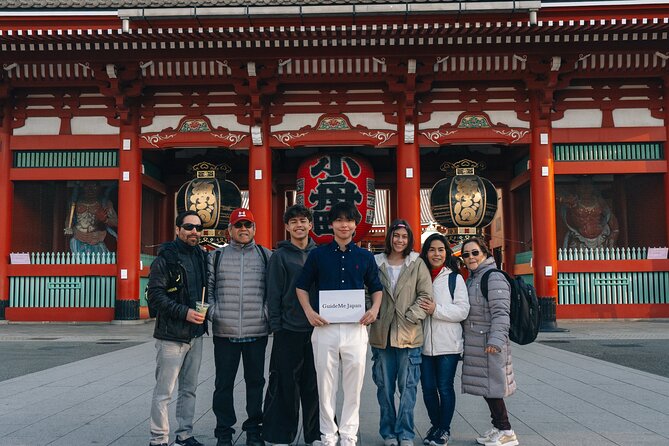
Tsukiji follows naturally, but it changes the mood completely. The former inner wholesale market moved to Toyosu, yet the outer market remains a major stop for seafood, prepared food, kitchen goods, and small bites.
You have about an hour here, and food is not included. That is a benefit if you want to choose exactly what appeals to you, but you should budget extra money for anything you eat. The tour price does not cover breakfast, drinks, or tastings.
This is the stop where a guide can save you from wandering without a plan. Hana Tanaka has been praised for giving practical food tips, so you can ask what looks suitable and how to approach the market. Do not expect a formal meal as part of the tour. Think of Tsukiji as a chance to sample something or make notes for a return visit.
I would keep some flexibility in your budget. The seafood and street food can make it tempting to buy more than planned, and the one-hour limit means you need to choose rather than browse every lane. The outer market is active and tightly packed, so stay aware of your belongings and keep an eye on the meeting time.
For food-focused visitors, Tsukiji may become the morning’s favorite stop. For others, it is a quick, lively look at Tokyo’s food culture. Either way, the guide’s local advice makes the visit more useful than simply taking a few pictures and leaving.
Meiji Jingu’s forested approach
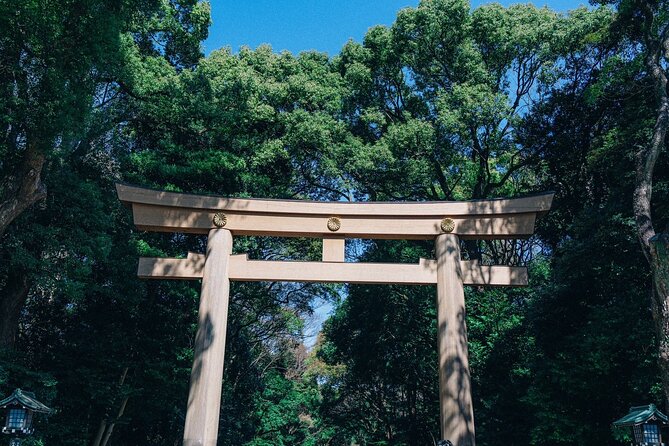
Meiji Jingu provides the route’s biggest change of pace. Located in central Tokyo, this Shinto shrine is dedicated to Emperor Meiji and Empress Shoken, and its wooded grounds create a quiet break from the city.
The stop lasts about 90 minutes, the longest portion of the tour. That extra time matters because the shrine experience begins before the main buildings. You walk through the forested area, notice the shift in sound, and reach the shrine with a better sense of separation from the streets outside.
Your guide can explain the shrine’s purpose and basic Shinto customs. This is a good place to ask questions, since the visit is less about checking off a single building and more about understanding how the site is used.
The free admission keeps the stop simple, but the physical side deserves attention. The tour requires a moderate fitness level, and the full morning includes walking between sights and public transport. Wear shoes you can manage for several hours, and do not treat the five-hour estimate as a seated sightseeing trip.
The shrine is peaceful, but it is not guaranteed to feel empty. Its central location makes it popular, and the amount of activity can vary by day. The early timing still gives you a better chance at a calmer visit than an afternoon arrival.
A few more Tokyo tours and experiences worth a look
Shibuya Crossing and the Hachiko finish
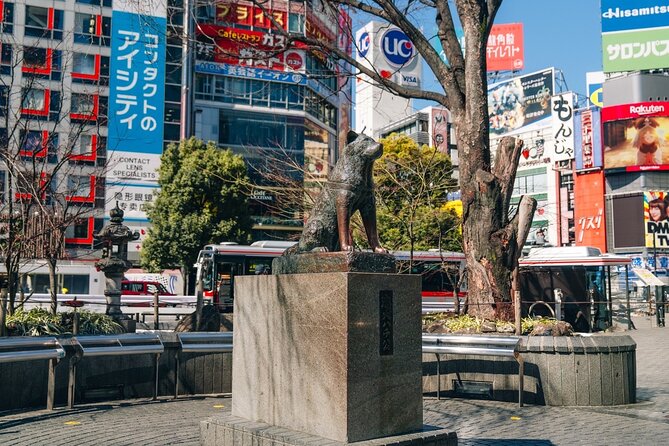
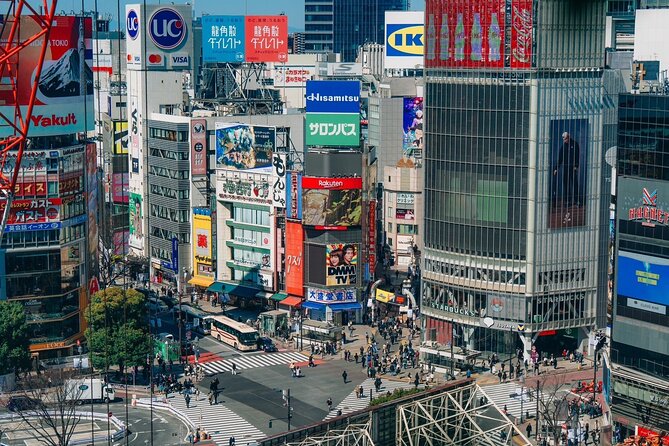
The final stop is Shibuya Crossing, where crowds stream across the intersection from several directions at once. You have around 30 minutes, enough to watch the crossing, take photographs, and see the area around Shibuya Station.
This is not a long Shibuya neighborhood tour. You will not have time to explore the department stores, side streets, or nearby viewpoints as part of the stated route. The value is the quick, recognizable finish after the quieter shrine.
The tour ends at the Hachiko Statue, outside Shibuya Station at 2-1 Dogenzaka. Hachiko’s story gives the ending a human touch, and the statue is a useful place to continue on your own. You are already in one of Tokyo’s best-connected areas, so you can plan lunch, shopping, or another sight afterward.
Ending here also makes practical sense. You do not need to return across the city to the starting point, and the route moves in one direction rather than sending you back and forth.
How much time and energy should you plan?
The advertised duration is about five hours, though one past booking described a six-hour outing. That difference may reflect walking, questions, transport, or a group’s pace, so allow some room in your schedule.
You will need moderate physical fitness. The morning combines temple and shrine grounds, market lanes, station areas, and transfers. The experience is not presented as accessible for limited mobility, and no special accessibility details are provided.
Transportation costs are separate, at around 600 yen. That is a modest extra, but it is worth knowing before you book because the advertised price is not the complete cost of moving between all four areas. Food and drinks are also separate.
The early meeting time may be the hardest part for some people. If jet lag has you awake anyway, it is a useful way to spend those first hours. If your body needs a slow start, you may find the schedule tiring, especially with an afternoon plan afterward.
Is $59.46 a fair price?
At $59.46 per person, the tour is priced as a guided introduction to Tokyo rather than a luxury private excursion. The English-speaking guide, route planning, cultural explanations, and small group limit are the main reasons to pay instead of visiting these places independently.
The value is strongest if you are new to Tokyo, want help with trains, or prefer not to work out the order of four distant areas yourself. Hana has helped families learn how to ride the train, and that kind of practical support can be worth more than a simple list of sights.
The value is less clear if you already know Tokyo’s transport system and enjoy making your own food and neighborhood plans. All four stops are free to enter, transportation costs extra, and Tsukiji purchases are not covered. A self-guided format may suit confident independent visitors who do not need commentary.
Group discounts may improve the price for larger parties. A private choice should be considered for families, older relatives, or groups with different interests, but the supplied information does not state the private supplement, so check the price before booking.
Small group, private, or self-guided?
The small-group option is the middle ground. With no more than eight people, you get the structure of a planned tour without the scale of a large coach group. It should also be easier to ask questions than on a big city tour.
The private option gives your group more control. That matters if you are traveling with teenagers, want more explanation at temples, or would rather spend extra time at Tsukiji than move on at the scheduled point. It may cost more, so compare the final total.
The self-guided option is aimed at independent visitors. It gives you the route without relying on a guide’s live commentary, but the supplied details do not explain exactly what materials or support are provided. Confirm what is included before choosing it.
For a first day in Tokyo, I would favor the guided small-group format. You get orientation, cultural background, and practical help while keeping the cost below a private tour.
What this tour does especially well
The strongest part is the guide’s role. Hana Tanaka has been singled out for a personable approach, clear cultural explanations, and help with the train system. Kouta has also been praised for handling questions and keeping teenagers engaged.
The route is another strength. It does not repeat one type of sight. You move from Buddhist Asakusa to the food stalls of Tsukiji, then to a Shinto shrine and a modern city intersection. That variety gives you a useful first picture of Tokyo.
The early schedule is practical, not just a marketing detail. You avoid the worst afternoon crowds and heat, and the first two stops are better before the day gets fully underway.
The main weakness is limited free time. You will see the headline sights, but you will not have a leisurely market breakfast, a long Asakusa shopping session, or a full Shibuya exploration. The route favors range over depth.
Who should book this morning?
I would choose this tour if you are visiting Tokyo for the first time, want a clear orientation, or feel unsure about using the city’s trains. Families may find the guide helpful, especially with children or teenagers who need a bit of variety.
It also suits visitors who want temple, food, nature, and city views in one outing. The mix keeps the morning moving and gives you several ideas for places to revisit later.
You may want to skip it if you dislike early starts, have limited walking ability, or prefer spending half a day in one neighborhood. Independent visitors who already know Tokyo may get better value from building their own route and paying only for what they eat and use.
The cancellation rule is generous if your plans remain uncertain: you can receive a full refund by canceling at least 24 hours before the local start time. Changes or cancellations inside that window are not accepted for a refund.
Should you book the Tokyo early morning tour?
Book it if you want a guided first look at Tokyo’s major contrasts and value having the morning organized for you. The combination of Sensoji, Tsukiji, Meiji Jingu, and Shibuya gives you a lot in five hours, while the early timing keeps the experience more manageable.
Before paying, confirm the exact start time, transport cost, and the price difference between small-group and private choices. Bring comfortable shoes, money for Tsukiji, and enough energy for a full morning on foot.
I would not choose it as your only Tokyo experience. I would choose it as a strong opening chapter, then return later to the neighborhood that catches your interest most.
FAQ
How long does the tour last?
The stated duration is approximately five hours. One past booking described a six-hour experience, so allow some flexibility in your schedule.
Where does the tour start?
It starts at the Burger King Asakusa Azumabashi, at Kaminarimon 2-chome 20-6, Cross Building Royal Palace, Taito City, Tokyo 111-0034.
Where does the tour end?
The tour ends at the Hachiko Statue, at 2-1 Dogenzaka outside Shibuya Station.
Which places are included?
The route includes Asakusa, Tsukiji Fish Market, Meiji Jingu Shrine, and Shibuya Crossing.
Is an English-speaking guide included?
Yes. An English-speaking guide is included with the guided tour option.
Is transportation included in the price?
No. Transportation costs about 600 yen and are paid separately.
Are food and drinks included?
No. Food and drinks are not included, so you pay separately for anything you buy at Tsukiji or elsewhere.
How many people can join the tour?
The tour has a maximum of eight participants. A private option is also available.
Can I cancel for a full refund?
Yes, if you cancel at least 24 hours before the experience start time. Cancellations or changes made less than 24 hours beforehand are not accepted for a refund.
More Private Tours in Tokyo


More Temples & Meditation in Tokyo
More Asakusa Tours in Tokyo
More tours in Tokyo we've reviewed




Asakusa Tours, compared.
 ★ 4.8Tokyo: Japanese Dance Cabaret Theater Asakusa-Kaguwa TicketFrom $492 hours
 ★ 4.7Tokyo: Meiji Shrine, Asakusa, Skytree Bus Tour and CruiseFrom $12210 hours
 ★ 4.9Tokyo: Roll and Authentic Sushi Making Class in AsakusaFrom $581h 40m
 ★ 4.8Tokyo: Asakusa Walking Tour with Sensoji Temple VisitFrom $222 hours
 ★ 5.0Tokyo Asakusa Rickshaw TourFrom $42
 ★ 4.5Tokyo Panoramic 1 Day: Meiji Shrine, Asakusa, Odaiba and SKYTREE®From $85